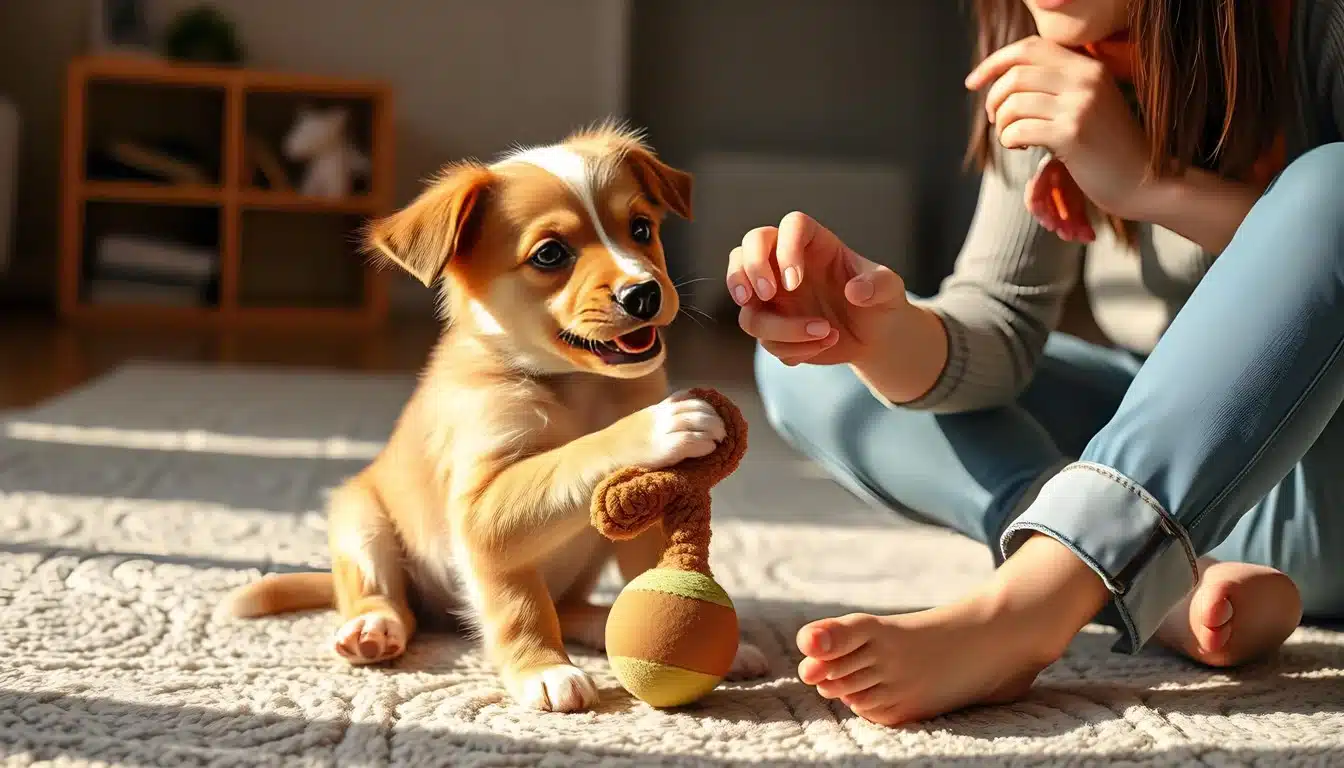
Bringing a new puppy home was thrilling. The wagging tail and playful bark were unforgettable. But, those little teeth can be a problem.
I still remember when my puppy bit my fingers. It was a surprise and a lesson. Learning to stop puppy biting became a top goal. This guide offers effective solutions to help you and your puppy enjoy a happy relationship.
Key Takeaways
- Puppies naturally explore the world with their mouths, making biting common.
- Understanding teething and energy levels can help manage biting behavior.
- Effective training techniques and consistency are crucial for success.
- Positive reinforcement encourages gentle play and discourages biting.
- Redirecting a puppy’s biting with toys can be an effective strategy.
- Socialization with other dogs helps in learning appropriate biting behaviors.
Understanding Why Puppies Bite
Puppies use their mouths to explore the world. This is a key reason they bite. It helps them understand their surroundings and play. But, if not managed, it can lead to unwanted biting.
Knowing why puppies bite can help us guide them better. It's important to understand their behavior.
The Natural Behavior of Puppies
Puppies naturally engage in physical interactions, like playful biting. This is common in young dogs. It shows their excitement and eagerness to play.
While it might be annoying, it's part of their growth. Recognizing this can help us address their biting positively.
Puppy Teething: A Painful Phase
Puppy teething happens between 12 weeks and 6 months. It's a time when baby teeth are replaced by permanent ones. During this, teething pain makes puppies chew on anything, including hands and furniture.
Using teething solutions, like chew toys or frozen treats, can help. It reduces their discomfort and unwanted biting. This approach helps them find relief through safe chewing.
Importance of Bite Inhibition
Bite inhibition is a key skill for every puppy. It means they can control how hard they bite. This skill is vital for safe play with other dogs and people. Puppies who learn this are often gentler, even when they're stressed.
What is Bite Inhibition?
Bite inhibition lets a dog control the force of their bites. This way, they can play without hurting anyone. Puppies learn this by playing with their littermates.
When one puppy bites too hard, the other puppy's reaction teaches them to be gentler. This is how they learn to play nicely together. It's all about understanding each other through play.
Learning Through Play: Social Interactions
Play is very important for puppies. It's how they socialize and learn about their world. They get to know each other, explore, and practice controlling their bites.
Through play, puppies grow physically and emotionally. They form bonds that shape their future relationships. It's a crucial part of their development.
How to Stop Puppy from Biting
Stopping puppy biting can be tough, but it's doable with the right steps. Using effective training techniques helps teach good habits. When my puppy bites, I yelp to show it's not okay. Then, I redirect their attention to toys for better play.
Effective Training Techniques
There are many ways to stop puppy biting. Saying a firm "no" when they bite teaches them it's wrong. Giving them toys for chewing helps them learn to play right.
Consistency is Key
Being consistent in training is crucial. Every time I interact with my puppy, I must stick to the rules. If I'm not consistent, they might keep biting. A routine helps them know what's expected.
Combining good training with consistency helps a lot. The more I use these methods, the better my puppy gets. With patience and effort, I aim to create a positive space for good habits.
Using Positive Reinforcement
Positive reinforcement is key in teaching puppies good behavior. It rewards them for acting well, encouraging them to do it again. When my puppy shows gentle behavior, I give them treats or praise. This helps them learn that being gentle is good.
It makes them feel safe and motivated to behave well. This way, they learn to play gently and not bite.
Rewarding Gentle Behavior
It's important to notice and reward gentle behavior. When my puppy plays nicely, I give them a treat. This shows them that being gentle is something to be praised.
Doing this often helps them prefer gentle play. It also reduces biting.
Praising Calmness and Quietness
Calm puppies are special. I celebrate their calmness and quietness. When my puppy is calm, I give them praise and treats.
This teaches them that being calm is rewarding. It helps them become more composed over time.
Redirecting Your Puppy’s Behavior
When my puppy starts to nip or bite, I quickly find a solution. Using toys helps shift their focus away from my hands and feet. I keep a variety of safe, engaging toys nearby. This teaches my puppy what they can chew on without hurting me or damaging things.
Substituting with Toys
Using different puppy chew toys really helps manage biting. These toys keep them from biting me and satisfy their natural urge to chew. I change up the toys often to keep things interesting and exciting for them. It's important to pick toys made for puppies to ensure they're safe and right for their teeth.
Using Chew Items
Adding chew items to my puppy's routine helps a lot. Rubber chews and dental sticks ease teething pain and keep them busy. When I give them these items, they're less likely to chew on furniture or other things. Offering toys in different shapes and sizes keeps my puppy engaged and promotes good chewing habits.
| Types of Chew Toys | Benefits |
|---|---|
| Rubber Chew Toys | Durable and safe; helps clean teeth |
| Dental Chew Sticks | Freshens breath; encourages chewing |
| Stuffed Plush Toys | Soft texture; great for snuggling after chewing |
| Frozen Toys | Soothes teething pain; keeps puppies occupied |
Understanding Playful Biting vs Aggressive Biting
Knowing the difference between playful and aggressive biting in puppies is key. It helps us train them better. Playful bites show certain signs, while aggressive ones have different traits. Spotting aggression early can stop problems before they start.
Identifying the Signs of Playful Biting
Look at your puppy's body language to spot playful biting. A relaxed puppy with a wagging tail is usually playing. Playful bites are gentle and come with a happy mood, like bouncing or barking.
It's crucial to understand the context of these behaviors. This way, we can enjoy the fun moments with our puppies.
Recognizing Aggressive Behavior in Puppies
Aggressive behavior in puppies is serious. Signs include stiff body, growling, and intense focus. If a puppy bites hard, it might hurt or react badly to touch.
It's vital to tell the difference between playful and aggressive bites. We need to act fast to stop aggressive behavior and keep everyone safe.
The Role of Time-Outs in Training
Time-outs are a key training tool for puppies, helping to stop bad behaviors like biting. When my puppy bites too hard, I quickly stop playing with them. This teaches them that biting means playtime ends.
Implementing Effective Time-Outs
Good time-out strategies need to be consistent and clear. Every time my puppy bites too hard, I start a time-out right away. It's important to keep these time-outs short. This helps my puppy learn that their actions affect their playtime.
Using the Crate for Calmness
Crate training is great for time-outs. My puppy goes to a crate that's safe and cozy, helping them calm down. I make sure their crate is a positive place. This helps my puppy relax and reduces their aggression.
Preventing Problematic Biting Situations
Creating a safe space for your puppy is key to stopping bad biting habits. Making your home puppy-proof is more than just safety. It helps your puppy feel safe and happy. A well-prepared area also keeps your puppy from biting things they shouldn't.
Puppy-Proofing Your Home
Puppy-proofing is easy. First, keep electrical cords out of reach and throw away breakable things. Make sure your puppy has a special play area with safe toys. This area should have nothing that might make your puppy bite.
By doing this, you prevent biting problems before they start. It makes your home a safe place for your puppy to play and learn.
Avoiding Triggers that Encourage Biting
Knowing what makes your puppy bite is important. Watch how your puppy reacts and find out what makes them excited or upset. Try to avoid things that make them bite, like loud noises or too much play.
By doing this, you help your puppy stay calm and not nip as much. It's all about creating a peaceful environment for your puppy.
| Trigger Type | Example | Solution |
|---|---|---|
| Excitement | Playtime with other dogs | Implement calm breaks |
| Frustration | Being unable to reach a toy | Provide a variety of toys |
| Overstimulation | Loud noises | Limit exposure during intense moments |
Encouraging Proper Playtime Activities
Playing with my puppy is crucial for their development. It helps them learn good behaviors and keeps their energy in check. Interactive games make playtime fun and educational, teaching them to play safely without biting.
Interactive Games to Redirect Energy
Interactive games are great for keeping my puppy's energy right. Games like fetch or hide and seek keep them both smart and active. Using toys or balls helps teach them positive behaviors while they have fun.
It's key to focus on games that don't involve biting. This lets my puppy learn how to play the right way naturally.
Non-Contact Play Techniques
Non-contact play is vital for a fun play session. Games that make my puppy chase or jump are perfect. They keep them engaged without the urge to bite.
These methods help teach good behavior and lower the risk of biting. This makes playtime enjoyable for both of us.

| Activity | Type | Benefits |
|---|---|---|
| Fetch | Interactive Game | Redirects energy and enhances recall |
| Hide and Seek | Interactive Game | Encourages mental stimulation and problem-solving |
| Flirt Pole | Non-Contact Technique | Boosts physical activity without biting |
| Tug-of-War | Interactive Game | Teaches boundaries and impulse control |
Using these games and techniques makes playtime a joy. It's good for my puppy's behavior and strengthens our bond.
Socialization with Other Dogs
Getting puppies to socialize with other dogs is key to their growth. Puppy playdates and classes teach them important life skills. They learn about bite control, body language, and what's okay to do.
When puppies meet, they start building a strong base for talking and understanding each other. This makes it easier to stop bad biting at home.
The Importance of Interacting with Other Puppies
Puppy playdates are very important. They give puppies a chance to play and learn in a safe way. They help puppies learn how to act and behave well.
Playing with other dogs helps puppies become better friends. They learn to get along and have fun together.
Enrolling in Puppy Classes
Signing up for puppy classes is a great idea. These classes are fun and teach puppies important things. They learn how to listen and play nicely with others.
Classes also teach puppies to be confident and learn good habits. This helps them grow up to be well-behaved dogs.
| Activity | Benefits |
|---|---|
| Puppy Playdates | Encourages social skills, allows puppy to learn bite inhibition |
| Puppy Classes | Provides structured learning, fosters positive interactions |
| Obedience Training | Helps establish commands, boosts overall behavior |
Providing Mental and Physical Enrichment
Creating a balanced routine for my puppy is key. It involves focusing on both mental and physical enrichment. Without enough stimulation, a puppy can get restless and bite. Activities that reduce energy are very helpful.
Burning Off Excess Energy
Too much energy can cause nipping and biting. So, I make sure to take my puppy for regular walks and play. Simple games like fetch or tug-of-war are great. They help my puppy exercise and behave well.
Utilizing Brain Games and Puzzles
Mental stimulation is just as important. I love setting up brain games for my puppy. Dog puzzles and other activities keep them engaged and tired. This helps prevent bites when they're full of energy.
| Activity Type | Description | Benefits |
|---|---|---|
| Physical Activity | Regular walks and interactive games | Burns energy, reduces biting behaviors |
| Mental Stimulation | Brain games and dog puzzles | Enhances cognitive skills, prevents boredom |
| Combination Activities | Agility courses or hide-and-seek | Promotes bonding, challenges both mind and body |
Handling Nipping and Biting at Specific Targets
Dealing with hand biting and foot nips in puppies can be tough. It's key to teach them not to nip. By using the right techniques, we can help them learn good habits.
When my puppy bites my hands, I use special methods. Spotting these behaviors early helps me stop them before they start. This way, I can teach my puppy what's okay to bite.
How to Stop Puppy from Biting Hands
Stopping puppies from biting hands is crucial. I use a high-pitched yelp to tell them it hurts. Then, I give them a toy to play with instead.
This teaches them that toys are better than hands. Doing this often helps them learn not to bite hands.
How to Stop Puppy from Biting Feet
Puppies love to play with feet, which can lead to nipping. To stop this, I stop moving when they go for my feet. Giving them a toy or using a leash helps them focus on the right thing.
This way, they learn that feet are off-limits. I make sure to teach them this every time they try to play with my feet.
The Impact of Your Reactions
How I react to my puppy's actions greatly affects their behavior. When dealing with biting or nipping, it's key to understand the impact of punishment. Physical punishment can make puppies fearful or aggressive, worsening the problem.
Instead, I use positive reinforcement to build a strong bond. This approach helps my puppy trust and love me more.
Avoiding Physical Punishment
Physical punishment is not a good way to train my puppy. Studies show that using praise and rewards is better. I've seen my puppy's biting lessen as we use positive training methods.
This way, he learns what's right without feeling scared or unwelcome.
Understanding Your Responses as Signals
Puppies pay close attention to how I react. By recognizing my signals, they learn quickly. When he bites, I ignore him to show it's not okay.
But when he's calm and gentle, I praise him more. This teaches him which actions I approve of and which I don't.
Seeking Professional Help
Dealing with my puppy's biting behavior has taught me a lot. Knowing when to hire a dog trainer is key. It's important to spot the signs that my puppy needs expert help. This way, I can tackle the problem and find solutions that fit my puppy's needs.
Professional help for biting is out there. Talking to canine experts gives me valuable advice. It helps me understand my puppy better and find the right way to train them.
When to Contact a Dog Trainer
Every puppy is different, and sometimes, training alone isn't enough. If my puppy's biting is more than just playful, it's time to seek help. A dog trainer can help figure out why my puppy is biting and find ways to stop it.
Finding a Certified Professional
Choosing the right trainer is crucial for my puppy's biting issues. I look for certified trainers who focus on puppy behavior and use positive methods. Getting help from a certified trainer ensures my puppy gets the best training and I get peace of mind.
Conclusion
Biting is a natural part of a puppy's growth. Understanding their behavior helps me tackle training challenges. I've learned the value of being consistent and using positive reinforcement.
Patience and persistence are crucial. Playful interactions and gentle corrections work well. Socializing with other dogs also teaches my puppy right from wrong.
A well-behaved pet makes our lives better. By following these strategies and meeting my puppy's needs, we can enjoy each other's company without biting issues.