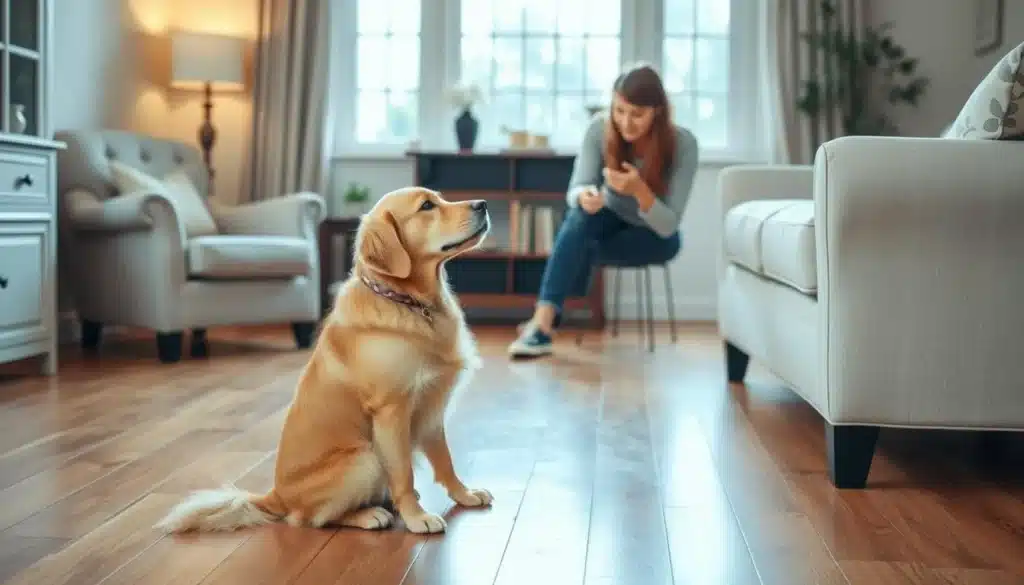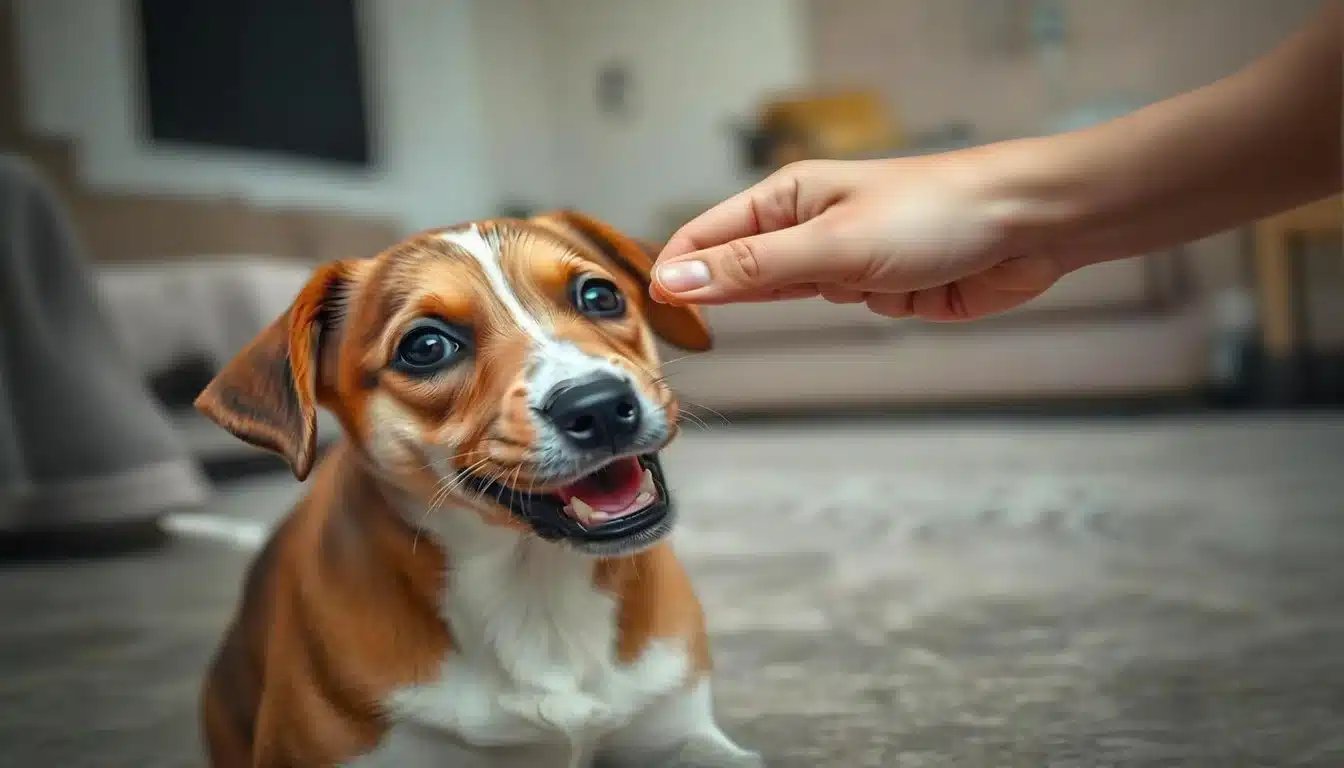
Welcoming a new puppy into my home was a dream come true. Their energy and curiosity brought joy. But, their enthusiasm often turned into sharp nibbles.
Like many pet parents, I wondered how to stop this. It's a common problem that can lead to frustration. But, with the right strategies and patience, we can teach them to be gentle.
Let's look at effective ways to train our puppies. We'll tackle this common problem together.
Key Takeaways
- Puppy biting is a common behavior that can be corrected with proper training.
- Understanding your puppy's biting triggers is essential for effective training.
- Teaching bite inhibition can help your puppy learn the difference between gentle play and biting.
- Redirecting biting behavior with toys can provide an outlet for their energy.
- Socialization with other dogs can reduce biting tendencies.
- Seek professional help if biting persists despite training efforts.
Understanding Puppy Biting Behavior
Puppies naturally use their mouths to explore the world. This instinct is key to their growth. When I watch my puppy, I see that biting is a way for them to learn.
They bite to get to know their surroundings. Their teeth are growing, and teething can be painful. It's important to tell the difference between playful bites and aggressive ones.
Seeing that biting is part of learning is crucial. Puppies learn social rules by playing with others. This helps shape their biting habits. By watching this, I can teach my puppy right from wrong while still letting them be themselves.
Why Do Puppies Bite?
Understanding why puppies bite is key. They bite for natural reasons like teething, play, and exploring. Teething, from three to six months, makes them bite to ease gum pain. This can turn into a habit after teething ends.
Excitement is another reason. Puppies, full of energy, show joy by nipping. Playtime makes this behavior common. But, if they get bored, they might bite more.
Separation anxiety also causes biting. When I leave, they feel left out and might nip. Knowing these reasons helps us stop them from biting.
How to Correct a Biting Puppy
Correcting a puppy's biting behavior is a mix of techniques. They help with self-control and positive interactions. Learning how to stop puppy biting is key to a well-behaved pet. With patience and consistency, I can teach my puppy right from wrong.
Teach Bite Inhibition
Teaching my puppy bite inhibition is a good method. If they bite too hard, I make a high-pitched sound. This sound tells them they've bitten too hard. Then, I stop play for a bit to show them the link.
Recognize the Importance of Gentle Play
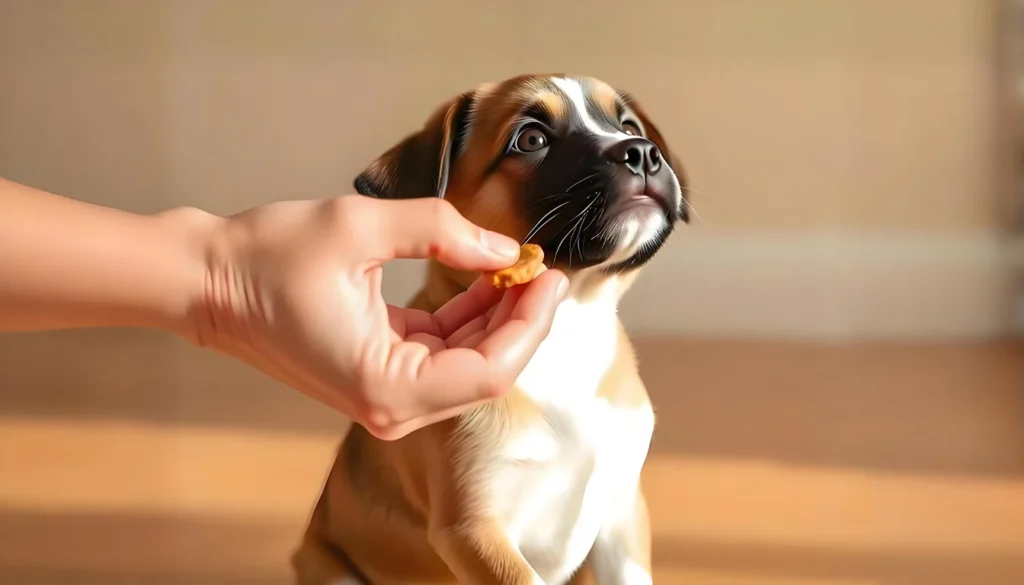
It's important to reward gentle play. When my puppy plays softly, I give them praise and treats. This teaches them that being gentle is good. But, if they get too rough, playtime stops. This mix of methods helps them learn and keeps our bond strong.
The Role of Play in Puppy Biting
Play is key for puppies to learn and grow. It helps them understand their world and how to act around others. By playing, puppies learn what is okay and what isn't.
Watching puppies play shows how important it is to teach them about limits. They learn to control their actions and how they affect others. This is crucial for their development.
Playtime is also a chance to teach puppies about gentle behavior. It's important to watch how they play to prevent rough behavior. If play gets too rough, stepping in can teach them about boundaries.
This approach helps puppies develop good habits and a strong bond with their owners. It's a way to ensure they grow up to be well-adjusted and friendly.
Identifying Triggers for Biting
Knowing what makes my puppy bite is key to handling tough behaviors. It's important to figure out what causes them to bite, like separation anxiety and puppy behavior or other things around them. By finding out what triggers their biting, I can prevent it and make our time together better.
Separation Anxiety and Excitement
Puppies often get anxious when left alone, leading to a lot of biting. They feel scared and bite to deal with their feelings. When they're too excited, like around people or other pets, they can't control their biting. Knowing this helps me understand why they bite.
Teething and Mouth Exploration
Teething is hard for puppies, and they bite to feel better. They chew on everything, which can look like bad behavior. But it's just them exploring with their mouths. Knowing this helps me tell the difference between normal teething and bad biting.
Effective Training Techniques to Stop Puppy Biting
When dealing with puppy biting, some training methods are super effective. Two top techniques are using high-pitched sounds and time-outs. These methods teach puppies about their actions and help them change.
Using High-Pitched Sounds to Correct Behavior
Making a high-pitched sound when my puppy bites too hard is a great trick. It sounds like another puppy's yelp, telling my pup they've hurt me. This teaches them biting is not good while keeping me calm and steady.
This method grabs their attention and makes them think twice about biting during play.
Implementing Time-Outs for Hard Bites
For really hard bites, time-outs are a powerful tool. When my puppy bites too hard, I stop play and put them in a time-out area for a few minutes. This pause lets them think about their actions.
Being consistent with this teaches my pup that biting means no playtime. It encourages them to stop biting.
Redirecting Puppy Biting with Toys
Redirecting puppy biting with toys is a great way to manage their urge to nibble. Giving them chew toys not only distracts them but also satisfies their chewing instincts. It's key to pick toys that keep your puppy engaged and entertained.
Providing Chew Toys for Chewing Needs
Having a variety of chew toys is beneficial. Look for durable and fun toys. Some good options include:
- Rubber toys that can withstand heavy chewing
- Dental chews that promote oral health
- Stuffed toys filled with treats to encourage longer play
These toys help redirect their biting to the right objects, not your fingers or furniture.
Engaging in Non-contact Play
Non-contact play is also important. Games like fetch or tug-of-war are great. They strengthen our bond and reduce biting. Here's why it's good:
- Encourages active movement and helps burn off energy
- Enhances training through commands like "drop it" or "come"
- Avoids reinforcing biting behaviors by limiting physical contact
Puppy Behavior Problems and Their Solutions
Puppies can show many behavior problems, even for the most patient owners. Puppy biting is a big issue. Knowing these problems is the first step to solving them.
For puppy biting solutions, a custom plan works best. Teaching puppies with clear commands and rewards helps stop biting. Giving them the right toys and playing with them helps them use their energy in a good way.
Watching for what makes puppies bite is key. It could be excitement, teething, or feeling scared. Knowing why helps me find the best puppy biting solutions.
By sticking to training, socializing, and understanding my puppy, I can make a better environment. Every effort I make helps my puppy behave better.
The Importance of Socialization and Puppy Classes
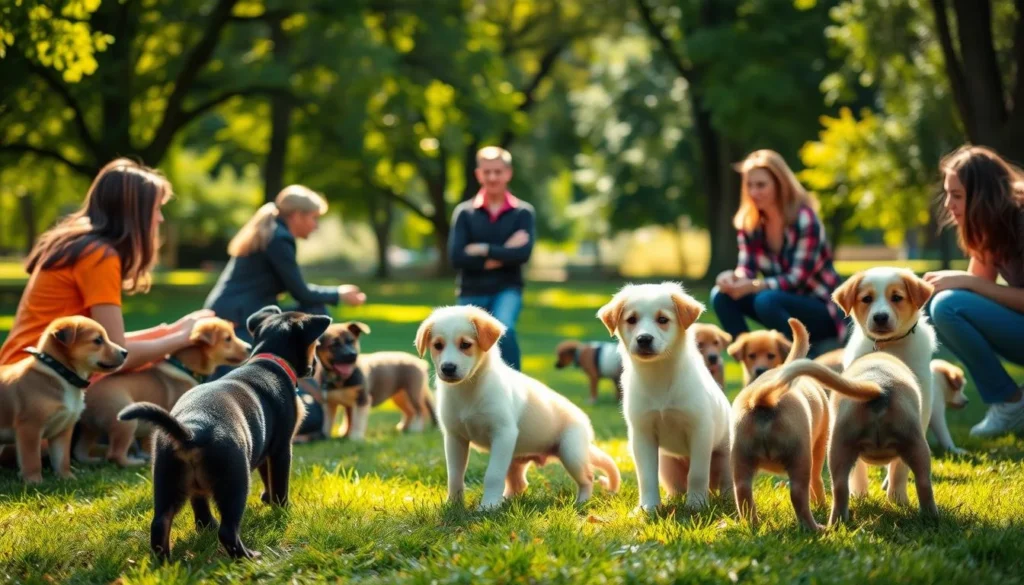
When I first brought my puppy home, I quickly realized the crucial role of socialization in reducing biting behavior. Early exposure to other dogs and humans fosters confidence and teaches effective communication. Embracing the importance of puppy classes can make a significant difference in how my puppy interacts with the world.
Benefits of Interacting with Other Dogs
Interacting with other dogs offers numerous benefits:
- Improved social skills help puppies learn how to read body language.
- Positive experiences reduce fear and anxiety in unfamiliar situations.
- Playtime with other dogs provides an outlet for energy, minimizing biting behavior.
Finding the Right Puppy Class
Choosing the right puppy class is essential for effective training. When searching for a class, I consider these factors:
- Instructor qualifications – Knowledgeable instructors can better guide puppy socialization techniques.
- Class size – Smaller classes allow for more personalized attention.
- Training philosophy – Look for positive reinforcement methods to create a supportive environment.
General Precautions to Prevent Biting
Thinking about how to prevent puppy biting shows me the importance of my actions. A controlled environment is key. It helps avoid situations that might make my puppy bite. Keeping toys and distractions around keeps my puppy busy and focused.
Redirecting their energy to the right things helps stop biting. It's also important to avoid behaviors that make my puppy want to bite. Rough play or too much excitement can lead to nipping. Instead, I encourage calm play that doesn't trigger biting.
Communicating clearly and gently helps my puppy learn good habits. Consistent positive reinforcement helps reduce bad behaviors. These steps not only cut down on biting but also strengthen our bond.
Training for Calm Behavior
Creating a calm space for my puppy is key to their growth and less biting. I teach them to be calm during our time together. One way is to have quiet moments during play.
Positive rewards keep my puppy eager to learn. I give them treats and praise for being calm. This helps them learn to stay calm more often.
Training in a quiet area helps a lot. It lets my puppy focus better. Our sessions include activities that need patience and control.
These steps help solve puppy biting problems. They make training fun and strengthen our bond.
Encouraging Positive Interactions
Building a strong bond with my puppy means encouraging positive interactions. These interactions help my puppy thrive. I use positive reinforcement during training sessions.
When my puppy is calm or positive, I praise them. This shows them that good behavior is valued. Using treats or affection as rewards helps create a positive atmosphere.
When my puppy behaves well during play, I encourage them. This helps them understand what is expected. It also improves their behavior and reduces unwanted biting.
Structured playdates with calm dogs help solidify these positive interactions. Watching and guiding positive interactions is key. Regularly rewarding good behavior helps my puppy become well-mannered.
| Positive Interaction Techniques | Benefits |
|---|---|
| Positive Reinforcement | Encourages desired behavior and builds trust. |
| Structured Playdates | Promotes socialization and reduces anxiety. |
| Calm Praise | Reinforces calm behavior and reduces stress. |
| Engagement through Toys | Redirects energy from biting towards constructive play. |
By focusing on positive interactions, I not only stop biting but also create a loving space for my puppy.
What to Do If Biting Persists
If your puppy keeps biting, it's time to rethink your training. Look at the environment. Are there things like other pets or loud noises that make them bite?
Changing how you train can help a lot. If what you're doing now isn't working, try something new. Maybe using treats or different toys will help.
Setting clear rules is also important. Make sure everyone knows how to act around your puppy. If they bite, everyone should say it's wrong.
Here’s a quick reference table of possible actions to take:
| Action | Description |
|---|---|
| Reassess Environment | Identify and eliminate triggers that lead to biting. |
| Adjust Training Techniques | Try different methods such as treats or new commands. |
| Implement Stricter Boundaries | Set consistent rules for how everyone interacts with the puppy. |
| Monitor Progress | Keep track of changes in behavior to determine what works. |
Remember, solving biting problems often takes a mix of these steps. Be patient and keep trying different things until you find what works best.
When to Seek Professional Help
Knowing when to get help for puppy biting is key for both me and my puppy. Puppies naturally bite, but some behaviors are a red flag. If my puppy bites hard or often, it's time to get professional help.
Watching for growling or snapping is another warning sign. This shows a bigger problem that needs expert help. Also, if my puppy bites people or other pets, it's a safety issue. Getting help early stops bad habits from forming.
Look for patterns in your puppy's biting. If they bite a lot in certain situations, it might mean they're scared or anxious. A pro can teach us how to fix these issues, making our home safer and happier.
| Signs that Require Professional Help | Actions to Take |
|---|---|
| Aggressive or painful biting | Consult a professional trainer immediately |
| Biting accompanied by growling | Seek guidance on behavioral assessment |
| Frequent biting towards children or pets | Enroll in group behavior classes |
| Puppy exhibits biting in specific situations | Schedule a consultation for customized training |
Conclusion
Understanding why a puppy bites is key. Gentle play and teaching bite control are crucial. With patience and consistency, your puppy will improve.
Using good training methods and toys helps a lot. Every puppy learns differently. But with effort, biting can become less of a problem.
Staying positive is important when dealing with biting. The right approach can make your puppy a loving friend. Let's work together to help your puppy grow well.