I remember the first time I brought a Boxer home. It was a mix of joy and nervousness. The puppy's wiggle and bright eyes made me want to get everything right, especially potty training. I learned that a clear plan is key for rapid potty training.
Boxers are playful and eager to please. This helped me find quick solutions for potty training. Early crate training, consistent timing, and small treats made a big difference in weeks.
Before your pup arrives, you'll need a few things. A proper crate, a simple schedule, and the right mindset for positive reinforcement are essential. These basics help your puppy grow faster and have fewer accidents.
Key Takeaways
- Start with a plan before bringing your Boxer home to enable rapid potty training for boxer puppies.
- Crate training leverages a Boxer’s natural cleanliness and speeds learning.
- Tie potty breaks to meals, naps, play, and waking—Boxers often need to go within 5–15 minutes.
- Use small, high-value treats and immediate praise as rewards for quick solutions for potty training a boxer puppy.
- Expect steady progress by six months with consistent routines and gentle, short training sessions.
Understanding Boxer Puppy Traits That Affect Potty Training
Getting a new Boxer puppy is exciting but also a bit overwhelming. I start by focusing on traits that help with training. This keeps my approach calm and consistent.
Boxer temperament and energy levels
Boxers are full of energy, curious, and very loyal. They love their people and respond well to positive feedback. I make training sessions fun and short to keep their attention.
Consistent timing and calm leadership are key. They help avoid stubbornness that can slow down training.
Developmental stages: what to expect between 8–16 weeks and by six months
The 8–16 week period is crucial for socialization and learning basic habits. I introduce gentle handling and short training sessions. I also expose them to new sights and sounds.
By six months, most Boxers know basic commands and show bladder control when routines are followed.
Boxers grow physically until late adolescence. I limit intense exercise and focus on mental activities. Matching potty breaks to their routine helps them learn faster.
Understanding developmental stages is key to setting realistic goals for potty training.
Why Boxers often potty-train quickly: cleanliness and den instincts
Boxers don't like soiling their sleeping area. I use crate training to teach them where to go. Short, frequent outings after naps and meals help them learn to go outside.
By combining routine, positive rewards, and mental stimulation, training goes faster. Using boxer temperament and puppy training tips helps me tailor my approach to their learning style.
how to potty train a boxer puppy fast
I just brought my Boxer puppy home and I want a clear, fast plan that works. I focus on consistency, short training bursts, and rewards. These steps form the backbone of accelerated boxer puppy potty training and give me confidence from day one.
Step-by-step quick-start plan for accelerated results
I begin immediately after bringing the puppy inside. I set up a properly sized crate and limit time inside to about four hours for very young pups. Crate training taps the Boxer's den instinct and cuts down on accidents when used right.
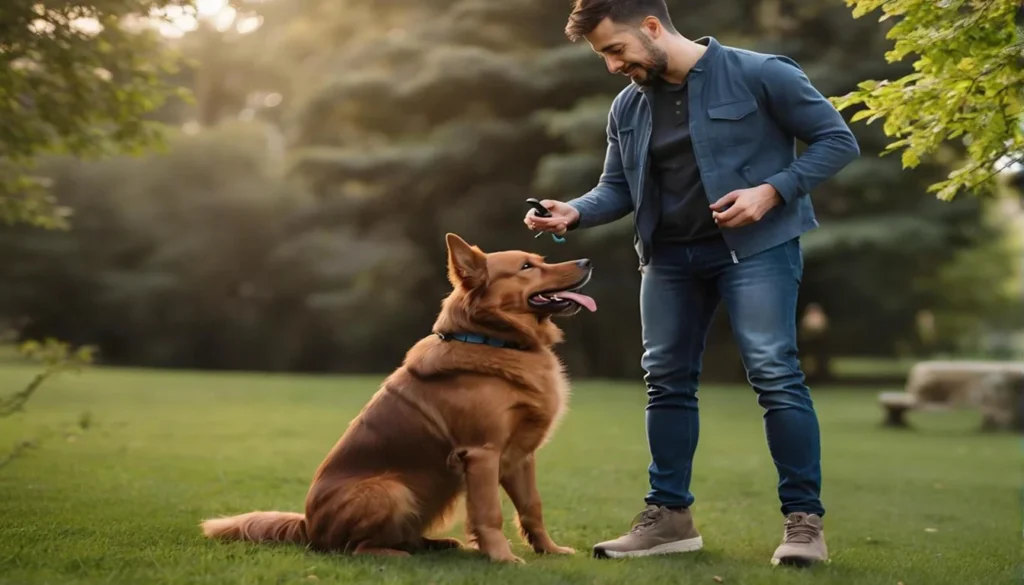
I take the pup to the same outdoor spot every time. I use a short training leash and a well-fitting harness so the puppy stays focused. I use a clear cue like “Go potty” and reward the moment the puppy finishes with a small high-value treat and praise.
I watch the 5–15 minute rule: puppies often need to go soon after eating, drinking, waking, or play. I plan outings around those events so I can prevent accidents and reinforce good habits.
Daily routine template to speed learning
I use a predictable schedule to create fast learning. I take the puppy out first thing in the morning, after naps, after play, after meals, and right before bedtime. Short, frequent trips work best for speedy potty training for boxer puppies.
I follow the age-in-months guideline for bladder control as a baseline. For example, a 2-month-old may hold for roughly two hours, a 3-month-old for about three hours. I still watch signals and adjust to the puppy’s needs.
If I work away from home, I arrange a dog walker or sitter to maintain the routine. If I must use puppy pads temporarily, I map out a transition plan to move from indoor pads to outdoor-only elimination.
What success looks like and realistic timeframes
I expect clear improvement within days when I stay consistent. Many Boxers show marked progress in a week or two with focused effort. Full reliability often takes longer, typically by six months to a year depending on the puppy’s age at the start and consistency in training.
I use short, frequent sessions and make each outing positive. I keep treats in a pouch, mark the potty spot, and maintain the same cue. These small touches speed learning and keep the puppy engaged.
| Stage | Typical Holding Time | Key Actions |
|---|---|---|
| 2 months | ~2 hours | Frequent outings, crate bursts under 2–3 hours, watch signals closely |
| 3–4 months | ~3–4 hours | Extend time gradually, reinforce cue word, short training walks after meals |
| 5–6 months | ~4–6 hours | Longer outdoor sessions, reduce treats slowly, expect growing reliability |
| 6+ months | Up to 6–8 hours | Work toward full house training, maintain schedule, use walks as potty chances |
Crate Training as a Core Fast Potty Training Method
I think crate training is a quick way to teach a Boxer where to go. Boxers like a clean sleeping area because of their den instinct. Using a crate with patience and rewards helps them learn fast and reduces accidents.
Why crates work for Boxers: den instincts and cleanliness
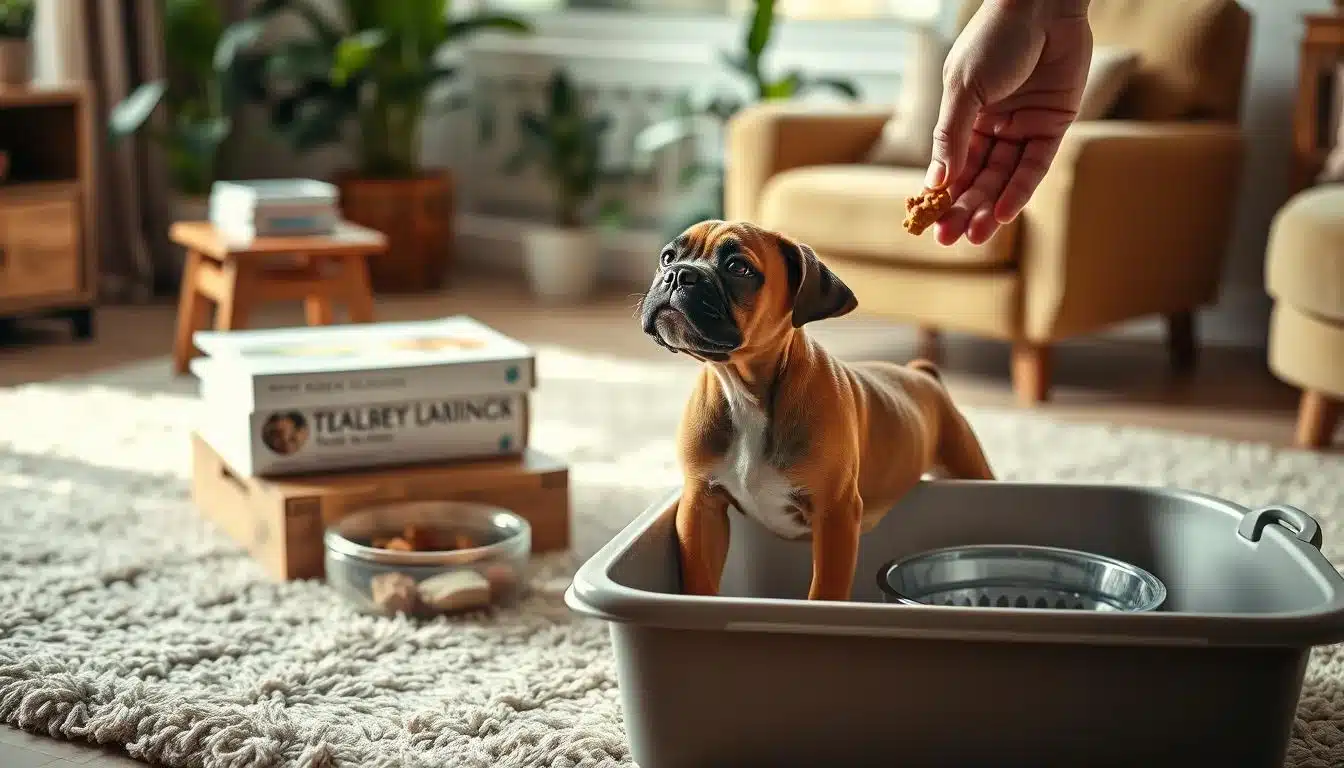
Boxers don't like to soil where they sleep. I use this to my advantage by making the crate a cozy spot. Short, fun sessions with treats and a soft bed help them associate it positively.
When a puppy feels safe in the crate, they might whine or scratch. This tells me they need to go outside. Quick praise when they do reinforces the good behavior.
Choosing the right crate size and using partitions
Choose a crate that lets your puppy stand, turn, and stretch. It should be big enough but not so big they can sleep in one corner and go in another. Adjustable crates or partitions are great for growing puppies.
For crate size boxer potty training, measure your adult dog's size. Set the partition to give enough room now and for later. A good fit keeps lessons clear and avoids confusion.
Crate timing rules and avoiding common mistakes
Stick to simple crate timing rules for puppies to help with bladder control and trust. Young puppies shouldn't be in the crate for more than four hours. Use it for naps and sleep, not punishment.
Avoid long confinement, irregular release times, and soiled crates. If your pup soils the crate, start again with short sessions and clean bedding. This keeps their den instinct strong.
Keep a regular routine with feeding, waking, and play. This makes crate training a key part of fast potty training success.
Creating a Consistent Potty Schedule for Rapid Progress
I set a clear routine from day one to speed learning. A predictable potty schedule boxer puppy responds to makes accidents rare and builds confidence. I base each break on natural events rather than random timing.
I take the pup out first thing in the morning and right after naps. I check the clock after meals and drinking, then again after play or intense chewing. Short, frequent outings teach where to go and when to expect relief.
Use the age-in-months rule as a guide. The puppy bladder control age guideline suggests a simple estimate: a four-month-old may hold about four hours. I never push that limit. I watch the pup closely and plan extra breaks when activity or excitement rises.
To adapt puppy schedule as the dog grows, I lengthen intervals slowly. I add 15–30 minutes every week when the pup stays dry. I keep rewards and the same outdoor spot to reinforce good habits while I expand access in the house.
For long workdays I arrange mid-day visits from a walker or a neighbor. That prevents long holds and stress. Consistent timing around waking, meals, play, and bedtime speeds progress and reduces setbacks.
Below is a simple example I use that follows predictable events and the age-in-months guideline. I tweak it to match my puppy's rhythm and temperament.
| Age | Typical Maximum Hold | Key Breaks Each Day | How I Adapt |
|---|---|---|---|
| 8–12 weeks | 2–3 hours | Morning, after naps, after eating, after play, before bed | I keep very short intervals and increase outings immediately if the pup shows signs. |
| 3–4 months | 3–4 hours | Morning, mid-morning, after meals, mid-afternoon, evening, bedtime | I follow the puppy bladder control age guideline and add a mid-day visit if needed. |
| 5–6 months | 4–6 hours | Morning, mid-day, after play, evening, before bed | I gradually lengthen gaps and adapt puppy schedule when accidents drop significantly. |
| 7+ months | 6–8 hours | Morning, early afternoon, evening | I test longer holds carefully and keep the same cues and rewards for outdoor elimination. |
Positive Reinforcement and Reward Strategies for Speedy Training
I focus on short, fun sessions to build a strong connection between actions and rewards. Boxers love to please and respond well to clear cues and tasty rewards. I use a consistent cue word and a pouch for treats to keep the training momentum high.
For treats, I use small pieces of cooked chicken, low-fat hot dog slices, or tiny cheese bits. These treats help the puppy choose the right spot even with distractions. I keep the treats small to avoid overfeeding.
I reward the puppy within seconds of them eliminating. This helps them connect the behavior with praise. If I catch them starting, I say "Go potty" and reward them when they finish. Quick feedback speeds up learning.
I never scold after an accident. Scolding confuses and breaks trust. I clean up calmly with an enzymatic cleaner to remove odors. If I catch them in the act, I move them outside and reward them if they finish there.
I mix up the reward strategies to keep Boxers engaged and prevent boredom. This keeps them interested in the training.
Here's a short checklist I follow:
- Use one cue word consistently.
- Carry high-value treats for puppies in a pouch.
- Reward within seconds of completion.
- Keep sessions under five minutes and fun.
- Clean accidents calmly with enzymatic cleaner.
| Goal | Immediate Action | Best Reward | Timing |
|---|---|---|---|
| Encourage outdoor elimination | Use cue as puppy begins | Cooked chicken pieces | Within 1–2 seconds |
| Reduce indoor accidents | Interrupt gently, move outside | Small hot dog slice | Right after they finish |
| Maintain interest | Short play breaks between tries | Varied high-value treats for puppies | Throughout session |
Recognizing Puppy Signals and Preventing Accidents
I keep a close eye on my Boxer to catch early signs. This helps me avoid messes and keeps training on track. I check after play, naps, and meals to prevent surprises.
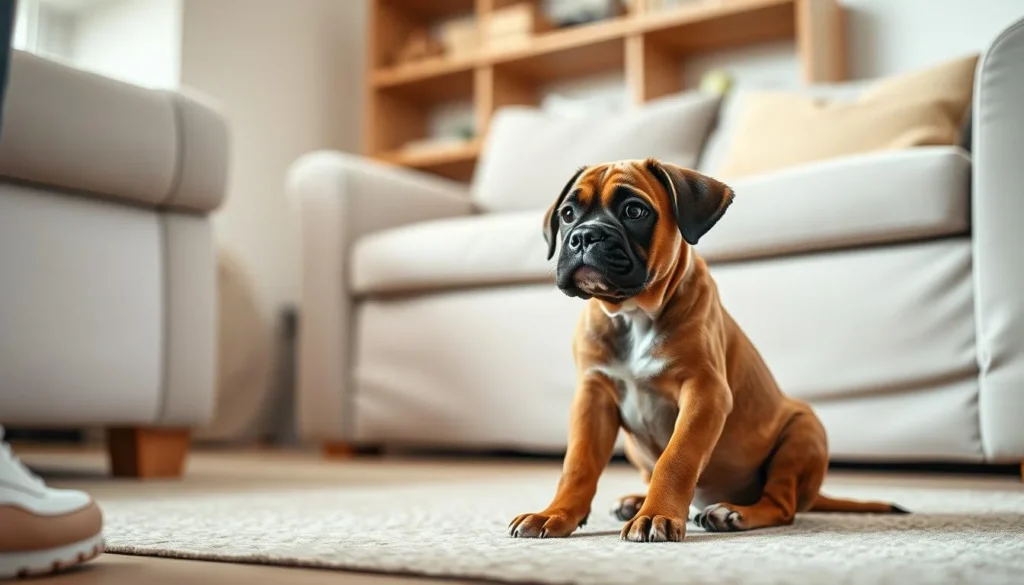
I look for simple signs like sniffing the floor and circling. Squatting, sudden restlessness, whining, and scratching at the crate or door also mean it's time to go. These are common puppy signals.
I quickly redirect my pup when I see these signs. For small pups, I pick them up and take them outside. For larger ones, I clip on a leash and guide them. If they start indoors, I gently interrupt and reward them outside.
Limiting access inside the house helps prevent accidents. I use baby gates, short leashes, or tethering to keep my puppy safe. I wait until they show consistent progress before giving them free run of the house.
Crates help me spot patterns and prevent accidents. Puppies often whine or scratch when they need to go. This setup is key in teaching bladder control.
I time potty breaks after play to avoid mishaps. After high-energy play, I take them outside right away. This habit, along with recognizing puppy signals, speeds up learning and builds reliable routines.
Below is a comparison of common signals and my immediate actions. This can help you create an effective plan for your home.
| Signal | What I Do Immediately | Why It Works |
|---|---|---|
| Sniffing and circling | Leash and guide to outdoor potty spot | Redirects focus and gets them to the right surface |
| Squatting or crouching | Pick up small pups or clip leash to move outside fast | Stops indoor elimination and reinforces outdoor habit |
| Sudden restlessness or whining | Interrupt calmly, carry or lead to potty area, reward success | Teaches the pup that signals lead to immediate relief and praise |
| Scratching at crate or door | Open crate, leash, and walk to designated spot | Prevents crate soiling and reinforces that signals mean outside |
| Post-play panting and pacing | Take a short break outside right away | Aligns exercise schedule with elimination needs to prevent accidents |
Indoor Options and When to Use Puppy Pads or Indoor Potties
I consider indoor solutions when going outside is hard. This includes long workdays, bad weather, or small living spaces. Boxers like a clean area, so I think if indoor options will help or hinder outdoor training.
I make a simple checklist to decide. If I'm busy and can't take my dog out often, pads can prevent accidents. But, if I aim for quick outdoor training, I avoid using pads indoors.
Pros and cons of puppy pads for long workdays
Puppy pads offer a reliable spot for young dogs when I'm away. They keep floors clean and prevent messes. However, they can confuse dogs and make them less likely to hold it until outside.
Transitioning from indoor pads to outdoor-only elimination
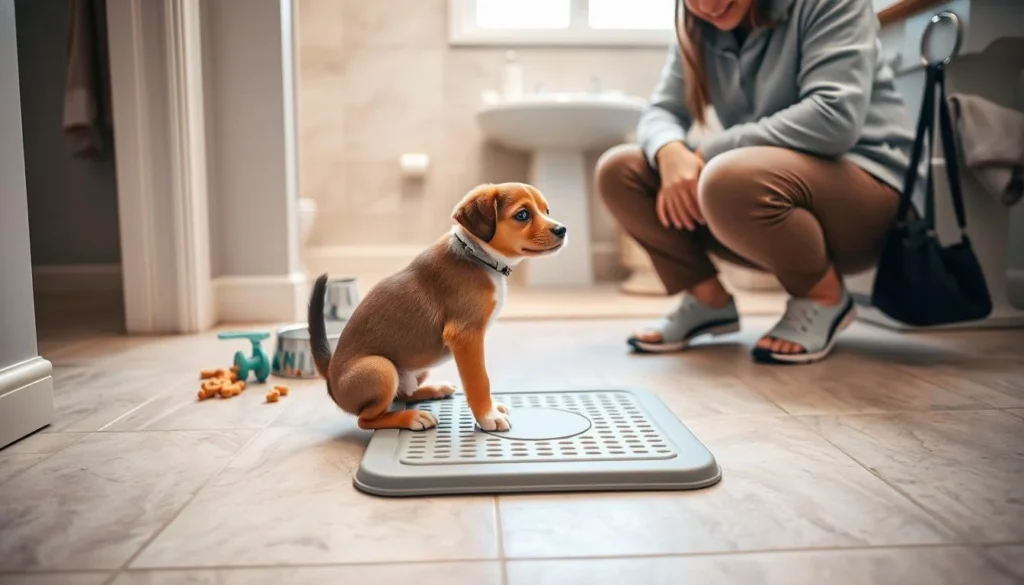
When using pads, I have a clear plan to switch to outdoor training. I move the pad closer to the door over time. Then, I place it outside and reward my dog for going there.
Keeping indoor potty areas clean and odor-free
Keeping the indoor potty clean is key for health and training. I use enzymatic cleaners to remove smells. I also wash and replace synthetic grass pads and liners often. Good air flow and an odor filter help keep the area fresh.
I always aim for consistency. When transitioning to outdoor training, I set a timeline and reward system. This keeps my dog focused on outdoor goals. For boxers that are already tidy, I usually skip indoor pads and push for outdoor success from the start.
Diet, Feeding Schedule, and Digestive Considerations
I keep things simple when housetraining a Boxer puppy. A regular routine helps me link meals to potty breaks. This makes it easier to plan around play, naps, and sleep.
Young Boxers eat three small meals a day. This creates a reliable pattern. Puppies often need to go potty within 5–15 minutes after eating. So, I take them out right after each meal.
Feeding frequency and how it influences potty timing
Smaller, regular meals help avoid big, unpredictable bowel movements. I don't free-feed because it makes accidents more likely. As the pup grows, I switch to two meals a day to match their longer bladder control.
Choosing puppy food that supports regular stools
I pick high-quality puppy food, like Royal Canin Puppy or Hill’s Science Diet Puppy. Good food balances protein, fat, and fiber for firm, regular stools. I measure portions to avoid overfeeding and read labels for guidance.
Monitoring stool quality and when to consult a vet
I check stool daily for consistency, color, and smell. If it's bulky, stinky, loose, or has blood, I watch closely and call my vet. If training is consistent but accidents keep happening, or the puppy seems off, I get vet advice.
I keep water available but watch timing before bedtime. I reduce free water a couple hours before sleep. This helps prevent accidents at night while keeping them hydrated during the day. I also avoid intense exercise right after meals to protect digestion and prevent accidents.
If I think diet is the problem, I try a limited-ingredient or sensitive-stomach formula for a short trial. If signs don't improve, I contact my clinic for tests and diet advice. This way, potty training stays focused on training, not health issues.
Handling Setbacks and Troubleshooting Common Problems
I know hiccups come with potty training a Boxer puppy. Setbacks can be due to stress, irregular routines, or a small bladder. I remain calm, keep routines consistent, and use rewards to speed up progress.
Accidents in the house: cleaning and preventing reoffending
If an accident occurs, I clean it with an enzymatic cleaner immediately. This removes scents that might lead to more accidents. I never scold because puppies don't connect past mistakes with punishment.
I check the schedule: more potty trips after meals, naps, and play can help. I also limit freedom until the puppy shows they can go outside successfully.
Soiling the crate and steps to re-establish trust
When a puppy soils the crate, I first check if the crate is the right size. Too much space can lead to accidents. I shorten freedom, add potty breaks, and start crate training again.
For rescued dogs or those with past confinement issues, I treat crate accidents as a sign to start over. I adjust feeding times and use short, consistent sessions. This helps the dog learn den habits again and offers reliable crate solutions.
When to seek veterinary or professional trainer help
If housetraining doesn't work despite trying everything, I think about health problems. Unusual or persistent elimination could mean infections, stomach issues, or bladder problems. I get a vet to check before changing training methods.
If the vet says there's no health issue and problems continue, I reach out to a certified dog trainer or behaviorist. I look for someone experienced in housetraining. I ask for their advice on when to call a vet trainer for specific behavior plans and guidance.
Incorporating Socialization and Exercise Without Hurting Progress
I start socializing my puppy from the moment they arrive. Safety is my top priority. Early, controlled exposure helps them learn manners and reduces fear.
I avoid high-risk public spots until they're fully vaccinated, usually around 16 weeks. Enrolling in an AKC S.T.A.R. or Family Dog Program that accepts vaccinated pups is a great way to train and socialize safely.
I break play and learning into short, manageable sessions. Boxers need both mental and physical outlets. I follow an exercise potty schedule that alternates play, rest, and bathroom trips.
After a game, I take the puppy straight to the potty area. This helps prevent accidents during play.
Short walks and controlled visits are great for reinforcing outdoor elimination. I keep leash and harness control and reward any successful outdoor potty right away. These supervised play potty breaks teach the puppy where and when to go while building good leash manners.
Growth plates in Boxers remain vulnerable until about 18 months. I keep activities age-appropriate to avoid overexertion while preventing boredom-related accidents. Low-impact games, puzzle toys, and brief runs work best for young pups.
Below I show a compact routine you can adapt. It ties social contacts, play, and potty timing into one easy-to-follow outline that supports both training and healthy development.
| Time Block | Activity | Purpose | Notes |
|---|---|---|---|
| Morning (wake) | Immediate potty, short walk, social greeting | Establish outdoor elimination, calm social exposure | Use leash and harness; reward outdoor success |
| Mid-morning | Gentle play or training class | Mental stimulation, controlled socialization | Keep sessions 10–15 minutes for young pups |
| Noon | Potty break, brief supervised play | Reinforce exercise potty schedule | Take puppy to same potty spot each time |
| Afternoon | Short walk, exposure to calm people or dogs | Safe socialization and outdoor elimination | Choose low-traffic areas until vaccinated |
| Evening | Play, training, then final potty | Wind-down routine, reduce night accidents | Include supervised play potty breaks after games |
| Overnight | Crate rest with brief potty if needed | Support bladder control and crate trust | Limit nighttime disturbances for older puppies |
When I introduce new people or vaccinated dogs, I keep meetings calm and short. I let the puppy approach on its own terms and reward calm behavior. These small, frequent exposures mesh with potty training goals and help a Boxer become a confident companion without backsliding on house manners.
Essential Supplies and Setup for Fast, Efficient Training
I've found the right gear to speed up house training with my Boxer. A clear puppy training supplies checklist helps keep things consistent. This reduces accidents and makes training sessions predictable for your pup.
Crate, harness, leash, treats, and cleaning supplies checklist
I use a crate with an adjustable partition to fit my growing dog. A snug harness, a 2-meter adjustable training leash, and a soft collar with ID tags make outings easier. I also carry a treat pouch for rewards.
For outings, I pack small, high-value treats, two identical toys, chew toys, and a non-slip travel mat or Vetbed for comfort. I also have enzymatic cleaner, stain remover, paper towels, and odor-control spray for accidents.
How to set up a reliable outdoor potty spot and markers
I choose one spot in the yard and mark it with a visible marker, like a small flag or potted plant. Using the same cue word each time helps build a fast association.
Keep the area clean and easy to reach. If needed, use puppy pads or a trained indoor potty system during long workdays. This helps maintain the outdoor potty spot setup.
Using apps, timers, or helpers to maintain the schedule
I use training apps and timers to keep breaks consistent. Set phone reminders, share a calendar with a spouse, or use a dog-walker service for long shifts.
Apps like Zigzag-style trainers offer structured plans and help with troubleshooting. For extra help, arrange a neighbor or a trusted sitter to follow your routine.
| Item | Purpose | Recommendation |
|---|---|---|
| Crate with partition | Safe den space and bladder control aid | Size-adjustable crate, Vetbed for comfort |
| Harness + 2m training leash | Control and gentle guidance during outings | Well-fitting harness, adjustable leash |
| Treat pouch & high-value treats | Immediate rewards for correct potty behavior | Small, soft treats that the pup eats quickly |
| Cleaning kit | Remove stains and odor to prevent repeat marking | Enzymatic cleaner, stain remover, paper towels |
| Outdoor marker | Visual cue for consistent potty location | Small flag, potted plant, or distinct surface |
| Puppy pads / indoor potty | Temporary solution for long absences | Match pads to transition plan toward outdoor only |
| Apps, timers, shared calendar | Keep schedule steady, especially for working owners | Use training apps and phone reminders; consider a walker |
Conclusion
I've learned that crate training, a clear schedule, and short, rewarding sessions work best. Boxers are eager to learn and quick to pick up new habits. Using timed outings after meals, play, and naps helps a lot.
Before getting a puppy, I plan out feeding and potty times. I also get the right tools: a crate, cleaning supplies, and treats. These steps help avoid accidents and make training easier for everyone.
Training should be fun, short, and consistent to keep things exciting. If training slows down, I check for health issues and seek advice from vets or trainers. With effort and the right techniques, my Boxer learns quickly and develops good habits.