
I remember the first time a neighbor asked for help with a fearful Labrador. I felt both nervous and thrilled. That moment showed me that loving dogs is just the beginning if you want to train them. Real progress comes from learning, practicing, and facing tough behavior problems with owners.

This article offers step-by-step advice on starting a dog training career in the United States. I'll guide you from training your own dog to getting apprenticeships, taking courses, earning certifications, and starting your own business. You'll learn the skills needed to handle a reactive dog or deal with separation anxiety, which go beyond just owning a pet.
I've used resources from the Certification Council for Professional Dog Trainers, the Association of Professional Dog Trainers, and Karen Pryor Academy. If you dream of becoming a dog trainer or turning your hobby into a career, I'll show you the way. You'll learn about the importance of hands-on experience, formal education, and focusing on your clients.
Key Takeaways
- Becoming a professional dog trainer requires more than owning one pet; it needs deliberate skill-building.
- Start with your own dog, then expand to varied dogs through volunteering and apprenticeships.
- Formal courses and certifications add credibility and deepen your knowledge of learning theory.
- Expect a mix of rewarding moments and challenging behavior cases that build experience.
- This guide covers practical steps from early practice to business startup in the U.S.
why I chose dog training as a career and what to expect
I chose dog training because I love dogs. I wanted a job that combines animal care with science. My interest in behavior science and helping owners solve problems led me to this career.
My typical day includes client work, lesson planning, and learning. I start with consultations and then move on to private sessions or classes. I also update records and set goals for follow-up. Sometimes, I teach dog behavior classes at a community center or run enrichment sessions at a shelter.
Personal motivation and realistic job overview
I wanted a job with meaningful results. I enjoy the small wins, like a dog learning to sit calmly. The field attracts both career changers and lifelong animal lovers. Expect irregular hours, weekend classes, and steady communication with clients.
Rewarding aspects versus stressful challenges
The rewards are clear. You work with dogs daily and improve relationships. You see progress unfold. Some cases are emotionally powerful, like helping a rescued dog trust humans again.
The stress is real when working with reactive or anxious dogs. Client compliance can be low, and outcomes can be slow. Nothing is guaranteed.
Types of work: private lessons, group classes, shelter training, sports, and behavior consulting
Private lessons focus on one-on-one behavior work. They offer higher hourly rates and deep problem-solving. Group classes, like puppy socialization and basic obedience, build community and steady income.
Dog behavior classes attract owners facing specific issues. Shelter work focuses on triage and enrichment to boost adoptability. Dog sports and therapy training require specialized skills and consistency. Behavior consulting offers in-depth modification plans and long-term follow-up.
Clients contact trainers when problems arise. Mastering technical skills and client management is key. I keep growing through workshops, case reviews, and practice. This balance helps me stay effective and resilient in a demanding but rewarding career.
how to get into dog training
I teach people how to move from hobbyist to professional dog trainer. It starts with focused practice, varied exposure, and feedback. I share three steps you can start today.
start by training your own dog and building core skills
Begin by training your own dog. Focus on timing, reward placement, and clear cues. Move beyond basic commands like sits and downs.
Practice stay at distance and under distractions. A goal I used was the AKC Canine Good Citizen (CGC). It provides measurable milestones and shows your handling gaps.
Joining a dog sport like agility or rally also helps. It sharpens your reinforcement rate and timing.
gain hands-on experience with a variety of dogs and behaviors
Training one dog limits your learning. Different dogs with various temperaments, ages, and behaviors are essential. I worked with dogs with fear, resource guarding, and high drive to improve my skills.
Deliberate practice involves repeating small tasks until they're reliable. I logged my sessions and tracked changes. This helped me see patterns and adjust my methods.
apprentice with experienced trainers and assist in real client sessions
I asked local trainers if I could apprentice with them. Assisting during lessons lets you observe client communication and get real-time feedback.
As an assistant, you see more dogs and varied cases. You learn to explain technical ideas simply to owners. I treated each session as a lesson in technique and teaching.
| Step | Action | What you learn |
|---|---|---|
| 1 | Start by training your own dog toward CGC and a sport | Timing, reward placement, consistency, measurable goals |
| 2 | Work with multiple dogs: shelters, friends, clients | Adaptation to temperament, troubleshooting problem behaviors |
| 3 | Apprentice with experienced trainers | Client communication, lesson structure, supervised feedback |
building foundational knowledge with dog training courses
I started by looking at different types of dog training courses before spending any money. I decided between online and in-person courses. This choice affected how quickly I learned, who I trained with, and the cost of travel.
Online courses offered me flexibility and access to top instructors from anywhere. I could learn at my own pace, watch videos again, and take quizzes whenever it was convenient for me.
In-person classes provided hands-on feedback that screens can't offer. At places like Karen Pryor Academy, I learned through group labs, live demos, and supervised practice. I planned for travel and simple lodging for week-long sessions.
To make a choice, I weighed what each format offered and what I needed. Online courses were great for quick foundational knowledge. But for polishing handling or real client sessions, in-person workshops were worth the cost.
I focused on essential science and practical skills in my top recommended courses. I learned about learning theory, operant conditioning, and classical conditioning. I also studied timing, reinforcement schedules, and how to modify behavior.
I added ethology and canine body language to avoid misunderstandings during sessions. I learned practical handling, safe management, and how to use video feedback effectively.
When choosing providers, I looked for a scientific basis and clear access to instructors. Karen Pryor Academy was a standout for its foundation-to-professional tracks and specialty modules like shelter training and therapy dog team prep.
I checked resources from the Certification Council for Professional Dog Trainers and chose programs vetted by vets and behaviorists. I tested demos, compared foundation versus comprehensive tracks, and chose courses with instructor interaction and measurable exercises.
Practical tips for choosing: try course previews, ask about video review, and confirm instructor hours. Pick courses that match your skill level and offer clear steps to professional work.
earning certifications and joining professional organizations
I suggest getting formal credentials and joining groups early in your career. They help you learn in a structured way and set clear goals. They also guide you as you grow and build a network for ongoing learning.

The Certified Professional Dog Trainer – Knowledge Assessed (CPDT-KA) needs hands-on experience. I worked 300 hours over three years, kept client logs, and studied for the exam. The exam tests your knowledge in learning theory, behavior, and ethics.
Membership benefits I use
Being part of the Association of Professional Dog Trainers and the Certification Council for Professional Dog Trainers helped me. I got access to learning resources and teaching tools. These memberships opened up workshops, mentor programs, and listings that brought in more clients.
Why certification matters to clients
Many clients ask if I'm certified. I tell them it shows I know my stuff and follow ethics. Even though it's not required, it builds trust. Being part of the Association of Professional Dog Trainers also makes clients more confident in my skills.
Actionable steps you can take
- Start tracking billable training hours and session notes for documentation.
- Gather client consent forms and case summaries to support applications.
- Study core topics: operant conditioning, classical conditioning, learning theory, and ethics.
- Plan a realistic exam timeline and register once requirements are met.
- Join the Association of Professional Dog Trainers or similar bodies for education and visibility.
| Item | Why it helps | My tip |
|---|---|---|
| CPDT-KA | Proves knowledge with an objective exam and experience threshold | Log 300+ hours with dates, client summaries, and measurable outcomes |
| Association of Professional Dog Trainers | Offers CEUs, networking, and trainer directory listings | Attend local meetings and list services in the trainer locator |
| Certification Council resources | Provides exam outlines, ethics guidance, and study materials | Use their topic list to create a focused study plan |
apprenticeships, volunteering, and hands-on experience
I learned the most by being around dogs. Apprenticeships and volunteering let me watch and learn. I found that a mix of guidance and practice is key to skill-building.
How to find an apprenticeship or assistant position
I started by reaching out to local trainers. I offered to help in exchange for mentorship. I used directories from groups like the Association of Professional Dog Trainers to find mentors.
I also attended seminars and joined local clubs. I sent a note showing my willingness to help and learn.
Working with rescues and shelters to broaden experience
I volunteered at nearby shelters to work with different dogs. Shelters need help with training and enrichment programs. These programs help reduce stress and improve adoption chances.
My volunteer work taught me about safe handling and simple enrichment. It showed me how to quickly engage dogs.
Practicing with friends, family, and community clients
I offered free or low-cost sessions to neighbors. This helped me practice and improve my teaching. I tested my demos and learned from feedback.
Practical checklist and documentation
| Action | Why it matters | How I tracked it |
|---|---|---|
| Contact local trainers | Find mentors who teach real client work | Logged emails, dates, and outcomes in a notes file |
| Join trainer directories | Access vetted apprenticeship opportunities | Saved profiles and contact dates for follow-up |
| Volunteer at shelters | Gain exposure to varied behaviors and enrichment | Recorded shift hours and case notes for certification |
| Offer community sessions | Practice communication and lesson structure | Collected client feedback and before/after videos |
| Document hours | Meet certification requirements and show experience | Maintained a running log with dates and tasks |
Being proactive changed my career path. I treated every hour and shift as a learning opportunity. This mindset helped me grow faster than I expected.
learning to train people, not just dogs
I spend more time teaching owners than shaping canine behavior. Good trainers learn to train people to train dogs. Clear client communication turns technical methods into daily habits that owners can follow.
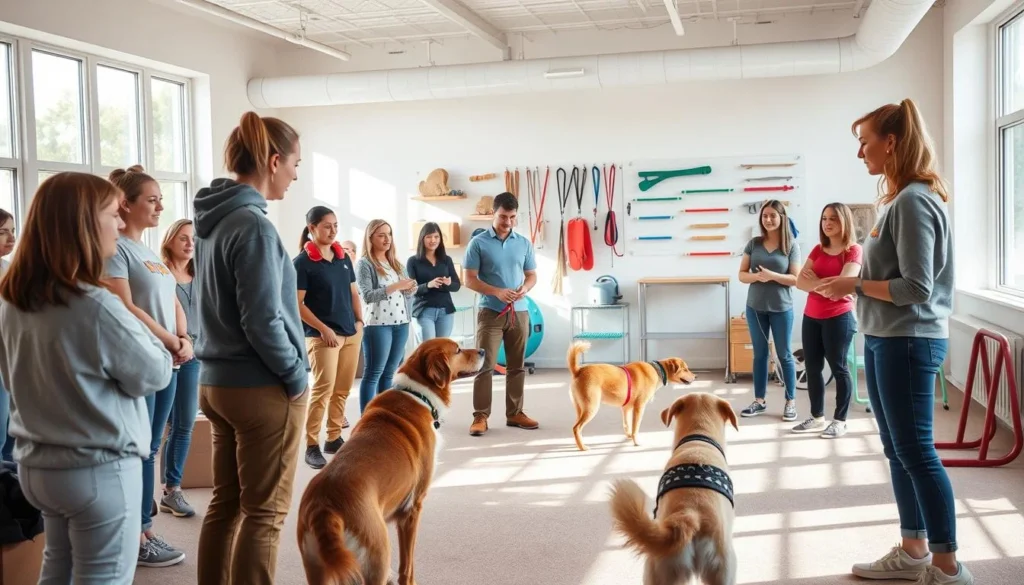
I start sessions with a simple assessment and clear explanation. Short demos show the concept in action. I use empathy and active listening to learn what each owner can do that week.
I rely on practical teaching methods that work in real life. I break tasks into steps, show a live demo, then guide the owner while their dog practices. This mix of demonstration and hands-on coaching makes dog training lessons stick.
Setting realistic goals keeps clients engaged. I outline timelines and explain factors like dog history and environment. Small, measurable milestones and praise for owner progress help motivation and follow-through.
Homework must fit each owner's schedule and skill level. I write simple, specific exercises and ask owners to record short videos when possible. Follow-up sessions focus on troubleshooting and adapting the plan.
Good client communication includes documenting progress and keeping expectations reasonable. I teach owners how to notice small wins and how reinforcement shapes both dog and human habits.
Apprenticeships and repeated client sessions helped me refine these soft skills. Training people to train dogs is a learned craft that grows with practice, patience, and clear feedback.
| Lesson Component | What I Do | Owner Takeaway |
|---|---|---|
| Assessment | Quick behavior check, owner interview, goal setting | Clear short-term goals and a baseline to measure |
| Demonstration | Live demo with a calm dog and step-by-step narration | Visual model to copy during practice |
| Guided Practice | Owner performs steps while I coach and adjust | Hands-on experience with real-time feedback |
| Homework | Short, daily tasks tailored to the owner's routine | Simple actions to build consistency and skill |
| Follow-up | Review progress, troubleshoot, update plan | Ongoing support and clear next steps |
specialties and advanced paths in dog training
I help trainers explore advanced areas that deepen their skills and build trust. Each path requires specific abilities, long practice, and careful risk management. I'll outline the main areas to consider and how they shape a career.
behavior modification and working with reactive dogs
I start by assessing each case thoroughly. I look at triggers, thresholds, and medical history. Then, I use methods like systematic desensitization and counterconditioning to change emotional responses over time.
Safety is key; I create plans for households and work with vet behaviorists when needed. Clients need detailed notes, measurable goals, and regular updates. I teach owners how to use timing and markers effectively, reducing incidents and building trust.
dog sports, therapy teams, and competition handling
Dog sports and therapy work are two distinct areas. In dog sports, I focus on timing, handler movement, and course reading. This training sharpens skills and teaches quick decision-making, useful in behavior work.
Therapy dog training emphasizes public access, handler control, and socialization. I prepare teams for visits by practicing in real-world settings. Titles and certifications prove a trainer's competence to clients.
shelter enrichment and working with difficult or fearful dogs
Shelter enrichment boosts adoptability through play, scent work, and confidence-building. I create short, stress-reducing sessions that teach easy skills. This shows potential adopters a dog's strengths.
Working with fearful dogs requires patience and small victories. I build routines to reduce fear and teach resource control. Shelter experience makes trainers more adaptable in private sessions.
I suggest targeted courses, mentorships, and practical experience in each area. Certifications and titles prove a trainer's expertise, helping clients choose wisely.
practical skills: equipment, safety, and canine body language
I teach trainees about the importance of practical skills. These include the right tools, understanding canine body language, and setting up safe spaces. This ensures a safe and effective training environment for both dogs and people.

Essential tools and when to use them responsibly
I recommend a variety of tools for training. These include flat collars, front-clip harnesses, head halters, clickers, treat pouches, long lines, and target sticks. Each tool has a specific purpose, from ID and guidance to recall work.
It's crucial to use these tools responsibly. I advise against punitive devices unless a behaviorist recommends them. Brands like Ruffwear and Premier Gentle Leader offer reliable options when used correctly.
Reading canine body language and preventing bites
Understanding canine body language is key to preventing bites. I teach students to recognize calming signals and signs of tension. These include whale eye, lip licking, and stiff posture.
I also teach de-escalation techniques. This includes pausing, giving distance, using rewards, and changing body posture. For situations where handling is necessary, I show how to muzzle a dog calmly and safely.
Creating safe training environments and handling protocols
Creating safe spaces is essential. This includes controlled areas, secure fencing, and nonslip surfaces. I also emphasize the importance of clear gates and simple routes.
For dogs that are reactive or high-risk, I implement special protocols. This includes separation, graduated distance work, and assistant handlers. I always have an emergency plan and liability insurance in place.
I encourage students to seek out reputable courses and organizations. This way, they can develop practical skills in essential dog training tools, canine body language, and training safety.
building a portfolio and documenting your progress
I keep a compact training portfolio to show how dogs and owners improve under my guidance. A clear digital folder with videos, charts, and short case notes makes it easy for clients to see progress at a glance.
I record training sessions and measurable outcomes. I video lessons, log metrics like frequency, latency, and duration, and update baseline and progress charts. Those records let me point to real change during consultations.
I collect client testimonials and before/after case studies with permission. I ask for short written feedback, a quick video quote, and photos that illustrate change. I anonymize sensitive details when a client prefers privacy.
I use AKC Canine Good Citizen and CGC passes, plus documented dog sport achievements, to strengthen credibility. Titles in obedience, rally, or agility give prospective clients an easy way to compare skill levels.
I organize everything on a simple webpage or PDF that I can share. Each entry lists the problem, methods used, metrics tracked, and the outcome. Certificates and score sheets appear next to videos and testimonials.
Below is a compact example layout I use to present cases and credentials to clients and referral partners.
| Item | What I Include | Why It Matters |
|---|---|---|
| Case File | Baseline data, goals, weekly progress charts, short notes | Shows measurable improvement and the trainer's method |
| Video Clips | Short clips of baseline, mid-training, and final session | Provides undeniable proof of skill change and handling |
| Client Testimonial | Written quote and optional short video, contact permission | Builds trust through social proof and real experiences |
| Certifications | AKC Canine Good Citizen, CGC score sheets, sport titles | Translates credentials into recognizable achievements |
| Performance Metrics | Frequency, latency, duration, and session counts | Offers objective measures clients can understand |
| Summary Snapshot | One-page summary with key wins and next steps | Makes it simple for busy clients to decide |
start a dog training business in the United States
I built my business step by step. This way, I could help dogs and their people while staying solvent. Before taking clients, I checked local rules, set up a simple LLC, and wrote clear contracts.
basic business setup: licensing, insurance, and contracts
Get the right permits for your town. Also, check home-based business rules if you train from home. For public classes, you might need a special permit from parks or facilities.
Protect your work with dog trainer insurance. I carry general and professional liability insurance. This way, a single incident won't sink my practice. Keep vaccine and waiver policies current and have clients sign them before sessions begin.
Create contracts that are easy to read. I include session scope, refund policy, payment methods, and a behavior risk clause. Clear terms reduce disputes and set professional expectations.
pricing services, packages, and class formats
I price by value and local market. Typical revenue streams include one-off private lessons, multi-session packages, group classes, board-and-train, and online workshops.
Use packages to lock in ongoing work and predictable income. For example, offer a three-session starter pack, a six-week group course, or a premium board-and-train. Compare nearby trainers to set competitive rates while reflecting your credentials and results.
When pricing dog training services, factor in travel time, facility rental, and prep work. Offer discounts for prepayment or referrals to fill slow spots in your calendar.
marketing strategies: website, local listings, social proof, and trainer locator databases
Build a clean website with clear calls to action, pricing tiers, and booking options. Add a blog post or short videos showing real training progress. This lets prospects see your methods and outcomes.
List your business on Google My Business and local directories. Collect reviews on Google and Facebook. I ask satisfied clients for short testimonials and before/after photos to post with permission.
Join trainer locator databases to expand reach. I am listed in Association of Professional Dog Trainers and Certification Council directories. These platforms, along with AKC and Karen Pryor Academy tools, drive inquiries from serious pet owners.
Start promotions with an intro discount or partner with a local veterinarian, groomer, or pet store to cross-refer clients. Keep branding consistent and highlight specialties so your niche stands out.
continuing education and staying current with science
I keep my skills sharp by making learning a regular habit. I sign up for courses, join groups, and set aside time each week for reading. This helps me use new research in my training and keeps my methods up-to-date.
I go to workshops, online seminars, and in-person events to improve my skills. Short courses help me focus on one skill at a time. Webinars are great for quick learning from experts. I keep track of my credits to show my progress.
ongoing courses, conferences, and webinars
I choose conferences that mix science with practical sessions. Dog training events offer talks from experts, demos, and chances to meet others. I aim for a mix of local and national events to see different views.
trusted resources and research-based training methods
I rely on journals, learning theory books, and advice from groups like the Certification Council for Professional Dog Trainers. I focus on training methods backed by science, like operant and classical conditioning.
how I keep improving: mentorship, peer networks, and professional reading
I have a mentor and meet with a study group often. We discuss new research, practice, and solve problems together. I also read behavior science newsletters and books to stay updated.
Here's a quick look at how I learn and why it's important to me.
| Format | What I gain | When I use it |
|---|---|---|
| Short online courses | Focused skill drills, flexible scheduling, certificates for records | When I need a quick update on a technique or theory |
| Workshops and hands-on labs | Practical application, immediate feedback, peer practice | To refine body mechanics, timing, and real-dog scenarios |
| Dog training conferences | Exposure to new research, diverse methods, professional networking | For big-picture trends and meeting leading trainers and researchers |
| Peer-reviewed journals | Evidence to support or revise methods, deeper theoretical insight | When I evaluate research-based training methods for client programs |
| Mentorship & study groups | Case review, accountability, shared problem solving | Ongoing skill sharpening and specialty development |
Conclusion
I began by practicing with my own dog and then worked with different dogs through apprenticeships and volunteering. I also took courses from places like Karen Pryor Academy. This helped me understand the Certification Council for Professional Dog Trainers requirements for certification.
This mix of hands-on experience and learning shows a clear path into dog training. It's a step-by-step guide for anyone interested.
As I gained more experience, I learned to train both dogs and their owners. I worked towards CPDT-KA eligibility by tracking my hours. I also joined the Association of Professional Dog Trainers and documented my progress with videos and client notes.
These actions helped me build trust and a portfolio of my work. It shows how to become a dog trainer and start a business.
If you dream of starting a dog training business, set achievable goals. Earn CGC titles, find a local apprenticeship, and take one online course. Keep logging your hours, join professional groups, and keep learning.
With consistent effort, you can become a dog trainer and build a reliable business in the United States.