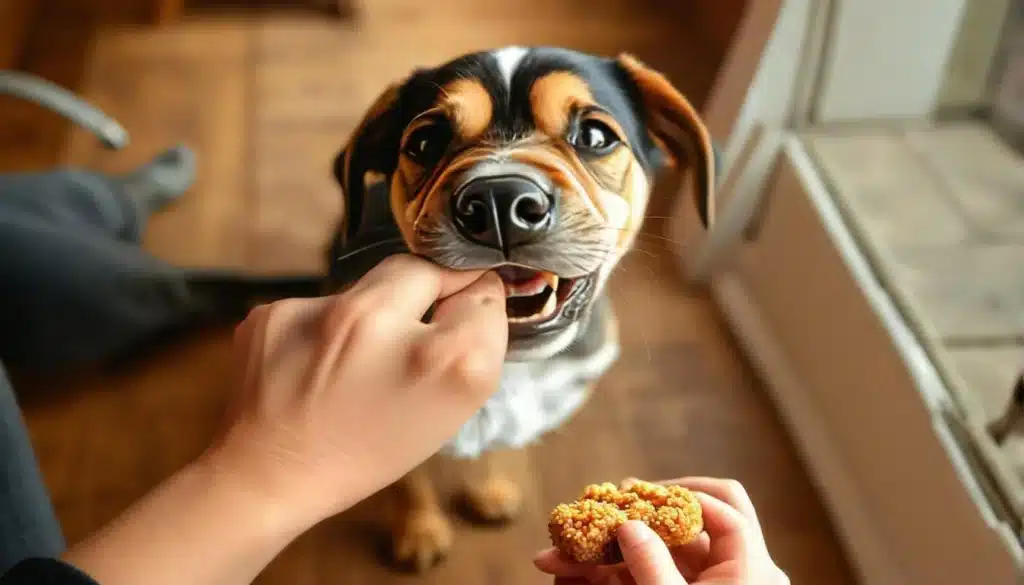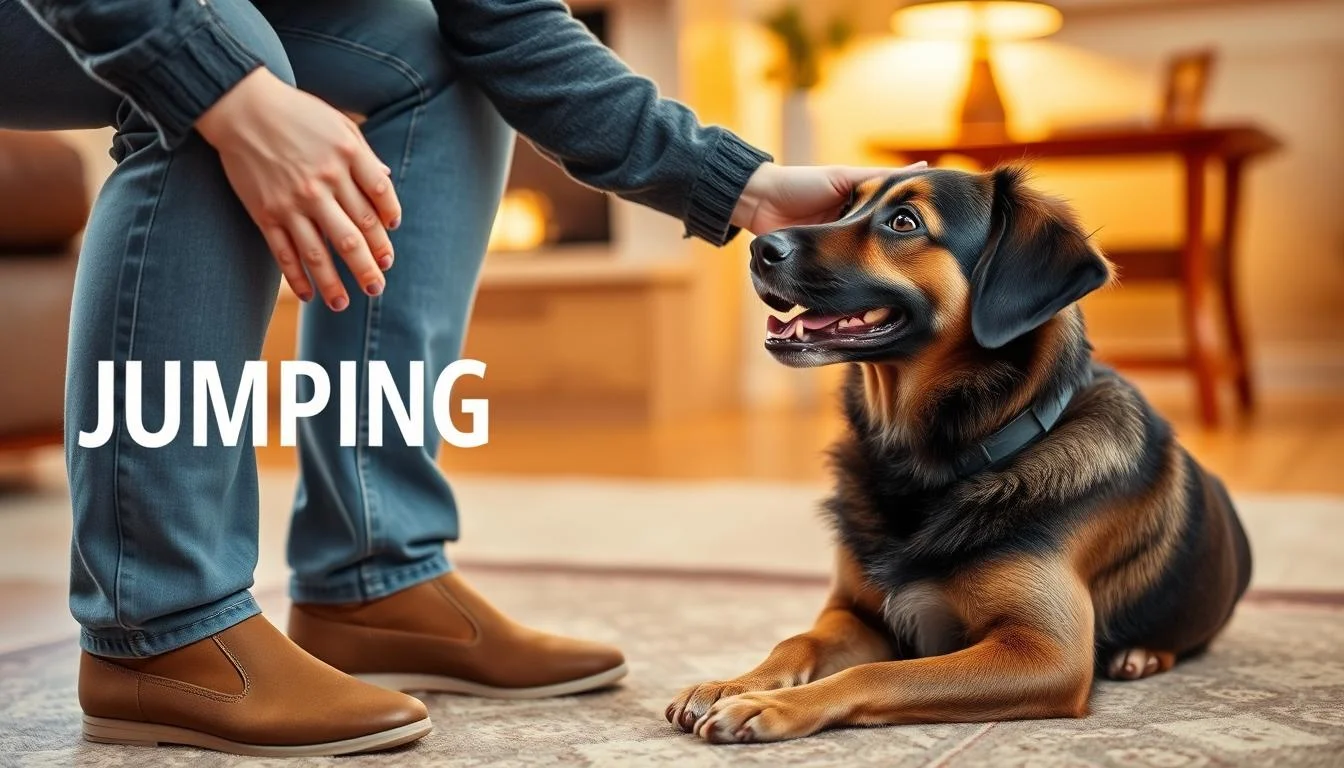
I still remember the first time my Labrador, Milo, barreled toward a visitor and knocked over a vase. I laughed at the puppy antics, then felt my cheeks burn when the guest stumbled. That mix of love and embarrassment is familiar to many of us. If you’ve asked yourself how to get my dog to stop jumping on people, you’re not alone—and you can fix it without harsh methods.
Jumping up is a natural canine greeting that earns attention. Dogs learn quickly that a raised hand, a laugh, or a pet is a reward. The trick is to remove those rewards while giving your dog a clear, safe alternative. In my experience, blending management—like crating or tethering at the door—with direct training produces the fastest, most lasting change.
In this article I’ll walk through practical, humane steps for dog training for jumping behavior. You’ll learn why dogs jump, how unintentional reinforcement keeps it going, and two reliable alternatives—“four on the floor” and teaching a solid sit for greetings. These techniques stop muddy paws, protect kids and seniors, and restore calm to your home.
Key Takeaways
- Jumping is a natural greeting that is reinforced by human attention.
- Stopping jumping requires both management and training at the same time.
- Teach a replacement behavior like four on the floor or sit to greet guests politely.
- Remove rewards—looking, touching, and talking—so jumping loses its value.
- Consistent responses from everyone in the household speed up progress.
Why dogs jump on people: attention, excitement, and natural greeting behavior
I watch dogs at parks and doorways and see a pattern. They jump up, wag their tails, and get a reaction. This reaction is key. Dogs jump for attention, and it works.
Jumping gets them what they want most: social interaction. If I react, even with a "no," it's seen as play. This makes jumping a learned behavior.
Excitement at the door or seeing a favorite person can make dogs jump. Some jump for food or to get attention. Owners need to address these triggers to stop the jumping.
Jumping can be a way to demand attention. If I call or wave, a dog may jump to get a response. This habit gets stronger with repetition.
The risks of jumping are serious. It can hurt people, especially children and seniors. Large dogs can even knock things over.
Below, I compare why dogs jump, common triggers, and the consequences. This helps you see the links clearly.
| Aspect | What it looks like | Why it matters |
|---|---|---|
| Attention seeking | Paws up when someone looks or speaks | Reinforces jumping; explains persistence |
| Excitement | Door greetings, play arousal, greeting visitors | High energy makes alternatives harder; safety risk |
| Lack of greeting skills | No sit or calm alternative offered | Training gap turns puppy habit into adult problem |
| Consequences | Scratches, bruises, falls, damaged items | Health, legal, and household harmony concerns |
| Prevention focus | Manage triggers and teach replacements | Key to how to get my dog to stop jumping on other people |
Understanding reinforcement: why what you do matters
I explain how simple responses change a dog's behavior. Dogs learn fast when actions bring rewards. For example, paying attention, petting, or talking can turn a polite greeting into a habit of jumping. This makes reinforcement and dog jumping a key topic for anyone asking how to get my dog to stop jumping on people.
How looking, talking, and touching reinforce jumping
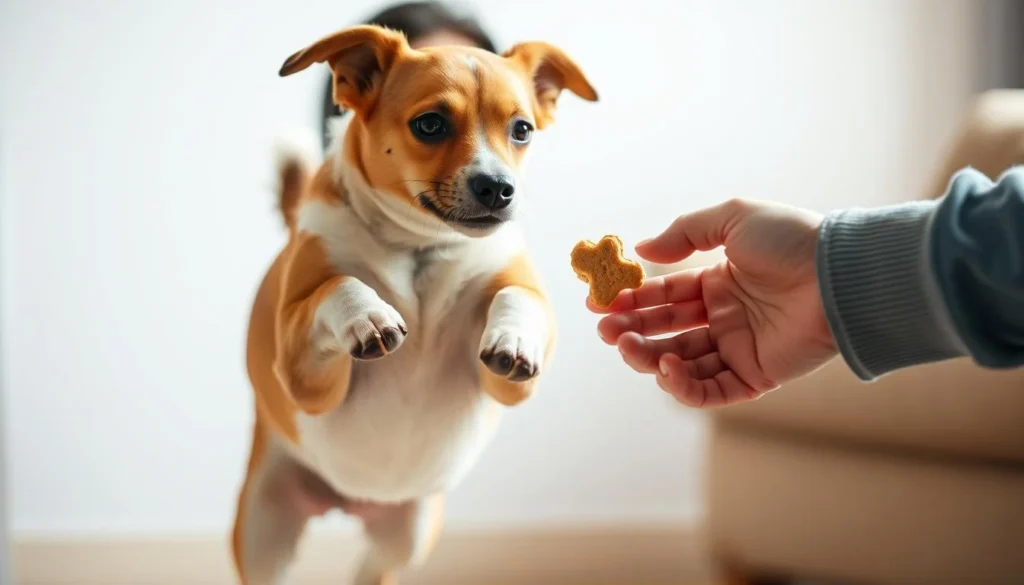
When a dog jumps, many people instinctively look down, laugh, or reach out. These reactions are rewards in the dog's world. I advise removing those rewards until the dog offers a calmer alternative.
I recommend turning your back, folding your arms, and avoiding eye contact when the dog jumps. This is part of how to stop dog jumping reinforcement. The message must be clear: jumping gets no attention.
Extinction bursts and expected temporary worsening
Expect a surge in jumping before it drops. Trainers call this an extinction burst. The dog may jump more, bark, or try different tactics to regain attention.
If you stay consistent and use management tools like a leash or baby gate, the spike usually fades within days to a week. Pair ignoring jumps with teaching a replacement behavior to speed progress in correcting dog jumping habits.
| Action by Owner | Effect | Recommended Response |
|---|---|---|
| Look and talk to the dog | Reinforces jumping | Turn away, remain calm, wait for four paws on the floor |
| Touch or pet when dog leaps | Rewards the jump | Withhold touch, reward only calm alternatives like sit |
| Inconsistent correction by family or guests | Slows progress, causes confusion | Create a household plan and brief guests on rules |
| No management during training | Allows practice of unwanted behavior | Use leash, gate, or crate to prevent rehearsals |
| Teach and reward replacement behavior | Builds durable habit | Mark and treat when dog keeps paws down |
Management techniques to prevent practice opportunities
I keep guests calm and the dog out of the doorway until training sticks. Management means I remove chances for the dog to rehearse jumping. Good planning turns a chaotic arrival into a predictable routine that supports progress.
Crating, confining, and using baby gates
I use a crate or a gated area near the entry when visitors arrive. Crating gives the dog a safe break while I greet people. A baby gate lets the dog see guests without physical access, which helps reduce rehearsal of the unwanted behavior.
I keep treats and favorite toys by the door to redirect energy away from jumping. This setup supports management to prevent dog jumping and keeps training sessions focused.
Leash control and tethering at the door
I sometimes leash and tether the dog to a fixed point well before guests knock. That gives me immediate control and prevents sudden lunges. Asking for a sit while the guest enters turns the leash into a training tool rather than a restraint.
When I ask friends to ignore the dog if it breaks the rule, I help prevent dog from jumping on guests by removing reinforcement. I explain the plan briefly so everyone responds the same way.
Using a mat, crate, or “place” cue
I teach a reliable place cue on a mat or in a crate as a polite default. When guests arrive, I send the dog to place and reward calm behavior. The mat becomes a clear alternative to jumping.
Management to prevent dog jumping pairs with these cues. I continue to use confinement and tethering until the dog learns to stay on the mat without constant prompts.
| Management Option | When to Use | How It Helps |
|---|---|---|
| Crate | High excitement or many visitors | Removes access, gives safe quiet space, prevents practice |
| Baby gate | Low to moderate excitement, visual access okay | Allows supervision while blocking contact, teaches calm watching |
| Leash/tether | Doorway arrivals, walks near strangers | Immediate control, lets handler cue sit or place at entry |
| Mat / place cue | Training doors and greetings | Provides a taught alternative, redirects reward away from doorway |
| Toys & treats at door | To distract and reward away from guests | Shifts focus, prevents reinforcement of jumping |
I repeat management consistently until polite greetings are reliable. These tips for preventing dog from jumping on guests make training faster and safer. Using layered management to prevent dog jumping protects guests and sets the stage for lasting change.
Training an incompatible behavior: teach four on the floor
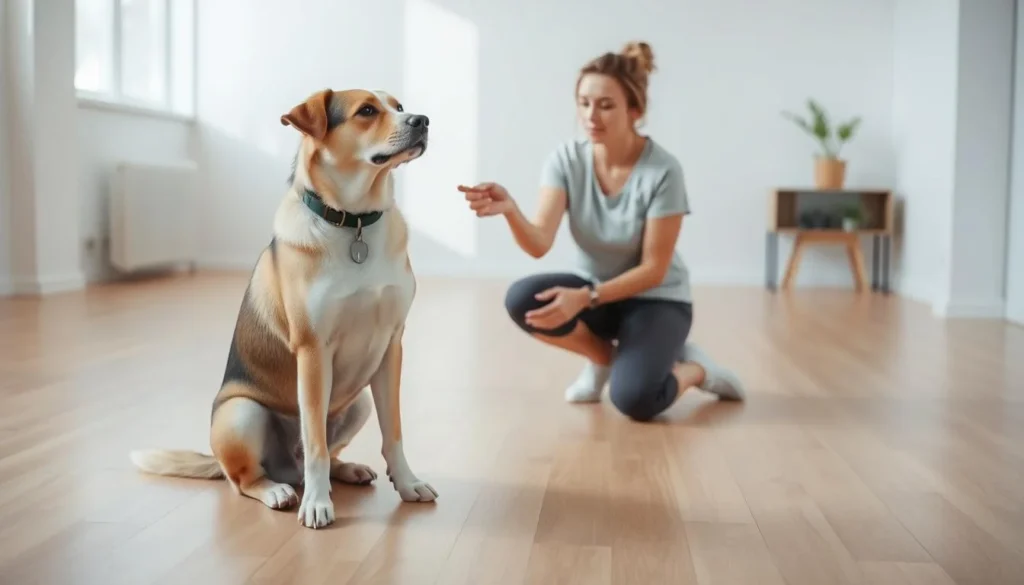
I teach a clear replacement for jumping by rewarding the dog for keeping all paws on the ground. This method uses timing, an eager helper, and fast treats on the floor to shape calm greetings. It works well with other training exercises to discourage dog from jumping on humans.
Preparing the environment and tools
I start in a low-distraction space with a leash, high-value treats, and a helper the dog likes. Sessions are short and I plan for multiple repeats. I position the helper where the dog expects a greeting and clip the leash for control.
Step-by-step four-on-the-floor exercise
I leash the dog and ask my helper to approach slowly. Just before the helper reaches the dog, I toss several treats on the floor. The dog must keep paws down to eat.
While the dog eats, I let the helper gently pet and then step back before the treats run out. I repeat, gradually increasing time between treat tosses until the greeting itself becomes rewarding.
I may begin with a sit cue if the dog already knows sit. If the dog stands, the helper turns and walks away, then returns to try again. This pattern reinforces staying down and teaches proper greeting behavior without confusion.
How to respond if the dog jumps during the exercise
If the dog jumps, I stop the interaction immediately. I do not look at, touch, or talk to the dog. My helper turns away and walks off.
I wait for the dog to calm for a brief moment, then resume with another short, successful trial. This consistent non-reinforcement of jumping is a core part of training exercises to discourage dog from jumping on humans.
I expect short, repeated attempts at the start. If jumping brings no attention, it fades quickly. Over time, I reduce treats and rely on petting and calm greetings. This way, the dog generalizes four on the floor training to real-life visitors and strangers.
Training sit for greetings as an alternative behavior
I teach my dog to sit calmly when guests arrive. This way, they only get attention when they're sitting. It helps avoid the jump-reward cycle that makes dogs jump up on people.
I use short training sessions and simple cues. This helps my dog learn to sit reliably.
Prerequisites: reliable sit under distractions
First, I make sure my dog can sit well in quiet places. They need to stay seated even when I move or call them. If they start to wobble, I go back to basics and practice sit again.
Practicing sit with door approaches and guests
I start by tying my dog to a doorknob or using a leash. I call for a sit from a distance and slowly get closer. If they sit, I reward them with a touch and praise.
If they jump up, I go back and try again. I do this with friends and family once they're good at it. Making sit a part of daily routines helps keep the behavior useful.
I also use training resources to tackle the dog jumping issue. This gives me clear steps to follow.
Gradually increasing excitement and generalizing to others
I increase the excitement level in small steps. I start with louder voices and quicker approaches, then move to strangers. Each step is only added after my dog succeeds at the previous one.
I practice with different people and in public. This helps my dog learn that the sit command works everywhere.
| Stage | Setup | Goal | Typical Reward |
|---|---|---|---|
| Foundation | Quiet room, short leash | Reliable sit on cue | High-value treat and calm praise |
| Door drills | Tether at door, controlled approaches | Hold sit while handler approaches | Attention, petting, intermittent treats |
| Guest practice | Friends perform approach sequence | Generalize sit to unfamiliar people | Social reward and occasional treats |
| Public generalization | Parks, sidewalks, delivery scenarios | Maintain sit with distractions | Variable rewards to sustain behavior |
Walking and public encounters: strategies to prevent jumping on strangers
I walk my dog every day and see how a friendly hello can quickly turn into a jump. On busy paths, I use clear management and short training sessions. This keeps our walks calm and safe.
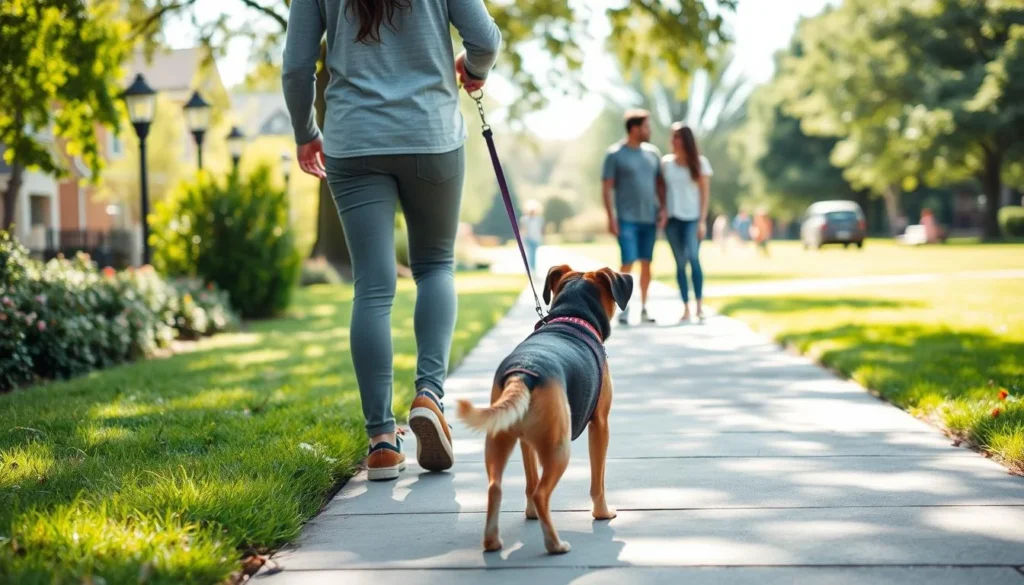
I control greetings. I don't let my dog meet strangers until they sit or lie down. A quick “watch me” cue or a treat refocuses their attention and stops jumping.
Managing greetings on walks
When someone approaches, I step aside and shorten the leash. This stops my dog from lunging. I ask the person to wait while I get my dog to sit.
If my dog sits, I give them a treat from my closed fist. This teaches them to sit instead of jump and shows people how to help.
How to instruct strangers and handlers to help
I tell strangers what to do before they reach us. I ask them to ignore my dog unless it stays calm. If they want to give a treat, it should be after a sit.
Showing them how to do this makes them part of the training. It helps control dog jumping with positive reinforcement.
When to avoid greetings with unfamiliar people
If the passerby looks uncertain or my dog seems too excited, we skip the greeting. I don't force interactions that might scare my dog or reward unwanted jumping.
Limiting greetings with strangers reduces the chance for my dog to jump. It helps them learn to behave politely faster.
Using positive reinforcement and timing to shape polite greetings
I teach dogs what to do instead of punishing them. This way, they learn which actions get them attention and pets. It's a positive method that helps dogs develop good habits.
When a dog does the right thing, I mark it. A click, a "yes," or a gentle touch at the exact moment they sit or stay down is the reward. Timing is key. Quick rewards make the lesson stick faster than praise that comes later.
At first, I use lots of treats to make the lesson clear. When a guest comes and the dog stays seated, I reward them and let them be petted. As time goes on, I use fewer treats but keep the praise and cuddles coming. This helps the dog learn without relying on food alone.
I use the same cues and small steps to teach polite greetings. Before guests meet the dog, I ask for a sit or "four on the floor." I reward small improvements and then make the challenge a bit harder. This way, the dog learns to greet people nicely and reliably.
Consistency and household rules: getting everyone on the same page
Stopping jumping only works if everyone agrees on a plan. I ask family and regular visitors to choose one response. This could be teaching a sit, four on the floor, or ignoring jumps. Being consistent in dog training for jumping behavior helps a lot and keeps the dog from getting confused.
Mixed signals can undo all your hard work. If one person pets the dog for jumping and another ignores it, the dog gets mixed messages. This makes learning harder. Clear rules for preventing dog jumping help avoid these mixed messages and make training easier to follow.
I share a simple training plan with everyone. I tell them to manage the door, ignore jumping, reward sits or four on the floor, and only give attention when the dog is calm. This shared routine helps the dog learn to greet people politely everywhere.
I write down the plan so it’s easy to follow. The rules include who gives treats, when to open the door, and what to do if the dog jumps. Short role-play sessions help family members practice the plan. These actions create reliable rules for preventing dog jumping.
Guests who want to pet the dog can make training harder. I politely ask them to follow the plan: ignore jumping, wait for a sit, then reward. If they insist, I use tools like a crate or leash at the door. These steps protect our training progress and keep everyone safe.
For hosts who face resistance, I share tips for preventing dog from jumping on guests. Give guests a treat to give only when the dog is seated. Ask guests to turn their body away during greetings and avoid eye contact until the dog is calm. Small, consistent actions like these teach the dog that calm behavior is rewarded.
I keep the instructions short, friendly, and practical. When everyone uses the same cues and rewards, training becomes a habit. This habit leads to steady improvement and more polite, safe greetings in my home.
Problem escalation and when to seek professional help
When basic management and training don't work, I look for signs to seek help. If a dog jumps too much and might get hurt, or adds pawing or mouthing, it's a warning. Growling and snapping when ignored are clear red flags, showing the need for professional help.
Signs training alone isn’t working
I watch how often and how hard the dog jumps. If it still jumps a lot after lots of practice, it's a sign of a bigger issue. If family members don't agree on how to handle it, and the dog doesn't learn to greet calmly, it's time to get help.
A sudden increase in demanding behavior or aggression when ignored is a clear sign. This means you should look for professional help for dog jumping.
Types of professionals and resources
I look for experts who use kind methods. Certified Applied Animal Behaviorists and Certified Professional Dog Trainers (CPDT-KA) are great choices. They focus on positive training.
Behavior consultants and veterinary behaviorists help with tough cases. If you need specific help for your dog's jumping, find someone who uses positive methods and explains their plans clearly.
What to prepare before a consultation
I make sure to bring all the important information. I record videos of the dog's jumping, list what triggers it, and note what I've tried so far. I also include the dog's health history and any medications.
Having clear examples helps the professional understand what's needed. They can then decide if training, management changes, or deeper work is required.
| Use Case | Who to Consult | What to Bring |
|---|---|---|
| Persistent jumping despite consistent training | Certified Professional Dog Trainer (CPDT-KA) | Video of incidents, training log, household rules |
| Jumping with escalation to aggression | Veterinary Behaviorist or Certified Applied Animal Behaviorist | Medical records, behavior timeline, videos |
| Household inconsistency or multiple handlers | Reward-based behavior consultant | Notes on who greets and how, video of varied handlers |
| Need for long-term behavior modification plan | Certified trainer with behavior consult experience | Previous training attempts, treat types used, daily routine |
Common mistakes to avoid when correcting jumping behavior
Many owners make simple mistakes that slow progress. It's as crucial to know which habits to stop as it is to teach new ones. Here are three common pitfalls and how to avoid them to improve your efforts in correcting dog jumping mistakes.
Don’t yell, push, or use physical punishment
Yelling and pushing might seem like quick fixes, but they can actually make things worse. They can increase the dog's excitement or teach them to be afraid. Instead, avoid punishing your dog for jumping because any strong reaction can give them attention or make the problem worse.
Physical corrections can also damage trust and make training more challenging.
Don’t rely on verbal “no jump” without a plan
Telling your dog “no jump” without a plan can give them attention without clear guidance. I suggest avoiding this method because verbal corrections alone can actually reinforce the behavior you want to stop. Create a plan that pairs a cue like “sit” with rewards so your words have meaning.
Avoid inconsistent rewarding from visitors or family
One forgiving guest can undo all your hard work. Letting small dogs or puppies jump can encourage the behavior. I urge everyone in the household to follow the no-look/no-touch/no-talk rule and reward the alternative behavior right away. Consistent responses help avoid making correcting dog jumping mistakes a constant task.
Conclusion
Stopping a dog from jumping on people is simple. First, remove the things that make them jump. Then, manage how often they practice jumping. Teach them a new way to greet, like sitting or lying down.
Using crates, gates, and leashes helps you control the situation. Quick rewards for the new behavior help them learn fast.
When you start ignoring the old behavior, expect a brief increase in jumping. This is normal and will pass if everyone is consistent. Quiet homecomings and asking visitors to follow the plan help the dog learn to greet politely.
If you hit a roadblock or have other concerns, look for training resources. A certified, reward-based trainer or behaviorist can help. With patience, clear rules, and the right tools, you can teach your dog to greet properly.