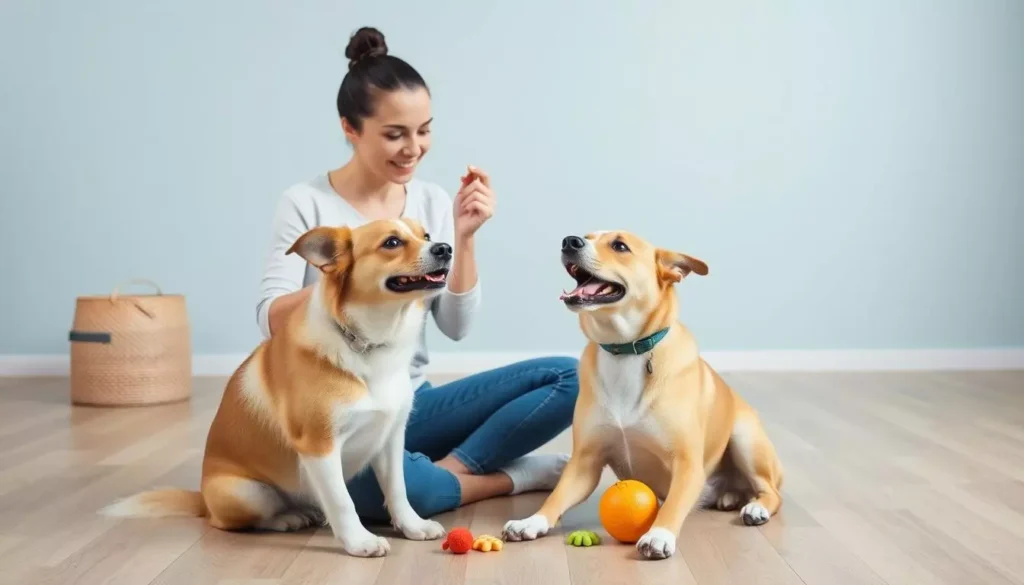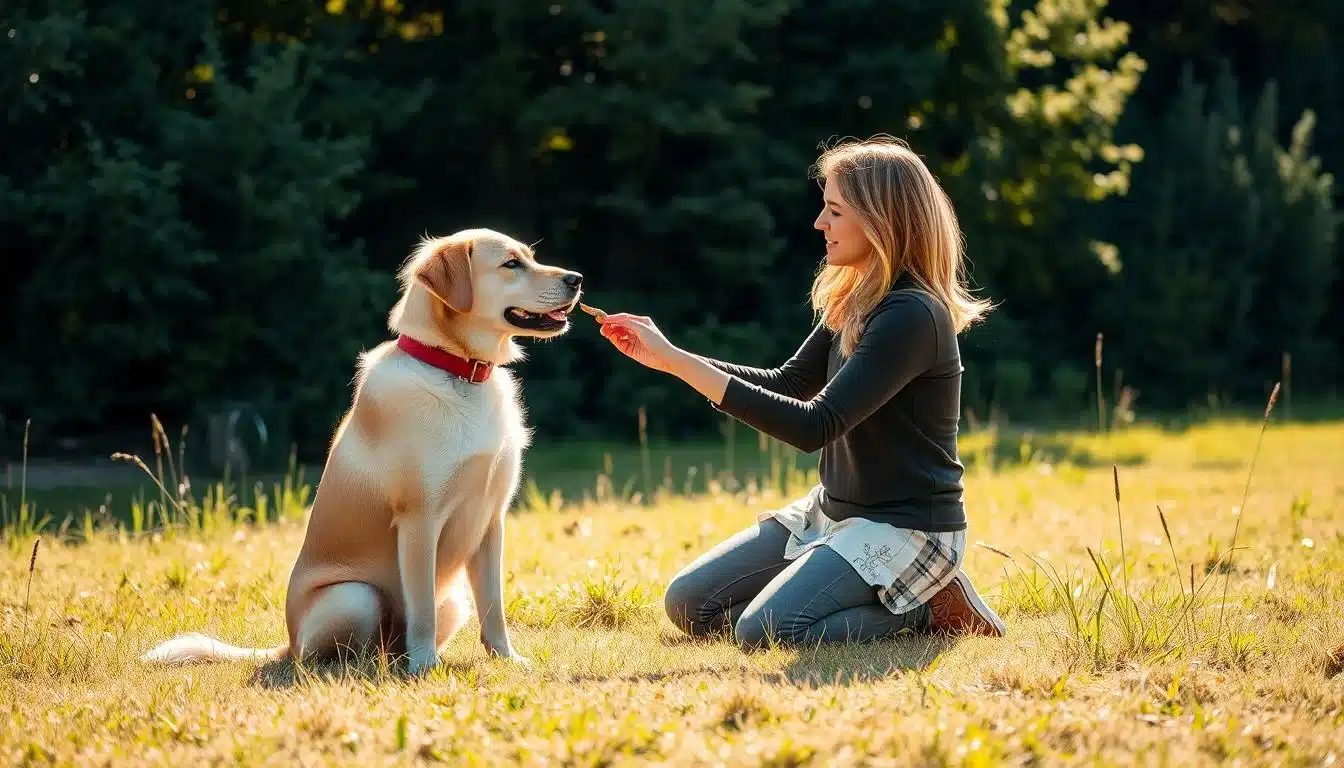
When I brought home my golden retriever, I thought long training sessions would solve all issues. But after a long, tough hour, we both needed a break. I learned that shorter sessions are much better for progress.
The American Kennel Club agrees. They say short sessions are better than long ones. Most dogs do well with three to five short sessions a day, each lasting five to ten minutes. These short sessions keep dogs focused, reduce stress, and end on a positive note.
Age, breed, and energy level affect how long a training session should be. Puppies need short, frequent sessions. Adults can handle a bit longer, while seniors need gentle training. When picking classes, look for qualified trainers, small class sizes, and positive reinforcement.
Key Takeaways
- Short sessions (5–10 minutes) repeated 3–5 times daily usually yield the best results.
- Match dog training duration to age: puppies very short, adults moderate, seniors gentle.
- End sessions positively to reinforce behavior and strengthen the bond.
- Choose trainers with credentialed backgrounds and ethical, reward-based approaches.
- Adjust session length for breed energy, health, and emotional readiness.
how long should a dog training session
Most owners wonder how long a dog training session should last. I suggest following the American Kennel Club and professional behaviorists' advice. For most dogs, three short sessions a day, each lasting five to ten minutes, are best.
Puppies need even shorter sessions, under five minutes, repeated often. This keeps them from getting overwhelmed and keeps learning fun. For adult dogs, sessions can be up to ten minutes for more complex tasks.
Session length should change with the dog's development and health. Seniors need gentler, shorter sessions that respect their stamina and any health limits. It's important to consider vaccination status and emotional readiness before starting group classes or social sessions.
I focus on the dog's response rather than the time. If they lose interest or get frustrated, I stop and try again later. Poor training methods or a bad classroom ratio can't be fixed by just changing the session length. A skilled trainer can make even short sessions effective.
In summary, aim for 3–5 short sessions a day for everyday learning. This balance keeps motivation high, speeds up learning, and answers the question of how long a session should be without overdoing it.
Why short, frequent training sessions beat long ones
Short, focused training sessions are often better than long ones for dogs. They make learning faster and more fun for both of us. This method focuses on quality, not just how long you train.
Attention span and canine learning
Dogs, especially puppies, can only focus for short periods. I break training into brief, focused segments to match their natural rhythm. This helps them learn and remember better.
Short sessions prevent dogs from getting overwhelmed. Stopping while they're still engaged keeps learning positive and improves retention.
Reduced stress and better reinforcement
Short training sessions reduce stress for both dogs and trainers. I reward correct behavior immediately to strengthen the connection. Dogs learn best when they see the outcome right away.
Long sessions can make dogs tense and less responsive. I prefer short sessions to keep training positive and effective.
Integrating training into daily life
I incorporate short training sessions into daily routines like walks and playtime. This makes training realistic and consistent without needing a lot of time. Training in different settings helps solidify skills and keeps things interesting.
Trainers from well-known programs often give homework and schedules. This supports consistent practice at home. Regular training woven into daily life shows quick results.
How age affects ideal session length
I explain how age impacts training needs. This helps you figure out the right session length for each life stage. Age influences attention, stamina, and what to expect during training. Read the guides below to match session length to your dog's abilities.
Puppies: prime learning window
Puppies learn fast but get tired quickly. For puppy training, aim for under five minutes per try. Repeat three to five times a day. Start with basic cues around 7–8 weeks. Keep lessons fun and reward-based to build trust and social skills.
Adolescents and adults
Teenage dogs and adults can focus longer. For adult training, plan multiple five- to ten-minute blocks. Or, have a 15-minute session when the dog stays engaged. Use slightly tougher tasks and clear timing to advance skills without frustration.
Seniors: adjust for health and stamina
Seniors need gentle, mentally stimulating work. For senior training, reduce physical challenge and watch for signs of fatigue or pain. One to three short sessions a day often work. Tailor exercises to medical needs and keep rewards high to keep motivation.
Breed and energy level considerations for session length
I adjust session length based on a dog’s breed and energy. When I ask how long should a training session be for a dog, I look at stamina, breathing, and natural drive. A one-size-fits-all minute count rarely works.
Working breeds that were bred for tasks need regular mental work. For Border Collies and German Shepherds, I aim for several short bursts through the day rather than a single long lesson. These working breed training sessions usually run about 8–12 minutes each and focus on problem solving and obedience cues.
Low-energy dogs and brachycephalic breeds require gentler pacing. For Bulldogs and Shih Tzus I keep sessions brief and calm, watching for heavy breathing. Good brachycephalic dog training consists of 5–10 minute sessions two to three times daily, with cool-downs and water breaks between sets.
Size matters less than temperament, but it still guides my plans. Small dogs may concentrate well for brief, frequent drills. Large breeds can handle slightly longer, structured practice if I break activities into focused segments. I tailor breed-specific training duration to each dog’s responses.
When I pick classes or trainers, I look for groups organized by energy and ability. That choice helps match session intensity to needs and keeps dogs engaged without overdoing it.
Key components of an effective 5–10 minute session
I keep short training blocks focused and predictable. When owners ask how long should dog training sessions be, I point to routine, clarity, and reward timing as the pillars. A 5–10 minute dog training session can deliver steady progress if each minute is used with intent.
Preparation saves time and keeps momentum. I gather treats, a favorite toy, and a clicker if I plan to use one. I pick a low-distraction spot so the dog can pay attention. Being ready prevents wasted minutes and sets the tone for productive learning.
Preparation and setting up rewards
I arrange rewards by value. High-value treats go to new or difficult behaviors. Low-value rewards work for warm-ups. I keep them in small pieces so the dog stays motivated without getting full.
I bring a leash for safety when practicing recalls or loose-leash walking. For complex behaviors I write a quick plan: cue, expected response, and reward. This structure answers the question of how long should dog training sessions be by maximizing each short interval.
Clear, consistent cues and timing
I use one word per cue and give it the same tone each time. Clear signals reduce confusion and speed learning. I reward immediately after the desired action so the dog links behavior and outcome.
Timing matters. If I delay, the dog may not connect the reward to the right action. Consistent cues and prompt rewards are core effective short session components that make brief practice powerful.
Varying tasks to keep engagement
I mix easy wins with challenges. A session might include a sit, a short recall, and a one-minute leash walk. This variety keeps the dog interested and builds a range of skills in a single 5–10 minute dog training session.
I end on a reliable command the dog already knows well and reward generously. Closing on success makes the next session easier to start and reinforces positive momentum over time.
| Component | What I do | Why it helps |
|---|---|---|
| Preparation | Gather treats, toy, clicker; choose quiet spot | Prevents delays and keeps session focused |
| Reward setup | Use high-value for hard tasks, small pieces | Keeps motivation high across multiple reps |
| Cues and timing | Single-word cues; immediate reward | Boosts clarity and accelerates learning |
| Task variety | Mix basics, recall, leash manners | Maintains engagement and generalizes skills |
| Session close | Finish with a known command and big reward | Creates a positive memory and good habit |
Designing a daily training routine that works
I create routines that fit into our busy lives and our dogs' needs. A clear daily dog training routine keeps us both on track without getting tired. Short, focused practice sessions throughout the day make learning fun and engaging.
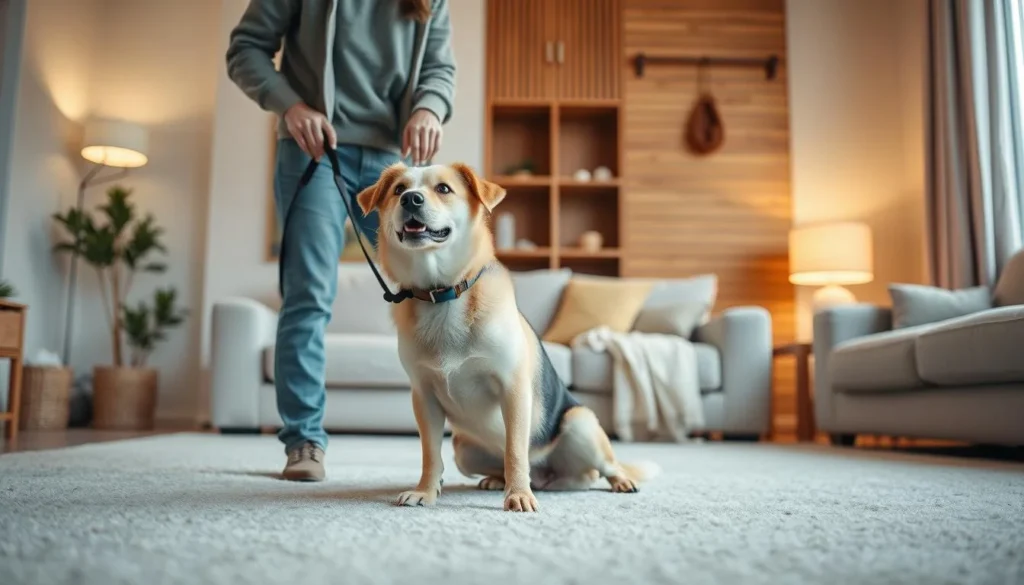
Experts suggest three to five short sessions a day. Think about how long your dog needs for each session. Aim for 5–10 minutes per session. A quick morning session before breakfast covers the basics.
A midday session focuses on leash manners or recall. An evening session of 8–10 minutes is great for tricks or more complex tasks.
I provide a sample training schedule for dogs. This way, owners can follow it and make adjustments as needed.
The weekday plan balances errands, work, and actual practice.
- Morning (5 minutes): sit, down, stay before breakfast.
- Midday (5 minutes): loose-leash walk work or short recall drills.
- Afternoon (3–5 minutes): impulse control games or door greetings.
- Evening (8–10 minutes): enrichment or trick practice with higher value rewards.
Weekends offer more time and variety. I use parks and pet-friendly stores for longer sessions. These outings test skills in different environments.
Weekend practice is focused and purposeful. I avoid long, repetitive sessions. Instead, I mix short bursts with real-world rehearsals for success in various settings.
To track dog training progress, I keep brief notes after each session. I note which cues are reliable, which need more practice, and how long the dog stays focused. This helps me adjust session length and frequency based on progress.
Good group classes from trainers like Victoria Stilwell or local trainers provide homework that fits a daily routine. Small class sizes allow for personalized tasks that can be used at home to track progress and adjust session length.
I adjust timing as the dog improves. When a cue becomes consistent, I combine or reduce sessions. When distractions cause setbacks, I add short, targeted practice. This keeps growth steady and sustainable.
Rewards and corrections: timing and balance within each session
I keep sessions short and clear for reliable results. Think about how long should dog training sessions be. Aim for focused bursts of practice. This helps your dog link actions to outcomes and makes reward-based dog training work best.
I use immediate rewards for new skills. High-value treats like small pieces of cooked chicken or store brands such as Blue Buffalo training treats work well at first. Praise and a quick play break follow the treat. That timing tells the dog which behavior earned the reward.
Corrections in dog training must be minimal, calm, and consistent. I prefer a firm “no” or gentle redirection to another task. Harsh tools like choke chains or prong collars do not fit with ethical, modern methods used by trainers certified through organizations such as the Association of Professional Dog Trainers or the Pet Professional Guild.
Timing matters for both reward and correction. A delay of even a few seconds blurs the connection between action and feedback. I deliver rewards or redirection immediately to keep learning sharp and clear.
Weaning treats is part of long-term success. Once a behavior is reliable, I switch to lower-value snacks or intermittent reinforcement. Verbal praise, petting, and occasional treats maintain the behavior without relying on constant food rewards.
- Start sessions with a high-value reward for new cues.
- Keep corrections brief and never painful.
- Gradually reduce treat frequency while keeping praise strong.
When you design a routine around how long should dog training sessions be, build in these reward and correction rules. Reward-based dog training mixed with fair corrections in dog training and planned weaning treats creates a balanced, humane program. It strengthens bonds and lasting skills.
When to extend or shorten a session
I watch my dog’s body and behavior to know how long to train. I keep sessions flexible so I can answer the question how long should my dog training sessions be with real-time choices. Short bursts work most days, but I will extend dog training session time when the dog stays calm and focused. I shorten a session if I see clear dog stress signs.
I rely on simple cues to decide when to stop or push on.
Signs your dog needs a break
- Loss of focus, repeating the same mistake despite prompts.
- Yawning, sniffing away, or turning their head from the training area.
- Rising excitability, whining, or sudden frustration gestures.
- Stiff body language or avoiding eye contact during drills.
When to lengthen practice
- Reliable responses across multiple short sessions in a day.
- Steady calm engagement during a sequence of skills.
- Training advanced tasks that require endurance or chaining behaviors.
- Clear enthusiasm for a specific game or complex cue.
Adjusting for medical or emotional issues
- Seniors and dogs with arthritis need gentler, shorter sessions tailored to stamina.
- Dogs with separation anxiety or recent trauma may show dog stress signs early; I back off and build trust before pushing longer work.
- If a vet diagnoses a condition, I follow clinical advice and modify duration and intensity.
- I avoid trainers or classes that use fixed, inflexible session lengths that ignore individual needs.
I use a simple table to compare quick decisions I make when I choose to extend or shorten dog training session length.
| Trigger | Action | Why it helps |
|---|---|---|
| Focused, calm responses | Extend dog training session by combining two short blocks | Builds endurance for advanced skills and chains |
| Repetitive mistakes or loss of focus | Shorten dog training session and end on a win | Preserves motivation and prevents frustration |
| Yawning, sniffing away, avoidance | Stop and offer a calm break | Reduces escalation of dog stress signs |
| Medical limits (age, injury) | Shorten session and lower intensity | Protects health and supports safe learning |
| Reliable performance across tasks | Extend session for endurance or real-world practice | Strengthens generalization and confidence |
Choosing the right class or trainer and session structure
Find a program that fits your dog's needs and your learning style. Look for trainers with ABTC membership or Chartered body certification. Read reviews and observe a class before signing up.
Small trainer-to-dog ratios are key. I prefer classes with six dogs or less. The venue should allow for one-on-one work and progressive lessons each week. A clear structure keeps sessions focused and helps with home practice.
Watch for red flags. Avoid programs using e-collars, prong collars, or forced inactivity. The best class motivates both dog and owner, leaving them confident after each session.
Consider board-and-train or intensive options for tough home practice or specific behaviors. Ask about session length, daily routines, and health checks. A good provider offers a gradual transition and support.
Homework is essential. Classes should provide a practice schedule for daily practice. This ensures skills last beyond the classroom.
Grouping by age and ability helps. Puppy-only and different skill levels allow for proper pacing. Make sure trainers explain session time for different ages.
When looking at intensive programs, ask about cost, methods, and post-program support. I want clear answers on session length and measurable goals. If learning is shut out, I leave.
Choose a trainer who helps you create a realistic home routine. Knowing session length and following a plan reinforces lessons and keeps momentum. Enjoy the journey together.
Conclusion
I suggest short, frequent sessions for dog training. Three to five daily sessions of five to ten minutes each work well. This keeps a dog focused and makes positive reinforcement more effective.
This method is great for puppies, busy adults, and most family routines. It limits stress and burnout.
Remember to tailor the training to your dog's age, breed, and health. Puppies need quick bursts, adults can handle slightly longer sessions, and seniors need gentler pacing.
When choosing a class or trainer, look for ethical, qualified professionals. They should have small ratios and clear homework. This makes your at-home practice meaningful and consistent.
Start small, keep sessions upbeat, and track progress. Adapt as needed. This approach makes training short, steady, and tailored. It builds skills, strengthens your bond, and leads to lasting behavior changes.