I remember the first week with my apartment puppy. It was filled with late-night elevator rides and quiet hallway walks. I felt helpless when my small dog couldn't hold it until the next outdoor trip.
Fast, I learned that training a dog in an apartment is unique. It's different from training one in a house with a yard.
In this guide, I'll share practical steps for training your dog in an apartment. We'll cover indoor potty spots, crate training, and schedules. I'll also talk about potty cues, cleaning up accidents, and useful products.
Apartment living comes with its own set of challenges. There's limited outdoor access, elevator and hallway issues, and small bladders in puppies. My aim is to offer real advice to help you succeed without stress. Enjoying life with your dog in the city or complex is possible.
Key Takeaways
- Apartment dog potty training needs different tactics than yard living.
- Designate a reliable indoor potty spot and be consistent.
- Crate training and a tight schedule speed up housebreaking a dog in an apartment.
- Plan transitions from indoor systems to outdoor elimination if you want to.
- Keep enzymatic cleaners and a simple accident kit on hand for quick cleanup.
Understanding the challenges of apartment dog potty training
I live in a mid-rise in New York City and quickly learned about the challenges of apartment living with a dog. Tight schedules, shared hallways, and elevator waits make timing crucial. I plan each trip out carefully, like a mission.
Limited outdoor access and logistics
Long corridors, stairs, and crowded elevators can make a simple potty break a delay. I carry small puppies to prevent accidents until they learn. Building etiquette is key. I coordinate elevators, respect neighbors, and choose less busy times to reduce stress for my dog.
Puppy bladder capacity and age-related expectations
Puppies have small bladders and need to go often. A common rule is a puppy can hold urine about one hour per month of age. So, an 8-week pup can manage two hours. I watch closely after sleep, meals, and play. Frequent, short outings help me stick to house training tips for apartment living.
Health and safety considerations for shared outdoor areas
Young pups may not be fully vaccinated, so I avoid communal dog parks until they're vet-approved. I use a private balcony or indoor potty solutions to keep my puppy safe. When I must use shared spaces, I clean up promptly and follow building rules to protect neighbors and reduce disease risk.
Setting up a designated potty spot in an apartment
I guide you through setting up a reliable indoor potty spot. We look at the pros and cons of different surfaces. Balcony or patio options can also help reduce mess and odor.
Simple placement and consistency tips make training easier for busy owners.
Indoor options: pee pads, artificial turf, and real-grass patches
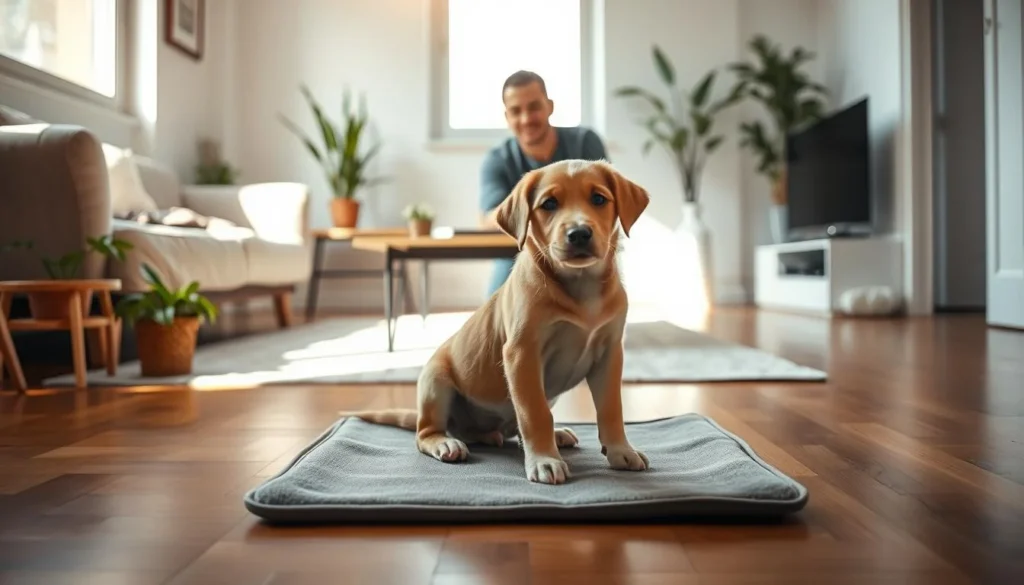
Pee pads are easy to set up and come in disposable or washable types. I prefer pads with scent attractants for puppy training. They help guide small dogs.
Portable pads are great for travel, especially during moves or overnight stays.
Artificial turf offers a reusable surface that looks neat. But, low-quality turf can trap urine and odor. Choose a dense, drainage-friendly model and rinse it regularly with an enzyme cleaner.
Real-grass patches mimic outdoor surfaces, helping dogs transition to yard pottying. Services like Fresh Patch deliver sod swaps to avoid long-term odor and soil buildup. The natural scent of grass helps dogs learn faster.
Balcony or patio solutions
Balconies are great for placing a grass patch or turf outside. This preserves your indoor floors. Use shallow containers with drainage holes to prevent seepage through decking.
For odor control, consider a small waste station with charcoal filters and a deodorizer. PetFusion-style waste bins or compact canisters can also cut smells and reduce neighbor complaints. Place the patch where wind flow and privacy are best for your dog.
Placement strategy and consistency
Place the potty area near an exit if you plan to move outside later. This builds a location link between the door and elimination. Keep pads or patches in one fixed spot rather than moving them around the apartment.
Use a playpen or short leash during training to guide a puppy to the target area. Repeat the same spot after meals, naps, and play sessions. Consistency speeds learning and reduces accidents in other rooms.
| Option | Pros | Cons | Best use |
|---|---|---|---|
| Pee pads (disposable) | Easy cleanup, portable, scent options | Ongoing cost, may encourage indoor-only habits | Short-term training, travel, city apartments |
| Pee pads (washable) | Reusable, eco-friendly, durable | Requires frequent washing, initial cost | Owners wanting low waste solutions |
| Artificial turf | Reusable, neat appearance, sturdy | Can trap odor, needs rinsing and enzyme cleaning | Indoor areas with storage for cleaning supplies |
| Real-grass patches (subscription) | Natural scent, eases outdoor transition, swaps reduce buildup | Subscription cost, requires tray and waste management | Owners planning to move dogs outdoors later |
| Balcony grass/turf | Keeps odors outside, simulates outdoor pottying | Weather exposure, drainage management needed | Small outdoor spaces like balconies and patios |
Crate training as a potty training tool
I use a crate to help housebreak my dog in an apartment. A good crate is like a cozy den. It limits where my dog can go and makes it easier for me to watch them. Many owners find that crate training helps prevent accidents and keeps their floors clean when they're not home.
Why crates help with housebreaking in small spaces
Dogs don't like to soil where they sleep. This makes a crate a great tool for training in small spaces. It helps me catch when my dog needs to go out and take them before they have an accident.
In apartments, getting outside can be hard. A crate stops my dog from getting into bad habits while I deal with elevator waits, bad weather, or busy days. It helps teach a routine that makes potty breaks successful.
Sizing and setup tips for comfort and success
I choose a crate that lets my dog move around comfortably. For puppies, I use a divider to make the space just right as they grow. This keeps them from eliminating in one spot and sleeping in another.
Comfort is key. I feed my dog in the crate, add familiar bedding, and include safe toys. I never use the crate as punishment. These habits make the crate a positive, cozy place for my dog.
Crate schedule and integration with potty breaks
I match crate time with a strict potty schedule. I take my dog out right after they're released, and within a few minutes after eating, drinking, or playing. I follow age-based rules to set realistic expectations.
At night, puppies might sleep longer and hold their bladder. But I still plan for middle-of-the-night potty breaks when needed. For longer times away, I create a puppy zone with pads or a grass patch instead of leaving them in a crate too long.
| Need | Practical Tip | Why it helps |
|---|---|---|
| Right crate size | Choose crate where dog can stand and turn; use divider for growth | Prevents elimination at one end and sleeping at the other |
| Positive association | Feed meals inside, add bedding and safe toys; avoid punishment | Encourages calm, reduces stress-linked accidents |
| Timing | Release then potty within 5–10 minutes; follow age rules | Reinforces correct elimination and teaches routine |
| Long absences | Set up puppy zone with pee pads or grass patch | Prevents over-crating and reduces anxiety while away |
| Apartment logistics | Use crate to limit roaming and simplify supervision | Makes housebreaking a dog in an apartment more manageable |
Creating a consistent potty schedule for apartment living
I guide you through a simple plan for apartment dog potty training. It makes the process predictable and calm. A steady routine helps cut down on accidents and gives your dog clear cues for when to go.
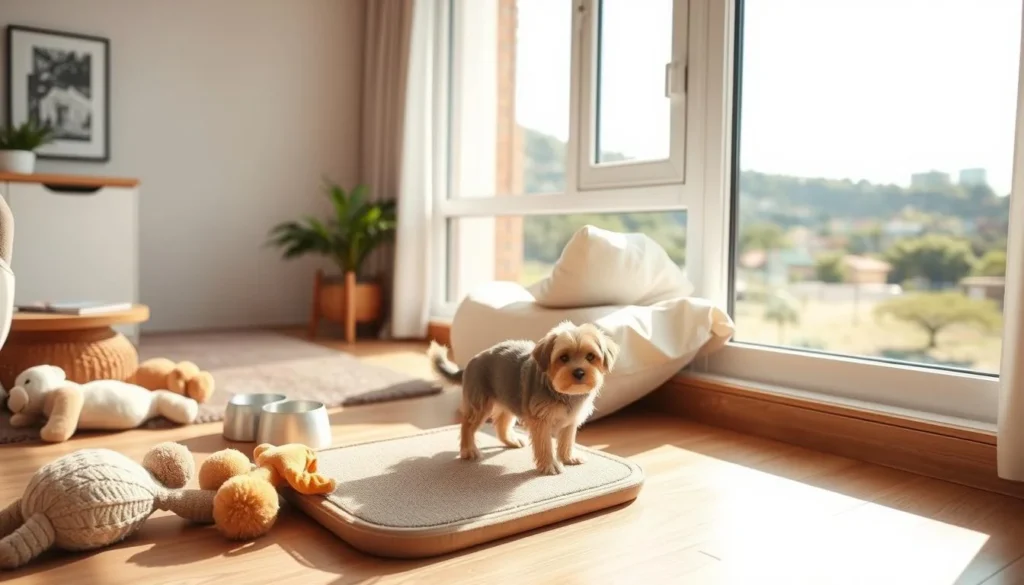
Feeding, drinking, and timing connections
Fixed meal times help shape when your dog needs to go. Offer meals at set times and avoid free-feeding. For young puppies, I split their food into three small meals throughout the day.
Watching water intake is key. Bring your dog to the potty spot after eating, drinking, naps, or play. Most dogs need to go within five to ten minutes after these activities, so I plan breaks accordingly.
Using age-based timing rules
I use age rules to guide my potty schedule for puppies. The "one hour per month old" method is a good starting point. Another way is to divide the dog's age in months by ½ to find the hours between breaks. For example, a three-month-old might handle about 1.5 hours.
These rules are just a starting point. I adjust them based on the individual dog's needs. This includes more frequent trips for small puppies or dogs with health issues.
Tracking and adjusting with a potty log
I keep a simple potty log to track when my dog goes, accidents, and successful trips. A few lines per outing help me spot patterns faster than memory alone.
After a week, I compare the intervals and make adjustments. The log helps me reduce accidents and slowly increase the time between breaks as the dog grows. This method is crucial for effective house training in apartments.
Teaching your dog to use indoor potty systems and transition to outside
I help owners teach their dogs to use indoor potty systems and then move to outdoor pottying. We focus on short, repeatable routines. These routines reduce accidents and build confidence in both dog and owner.
I suggest leash-and-harness guided practice sessions. Lead the dog to the pad or patch, say “Go potty”, and reward immediately after they go. If they don't go, return to the crate or playpen for 15–20 minutes, then try again.
Use an exercise pen or small confinement area to help the dog focus. Short sessions prevent distraction and teach the dog the right spot. Consistency in timing and cues speeds learning.
Surface scent matters when transitioning pads to outside. Dogs trained on real grass patches pick up outdoor cues faster. Move a grass patch gradually closer to the exit, then place it on a balcony or stairwell landing before moving it outdoors.
For dogs trained on disposable pads, the shift is trickier. Place pads progressively nearer the door while introducing a small grass mat near the pad. Run outdoor practice sessions using the same potty cue and reward routine. Gradual pairing of pad, grass, and outside locations helps the dog learn the new target.
Some owners need long-term pads. Small breeds in high-rise buildings, seniors with limited mobility, and dogs with medical needs may benefit from permanent indoor options. If you keep pads long-term, pick one consistent spot, use washable or heavy-duty disposable pads, and clean thoroughly to avoid lingering odors.
Below is a compact comparison to help you choose a path based on breed, living situation, and goals.
| Situation | Best Indoor Option | Transition Ease to Outside | Tips |
|---|---|---|---|
| High-rise small breed | Washable pad or balcony grass patch | Low to moderate | Keep single pad location, short leash-guided sessions, frequent rewards |
| Elderly owner or limited mobility | Durable disposable pads or indoor grass | Low | Prioritize convenience and odor control, use consistent cue and timing |
| Puppy in apartment | Pee pads with supervised practice and crate breaks | Moderate to high with staged moves to grass | Follow age-based timing, move pad toward door, introduce grass before outdoor trials |
| Adult dog used to grass patch | Real-grass patch indoors | High | Gradually relocate patch outdoors, maintain the same potty cue and rewards |
| Medical or recovering dog | Low-entry pad tray or grass patch | Variable | Work with your vet, keep sessions short, use consistent cleaning routines |
Teaching potty cues and reinforcing successful elimination
I'll show you a simple plan for potty cue training. Start with a calm routine and clear signals. Keep sessions short to match your dog's attention span. This makes training easier in an apartment.
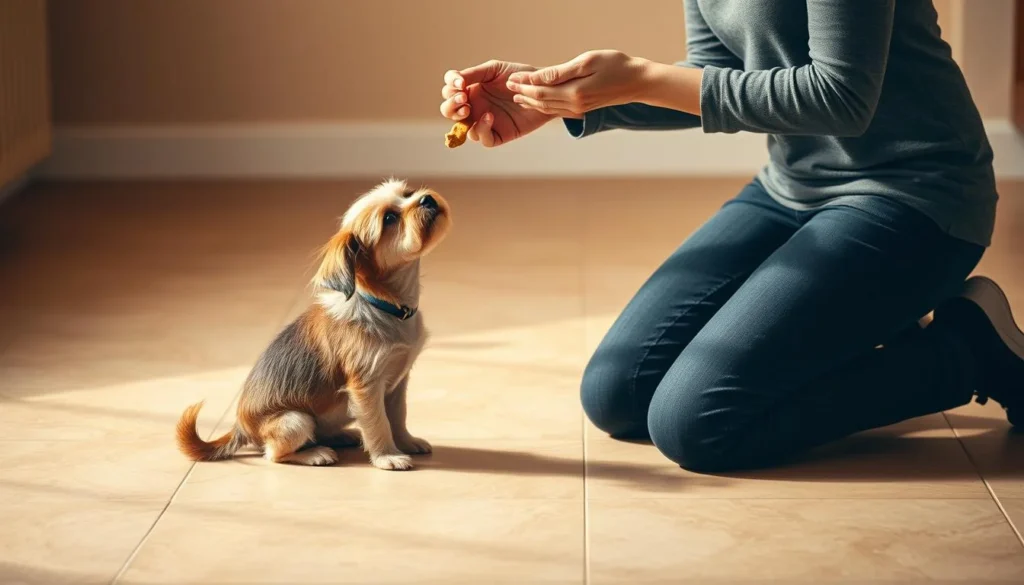
Choose and use a short verbal cue. Pick a brief phrase like "Go potty" or "Do your business." Say it only when your dog is ready to go. Use the same cue everywhere to help your dog learn faster.
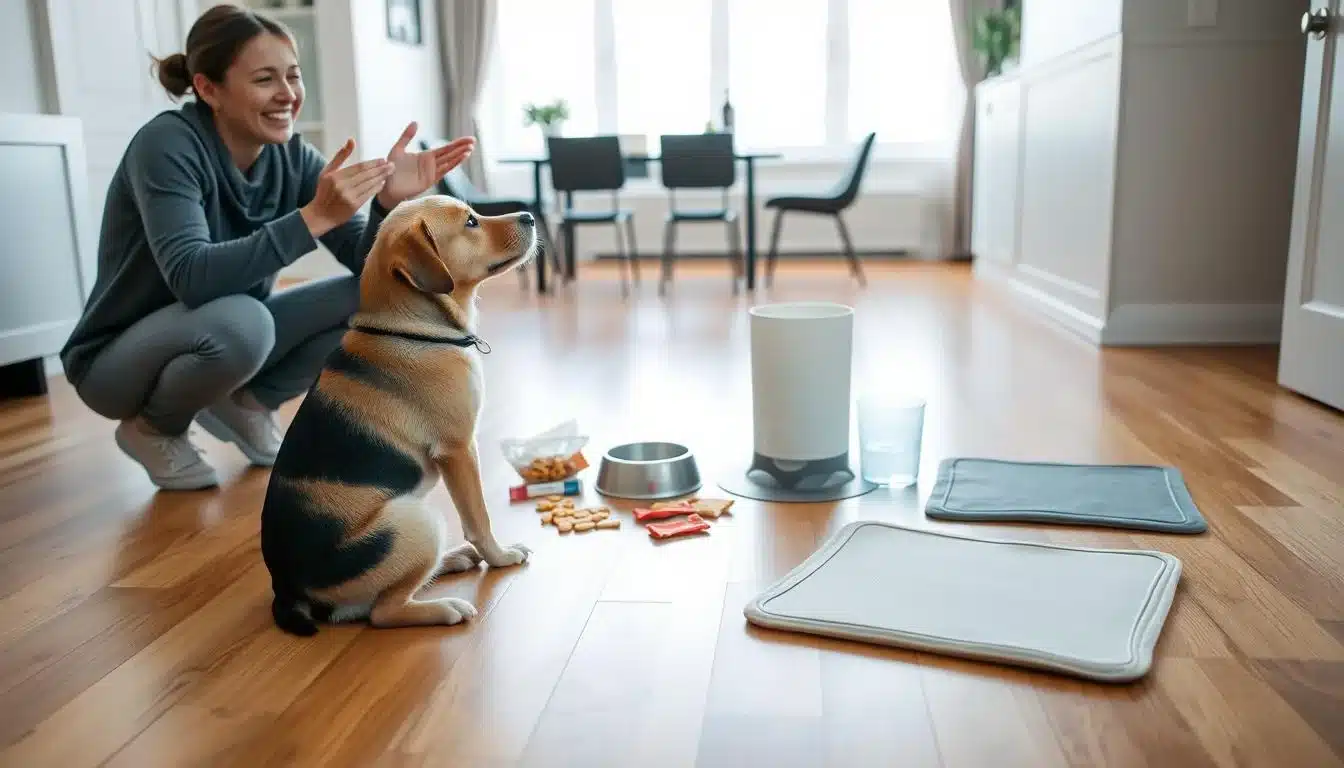
Reward timing matters. Give treats or praise right after they go. Use high-value treats and lots of praise. This helps your dog learn quickly through positive reinforcement.
Use leash or small confinement to focus attempts. Keep your dog on a short leash or in a pen near the potty. This keeps them focused. Practice for 3–5 minutes, then reward and end the session quietly.
Consistency and gradual fading. Start by rewarding every successful attempt. Then, reduce treats over time while keeping praise. Slowly let your dog learn to go on their own. This step-by-step method helps your dog learn to respond to a potty cue.
| Training Step | What I Do | Why It Works |
|---|---|---|
| Pick a cue | Choose a short phrase and use it only at the moment of elimination | Creates a clear association between words and action |
| Immediate reward | Treat or praise given right after the dog finishes | Reinforces the target behavior with positive reinforcement in dog training |
| Focused sessions | Short leash or pen around the potty area for 3–5 minutes | Prevents distractions and increases success rate |
| Generalize cue | Use the same cue on pads, turf, balcony, and outside | Makes the cue effective across locations when you want to train a dog for apartment life |
| Fade rewards | Gradually replace treats with praise, keep the cue consistent | Encourages long-term obedience without heavy treat dependency |
Spotting signs your dog needs to go and preventing accidents
I look for small signs that tell me my dog needs to go. Quick action helps avoid messes and keeps stress low in small spaces. I make simple routines to make apartment dog care easy every day.
Common pre-potty behaviors
Puppies often show clear signs: they get restless, sniff the floor, circle, stop playing, or head for the door. Some dogs look for corners or scratch where they want to go. I see these as signs to take them to their potty area right away.
Supervision, tethering, and short-term confinement
When I'm home, I keep the puppy close. A hands-free leash or short tether helps me notice signs sooner. A playpen or baby gate creates a safe area and makes accidents easier to spot.
I use a crate or a puppy zone with a pad or grass patch when I must leave. This setup helps prevent wandering and keeps training on track while maintaining apartment standards.
Nighttime management and middle-of-night breaks
Puppies have small bladders and might need a mid-night trip. I set gentle alarms for young pups and limit water before bedtime to avoid interruptions. As they get better, I stretch the time between nighttime potty breaks.
If a middle-of-night break is needed, I keep it calm and quick. I use low lights, minimal play, and take them straight to the potty spot. Then, we go back to bed. This helps them learn night routines without turning the night into playtime.
Dealing with accidents the right way in an apartment
I stay calm and practical when accidents happen in small spaces. Quick cleanup and the right tools stop smells from drawing my dog back. I focus on prevention, gentle training, and tools that work well in apartments.
Cleaning with enzymatic cleaners
When I find a fresh spot, I blot first with paper towels or a microfiber cloth. Then, I use an enzymatic cleaner dog urine formula. These products break down urine compounds, removing the scent that invites repeat accidents.
I follow the label directions: saturate the area, let the enzymes work, then blot and air dry. For carpet, upholstery, and hard floors, I choose products from Nature’s Miracle or Rocco & Roxie. They offer enzyme blends suited for indoor use.
Why punishment is counterproductive
I never scold or rub a puppy’s nose in an accident. This approach creates fear and confusion. It can teach a puppy to hide elimination instead of learning where to go. Trainers and behaviorists agree that positive reinforcement works better for lasting results.
When I catch my dog in the act, I interrupt calmly, move them to the proper spot, and reward correct elimination. If the accident is discovered afterward, I ignore it and focus on cleaning and adjusting the schedule or supervision to prevent repeats.
Practical accident kits for apartment emergencies
I keep a small accident kit for quick responses in the apartment and when I leave. My kit fits in a tote or a hallway bin so I can grab it fast before guests arrive or when heading out to the elevator.
- Enzymatic cleaner dog urine spray for neutralizing odors
- Paper towels and a microfiber cloth for blotting
- Disposable gloves and small trash bags for sanitary disposal
- Spare potty pad and a few poop bags for hallway or elevator incidents
- Small deodorizer or charcoal-filtered portable waste container to control smells until proper disposal
| Item | Purpose | When to Use |
|---|---|---|
| Enzymatic cleaner dog urine | Breaks down urine compounds and neutralizes odor | After blotting fresh spots or treating dried stains |
| Paper towels / Microfiber cloth | Quick liquid removal and surface cleanup | Immediately after accident discovery |
| Disposable gloves & small trash bags | Sanitary handling and containment | For all cleanup and temporary waste storage |
| Spare potty pad | Temporary surface for a puppy to finish if needed | During emergencies or hallway waits |
| Portable deodorizer / Charcoal container | Controls odor until trash pickup or outdoor disposal | When storing waste briefly inside an apartment |
I check the kit weekly and replace spent supplies. Keeping these items on hand makes cleaning puppy accidents apartment manageable. A tidy, odor-free home supports training success and reduces stress for me and my dog.
Tools and products that make apartment potty training easier
I share my top picks for apartment potty training. In small spaces, it's key to pick tools that fight odors, save time, and help training go smoothly.
Portable pee pads are great for when you're on the go or visiting the park. Disposable pads with scents are good for newbies. For those who want to be eco-friendly, washable pee pads are a great choice. They're made from materials that can be washed and reused, cutting down on waste.
For those who live in high-rise buildings, removable tray systems are a lifesaver. They keep pee pads in place, even when it's windy outside.
For a natural transition to outdoor potty training, consider real-grass deliveries. Brands like Fresh Patch send small sod units on a subscription basis. This gives your dog the feel and smell of real grass at home. Many kits come with a tray for easy cleanup on balconies or patios.
If you're on a budget, a DIY grass patch in a shallow tray can be a cost-effective option. It works as a makeshift potty on your porch.
Having an apartment dog waste container by your door is handy. It holds poop bags until trash day. Look for one with a locking lid and charcoal filter to keep smells at bay. Small dog waste stations with filters are also useful, especially in buildings with many units.
Here's a quick rundown of the tools I use:
- Disposable pads: attract with scent, easy to swap, perfect for travel.
- Washable pee pad alternatives: save money over time, need washing often.
- Tray systems and travel mats: keep pee pads secure in windy conditions.
- Fresh Patch-style real grass: natural feel, subscription delivery, great for training.
- Apartment dog waste container: keeps smells away with a locking lid and filter.
Choosing the right tools depends on your building's rules, your schedule, and your dog's progress. I mix a washable pad at home with a Fresh Patch or real-grass kit for balconies. An apartment dog waste container keeps common areas fresh.
Special training needs: aggression, calming, recall, and service-dog basics in apartment life
I live in an apartment and train dogs for calm behavior. Small homes require special training methods. I use short sessions, predictable routines, and clear rewards to keep learning positive and quick.
Here are some practical steps for today. Each method works well in apartments and can be practiced in small spaces like hallways or balconies.
How to train a dog to calm down indoors
I start with structure: set exercise times, mental work, and a quiet cue. Puzzle toys, scent games, and short drills tire the mind without needing a yard. Teach a mat or place routine using rewards so your dog chooses rest.
I use gradual desensitization to common apartment triggers like doorbells and elevators. Start soft, reward tolerance, and raise intensity slowly. Pair a clear verbal cue like "settle" with timed rewards to build calm behaviors.
How to train a dog with aggression issues in limited space
For aggression, always consult a certified trainer or vet behaviorist. In an apartment, prevention is key. Manage sight lines, use barriers, and limit high-risk encounters while training.
I employ controlled desensitization and counterconditioning. Work at low intensity, reward non-reactive choices, and use management tools only when safety requires them. A properly fitted muzzle from brands like Baskerville can protect people while behavior changes.
How to train a dog to come when called and service-dog foundation skills
I build recall with short, high-value sessions. Use treats or a favorite toy and call from low-distraction spots. Gradually add distance and distractions, rewarding every reliable response. Frequent, brief practice beats long, rare drills.
For service-dog basics, focus on dependable recall, a strong settle cue, public access manners, and simple task training. Apartment life offers many small exposures to practice controlled behavior. Professional courses and certification paths are critical for public work with a service dog.
| Goal | Apartment-Friendly Method | Typical Tools |
|---|---|---|
| Calm indoors | Short mental sessions, mat training, desensitization to door sounds | Puzzle feeders, mat, clicker |
| Manage aggression | Professional plan, trigger management, gradual counterconditioning | Safety muzzle, baby gates, certified trainer guidance |
| Reliable recall | High-value rewards, progressive distractions, many short rehearsals | Treat pouch, long line, favorite toy |
| Service-dog foundation | Stable settle, public access practice, task basics and proofing | Training vest, formal courses, public outings |
Small space dog care and long-term apartment living tips
I live in the city with a lively dog. I know how important planning is for apartment living with a dog. Small spaces need smarter routines that meet energy needs and protect building harmony. I share practical steps that fit busy schedules and tight footprints.
Exercise and mental stimulation without a yard
I take daily walks and short runs at off-peak times to burn energy. Stair sessions and brisk hallway laps work when weather stops outdoor time.
I use interactive toys like KONG, puzzle feeders, and snuffle mats to give my dog challenge and calm. I add nose-work games around the apartment for scent play.
I keep training short and frequent. Five- to ten-minute sessions for basic cues, tricks, and impulse control add mental mileage without long commitments.
Socialization in urban apartments
I introduce my dog to neighbors slowly and with control. I arrange calm, positive encounters in lobbies and on leash to reduce stress and prevent reactivity.
I walk past other dogs at a distance that keeps my dog relaxed. Gradual exposure and rewards for calm behavior build confidence in busy streets and elevators.
I use building common areas respectfully and follow rules. I ask permission before using shared spaces and clean up every time to keep good relations with neighbors.
Routine vet care and neighborhood resources
I keep vaccinations and parasite prevention up to date, especially if my dog uses shared outdoor areas. Regular checkups catch issues early and keep public spaces safe.
I know local vets, groomers, pet supply stores, and training classes in my neighborhood. I rely on apps and building boards to find trusted dog walkers and pet sitters when I travel.
I recommend doggy daycare or a reliable walker for high-energy dogs. These services fill exercise gaps and support long-term apartment dog care.
- Daily habit: Walks + one indoor game each day.
- Training: Short sessions for ongoing small space dog training.
- Community: Practice socialization in urban apartments regularly.
Conclusion
I've shared a simple plan for training your dog in an apartment. First, know the challenges of apartment dog potty training. These include limited outdoor time, puppy bladder issues, and safety in shared areas.
Then, pick a reliable spot for your dog to go potty indoors or on a balcony. Use pee pads, artificial or real grass. Make sure it's a place where your dog feels safe and comfortable.
Use crate training and a regular schedule to help your dog control their bladder. Teach a simple potty cue and reward it right away. This helps your dog connect the action with praise.
Keep a potty log to track your dog's progress. Adjust the timing as your dog grows. This makes housebreaking more predictable.
Deal with accidents by using enzymatic cleaners and calm corrections. This way, your dog learns without fear. Choose tools that fit your lifestyle, like portable pads or odor-controlled waste stations.
Consistency, patience, and positive reinforcement are key. With a good routine, the right products, and tracking, you can housebreak your dog in an apartment. I've seen it work, leading to quieter nights and happier owners.