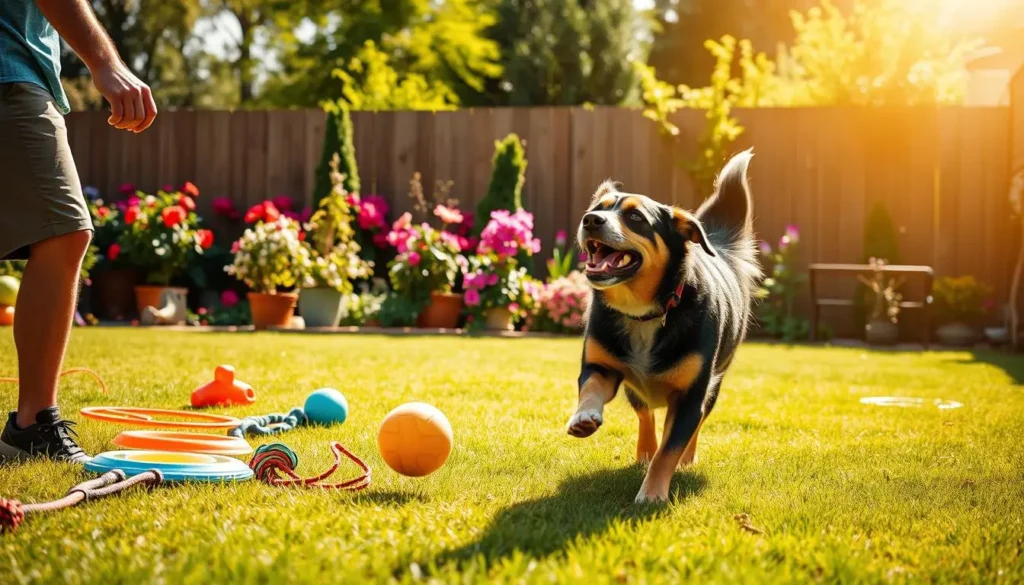
I still remember the first evening with my Labrador mix. Tiny teeth found my sleeve and kept finding it. It felt like a tug-of-war between love and frustration.
If you’ve ever flinched as a puppy’s sharp deciduous teeth closed on your hand, you’re not alone. Mouthing is how puppies play, explore, and soothe sore gums.
In this piece, I'll share friendly, practical puppy training tips. You can stop puppy biting without harsh corrections. My goal is to help you learn humane, positive-reinforcement methods for training a biting puppy.
Teaching gentle mouths, using brief time-outs, and redirecting with the right toys and chews are key. I'll explain why mouthing is normal and how bite inhibition develops. I'll also tell you when to call a professional such as a CPDT, CAAB, or Dip ACVB.
Expect a clear, step-by-step plan, daily schedule suggestions, and simple ways to track progress. Your pup will grow and outgrow teething.
Key Takeaways
- Puppy mouthing is normal; sharp baby teeth can hurt but aren’t usually aggressive.
- Use positive puppy training tips: reward gentle behavior and swap hands for toys.
- Immediate responses like a high-pitched yelp and short time-outs teach bite limits.
- Provide durable chew toys for teething and consistent family-wide rules.
- Seek a qualified professional if bites show fear, escalating intensity, or persist past teething.
Why puppies bite: normal mouthing, teething, and behavior
I want to help you see biting as a mix of normal development and behavior you can change. Understanding why puppies bite makes training and prevention easier. Small changes in play and routine can make interactions safer and calmer.
I'll explain why puppies bite so you can act quickly. First, I'll cover basic reasons. Then, I'll talk about teething. Finally, I'll discuss biting due to excitement, boredom, or separation.
Developmental reasons for mouthing
Puppies explore with their mouths, just like human babies use their hands. Play with littermates teaches them social rules. When a pup bites too hard, a playmate yelps, and play stops. This feedback helps them learn to bite gently.
Teething and oral exploration
Teething makes puppies bite more because their gums hurt. They lose baby teeth and get adult teeth by six months. Giving them chew toys and cold rubber chews helps them cope.
Excitement, boredom, and separation-related biting
Puppies bite when they're bored or overexcited. Boredom leads to impulsive nibbling. Separation-related biting shows anxiety when you leave. Gradual desensitization and regular routines help.
I suggest a few steps: give safe toys, watch play, meet basic needs, and use consistent commands. These steps help prevent long-term biting and support training.
Understanding bite inhibition and its importance
I want to explain bite inhibition in a clear way so you can use puppy biting solutions that feel fair and effective. Bite inhibition is a dog’s ability to control the strength of its mouth. Puppies pick this up early through play with littermates and their mother. I recommend using positive reinforcement puppy training to mirror that natural learning and keep lessons gentle.

What bite inhibition is and how puppies learn it naturally
Puppies learn to soften their mouthing when a sibling yelps and play stops. That quick social feedback teaches restraint. A mother dog may also correct rough play so the pup understands limits. I use those same cues—yelp, pause play, and offer a toy—so the puppy links gentle mouths with continued interaction.
How bite inhibition reduces future risk of hard bites
When a pup masters bite inhibition, it rarely uses full force, even under stress. That makes future interactions safer for people and other animals. Training that emphasizes control and calm, such as puppy obedience training with rewards for soft mouths, lowers the chance of hard bites later in life.
Signs your puppy has or lacks bite inhibition
Good bite inhibition shows as gentle mouthing, an immediate pullback after a yelp, and choosing toys over skin. If your puppy gives repeated hard nips, keeps escalating after a yelp, or shows stiff posture and growling, those are warning signs. In those cases I suggest focused puppy obedience training and consulting a qualified trainer for tailored puppy biting solutions.
Immediate responses to nips: yelp, stop play, and time-outs
I'm always ready to stop play when my puppy nips too hard. A quick, clear response teaches them that biting stops the fun. I make sure everyone in the house uses the same training methods.
I start with a high-pitched yelp, like how littermates sound. Saying a brief "ow!" and freezing for a second often surprises them. This pause is a good start.
If the yelp doesn't work, I use time-outs. Time-outs are effective if they're calm and consistent. For mild bites, I ignore them for 10–20 seconds. For more serious bites, I use 30–60 seconds of calm removal.
When yelping doesn't work, I try other methods. I might turn away, fold my hands, or freeze. Sometimes, I put them in a puppy-proofed room or a calm crate for a few minutes.
I never scold or punish with fear. My aim is to teach them to stop biting without losing trust. Using consistent training and quick responses helps them learn to be gentler over time.
Positive reinforcement puppy training techniques to reinforce gentle mouths
I focus on teaching puppies to have gentle mouths with simple steps. Positive reinforcement puppy training helps them connect calm actions with rewards. I keep training sessions short to keep them focused.

I use small treats, soft words, or a quick pat to praise quiet moments. When a puppy plays nicely, I reward them right away. This quick feedback is key in both group classes and at home.
I teach simple behaviors that replace bad ones. Asking for a sit or offering a chew toy stops mouth play. During playtime, I ask for a sit and then give a toy as a reward. This makes training practical in real-life situations.
It's important for everyone in the house to follow the same rules. I teach children and guests to avoid rough play and to redirect to toys. Consistent rules help puppies learn faster and reduce confusion.
I suggest joining an AKC S.T.A.R. Puppy or a CPDT-led class to reinforce what I teach. Group lessons offer guided play and model calm behavior. Trainers show how to mix positive training with safe socialization to reduce mouthing.
I never use punishment or pain-based corrections. Harsh methods can make puppies fearful and increase the risk of aggressive behavior. My method uses clear cues, timely rewards, and predictable routines to help puppies succeed.
Redirecting biting: toys, chews, and appropriate alternatives
I teach puppies to trade my hand for something safe. Redirecting biting works when I offer clear alternatives and keep the puppy calm. Small steps and consistent timing make this training stick.
I choose durable chew toys for teething relief that match my puppy’s size and chewing strength. I rotate items so each toy feels new. I include rubber toys, soft rope chews, and teething-specific options to soothe gums. When the puppy chews the right thing, I praise and give a tiny treat.
I train the swap by staying calm and presenting a toy quietly. I avoid high-energy teasing that spikes arousal. If the puppy mouths my hand, I offer a chew toy and wait for them to take it. When they do, I begin gentle play or give a short reward to reinforce the change.
I keep chew toys for puppies within easy reach. I place baskets in predictable spots and carry a small tug or squeaky toy in my pocket. This lets me act fast and stop mouthing before it escalates. For walks and indoor play, having a toy ready helps with puppy biting prevention.
I use simple puppy biting alternatives to hands: toss a ball, start a short game of fetch, or offer a treat from my other hand while petting. These substitutions teach the puppy that hands mean gentle contact and toys mean chewing. Over time the puppy learns to focus on objects instead of fingers or ankles.
When feet-and-ankles pouncing starts, I swap in a favorite tug and move away calmly. I keep rules consistent with family members so the puppy sees the same limits everywhere. Predictable routines and easy access to toys support long-term redirect puppy biting success.
Practical prevention strategies for common scenarios
I teach owners simple steps to reduce mouthing and make life easier. We use routines, clear responses, and safe toys. This helps your puppy learn what play is and what isn't.

When my puppy pounces on my feet, I freeze. Standing still takes away the reward of movement. When they stop, I reward calm with a treat or a tug toy. Then, I only walk again when they accept the toy.
I avoid rough play that turns hands or feet into toys. It raises arousal and normalizes nipping. Instead, I play structured games like fetch or tug with clear rules. This teaches bite control and avoids rough play habits.
Clothing and hair can be tempting. I remove flappy scarves, tuck in loose shirts, and tie long hair back during training. I also stash treasured items and puppy-proof rooms to reduce temptations.
Children need quick lessons. I teach them to be calm, offer toys instead of grabbing, and why squealing makes mouthing worse. Supervising and setting limits protects both the child and the puppy while supporting puppy biting prevention.
Managing energy is key. I give my puppy a brisk walk and a short training session before play. A tired puppy mouths less. If biting persists, I provide a calm break or nap for them to reset.
I keep these strategies ready: freeze-and-reward for foot pouncing, no hands-as-toys, and environmental changes to reduce triggers. Small, consistent steps lead to steady progress in stopping feet biting and managing puppy mouthing.
| Scenario | Immediate Action | Follow-up |
|---|---|---|
| Feet-and-ankles pouncing | Stop moving and stand still | Reward calm, offer toy, resume only after release |
| Hands used as play | Withdraw hands and ignore the puppy briefly | Teach fetch or tug with rules; reward gentle play |
| Loose clothing or long hair | Secure or remove tempting items | Puppy-proof area and replace with chew toys |
| Children interacting | Supervise and coach calm handling | Short lessons on gentle touch and toy use |
| High energy, persistent mouthing | Provide exercise and mental games | Offer calm break or nap; repeat routine |
Using time-outs, crates, and calm breaks correctly
I'll show you simple ways to stop nipping while keeping your puppy safe and happy. Short, predictable breaks teach boundaries without scaring your dog. These steps are easy to follow for puppy biting training, crate training, and time-out training.
For mild nips, I remove them from play. A 10–20 second pause or brief in-room break tells them to stop hard mouths. This method works well for most playful mouthing and is part of puppy biting training.
When I need a calm break, I use the crate. Keep these sessions short to keep the crate positive. Add a favorite toy or treat and open the door when they're calm. This makes crate training a safe rest place, not a punishment.
Time-out training only works if it's calm and unemotional. I stay quiet and neutral for 10–60 seconds. No yelling or dramatic gestures. When time's up, I return calmly and resume play if they're gentle.
If leaving the room is safe, I puppy-proof the area first. A supervised tether or dragging leash can guide a pup to a calm spot when I can't exit fully. These options support calm breaks for puppies while keeping control.
I set simple rules for family members. Everyone uses the same short time-outs, calm returns, and crate routine. Consistency helps the puppy learn faster and reduces confusion during training.
| Scenario | Action | Duration | Goal |
|---|---|---|---|
| Mild playful nip | 10–20 second in-room ignore | 10–20 seconds | Stop play briefly; link gentle mouths to play |
| Persistent nipping during play | Short supervised crate break with toy | 30–60 seconds | Settle arousal; reinforce calm behavior |
| Unsafe area or unattended | Leave puppy in puppy-proofed space or tether to calm spot | As needed, short intervals | Keep pup safe while reducing stimuli |
| Puppy calms in crate | Release calmly and reward quiet | Immediate | Make crate a positive resting place |
When to seek professional help for biting and aggression
I keep a close eye on owners who ask about puppy biting. Most of the time, it's just play. But some signs show fear or aggression. If bites hurt, happen often, or come with stiff body language and growling, get help early.
I use three short headings below to guide a decision and set expectations for puppy behavior training.
Distinguishing playful mouthing from fear-based or aggressive bites
Playful mouthing is loose, quick, and short. Puppies will soon go back to sniffing or wagging. But fear-based or aggressive bites are stiff, fixed stares, snarling, or repeated painful snaps. If your puppy has temper tantrums or bites that break skin, get help fast.
Types of professionals: CPDT, CAAB, Dip ACVB and when to call them
For basic obedience and classes, a Certified Professional Dog Trainer (CPDT) is great. They teach impulse control and run socialization sessions like AKC S.T.A.R. Puppy.
For complex fear or aggression, a Certified Applied Animal Behaviorist (CAAB) or a Diplomate of the American College of Veterinary Behavior (Dip ACVB) is best. They diagnose emotional drivers, create behavior plans, and advise on medical needs.
What to expect from a behavior consultation or puppy class
In a CPDT-led class, you'll see guided socialization and clear cue training. They teach safe alternatives for mouthing. A CAAB or Dip ACVB consultation starts with a detailed history and trigger assessment.
The specialist will make a step-by-step plan. This may include desensitization, counterconditioning, management tools, and owner coaching. Sessions focus on safety, positive reinforcement, and progress over time. If mouthing lasts past six months or gets worse, get a professional evaluation.
how to train a puppy to stop biting
I've created a simple, quick plan to start today. This guide offers clear steps for training a biting puppy. It also shows a daily routine to reduce mouthing and easy ways to track progress. Just follow these steps and adjust as your puppy grows.
A step-by-step training plan you can follow at home
1) Make a rule from the start: no biting skin. When teeth touch skin, stop play and give a toy instead. This teaches what's okay.
2) Teach bite control. Use a high-pitched yelp for hard bites, go limp to stop play, then play again when calm. For repeated hard bites, take a 10–60 second break.
3) Teach what not to do. Ask for a sit or hold a toy before play. Reward calm behavior with treats and attention.
4) Always have chew toys ready and change them often to keep interest. Use taste deterrents briefly if needed to stop bad habits.
5) Avoid rough play and keep rules the same for everyone. Consistency is key in training a puppy.
Daily schedule tips: exercise, socialization, and quiet time
Begin with age-appropriate exercise to burn off energy and reduce biting. Short walks, fetch, or play are good for most breeds.
Include socialization with other puppies or a good puppy class. Practice bite control in safe places to apply it in real life.
Make time for quiet after activity. Planned naps or crate time help prevent tired biting. Always check for potty and feeding needs before blaming behavior.
Tracking progress and adjusting techniques as your puppy grows
Keep a simple log: count nips, note intensity, list triggers, and record what worked.
Expect improvement by 3–5 months. If progress slows or aggression shows, increase management and consider a professional.
As hard bites lessen, raise your expectations. For example, stop play for moderately hard nips once painful bites stop. This refines bite control.
I use this method for effective puppy biting solutions in busy homes. The step-by-step training makes changing behavior easy and measurable.
Conclusion
Learning to stop a puppy from biting starts with understanding their normal behaviors like teething. It also involves teaching them not to bite too hard. Use a high-pitched yelp and brief time-outs to teach them. Make sure to tell them it's not okay to bite skin.
Redirecting them to chew on toys and using positive reinforcement helps a lot. Reward them when they're calm and teach them other actions like sitting. Always have toys ready to prevent them from biting out of boredom.
It's important for everyone in the family to follow the same rules. This helps prevent biting and avoids any setbacks. Be patient and kind, and never use physical punishment.
Consider enrolling in a puppy class and seek help from certified professionals if the biting doesn't stop. Start teaching them now by swapping hands with toys and rewarding gentle behavior. If the problem gets worse, get help from a CPDT or a vet behaviorist.