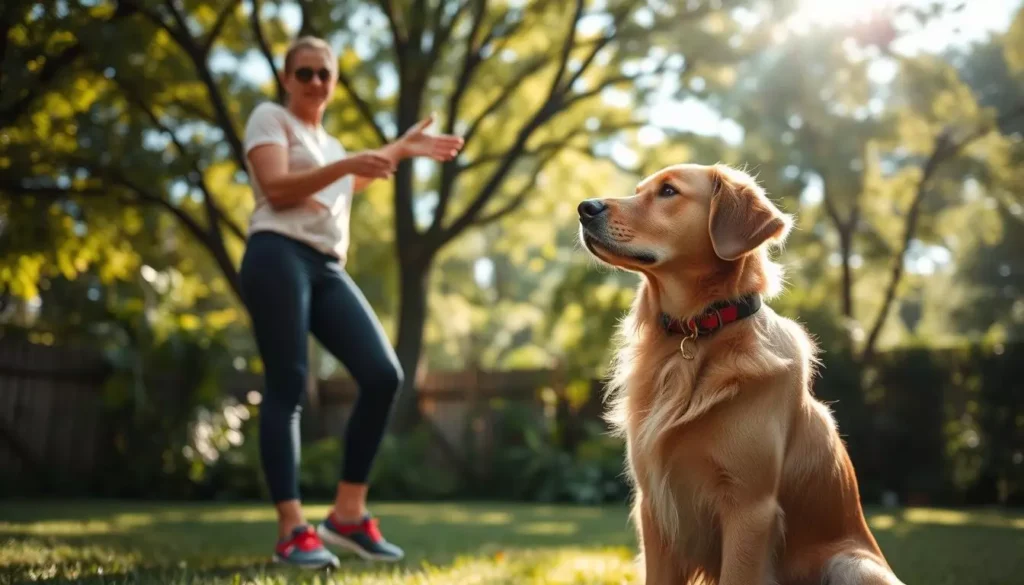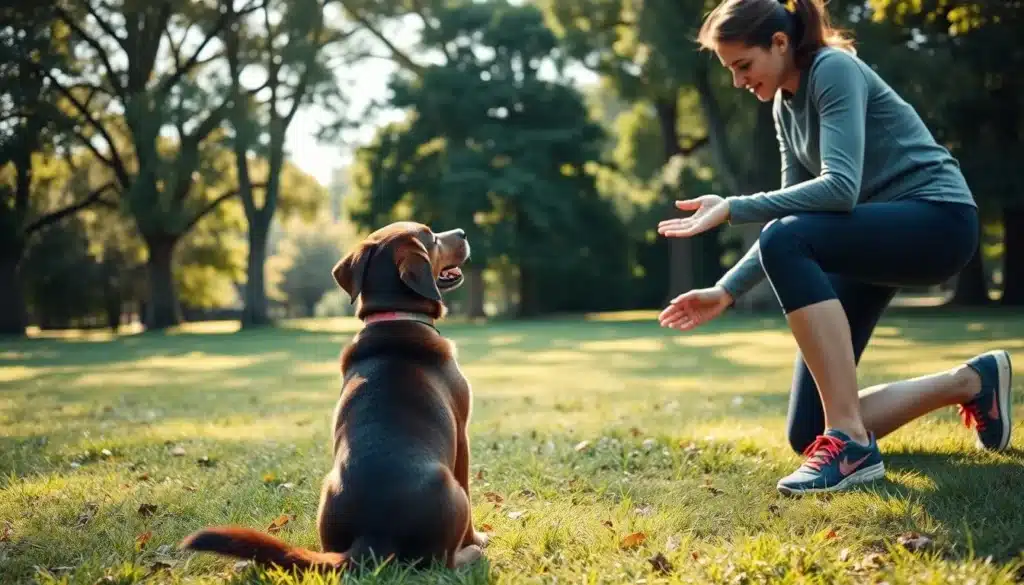
I remember the first time a dog helped me feel calm. I was running late for an appointment, feeling anxious. A neighbor's Labrador sat with me, bringing peace. This moment made me want to train my own service dog at home.
This guide is for those in the U.S. who want to train a service dog at home. It covers the basics, from starting to socializing, and even public access. You'll learn how to train service dogs with clear steps and goals.
The AKC and disability groups help explain service dogs' tasks. Different breeds are good for various tasks. For example, German Shepherds or Labradors are great for mobility. Smaller dogs can help with other tasks. Training at home is affordable and empowering.
In this article, I'll share how to progress from socialization to public access. You'll learn about benchmarks like CGC and Urban CGC. I'll also talk about online courses and professional training. Whether you train alone or with help, I'll guide you through the process.
Key Takeaways
- training your own service dog at home is a realistic, ADA-compliant option when done with clear stages and benchmarks.
- Learn to train service dogs by starting early with socialization and building foundation skills before tasking.
- Owner-trained teams are allowed under the ADA, and professional programs can be costly.
- Benchmarks like CGC and Urban CGC help measure readiness for public access.
- Decide whether to train service dog at home, use online courses, or hire a professional based on cost, support, and your learning style.
Understanding what a service dog is and ADA rules
I explain the law's definition of a service animal and its importance for training. The ADA says a dog is a service animal if it's trained to help with a disability. This includes physical and mental issues that affect daily life.
I outline the rules that protect handlers and set expectations in public. Knowing your rights helps in training and when you're out with your dog.
Definition of a service dog under the ADA
The ADA focuses on the dog's function, not its breed or registration. The dog must be trained to help with the handler's disability. Just being a comfort animal doesn't qualify.
Legal rights and minimal public-access requirements
Handlers have the right to be with their service dog in public. Staff can only ask two questions if the disability isn't clear: (1) Is the dog required because of a disability? and (2) What task has the dog been trained to perform? They can't ask for certification or medical records.
The dog must be well-behaved and under control. It should not bark too much or leave without supervision. These rules help in planning public outings during training.
Distinguishing service dogs from ESAs, therapy dogs, and courthouse dogs
Emotional Support Animals provide comfort but don't qualify as service animals. They don't get the same rights as service animals. Check local laws for housing rules.
Therapy dogs and courthouse dogs help in specific settings. They are valuable but don't have the same rights as service dogs. They don't automatically get public-access or airline exceptions.
I watch for misuse trends, like those reported by the American Kennel Club. Pretending a pet is a service dog can cause problems. Some states have laws against this, and efforts are being made to improve standards.
Good training and education are key. They protect real service dog teams and ensure access for those who need it.
Is owner training allowed and when should service dog training start
I train many teams and often get asked if you can train your own dog. The ADA says yes, you can train your own service dog. You just need to meet some basic rules.
The rules are simple: the dog must help with a disability, and the team must be well-behaved in public. This means the dog should be easy to control and not disrupt others.
I teach owners how to train their dogs under the ADA. We focus on safety and making sure the dog can do its job well. It's not about getting a certificate, but about being reliable.
When should service dog training start? For puppies, we start socializing them early. This helps them get used to people and sounds. We also teach them basic skills like sitting and staying.
For adult dogs, we start with crate training and potty habits. We also check if the dog is a good fit for the task it needs to do.
We have a clear plan for training. First, we focus on socializing the dog. Then, we work on home manners and obedience. This helps the dog become more reliable.
Next, we teach the dog how to behave outside. We work on leash skills and how to stay calm in busy places. We start teaching the dog to do its task around 12-24 months old.
After that, we practice in public places. We make sure the dog can handle distractions and do its task well. We also work on skills like using elevators and riding public transportation.
It takes at least two years to get a dog ready for public access. The time it takes depends on the dog, the handler, and how much time and money you have. If you need help, you can use a service dog training course online.
Many people use online courses to learn new skills. A good course can teach you how to train your dog step by step. It's a way to learn new things without replacing in-person training.
I help teams by keeping things simple and celebrating small victories. We also review videos often. This helps the team feel more confident and prepared.
Choosing the right dog for service work
I look for specific traits in dogs before I decide. They need to be calm in new places. They should focus well and switch attention when asked.
I use a checklist during evaluations. I look for calmness, alertness, a desire to please, and the ability to learn tasks. I also check if they can get along in different places.
Breed and size are important for the task. Big dogs like Labradors and German Shepherds are good for mobility help. Smaller dogs, like Papillons, are great for alert work.
Poodles are very versatile. Standard Poodles are good for carrying things. Miniature and Toy Poodles are great for scent work.
I look at sources carefully. Organizations like Canine Companions and NEADS help with temperament and health checks. I also talk to other owners and ask for health records.
Rescues and shelters can have great dogs. Some places screen dogs for specific traits. But, be ready for higher drop-out rates and have a plan for other options.
Drop-out rates are common. Up to 70% of dogs may not make it. I prepare for rehoming and spend time finding the right dog.
It's important to find a dog that fits well with you. The best service dogs stay focused on their handler. I always check if a dog is a good match for service work.
Foundation skills you must teach at home
I start every team with a clear set of foundation skills. These basics are key for public reliability and make later tasks easier. To train a service dog at home, start with consistent routines and short practice sessions every day.

I focus on three main areas: house manners, basic obedience, and socialization. Each area has specific behaviors I teach in stages. This helps the dog learn predictability and calmness under pressure.
When owners train service dogs this way, they save time and reduce stress for both the dog and handler.
House manners
Crate training gives the dog a safe, predictable place to rest. I establish a routine for meals, naps, and quiet time to make the crate positive. Next, I teach the dog to go potty on cue in various locations, matching public access needs.
Cooperative care is also important for long-term health. I train the dog to accept grooming, nail trims, ear checks, medications, and gentle vet handling. Dogs that accept care calmly have fewer health issues and perform better in public.
Basic obedience
Reliable recall is crucial for safety. I train recalls with high-value rewards and short distances, then add distractions slowly. Engagement drills help build handler-centered attention, rewarding the dog for checking in and staying focused.
Teaching loose-leash walking and consistent position work makes transit and crowded areas easier. I teach side stays, place/settle for waiting, and brief stand-stays for entryways. These skills are vital for real-world work when training a service dog at home.
Socialization essentials
Socialization is systematic and safe. I expose the dog to people, dogs, noises, surfaces, and transit sights and smells from a distance. Early exposure is key, without needing interaction.
I use AKC Canine Good Citizen and Confident Puppy concepts as frameworks. These benchmarks help track progress and identify gaps. Following this path makes foundation skills service dog teams dependable before tasking starts.
I recommend starting foundation work before intensive task training. To train service dogs well, focus on these basics first. They reduce vet bills, public access problems, and strengthen the handler-dog bond.
My staged training progression from puppy to public access
I break training into clear, manageable stages for steady progress. Staged service dog training guides my decisions and sets milestones. Each stage has focused goals, simple methods, and measurable checkpoints I can video and review.
Socialization stage: safe exposure and distance work
My early goal is to get neutral or positive reactions to people, dogs, surfaces, and noises. I focus on socialization for service dogs with short, controlled outings and gradual desensitization.
I take the pup on exposure field trips to parking lots, sidewalks, and quiet stores. I keep a safe distance from crowds and other dogs while rewarding calm observation. At home, I vary textures to help the pup accept ramps, grates, and slippery floors without fear.
Cooperative care and home manners stage for vet and grooming success
At this stage, I teach grooming and vet handling through cooperative care shaping. I break handling into tiny steps: touch, hold, and reward. I practice brief nail, ear, and restraint sessions to make vet visits low stress.
I build crate acceptance, potty reliability, and basic house manners. Short, frequent sessions make routines predictable and calm. I record sessions for progress and trainer feedback.
Outside manners and public manners stages — building in distractions
I transfer home obedience to parks, patios, and parking lots first. I reinforce handler engagement and cue reliability around moderate distraction. I keep sessions short to protect learning.
Next, I introduce non-pet-friendly settings like hardware stores, farmers markets, and transit hubs. I train for waiting rooms, elevators, bathrooms, and loud noises. These steps prepare the dog for realistic public access training challenges.
Tasking stage: teaching work that directly mitigates a disability
I shape specific tasks at home before proofing outdoors. Tasks include guiding, hearing alerts, mobility bracing, medical alerts, and interrupting behaviors. I sequence teaching from simple to complex and never add high-precision public tasking until obedience holds under distraction.
Many tasks, except scent-based ones, learn quickly with consistent reinforcement. I proof task performance in increasingly difficult but controlled settings to ensure reliability.
Public access stage: polishing position, transit, and multi-environment reliability
This stage polishes position choices, out-of-the-way placements, and transit etiquette. I practice navigating complex stores, buses, and crowded streets while keeping task reliability steady.
I expect this stage to be the shortest if foundations are solid. Typical total progression often approaches two years, though timelines vary by team. Throughout, I use video review, set milestones, and schedule periodic pro trainer check-ins to avoid common pitfalls.
Training specific tasks at home that help disabilities
I start by mapping the task to the need. For someone with vision loss, guiding is different from helping with mobility or alerting. I set clear goals to design exercises that work in the living room and busy streets. Short, focused sessions help the dog learn fast and stay interested.
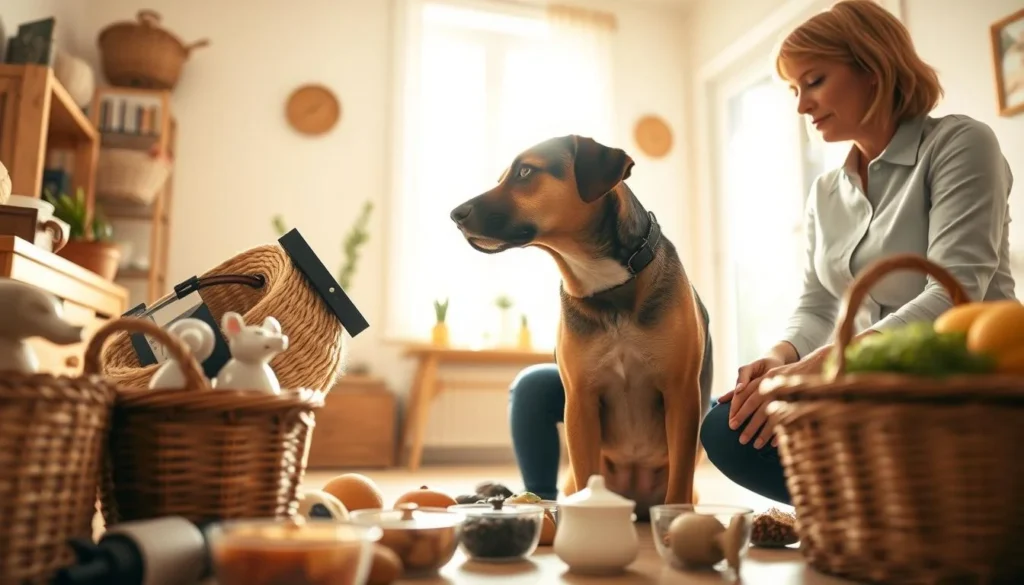
I break each task into tiny steps and reinforce each success. For tasks like retrieving or pressing switches, I start with small movements. Then, I connect them into the full skill. These tasks get better with repetition, so dogs can learn them in weeks to months at home.
For alerting tasks, I use pairing and context. With alerts for seizures or low blood sugar, I look for consistent cues. I pair these cues with rewards, making the training more reliable over time. I start in quiet rooms until the dog shows it can do it right.
I use a proofing ladder to move a behavior from home to public. First, I add mild distractions, then longer distance and duration. Next, I test in parks, then on sidewalks. Finally, I check performance in crowded, non-pet-friendly spaces.
Some task examples I teach at home:
- Guiding/navigation: front, stop, and steer around obstacles.
- Hearing/alerting: trained response to doorbells, alarms, and timers.
- Mobility support: steady bracing, guided turns, and retrieving dropped items.
- Medical and psychiatric support: scent alerts, interrupting repetitive behaviors, and fetching medication.
I keep timelines realistic. Mechanical tasks often come faster, while scent-based training can take months. Dog age, prior obedience, and handler consistency affect these timelines. I don't rely on a task for safety until it's reliable in different situations.
Documentation is part of my process. I record short videos and keep logs of repetitions, cues, and success rates. These records help me troubleshoot, show progress to remote trainers, and plan for future training.
| Task Type | Typical Timeline | Home Focus | Key Proofing Steps |
|---|---|---|---|
| Mechanical (retrieve, switch press) | Weeks to months | Shaping small movements, chaining actions | Increase distance, add distractions, test in public |
| Mobility support (bracing, steadying) | Months | Strength building, positioning, handler cues | Practice on stairs, curbs, and transit situations |
| Hearing/alerting | Months | Sound discrimination in quiet rooms, consistent rewards | Move to noisy environments, vary sound sources |
| Scent-based (medical alerts) | Months to year+ | Pairing cues with physiological signals, steady reinforcement | Proof across settings, control for confounding odors |
| Psychiatric tasks (interrupts, retrieve medication) | Months | Shape interrupt behaviors, reliable fetch under stress | Simulate triggers, generalize to varied environments |
I focus on reliability over speed. When training at home, I set conservative benchmarks before relying on the dog for critical tasks. This approach keeps teams safe and builds long-term success in real life.
Using online and professional programs versus self-training
I always consider the best options for my teams. The choice is often between an online service dog training course or a professional program. The cost, time, experience, and the dog's needs are key factors in my decision.
Online courses are great for those who need flexibility. They can save a lot of money compared to in-person training. You can train at home and follow a set curriculum at your own pace.
Good online courses have clear lessons, videos, and assignments. They also ask for video submissions and provide feedback from trainers.
I steer clear of programs with unclear goals. Some online service dog training programs vary a lot in quality. Poor programs might not teach public access skills or how to handle problems.
Self-training requires discipline and regular checks on progress. It also needs time to practice in real-world situations.
I choose professional training for complex tasks or behavior issues. Professional programs offer hands-on help, in-person guidance, and often faster results. They're best for tasks like medical alerts, guiding, mobility support, or achieving reliable public access.
Quality online or distance training should be similar to in-person programs. It should have clear modules, measurable goals, and regular video reviews. Assignments should focus on specific skills, and trainers should provide personalized feedback.
It's also important to look for minimum training commitments. Good programs state realistic timelines or hours needed before public access testing. Ethical training methods and positive reinforcement are crucial to me.
Before signing up, I check credentials, read reviews, and look at refund policies. If a program offers online lessons plus live coaching, it's a good balance. This mix keeps costs down while still offering expert help when needed.
Public access, etiquette, and minimizing community issues
I teach teams how to behave in public, more than the ADA requires. My goal is to have a calm, reliable service dog. This dog should stay out of the way, settle quietly, and respond to commands.
I focus on training for brief stays, elevator manners, and grooming. This way, handlers face fewer complaints in stores and restaurants.
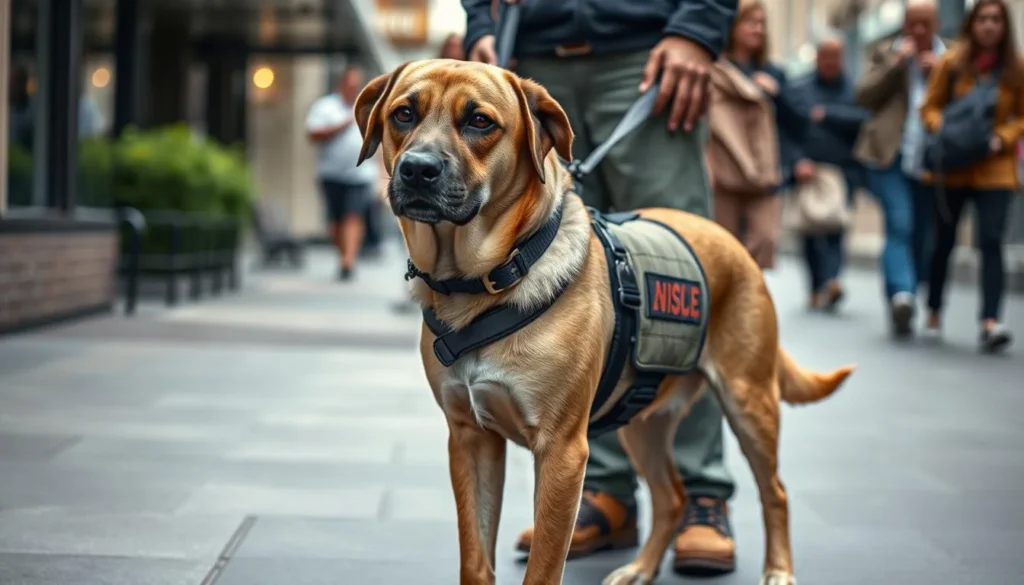
I teach handlers short scripts for questions. This makes them feel ready and calm. Under ADA rules, staff can only ask two things: if the dog is needed because of a disability and what task it performs.
I teach handlers to give clear, neutral replies. This protects their health details and shows good service dog etiquette. This reduces friction with employees and other patrons.
If a business refuses ADA access, I teach de-escalation first. Handlers should calmly state their rights, offer a task demo if safe, and ask for a manager if needed. I also teach when to document incidents and seek advocacy or legal help. The ADA does not require handlers to carry special papers.
Responsible training helps reduce fake service dogs. It shows the public what a true working team looks like. Well-mannered dogs, clear task behavior, and respectful interaction lower suspicion and improve acceptance.
I emphasize consistent public presentation. This way, communities see service dogs as professional partners, not a nuisance.
Below I compare common public challenges and the training responses I use to prevent or address them.
| Common Challenge | Training Response I Use | Benefit for Public Access |
|---|---|---|
| Unexpected questions about the dog | Short scripted replies that state task without medical details | Faster interactions, fewer personal disclosures, better service dog etiquette |
| Dog becomes distracted by patrons or dogs | Engagement on cue and quick settle with food or touch cue | Less wandering, improved safety, fewer complaints |
| Refusal of entry or ADA access refusals | Calm restatement of rights, manager escalation, task demo if appropriate | Resolves many incidents without conflict, documents issues for advocacy |
| Public confusion between service dogs and pets or ESAs | Visible, professional equipment and brief public education when asked | Raises awareness, helps reduce fake service dogs, protects access rights |
| Poorly groomed or stressed dog causing concern | Regular grooming, stress management, and pre-entry checks | Improves public confidence and reduces confrontations |
Measuring progress and knowing when your team is ready
I use simple measures to track progress and make decisions. I check reliability, distraction tolerance, task proficiency, and household housekeeping. I also log sessions, keep video clips, and schedule third-party checks to avoid wishful thinking.
Reliability means the dog responds to cues in different places and situations. I expect the dog to respond well even when the handler is tired or in a hurry. This helps measure progress in everyday life.
Distraction tolerance is about staying calm in various situations. I give graded exposures and record success rates. High success in distracting situations means the dog is ready for more public work.
Task proficiency requires the dog to perform tasks correctly and quickly. I set targets for independent task execution and real-world proof. If a task fails under distraction, we go back to drills.
Housekeeping includes steady potty habits, grooming tolerance, and crate acceptance. These basics reduce stress during appointments and travel. They are the foundation for any service dog training.
I use recognized programs as milestones. Passing CGC for service dogs or Urban CGC shows basic manners and focus. These checks help before increasing tasking.
Programs provide a scorecard. I schedule a CGC or Urban CGC test once home manners and basic obedience are solid. A passing result boosts confidence for trainers, handlers, and organizations.
| Benchmark | What I test | Typical target | Why it matters |
|---|---|---|---|
| Reliability | Cue response across 5 environments, with fatigue | 90%+ correct over 10 trials | Shows consistency when life is unpredictable |
| Distraction tolerance | Work near food, dogs, crowds, and loud noises | 80%+ calm/task success under moderate distraction | Predicts public access safety and etiquette |
| Task proficiency | Task done on cue, with increasing proofing levels | 85%+ success in public-like conditions | Ensures the dog reliably mitigates the disability |
| Housekeeping | Potty, grooming, crate, and vet handling | Consistent daily routine with no refusals | Reduces stress and prevents access issues |
Training timelines vary. I tell handlers it usually takes about two years for consistent public-access reliability. Some dogs or experienced handlers might reach proficiency in months.
Professional programs suggest timelines from months to years. Some courses require 120 hours or about six months of focused work before certification. I see these as guidelines, not strict rules.
Many factors affect training time. Handler skill, dog temperament, life events, and training consistency all play a role. I keep logs to measure progress and set realistic goals.
I suggest regular third-party reviews, short video evidence, and weekly logs. These habits help keep expectations realistic and make judging readiness easier.
training your own service dog at home
I focus on short, predictable training sessions at home. These daily sessions keep my dog engaged. Weekly challenges test their skills in new places.
Step-by-step daily and weekly plan I use
Daily sessions last 5–10 minutes, happening two to four times a day. We work on basic cues and one task each session. This keeps learning fun and reliable.
Weekly, we spend 15–20 minutes on task shaping. This helps us chain behaviors and practice in distracting environments. We also practice handling three to five times a week for vet visits and grooming.
Once a week, we go on a field trip to a new place. This could be a pet store patio or a quiet hardware aisle. Monthly, we test our skills in busy stores and different environments.
Tools and equipment I recommend
I pick harnesses based on the task at hand. For weight support, I use a mobility harness. For leash control, a front-clip walking harness is best. Task-specific harnesses are used for specialized work.
For fast learning, I use clickers or a clear marker word. High-value treats and target objects help in shaping. I carry a treat pouch and a portable mat for practice. My phone records sessions for review.
Record-keeping and remote accountability
I log every session with details like date, length, and exercises. This log helps me see progress over time. Video submissions to a remote trainer provide feedback and keep standards high.
Many remote training programs require photo and video assignments. They grade benchmarks and issue a completion certificate when standards are met. Some programs expect 120 hours of training in six months for basic tasks.
Remote training helps me improve my dog's skills. Regular video reviews from a trainer help correct mistakes and refine cues. A structured plan and outside accountability make home training effective for public access.
Conclusion
I aimed to make training your own service dog at home easy and doable. The ADA allows owner-trained teams, but success needs careful dog choice, strong skills, and a step-by-step approach. This includes moving from socialization to public access.
Expect a realistic timeline—many teams take close to two years to reach consistent public reliability.
Self-training with a plan and a good service dog training course online can save money. It also builds a strong bond between you and your dog. For complex tasks or ongoing behavioral issues, consider professional help.
I use benchmarks like CGC and Urban CGC to measure progress.
Train beyond the legal minimums and use positive-reinforcement methods. This protects your rights and builds trust in the community. Keep records, video your sessions, and track milestones to assess readiness.
If you want to learn to train service dogs, follow the plan I outlined. Stay patient and seek help when needed.
With discipline, structure, and the right support, training your own service dog at home is achievable. My final advice: commit to consistent practice, aim for measurable improvements, and prioritize the dog’s wellbeing as you build a reliable working partnership.