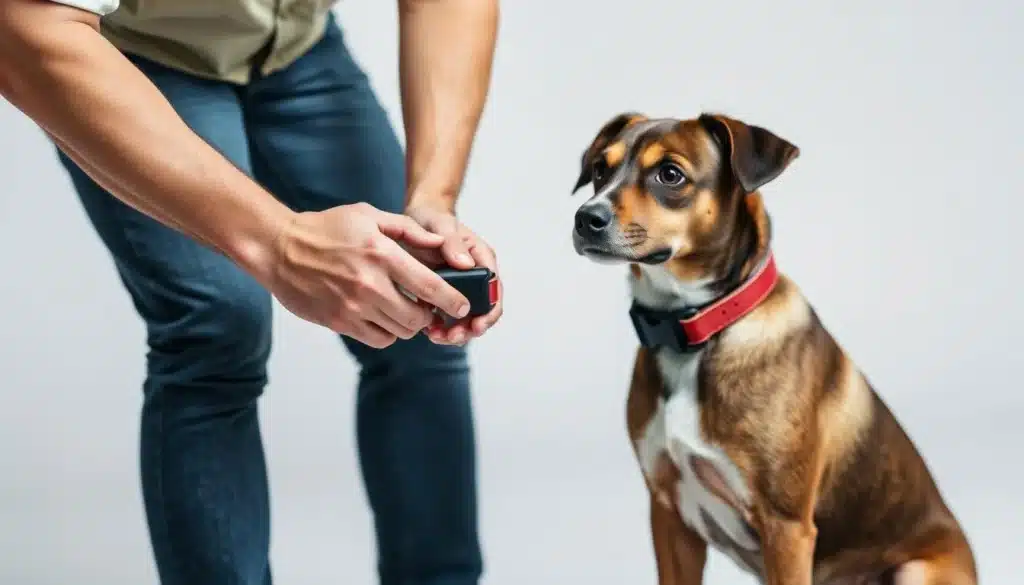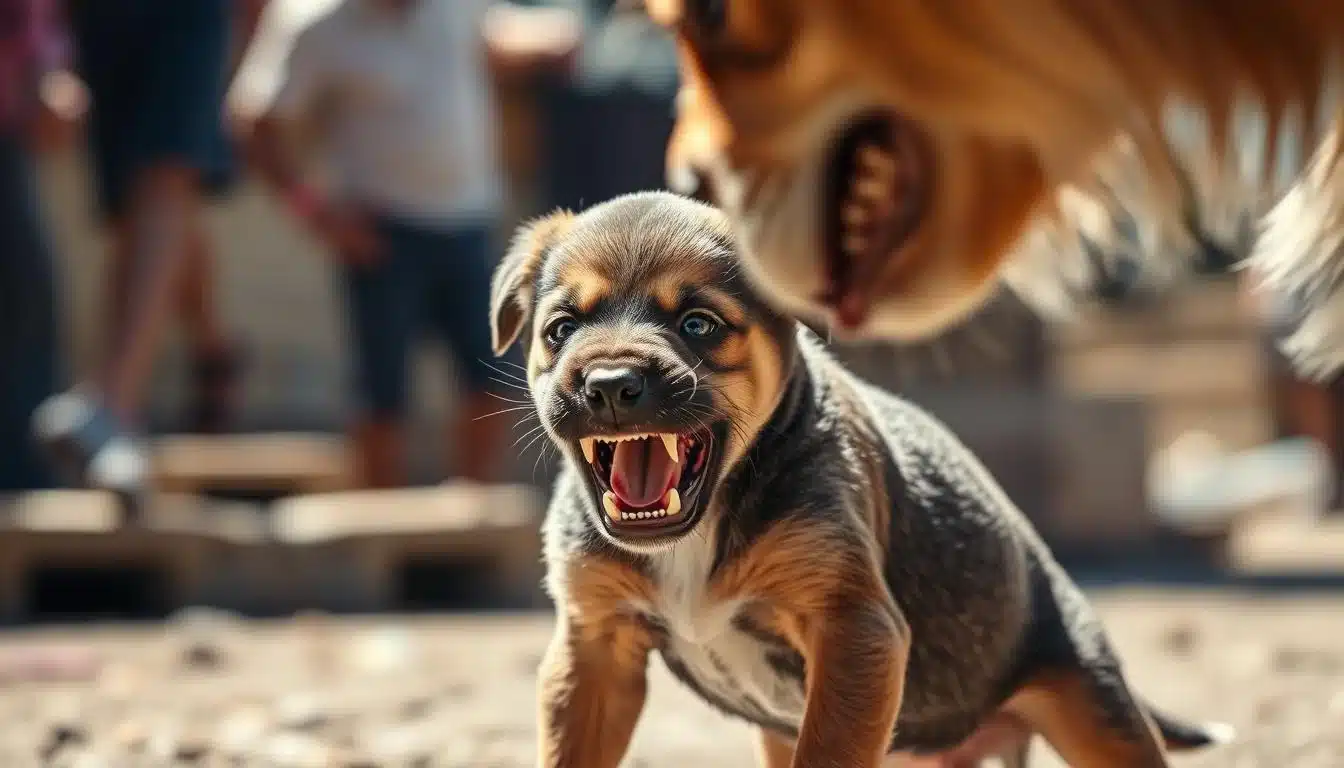
I remember the first time my Labrador mix snapped at a visiting spaniel. My heart sank, and I felt unsure about every walk and playdate. If you've felt that shock, you're not alone.
Watching a young dog show teeth or stiffen when another dog approaches worries every owner. It cuts straight to concerns about safety and the future.
In puppies under six months, aggression often comes from fear or confusion, not malice. I've seen timid pups learn that growling or lunging makes a scary thing go away. This can become a fast habit.
Punishment only makes things worse. Managing dog aggression needs calm, clear steps that address why the puppy acts out.
In this series, I'll guide you through assessing triggers, keeping everyone safe, and using proven rehabilitation methods. There are realistic, compassionate solutions for aggressive puppy behavior. These let your puppy grow into a confident dog without giving up on social life or walks.
Key Takeaways
- Puppy showing aggression towards other dogs is often fear-based in dogs under six months.
- Aggression in puppies can be learned quickly if it successfully avoids threats or wins resources.
- Harsh punishment usually makes problems worse; managing dog aggression needs positive, structured steps.
- With careful resocialization and the right safety measures, rehabilitation is usually possible.
- Ask your veterinary surgeon for referrals to a qualified pet behavior counselor when needed.
Understanding why your puppy is showing aggression towards other dogs
Puppy owners often worry when their dogs snap or freeze near others. I explain that fear usually causes these early reactions. When a puppy feels trapped or overwhelmed, it may use threat signals instead of running away.
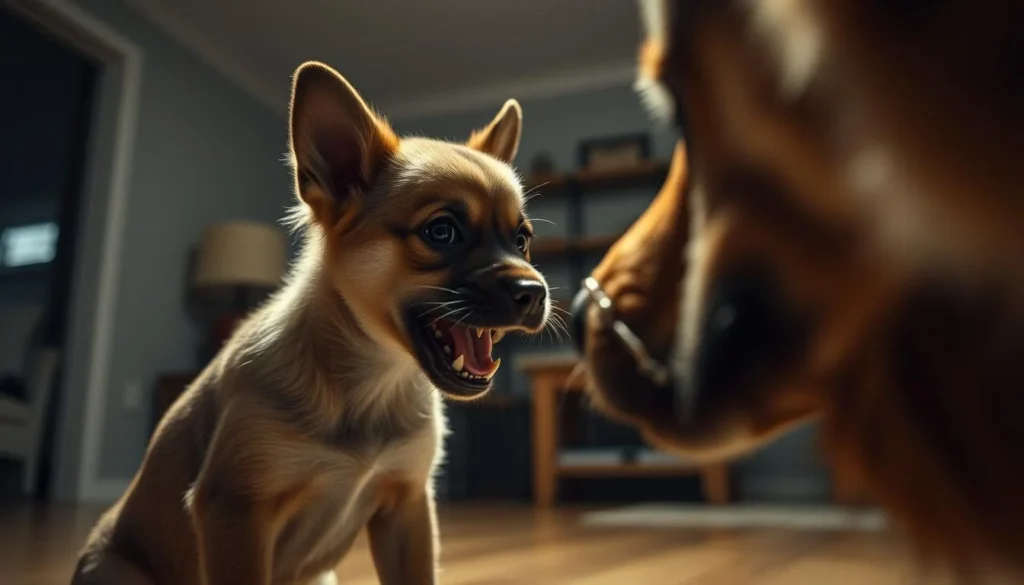
Fear-based aggression as the most common cause in puppies under 6 months
In my work, fear-based aggression is the top reason puppies show reactivity before six months. A frightened puppy may growl, snap, or lunge when it senses danger. Ignoring these warnings lets the behavior escalate into bites.
How lack of early socialization (3–12 weeks) increases worry and defensive responses
Puppy socialization with other dogs during weeks three to twelve shapes later confidence. Puppies that miss that window often misread normal dog greetings and view unfamiliar dogs as threats. I focus on gradual, positive exposure to avoid creating long-term dog behavior issues.
Past unpleasant or startling encounters and their long-term effects
Even a single scary event can leave a lasting impression. A puppy on a tight leash that was rushed by a larger dog may link approach with danger. That learned fight-or-flight response can become aggression in puppies if it seems to work.
Recognizing body language and non-bite aggressive signals (posture, mounting, blocking, staring, vocalization)
Aggression in puppies rarely appears out of nowhere. I teach owners to spot posture changes, mounting, blocking, hard staring, and sudden vocalization. These cues warn of rising tension long before teeth show.
| Signal | What I watch for | What it often means |
|---|---|---|
| Stiff posture | Raised hackles, rigid legs, fixed gaze | Puppy is on alert and ready to escalate |
| Mounting / standing over | Repeated attempts to climb or pin another dog | Assertion or stress; can provoke conflict |
| Blocking / close positioning | Cutting off another dog's path | Control attempt that may trigger a fight response |
| Hard stare | Unblinking focus on the other dog | Threat signal; often precedes snapping |
| Vocalization | Low growls, sharp barks, sudden yelps | Warning or distress; indicates rising fear |
Types of aggression you might see and what they mean
I help owners understand why their puppies act aggressively. Knowing the different types helps us create effective training plans. This keeps everyone safe and happy.
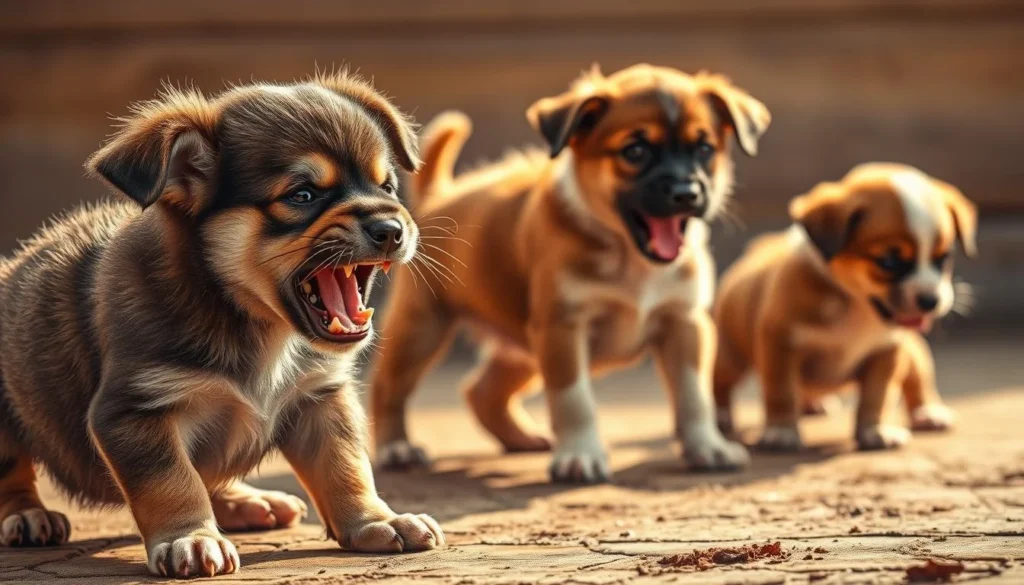
Fear and anxiety can cause puppies to growl, cower, or snap. This happens when they feel trapped or rushed. Gentle desensitization and calm rewards help reduce fear over time.
Conflict aggression, once seen as dominance, includes stiff posturing and blocking. It's usually about tension over social choices, not wanting to rule. Setting clear boundaries and routines helps prevent conflicts.
Resource guarding is when puppies protect food, toys, or resting spots. They may freeze, stiffen, or bite when others approach. Ignoring this behavior makes it worse. I use controlled feeding, trade games, and targeted management to stop this.
Food aggression towards other dogs is common. Handle meals in separate spaces with predictable cues. Short, safe drills teach puppies to trade for treats, rebuilding trust.
Territorial aggression is when puppies protect their home, yard, car, or people. Barking, lunging, and blocking doorways are signs. I recommend managing windows and gates and training to redirect guarding into calm alertness.
Play aggression looks like real fights but is often exaggerated. It can turn into predatory attacks if arousal increases. I watch for hard bites and silent stalking, switching to structured games early.
Hormone-driven aggression in intact puppies and alliance aggression when owners are present are specific concerns. These can change with age, social maturity, or household changes. A vet exam rules out medical causes before long-term plans start.
| Type | Typical Signs | Immediate Steps I Take | Training Focus |
|---|---|---|---|
| Fear/anxiety-driven | Growling, cowering, snapping when approached | Create distance, calm praise, desensitization at safe range | Gradual counter-conditioning and confidence-building |
| Conflict aggression | Stiff posture, blocking, mounting, resource disputes | Separate dogs, reduce competition, set clear rules | Structure, predictable routines, leadership through reward |
| Resource guarding | Freezing, guarding food, toy snatching, bed guarding | Feed separately, remove triggers, trade for high-value rewards | Give/leave protocols, supervised access, aggressive puppy behavior training |
| Territorial aggression | Barking at passersby, lunging at gates, guarding people | Limit visual triggers, use barriers, redirect focus | Controlled exposure, calm alert behavior, boundary training |
| Play vs predatory | Rough mouthing, chasing, sudden silent stalking | Interrupt high arousal, resume structured play or rest | Teach bite inhibition, impulse control, alternative outlets |
I combine management with targeted behavior plans to prevent resource guarding and territorial aggression. With patient training, most puppies improve. Owners need to follow clear, consistent steps.
How I assess the severity and triggers of aggressive puppy behavior
I start by watching the puppy in short, controlled scenarios. I see what sets off tension. I look for clear signs of a specific situation causing the reaction.
I note how quickly the behavior appears and if it gets stronger with repetition.
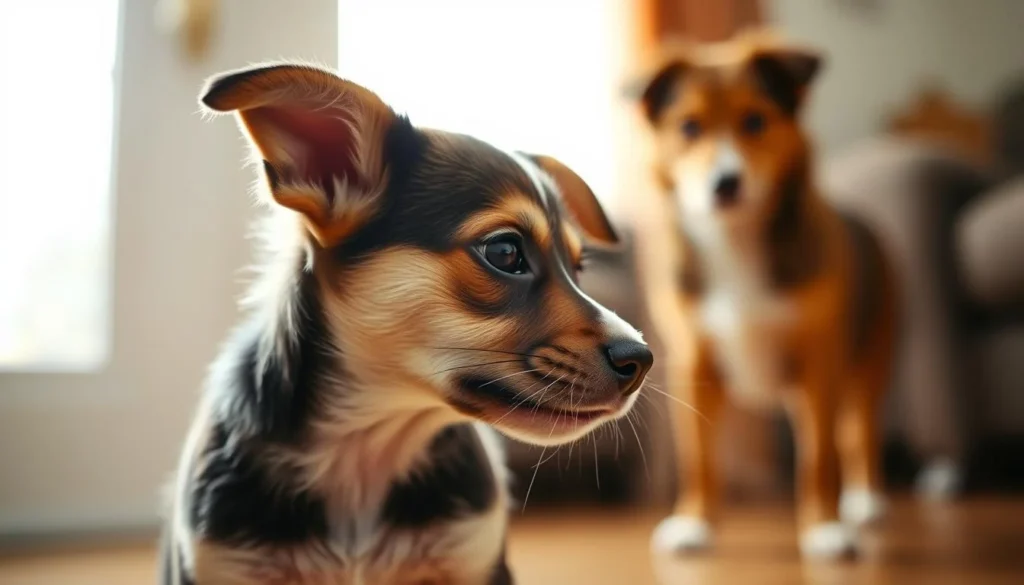
I track common aggression triggers like a fast approach, tight leash pressure, or competition over toys and food. I record if the puppy learns aggressive responses get what it wants. This helps when assessing puppy aggression and planning next steps.
I also check household factors. Multiple dogs, recent moves, new pets, or the loss of a family member can change dynamics fast. I watch for alliance aggression between dogs and for shifts during adolescence or when intact hormones rise.
Part of my routine is observing owner handling. Pulling, shouting, or rewarding a puppy for pushing another dog away can reinforce bad habits. I note where managing dog aggression can begin with simple changes in daily routines.
I separate behaviors into clear categories: leash reactivity, resource guarding, territorial responses, and redirected fear. For each, I describe when the behavior started, its intensity, and the exact aggression triggers that preceded it.
I always recommend a vet check for aggression before starting behavior work. Pain from injuries, arthritis, or thyroid problems can cause sudden aggression. A medical exam rules out those causes so I can treat the behavior safely and effectively.
Immediate safety measures when a puppy becomes aggressive
I stay calm and act quickly when a puppy acts aggressively. My main goal is to keep everyone safe. I remove any triggers and calm the situation before starting any training.
I keep a safe distance to lower tension. I step in between dogs or move the puppy back on a loose leash. This helps both dogs relax.
Managing distance: keeping a safe buffer and avoiding escalation
I make sure there's a clear space between dogs. I watch their body language closely. If the puppy looks stiff or growls, I move them back right away.
Tools I use for safety: head halters, basket muzzles, trailing leashes
I use tools like head halters and basket muzzles for safety. A head halter helps control the puppy's head without hurting them. Basket muzzles let them breathe and drink while keeping everyone safe.
Trailing leashes help me move quickly to separate dogs. I choose humane tools over sprays. In emergencies, I use a citronella spray to startle them without harm.
Separating dogs safely and preventing visual contact through gates or barriers
If things get worse, I separate the dogs safely. I use gates, crates, or rooms to block their view. This stops them from showing aggression through barriers.
When dogs are separated for a long time, I check if my home is safe. My goal is to prevent fights and find a way to change their behavior. If it's not safe, I talk about rehoming or getting professional help.
Behavior modification strategies that actually work
I start by managing distance and setting up predictable routines. This lowers stress and makes learning easier. I avoid punishment and focus on clear, repeatable steps that everyone follows.
I use desensitization counter-conditioning to change how a puppy feels about other dogs. I pair calm distances with high-value treats until the puppy looks to me instead of reacting. Short, frequent sessions build confidence faster than long, intense encounters.
Obedience and calmness training come next. I teach sit, look, and stay under low stress, then add gentle distractions. These cues give the puppy a job and a positive focus during walks or at the park. Regular practice makes relaxed responses automatic.
I build structure with a nothing in life is free routine. The puppy learns that attention, toys, and meals follow calm behavior. This reduces pushy attempts to control resources and cuts down on conflict between dogs.
Showing preference and keeping predictable schedules also help. I feed and handle dogs in a consistent order, choose who greets guests first, and keep exercise routines steady. Predictability lowers tension and makes aggressive puppy training more effective.
My full plan blends behavior modification for aggressive dogs with management tools like gating, short leashed meetings, and calming aids when needed. I stay consistent, track progress, and adjust distances so the puppy always feels safe while learning new emotional responses.
Specific training approaches for puppy fear aggression towards other dogs
I start with a clear plan that focuses on safety, slow progress, and rewards. My goal is to reduce puppy fear aggression towards other dogs by rebuilding confidence. I use brief sessions, firm but gentle handling, and plain cues the puppy already knows.
Gradual re-socialization plan
I set up meetings at safe distances where the puppy stays calm. I ask handlers to hold position while I reward any relaxed looks or loose body language. I shorten or stop sessions if tension rises.
I rely on gradual re-socialization to close the gap slowly. Distance gets smaller only when the puppy shows ease. Sessions stay short and frequent to build positive memories.
Reading stress signals and backing off
I watch posture, blocking, mounting, staring, and vocal cues closely. If I see tightness, whale eye, lip lift, or freeze, I increase the distance right away. I mark the moment the puppy relaxes and reward that choice.
Control matters during these steps. I use leashes, head halters, or basket muzzles when needed to keep everyone safe. I keep handlers between dogs while walking when leash tension could create conflict.
Using well-socialized dogs as models
I bring in calm, friendly dogs that I trust, such as those handled by certified trainers or reliable pet owners. These dogs show how to greet and move without threat. The observing puppy copies that calm behavior over time.
Positive reinforcement is central to every stage. I pair treats, praise, and short games with proximity to friendly dogs. Positive reinforcement turns anxious reactions into voluntary, confident choices.
I tailor pace to each puppy. Most young dogs without deep trauma respond well to this method. If progress stalls, I consult a veterinarian or a certified behaviorist to refine the approach.
Addressing resource-based problems including puppy food aggression towards other dogs
I take clear, practical steps to reduce resource guarding and keep everyone safe. When puppies fight over food, toys, or beds, it can happen fast. My plan combines feeding management with short training sessions to replace guarding with calm behavior.
Feeding management
I feed dogs separately when they live together. Using separate bowls, different rooms, or staggered meal times reduces risk. I also remove high-value chews until the dogs learn calm cues. Denying free access to prized items helps prevent guarding from developing.
Training protocols
I teach puppies to sit and look to me before they get food or toys. I reward quiet, relaxed behavior with controlled access. This builds a positive routine where the puppy learns giving up a resource brings rewards, not threats.
When to use management tools
Gates and crates protect family members while behavior changes take hold. I use barriers during meals and for high-value items, then pair that management with desensitization and counter-conditioning. For lasting change, I blend management with training rather than relying on tools alone.
I watch for signs that resource guarding is escalating. If I see stiff posture, growling, or snapping, I separate dogs immediately and restart introductions at safe distances. For intact animals, I discuss spaying or neutering with my veterinarian as hormones can fuel disputes.
These aggressive puppy behavior solutions reduce risk now and teach long-term calm around food and toys. Small, consistent steps in feeding management and training make homes safer and more peaceful for pets and people alike.
When veterinary help, medication, or a professional behaviorist is needed
I look for warning signs that it's time to call for help. If a puppy attacks without reason, bites hard, or gets aggressive with other pets, it's urgent. These signs mean it's time to get veterinary help for aggressive puppy behavior.
If the puppy's triggers are hard to predict or training is not safe at home, I seek a specialist. A vet check is key to rule out health issues like pain or thyroid problems before starting any treatment.
Medication can help with aggression when used with behavior therapy. Vets often prescribe fluoxetine for aggression. It may take a few weeks to see mood changes and even longer for behavior changes.
But, there can be side effects. These include feeling sleepy, stomach problems, changes in appetite, or feeling agitated. Some medications can also interact with pain meds, so careful management is needed. I always say medication alone is not the answer.
Finding a good behaviorist for aggressive dogs is crucial. I ask my vet for referrals to certified professionals. I look for those who create a detailed plan, involve the family, and work with the vet.
Good training should include behavior modification and management. Plans should include desensitization, counter-conditioning, consistent rules, and safety measures. Everyone in the household must follow the plan for it to work.
When a dog is not spayed or neutered, I talk to the vet about it. Spaying or neutering is part of the plan. Re-homing is considered only when all else fails to keep everyone safe.
| Issue | When to Seek Help | Typical Professional Role |
|---|---|---|
| Severe or escalating bites | Immediately | Veterinarian for exam; board-certified behaviorist for plan |
| Aggression toward housemate dogs | Promptly | Behaviorist for in-home assessment and professional aggressive dog training |
| Unpredictable triggers | Soon | Veterinary evaluation and behaviorist referral |
| Medical concerns (pain, hormones) | Asap | Primary care veterinarian; possible specialist testing |
| Slow progress with training alone | After consistent at-home effort | Behaviorist for advanced protocols; vet for medication options like fluoxetine for aggression |
Conclusion
Early action often leads to better results in dealing with aggressive puppy behavior. I start by addressing fear or poor social skills. This means using calm training and careful socialization instead of punishment.
Small, steady steps help puppies gain confidence and trust. It's crucial to know the type of aggression to choose the right strategy. My approach includes training, exercise, and positive reinforcement.
Setting clear rules and using "nothing-in-life-is-free" helps reduce tension. When triggers don't go away, I use desensitization and counter-conditioning. I also check with a vet to make sure there's no health issue.
In some cases, medication helps, but only as part of a complete plan. With patience and careful steps, we can manage aggressive puppy behavior. Safety always comes first.