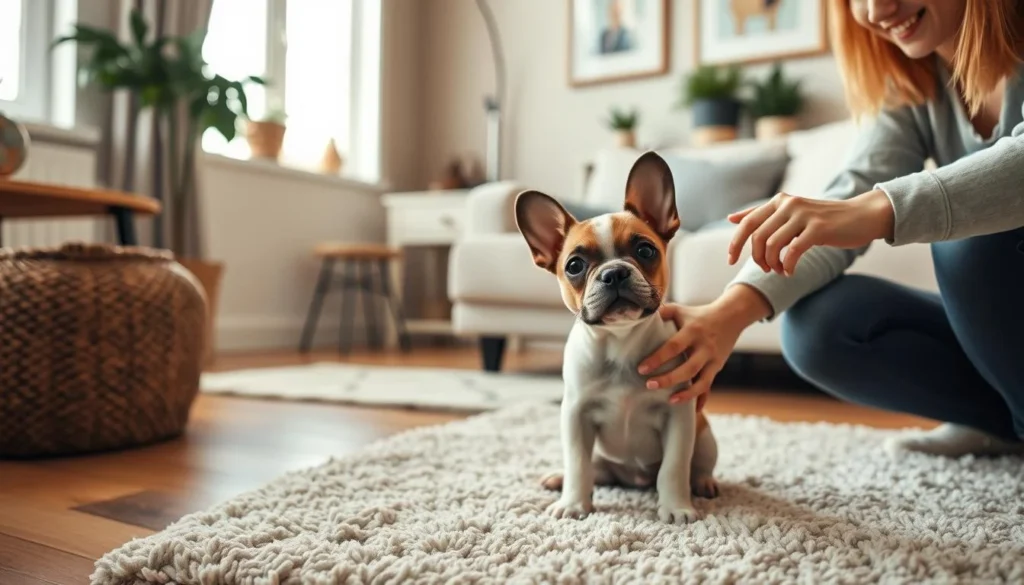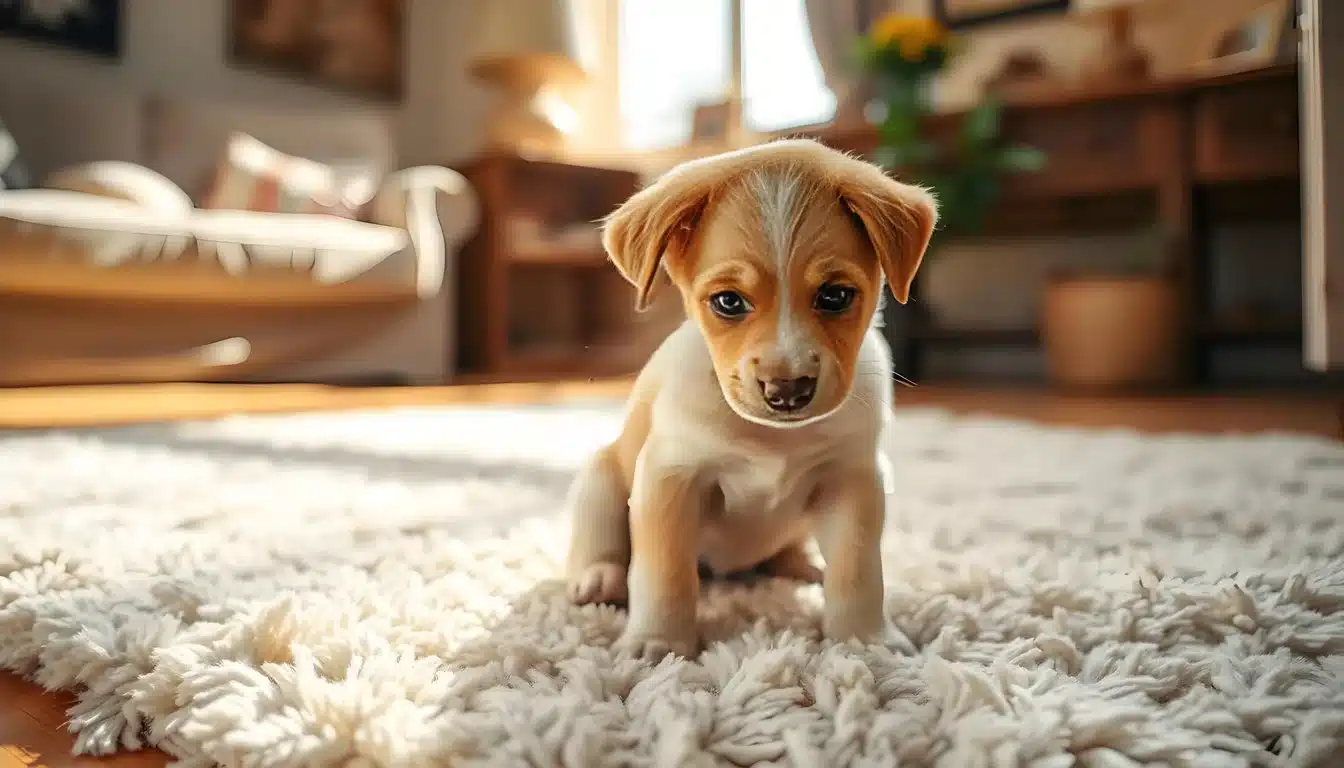
I remember the first week my Labrador mix arrived. It was filled with excitement, chewed slippers, and urgent moments. I knew housetraining would be key to our life together.
I wanted a clean home and a happy, confident puppy. So, I researched and planned before bringing him home. Puppy potty training is crucial, and starting early saves time and stress.
Good puppy potty training needs repetition, positive feedback, and a routine. Using a consistent cue word and rewarding immediately helped a lot. Whether you use classes, crate training, or puppy pads, being consistent and patient is key.
Some puppies learn fast, while others take longer. It depends on their age and background.
When training doesn't work, it's time to tighten the routine. Set regular feeding times and take your puppy outside every two hours. Supervise closely and clean up accidents well.
Tools like leash outings and potty bell training can help. Use praise and treats right after your puppy goes.
Key Takeaways
- Start with a clear plan: routines and positive reinforcement matter most.
- Use consistent cues, immediate rewards, and frequent outdoor trips to build success.
- Crate training, puppy pads, and classes are useful tools when applied consistently.
- If puppy potty training not working, tighten the schedule and supervise more closely.
- Potty bell training a puppy or leash-focused outings can speed up reliable habits.
Why puppy potty training matters for a happy home
I want your home to be calm, clean, and safe when a new puppy comes. Early housetraining is key for good manners and fewer accidents. It makes your home fresher and your life easier.
Benefits for your puppy’s behavior and health
Housetraining does more than stop messes. It teaches your puppy to control impulses and obey. It also keeps them healthy by avoiding infections from dirty places.
How housetraining builds routines and reduces stress
Set schedules make life stable. I suggest regular feeding and potty times. This makes your puppy's life predictable and yours less stressful.
When to start: age and readiness cues
Start planning before your puppy arrives. For young pups, offer to go outside every hour or two. Watch for signs like sniffing or circling to take them outside fast.
If training slows down, it might be a normal pause. Look for reasons like teething or illness. If you're stuck, check your schedule and how you're supervising before trying new things.
Creating a consistent housetraining schedule
I set a clear routine to help my puppy learn where and when to go. A steady puppy potty training schedule makes elimination more predictable and cuts down on accidents. I pair feeding, play, and rest so cues line up and the puppy knows what to expect.
Feeding times and how they predict potty breaks
I feed my puppy three small meals a day at the same times. Eating often triggers elimination, so I plan potty trips about 10–20 minutes after meals. This habit cements an association and helps the puppy anticipate breaks.
How often to take very young puppies outside
Puppies under eight weeks need very frequent outings. I take mine out every 1–2 hours and after naps, play sessions, and meals. Short, consistent trips build success and let me use a simple cue word like potty so the dog links the phrase to the action.
Nighttime strategies and reducing overnight accidents
I remove water about 2.5 hours before bedtime to lower the chance of mishaps. Most puppies can sleep up to seven hours, but I stay ready for a middle-of-the-night trip if needed. When I do wake the puppy, I keep the outing calm and brief so it stays a bathroom break, not playtime.
I use the same schedule each day to avoid confusion. These puppy potty training tips at night and puppy potty training tips and tricks work best when I stay consistent. Small, steady steps help both of us succeed with the routine.
Crate training as a potty training tool
I trust crates because they tap into a dog's natural den instincts. When I introduce a crate properly, a puppy often resists soiling the space where it sleeps. This instinct makes crate training a practical starting point for many owners. Crates also help puppies get used to vet visits, car rides, and other real-world demands without fear.
Choosing the right crate size is crucial. I recommend a crate that lets a puppy stand, lie down, and turn around with ease. For breeds that grow fast, I advise partitions or crates with dividers to section off space as the puppy grows. Too much empty room encourages a pup to pick a corner for elimination.
I follow a few clear crate do’s and don’ts to avoid accidents. Do keep confinement periods within the puppy’s bladder capacity. Do use the crate for rest and short, supervised breaks. Do not use the crate as punishment. Do not let a puppy roam unsupervised too soon after apparent progress, because that can lead to puppy potty training regression.
When a puppy soils the crate, I reassess the routine right away. I check feeding times, tighten the schedule, and add more outdoor trips. I clean the crate thoroughly to remove scent markers and avoid repeat soiling. If problems persist despite consistent steps, I suggest considering puppy potty training classes or consulting a veterinarian to rule out medical causes.
| Topic | Practical Tip | When to Adjust |
|---|---|---|
| Crate Size | Use a divider; allow stand and turn space | At growth milestones or if the pup sleeps in a corner |
| Confinement Length | Match to bladder capacity; short naps only for very young pups | If the puppy soils overnight or seems distressed |
| Accident Response | Clean with enzymatic cleaner; reset schedule | After any crate soiling or sudden regression |
| Supervision | Keep supervised freedom gradually; use a leash indoors | When the pup consistently eliminates outdoors |
| Training Support | Enroll in puppy potty training classes for guidance | If progress stalls or behavior regresses |
Using puppy pads and indoor potty options
Indoor potty aids are a good choice when you can't take your puppy outside. Puppy pads and paper options are great for those with busy schedules or living in small spaces. They provide a set spot for your puppy to go, helping them learn a routine.
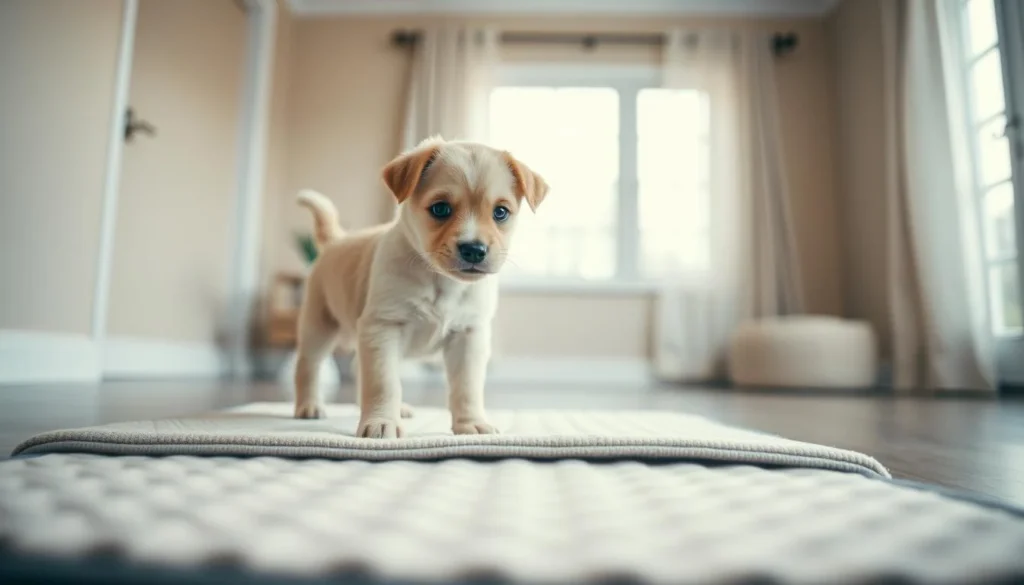
When puppy potty training on pads makes sense
Puppy pads are best for small breeds and busy homes. They make cleanup easy and keep your carpets clean. Starting with pads helps avoid accidents while your puppy gets used to going outside.
Transitioning from pads to outdoor elimination
When you're ready for your puppy to go outside, start by moving the pad closer to the door. Then, replace it with a patch of grass or a grass box. This helps your puppy learn to go outside.
Clean up accidents with an enzymatic cleaner to avoid smells. If you're tracking your puppy's health, look for pads that change color if there's a problem.
Placement, cleanup, and odor control for pads
Place puppy pads near the exit you want your puppy to use. This helps them learn to go outside. Use high-absorbency pads like Pet Life Unlimited Smart Prints for better protection.
For cleaning, remove solids quickly and replace pads regularly. Use enzyme products to remove smells. Move the pad slightly to prevent marking.
| Need | Recommended Option | Pros | Cons |
|---|---|---|---|
| Limited outdoor access | Puppy potty training pads | Convenient, low-stress, easy cleanup | May slow outdoor transition |
| Tiny breeds or seniors | High-absorbency overnight pads | Handles frequent small voids, odor control | Cost over time |
| Transition goal: outdoors | Move-pad method + grass box | Gradual link to outdoor location, effective | Requires patience and consistency |
| Monitoring health | Pads with pH or color indicators | Early detection of urinary issues | Higher upfront cost |
| Reinforcing signaled trips | Combine pads with potty bell training a puppy | Teaches cueing and increases communication | Needs training time and repetition |
Recognizing your puppy’s signals to go
I keep a close eye on puppies during housetraining. Small changes in their behavior tell me it's time for a bathroom break. Catching these cues quickly helps prevent accidents and teaches them where to go.
Common signs
Puppies often sniff the floor, circle, whine, or pace before they need to go. I see sudden restlessness or focused scratching at the door as a clear sign. Noticing these habits early is key when puppy potty training doesn't work out.
How close supervision helps
I keep my puppy in sight until they're reliable. Using a short leash, confining them to a small area, or baby gates keeps them from wandering off. If I see barking, squatting, or intense sniffing, I take them out right away.
Leash use during potty breaks
I always put the puppy on a leash for outdoor potty trips. This keeps them focused and away from distractions like squirrels or neighbors. Treating the yard like another room and making outings short and purposeful helps them learn faster when practicing leash potty training puppy.
Positive reinforcement techniques that work
I use simple, reliable methods to teach puppies where to go. Making learning fun is key. Positive reinforcement means timing, consistency, and meaningful rewards. When I get these right, we both see progress and feel less stressed.
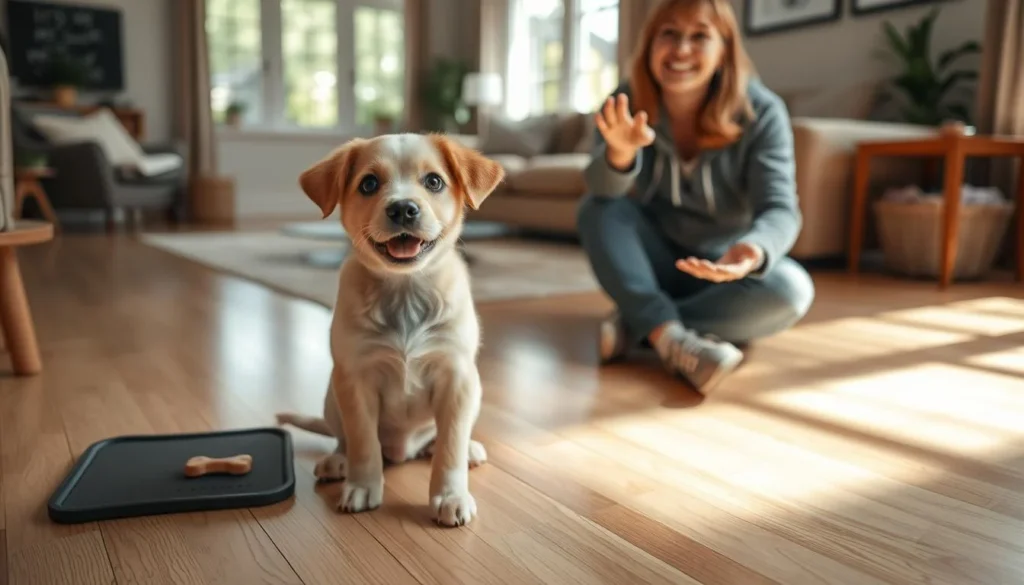
I keep training sessions short and treats small to keep the puppy interested. I praise and give a treat right after they go in the right spot. This quick reward helps them learn fast.
Timing praise and treats for strongest associations
I reward immediately after they finish, never before. If they start to go inside, I move them outside and reward them if they finish there. Quick rewards help them learn the fastest.
Using verbal cues like “potty” or “go potty”
I use a single, calm cue word for every potty trip. Saying the cue just before they start helps them connect the word to the action. Keeping the cue the same helps them understand it better.
Why scolding backfires and how to handle accidents calmly
I never yell or punish after the fact. Scolding can make puppies scared and confuse them. If there's an accident, I clean it up with an enzymatic cleaner. Then, I watch them more closely and adjust their schedule.
- Use short, frequent outings after meals and naps.
- Reward immediately and lavish praise when they succeed.
- Teach a cue and use it every time to reinforce the behavior.
- Handle accidents with calm cleaning and prevention steps.
These tips work best with a steady routine and patience. I only use a puppy potty training tips bell if it fits my schedule. It helps signal the door. Small, consistent wins lead to lasting habits.
Monitoring diet and its impact on potty training
I keep an eye on what my puppy eats because it affects when they go. Puppies have young guts, so regular meals help me guess when they need to go. Feeding them small, consistent amounts helps prevent accidents.
Feeding schedules and predictable elimination times
I feed my puppy three small meals a day at the same times. This routine helps me know when they need to go. It makes potty training easier and reduces accidents.
Meal size, food quality, and digestive health
How much I feed my puppy is important. Too much can cause loose stools and mess. I choose good brands like Royal Canin or Hill’s Science Diet for balanced food. I also watch the quality of their stool closely.
When to consult a vet for persistent diarrhea or accidents
If my puppy has persistent diarrhea or accidents, I call the vet. They can check for parasites, infections, or food allergies. This helps keep my puppy healthy and trains them well.
| Issue | What I watch for | My action |
|---|---|---|
| Irregular elimination | Unpredictable timing despite set meals | Adjust feeding times, increase supervision, log potty events |
| Loose or foul stools | Bulky, watery, or very smelly stool after meals | Switch to a high-quality puppy formula slowly; consult vet if persistent |
| Frequent accidents | Multiple indoor eliminations daily | Review schedule, reduce meal portions, rule out medical causes |
| Post-diet change upset | Temporary soft stool after new food | Gradual transition over 7–10 days and monitor stool |
| Ongoing issues after adjustments | Diarrhea or accidents for more than 48–72 hours | Schedule veterinary evaluation to determine cause and treatment |
Troubleshooting puppy potty training not working
It's really frustrating when things don't move forward. First, check if there are gaps in the schedule, too much freedom, or a crate that's too small. Toy breeds and rescue puppies often need more patience and a special plan.
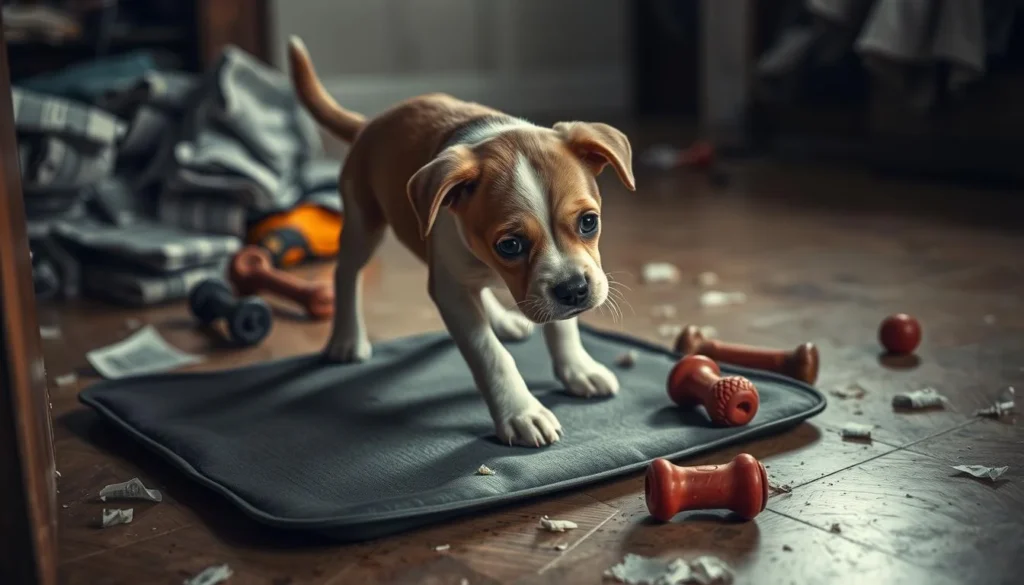
Then, look for hidden signs that were missed. Scents from past accidents can attract a puppy to the same spot. Use an enzymatic cleaner to get rid of the smell. Also, stick to a routine for feeding and playtime.
Common causes: schedule inconsistency and overlooked signals
Irregular feeding or changing outdoor times can confuse a puppy. They learn best through repetition. I suggest short, regular walks and watching them closely. This way, any sniffing or circling is noticed and dealt with quickly.
Medical causes and when to get a veterinary checkup
If accidents start happening more often, or if there's persistent diarrhea, see a vet. Issues like urinary tract infections or parasites can look like behavioral problems. Make sure to check for health issues before changing how you train.
When to seek a professional trainer or behaviorist
If health checks are okay and you still see problems, get help from a pro. Trainers and behaviorists can spot small issues and create a detailed plan. Puppy potty training classes offer structure, social time, and help owners stay on track.
- Review the daily schedule and tighten timing.
- Limit free access until consistent success.
- Clean accidents with an enzymatic product immediately.
- Consult a vet for sudden changes or frequent accidents.
- Enroll in puppy potty training classes or hire a certified trainer when progress stalls.
Special situations and advanced tips
I help many owners deal with small spaces, cold weather, or setbacks. I offer simple, easy-to-follow tips for apartment living, winter, and potty training ups and downs.
For tight spaces, I suggest indoor potty options. Puppy pads, dog potties, or small sod boxes are good choices. Small breeds need more breaks. If you have a dog walker, share the schedule to match feeding and nap times.
In cold weather, I shorten outdoor trips and focus them. Dress your pup in a jacket or booties if needed. Use indoor pads or a sheltered spot for snowy days. As it warms up, gradually move back to outdoor potty breaks.
Regression can be tough. It often happens when routines change or past accidents' smells return. Stick to a strict schedule, watch closely, and use a crate or small room when you can't supervise. Clean accidents with an enzymatic cleaner. Reward your pup for quick outdoor successes to help them get back on track.
Here's a quick guide to help you pick the best solution for your situation.
| Situation | Best short-term option | Key daily step | Expected timeframe to stabilize |
|---|---|---|---|
| Apartment with limited outdoor access | Puppy pads or sod box placed near door | Strict schedule with walks or walker every 3-4 hours | 2–4 weeks of consistent routine |
| Cold winter conditions | Indoor potty or cleared, sheltered outdoor spot | Short focused outings and warm protective gear | 1–3 weeks while adjusting to weather |
| Potty training regression | Temporary confinement plus increased outdoor rewards | Enzymatic cleaning and re-starting the schedule | Several days to 2 weeks with firm follow-through |
Bell potty training dogs and potty bells
I'll show you a simple bell method for puppies and adult dogs. Bell potty training dogs makes a clear signal your pet can learn quickly. I put a bell by the exit and link the sound with every potty trip. This way, the dog learns to ring the bell when they need to go outside.
How to teach the bell method step by step
I start by ringing the bell every time I open the door for a potty break. Then, I guide the puppy to touch the bell with their nose or paw. When they ring it, I open the door and take them to the right spot.
I reward them right after they go. This sequence—ring, door, go, reward—teaches them fast. These tips focus on being consistent and giving immediate feedback.
Schedules, cues, and predictable timing
I keep a reliable schedule for my dog to learn when it's time to go. I use a verbal cue like “potty” with the bell to make it stronger. When the bell is easy to reach near the door, they respond better.
For dog bell potty training, I always respond to the bell. This teaches them the bell means it's time to go, not just a sound. I adjust the timing for meals, naps, and play to match their natural potty cues.
Alternatives and mixing bells with pads or crates
I sometimes use indoor pads with bell training for apartment living. I put the bell on the path from pad to door. This way, the puppy learns to signal both options. Over time, I move the pad closer to the door and then remove it to encourage outdoor use.
When using a crate with a bell, I teach the dog to ring before I open the crate. This method reduces accidents and speeds up learning. Potty bell training a puppy works best with a calm response and a steady routine.
If you need a quick comparison, I can add a table. It will show the differences between bell-only, bell-plus-pad, and bell-plus-crate training. This can help you choose what fits your lifestyle.
Conclusion
I began by seeing puppy potty training as a key part of life with my dog. I planned ahead, chose methods that fit my life, and stayed consistent. This turned daily mess into calm.
Using positive reinforcement and enzymatic cleaners helped me deal with accidents easily. This made training less stressful.
Repetition and regular routines were key to success. I kept feeding times and rewards consistent. Breaking tasks into small steps and celebrating small wins helped.
Most puppies learn in a few months with patient owners. So, I focused on steady progress, not perfection.
If issues persisted, I checked with my vet for health problems. I also looked into professional trainers or puppy classes. With patience and clear habits, I found effective tips for lasting success.
In short, predictable routines, positive reinforcement, and timely help are the path to success. Stick to your plan, adapt when needed, and enjoy the bond as your puppy learns.