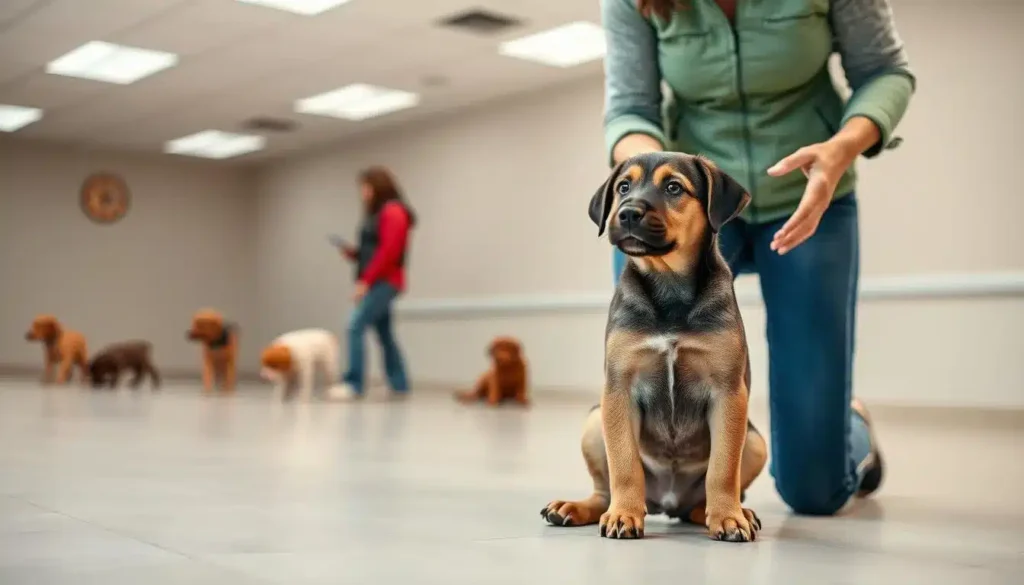
I remember the first time I met a dog who snapped at anyone who reached for his collar. My chest tightened, not from fear, but from understanding the dog's fear. This moment changed my view on training aggressive dogs. It's not about who's in charge, but about changing feelings and building trust.
When owners ask how to train an aggressive dog, they seek safe, effective steps. I follow a plan based on positive reinforcement, medical checks, and careful management. I avoid punishment because, as Michael Baugh warns, it can make things worse.
My method starts with safety and understanding. First, rule out health issues and learn the dog's body language. Then, set up the environment for success. Next, I use desensitization, counterconditioning, and teach new behaviors to replace bad ones. For dogs with severe histories, like those rescued from trauma, a tailored plan and expert guidance are crucial.
Key Takeaways
- Start by checking health and reducing immediate risks around the dog.
- Prioritize positive-reinforcement techniques over punishment for lasting change.
- Set the dog up to succeed with distance, low-stress practice, and gradual exposure.
- Use counterconditioning to change emotional responses to triggers.
- Seek experienced, individualized help for severe or complex cases.
Understanding aggression versus reactivity in dogs
I start by explaining two different responses I see in practice. Reactivity is when a dog shows strong emotions but doesn't mean to harm. Aggression, on the other hand, is when a dog acts in a way that threatens or harms to change another's actions or to get away.
When deciding how to help a dog, I use this difference. A reactive dog needs help managing their emotions, staying calm, and learning to cope. An aggressive dog needs a careful safety plan, a thorough check-up, and a structured program to change their behavior.
Definitions and why the distinction matters
Reactivity shows as barking, lunging, or frantic displays that are too big for the situation. These reactions are often because of fear, frustration, or too much excitement. Aggression, however, is when a dog growls, snaps, or bites to avoid or stop an interaction.
Knowing the difference changes how I help. For reactive dogs, I focus on calming them down and teaching them to manage their emotions. For aggressive dogs, I prioritize keeping everyone safe while working on a long-term plan to change their behavior.
Common signs of reactivity compared to true aggression
Reactive dogs often get very upset quickly but show signs of stress like lip-licking or a stiff body. They might bark and lunge but not follow through. Aggressive dogs, however, show clear threats like a fixed stare or raised hackles, and they try to bite.
Early action is key. I watch for signs of rising arousal and use distance or a different behavior to stop things from getting worse. This helps manage aggressive behavior in public or at home.
How emotional arousal affects behavior and learning
High arousal makes it hard for a dog to think clearly. When a dog is in the fight/flight/freeze zone, they can't learn and their reactions become automatic. This makes training during intense moments unsafe or ineffective.
My work uses the idea of conditioned emotional responses. Triggers become predictors of good or bad things. By changing these associations with slow exposure and rewards, I show owners how to help an aggressive dog by changing their feelings first.
| Feature | Reactivity | Aggression |
|---|---|---|
| Primary drivers | Fear, frustration, excitement | Defense, resource guarding, learned threat response |
| Common signals | Barking, lunging, pulling, lip-licking | Growling, snapping, biting, fixed stare |
| Best initial steps | Distance, emotional-regulation, counterconditioning | Safety plan, medical check, structured behavior program |
| Training focus | Techniques to curb dog aggression via reward-based desensitization | Careful behavior modification, possible medication, professional assessment |
| Risk of escalation | Moderate; arousal can lead to aggression if unmanaged | High; poses clear safety concerns without intervention |
Causes of aggressive behavior in dogs: fear, pain, and environment
I start by checking for medical issues and recent changes at home. A quick vet visit helps rule out pain, infection, or brain problems that might make a dog snap. If the vet says everything is okay, I look into past traumas, family dynamics, and routines to get the emotional picture.
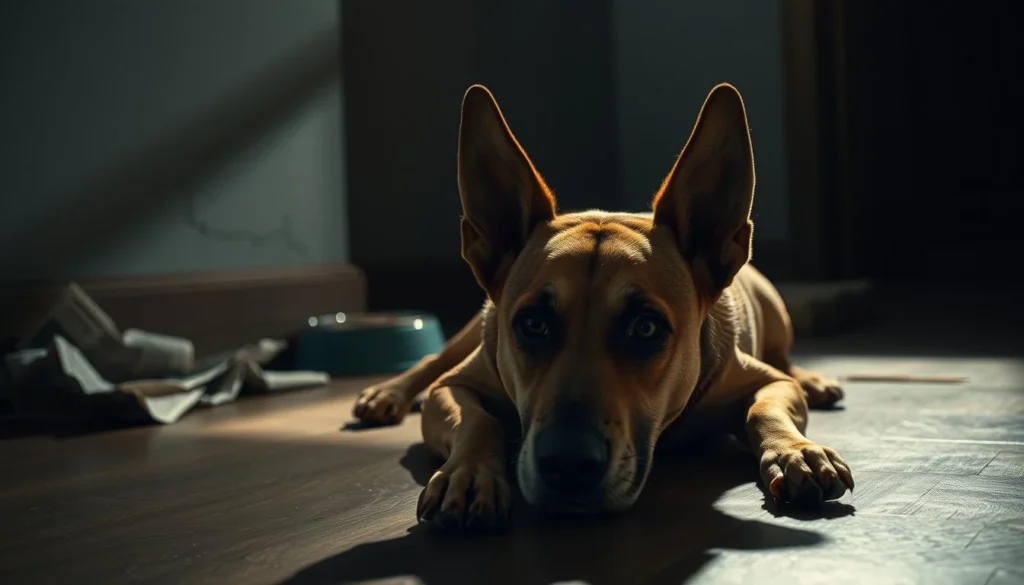
Fear-based aggression and previous trauma
Fear is a big reason I see. Dogs that were attacked or used as bait often fear people, other dogs, sounds, or places. I look at how they react to triggers, their body language, and comfort zone to plan low-stress steps.
Pain and medical causes that can produce aggression
Pain can quickly change a friendly dog into an unpredictable one. Issues like arthritis, dental pain, ear infections, and internal problems are common culprits. I always check for medical issues first because fixing the problem can stop aggression without training.
Breed, age, and environmental factors that increase risk
Studies show certain factors increase aggression risk. Older dogs, intact males, and dogs with fearful personalities are more likely to be aggressive. Some breeds, like Collies and Toy Poodles, are more prone, while others, like Labradors, are less so.
Environmental stress also plays a big role. Crowded homes, lack of socialization, and inexperienced owners can lead to aggression. Dogs without friends can feel lonely and lash out more.
I use these insights to plan how to manage aggressive dog behavior. First, I do a full exam, gather history, and check the living environment. Then, I set out humane, achievable steps to reduce stress and build trust.
If you want to help an anxious aggressive dog, start with predictable routines and safe tools. Gradually changing behavior helps the dog feel safe again without making things worse.
Initial safety and management steps for an aggressive dog
I start by setting up predictable routines and clear paths in the house. This helps the dog know what to expect, which lowers their excitement and makes it easier to manage their aggression. I map out quiet paths from their crate or bed to the door. These paths are used for both exits and entries.
I use barriers and gates to keep the dog away from areas that might upset them, like the front door. A baby gate can give the dog space while keeping everyone else safe. These simple steps help reduce the risk of things getting worse while I work on changing their behavior.
Immediate household safety: routes, barriers, and routines
I block the dog's access to windows, doors, or rooms that might upset them. I also stick to short, consistent routines for feeding, play, and going out. When everyone follows the same rules, the dog learns to expect calm interactions.
Managing walks and public exposure to reduce incidents
I plan walks for quieter times and choose routes with less traffic. Walking early in the morning or late in the evening can help avoid triggers. If I see a potential problem, I increase the distance, change direction, or cross the street to avoid it.
I teach handlers to read the dog's body language so they can step in early. Signs like intense staring, stiff posture, or fixed focus mean it's time to move the dog away before things get worse. These small actions help prevent problems and build confidence for both the dog and the handler.
Tools that help with management without causing fear (muzzles, crates)
I introduce safety tools like muzzles and crates slowly and positively. A well-fitted Baskerville basket muzzle lets the dog pant and drink while keeping people safe. I pair muzzle training with treats so the dog sees it as a safe cue, not punishment.
I suggest using front-clip harnesses or gentle leader head halters for better control without force. Crates can be secure, calm dens when introduced with praise and treats. It's important to never use these tools as punishment. They should be part of a safe plan that complements training.
These management steps are the foundation for changing the dog's behavior. By reducing pressure, increasing distance from triggers, and using humane tools for safety, I set the stage for effective training. These practices are part of my overall approach to managing aggressive dog behavior. They provide practical tips for training aggressive dogs and using proven tools for training aggressive dogs.
Behavior modification principles I use to help aggressive dogs
I start by making sure the dog can succeed. When working on behavior modification, I control the distance from triggers. I also choose very low-stress settings to begin. Small wins build confidence and make learning reliable.
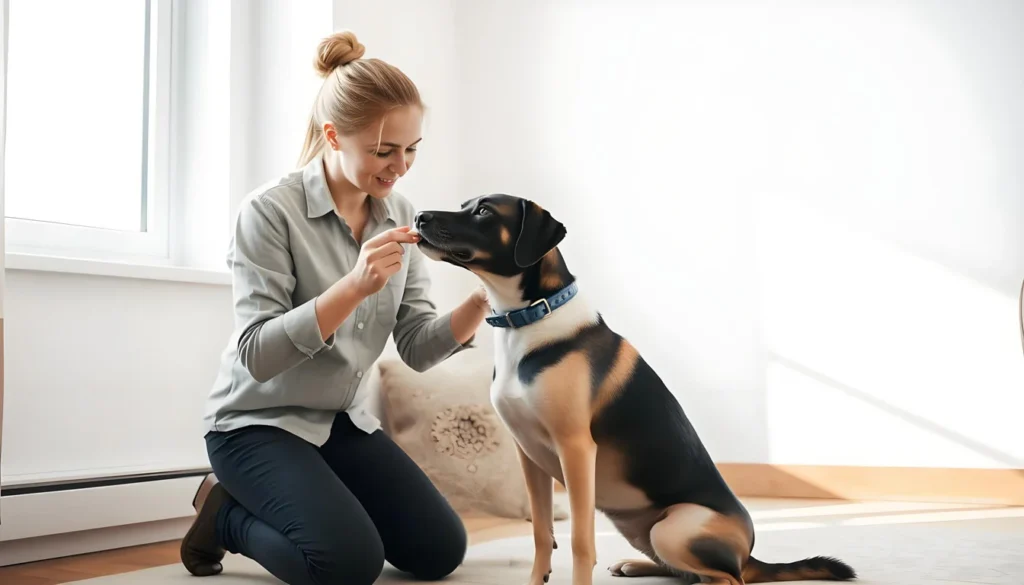
I avoid using punishment. My focus is on changing what the dog does and how the dog feels. I use predictable routines, high-value rewards, and clear cues. This helps the dog learn safer choices instead of feeling forced.
Focus on behavior change rather than punishment
Punishment often raises arousal and fear. I prefer positive-reinforcement steps that reward calm responses. This approach reduces the risk that an anxious dog will become more defensive or escalate aggression.
Setting dogs up to succeed: distance, low-stress environments, gradual exposure
I manage distance carefully, so triggers sit below the dog’s threshold. Training begins where the dog is comfortable. I increase challenge slowly while reinforcing the targeted behavior each time the dog succeeds.
Replacing unwanted behaviors with desirable alternatives
I teach clear replacements like “go to mat,” “look at me,” or a settle cue. Teaching an incompatible behavior gives the dog a practical action to use when a trigger appears. Repetition in calm contexts transfers those choices into real situations.
My plan often follows three linked steps: management to keep everyone safe, positive-reinforcement training to change responses, and education in body language so owners spot rising arousal early. This structure supports lasting change and informs decisions about when medication or veterinary input may help.
| Goal | Initial Setup | Training Tool | Expected Result |
|---|---|---|---|
| Reduce lunging at strangers | Work at double the dog’s comfort distance | High-value treats, go-to-mat cue | Dog chooses mat instead of charging |
| Lower reactivity to passing dogs | Parallel walks with 20–30 feet separation | Counterconditioning with favorite food | Neutral or positive emotional response |
| Stop growling when approached | Controlled, calm handling sessions | Desensitization steps plus alternative behaviors | Safe greeting routine or clear avoidance cue |
I use these techniques to curb dog aggression by teaching new skills and softer emotional reactions. Owners see steady progress when they replicate the same structure, timing, and rewards at home. For anyone wondering how to help an aggressive dog, clear steps, patience, and consistent practice make the difference.
Desensitization and counterconditioning techniques for trainers
I create detailed plans to change how a dog reacts to triggers. I use a mix of desensitization and counterconditioning. This helps the dog learn to stay calm instead of feeling scared or aggressive.
How I create progressive exposure plans
I start by making a list of steps for each trigger. This list includes distance, intensity, and how long to stay. I find out how close the dog can be without getting upset.
I keep the sessions short and simple to avoid overwhelming the dog. I use safety tools like a basket muzzle or a barrier when needed. I only move closer if the dog stays calm.
If the dog gets upset again, I go back to an easier step. I keep doing this until the dog stays calm consistently.
Using high-value rewards to change emotional associations
I use treats like rotisserie chicken, cheese, or jerky to help the dog associate the trigger with good things. I reward the dog for staying calm or doing something else, like looking at me.
I also use praise and movement to help the dog feel good about the trigger. This mix of techniques helps change how the dog feels about the trigger.
Measuring progress and increasing challenge levels safely
I track how well the dog is doing by measuring distance, volume, and time. I keep notes and videos to see small improvements.
If progress slows down, I check if the dog is motivated enough or if there are medical issues. For serious cases, I might need help from a behavior expert.
| Step | Action | Metric |
|---|---|---|
| Assess threshold | Expose at increasing distances until calm breaks | Distance (feet/meters) where dog remains calm |
| Pairing | Deliver high-value reward when trigger appears | Number of successful pairings per session |
| Rehearse incompatible behavior | Train look, mat, or sit-away during exposure | Percent compliance under stimulus |
| Progression | Increase intensity or reduce distance gradually | Consistent calm at new level for 3 consecutive sessions |
| Safety check | Use barriers/muzzle and reassess health if needed | Recorded incidents and veterinary referrals |
Training incompatible behaviors to interrupt aggression
I start by identifying what triggers aggression and finding better behaviors to replace them. My goal is to teach simple, reliable actions that make the dog look to me instead of react. I use treats and praise to make these new habits feel safe and rewarding.
Examples I teach
I teach a few key behaviors that work in many situations. These include a focused look cue, a mat routine, a leave-it command, and settling behind a barrier. These actions are easy to do and work well even when things get tough. For many dogs, learning to look at me is the first step in stopping aggression.
My go-to-mat for reactivity gives dogs a safe place to calm down. Owners like this because it's clear and structured.
How I teach and proof under distraction
I start in quiet rooms and build each behavior in small steps. I reward them right away and keep training sessions short. Once they get it, I add more distance and distractions.
I make the behaviors stronger by changing how far away I am, when I reward them, and how often. I practice in different places and with distractions until they stay calm. I also use random rewards to keep the behavior strong when real triggers happen.
Pairing triggers with positive emotional responses
I pair the original trigger with quick, predictable rewards. This makes the trigger a signal for good things instead of danger. Over time, the dog learns to feel positive about stressful events.
I follow Baugh’s teach-this-instead-of-that approach to replace bad reactions with calm routines. For dogs with severe histories, patience and skill are key. In these cases, teaching incompatible behaviors is crucial for safe re-socialization.
| Behavior | Purpose | First steps | Proofing method |
|---|---|---|---|
| Look at me | Shift attention away from trigger | Click for eye contact, reward fast | Increase distance, add quick distractions |
| Go-to-mat for reactivity | Create a safe, stationary place | Guide to mat, reward calm posture | Layer trigger presence, extend time on mat |
| Leave-it | Prevent escalation toward object or animal | Trade treat for item, mark the choice | Introduce tempting items, randomize rewards |
| Settle behind barrier | Reduce arousal while exposed | Teach calm on cue with short durations | Practice near windows, doors, then with passersby |
Here are some tips for training aggressive dogs: start with distance, reward fast, and keep training short but frequent. Never rush the proofing process. Small successes add up to reliable control when it counts.
Managing dog-to-dog aggression and reactivity towards other dogs
I start with clear, simple management to make owners feel safe and dogs learn. My focus is on distance work to prevent escalation and teach calm responses. I set thresholds and build success by keeping interactions slow and predictable.
How to help an aggressive dog towards other dogs starts with finding the distance where the dog notices another but doesn't react. I ask owners to feed high-value treats while a second dog is present well outside that threshold. This pairs the other dog's presence with good things.
I use an ordered plan that moves in small steps. First, management and safe exits. Next, controlled distance work where the reactive dog watches another dog from a neutral spot. Then I add movement and gradually increase challenge only when the dog stays below threshold.
Parallel walking techniques are a key progressive step. Walking two dogs side-by-side, but well separated, helps pair forward motion with a neutral presence. I coach handlers to keep pace steady, reward calm attention, and widen space again at any sign of stress.
I teach owners to read body language to prevent escalation. Early warning signs I watch for are stiff posture, fixed stare, raised hackles, whale-eye, and sudden silence. I intervene before those signs grow into lunges or snapping, using distance or brief redirects.
Controlled greetings come late in the program. I only allow approach when both dogs show relaxed signals and loose movement. If one dog tightens, we step back to parallel walking and regroup. In severe cases, such as dogs with abuse histories, I recommend expert-led desensitization and slow, conservative progress.
My protocol blends management, distance work, and gradual exposure for reliable dog-to-dog aggression management. I sometimes introduce a calm, well-trained dog in a controlled setting to model calm behavior. I coach handlers to track triggers, reward small wins, and keep sessions short and positive.
Addressing anxious aggressive dogs with calming strategies
I help anxious aggressive dogs by reducing stress and setting clear routines. A steady schedule helps them know what's next, which lowers fear. I make sure they have predictable walks, set feeding times, and quiet rest periods.
How to help an anxious aggressive dog through routine and enrichment
I add mental games like puzzle feeders and scent games to keep them engaged. These activities help them focus and burn energy. I also suggest structured exercise like leash walks and short play sessions.
I make small changes to their environment to reduce stress. This can mean moving a bed or adding privacy screens. These small changes help lower daily stress and make behavior change easier.
Relaxation protocols and impulse-control exercises
I teach a progressive relaxation protocol starting with settling on a mat. I reward calm behavior in small steps. This helps the dog learn to stay calm for longer.
Impulse-control games are key in my work. I use sit-wait drills and leave-it with delayed rewards. These exercises help the dog choose calm responses over reacting.
When and how medication can support behavior change
I first check for medical causes with a vet. If there's pain or thyroid issues, treating them can help. If the dog's anxiety is still high, I discuss medication with a vet behaviorist.
Medication helps lower anxiety so the dog can learn. I often work with vets on fluoxetine or trazodone. Medication is always paired with behavior modification to teach new emotional responses.
| Goal | Example tactic | Expected benefit |
|---|---|---|
| Lower daily stress | Consistent routine and quiet zones | Fewer reactive episodes and clearer learning windows |
| Increase focus | Puzzle feeders and scent work | Mental tiredness that reduces anxiety-driven behavior |
| Build self-control | Impulse-control games (sit-wait, leave-it) | Calmer choices when faced with triggers |
| Support learning | Veterinary-guided medication for dog aggression | Lower arousal so behavior change is possible |
Positive reinforcement techniques and why I avoid punishment
I focus on changing how dogs feel and act, not scaring them. For aggressive dogs, I use positive reinforcement. It builds trust and helps them respond calmly. I learned from experts that punishment often makes things worse.
Short- and long-term effects of punishment on aggression
Punishment might stop a bad behavior, but it's risky. It can make a dog more scared of triggers. I avoid punishment to prevent this.
Punishment also hurts the bond between dog and owner. This makes learning harder and less reliable. I aim for lasting change, not just stopping the behavior.
Examples of positive-reinforcement plans that reduce aggression
I start by finding out what triggers the dog's aggression. Then, I create steps to help them get used to the trigger while staying calm.
I use treats, play, and praise to reward calm behavior. I teach them to do things like "look at me" or "go to mat." This gives them better choices than reacting.
I use a clicker or a clear word to help them learn faster. I change the rewards to keep them interested. I also keep track of their progress to adjust the plan as needed.
How praise, food, and movement create new emotional responses
When a trigger means treats or play, the dog starts to look forward to it. I keep sessions short and fun so they can succeed often. Over time, this new response becomes a habit.
Using positive reinforcement is a smart way to train aggressive dogs. It changes their feelings, not just their actions. I teach owners to be consistent, patient, and clear. This approach leads to steady progress without the dangers of punishment.
When to seek professional dog training for aggressiveness
Many owners face a tough choice: when to seek help beyond DIY methods. If your dog lunges, bites, or shows threats, acting fast is crucial. Professional dog training can prevent things from getting worse and keep everyone safe.
Start with a thorough evaluation. A skilled professional will check for medical issues, find out what triggers your dog, and see how far they'll go. This helps create a safe and effective plan, not just guesses.
Choosing between a certified behavior consultant and a trainer
For serious aggression, look for a vet behaviorist like a DACVB or a certified animal behaviorist like an ACAAB. They handle tough cases and can suggest medication.
For issues like leash reactivity, a certified trainer with CPDT-KA or CBCC-KA is a good choice. They create detailed plans and teach owners how to help their dogs.
Questions to ask prospective professionals and what credentials matter
Ask about their credentials, experience, and plans. Make sure they check your dog's medical history, do threshold tests, and have insurance.
Find out if they use positive methods, avoid punishment, and focus on safety. Ask for references and examples of similar cases.
How a professional evaluation informs an individualized plan
A good evaluation looks at your dog's health, behavior, and what triggers them. It also includes controlled tests. Expect a plan with clear steps, safety rules, and what you need to do.
Good professionals offer ongoing support, adjust their methods as needed, and work with vets for medication or pain management.
Choosing a behavior consultant or trainer is a smart move. It can change your dog's behavior for the better. Act quickly and pick someone whose methods fit your dog's needs and your values.
Practical tips for owners: consistency, tracking, and home setup
I help owners create simple, repeatable habits for training. Short sessions of five to ten minutes, spread through the day, help dogs learn without getting tired. I use the same cues, timing, and treats to show what's correct.
Consistent practice is more effective than long sessions. Use daily routines to teach behaviors like "look at me" and "go to mat." These help lower reactivity and give the dog a clear job when faced with triggers.
Keeping a log helps track progress in training. Record date, time, trigger, distance, response, reward, and threshold distance. Reviewing notes weekly helps spot patterns and small wins.
Teach families to recognize early warning signs. This way, they can change distance or manage the environment before things get worse. When everyone follows the same plan, the dog learns faster.
Adjusting the home setup can help reduce pressure and create more learning opportunities. Use gates to create safe zones, keep quiet rooms for breaks, and block outside triggers with blinds or frosted film. Place chews and puzzle feeders in low-traffic areas to lower arousal.
Below is a checklist I use with owners for daily practice, tracking, and home layout. Use it as a starting point and adapt based on your dog's needs and your household rhythm.
| Area | Action | Frequency |
|---|---|---|
| Daily training | Three 5–10 minute sessions: cue practice, incompatible behaviors, calm settling | Daily |
| Progress log | Record date/time, trigger, distance, response, reward, threshold distance | After each session or incident |
| House layout | Install gates, create a quiet room, add escape routes, block visual triggers | One-time setup, review monthly |
| Management tools | Use muzzles, crates, leashes for safety without punitive force | As needed |
| Enrichment | Puzzle feeders, long-lasting chews, supervised play to reduce arousal | Daily |
| Family consistency | Agree on cues, rewards, and handling procedures; brief family meetings | Weekly |
| Review | Analyze log for trends, adjust distances and rewards, set new thresholds | Weekly |
Conclusion
I've written this guide to help train an aggressive dog carefully. First, check for medical issues with a vet. Then, set up clear rules to keep everyone safe while you work.
My method focuses on changing behavior, not just suppressing it. I teach new behaviors and change how they feel with positive reinforcement. This helps them learn to respond better.
Training aggressive dogs needs a mix of desensitization, counterconditioning, and teaching new behaviors. Use "look at me" or "go to mat" to replace old ones. Start slow, keep a safe distance, and track progress well.
For dogs with past traumas, seek help from a pro. They can create a safe, structured plan for your dog's needs.
Helping an aggressive dog is about safety, consistency, and proven methods. With vet checks, smart rules, and positive reinforcement, owners can make their dogs better. This improves their emotional health and strengthens their bond.