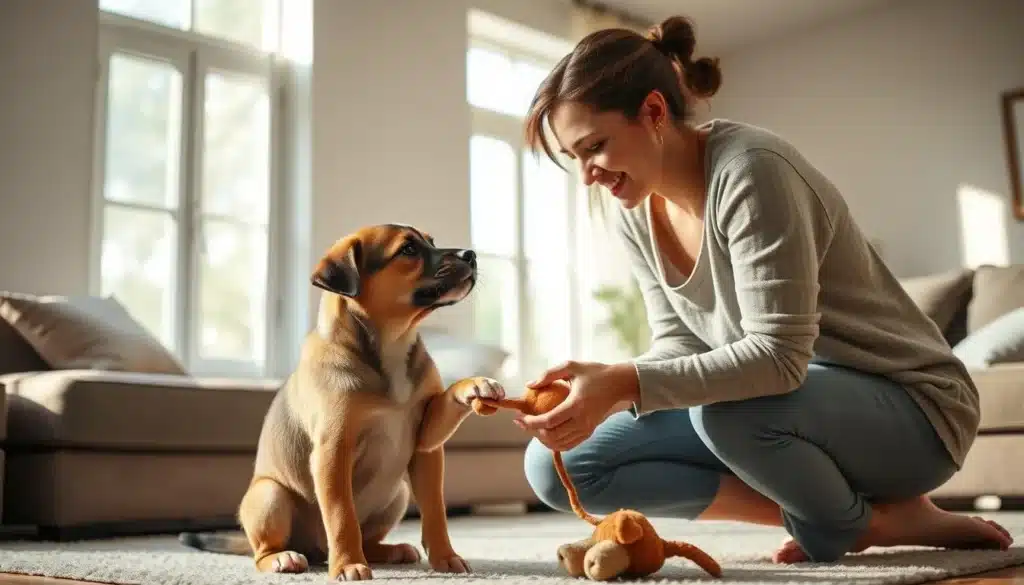
I remember the first night with my puppy. He was so soft and nervous. And then, the accident on my rug. It showed me how crucial potty training is for us.
It's not just about keeping things clean. It's about building trust and a routine. This makes our life together predictable and calm.
Before starting, I did my research. Planning was key. I learned that being consistent and positive is better than punishment.
A simple cue like "potty" helps him learn where to go. I set a schedule, chose a spot, and rewarded him right away.
To speed things up, I took him outside every two hours. I also went outside after he woke up, played, ate, or drank. This helped him learn fast.
Keeping calm and waiting to praise him helped too. It avoided interruptions and strengthened the habit. This way, we made progress without stress.
Key Takeaways
- Potty training my puppy sets routines that protect the home and build trust.
- Positive reinforcement and a consistent cue like "potty" are more effective than punishment.
- Frequent outings — especially after sleep, play, and meals — speed learning.
- Choose one outdoor spot and reward immediately after elimination.
- Planning and repetition help me achieve potty training a dog quickly and calmly.
Why potty training my puppy matters for a happy home
I want a clean house, a calm routine, and a strong bond with my puppy. Housetraining gives me these things. It's more than just avoiding messes. It shapes our daily life, reduces stress, and makes our time together predictable.
Using consistent cues and rewards helps a lot. Positive reinforcement teaches my puppy what I expect. This keeps accidents rare and makes outings easier to plan.
When my puppy knows a command like “go potty,” trips outside become efficient and less stressful.
Early training has many health, hygiene, and behavior benefits. A set schedule prevents urinary tract issues and keeps odors down. Teaching a reliable outdoor spot reduces repeated soiling inside. These habits protect my home and my puppy’s wellbeing.
Early training sets the foundation for obedience and future learning. Teaching potty routines while my puppy is young makes other commands easier to teach later. Waiting until my puppy finishes before I praise builds a dependable response. That timing trains patience and focus.
Below are practical benefits I rely on:
- Routine: Predictable feeding and bathroom times make life simpler.
- Clean home: Fewer stains, less odor, and less cleaning time.
- Clear communication: My puppy learns cues and where to go.
- Outdoor success: Potty training outside puppy reinforces leash manners and consistency.
When I commit to habits, the payoff is steady. My house stays tidy, my puppy learns expected behavior, and we both enjoy a calmer, happier home.
Choosing the right potty training method for my situation
I need a solid plan before starting. I compare crate training, puppy pads, and outdoor-only options. This helps match my lifestyle, my puppy’s needs, and my home. The right method saves time and stress.

I consider how each method fits my daily routine. Crate training taps into a dog’s den instinct and can speed up learning. Puppy pads offer flexibility when I’m busy. Outdoor-only training builds habits for walks and public spaces.
I quickly compare the pros and cons for apartment living, busy days, and cold weather. This helps me decide between crate training, puppy pads, or outdoor-only routines.
Crate training
- Pros: Sets clear boundaries, encourages bladder control, useful for naps and nighttime.
- Cons: Needs proper crate size and partition use; too large crates can lead to accidents.
- Notes: I choose a crate just big enough for my puppy to stand, turn, and lie down to avoid accidents.
Puppy pads
- Pros: Suitable for tiny breeds, extreme weather, or long gaps between outings.
- Cons: Can teach two acceptable spots to eliminate, confusing outdoor training later.
- Notes: I place pads near doors to link indoor pads with going outside when transitioning.
Outdoor-only
- Pros: Fast transfer to real-world behavior and socialized elimination spots.
- Cons: Requires consistent outdoor access; not ideal for apartment living with limited grass.
- Notes: I schedule short, frequent trips to reinforce where to go and use treats for success.
I consider my puppy’s age, breed, and history before choosing. Young pups need more breaks. Tiny toy breeds often need special timing. Rescued dogs may need patience due to inconsistent care.
When deciding, I combine realistic timing with the best method for my life. For apartment living, I focus on potty training a dog in an apartment strategies and controlled crate use. If I travel or work long hours, puppy pads can fill the gaps while I plan a transition.
My final choice balances consistency, the puppy’s background, and what I can sustain daily. Staying realistic about my schedule helps me commit to the method and see steady progress.
Creating a consistent potty training schedule
A steady routine makes housetraining easier for both of us. A clear potty training schedule gives my puppy predictability. It helps me spot patterns in elimination.
I plan meals, breaks, play, and rest around my puppy’s needs. This way, my days flow smoothly.
Feeding times and predictable elimination windows
I follow a consistent feeding schedule: three small meals a day for young pups. Meals are spaced at the same times each day. This makes elimination more predictable.
Right after eating, I watch closely. Most puppies need to go within 10–30 minutes. I take my pup outside or to the indoor spot I choose during this time.
How often to take my puppy out by age and bladder control
Puppies can hold their bladder for about the number of hours equal to their age in months. A two-month-old needs to go every one to two hours. A six-month-old can wait up to six hours, but breeds vary.
Young puppies need to go first thing in the morning, after naps, after play, after chewing, and before bedtime. I also take them out after drinks and meals. This reduces accidents and reinforces good timing.
Scheduling tips when I work or travel
When I work in-person, I arrange a dog walker or neighbor to visit midday. They follow the same feeding and potty routine. Clear notes about feeding schedule puppy and break times keep everyone on the same page.
For travel, I keep meal times steady and ask a trusted caregiver to replicate my schedule. If I have to be away for a long time, I use a supervised indoor potty option. This way, my absence does not pressure my puppy to learn outdoors.
Small changes and consistent timing build confidence. I check progress weekly and adjust outings as my puppy gains bladder control and age-appropriate independence.
Crate training as a potty training tool
I use a crate because dogs naturally avoid soiling their den. This instinct makes crate training a reliable method for me. A crate provides structure, helps with vet visits and travel, and teaches bladder control with a steady schedule.

Choose a crate size puppy that's just big enough for them to stand, turn, and lie down. A crate that's too big can lead to a corner being used as a bathroom. I use partitions to make the space smaller as my pup grows. This way, I avoid buying many crates and keep the area cozy.
Introducing the crate without stress
I never force my puppy into the crate. I feed meals there and let them come and go during short visits. If they whine or scratch, I take them out right away. This teaches them the crate is safe.
Preventing soiling and building routine
Controlling diet and having a predictable schedule helps prevent accidents. I increase outside trips when my puppy is young or after play and naps. If I'm away for a long time, I arrange for a dog walker or a trusted neighbor to keep trips frequent.
Using the crate for naps, bedtime, and unsupervised periods
I use the crate for restful times, not punishment. Naps and bedtime help my puppy learn to control their bladder overnight. The crate also keeps my home safe and my puppy secure when I'm away. If I adopt a rescue who soils, I go back to basics: tighter scheduling, short crate periods, and more outdoor time to relearn clean habits.
Using puppy pads and indoor potty solutions
I found out that puppy pads are a big help when I need a safe spot for my pup inside. They're great for when it's too cold to go outside or when I'm stuck inside. I use pads like Pet Life Unlimited Overnight Smart Print to keep the smell down and protect my floors.
When pads help and when they complicate outdoor goals
Puppy pads are super useful for potty training my puppy when I'm busy. They help keep my home clean and reduce accidents. But, using them too much can make it hard for my puppy to learn to go outside.
I watch for signs that my puppy is getting too used to using pads. I want them to learn to go outside only.
Placement and the gradual transition strategy
I put the pads near the back door so my puppy knows where to go. For younger pups, I use a pad in a playpen. This helps them learn to go to one spot.
When it's time to move from pads to outside, I start by moving the pad a little closer to the door each day. Then, I put the pad outside and replace it with a small patch of grass.
I always give treats and praise when my puppy goes outside. This helps them learn faster.
Options for tiny breeds and extreme weather
For small breeds, I use pads that fit their size to avoid mess. I also use pads that don't leave tracks on the floor. In really cold weather, I use a special indoor spot or a covered area outside.
These choices help keep potty training kind and effective for my puppy.
| Scenario | Best pad type | Placement tip | Transition suggestion |
|---|---|---|---|
| Apartment with frequent outings | High-absorbency overnight pad | Near service door or balcony exit | Move pad daily toward door, then outside |
| Busy schedule / long workdays | Odor-control, extra-thick pads | Visible corner of living area or playpen | Use pads as liners, replace with sod box when ready |
| Tiny breeds | Small anti-tracking pads | Close to their sleeping/playing spot | Short, frequent outdoor trips plus gradual move |
| Extreme winter or heavy rain | Waterproof-backed, odor-eliminating pads | Indoor protected area or covered outdoor box | Introduce outdoor sod box near door, then expand outdoor time |
Recognizing my puppy’s signals and preventing accidents
I keep a close eye on my puppy to catch early signs. Changes in posture, sniffing, and circling are clues. Whining or scratching at doors also mean it's time for a bathroom break. This way, I can stop accidents before they start.

Using simple tools helps me keep my puppy in sight. Tethering, playpens, or baby gates keep them close. When outside, a leash helps them focus on the right spot.
Spotting a signal, I act fast. If they start to go inside, I quickly take them outside. After they finish, I praise them to link the action with positive feedback. Scolding later can confuse them and hinder training.
Setting routines helps avoid surprise accidents. Regular feeding and walks create predictable times for bathroom breaks. This approach makes potty training faster with my constant supervision.
Having cleaning supplies ready helps with messes. Enzymatic cleaners remove scents to prevent repeat accidents. If accidents keep happening, I increase supervision and shorten freedom periods.
Here's a comparison of supervision methods to find the best fit for my home and schedule.
| Supervision Method | How I Use It | When It Works Best |
|---|---|---|
| Tethering with a short leash | I clip the leash to my belt or furniture so my puppy stays near me and I notice signals quickly. | During active house time and when I need constant visual contact to recognize puppy signals. |
| Playpen or exercise pen | I create a safe, small area with toys and a bed; I supervise from close by and limit access to the rest of the house. | When I need a contained space for short unsupervised periods or during training sessions. |
| Baby gate or room confinement | I close the puppy in a bathroom or laundry room with easy-to-clean floors and take them out on a tight schedule. | At night or when I must leave for brief errands and want to prevent accidents puppy while away. |
| On-leash outdoor training | I walk my puppy on leash straight to the designated potty spot and wait calmly until they go. | When reinforcing outdoor habits and working to transition from pads to outside elimination. |
Positive reinforcement and reward strategies I use
I give clear, immediate feedback to my puppy. This helps them connect the action with the praise. Using rewards at the right time makes potty training easy and calm. Short, consistent sessions keep the message clear without overwhelming them.
Timing treats and praise so my puppy connects the behavior
I wait until my puppy finishes before giving praise or treats. This avoids interruptions and creates a positive link between the potty and the reward. I use a happy tone, a quick clap, and a small treat within two seconds for an immediate connection.
Choosing high-value treats and minimizing distractions
I use small, high-value treats like cooked chicken or training bites from Purina or Blue Buffalo. These small bites prevent stomach upset and keep training quick. During potty trips, I keep the leash short and avoid toys or play until after the reward, focusing on the task.
How to celebrate success without interrupting elimination
After the treat and praise, I let my puppy sniff and wander briefly outside. A bit of playtime shows that going out is fun, not punishment. I keep celebrations short and positive, making potty training fast and stress-free for both of us.
| Strategy | What I do | Why it works |
|---|---|---|
| Immediate reward | Give treat within two seconds after finishing | Creates a clear link between action and reward |
| High-value small treats | Use chicken, cheese, or training bites in pea-sized pieces | Fast consumption, strong motivation, avoids upset |
| Minimal distractions | Keep leash short, no toys until after reward | Puppy stays focused on elimination task |
| Post-reward routine | Brief sniff or play outside before returning inside | Signals that potty time leads to positive play, not end of fun |
| Consistency | Same cue words, same treat choices, same timing | Reinforces habit and speeds progress |
Managing diet, water, and their effect on potty training
I keep things simple with diet and water to make potty training easier. Puppies have hard-to-digest food, so I feed them small, regular meals. I also watch when they go to the bathroom to plan potty breaks.
Feeding frequency, portion control, and predictable potty times
I feed my puppy three small meals a day. This helps me know when they need to go to the bathroom. I use a scoop to measure food and follow the brand's guidelines to avoid too much food.
Changing food brands slowly helps avoid diarrhea. For older dogs, I give them less food and stick to a tight schedule. This helps them go to the bathroom at the right times.
When to remove water before bedtime and overnight expectations
To stop accidents at night, I take away water 2.5 hours before bed. Most puppies can sleep for about seven hours without needing to go. Younger puppies might need to go more often.
I watch how much water my puppy drinks in the evening. If they drink a lot, I shorten the time before bed. If accidents keep happening, I use a night alarm and check the feeding schedule.
Monitoring stool and when to consult my veterinarian
I check my puppy's stool every day. If it's too loose, smelly, or bulky, it's a sign of a problem. This can happen if they eat too much or if the food is not good quality.
If the stool is soft for more than a day or if there's blood or mucus, I call the vet. I also visit the vet if my puppy has accidents before they should. This helps rule out health issues.
I keep a record of meals, water, and stool. This helps me adjust the feeding schedule and talk to the vet about diet. By following a consistent routine, I can help my puppy learn faster.
Troubleshooting common potty training problems
I face challenges while potty training my puppy. It's normal to hit a few bumps. I first look for patterns and the environment before adjusting my approach.
I check for repeat spots first. If a puppy keeps going back to the same place, it's likely due to scent. I use an enzymatic product to break down urine odor. Following the directions helps, and I make sure to saturate the area and let it dwell.
When a puppy soils the crate, I review their history and schedule. Some dogs, especially rescues, might learn to eliminate where they sleep. To address this, I reduce unsupervised time, cut back on late-night water, increase outdoor trips, and refresh crate introductions.
Life changes can also cause setbacks. A move, a new baby, or changes in my work hours can disrupt training. I focus on maintaining a consistent potty routine and praise my puppy for successful outings. If house soiling persists, I get a vet check to rule out health issues.
If health issues are ruled out, I seek help from a certified trainer or behaviorist. They help me identify subtle triggers, refine timing, and create a plan when basic steps don't work.
Here's a quick guide I keep handy for common problems and solutions.
| Problem | First Action | Follow-up |
|---|---|---|
| Repeat soiling in same spot | Clean with enzyme cleaner repeat soiling product per label | Restrict access to area; add scheduled outdoor visits |
| Puppy soils crate | Assess bladder control and recent history | Reduce unsupervised time; rebuild crate routine |
| Sudden regression | Return to strict schedule and praise | Seek vet if persistent; consult trainer if medical ruled out |
| Nighttime accidents | Limit evening water and schedule last walk | Consider overnight pad or shorter crate intervals |
| Spot-cleaning fails | Use professional-grade enzymatic cleaner | Replace carpet or cover spot until scent gone |
Special scenarios: apartment life, night training, and being away
I live in an apartment and learned that small spaces need smart potty plans. I set a clear routine and pick a reliable indoor spot for emergencies. I also use short outdoor trips when weather and time allow.
I find workable solutions that fit my schedule. For tiny breeds, I use grass patches or a sod box on the balcony. For larger puppies, I reserve balcony access or a nearby grass patch for morning and evening sessions.
I keep a consistent cue so my puppy learns where to go.
Potty training a dog in an apartment: balconies, grass patches, and schedules
I place a portable grass patch near a door and treat it like the official potty zone. I keep a predictable walk schedule and pair outings with praise and a short cue word. I avoid long gaps by arranging midday breaks when I can.
I use washable mats and enzyme cleaner on repeat spots. I let visitors know the rules and block tempting rugs or carpets. If the building has a courtyard, I train my puppy to wait calmly for the short trip outdoors.
Potty training a dog at night: overnight routines and pads
I reduce water intake about 2.5 hours before bedtime so overnight needs drop. I give a calm, late-night bathroom trip and then settle my puppy in a crate or small playpen with an overnight pad just outside the sleeping area if needed.
If my puppy wakes, I take them out without playing. I use a low-voice cue, then return to bed. This calm, consistent approach speeds learning and prevents late-night excitement.
Potty training a dog when you work: dog walkers, pet sitters, and indoor options
I arrange breaks when my workday stretches beyond four hours. A trusted dog walker or neighbor visit keeps my puppy on schedule. I leave clear instructions so the walker follows my cues and praise routine.
For longer absences, I set up a clean indoor option like puppy pads or a sod box. I know indoor solutions can slow outdoor-only training, so I plan gradual transitions. When I return, I reinforce outdoor trips until my puppy prefers them.
Advanced techniques: bells, leash training, and outdoor consistency
I use advanced methods to help my puppy learn faster. Each step is about clear signals, short training, and rewards. I keep things simple so my puppy knows what to do without getting confused.
Potty training a dog using a bell or with a bell: introduction and timing
I teach my puppy to use a bell as a signal. The bell is hung by the door at nose height. Before opening the door, I guide my puppy to touch the bell, then we go outside right away.
I give my puppy a treat after they go outside. This helps them connect ringing the bell with going outside. Doing this often helps my puppy learn quickly.
Teaching my puppy to go on leash to a consistent outdoor spot
I treat the yard like a room and keep my puppy on leash until they finish. I choose one spot outside for them to go. We walk there together, wait quietly, and use the same cue every time.
I give treats after they finish, not while they're doing it. This helps my puppy stay focused. Over time, they learn the path and spot, making potty training easier.
Transitioning from indoor pads to potty training outside puppy
To move from pads to outside, I gradually move the pad closer to the door. Then, I replace it with a small patch of sod or take short trips to the yard.
I slowly reduce pad use and increase outdoor trips. Each successful trip outside gets praise and a treat. This helps my puppy learn to go outside and get a reward.
| Technique | How I implement it | Key benefit |
|---|---|---|
| Bell training | Bell by the door, guide touch, open door, immediate outdoor trip, reward after finish | Clear signal for requesting outside time |
| Leash-to-spot | Keep puppy on leash, use same path and spot, quiet waiting, reward after completion | Strong location association and faster outdoor success |
| Pad-to-outdoor transition | Move pad toward door, place pad outside or sod box, decrease indoor pads, increase supervised trips | Smoother shift with fewer accidents and quicker outdoor adoption |
Conclusion
Potty training my puppy was all about patience, clear routines, and rewards. I used crate time, scheduled walks, and watched them closely. When I praised them right after they went, and cleaned up accidents, they learned fast.
To keep training consistent, I stuck to a schedule and used calm cues at the door. Puppy pads helped during cold nights and in apartments. But, I moved to outdoor training as soon as they were ready. These small steps made learning easier and less stressful.
If I wanted to potty train my dog quickly, I kept a tight schedule, praised them right away, and limited their freedom until they were reliable. For any health issues or if they regressed, I consulted my vet and a certified trainer. This way, most puppies learn to use the bathroom, and it strengthens our bond and keeps our home clean.