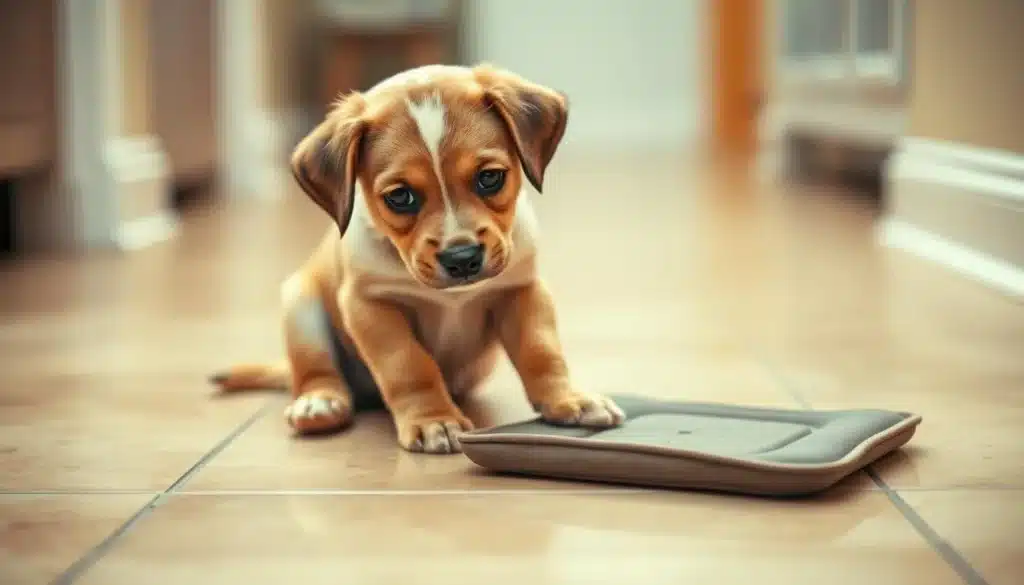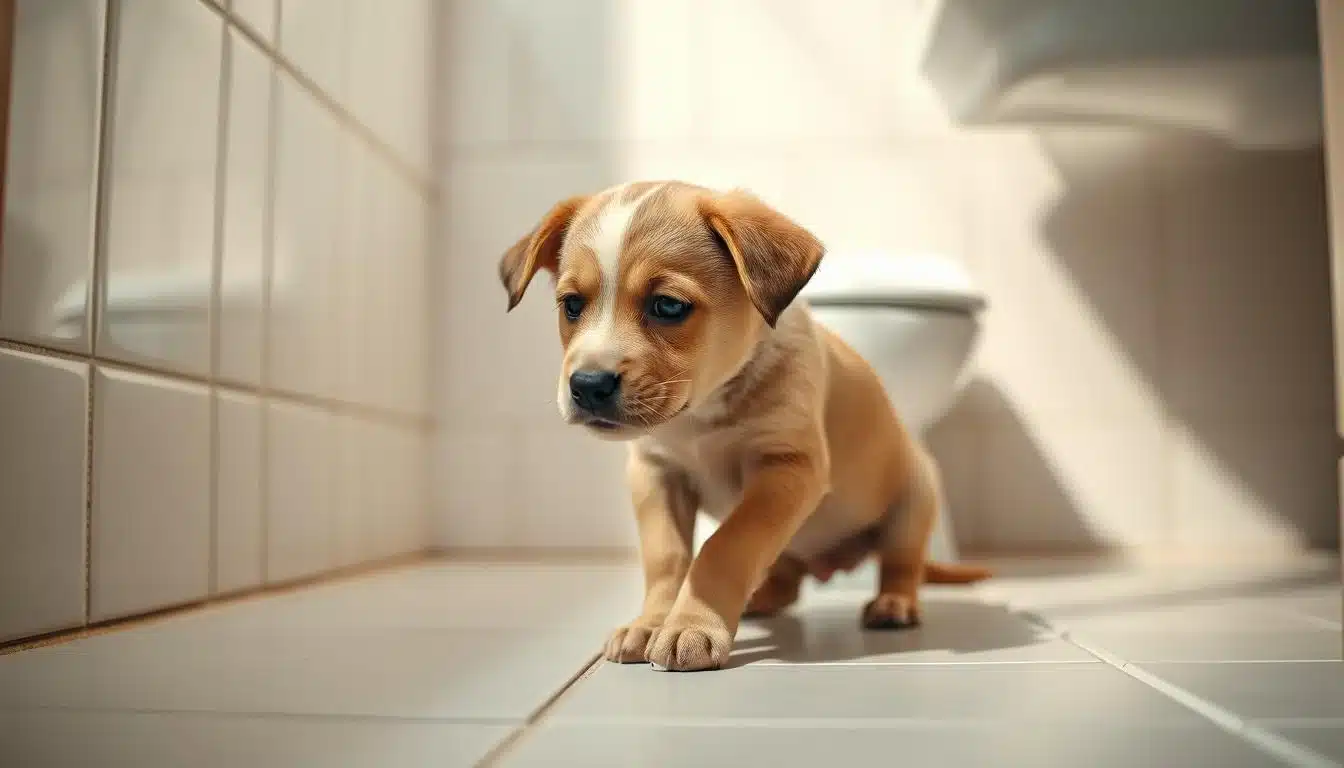
I remember the first night with my Labrador. I slept on the couch with a towel, ready for accidents. It was a mix of excitement and worry.
Potty training is a big challenge that shapes your bond. It sets the tone for life together.
Potty training success comes from planning, patience, and routine. Research and a clear plan before bringing a puppy home are key. Housetraining keeps the house clean, builds a schedule, and helps with other skills like name recognition and basic obedience.
I focus on repetition and positive reinforcement, not punishment. I use a simple cue word like “potty,” reward immediately, and stick to a schedule tied to feeding times. For apartment life, I have indoor options and a designated spot for when outdoor trips are hard or vaccinations aren’t complete.
Key Takeaways
- Start planning potty training puppy steps before bringing your puppy home.
- Use repetition, consistent cues, and immediate rewards for best results.
- Create a schedule tied to feeding to predict elimination times.
- Apartment owners should prepare indoor or patio potty options early.
- Focus on positive reinforcement rather than punishment for lasting success.
Why potty training matters for your new puppy
I make housetraining a top priority when a new dog comes home. It helps keep floors and furniture clean. It also lowers stress for everyone.
Early success strengthens our bond and makes learning easier. It's a win-win for both of us.
Quickly, you'll see the benefits. A set schedule means less mess and cleaner floors. It also protects your carpets and hardwood.
When I praise my puppy for good behavior, they learn to trust me. This makes walks and vet visits easier. It improves our daily life together.
Early training helps shape good habits. By repeating and praising, my puppy learns what I expect. I use a simple cue word like "potty" to link the action to the phrase.
Knowing when to start depends on the puppy's age and development. Puppies under eight weeks need to go every hour or two. A general rule is that a puppy can hold its bladder for as many hours as its age in months.
Here are some tips I use: start training right away, adjust expectations based on age, and always praise. If you can't take your puppy outside yet, use pads or real-grass solutions.
| Age | Typical Hold Time | Key Training Focus |
|---|---|---|
| Under 8 weeks | 30–120 minutes | Frequent supervised trips, immediate praise for success |
| 2–4 months | 2–4 hours | Start consistent cue word, short crate sessions, establish schedule |
| 4–6 months | 4–6 hours | Increase independence, reinforce outdoor routines |
| 6–9+ months | 6–9 hours | Extend confidence, reduce indoor options, fine-tune cues |
Creating a consistent potty training schedule
I set a clear daily routine for my puppy to cut down on accidents and build reliable habits. A steady rhythm helps predict when my dog needs to go. This makes planning outings easier after meals, naps, and play. It's especially useful for potty training puppies of different ages and for those living in tight spaces.
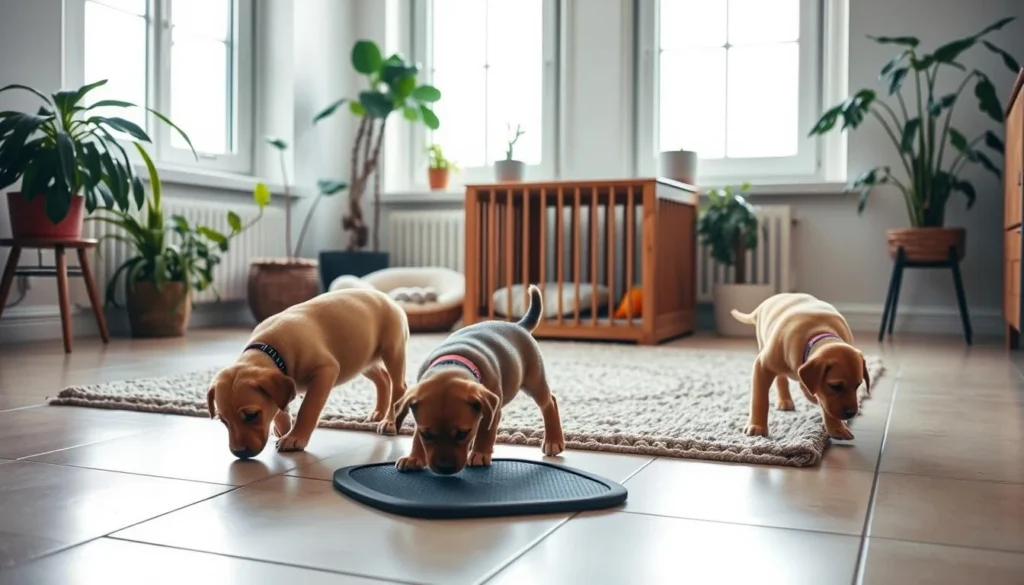
Feeding times and predictable elimination
I feed my puppy at the same times every day. Regular meals mean I can expect when they'll need to go outside.
For young pups, I use three small feedings. This gives me three chances to take the puppy outside or to a pad after each meal. It helps reduce indoor accidents and supports potty training tips I trust.
How long puppies can hold it by age
A rough rule is that a puppy can hold their bladder for about the number of hours equal to their age in months. A two-month-old may only manage two hours. A six-month-old often holds longer.
I watch the individual pup closely because variation is large. I avoid expecting long stretches like ten to twelve hours from most young dogs. Adjusting by signals and a potty log helps refine the plan.
Sample daily schedule for young puppies
Here is a practical routine I use and adapt to each puppy's needs.
- Wake → immediate outside or pad visit.
- Breakfast → 5–10 minutes later outside.
- Play or short walk → crate nap → outside when waking.
- Mid-morning check → quick potty break.
- Lunch feeding → outside afterward.
- Afternoon play and training → outside after play.
- Early evening meal → short walk and potty.
- Before bed → final outside trip and one late-night check depending on age.
When I lived in an apartment, I carried my pup in elevators and used a nearby spot every hour at first. This helped with potty training puppies in an apartment and nighttime care.
I keep a simple potty log to track times and tweak the schedule. Small changes based on that data often fix recurring problems and sharpen my potty training puppies tips.
Using crate training as a potty training tool
I use crate training to help housetrain dogs because they naturally avoid soiling their sleeping area. A crate gives a puppy clear boundaries. It also makes vet visits and travel easier and helps with supervision during naptime and bedtime.
Why crates help with housetraining
Crates help a puppy learn to hold their bladder by limiting space. They create a safe place for the puppy to rest. When I use a crate for short, predictable periods, the puppy learns to wait until I let them out.
Puppies will often whine or scratch when they need to go. Responding quickly helps them understand that soiling the crate is not okay.
Choosing the right crate size and setup
The crate should be big enough for the puppy to stand, lie down, and turn around. If it's too big, I add a partition to separate the sleeping and potty areas. I put a comfortable bed on one side and leave the feeding dish just inside when I supervise, never as a punishment.
Managing crate time and preventing accidents
I follow age-based hour limits and increase crate time slowly as the puppy's bladder control improves. For very young puppies or rescues with past habits, I tighten the schedule. This includes controlled feeding, frequent outside trips, and quick responses to signals.
If I must be away longer than safe crate time, I create a puppy zone. This zone has potty training puppy pads or a small patch of real grass. I arrange for a dog walker or neighbor visit.
Cleaning accidents with enzymatic cleaners keeps the crate neutral. I never use the crate for punishment. I want the puppy to associate it with calm, rest, and predictable potty breaks. These steps are among my most reliable potty training puppies tips.
| Topic | Recommendation | Why it matters |
|---|---|---|
| Crate size | Allow standing, turning, lying; add partition if needed | Prevents sleeping in one area and soiling in another |
| Crate schedule | Follow age-based limits; gradually extend time | Builds bladder control without overconfinement |
| When away long | Set up a puppy zone with potty training puppy pads or grass | Protects the crate routine and prevents accidents |
| Accident response | Clean with enzymatic cleaner; reset schedule if needed | Removes odor cues and reinforces proper timing |
| Behavior cues | Watch for whining, scratching; respond promptly | Teaches reliable signaling and reduces crate soiling |
Puppy pads, indoor potties, and apartment solutions
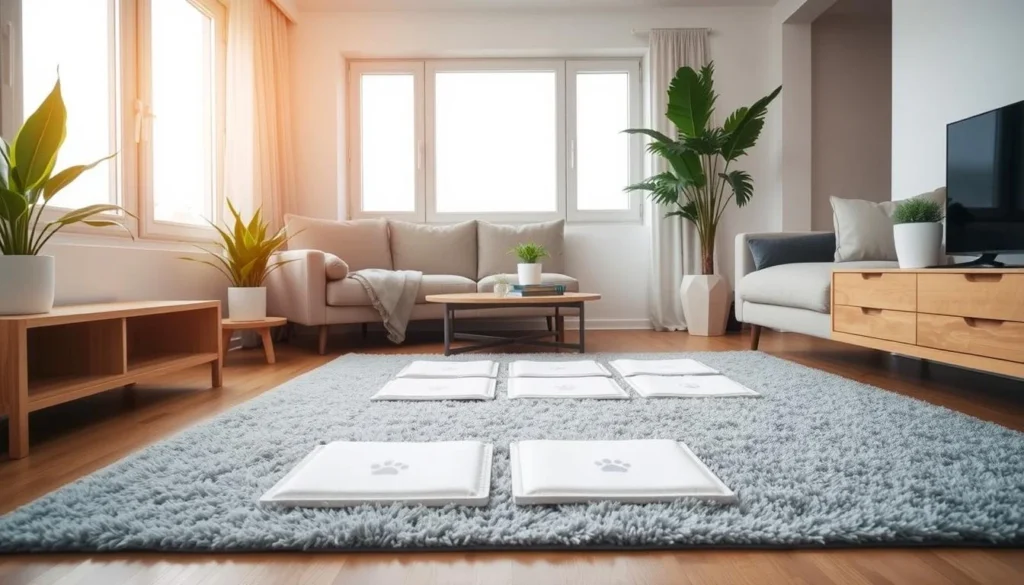
I live in an apartment and learned that indoor options save my floors and sanity. Choosing between puppy pads, a real-grass tray, or a small patio spot depends on my schedule, my pup’s age, and the season. I seek solutions that make potty training clear and steady for both of us.
When puppy pads make sense and downsides
Puppy pads are good when I can’t get outside often or when a tiny dog struggles in bad weather. I use high-absorbency disposable pads at night and a washable pad during the day to reduce waste. I place pads near the back door to help link the indoor spot with the outdoor exit and to reduce confusion later.
Dr. Mary Burch warns that pads can teach a puppy two acceptable places to eliminate, which makes a later outdoor-only transition harder. I weigh that risk when I plan long-term training. For jobs with long hours or steep stairs, pads may be the most humane short-term choice.
Real-grass options and transitioning to outdoors
I prefer real-grass trays when my goal is to move the puppy outside eventually. Puppies imprint on the surface they use. Fresh grass or a DIY real-grass mat gives a surface that matches yard textures, so the switch to the lawn goes smoother.
When I transition, I carry the puppy from the indoor grass tray to the outdoor spot and praise them for going in the right place. I reduce indoor options step by step until outdoor elimination becomes the norm. I also track nights when accidents happen and swap to overnight pads if needed.
Designating a potty spot in an apartment or patio
In tight spaces, I create a permanent, visible potty spot. I choose either a pad, a real-grass tray, or a dedicated patio corner. Consistency matters. I reward the puppy with treats and calm praise the moment they use the spot.
I keep a small waste station for quick cleanups and use odor-neutralizing pads or pH-responsive pads when I want health feedback. If I must travel the transition path, I carry my pup to the outdoor spot to reinforce where elimination belongs.
| Option | Best for | Pros | Cons |
|---|---|---|---|
| Disposable puppy pads | Busy owners, overnight use | High absorbency, convenient, disposable | Can teach indoor elimination, recurring cost |
| Washable reusable pads | Eco-conscious households | Cost-effective long term, less waste | Needs laundering, initial cost |
| Real-grass tray (Fresh Patch) | Transitioning to outdoor only | Surface matches lawn, eases outdoor switch | Requires replacement/maintenance |
| Patio or balcony spot | Apartments with outdoor access | Direct outdoor imprinting, no indoor habit | Weather dependent, needs cleanup routine |
| pH-responsive or odor-neutralizing pads | Health monitoring, senior pups | Alerts to changes in urine, useful for vets | Higher cost, limited availability |
Recognizing signals that your puppy needs to go out
I keep a close eye on my puppy for signs it's time to go outside. Catching these early helps avoid accidents and speeds up potty training. It's what I need most.
Common pre-potty behaviors to watch for
Puppies often show signs like restlessness, sniffing the floor, or circling. They might stop playing suddenly or head for a corner. If I see these, I quickly take them to the potty spot.
How supervision and leash use prevent accidents
Watching my puppy and using a short leash helps keep them focused. A leash lets me guide them to the right spot and praise them right away. Indoors, a hands-free leash or keeping them close helps me catch any signs before accidents happen.
Using a potty log to spot patterns
I use a simple potty log to track my puppy's habits. It shows me when they go and helps me plan better. This data helps me use potty training tips more effectively.
Teaching my puppy to ring a bell when they need to go worked well. It's a quick way to communicate. If potty training isn't working, I check the log, increase supervision, and try shorter outings.
Positive reinforcement methods and training cues
I teach potty habits with clear rewards and a steady cue. Positive reinforcement makes learning fast and keeps stress low. I focus on timing, consistency, and small wins that build a reliable routine.
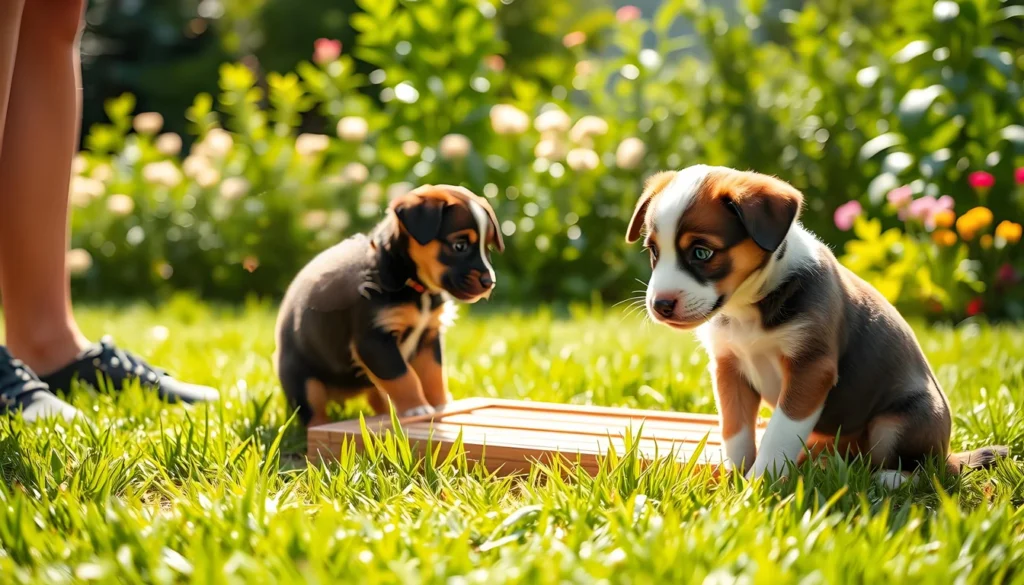
I pick tiny, soft treats that my puppy can eat in one bite. I cheer, clap, and give the treat the moment the puppy finishes outside. If an accident happens, I clean with enzymatic cleaner and avoid scolding. Gentle praise after success creates a strong link between the behavior and the reward.
I use one consistent cue word, such as "potty" or "bathroom," each time we approach the elimination area. I say the cue once the puppy starts sniffing and squatting, then reward immediately after. Repeating the pair—cue plus reward—helps the puppy understand the expected action.
When I teach a potty cue, I ring a bell for the door and pair the sound with an outdoor trip. I open the door after the bell ring and guide the puppy to the spot. If the puppy goes, I give a small treat and calm praise. This method works for apartment living and in training scenarios that use potty training puppy pads as a temporary tool.
Night and long-day strategies must stay subtle. I use quieter praise and smaller treats at 2 a.m. so the puppy stays calm and returns to sleep. For overnight success I combine short late-night outings and well-placed overnight pads when needed. These methods support routines that can fit programs like potty training your puppy in 5 days by reinforcing consistency.
Challenging conditions—cold weather, tiny breeds, high-rise apartments—require steady rewards and patience. I keep outings short in winter and reward warmly when the puppy completes the job. Teaching a bell or signal helps in buildings where quick outdoor access is limited. Pair the signal with an immediate trip to the potty spot, then reward when the puppy eliminates.
I track progress with a simple log that notes times, cues used, and rewards given. That record helps me tweak treat timing and reduce dependence on treats over time. When I phase out frequent treats, I replace them with play, a favorite toy, or brief affection so the behavior stays strong without constant food rewards.
| Situation | Immediate Reward | Cue or Signal | Practical Tip |
|---|---|---|---|
| Fresh puppy learning | Small soft treat + enthusiastic praise | Single-word cue like "potty" | Reward right after elimination to form the link |
| Apartment with limited outdoor access | Tiny treat + calm praise | Bell on door to request outing | Pair bell with immediate trip to designated spot |
| Nighttime or early morning | Very small treat or gentle petting | Quiet cue to avoid excitement | Keep lights low and praise soft to maintain sleep cycle |
| Using puppy pads or indoor potty | Small treat + brief play | Consistent cue word and location | Use pads temporarily while planning outdoor transition |
| Cold weather or tiny breeds | High-value tiny treat + warm praise | Same cue used consistently | Short outdoor trips, more frequent rewards for success |
Troubleshooting when potty training puppies is not working
It's really frustrating when potty training doesn't work out. But, remember, small changes can make a big difference. You don't have to stress about it.
There are common reasons for setbacks. Puppies might have too much freedom too soon. Crates that are too big can lead to accidents in one corner. If schedules are not consistent, it can confuse them.
Rescue puppies might need more time to adjust to a routine. Also, not cleaning up properly can leave smells that attract them to the same spot again.
It's important to check for any health issues if training isn't going well. A sudden change or a puppy that can't seem to learn might have a health problem. A vet can help figure out if there's an underlying issue.
To start fresh, go back to the basics. Stick to a strict schedule for feeding and potty breaks. Use a crate that's the right size or a puppy zone to keep them safe. Take them out more often and reward them when they do their business outside.
If you live in an apartment, use puppy pads or a small area of grass. This can help when going outside is hard. Always clean up accidents with a special cleaner to remove smells.
Carry your puppy through elevators or busy areas to avoid accidents. Keep cleaning supplies ready for quick clean-ups.
If you're still having trouble, don't hesitate to ask for help. A vet can rule out health issues, and a professional trainer can give you personalized advice. Getting the right help can make a big difference and help you both feel more confident.
Common causes of setbacks and accidents
Too much freedom, inconsistent schedules, and a crate that's too big are common problems. Apartment living can also make it harder to avoid accidents. Spot these issues and make adjustments to help your puppy.
When a medical issue might be involved
Look out for sudden changes or frequent accidents. Signs like straining or blood in urine mean it's time to see a vet. Early testing can catch infections that are blocking your puppy's progress.
Steps to reset training after repeated problems
Start with a full reset: strict feeding times, frequent supervised outings, and a smaller crate or puppy zone. Reward your puppy every time they do their business outside. Use special cleaners on accidents and consider indoor grass or pads while you rebuild their confidence.
Potty training puppies at night and when you work all day
I focus on steps that fit busy lives and sleepy nights. I help puppies learn where to go and when with a clear routine. This balances crate use, pads, and outside trips to avoid accidents.
Night routines, pads, and crate tips for overnight success
I limit food and water before bedtime based on age. I take the pup out right before lights out. For very young puppies, I do a quiet check in the middle of the night.
Crate training helps the pup hold until the next outing. I size the crate so the pup can stand and turn but not sleep far from the door.
Overnight pads are a reliable backup. I prefer high-absorbency options like Overnight Smart Print Pads for full-night coverage. For long-term habits, I pair pads with short, calm rewards.
Solutions for long workdays: dog walkers, pet sitters, and pee pads
I never ask a puppy to hold urine beyond age-based limits. If work stretches long, I arrange a dog walker or trusted neighbor to let the puppy out on schedule. For apartment life, a dedicated puppy zone with pee pads or a real-grass patch keeps a consistent target and reduces stress.
When I set up potty training puppies when you work all day, I layer solutions. I do morning and evening outdoor trips, midday relief via a walker, and pee pads as backup. This mix keeps the puppy safe during vaccine stages when outdoor outings may be limited.
Managing sleep schedules and late-night outings
I set a consistent bedtime so bladder capacity grows predictably. For very young pups, I plan a brief late-night outing an hour or two after lights out. I use quiet praise and tiny treats to avoid stimulating play after a successful night trip.
When owners ask about potty training puppies at night, I recommend patience and small, steady changes. Adjust feeding times, keep a short pre-bed routine, and create a schedule that fits work demands without forcing long holds.
Seasonal and special-case tips: winter, tiny breeds, and bells
I've learned a lot from training puppies in Chicago and Boston. I share tips on dealing with cold weather, small dogs, and teaching them to use bells. My advice is easy to follow today.
When it's cold, I keep puppy outings short. I dress them in a coat and use booties when it's icy. I carry treats and a towel for accidents.
If it's too icy or snowy, I use a real-grass patch inside or a pad near the door. This makes it easier for them to go back outside when it's better.
For tiny breeds, I'm patient and expect more accidents. Some tiny dogs do better with an indoor potty spot. This keeps their routine predictable and protects floors.
I teach them to use a bell by the door. I ring it before we go out. This helps them learn to go outside when they hear the bell. I reward them right after to make the connection stronger.
Teaching them to use a bell takes time. I start by touching the bell with my hand and rewarding them. Then, I let them nudge the bell and go outside. I keep the training sessions short and consistent.
I also have a simple checklist for owners. It works for most situations.
- Bundle up the puppy: coat, optional booties, towel for paws.
- Use short, frequent outings in freezing weather.
- Keep a real-grass option or pad inside for extreme storms.
- Expect more accidents and plan extra supervision for tiny breeds.
- Introduce a bell early and reward immediate outdoor success.
| Situation | Best tool | How I use it |
|---|---|---|
| Severe winter weather | Indoor real grass or pad | Place near entry, move outside gradually when thawed |
| Small or toy breeds | Mini indoor potty or dedicated pad area | Short, frequent trips; consider lifelong indoor spot if needed |
| Teaching a signal | Door bell or hang bell | Ring before outings, reward post‑potty, shape nudging behavior |
| Apartment waste management | Subscription grass or small waste station | Choose compostable options and regular pickups for hygiene |
Conclusion
I've learned that potty training puppies works best with a few key habits. These include keeping a consistent schedule, using a crate, and responding quickly to their signals. Also, giving rewards when they go in the right spot is crucial.
It's important to remember that every puppy learns at their own pace. I use age guidelines and watch for their signals to know when they need to go. For those living in apartments or during winter, using indoor grass or pads is helpful. I also carry a young puppy until they're fully vaccinated.
When my schedule gets busy, I get help from a dog walker or pet sitter. This keeps the training on track. If I think there might be a health issue, I quickly call my vet. If training isn't going well, I might get help from a certified trainer or behaviorist.
With patience, persistence, and these tips, potty training your puppy becomes easier. It leads to a cleaner, more comfortable home for both of us.