I still remember the first time my border collie learned to spin on cue. We were both restless after a long day. A five-minute game turned into a shared laugh and a new habit. That small moment showed me how teaching dog tricks does more than impress guests.
It opens a channel of communication and joy between me and my dog.
Over time, I've used short, positive sessions to teach shake, roll over, spin, and take a bow. Those simple wins gave my dog mental stimulation. They also helped reinforce everyday commands like place and wait.
Learning how to train dog tricks has become one of my favorite dog training tips. It's practical, playful, and builds confidence for both of us.
Key Takeaways
- Teaching dog tricks adds mental stimulation and physical activity for your dog.
- Short, consistent sessions make learning how to train my dog tricks easier for all ages.
- Tricks can reinforce core manners like place, wait, and recall.
- Positive, reward-based approaches yield reliable, joyful results.
- Begin with accessible tricks—shake, spin, and roll over—to build confidence.
Why teaching tricks matters for your dog’s behavior and bond
I teach tricks to give my dog mental challenges and fun physical activities. These short sessions keep them focused, prevent boredom, and reduce bad behaviors like chewing or pacing.
Mental stimulation and physical exercise benefits
Tricks like spin, back up, or retrieve challenge both thinking and movement. I add scent games and memory retrieves to boost problem-solving skills. These activities, combined with positive reinforcement, make my dog confident and tired in a healthy way.
How tricks strengthen the owner-dog relationship
Teaching dog tricks creates a routine where my voice and body language are reliable. Each successful trick strengthens our bond. This makes my dog more likely to listen and calm down in distracting situations.
Trick training as a tool for behavior modification
I use tricks to change bad habits and support dog behavior plans. By linking fun tricks to important commands like leave it or place, I can replace bad behaviors with good ones. Clear steps, consistent rewards, and knowing how to train dog tricks help me achieve this.
Foundations first: basic obedience before advanced tricks
I always start with the basics when teaching tricks. Good obedience makes it easier to learn new things. It helps dogs understand what I want faster.
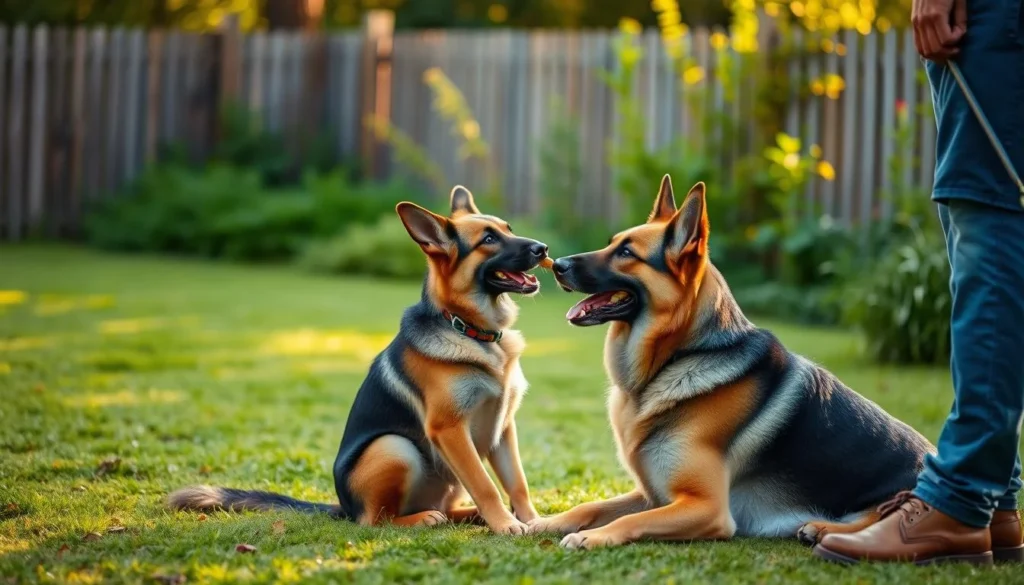
I practice for short periods often. Small victories boost confidence. Clear commands and routines help dogs learn without getting stressed.
Essential commands that make trick training easier (sit, down, stay, come, place)
Learning sit, down, stay, come, and place helps with control and focus. These commands are the foundation for more complex tricks like roll over or play bow.
The Spruce says sit, down, and recall are key. Adding place helps dogs have a calm spot to rest between tricks. This makes learning easier.
Setting clear cues and consistent routines
I use one cue at a time and reward right away. Being consistent with words, signals, and timing helps dogs quickly connect actions with rewards.
For puppies, I keep sessions short, three to five minutes. For adult dogs, sessions can last up to ten minutes. Regular, short sessions and predictable rewards help dogs learn well.
Why I won’t teach flashy tricks until the basics are solid
Ben Randall warns against teaching flashy tricks without basic manners. I agree. Tricks that look cool can be a problem if a dog lacks recall or impulse control.
I wait to teach flashy tricks until obedience is solid. This approach avoids frustration and keeps training useful for everyday life.
| Foundation Skill | Why it matters | Practice tip |
|---|---|---|
| Sit | Creates attention and a starting point for many tricks | Use a treat lure, release word, and brief holds |
| Down | Teaches calmness and prepares the body for rolling or bowing | Shape gradually from sit, reward low-position behavior |
| Stay | Builds duration and focus amid distractions | Increase distance and time in tiny steps |
| Come (recall) | Essential for safety and off-leash practice | Reward with high-value treats and enthusiastic praise |
| Place | Gives a go-to location for waiting and resets | Teach with a mat, guide with treats, reinforce calm arrivals |
How to structure short, effective training sessions
I keep my dog's training sessions short and focused. This keeps them excited and learning fast. Short sessions are better for their attention and memory. I use positive reinforcement to help them learn without feeling stressed.
Ideal session length and frequency for attention and retention
I aim for 5 to 10 minute sessions, two to four times a day for puppies. For adult dogs, I do two short sessions. Repetition is key, so I spread out practice throughout the day. This method is in line with many dog training tips that promote steady progress.
Using variety and breaks to prevent boredom and frustration
I mix up exercises between obedience, tricks, and short games. A memory retrieve game or a quick impulse-control drill keeps it fun. If my dog loses focus, I stop and give a break. This variety keeps them motivated and helps effective training methods work well.
Progress tracking: small steps and measurable goals
I break each trick into tiny steps and record success at each stage. For example, when teaching new tricks, I list small goals and reward them when met. I raise the bar in small increments. Tracking progress helps me see real gains and adjust my plan quickly.
- Set clear micro-goals: reward the smallest approximation that moves toward the trick.
- Keep a short log: write session date, exercise, and success rate.
- Adjust reward value: use higher-value treats when criteria increases.
Positive reinforcement training: my method for reliable results
I use reward-based methods to shape reliable behaviors and keep learning joyful. Positive reinforcement training helps me turn simple steps into dependable cues by rewarding what I want my dog to repeat.
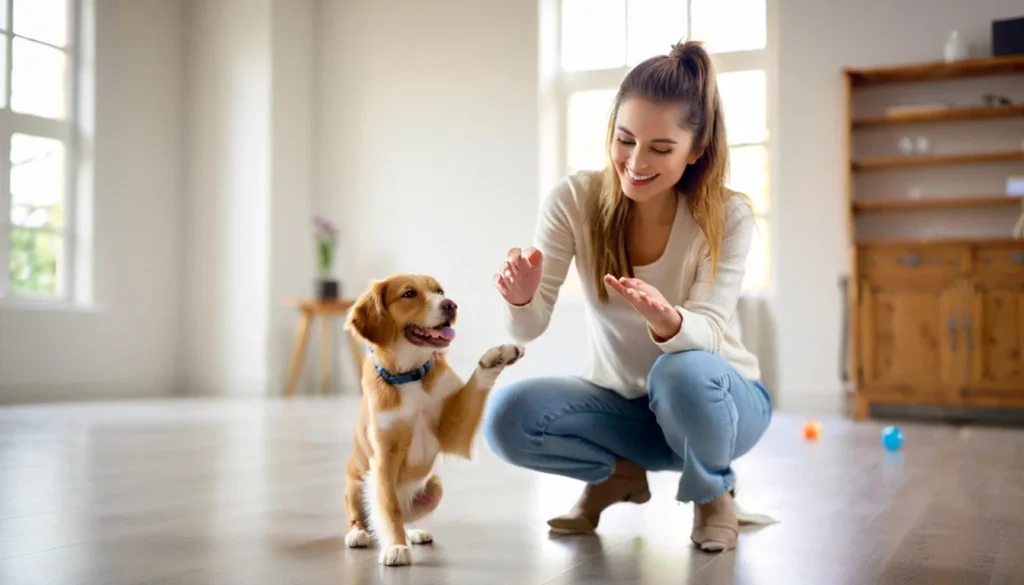
Choosing rewards matters. I rotate treats, toys, praise, and life rewards so my dog stays engaged. When I focus on choosing rewards for dogs, I match value to the task: tiny kibble for easy reps, high-value treats for new or hard behaviors.
I pay attention to timing. A precise marker followed immediately by a reward tells my dog which action earned the treat. For many exercises I use clicker training for dogs as the marker, then deliver the reward within one second to cement the connection.
Here are dog training tips I use during sessions:
- Short bursts: five minutes several times a day keeps focus high.
- Variable rewards: mix toys and treats to prevent satiation.
- Life rewards: open a door, start play, or release to reinforce real-world value.
I condition markers in a simple way. I click, then give a treat, and repeat until the sound alone predicts reward. This makes clicker training for dogs quick and clear. Later I fade the clicker to a verbal marker and then to cues.
Keeping training pressure-free matters more than speed. If my dog shows stress or shuts down, I lower criteria and return to easy wins. That approach aligns with positive reinforcement training and keeps both of us motivated.
Below is a quick reference I follow when choosing and timing rewards:
| Training Stage | Reward Type | Marker | Session Length |
|---|---|---|---|
| Intro/Conditioning | Soft treats, praise | Clicker or short "Yes!" | 3–5 minutes |
| Skill Acquisition | High-value treats, toy play | Clicker then treat | 5–7 minutes |
| Proofing with distractions | Top-value treats, life rewards | Clicker then immediate reward | Short bursts, repeated |
I keep notes on progress and adjust reward value as criteria rise. These dog training tips help me maintain clarity and fairness while building strong, reliable behaviors.
Clicker training for dogs: precise communication
I use a clicker to give my dog a clear, instant marker for the exact moment a behavior is right. Clicker training for dogs cuts guesswork and speeds learning. I start with short sessions and keep criteria low so my dog succeeds often.
I condition the clicker by pairing the sound with high-value rewards. I click, then reward, repeating until the click alone predicts a treat. This builds trust in the marker and tightens timing. When timing is clean, the click becomes the bridge between action and reward.
How I condition the clicker and pair it with rewards
I start on leash in a quiet room. I click then drop a small treat near my dog. I repeat ten to fifteen clicks per short session. I stop before my dog tires and keep sessions playful.
I vary treats from kibble to small soft bites from brands like Blue Buffalo or Zuke’s to keep value high. I never delay the reward more than a second after the click.
Using shaping and luring to teach complex behaviors
For multi-part tricks I rely on shaping and luring. I reward tiny steps as my dog moves closer to the final action. Shaping and luring let me break a trick into simple, repeatable pieces.
I use luring when I want a fast guide, such as getting a paw up for a shake. I switch to shaping when I need my dog to offer behavior willingly, like spinning or rolling over. I raise criteria slowly so the dog stays confident.
Transitioning from clicker to verbal cues and hand signals
Once a behavior is solid, I begin the transition to verbal cues. I add a short word right after the click, then fade the click over several sessions. I pair a clear hand signal at the same time. This transition to verbal cues keeps control in everyday life.
For reliable results I test cues in new places and add distractions. I keep rewards variable so the behavior remains strong. These effective dog training methods make tricks useful, fun, and safe for both of us.
how to train dog tricks
I plan every trick before I start. I imagine the final action, break it down into small steps, and pick cues and rewards. Short sessions and clear cues keep my dog confident and focused.
This method helps me move from simple tricks to more complex ones without losing control or manners.
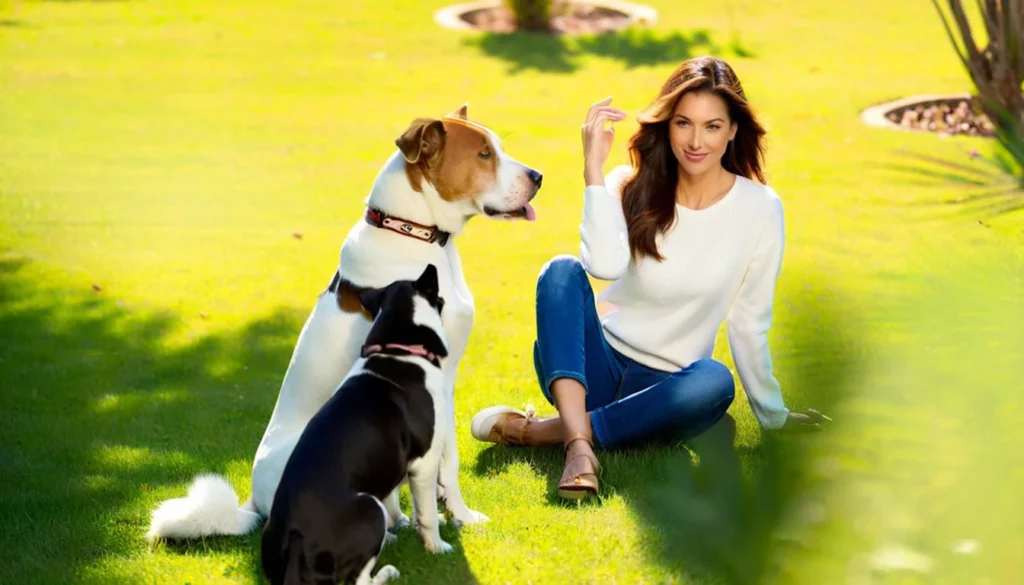
Step-by-step approach to teaching a new trick (plan, shape, proof)
I begin by planning the trick's end goal and the first step my dog can do. I mark small victories, reward quickly, and only increase the challenge once the step is mastered.
Then, I shape the behavior by rewarding small improvements until the trick is complete. I use a clicker or a sharp word to mark the exact moment my dog gets it right.
Finally, I proof the trick in various settings, with distractions, and at different distances. This makes the trick reliable outside of training sessions and turns practice into real-life skills.
Common beginner tricks and easy progressions (shake, spin, roll over)
My favorite beginner tricks are shake, spin, and roll over. I teach shake by rewarding natural paw lifts. For spin, I lure with a treat near the nose and gradually remove it.
Roll over starts with a solid down. I teach a tight circle toward the shoulder, reward the movement, and build the roll over in small steps. These steps keep training fun and predictable.
How I troubleshoot when a trick stalls
If progress slows, I make the task easier. I simplify the step so my dog can succeed quickly. Shorter sessions also help; a few minutes of success is better than a long, frustrating session.
I increase reward value if motivation wanes. High-value treats, a favorite toy, or an enthusiastic game can get learning back on track. If confusion continues, I go back to a previous step and rebuild confidence before moving forward.
Teaching my dog new tricks: progressive difficulty and creativity
I start each new trick with a clear, tiny goal. Small wins keep my dog confident and make learning fun. I plan steps so I can move from basic cues to more complex actions without rushing.
Building from simple to advanced
I teach in short stages: sit, then add a spin, and later work toward standing on the hind legs. Breaking a trick into micro-steps helps when I teach advanced dog tricks like walking on two legs or rolling into a “play dead.” I reward tiny improvements and only increase difficulty when each step is solid.
Adapting tricks to your dog’s breed, age, and physical limitations
I always adapt tricks to breed and age. A greyhound may not enjoy tight turns the way a border collie does, and a senior Labrador needs low-impact moves. I check joints and energy levels before I introduce jumps or long balances.
Creative tricks that use natural behaviors
I look for behaviors my dog already shows, such as bowing, licking, or leaning in for contact. I shape those into fun cues like a play bow on command, a gentle kiss, or a hug with paws on my knees. These creative dog tricks feel intuitive and reduce stress.
I balance novelty with safety. When I try advanced dog tricks, I add warm-ups and limit reps. For young puppies I focus on low-impact exercises and memory games. That way I can teach useful signals and keep training playful.
How to train my dog tricks for real-life control and manners
I use trick training to make learning fun and useful. Short games help my dog focus and control impulses. This way, they learn to behave well in places like parks or vet offices.
Incorporating impulse control into practice
I start with simple commands like wait and leave it. I break each task into small steps for quick wins. This makes learning impulse control easier for my dog.
I add distractions slowly. First, I hold a treat, then a toy, and finally, someone nearby. This helps my dog learn to stay calm and not grab things frantically.
Using tricks to strengthen recall and focus
I use tricks as rewards during recall training. A fun trick after returning makes coming back rewarding. This boosts recall in real-life situations.
I practice recall in different places. Starting in my yard, then quiet walks, and finally, busy parks. Tricks keep my dog motivated and focused when it matters most.
Turning tricks into everyday cues
I turn playful tricks into useful cues. For example, a spin at the door means wait before leaving. A touch target becomes a check-in at the vet. These tricks help my dog learn manners.
Being consistent is key. I use the same words and rewards for each trick. This helps my dog connect the trick to the desired behavior, making training effective and lasting.
| Skill | Practical Use | Training Tip |
|---|---|---|
| Wait | Doorways, crossing streets | Start with 2 seconds, build slowly while adding distractions |
| Leave It | Food on walks, dropped items | Hold low-value items, reward for looking away, increase temptation |
| Recall | Off-leash safety, park returns | Use high-value treats, practice short recalls, add distance and distractions |
| Touch/Target | Vet checks, grooming stations | Reward every correct touch, generalize to new locations and surfaces |
| Place/Mat | Quiet settling at home or public spaces | Make the mat rewarding, extend duration in small steps |
Advanced dog tricks and maintaining performance
I start with solid basics when I teach advanced dog tricks. I use short, staged steps to avoid confusion and keep the dog confident. I slowly add more distance, time, and distractions, keeping the behavior reliable.
Chaining behaviors help me link simple cues into polished routines. For example, I connect a sit, a spin, and a bow into one sequence. This method teaches complex actions without overwhelming the dog.
I practice tricks in various settings to ensure they work outside the yard. I start with mild distractions and then add real-life challenges. This makes me confident that the trick will work when it matters.
Playful maintenance sessions keep advanced skills sharp. I use short, varied practices with rewards to keep the dog interested. I mix treats, toys, and praise to keep things exciting.
When adding distance or duration, I increase criteria slightly each time. I reward early success to support skillful training and avoid frustration.
I watch for signs that advanced tricks might be replacing basic manners. If impulse control drops, I pause and refresh basic cues. Ben Randall’s advice helps me balance tricks with manners.
Below is a quick reference I use to plan progressions and proofing. It helps me track where a trick is solid and where more work is needed.
| Training Focus | Initial Step | Progression | Proofing Setting |
|---|---|---|---|
| Chaining behaviors | Teach components separately (sit, spin, bow) | Link two then three cues; shorten pauses | Home → Quiet park → Busy street |
| Adding distance | One step back with clear release | Increase by 2–3 feet per success | Yard → Dog park perimeter → Cafe patio |
| Increasing duration | Hold for 2–3 seconds with timer | Add 2–5 seconds per session | Living room → Training class → Event |
| Proofing tricks | Introduce mild distractions (toy, noise) | Gradually add people, dogs, novel surfaces | Friend visits → Group walk → Public event |
| Maintenance | Two short refreshers per week | Mix variable rewards; occasional jackpot | Home play → Walk cues → Class review |
Dog training tips for common challenges
I keep training sessions short and gentle when things get rocky. Small wins build momentum. I change rewards if my dog loses interest and I watch body language for any signs of stress or discomfort.
What to do if my dog gets distracted or loses interest
I break tasks into tiny steps and drop criteria until my dog succeeds. I use high-value treats, favorite toys, or quick play breaks to re-engage focus. With managing distracted dogs, I add brief, fun drills between harder repetitions to keep motivation up.
Managing frustration, fear, or physical discomfort during training
I never force a behavior that causes stress. For training for fear or discomfort, I rely on calm, reward-based desensitization and back off when a dog shows tightness, lip licking, or avoidance. If I suspect pain, I consult my veterinarian before continuing.
Adjusting reward value and criteria to speed learning
I raise reward value when difficulty increases and lower performance demands until the behavior is solid. Adjusting rewards lets me shape faster gains without overwhelming my dog. I mix treats with life rewards like walks to keep training functional and fun.
Skillful dog training: tools, safety, and ethical considerations
I focus on safe and respectful dog training. My goal is to make learning fun and safe for the dog. I choose the right equipment and exercises based on the dog's size, age, and health.
Choosing the right tools is crucial. I use padded harnesses, low-impact platforms, and non-slip mats. I avoid tools that could harm the dog, like high jumps or standing on hind legs for too long.
I pay close attention to the dog's body language. If a dog shows signs of stress, like a tucked tail or lip lick, I stop and reassess. This helps prevent injury and stress.
I always treat dogs with respect. I never use training methods that could humiliate or stress a dog. This builds trust and makes learning faster.
Some tricks can be good for a dog's mental health. Low-impact tricks can boost confidence and help with impulse control. I make sure to balance fun with careful monitoring.
There are times when I need to seek professional help. If a dog shows fear, stress, aggression, or pain, it's time to get a pro involved. I also consult a vet if I suspect a medical issue. For complex cases, I look for a certified canine behaviorist or a credentialed trainer.
Here is a quick reference to compare common props and their safety profile for easy decision-making.
| Prop | Recommended Use | Risk Level | When I Replace It |
|---|---|---|---|
| Padded harness | Loose lead work, supported movement | Low | If chafing appears or dog resists |
| Non-slip mat | Balance drills, sit/stand practice | Low | When surface becomes worn or slippery |
| Low platform | Targeting, safe height jumps | Medium | If dog shows joint pain or hesitance |
| Clicker | Precise marking and shaping | Low | If it startles a noise-sensitive dog |
| High jump bars | Advanced agility, only with conditioning | High | If dog lacks conditioning or has health risks |
Conclusion
Learning how to train dog tricks is simple and consistent. Short sessions and positive reinforcement keep my dog interested and learning quickly. Tricks also provide mental and physical exercise, and help with manners.
It's important to master the basics first and respect my dog's limits. Treating tricks as enrichment, not a replacement for manners, is key. Clear cues, steady progress, and matching rewards make learning fun and reduce frustration.
Teaching dog tricks has made our bond stronger and improved my control. I follow advice from trainers like Ben Randall and McCann Dogs. With patience and the right tools, teaching tricks adds joy, confidence, and lasting skills.