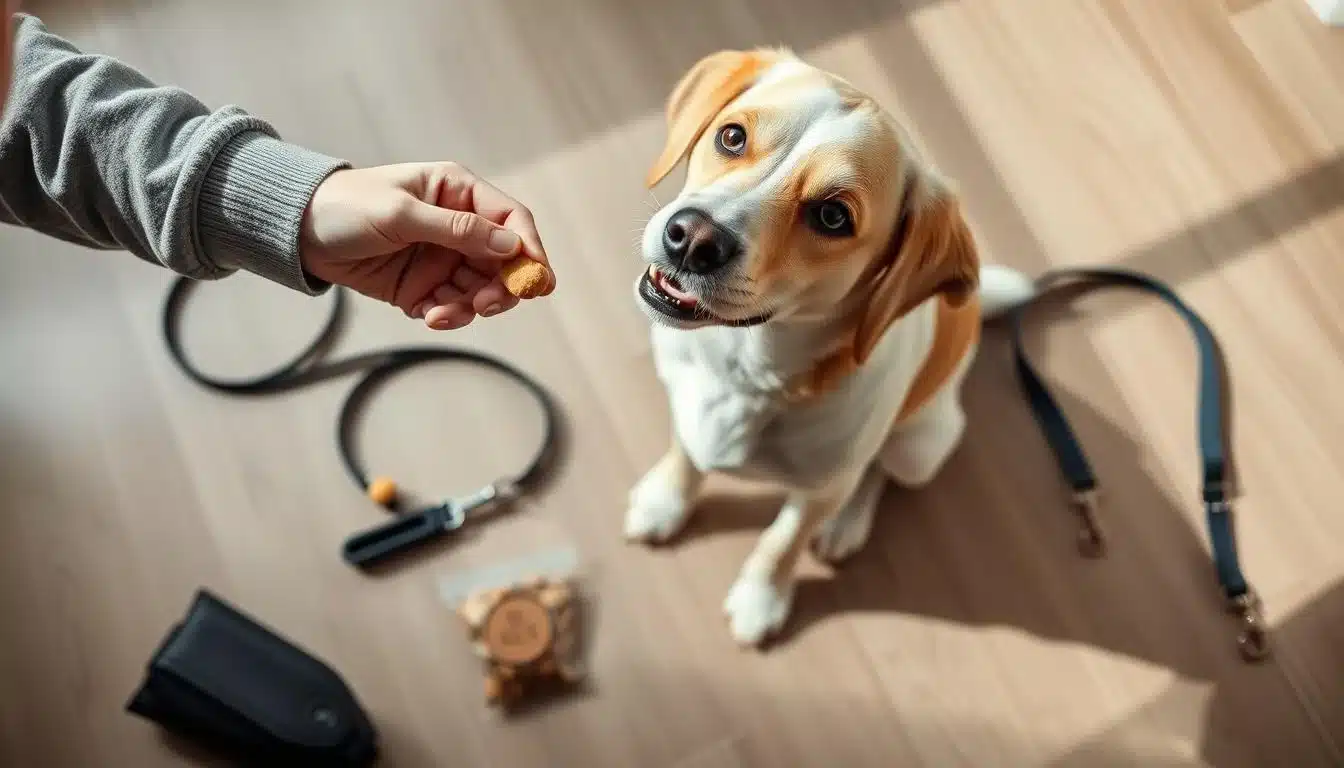
I remember the first time my golden retriever, Milo, would only sit for a treat. I was proud but worried he'd never obey without a treat. Many of us face this challenge in reward-based dog training.
In this article, I'll share steps to wean your dog off treats while keeping training positive. My aim is not to say never give your dog treats. Instead, I'll show how to use other rewards so your dog responds to praise and cues, not just snacks.
We'll explore how to know when to start, design schedules, and use real rewards and signals. I'll cover techniques like two-fers and the Zen Bowl method. We'll also discuss how to adjust for different dogs and ages. Plus, I'll share tips for when progress slows.
This guide is for U.S. dog owners looking for a friendly, step-by-step guide on transitioning from treats. Whether you're curious about weaning your dog or refining reward-based training, I'll make it easy to follow.
Key Takeaways
- Treats are a powerful tool for early learning but the aim is to shift the type and timing of rewards.
- I’ll show how to assess when your dog is ready to start fading treats.
- Practical techniques like two-fers and alternate-treat locations make the transition smoother.
- Marker signals and real-life rewards help maintain behavior without constant food delivery.
- Adapting your plan for age, breed, and environment prevents setbacks and keeps progress steady.
Why treats matter in positive reinforcement dog training
I use treats to help dogs learn faster and stay interested. At first, a tasty reward is paired with play and praise. This makes it easy for dogs to learn what I want.
Later, I switch to real-life rewards and start training without treats. This makes the training more meaningful and effective.
In the beginning, I give continuous feedback. A treat tells a dog they did something right. This stops them from guessing too much when they're not sure.
This clear feedback helps build a strong learning history. It supports training that doesn't rely on food as much.
Purpose of treats in early learning
Treats serve as both rewards and instructions. When I mark a correct response with a word or click and then reward, the dog learns. They connect their actions with the outcome.
This helps them learn simple and complex cues quickly.
Differences between luring and rewarding
Luring uses a treat to guide a dog's motion, like holding a treat above their nose to make them sit. I quickly stop using the lure so the dog learns the cue without following food.
Rewarding comes after the dog performs the action. They do something and then get a reward. I prefer rewarding because it builds long-term reliability.
Why treats aren’t a bribe
Treats show value, not force. I pair praise and a marker with food to build trust in the cue. Over time, this lets me train without treats while keeping behaviors strong.
how to wean a dog off treats when training
I look for signs that tell me a dog is ready to stop using treats for rewards. I set clear goals for reducing treats and share common mistakes to avoid. This helps in moving from treats to other rewards in training.
Signs your dog is ready to start fading treats
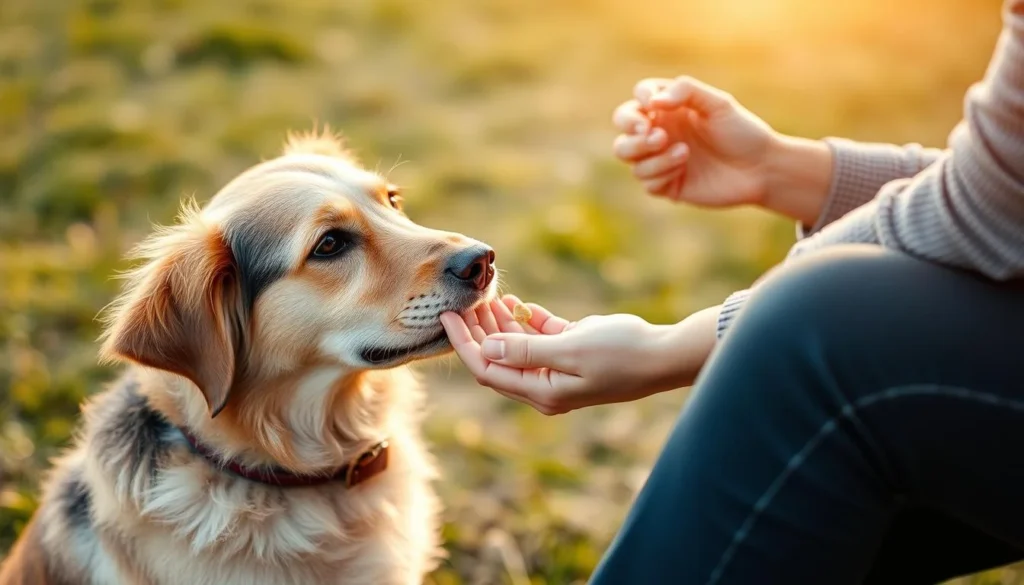
I check if a dog responds well to cues in different places. If they look at me, stay calm, and do the behavior at home, outside, and in quiet public areas, they're ready.
I count how many times they do the behavior correctly. If it's hundreds or thousands without treats, it's solid. I also watch if they stay calm when things get busy. This helps me know when to start using fewer treats.
Progressive goals for fading treats
I keep new skills rewarded until they're consistent. Then, I reward the quality of the behavior, not just the act. Finally, I use treats less often, only for the best responses.
- Milestone 1: home practice with kibble or low-value treats.
- Milestone 2: backyard and short outdoor sessions using real-life rewards like play or access to sniff.
- Milestone 3: quiet public spaces with occasional food rewards and frequent verbal markers.
- Milestone 4: busy public places using randomized treats for excellent responses.
I suggest using kibble for some training and adding real-life rewards early. This teaches the dog that training leads to fun things like walks or playing with toys.
Common mistakes to avoid
I never rush the process of fading treats. Doing it too fast can make the dog confused and stressed. Puppies or dogs that need more training can't handle it without feedback.
I make sure to not confuse luring with rewarding. Luring teaches a different cue and can make the dog dependent on food. I also avoid keeping treats as rewards for too long, so training doesn't feel like getting food.
- Always give a marker or praise even when not giving food.
- Don’t remove treats before the dog shows readiness across locations and distractions.
- Use small, achievable steps and track successes.
Designing reward schedules to decrease reliance on treats
I help trainers move from using treats all the time to real-life rewards. Good schedules of reinforcement teach a dog to keep doing the behavior even when treats are not given often.
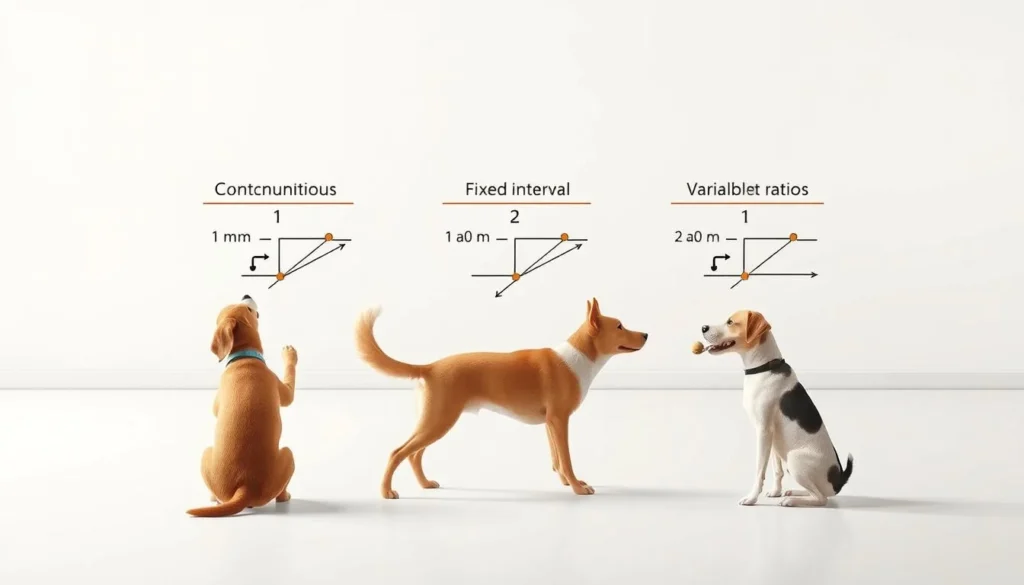
First, we use continuous reinforcement for new cues. Every correct action gets a treat. Short sessions of five to ten minutes are best for puppies and dogs learning in distracting places. This builds confidence and a strong link between the cue and reward.
Next, we use differential reinforcement as the dog gets better. Rewards are based on how well the dog responds. A polite recall might get praise, while a quick one gets kibble. An excellent recall gets a big reward. This makes the dog work harder and not just look for treats.
Finally, we aim for variable intermittent reinforcement for the long run. Rewards for excellent responses are given at random. It's like a slot machine that pays enough to keep the dog interested.
We follow a step-by-step plan. Start with continuous rewards, then add differential grading, and finally, variable intermittent reinforcement. We also add real-life rewards like play or walks. Treats are kept ready for new or tough situations.
Here's a quick guide to help trainers through the learning process.
| Phase | Main Goal | Typical Rewards | When to Use |
|---|---|---|---|
| Continuous | Build association and initial fluency | Small, frequent treats | Teaching new cues, puppies, high distraction |
| Differential | Improve quality and consistency | Graded treats, verbal praise, kibble | After basic fluency; to shape better responses |
| Variable intermittent | Maintain behavior without constant food | Random food jackpots, play, access rewards | Long-term maintenance, real-life contexts |
Real-life rewards and alternative reinforcers for dog training
I teach dogs to work for things they already love. Using real-life rewards instead of treats builds lasting habits. I watch each dog's choices to find the best rewards for training.
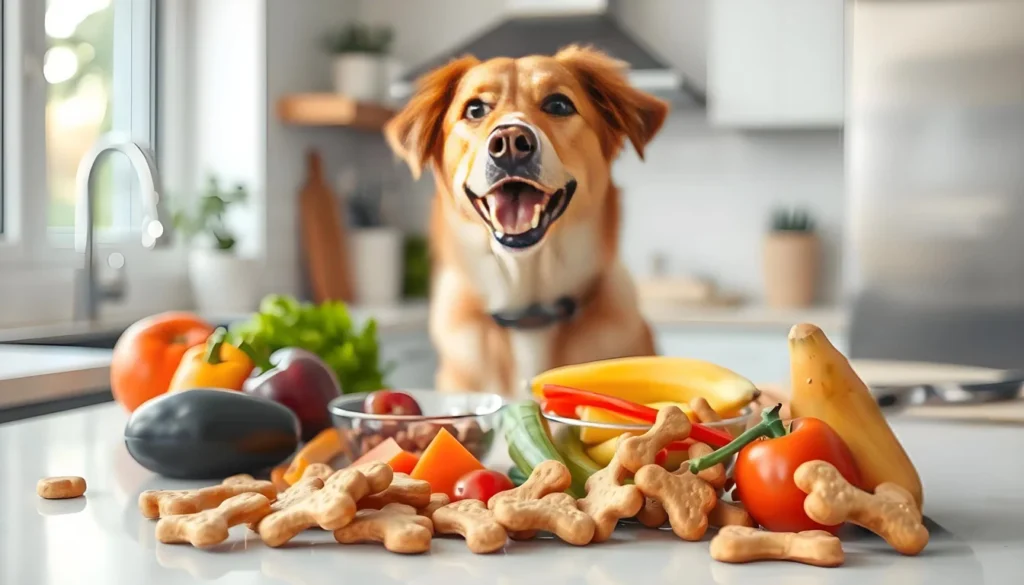
I start by observing what the dog prefers at home. Some dogs love tug or fetch, while others enjoy long walks or petting. For toy-motivated dogs, I use their favorite ball or tug rope. Dogs who love social time get attention and brief play as rewards.
I test rewards in short trials. If a walk loses appeal in rain, it won't work. I use kibble for routine drills to help the dog earn mealtime. This mix helps me train effectively and fades reliance on food.
I place real-life rewards in everyday context. I ask for a sit before opening the door, letting the dog go out as a reward. I require four-on-floor before giving attention or petting. After a solid loose-leash uphill, I allow a sniff break.
Combining treats with real-life rewards keeps progress steady. Low-stakes practice uses kibble. Busy parks or intense distractions get high-value soft treats plus a toy for toy-motivated dogs. I pair a marker word and praise with both food and non-food rewards so the dog understands what earned the payoff.
I follow simple rules when swapping rewards. First, the chosen reward must be rewarding in that moment. Second, vary the reinforcement to keep value high. Third, phase treats down slowly while increasing access to desired activities like play, freedoms, or outings.
| Reward Type | Best Use | When to Prefer |
|---|---|---|
| Meal kibble | Daily practice, cue reinforcement at home | Low-distraction settings, multiple reps |
| High-value soft treats | Intense distractions, building new skills | Busy parks, training around other dogs |
| Toys (tug, ball) | Energy release, fast engagement for toy-motivated dogs | Play-focused breeds, recall and drive work |
| Freedom & access | Real-life contingencies like door exits, sniffing | Household routines, walks and outings |
| Praise & petting | Quiet rewards for social dogs | Calm reinforcement, building trust |
Techniques to phase out treats practically
I'll share three ways to cut down on treats while keeping training fun. These strategies help dogs learn to control their impulses. They also teach dogs to look for rewards in real life, not just from me.
First, I ask for short actions before giving a treat. This makes each correct action more valuable. It also keeps the rewards unpredictable.
Two-fers and three-fers
With two-fers three-fers dog training, I ask for two or three actions before giving a treat. For example, I might say Sit → Touch → Shake → treat. I use a clear word like “yes” to let the dog know they're right.
By paying after any action in the sequence, I make the rewards less predictable. This keeps the dog motivated without giving out treats too often.
Treat from an alternate location
I put treats in a bowl or on a table away from where we're training. I run a few cues, then let the dog get the treat from the bowl.
This method teaches the dog to wait for treats, even when they're not in my pocket. It's useful in everyday life, where rewards often come from the environment, not just me.
Zen Bowl and impulse-control methods
The Zen Bowl method uses a special bowl as the reward spot. After doing a few skills, I let the dog go to the bowl for the treat. This teaches the dog to wait patiently and not grab the food.
I start with kibble in the bowl, then make it harder by increasing the distance or adding more steps. This helps the dog learn to control their impulses and not rely on treats for every action.
I use these methods together, keeping my cues consistent. I also mix up the rewards and use everyday things as rewards. This helps me move away from relying on treats all the time.
| Technique | How I use it | Primary benefit |
|---|---|---|
| Two-fers / Three-fers | Chain 2–3 behaviors, mark each step, pay after one chosen step | Reduces per-cue treats; builds behavioral sequences |
| Treat from alternate location | Place treats off-site, run cues, release dog to collect | Teaches compliance when treats aren’t immediate |
| Zen Bowl method | Use a distinct bowl as reward destination; require waiting | Improves impulse control for dogs and delayed gratification |
| Combined practice | Mix sequences, alternate locations, vary schedule | Creates robust, real-world-ready behaviors |
Using marker signals and praise to replace immediate food rewards
I train dogs to expect clear feedback. When I fade treats, I use precise marker signals and steady praise. This lets the animal know they did something right and a valued outcome will follow.
I choose one verbal marker and use it every time for the exact behavior I want. This consistency helps in deciding between clicker training and verbal markers. A click is crisp, but a well-timed word with praise makes moving off food easier.
I start by pairing treats and verbal praise in early sessions. Over time, the dog learns the marker predicts a reward. This method means the marker and praise can carry more weight, even when food is delayed or reduced.
I mark only clear, discrete actions. I mark the exact moment a sit is complete or a recall lands. Good timing prevents confusion and keeps trust strong. Inconsistent marking leads to frantic searching or loss of focus.
I use simple routines to link markers to real-life rewards. For example: marker → leash attach → walk. This pattern reinforces the idea that the marker predicts access to something meaningful beyond a treat.
Practical steps I follow:
- Choose one marker word and stick to it.
- Pair the marker with praise and treats early on.
- Mark only correct, distinct behaviors.
- Gradually increase delay to the reward while keeping markers reliable.
When I weigh clicker training versus verbal markers, I consider context. For busy parks, I might use a click for clarity. For at-home fading, a verbal yes plus enthusiastic praise supports building reinforcement history and reduces reliance on food rewards.
Adapting weaning strategy for age, breed, and environment
I adjust fading plans for each dog. Age, breed, and setting guide how fast I reduce treats. I start with simple steps and test them in quiet areas before moving to busy places.
I train puppies and adult dogs differently. Puppies need short, frequent sessions and lots of praise. Adults can handle longer gaps between rewards but need practice in different places.
High-drive breeds need special motivation. Sled-dog mixes and working lines love high-value food or activities. Toy-motivated dogs do well with play rewards. I use toys or quick play to keep them focused.
Training in noisy places takes patience and planning. I use more treats in loud or crowded areas. In parks, I use real-life rewards like continuing a walk.
In public, I test if rewards work. A walk might be great on a sunny day but not in a storm. I switch to life rewards and variable schedules as the dog gets better.
Below is a practical comparison I use when customizing a plan. It helps me decide pace and reinforcer choices based on age, breed drive, and environment.
| Factor | Typical approach | Speed of fading | Best reinforcers |
|---|---|---|---|
| Young puppies | Short, frequent sessions; continuous rewards for new skills | Slow | Small tasty treats, praise, brief play |
| Adult dogs with training | Longer practice; introduce differential and variable schedules | Moderate | Lower-value treats, toys, life rewards like access to the yard |
| High-drive breeds | Use high-value food and activity-based reinforcement | Moderate to slow depending on arousal | Meaty treats, tug, retrieve, structured exercise |
| Toy-motivated dogs | Replace food with short, intense play sessions | Moderate | Favorite toy, quick game of fetch, praise |
| Low-distraction home | Progress faster; practice novel cues | Fast | Mixed rewards, praise, access to routine rewards |
| High-distraction public spaces | Keep high reinforcement rates; proof behaviors gradually | Slow | High-value treats, real-life permissions, short play rewards |
I match pace to temperament and environment. At home, I move faster. In busy settings, I slow down and use variable reinforcement. This keeps training positive and practical.
Troubleshooting setbacks and maintaining motivation
I track small wins and losses to catch dips early. If a cue stops working, I slow down and use more rewards. This makes fixing problems easier.
When behavior drops, I follow a checklist. First, I check health and hunger. Then, I look at reward value and increase it in that place. If needed, I go back to basic rewards until things get better.
I treat training like a job that pays. If my dog seems unmotivated, I use better treats or play. This keeps them interested and avoids free work.
Keeping motivation up is key. I set small, measurable goals. Short sessions and varied rewards keep my dog engaged without getting tired.
I use a simple log to track progress. It records where we train, how many times we succeed, what rewards we use, and any distractions. This helps me decide when to make rewards less frequent and where to practice more.
Here is a practical checklist I use and the typical adjustment I make when a behavior slips.
| Issue Observed | Immediate Check | Short-Term Fix | Goal Before Fading |
|---|---|---|---|
| Loss of response in new environment | Context, distractions, recent changes | Increase reinforcement; practice in a quieter area | 10 reliable reps in that environment |
| Dog ignores cue intermittently | Reward value and timing of marker | Use high-value treat and clear marker immediately | 8 consecutive correct responses |
| Signs of stress or disinterest | Health check; recent routine change | Shorten sessions; return to easier steps | Consistent, calm participation across three sessions |
| Dog seems to be “working for free” | Reinforcement frequency and type | Re-establish payment with food, play, or access | Clear exchange of effort for reward every session |
| Dog seems to be “working for free” | Reinforcement frequency and type | Re-establish payment with food, play, or access | Clear exchange of effort for reward every session |
| Inconsistent marker use | Marker timing and clarity | Practice marker timing in short drills | Marker reliably predicts reward for 15 reps |
I use gradual tactics like two-fers, three-fers, the Zen Bowl, and alternate-location treats when rebuilding reliability. These tools make tracking progress easy and keep me focused on practical steps.
When I adjust, I keep sessions brief and frequent. This balance keeps motivation up and ensures steady progress. Small, consistent records make troubleshooting faster and less stressful.
Conclusion
Treats are key in early training, but they don't have to last forever. By using clear markers and changing reward schedules, we can teach dogs reliable behavior. This way, we can reduce our use of treats in training.
It's important to go at your dog's pace, considering their age, breed, and environment. Techniques like two-fers and three-fers help keep training clear. Using marker signals and consistent timing also keeps momentum during the transition.
You don't have to get rid of treats completely. I use them occasionally, along with praise, play, and access to fun activities. This keeps training fun and effective. These methods help us maintain reliability and build a strong reinforcement history.