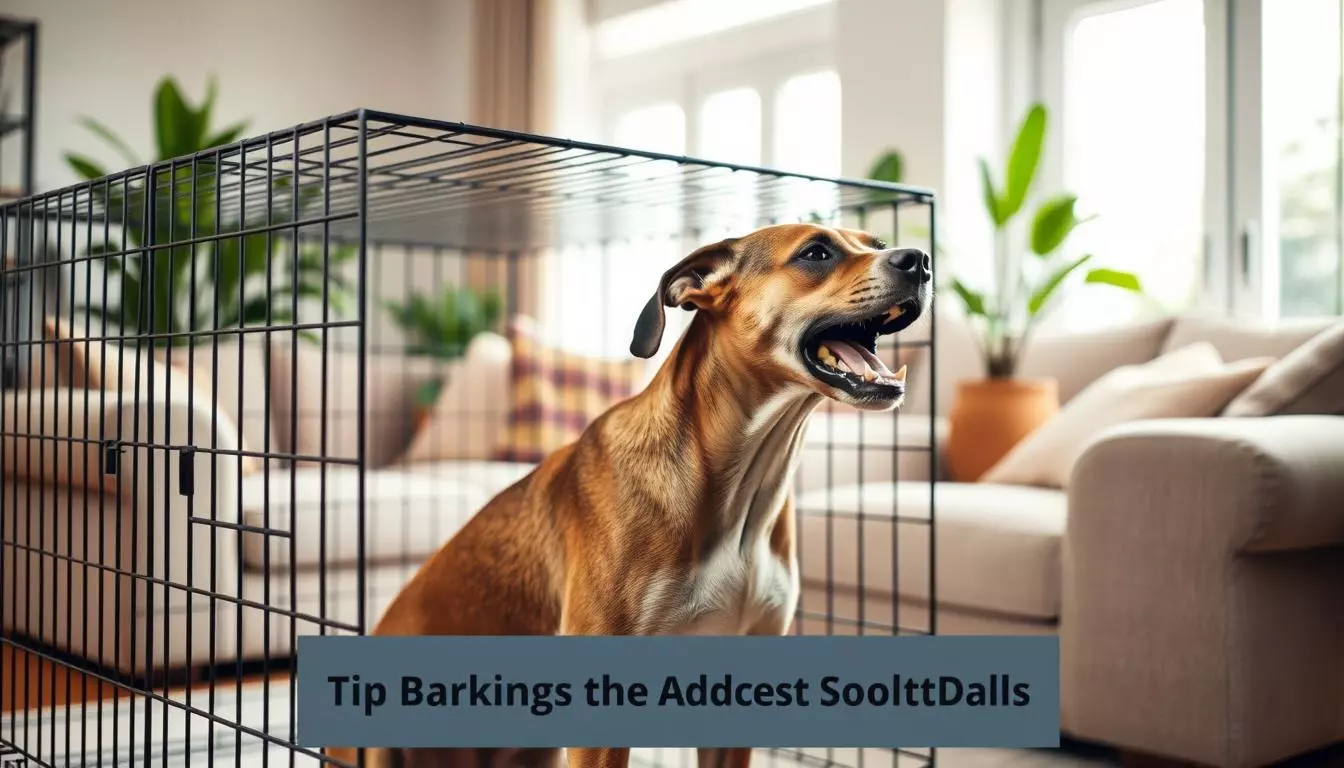
As a devoted pet owner, I know the sleepless nights and stress from a dog barking in the crate. It's heartbreaking to hear their distress, knowing they might feel lonely or scared. Thankfully, there are effective solutions for barking that not only help create a peaceful environment but also foster a loving bond between us and our pets. In this article, I aim to explore crate training tips to address this common issue, ensuring both my dog and I find comfort during those quiet moments.
Key Takeaways
- Understanding the reasons behind dog barking in the crate is essential.
- Establishing a routine can greatly reduce barking behavior.
- Positive reinforcement is a powerful tool in training.
- A comfortable crate environment helps alleviate anxiety.
- Regular exercise is crucial for your dog's mental and physical health.
Understanding Why Dogs Bark in Their Crate
Dogs bark for many reasons, especially when they're in a crate. The big question is: why do dogs bark in their crates? It's often due to emotional or physical needs.
Dogs bark in their crates for several reasons. They might be feeling anxious, uncomfortable, or just want some attention. Knowing this helps us figure out how to help them.
Dogs are social animals and need to interact. Their emotional state affects how much they bark. Understanding this helps us meet their needs better and reduce barking.
Common Reasons for Dog Barking in Crate
Understanding why dogs bark in their crates is key to solving the problem. Several reasons include separation anxiety, fear of the crate, and seeking attention. Knowing the cause helps me find the right way to make my dog feel better.
Separation Anxiety
Separation anxiety makes dogs bark when they're left alone. They fear being away from their owner or a familiar place. Signs include a lot of barking, destructive acts, and trying to get out of the crate. Spotting these signs helps me find ways to calm my dog.
Fear of the Crate
Some dogs are scared of their crate, due to bad past experiences or poor training. This fear shows as barking, whimpering, or trying to leave. It's important to figure out if past experiences are causing this fear. Fixing these issues helps my dog feel more at ease.
Need for Attention
Dogs may bark in their crates because they want attention. This happens if they feel ignored or think barking gets a reaction. Knowing this helps me teach them better ways to get attention, making crate time quieter.
How to Assess Your Dog's Needs Before Crate Time
It's key to know what your dog needs before they go into a crate. Understanding their needs helps make crate time better for both of you. Two important things are giving them enough potty breaks and making sure they get some exercise before the crate.
These steps help cut down on barking and anxiety when they're in the crate.
Puppy Potty Breaks
Dogs need potty breaks based on their age, size, and health. Taking them out often stops accidents. This can prevent them from getting upset or barking when they're in the crate.
It's smart to take your dog out right before you put them in the crate. This teaches them that going outside is part of the routine. It helps them feel less stressed when they're in the crate.
Pre-Crate Exercise Routine
Exercise is vital before putting your dog in the crate. Playing or exercising with your dog helps them relax in the crate. I mix in short walks, playtime with toys, or training sessions.
This not only meets their physical needs but also keeps their mind active. It makes their time in the crate much better.

| Need | Importance | Recommended Actions |
|---|---|---|
| Puppy Potty Breaks | Prevents accidents and discomfort | Schedule breaks directly before crate time |
| Pre-Crate Exercise | Reduces anxiety and promotes relaxation | Engage in walks or play sessions |
Effective Crate Training Techniques
Teaching my dog to love their crate is key. I start by making the crate a safe and cozy space. Positive rewards are a big part of this. When my dog calmly goes into the crate, I give them treats or praise.
I slowly increase the crate time to help them get used to it. Starting small helps them feel comfortable. Each time they stay quiet, they feel more confident and trust the crate more.
My main goal is to stop my dog from barking in the crate. When they feel safe and get rewards for quiet, they bark less. These training methods help us both live in peace.
How to Stop Dog Barking in Crate
Stopping barking in a crate can be tough. Learning to ignore barking and rewarding calm helps a lot. These steps make the crate a peaceful place for both of us.
Ignoring Unwanted Barking
Ignoring barking is a good way to stop it. Not reacting shows my dog that quiet gets attention. It takes patience, but my dog learns to be quiet over time.
Rewarding Quiet Behavior
Rewards for quiet behavior are key. I give treats or praise when my dog is calm. This teaches my dog that being quiet is good. Doing this often helps my dog understand what I want.
| Behavior | Action to Take | Expected Outcome |
|---|---|---|
| Unwanted Barking | Ignore | Dog learns barking does not yield attention |
| Quiet Behavior | Reward | Encourages more calm moments in the crate |
| Consistent Training | Apply techniques regularly | Establishes expected behaviors over time |
Creating a Comfortable Crate Environment
Creating a cozy crate space is key for any dog. A well-thought-out area can lessen anxiety and barking. It makes the dog feel safe inside. I focus on three main things: the right bedding, comfort items, and removing distractions.
Choosing the Right Bedding
Choosing the right bedding is crucial for my dog's comfort. I pick soft, washable bedding that's comfy. Different materials, like memory foam or plush, offer different feels. I consider my dog's likes, as some like it firm, others soft.
Adding Comfort Items
Adding familiar items makes a big difference. I put in my dog's favorite blanket or toy. These items give them a sense of security. Adding something with my scent also calms them during crate time.
Removing Visual Distractions
Reducing distractions is also important. I place the crate in a safe spot where my dog feels part of the home. This cuts down on barking from outside noises, like cars or people moving.
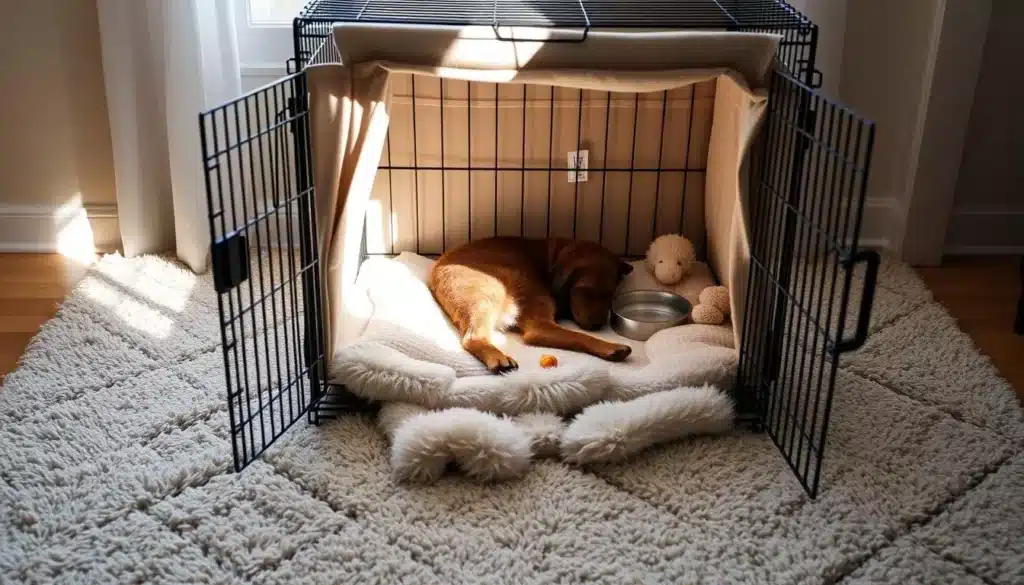
By focusing on bedding, comfort items, and removing distractions, I make a crate that's inviting and calming. Small changes can make a big difference in my dog's crate time.
Using Positive Reinforcement to Combat Barking
Positive reinforcement is a great way to stop barking during crate time. It helps make the environment calmer and teaches dogs what behaviors are good. By using the right training commands, we can teach dogs to be quiet and reduce barking.
Rewards for Calmness
Using rewards for calmness can change how dogs see crate time. I give my dog treats or praise when he's calm in the crate. This shows him that being quiet is good and makes the crate a positive place.
Being consistent helps my dog learn fast. He learns that being calm means more fun times.
Training Commands to Encourage Quiet
Using specific commands helps reduce barking. Commands like "quiet" or "settle" tell my dog to calm down and stop barking. Regular practice of these commands helps my dog understand what's expected.
Adding positive reinforcement to these sessions improves communication. It helps reduce stress during crate times.
Establishing a Consistent Routine
A consistent routine is key for a dog's happiness. Dogs love knowing what's next, which makes them less anxious and more well-behaved. By setting a routine for feeding and play, I help my dog and make our home a happier place.
Feeding and Crating Schedule
Having a set meal time is important for my dog's training and comfort. It tells my dog when to eat, which makes them less worried about being hungry. A routine that links eating and crate time helps my dog behave better.
It's also important to check if my dog feels safe and happy in their crate. This makes sure they feel secure during these times.
Daily Exercise Requirements
It's crucial to meet my dog's daily exercise needs. Regular walks, play, and brain games help burn off energy and prevent barking. By planning these activities, I make sure my dog gets enough exercise and stays happy.
| Activity | Frequency | Duration |
|---|---|---|
| Walks | 2 times a day | 30 minutes each |
| Playtime | Daily | 1 hour |
| Mental Stimulation (Puzzles/Toys) | Daily | 15-30 minutes |
When to Seek Professional Help for Barking Issues
Many barking problems can be solved at home with training and patience. But, some cases need extra help. If my dog's barking doesn't improve, I know it's time to get professional help. Experts can give me advice that fits my dog's special needs.
Behavior Consultation
A behavior consultation helps find the root of my dog's barking. A pro will look into what causes it and how to fix it. They create plans that help my dog and improve our training together.
Dog Training Classes
Dog training classes help with more than just barking. They offer a place to learn important commands and behaviors. My dog gets to meet other dogs and people, which is great for social skills.
Trainers teach us how to better communicate with our dogs. This makes our relationship better and our dog happier.
Understanding Crate Mechanics to Help Reduce Barking
Dealing with dog barking in crates means looking at crate mechanics. We need to think about crate size and where it goes in the house. Knowing these helps make a cozy spot for my dog, which might cut down on barking.
Size and Comfort of the Crate
The size of the crate is key for my dog's comfort. It should be big enough for my dog to move around, turn, and sleep. A too-small crate can make my dog feel trapped and anxious, leading to barking.
A big crate meets my dog's needs and makes them feel more at ease. This calmness helps reduce barking.
Placement of the Crate in the Home
Where the crate sits affects my dog's behavior. The best spot is a quiet area with few distractions. This helps my dog see the crate as a safe place.
By placing the crate right, I make a space that's both comfy and secure. This helps my dog stay calm, which means less barking.
Special Considerations for Puppies and Older Dogs
Every dog is unique, and their age affects their behavior and needs. This is especially true during crate training. Dogs at different life stages have special needs. These can help with issues like puppy crate barking or older dog fears.
4 Month Old Puppy Barking in Crate
A four-month-old puppy is still getting used to their surroundings. They may bark when in a crate due to anxiety and a need for company. To help, create a routine with regular potty breaks and playtime before crate time.
Adding comfort items like a favorite toy or blanket can also ease their stress. It makes them feel secure during these changes.
Addressing Fears in Older Dogs
Older dogs face unique challenges with crate training. Their fears can come from past experiences, leading to barking. It's crucial to make the crate a calm place.
Use gentle reassurance and let them get used to the crate slowly. Positive reinforcement is key. It helps older dogs feel safe and comfortable in their crate.
Common Myths About Crate Training and Barking
Crate training is filled with myths that can make it less effective. It's key to know these myths to create a good space for dogs and their owners. Many think ignoring barking will fix it. But, this can make the dog more stressed and anxious, not solve the problem.
Crates are not meant to punish dogs. They are a safe place for dogs, giving them comfort and security when used right.
Ignoring the Dog Will Fix the Barking
Many believe ignoring a barking dog will make them quiet over time. But, this can make the dog feel scared or left out. It's important to understand why the dog is barking.
By meeting the dog's emotional needs, their behavior can improve a lot. Positive reinforcement and a supportive environment can stop the barking, not make it worse.
Crates are Punishment
Some think crates are a form of punishment. This can make the crate a bad thing for training. But, seeing crates as a safe and cozy space helps dogs feel better.
Changing how we see crates can make training work better. Dogs do well in places where they feel safe, not scared.
Alternative Solutions for Reducing Barking
When crate training doesn't work, looking into other ways to stop barking can help. These methods aim to make your dog's environment better and keep them active.
Using Exercise Pens
Exercise pens are bigger than crates, letting dogs move around. They help reduce barking caused by feeling trapped. By giving my dog a safe space to play, I see less anxiety when they're in a crate.
Exercise pens work both inside and outside. They make a fun area where my dog doesn't feel stuck.
Interactive Toys to Distract Dogs
Interactive toys keep dogs from barking by keeping them busy. These toys challenge my dog's mind, keeping them entertained. Puzzle feeders and treat-dispensing balls make crate time more fun.
As a result, my dog barks less because they're having fun. They focus on the toys instead of feeling trapped in a crate.
| Solution Type | Description | Benefits |
|---|---|---|
| Exercise Pens | Spacious, secure areas for dogs to move freely | Reduces feelings of confinement and anxiety |
| Interactive Toys | Toys that engage dogs mentally and physically | Distracts from boredom and lowers barking frequency |
How Long to Allow Your Dog to Bark in Their Crate
When crate training, knowing how long your dog can bark is key. It's important to tell the difference between normal barking and when they're really upset. Paying attention to sounds and body language can help you know if your dog is stressed or anxious.
Recognizing a Distress Signal
Dogs bark for many reasons, but knowing when they're really upset is crucial. Look out for signs like:
- Pacing inside the crate
- Excessive howling or whining
- Inability to settle down
If you see these signs, it's time to act fast. By understanding your dog's signals, you can meet their needs better.
Avoiding the Extinction Burst
Training can sometimes lead to an "extinction burst." This is when barking gets worse before it gets better. Knowing this can help you train your dog better. If you ignore the barking during this time, your dog might bark more to get your attention. It's important to reward quiet behavior to get through this tough time.
Conclusion
Understanding why dogs bark in crates is key. It could be due to separation anxiety, fear, or a need for attention. Once I know the reason, I can use the right training methods.
I've found that making the crate a comfy space helps a lot. It also helps to meet my dog's emotional needs. This way, I can lessen the barking and create a calmer home.
Using the right solutions for dog barking in crates has really helped me. Positive reinforcement and a regular routine make my dog feel secure. This not only cuts down on barking but also makes our bond stronger.
Success in crate training takes time and effort. Every dog is different, so finding the right approach is important. With persistence in effective training, crate time can be a good experience for my dog.