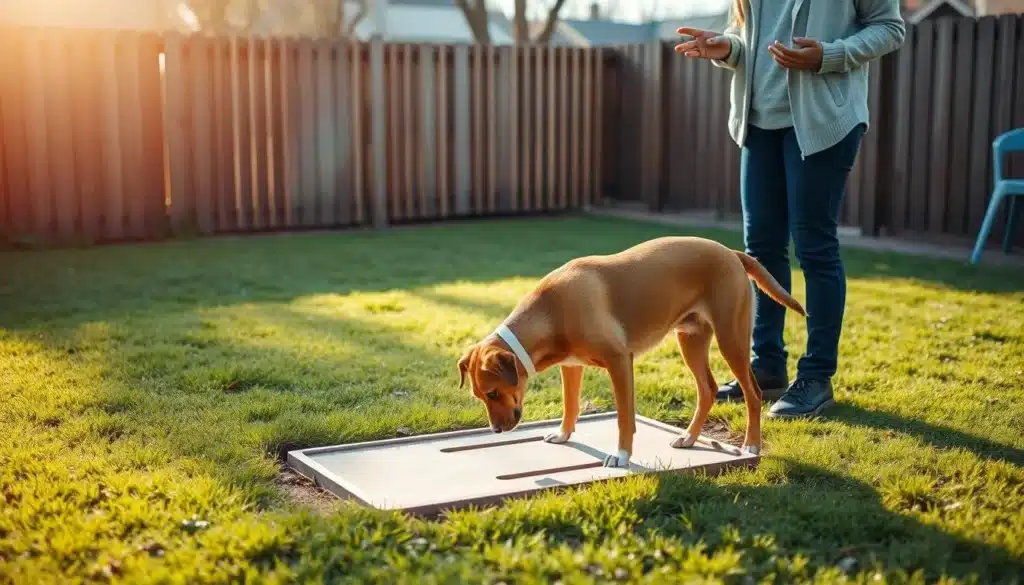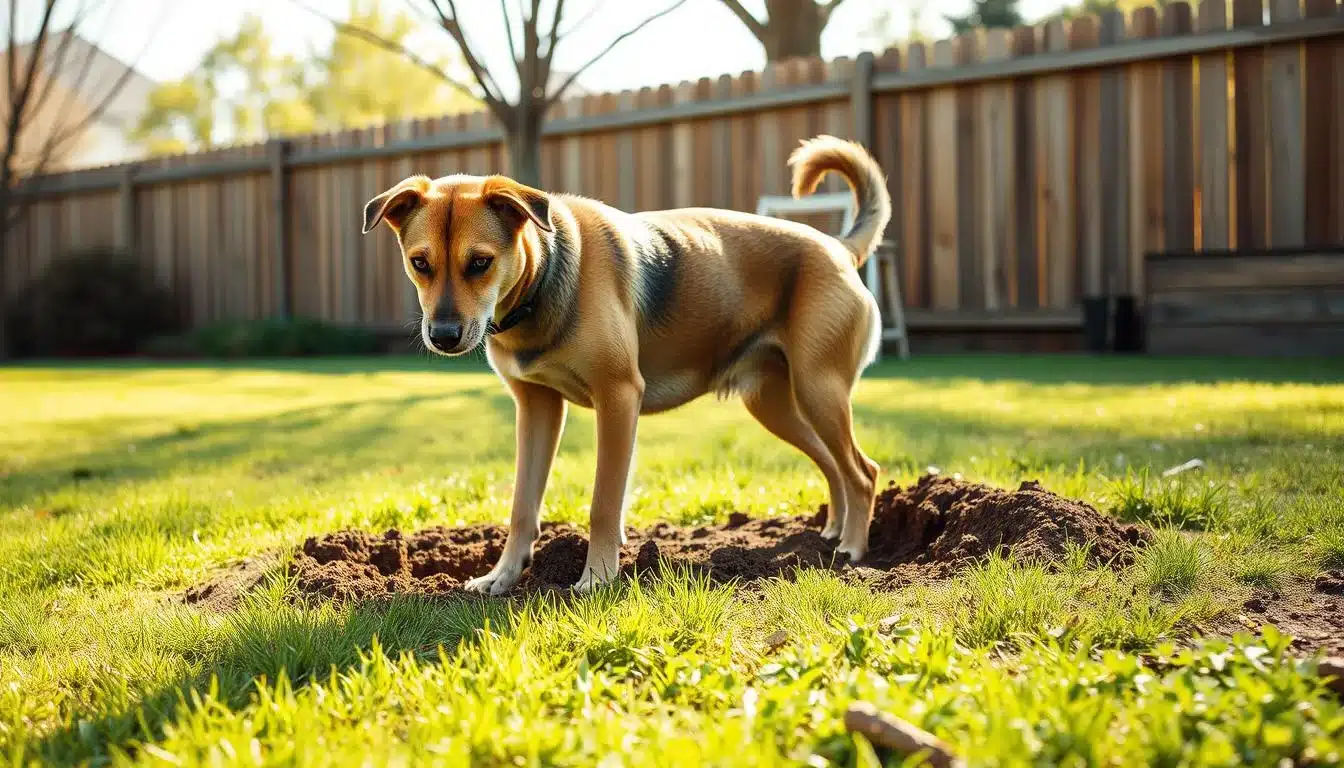
I remember the first time my Labrador dug under my rose bed. He proudly showed off his dirt crater. I felt both frustrated and loving at the same time. Digging is natural for dogs, and I wanted to find ways to protect my garden while keeping my dog happy.
Digging is a normal behavior for dogs, influenced by their breed, age, and environment. It's not just about disobedience. In this guide, I'll share how to stop your dog from digging by understanding and working with their instincts.
This article will cover how to prevent dog digging. We'll talk about enrichment, training, yard fixes, and using safe deterrents. I'll also explain how to create a safe area for your dog to dig.
I'll focus on practical, humane, and evidence-based methods. These are based on veterinary behavior and animal welfare practices. Follow along for step-by-step advice on preventing dog digging and keeping your yard safe and your dog happy.
Key Takeaways
- Digging is normal for dogs and often reflects unmet needs, not stubbornness.
- I will show how to stop a dog from digging holes with humane, targeted solutions.
- Prevent dog digging using enrichment, training, and landscape adjustments.
- Avoid harmful poisons or unsafe deterrents that risk pets and wildlife.
- When simple fixes fail, I’ll explain when to seek veterinary or behaviorist help.
Understanding why dogs dig: common causes and motivations
I keep an eye on my yard to figure out why my dog digs. Small pits mean one thing. But a line of holes along the fence tells a different story. Knowing why helps me find the right way to stop it without scolding.
Boredom and lack of stimulation
Scattered holes across the yard often mean boredom. Dogs with too much energy and not enough to do dig. Terriers and young dogs are especially prone. I add walks, playtime, and puzzle toys to keep them busy.
Hunting prey and scents that trigger digging
When digging is focused, it's usually about hunting. Scents from compost, fertilizer, and animals in the ground attract dogs. I look for signs of moles or rodents and use humane repellents instead of poison.
Comfort, temperature regulation, and shelter-seeking
Dogs dig for a cool or sheltered spot. Holes near foundations, trees, or water are often about finding comfort. If I see my dog in these spots, I add shade or a shelter, or bring them inside when it's too hot.
Attention-seeking and social needs
Digging when I'm around might be for attention. Scolding only makes it worse. I ignore the digging and reward calm behavior. More play and training help too.
Escape and fence-line digging
Holes along fences are about escaping. Dogs want to explore, reach mates, or defend their territory. I fix the fence and work on their behavior to stop the urge to escape.
how to stop a dog from digging holes
I start by watching my dog closely. I look at the time of day and where they dig. I also check if they rest in the hole or get excited.
Assessing the root cause first
I keep a simple log for a few days. I record when and where digging happens. I also note what was happening before and any wildlife or yard features nearby.
I check if my dog gets enough exercise and play. I look at their mental stimulation and shelter options. I also consider the weather that might make them dig for comfort.
I watch my dog’s body language. A dog that freezes and pounces likely hunts. A dog that digs then lies down wants a cool spot. Dogs that dig close to a fence may try to escape. Noting these cues guides the next steps.
Matching solutions to the motivation
I pick targeted dog digging solutions based on what I find. For boredom, I add structured walks, fetch sessions, and puzzle toys. I schedule short training bursts that tire the mind and body.
If prey drives the digging, I use humane rodent control and make the yard less appealing to burrowers. For comfort digging, I improve shade and provide a raised dog bed. For attention-seeking, I ignore digging and reward calm, desirable behaviors.
When the issue is escaping, I repair fence gaps, bury chicken wire, or add a visual barrier. I set up a supervised play area to reduce incentives to tunnel out. These focused steps help me train your dog not to dig by addressing the real trigger.
When to consult a vet or behaviorist
I seek professional help if digging persists after I try dog digging solutions, or if I see sudden changes in intensity. Signs of anxiety, compulsive repetition, or digging paired with pacing, loss of appetite, or other odd behaviors prompt a vet evaluation.
A veterinary behaviorist or a certified applied animal behaviorist can assess medical causes and recommend behavior modification plans or medication. I bring my log, videos, and notes to the consultation to speed up accurate diagnosis and a practical treatment plan.
| Motivation | Signs | Targeted Solution |
|---|---|---|
| Boredom | Digging after long idle periods, chewing, restless pacing | Daily exercise, puzzle toys, training sessions |
| Prey drive | Scenting, alert posture, sudden bursts of digging | Humane rodent control, remove attractants, supervised outings |
| Comfort | Lying in holes, digging during hot or cold spells | Provide shade, insulated shelters, raised beds |
| Attention-seeking | Stops when noticed, seeks human reaction | Ignore digging, reward calm behavior, teach alternatives |
| Escape | Digging at fence line, attempts to bolt | Fix fencing, remove incentives, supervised play areas |
Prevent dog digging with exercise and enrichment
I keep digging under control by giving my dog regular outlets for energy and curiosity. A steady routine of walks, focused play, and brain games lowers the urge to tunnel. This simple structure supports dog digging prevention and shows me how to stop a dog from digging holes without harsh measures.
Daily walk and play schedule
I walk my dog at least twice a day and add a long session for high-energy breeds. Off-leash time at a safe park lets my dog sprint and socialize, which cuts boredom-driven digging. When I plan vigorous fetch or agility play, I see fewer holes in the yard.
Interactive toys and mental games
I use Kong-style treat toys, puzzle feeders, and rotating busy-box toys to keep things fresh. I hide kibble around the house for scent work and offer short foraging games in the yard. These activities satisfy natural drives and fit right into a dog digging prevention plan.
Training sessions and classes
I practice short training sessions daily—five to ten minutes teaching commands or tricks. Those moments give my dog mental exercise and strengthen our bond. Group classes at a local trainer help with socialization and provide structured challenges that reduce digging urges.
| Activity | Duration | Benefit |
|---|---|---|
| Morning walk + play | 30–60 minutes | Burns energy; reduces early-day digging |
| Afternoon short walk or romp | 20–40 minutes | Makes afternoon calm; prevents backyard zoning out |
| Interactive toy rotation | 10–20 minutes, multiple times daily | Mental engagement; lowers boredom-related digging |
| Foraging and scent games | 5–15 minutes | Satisfies natural instincts; teaches focus |
| Training practice | 5–10 minutes daily | Reinforces commands that help prevent dog digging |
| Group class or structured sport | 1–2 times weekly | Socialization and sustained mental challenge |
Train your dog not to dig: behavior modification techniques
I'm looking for ways to stop my dog from digging in the wrong spots. I want to teach them where it's okay to dig. I do this by using short, consistent training sessions.
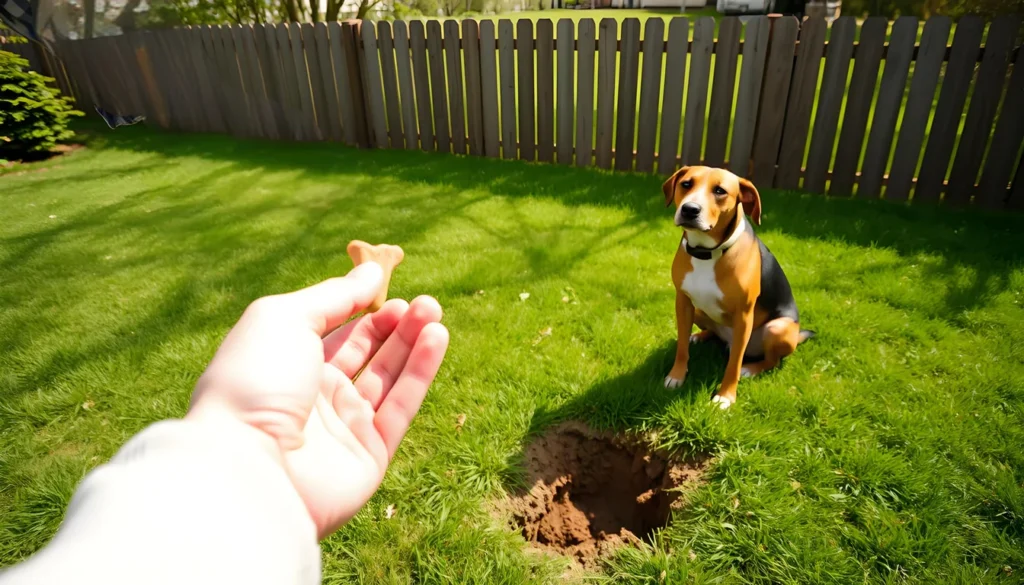
I pick a cue like “No dig” or “Leave it.” When I see digging, I use the cue and lead them away. Before rewarding, I ask for a known command like “sit.” This helps them learn in low-distraction areas first, then in real-life situations.
Reward-based redirection
When my dog digs in a bad spot, I stay calm and use the cue. I take them to a good digging area with loose soil. I bury toys or treats there to make it appealing.
I praise and treat them right away when they dig in the right spot. This teaches them that digging in the right place is rewarded.
Consistency and timing of rewards
I reward them instantly to reinforce good behavior. I make sure everyone in the family agrees on rewards and corrections. I ignore digs for attention, praise good digging, and block bad spots.
I change up treats and toys to keep them interested. As they learn, I ask for longer periods of good behavior before rewarding. This teaches them self-control.
- Practice the cue for short periods daily.
- Make the digging zone more fun than the yard beds.
- Use high-value rewards after real success.
Deter dogs from digging areas you want protected
I have a few tricks up my sleeve to keep flower beds and new plants safe. These methods help me stop dog digging and keep my yard pet-friendly.
Physical deterrents
I cover beds with chicken wire or hardware cloth to keep paws out. I also use large rocks along fences to stop digging. In busy spots, I add paving or mulch to make digging hard.
Sensory deterrents and safe repellents
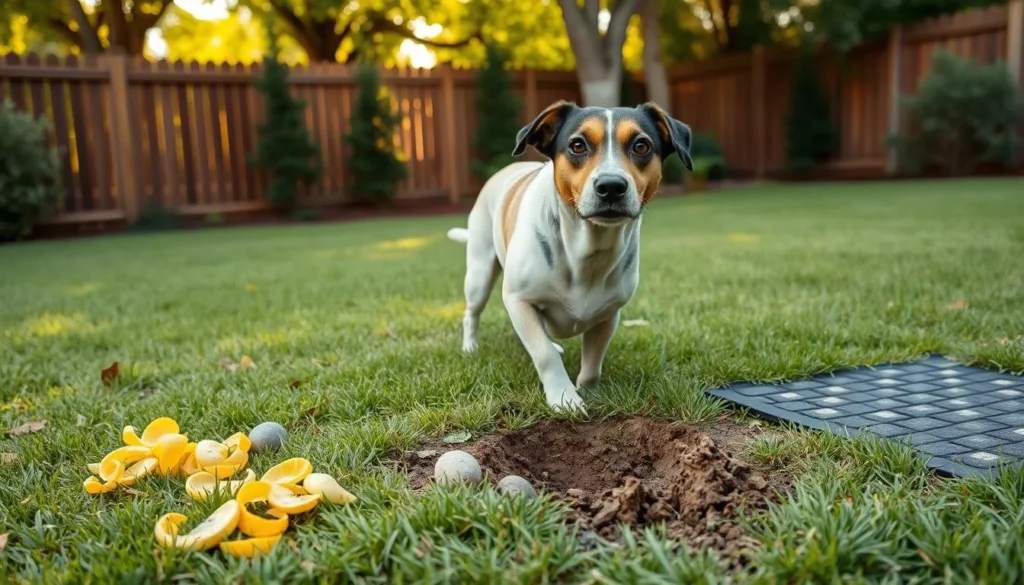
I use citrus peels or vinegar sprays to make areas less appealing. Pet-safe repellents from brands like PetSafe work well. But I avoid harmful chemicals for my dog's safety.
Temporary exclusion and supervision
For quick fixes, I use portable fencing or planters to block access. I watch my dog closely during training. If I see digging, I stop it with a loud sound and redirect to a toy.
I mix these methods to keep my yard safe without being too harsh. This way, I protect my plants and train my dog to stay out of certain areas.
Stop dog from digging yard to chase burrowing animals safely
I watch closely when my dog starts digging in the yard. Spotting the digging early saves plants and keeps everyone safe. Look for small holes, tunnel paths, and fresh soil near plants. If your dog keeps going back to the same spot, it might mean there's an animal living there.
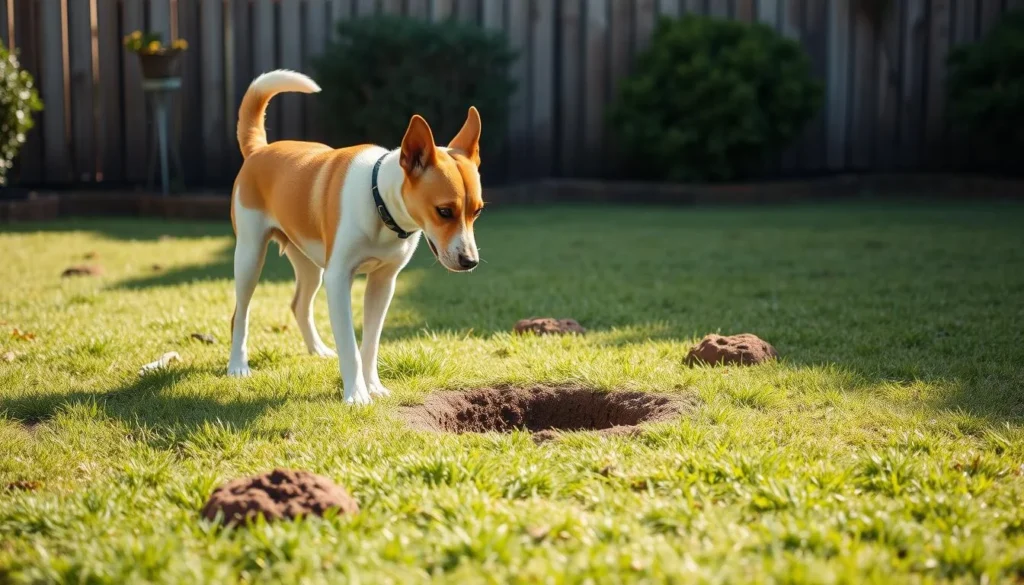
I check the yard at dawn and dusk for signs of burrows. I mark any spots I find and avoid poison. Using humane methods keeps my pet safe and stops the digging without harming them.
I sometimes call a local pest control for help. I ask for methods that don't harm animals and use traps instead of poison. I also fence off areas and seal gaps to keep animals out.
I make sure to remove food that attracts animals. I keep pet food inside, avoid meat in compost, and clear brush piles. A clean yard means fewer places for animals to hide, helping control digging.
To get lasting results, I change the yard and teach my dog new behaviors. I teach my dog to explore calmly and reward them for it. These steps protect wildlife, my garden, and my dog, making the yard safe for everyone.
Control dog digging habits along fences and boundaries
Dogs dig along fences for many reasons. I aim to help you manage this behavior with simple fixes and training. These methods fit into your daily routine.
Start by checking your fence for weak spots and things that might attract your dog. Dogs may dig to see neighbors, other dogs, or wildlife. Fixing the fence and removing temptations are key to stopping this behavior.
Here are some physical fixes to keep your dog from digging near fences:
- Bury the fence bottom 1–2 feet below ground or add a concrete footing to block tunneling.
- Anchor hardware cloth or chicken wire horizontally outward to form a skirt dogs can’t push under.
- Roll any sharp edges away from the yard and partially bury heavy rocks where digging starts.
It's also crucial to understand why your dog wants to escape. Is it due to mating instincts, boredom, or outside sights and sounds? By removing these reasons, you can make physical barriers more effective.
To reduce digging, focus on your dog's behavior. Increase exercise and play to keep them busy. Use toys and scent games near the fence to make the area more appealing.
Practice boundary training with short, calm sessions. Reward your dog for staying away from the fence and for returning when called. This teaches them safer habits and stops digging along the yard's edge.
| Problem | Practical Fix | Behavioral Tip |
|---|---|---|
| Active tunneling under fence | Bury fence 1–2 ft or pour concrete footing | Reward calm behavior near fence; supervise outdoor time |
| Digging to chase wildlife | Install outward-facing skirt of chicken wire | Reduce visual triggers; add enrichment and scent toys |
| Escape for social contact or mating | Repair gaps; strengthen gate latches | Limit unsupervised outdoor access; spay/neuter if recommended |
| Boredom-driven digging | Place rocks or paving along high-risk strip | Increase walks, training sessions, and interactive play |
Discourage dog digging through comfort and shelter improvements
I keep a close eye on my dogs to understand what makes them dig. Changes in shade, bedding, and access can reduce digging. These adjustments help prevent digging without using harsh methods.
I ensure outdoor shelters are warm in winter and cool in summer. I also provide a raised dog bed and an untippable water bowl. These offer stable, comfortable spots for my dog to rest.
To manage heat, I add a cooling mat, shade sail, and shaded platform. These alternatives help my dog avoid digging for cool spots.
In cold months, I provide an insulated dog house and warm bedding. If it's going to be very cold, I bring my dog inside. This keeps them safe and maintains a routine.
I limit my dog's outdoor time during storms or heat waves. When they do go outside, I guide them to their bedding or shaded area. This approach helps prevent digging in the long run.
If my dog still digs, I reduce their outdoor time and increase indoor activities. This gentle approach teaches them to meet their comfort needs without digging.
Dog digging prevention by creating an approved digging zone
I pick one small spot in my yard for my dog's digging. It's a clear place for play and saves my garden. A well-prepared digging area helps prevent digging while keeping my garden looking good.
I choose a discreet, shallow patch away from beds and foundations. A child sandbox or a loose-sand patch works well. I fill it with soft soil or clean sand so paws move freely and digging stays fun.
Training to use the digging zone
I teach my dog to prefer the approved spot by burying safe toys there. When I catch my dog digging in the wrong place, I calmly redirect to the approved digging area and use a cue like "dig here." I praise and reward immediately when my dog uses the zone. This helps train your dog not to dig in forbidden spots.
Maintenance and rotation to keep the zone engaging
I rebury toys and swap incentives every few days so the area stays novel. I keep the sand clean and top it up when it gets compacted. I give intermittent rewards so my dog keeps choosing the approved zone over the yard.
| Step | What I do | Why it helps |
|---|---|---|
| Choose site | Pick a quiet spot away from plants and foundations | Protects landscaping and reduces accidental damage |
| Prep surface | Fill with loose soil, sand, or a child sandbox | Makes digging easy and satisfying for the dog |
| Introduce cue | Use "dig here" and bury toys as incentives | Creates a clear, repeatable behavior to reinforce |
| Redirect consistently | Lead dog to approved spot when caught elsewhere | Reinforces the approved digging area as the right choice |
| Rotate rewards | Change toys, rebury treats, refresh soil | Keeps the zone interesting and prevents boredom |
| Routine upkeep | Clean, top up sand, remove debris regularly | Maintains hygiene and ongoing appeal |
Practical yard maintenance and landscape choices to reduce digging
I keep my yard tidy to stop my dog from digging. Good yard care mixes smart design with daily habits. This keeps the space nice without feeling empty.
Design choices that discourage digging
I use pavers, stone, and mulch paths in busy areas. They make clear paths and keep soil from getting loose. Raised beds and dense plants also reduce digging spots.
I put plants in containers and raised planters. This keeps them safe and teaches my dog not to dig there. Mixing textures makes the yard less inviting for digging.
Protect plant roots and vulnerable landscaping
I use hardware cloth and wire cages to protect plants. Decorative rocks or thorny branches also work as quick fixes. They keep soil covered until plants are strong.
These steps protect plants without harming animals. The barriers are temporary until plants grow strong.
Regular yard checks and quick fixes
I check the yard weekly for digging signs. Catching a new hole early lets me fix it before my dog digs it up.
Rotating play areas and hiding treats keeps things interesting. Small, regular care steps prevent problems and keep the yard looking good.
When to seek professional help for persistent digging
I keep a close eye on my dog's yard habits. I know when digging becomes a problem. If digging doesn't stop with training, or if it starts suddenly, it's time to seek help.
I look for signs of medical or psychiatric issues. If digging happens after exercise and training, I pay attention. Signs like repetitive movements or sudden anxiety mean it's time for a vet visit.
Types of professionals to consult
First, I talk to my vet to check for health problems. If it's a behavior issue, I ask for a vet behaviorist. For training, I might see a certified dog trainer. A vet behaviorist can offer both medicine and behavior plans.
Preparing for a professional consultation
I write down everything before the appointment. I note when and where digging happens, and what triggers it. I also share my dog's routine, recent changes, and any past attempts to stop the digging.
| What I Bring | Why It Helps |
|---|---|
| Timeline of digging events | Shows frequency and patterns that point to timing or triggers |
| Photos or videos | Provides clear examples of behavior and severity |
| List of prior interventions | Prevents repeat strategies and helps tailor new plans |
| Veterinary records | Helps rule out medical causes quickly |
| Exercise and enrichment log | Shows what’s been tried and where gaps might exist |
Conclusion
Stopping a dog from digging holes starts with understanding why they do it. Dogs might dig due to boredom, a strong prey drive, or a need for comfort. They could also dig for attention or to escape. I can use humane solutions to fix these issues.
Exercise, enrichment, and consistent training are key. Setting clear boundaries is also important. These steps help prevent dog digging effectively.
I avoid using toxic poisons or punishing my dog. Instead, I use positive reinforcement and safe ways to keep them out of certain areas. Creating a designated digging zone and improving the yard design are also helpful.
These steps help protect my yard while giving my dog a place to dig naturally. It's a win-win situation.
Changing habits takes time and effort from everyone. I keep an eye on progress, make adjustments, and seek help if needed. With the right training and environment, I can keep my yard safe and my dog happy.