I still remember the first time my neighbor’s Labrador lunged at our fence. My heart raced, not because of the bark but because I felt unprepared. That sudden moment made me think about how fragile trust can be between people and pets. It showed me how important it is to learn practical steps for dog aggression prevention before a warning growl becomes something worse.
Aggression is the most common and serious behavior issue that brings owners to veterinarians and trainers. It covers many behaviors—from stiffening and growling to snapping or biting. Dogs usually give signals before they escalate, even if escalation can happen in milliseconds. Understanding how to prevent aggression in dogs starts with seeing aggression as a functional response. Dogs defend territory, protect family members, guard food or toys, or react to fear and pain.
My goal here is to share clear, veterinary- and behaviorist-informed guidance on canine aggression prevention strategies. I’ll focus on early prevention, positive training, and management. Plus, when to seek professional help so you can reduce risks to people and pets. This way, you can build safer, calmer relationships with the dogs in your life.
Key Takeaways
- Aggression is a common, serious issue that often follows warning signals.
- Prevention focuses on understanding why dogs act aggressively and addressing triggers early.
- Positive training and environment management are central to dog aggression prevention.
- Medical causes or pain can underlie aggressive behavior—rule these out first.
- Seek professional help when aggression is frequent, severe, or unpredictable.
Understanding canine aggression and why prevention matters
I help owners find safe and calm ways to live with their dogs. Knowing the signs and causes of aggression is key. This knowledge helps prevent aggression and keeps pets safe.
Definition and common warning signs
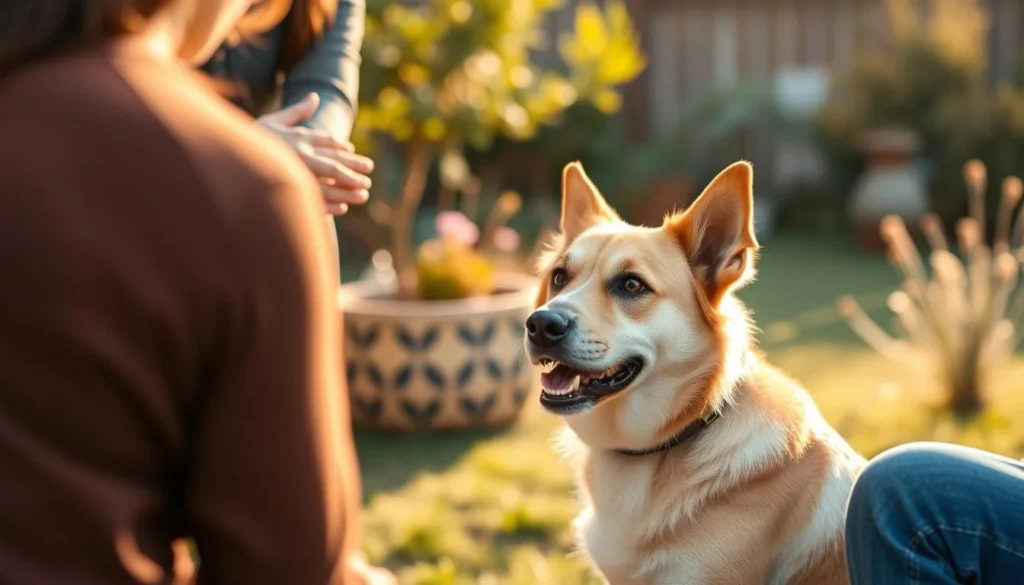
Aggression shows when a dog feels uncomfortable or wants to harm. Signs include stillness, stiff body, growling, and showing teeth. Other signs are lunging, snapping, and bites.
Subtle signs like yawning, lip licking, and whale eye often come before these threats. A tucked tail, trembling, or lifting a paw can also signal trouble.
Why aggression escalates without intervention
Recurring triggers can make dogs more aggressive. This is because they learn to associate certain situations with danger. If they can't escape, they may become more aggressive.
Punishing dogs can make things worse. It can lead to more fear and mistrust. Instead, we should focus on positive ways to manage their behavior.
When to seek professional help
If your dog's behavior changes suddenly or they show aggression, see a vet. For ongoing or severe aggression, especially towards children, get help from a certified trainer or a veterinary behaviorist. Early intervention is crucial for safety and effective behavior change.
| Concern | Signs to Watch | Recommended Action |
|---|---|---|
| Subtle anxiety | Yawning, lip lick, whale eye, tense body | Remove trigger, use desensitization steps, practice tips for controlling aggression in dogs |
| Escalating threats | Growl, show teeth, snarl, snap | Increase distance, record behavior, consult a force-free trainer for managing dog aggression behavior |
| Sudden change | New aggression or pain signs | Veterinary exam, pain management, tailored dog behavior modification for aggression |
| High-risk cases | Targeted at children, repeated bites | Immediate professional intervention, safety plan, long-term behavior work and tips for controlling aggression in dogs |
Common types of dog aggression and their triggers
I explain the main types of dog aggression to help you spot patterns early. Knowing what triggers aggression is key. This knowledge helps prevent territorial, food, and toy aggression in dogs. I provide examples you can use at home.
Territorial and protective reactions
Dogs often guard their homes, yards, and family. This behavior starts between one and three years old. Signs include barking, charging at the fence, or stiff body language when strangers approach.
Protective reactions can spread. A dog that once guarded a doorway may see delivery people or friends as threats. Early, calm exposures near boundaries and consistent cues can help lower tension.
Possessive and resource guarding
Resource guarding includes food bowls, toys, beds, and crates. Some dogs guard openly, while others quietly. Both puppies and adults can develop this behavior.
Guarding can escalate quickly. Simple handling or reaching for a toy may trigger snapping. I use low-pressure exchanges and trading games to reduce the value of guarded items and teach safe handling.
Fear, defensive, and frustration-driven behaviors
Fear-driven bites happen when a dog feels trapped. A fearful dog may bite fast then retreat. Defensive displays mix fear and offensive actions.
Frustration-elicited aggression occurs when arousal is blocked. Examples include lunging at a person outside a window or barking at a dog while on leash. Management and training that lower arousal help prevent these episodes.
Social, redirected, pain-related, sex-related, and predatory actions
Social aggression stems from status conflicts inside a household. It can surface during handling or when resources are taken. Redirected aggression happens when a dog transfers arousal from one target to another, such as biting a nearby person during a dog fight.
Pain-elicited aggression shows in normally calm dogs when touched where it hurts. Orthopedic pain, infections, or misuse of aversive tools can produce sudden aggression. Sex-related aggression is more common in intact dogs competing for mates.
Predatory aggression involves chase and grab behavior with little warning. It is rare but poses serious risk around small children and pets. Awareness and structured management reduce opportunities for dangerous encounters.
how to prevent aggression in dogs
I share steps to lower risk and keep dogs safe. These include social skills, reward-based work, and simple management. They fit busy lives and prevent aggression.
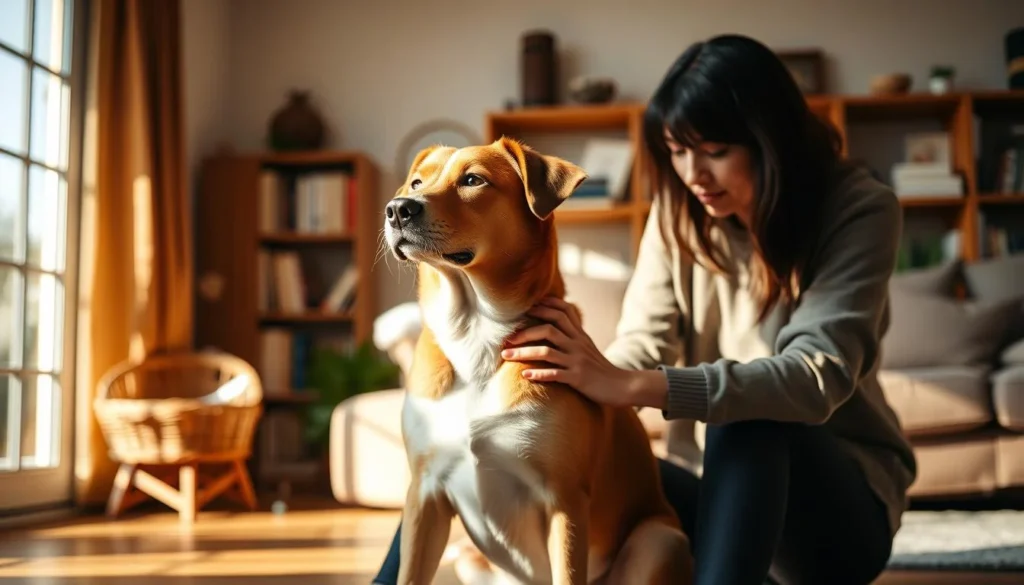
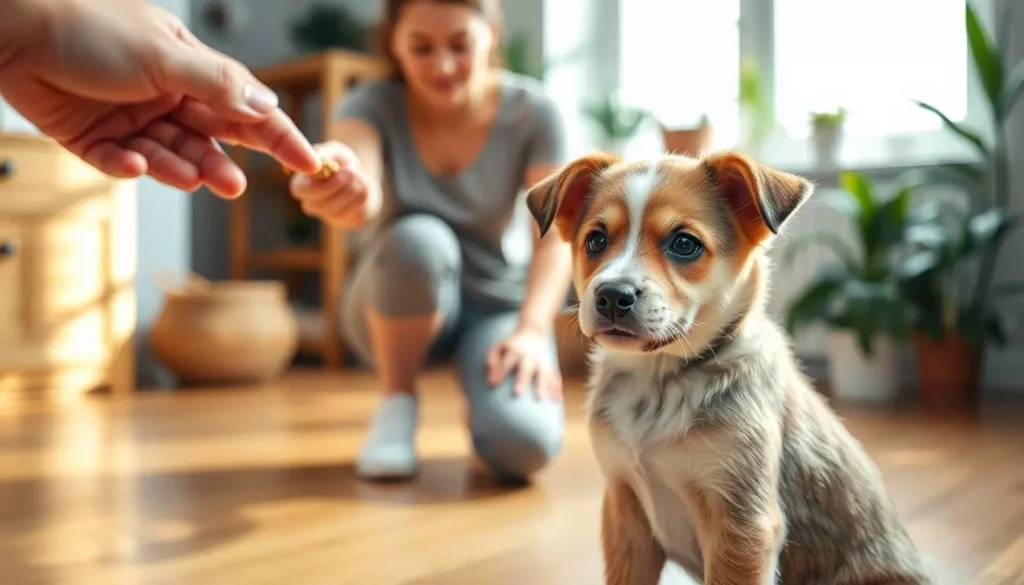
I start with early socialization and controlled exposures. Puppies and adolescents need short, positive meetings with different people, dogs, noises, and surfaces. I recommend calm introductions, plenty of treats, and stopping before the pup shows stress.
Gradual exposure builds confidence and cuts the odds of stranger-directed or fear-based issues. I plan sessions in calm settings until the dog shows relaxed behavior. This is a clear way to stop dog aggression long term.
Next, I focus on reward-based training and reinforcement. I teach core cues like recall, eye contact, and a reliable "sit" for greeting situations. I reward calm choices with high-value treats or favorite toys.
Using rewards reinforces the behaviors I want and reduces fear or defensive reactions. This is key to preventing dog aggression through training without using force. I never rely on punitive methods that can hide signals and make problems worse.
Finally, I use management and environmental modification to prevent repeated triggers. On walks I keep dogs on leash in new places. At home I add secure fencing or visual screening where boundary reactivity occurs.
I rotate or remove tempting items to limit guarding. I add structured play and scent games to lower arousal and boredom. For vet visits or behavior sessions I muzzle-train calmly so safety is never a surprise.
Below I compare practical steps so you can match methods to common problems. This table shows clear actions, expected benefits, and when to call a professional. This way, you can use canine aggression prevention strategies with confidence.
| Action | What I do | Benefits | When to get help |
|---|---|---|---|
| Early socialization | Short, positive exposures to people, dogs, sounds | Reduces fear, builds confidence, prevents stranger-directed aggression | If dog freezes, snarls, or escalates despite gradual steps |
| Reward-based training | Teach recall, sit, calm greetings using high-value rewards | Strengthens alternative behaviors and lowers defensive responses | If aggression is reactive during training or intensifies |
| Environmental management | Use leashes, visual barriers, secure fencing, rotate toys | Prevents repeated confrontations and reduces guarding chances | If incidents continue when managed or safety is at risk |
| Muzzle training | Positive, gradual desensitization to comfortable muzzles | Allows safe handling for veterinary care and training | If handling provokes biting or intense fear |
| Enrichment and exercise | Daily walks, puzzle feeders, training games | Lowers frustration, improves impulse control, reduces reactivity | If dog stays hyperactive or reactive despite routine |
Preventing barrier and territorial aggression in dogs
I help owners who want their dogs to be calm near fences, windows, and doors. I take small steps to teach the right response. This helps prevent barrier and territorial aggression in dogs.
Desensitization and counterconditioning at boundaries
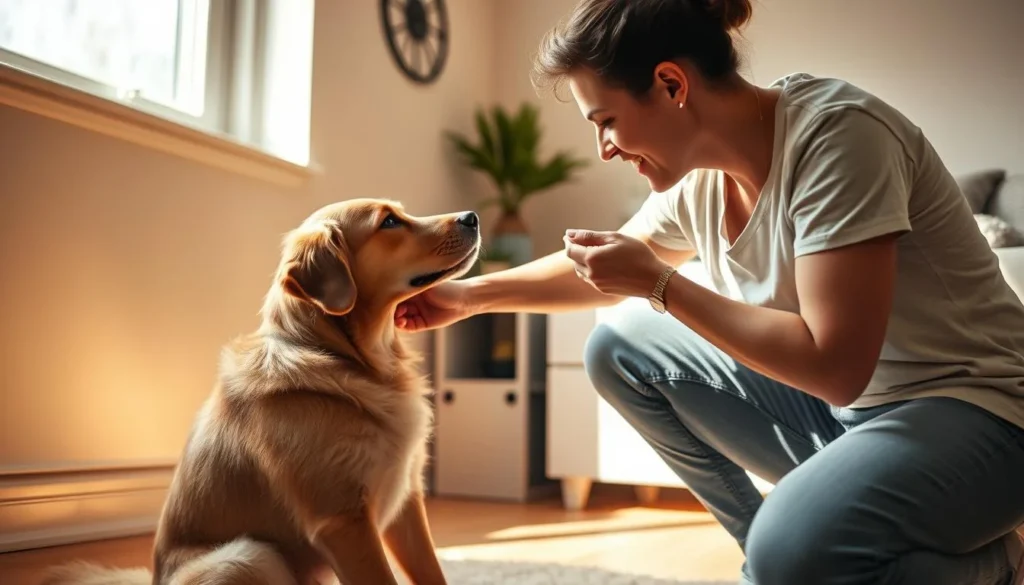
I start far away where the dog stays calm when someone walks by. I give a treat each time to teach the dog to look forward to it. I only get closer if the dog stays calm, keeping them safe from lunging.
I do short, frequent sessions. Over time, the dog learns to associate people with good things. This is key to preventing barrier aggression.
Management of visual and physical barriers
I reduce triggers by changing the dog’s view of the street. A privacy fence or shrubbery can help. Gates and secure zones keep dogs away from busy areas.
When big changes aren't possible, I limit yard access during busy times. I use a tether or exercise pen to keep the dog from running to the fence. These steps help prevent territorial aggression by reducing opportunities to practice it.
Training alternative behaviors for visitors and passersby
I teach a "go to mat" or "place" cue and reward calm behavior. The goal is to replace barking or lunging with a calm response. I also train a short sit-stay and teach dogs to greet guests calmly.
For outdoor encounters, I teach "look at me" while walking past. This rewards the dog for focusing on me instead of strangers. These routines help prevent barrier and territorial aggression and show owners how to do it.
Preventing food aggression and other resource guarding
I help owners reduce tension around food and valuable items. We take clear steps to keep everyone safe. We also teach the dog that giving up resources can lead to rewards.
Identifying triggers and safe management
I watch for when guarding happens. I note the item, location, people or animals nearby, and the dog’s body language. Feeding dogs separately is key when multiple pets live together.
Use crates, baby gates, or timed rotations for chews and toys. Remove tempting items when you can't watch. These steps help prevent resource guarding while training.
Counterconditioning and trading games
I teach dogs to exchange items for better ones. Start with low-value items at a distance. As the dog stays calm, decrease distance and increase duration.
Short sessions build confidence. This helps prevent dog aggression through training.
Handling food possession safely
Avoid reaching into a bowl while a dog eats. Train them to cooperate by pairing gentle touches with treats. Practice hand-feeding to make your presence positive.
For severe guarding or bites, seek a vet or certified behaviorist. Never use punishment. It can make things worse and harm prevention efforts.
Preventing toy aggression and play-related resource conflict
I often see toy disputes that start small and grow fast. With clear steps and steady practice, owners can reduce tension and keep play fun. Below I share practical methods for preventing toy aggression in dogs that fit daily life.
I teach a reliable "drop it" by trading rewards. Start in a quiet room with a low-value toy. Offer a high-value treat like cooked chicken. When the dog releases the toy, praise and give the treat. Repeat until the dog drops on cue without hesitation.
I train "leave it" to prevent grabbing forbidden items. Hold a treat in a closed hand. When the dog stops trying and looks away, mark the calm choice and reward with a different treat. Build distance and difficulty slowly so the cue works during higher arousal.
Supervised play means watching closely and stepping in early. Remove small or high-value toys when multiple dogs interact. Rotate toys so no single item becomes a major focus. I recommend keeping large chew items for one-on-one time or in crates when dogs are together.
During group play I use brief time-outs to reset energy. If tension rises, calmly separate dogs for a minute, then reintroduce at lower intensity. This prevents escalation and reinforces that calm play earns continued access to toys.
For introductions over toys I start with neutral objects and parallel play. Place two toys at distance, let each dog engage separately, and reward calm behavior. Gradually close the gap while keeping both dogs leashed or behind baby gates if needed.
If a swap will help, I practice trading games before shared sessions. Offer a trade item or treat so the dog learns that giving up a toy leads to something better. This technique is one of the most effective techniques for curbing dog aggression during play.
Below is a quick reference to compare approaches and when to use them.
| Situation | Primary Action | Why it helps |
|---|---|---|
| Single dog won’t release toy | Trade high-value treat for toy | Builds reliable drop it cue and rewards voluntary release |
| Two dogs tense over same toy | Remove toy, brief separation, reintroduce with parallel play | Reduces competition and teaches calm access |
| Group play with mixed value toys | Limit high-value toys, rotate items, supervise closely | Prevents possessiveness and lowers resource guarding |
| Dog grabs forbidden items | Practice leave it with closed hand and reward calm choices | Teaches impulse control and safer behavior |
| High-arousal sessions | Use on-leash control and short, structured play | Makes cues reliable under excitement and offers safer management |
These tips for controlling aggression in dogs and the step-by-step methods above form a practical plan. With consistency I find owners reduce incidents and enjoy safer, happier play. Use these techniques for curbing dog aggression to build trust and steady progress.
Training techniques and behavior modification strategies
I teach owners simple, step-by-step plans that mix science with everyday life. My goal is to prevent dog aggression by training that boosts confidence and predictability. Small, steady steps help dogs learn without feeling stressed.
I start with a calm plan for exposure and rewards. I keep triggers low and pair them with treats. This makes the trigger a positive thing, not a threat.
Desensitization and counterconditioning protocols
I break exposure into tiny steps. I set clear criteria before increasing intensity. If a dog shows tension, I go back to the previous step and reward calm.
I use counterconditioning to change emotions. For example, when a visitor appears, I give a favorite treat. Over time, the dog links visitors with something positive, reducing reactive responses.
Impulse control and obedience foundations
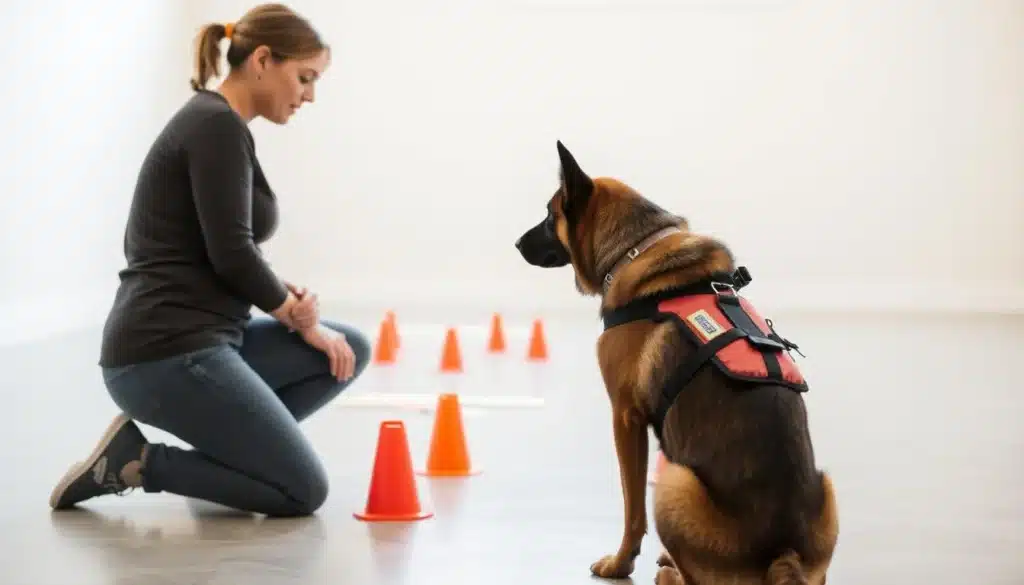
I teach basic cues like sit, down, recall, and place before real-life use. I set up short, fun exercises to build impulse control through gradual challenges.
I use games to strengthen skills. A quick "stay" with a reward, then a longer "stay" after a walk, makes impulse control practical. Strong recall lets me redirect a dog away from risky triggers, lowering the chance of escalation.
When and how to use management tools safely
I introduce management tools as training goals, not emergency fixes. I train dogs to accept a basket muzzle or a head collar with treats and practice sessions, making the tool neutral.
I avoid aversive devices like prong or shock collars because they can create fear-elicited or pain-elicited aggression. I recommend crates, gates, and leashes as temporary safeguards while behavior modification strategies are in progress.
Below is a compact comparison to guide safe choices and match tools to training aims.
| Tool | When to use | How I train for it |
|---|---|---|
| Basket muzzle | Short-term safety for vet trips or training sessions | Gradual desensitization with treats, repeated short sessions, positive pairing |
| Head collar | Manage leash pulling and reduce lunging at distant triggers | Fit slowly, reward calm acceptance, practice low-distraction walks first |
| Crate or gate | Create safe zones and prevent access to triggers | Make the crate positive with meals and toys, use gates for supervised management |
| Leash and harness | Everyday control during behavior training | Teach loose-leash walking and reward orientation to handler rather than target |
Medical evaluation, risk assessment, and when to involve professionals
First, I suggest getting a vet check if your dog's aggression is new or getting worse. A vet can find health problems like arthritis or dental pain. These can cause aggression, so seeing a vet quickly is key.
Then, I assess the risk of aggression. I look at who the dog is aggressive towards and how often. I also check the severity of the incidents. Keeping notes helps me create a safety plan that fits the situation.
I make a safety plan that's easy to follow. It includes things like keeping the dog on a leash and using muzzles. I also include emergency contacts and steps for handling bad situations. For high-risk cases, I push for strict safety measures and professional help.
Choosing the right expert is crucial. For tough cases, I recommend veterinary behaviorists or certified animal behaviorists. I look for trainers who use positive methods. Knowing when to get a vet behaviorist is important for high-risk dogs or those not improving with treatment.
When looking for a professional, ask about their credentials and experience. Make sure they use science-based methods and work well with vets. Avoid trainers who use harsh methods like alpha rolls.
In conclusion, acting fast is important. A mix of medical checks, risk assessment, and expert help is best for your dog's safety and well-being.
Conclusion
I've shared steps to stop dogs from getting aggressive. This includes early socialization, consistent training, and managing triggers. It's also important to watch for warning signs and get vet help when needed.
Positive training and teaching dogs new behaviors help a lot. This reduces stress for both dogs and their owners. I suggest limiting exposure to risky situations and using tools wisely.
Proactive muzzle training is also helpful. These steps protect people and pets while we work on changing behavior. It's smart to make safety plans so everyone knows what to do.
If problems are hard to solve, get help from experts like a vet behaviorist. With the right approach, we can keep our pets safe and happy. This makes life better for everyone in the family.