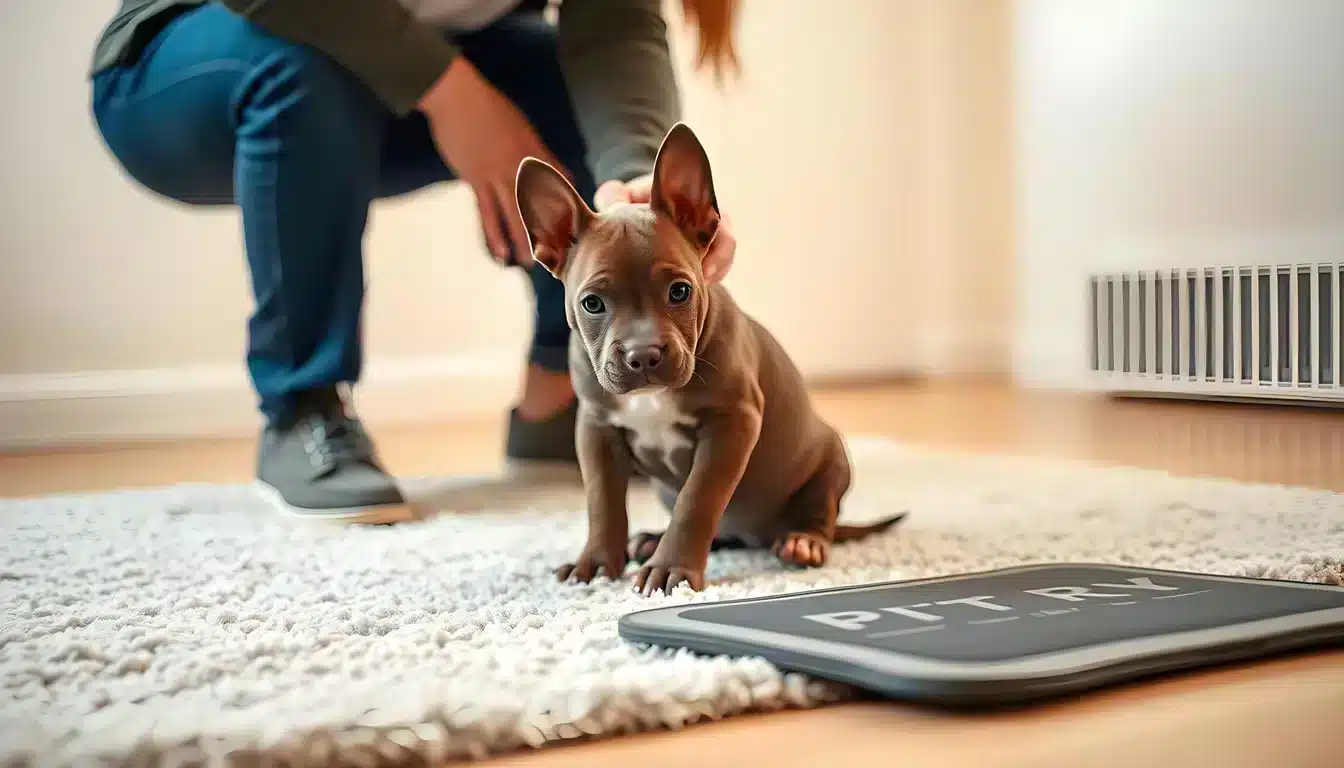
I remember the first rainy night I brought my pitbull puppy home. I woke up to a surprise on the kitchen floor. It was a moment of frustration, guilt, and determination all at once.
That moment taught me that quick potty training isn't about punishment. It's about clear routines, calm guidance, and understanding how this breed learns best.
In this article, I share practical steps for potty training a pitbull puppy fast. You'll learn about positive reinforcement, predictable schedules, and smart confinement. Start focused housebreaking around 12–16 weeks. Introduce location cues earlier with puppy pads for very young pups.
Follow a consistent plan and you'll see progress in weeks. But full reliability can take six months to a year. My approach is all about patience and consistency.
Repeated schedule-based outings, close supervision, and nonpunitive responses speed learning. They also reduce anxiety.
I've gathered tips from Spark Paws, PetMD, Pet Life Unlimited, and more. You'll find step-by-step guidance for potty training pitbull puppy owners. This way, you can get results without stress.
Key Takeaways
- Start focused training around 12–16 weeks; younger pups can learn location cues but have limited control.
- Quick pitbull puppy potty training relies on routine, positive reinforcement, and smart confinement.
- Expect progress in weeks; full reliability may take up to six months or longer.
- Avoid punishment—consistency and calm supervision speed learning.
- Use feeding schedules and frequent outings to predict potty times effectively.
Why I Focus on Pitbull-Specific Potty Training Techniques
I focus on potty training pitbull puppies because they are very social and smart. Their love for people makes them quick learners. I use clear signs, rewards, and short training sessions to help them.
Using a crate is key for pitbull puppy housebreaking. They don't like to mess where they sleep. So, a cozy crate helps teach them to hold it in. I also keep their routine consistent for naps and play.
Young puppies need time to learn. I start training them at 12–16 weeks. Before that, I use puppy pads or small areas. They have small bladders and need to go often.
Pitbulls get distracted easily. I keep training sessions short and fun. This keeps them focused on learning without getting too excited.
My training methods are based on advice from Spark Paws and Pet Life Unlimited. They also follow vet-backed tips on schedules, crate use, and rewards. This mix of structure and rewards works well for potty training pitbull puppies.
By keeping their routine consistent, potty training becomes easier. Using their love for people helps them learn faster. This way, they develop good toilet habits quickly.
how to potty train a pitbull puppy fast
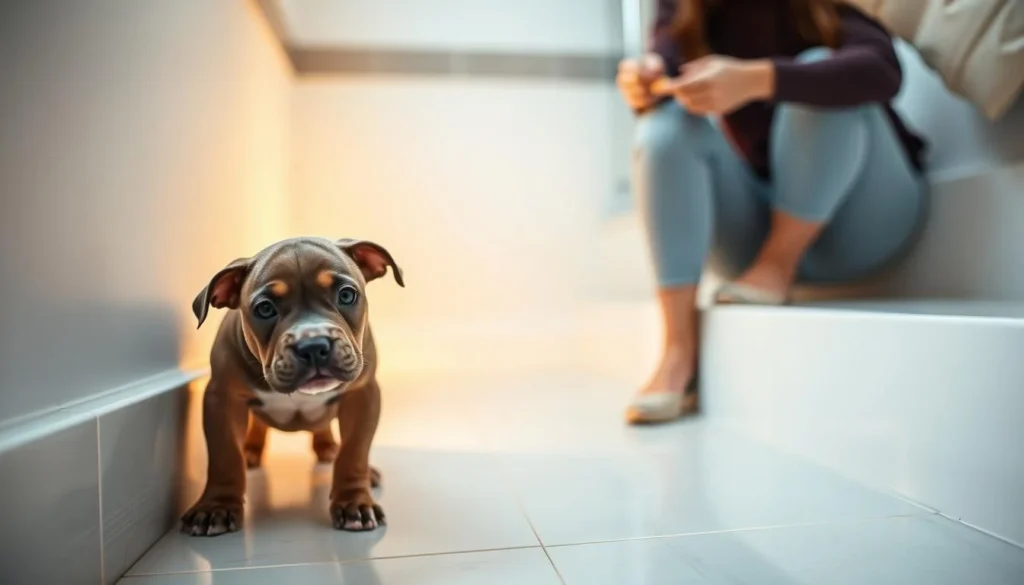
I have a simple plan to potty train a pitbull puppy fast. First, I pick a spot in the yard for them to go. I use the same door and path every time. This helps the puppy learn quickly.
I make a schedule for potty breaks based on the puppy's age. Young puppies need to go every 1–2 hours. As they get older, I stretch the time between breaks.
After meals, I take them out to pee and poop. This helps them learn when it's time to go. I also crate them when I'm not watching to prevent accidents.
When it's time for bed, I limit their water intake. This helps them sleep better. I also take them out at night to help them learn.
I never scold them for accidents. Scolding can confuse them and slow their learning. If they have an accident, I clean it up and take them to the right spot. I reward them for going in the right place.
To sum it up, I choose a spot, set regular times for potty breaks, and supervise closely. I crate them when I'm not there, use a leash for training, and reward them for good behavior. This method is effective and kind to the puppy.
Choosing the Right Tools for Efficient Pitbull Puppy Potty Training
I pick tools that make potty training simple and predictable. The right gear helps me set clear rules and cut down accidents while I teach my puppy where to go. Below I list what I use, why it works, and a quick comparison to help you choose.
Crates and confinement options I recommend
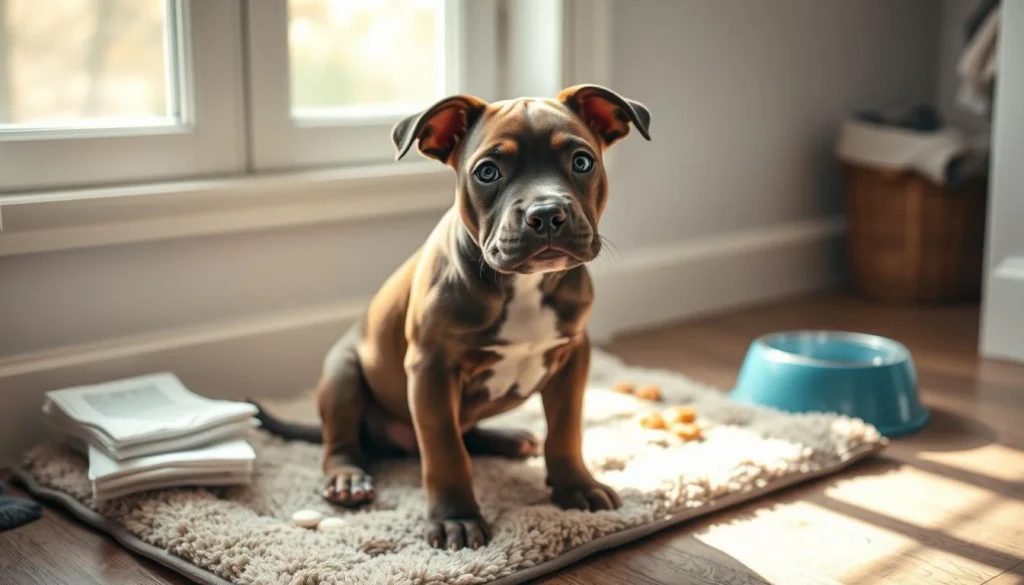
I use a crate sized so my puppy can stand, turn, and lie down but not stretch out to eliminate where they sleep. This encourages bladder control and speeds learning. I feed inside the crate and make it a cozy nap spot so it never feels like punishment.
For short supervised periods, baby gates or a playpen work well. A small bathroom or laundry room corner can be handy for confinement during cleaning or busy times. Brands I trust for durability and fit are MidWest and Frisco.
Puppy pads and indoor toilet alternatives
Puppy pads can be part of a plan when weather or apartment life makes outdoor trips hard. I use pads like Pet Life Unlimited Smart Prints and place them close to exits to build a spatial cue from indoors to outdoors.
I consider modular Create-A-Size pads for odd corners and overnight pads for long stretches. If my goal is outdoor elimination, I avoid relying on pads forever. Choosing a clear end goal prevents mixed signals in pitbull puppy toilet training methods.
Leashes, treats, and cleaning supplies
I always take my puppy on a short leash for potty breaks to keep focus and limit wandering. This helps link the outing with the desired behavior and speeds up potty training pitbull puppy success.
Treats are tiny, low-calorie, and high value. I save the best bites for potty wins and give them immediately after my pup finishes. Timing builds a strong association and supports efficient pitbull puppy potty training.
For accidents I use enzymatic, pet-safe cleaners to remove all odor and prevent repeat marking. I keep supplies in a carry caddy so I can clean fast and get training back on track.
| Item | When I Use It | Top Benefit | Recommended Brand |
|---|---|---|---|
| Crate (proper size) | Naps, bedtime, unsupervised periods | Promotes bladder control and safe confinement | MidWest, Frisco |
| Baby gate / playpen | Supervised containment in living areas | Flexible space control without crate time | Regalo, North States |
| Puppy pads (Smart Prints) | Bad weather, apartment living, early training | Creates indoor option and exit cue | Pet Life Unlimited |
| Create-A-Size pads | Odd-shaped areas or overnight use | Custom fit for any space | AlwaysDry, Amazon Basics |
| Short leash | All outdoor potty trips | Keeps focus and speeds completion | Ruffwear, Blue-9 |
| High-value tiny treats | Immediate reward after potty | Strong reinforcement with low calories | Zuke's Mini Naturals, Wellness |
| Enzymatic cleaner | Accident cleanup | Removes odor to prevent re-marking | Nature's Miracle, Simple Solution |
| Health Tracker Dog Pad | Suspected urinary issues or monitoring | Checks urine pH and volume for health clues | Health Tracker |
Setting a Potty Training Routine That Gets Results Quickly
I set a clear routine to speed learning and cut down accidents. A steady schedule helps me predict needs and teach my pitbull puppy faster. I focus on small, repeatable steps so the pup learns what to expect.
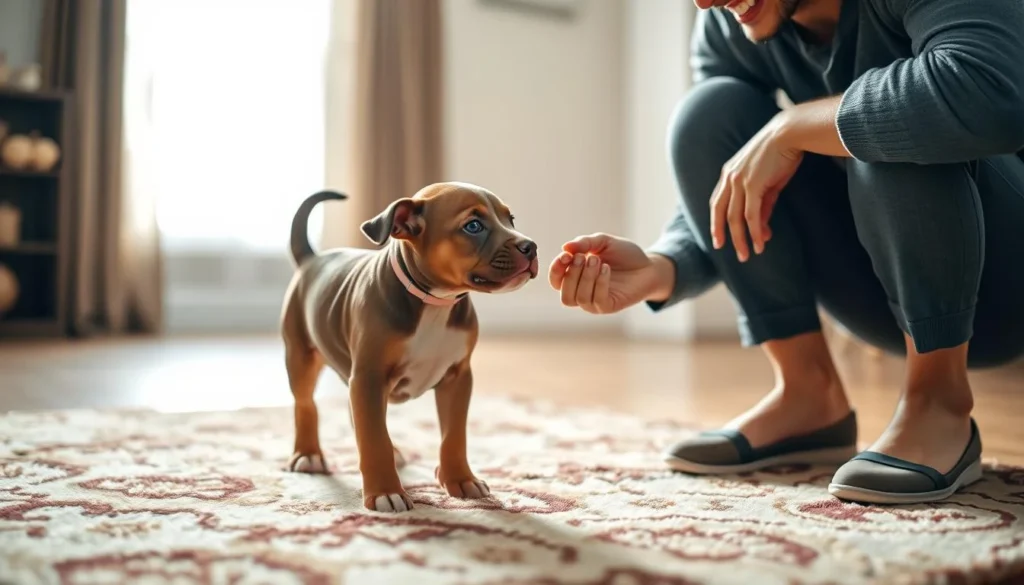
I feed three small meals at the same times each day. This creates regular digestion windows. Expect a potty break about 15 minutes after eating for urination and around 30 minutes for bowel movements. With predictable meals, using tips for pitbull puppy potty training becomes much easier.
Feeding schedule to predict potty times
Feed at morning, midday, and early evening. Keep portions consistent. When I stick to set times, I can plan outings and avoid surprises.
Daily potty schedule and frequency
For very young pups I take them out every 30 minutes when I'm closely observing. As they grow, I move to every 1–2 hours. Always go outside after waking, after play, after meals, and before bed. Gradually stretching intervals builds control without overwhelming the puppy.
Using consistent verbal cues and place selection
I pick one outdoor spot and one short cue, like “go potty.” I keep the pup on a leash and quiet while they sniff and relax. I wait until they finish before praising.
I reward success immediately with a treat and warm praise to reinforce pitbull puppy housebreaking techniques. These steps form the backbone of quick pitbull puppy potty training that I use with every litter and age group.
Crate Training as a Core Technique for Rapid Housebreaking
I use the crate as a safe, calm base when I teach a puppy where to go. It helps set clear boundaries and supports effective pitbull puppy potty training by limiting opportunities for accidents while the pup learns. The crate becomes a positive den, not a place for punishment.
I make the crate inviting with soft bedding, safe chew toys, and by feeding a few meals inside. I start with short, calm sessions and praise quietly when the door opens. Quick, gentle introductions build trust and make potty training pitbull puppy routines easier to manage.
I follow an age-appropriate daytime schedule. When I cannot supervise, the puppy stays in the crate for short periods. Young pups need more frequent breaks. This approach supports pitbull puppy housebreaking techniques by matching confinement to the puppy’s bladder control.
At night I bring the crate into my bedroom so I can hear needs. I begin with shorter stretches and slowly increase time between checks. I never use the crate as punishment and always let the puppy out before anxiety builds. That keeps the crate a place the puppy wants to enter.
I transition out of the crate in stages. First I move to a gated area, then to one room, and only after consistent, correct elimination do I expand access. During each step I keep close supervision or tethering on a leash to prevent setbacks.
If regression happens, I return to a smaller confinement and re-establish the routine. This cautious rollback protects progress and keeps the focus on effective pitbull puppy potty training. Small, steady steps make potty training pitbull puppy goals realistic and lasting.
Reading Your Pitbull Puppy’s Signs and Preventing Accidents
I keep a close eye on my puppy to catch the signs they need to go. These small cues help me act quickly and avoid messes at home.
Look for sniffing the floor, circling, or sudden restlessness. If they leave and come back to the same spot, it's a sign. Barking or scratching at doors means they're in a hurry. Catching these signs helps me plan when to take them outside and keeps our training on track.
Behavioral signals I watch for
I have a simple list of signs to remember. Sniffing, circling, pacing, and heading for the door are the top ones. Spotting these early helps prevent accidents and builds trust.
I pay attention to my puppy's patterns after eating and napping. This lets me predict when they'll need to go. Taking them out before they show signs helps with efficient training.
Supervision strategies I use indoors
When my puppy isn't in the crate, I keep a close eye on them. I use a 6-foot leash to tether them to me or a chair. This keeps them from sneaking off to go without me knowing.
I take them out for short breaks often and make sure the potty spot is ready. Using a leash for these breaks helps them stay focused and rewards them right away. These steps are key to quick learning in potty training.
Cleaning accidents the right way
If an accident happens, I stay calm and take them outside. If they go in the right spot, I praise and reward them. This positive response helps them learn without fear.
I clean up with enzymatic cleaners to remove any scent. I avoid ammonia-based products that might smell like urine. Never scold or rub their nose in it. This can confuse and scare them, slowing down training.
Positive Reinforcement and Reward Strategies That Speed Learning
I use clear, consistent rewards to make training fast. Short sessions and immediate feedback help the puppy connect the action with the reward. I time praise and treats to show the puppy the link between the spot and success.
In the first days, I use small, high-value treats for quick training. Verbal praise and a brief game reinforce the habit without overfeeding. I keep rewards special to keep puppies motivated for each correct trip outside.
Later, I reduce treat frequency and keep verbal cues strong. This helps the puppy not rely on food while keeping the behavior. I still give occasional surprise treats to keep the response reliable in different settings.
Timing rewards for best association
I reward immediately after the puppy finishes eliminating. This makes the link clear. I wait until the puppy is fully done before giving treats or praise to avoid interrupting.
Short, upbeat praise works if a treat is not available.
Choosing effective rewards
I choose tiny, tasty, low-calorie treats for frequent reinforcement. I pair treats with warm verbal praise and a quick play session. For very shy puppies, I use soft petting as an incentive instead of food.
Gradual fading of treats to proof behavior
I slowly reduce treats once the puppy is reliable. I swap in consistent verbal cues and occasional special rewards. I increase distractions and vary locations to proof the habit.
Intermittent reinforcement keeps the behavior strong long-term.
| Stage | Reward Type | Frequency | Goal |
|---|---|---|---|
| Initial | Small high-value treats + praise | Every successful potty | Build clear association |
| Transitional | Treats, praise, brief play | Most successes, start skipping some | Reduce food reliance |
| Proofing | Verbal praise + random treats | Occasional, unpredictable | Generalize behavior under distraction |
| Maintenance | Praise, play, rare special treat | Intermittent | Long-term retention |
Common Roadblocks and How I Handle Setbacks Quickly
I know training a puppy comes with its challenges. Knowing the common potty training problems helps me act fast. I make routines tighter, watch them closer, and keep rewards simple to teach them the right spot.
First, I look out for signs of regression and distractions. If accidents happen more, I shorten their freedom time. I also use a crate or a small area until they learn to go outside right.
I keep dogs apart in homes with more than one dog. This way, each puppy learns its own routine. I watch their interactions and reward each dog separately. This helps avoid confusion and speeds up their learning.
Regression, distractions, and multi-dog households
Regression can happen after big changes like new visitors or travel. I quickly get back to their usual schedule. Short, frequent trips outside and clear commands help them stay calm and avoid accidents.
To avoid distractions, I use a quiet spot for potty breaks and leash them. In homes with multiple dogs, I take each outside alone. This helps each dog develop its own routine.
Medical issues and when to see the vet
Accidents, straining, blood in urine or stool, or sudden urgency are warning signs. If I see these, I call my vet. Common infections or parasites can look like training problems and need quick attention.
I keep a record of when and how often they go. If their habits change, I share this with the vet. This helps figure out if health issues are causing the problems.
Adjusting training for different ages
Young pups need to go out every 1–2 hours and may use pads or be in a small space. They have little bladder control, so I plan short intervals.
Pups between 4–6 months can usually hold it longer, so I give them more time. Adult or rescue dogs need a careful look at their past habits. I build trust and a consistent routine, using positive reinforcement and patience.
These steps help solve common potty training problems. They provide practical tips for training pitbull puppies that I use every day.
Conclusion
To potty train a pitbull puppy fast, keep a routine and use a crate when you can't watch them. Pick one spot for potty and use a clear word. Short walks with rewards help your puppy learn quickly.
Be realistic about progress. It may take weeks to see big changes, and months for full reliability. Feed small meals and watch for the 10–20 minute window after eating for potty breaks.
Use puppy pads and enzymatic cleaners for accidents. Stay calm and adjust training as your puppy grows. If health issues arise, see your vet. With patience and positive training, your pitbull will learn fast.