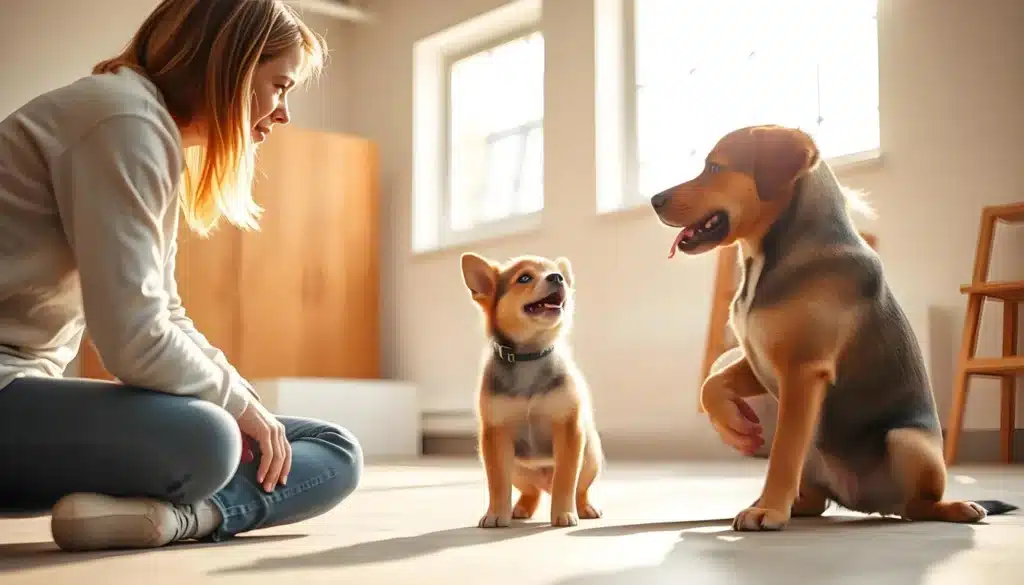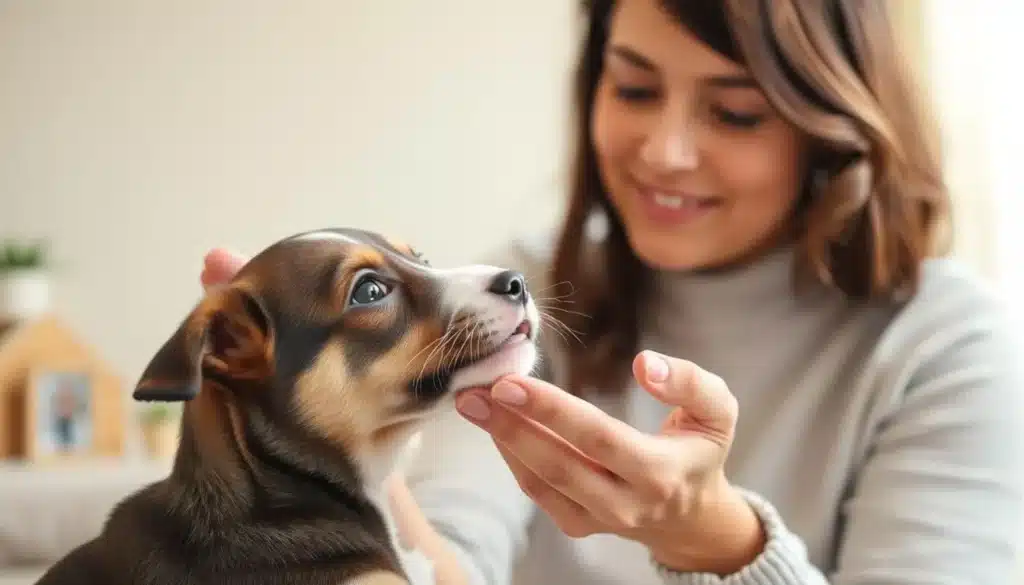
I remember the first morning with a trembling puppy. It was a mix of joy and fear. I wanted a clean house and a calm routine. But I also wanted to protect that little life and teach it new signals.
That's why I wrote this guide on potty training a dog at home. It's about tenderness and practicality.
Before getting a puppy or dog, prepare well. Research methods and pick what fits your home and schedule. Make a simple plan you can follow.
Consistency, patience, and positive reinforcement are key from the start. They are the foundation of successful house training.
This guide will cover the basics of potty training and realistic timelines. It will also talk about tools like crate training, puppy pads, and indoor potties. We'll discuss schedules, reward timing, nighttime routines, and more.
I won't promise perfection right away. But I promise practical steps and tips to reduce stress. Learning to potty train a dog builds trust and good habits.
Key Takeaways
- Prepare before bringing your dog home: pick a method and set a plan.
- Consistency, patience, and positive reinforcement are essential from day one.
- Core tools include crate training, pads/indoor potties, schedules, and timed rewards.
- Expect gradual progress—realistic timelines and troubleshooting are part of the process.
- Effective potty training supports a clean home and stronger bonding with your dog.
why potty training matters for your dog and home
I teach owners that basic housetraining shapes daily life for both people and pets. Clear routines cut stress, protect furniture and floors, and let you enjoy outings and boarding without worry. Understanding why potty training matters helps you make steady choices that set your dog up for success.
benefits of early and consistent house training
Starting young and staying consistent offers real rewards. One major benefit of house training is a predictable routine that prevents marking and destructive habits. Early lessons speed learning, which lowers long-term cleanup and rehoming risk.
Well-trained dogs travel and visit the vet more easily. Kennels like PetSmart and veterinary clinics accept dogs that understand boundaries. That ease saves time and stress when you need boarding or exams.
how potty training supports behavior and bonding
Regular schedules and immediate rewards build trust. I use positive reinforcement—treats, praise, short play sessions—to link good behavior with pleasant outcomes.
That pattern improves dog behavior bonding. Dogs learn household expectations and gain confidence. Owners feel less frustrated, which strengthens the relationship and improves overall training progress.
when to seek veterinary or professional help
If accidents persist despite consistent effort, it may be medical. Watch for red flags like sudden onset of accidents, blood in urine, or big shifts in toileting habits. These signs mean it's time to consult a vet for a full workup.
If the veterinarian rules out health issues, consider a certified trainer or a veterinary behaviorist. Complex histories, such as dogs from high-stress breeding environments or prior confinement, often need specialized behavior plans.
how to potty train a dog
I guide you through effective potty training methods for your home. I focus on what you can start today, fitting your schedule, and what to expect. This includes teaching a reliable routine.
overview of proven methods I recommend
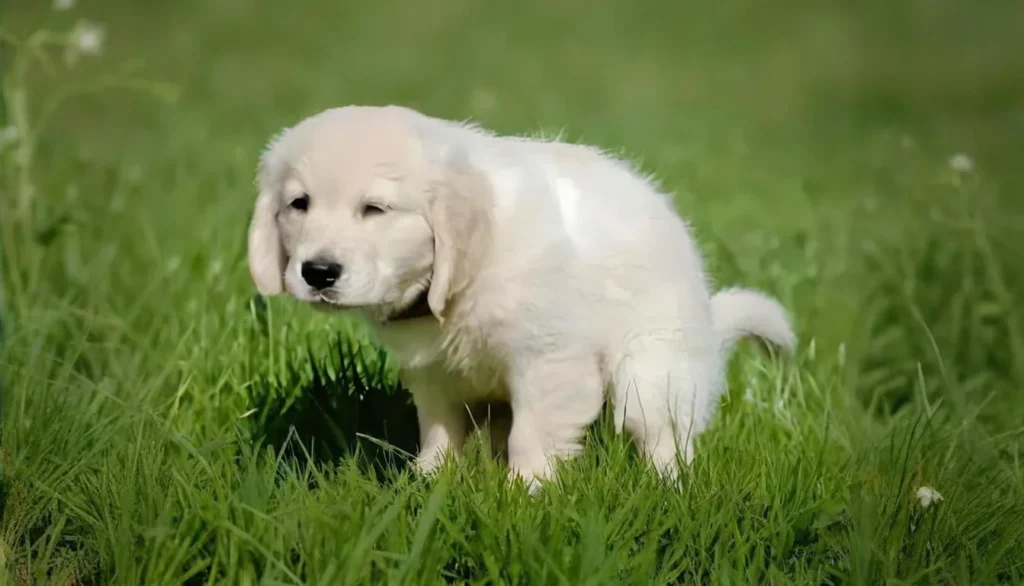
I suggest several reliable potty training methods for most families and dogs. Crate training gives dogs a safe spot and helps them hold it. Scheduled outdoor trips with a cue word teach location and timing.
Puppy pads or indoor potties are great for busy schedules, senior dogs, or small breeds in cold weather. Supervised room confinement or a playpen helps reduce accidents while you watch progress.
Success comes from consistent timing, active monitoring, and positive reinforcement. I reward the exact behavior I want and remove temptation when I can't watch. This combination speeds up learning and reduces setbacks.
matching a method to your lifestyle and dog’s history
I choose a method based on your daily routine, job hours, and the dog’s background. If you can check on the dog often and want to use natural instincts, crate training is best. For long hours or freezing weather, indoor potties or pads are practical.
Rescued dogs and large-breed puppies often need a gentle start. Some may need more time to trust a crate or link a cue word to outside elimination. I avoid pads for outdoor-only training unless I have a clear transition plan.
realistic timeline and expectations
I set realistic expectations to avoid frustration. Puppies under eight weeks need trips every one to two hours. By four to six months, many pups have better bladder control.
Some dogs learn quickly, while others take months. This depends on age, prior learning, and health. Use a training timeline as a guide, not a rule. I track trips, accidents, and successes in a journal to spot patterns. With steady reinforcement and patience, the pattern shifts toward reliability.
creating a housetraining schedule that works
I set a clear routine to teach my puppy where and when to go. A steady housetraining schedule makes expectations simple for both of us. I link meals, naps, playtimes, and bathroom breaks so my puppy learns the pattern quickly.
linking feeding, sleeping, and potty times
I follow a fixed puppy feeding schedule, usually three meals a day for young pups. I take my puppy out right after eating, drinking, waking from naps, and after crate time. I use a short cue like "potty" on every trip so the word becomes a reliable signal.
I always hit the two critical times: first thing in the morning and last thing before bed. I keep outings calm and brief. Excitement can make puppy bladder control worse, so low-key walks work best for training trips.
age-based bladder-control guidelines
Use a simple rule to set expectations: a puppy can often hold its bladder for about the number of hours equal to its age in months, up to roughly nine to twelve months. Newborn to eight-week puppies need breaks every one to two hours. At three to four months many manage four to six hours.
By six to eight months some puppies can sleep through the night. Stress and excitement reduce control. I plan extra trips on high-energy days and after play sessions to avoid setbacks.
using a journal to spot patterns and progress
I keep a short journal noting feeding times, potty trips, accidents, and successful outdoor eliminations. That record reveals triggers like peeing during showers or after certain toys. It also shows steady gains in puppy bladder control over weeks.
I jot stool quality too. Changes in stool often point to dietary issues that slow training. Small daily notes let me tweak the housetraining schedule, adjust the puppy feeding schedule, and celebrate real progress.
crate training as an effective potty training tool
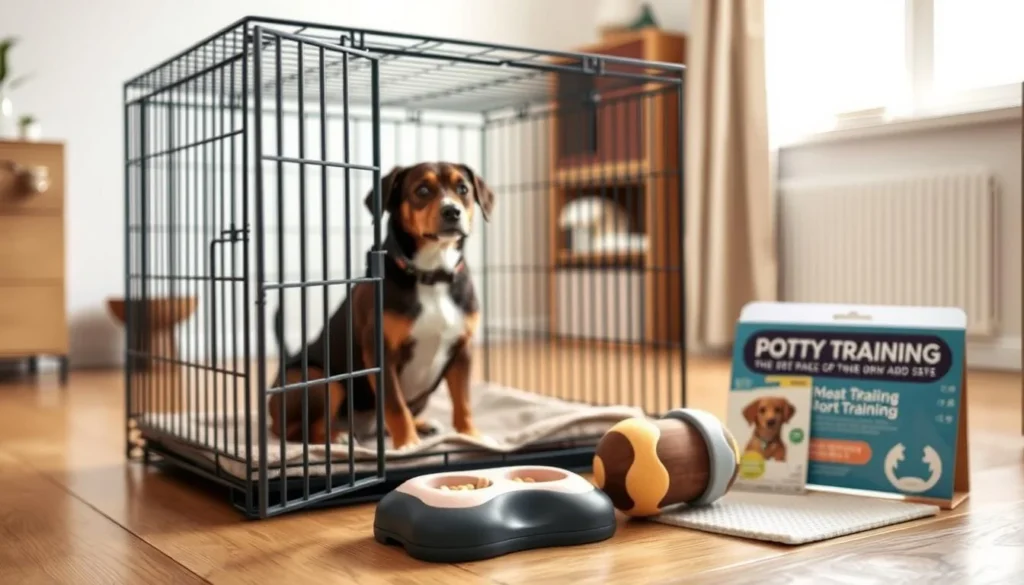
I find crate training a reliable way to help a puppy learn house rules. The den principle explains why many dogs avoid soiling where they sleep. When I use a crate the right way, it reduces accidents, helps calm the dog, and makes supervision easier when I can’t watch closely.
why crates help and the den principle
Dogs evolved as den animals and usually keep their sleeping area clean. I lean on that instinct to teach bladder control and to create predictable habits. A crate becomes a safe spot for rest and travel, and it makes vet visits less stressful when the dog already sees enclosed spaces as calm zones.
choosing the right crate size and partition use
Picking the correct dog crate size matters. The crate should let the dog stand, turn, and lie down, but it should not be so large that the dog can use one corner to eliminate. For growing puppies I prefer crates with adjustable partitions. For large-breed puppies I select a crate sized for adult height and partition off the extra room until growth is complete.
| Age/Stage | Recommended dog crate size | Partition advice |
|---|---|---|
| Small puppy (8–16 weeks) | Just enough to stand and turn; 18–24 inches for tiny breeds | Use partition to reduce space and prevent accidents |
| Growing puppy (4–9 months) | Choose crate for adult size; adjust partition as needed | Move partition gradually to allow safe expansion |
| Large-breed puppy | Select adult-size crate now; partition to match current size | Partition prevents extra corner space while puppy grows |
| Adult dog | Crate matches full adult dimensions; no partition | Ensure room for comfort without excess space |
introducing the crate without punishment
I make the crate inviting from day one. I feed meals inside, hide treats in a Kong, and place soft bedding just outside if soiling is a risk. Short, positive sessions set the tone. I start with minutes, then slowly increase time as the dog stays calm.
If a dog soils the crate because of past problems, I return to basics: more frequent scheduled outings, closer supervision, and step-by-step reconditioning. I never use the crate for punishment. Pairing calm behavior with treats and praise keeps the crate a place the dog wants to be.
using puppy pads and indoor potties strategically
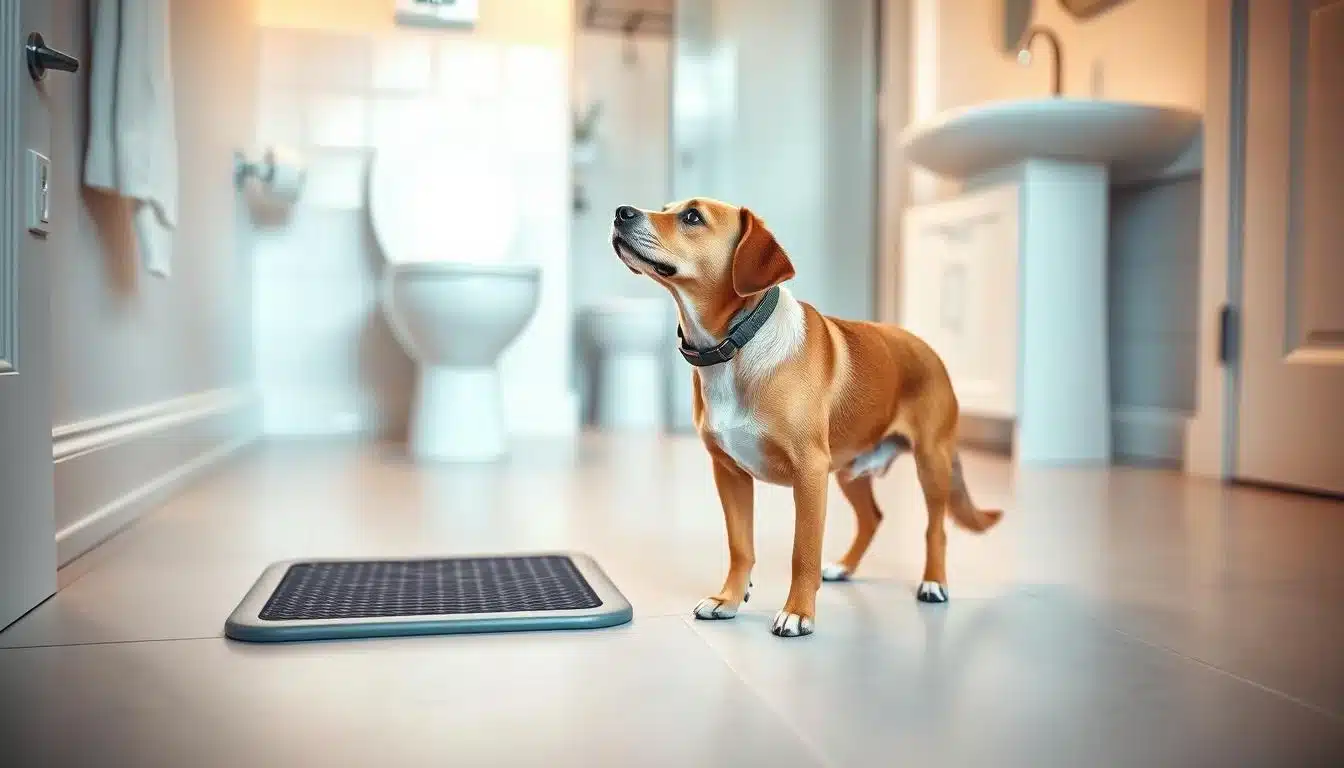
I guide you on using indoor dog potty options wisely. This avoids confusion and speeds up learning. Puppy pads are great when you can't take your dog outside often.
Keep training simple with clear rules. Use pads in one spot and treat them like any other potty area. This reduces confusion and protects your floors.
When moving to outdoor-only elimination, expect a gradual process. You'll need to repeat the training many times.
I share steps to make the switch from pads to outside easier. Move the indoor potty near an exit and reward outside successes. Slowly reduce pad access to help your dog learn the right spot.
- When pads help: long workdays, harsh winter, or medical limits that make frequent walks impractical.
- When pads complicate training: if you want a dog that only eliminates outdoors, pads can teach a permanent indoor habit.
when pads are helpful and when they complicate training
Puppy pads are good for when you can't take your dog outside. They're great for apartments, young puppies, and senior dogs. But, use them as a temporary solution if you want your dog to go outside.
Pads can make training harder if moved around or used too long. Dogs learn by location and scent. If the inside smells like a toilet, your dog will go back there. Keep pads in one place and predictable.
transitioning from pads to outdoor-only elimination
Start by placing the indoor pad next to the exit door. Move it a few inches each day until it's outside. Reward your dog with treats after each outdoor trip.
Reduce pad availability slowly. Start with smaller pads and then remove them for short periods. Expect to retrain your dog for weeks with consistent cues and praise.
placing pads near exits and cleaning up properly
Place pads by a back or side door for a clear path to the yard. This makes supervision easier and shortens the distance to the outdoor goal. For nights, use absorbent overnight pads and special monitoring pads if needed.
- Use enzymatic cleaners such as Nature’s Miracle or Eco-88 to remove odor.
- Keep spare pads in the same spot so replacements match the scent cue.
- Gradually increase outdoor opportunities while decreasing pad access.
My approach balances kindness with clear structure. With steady routine and rewards, moving from puppy pads to outside becomes manageable. Patience, placement, and proper cleanup are key to success.
positive reinforcement and reward timing
I focus on clear, short steps for potty training. Positive reinforcement makes training fast and lasting. Keep sessions short and fun.
what counts as an effective reward
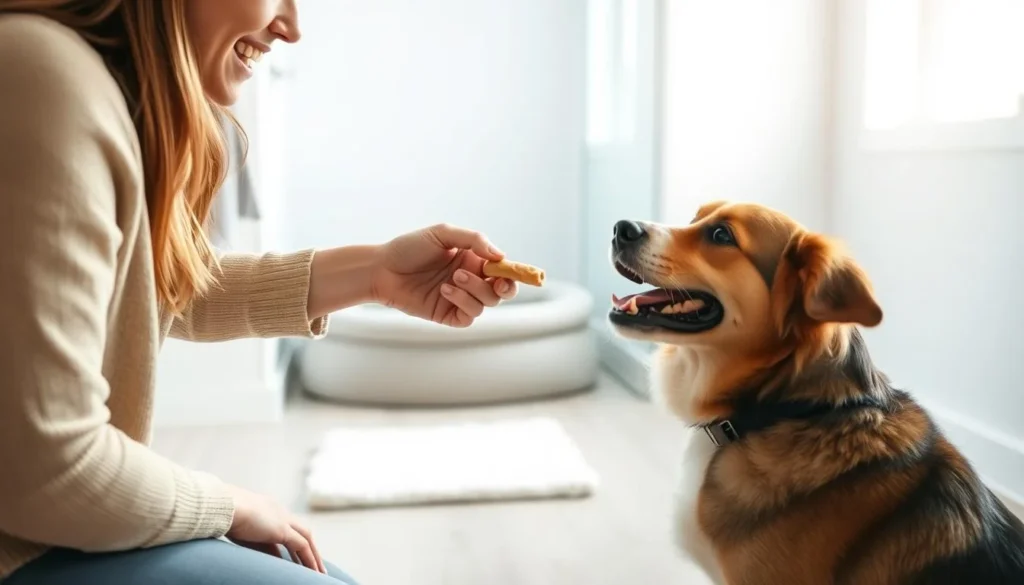
Use treats like small cheese, cooked chicken, or favorite kibble. Add enthusiastic praise and a quick play moment. Some dogs like petting too.
Save these rewards for potty success. This makes the reward special and links it to going outside. I only give these rewards for potty behavior to keep it strong.
how to deliver rewards within seconds for best learning
Reward timing is key. I give a treat within one to two seconds after they go. This links the act to the reward.
Be ready with treats near the door or in a pocket. Use a consistent cue during elimination. Praise and reward before they walk away to avoid failure.
avoiding punishment and cleaning accidents with enzymatic cleaners
I never scold after the fact. Dogs can’t connect past accidents to later reproach. If I catch them, I interrupt calmly and take them outside. If they finish outdoors, I reward immediately.
Thorough cleaning is crucial. I use enzymatic cleaners like Nature’s Miracle or Eco-88 to remove odors. A clean spot reduces confusion and setbacks.
For dogs that use a bell, I teach them to ring it for bathroom trips. This makes the bell a clear signal.
| Reward Type | When to Use | Why It Works |
|---|---|---|
| High-value treats | During early training and outdoor successes | Strong motivation; fast association with potty behavior |
| Verbal praise | Every successful elimination once timing is set | Builds positive emotional link without overfeeding |
| Petting or play | With dogs who prefer interaction over food | Reinforces bond and makes the reward meaningful |
| Enzymatic cleaner pet stains | After accidents indoors | Removes odor to prevent repeat incidents |
| Bell pairing | When teaching signaling for potty trips | Creates a reliable cue for how to potty train a dog with a bell |
potty training a dog at night
I'll show you easy steps to reduce accidents at night and improve your dog's bladder control. Nighttime training is different from day. My goal is to make nights predictable and comfortable for your dog.
nighttime routines to reduce accidents
I limit water an hour or two before bed but keep it steady during the day. I take a final trip outside right before bed. This trip is calm and focused, not playtime, so my dog knows it's for the bathroom.
I place the crate or playpen near my bedroom. If a puppy whines, I can hear it and respond quickly. Quiet activities before bed help signal it's time to rest, reducing accidents.
setting up safe overnight spaces without over-relying on pads
I use a crate that's the right size to prevent soiling where my dog sleeps. If pads are needed, I put them outside the crate near the door. This avoids teaching my dog to eliminate in its sleeping area.
I add safe enrichment like a frozen Kong to keep my dog occupied without accidents. My aim is to gradually remove pads as my dog learns to go outside. Crate training helps with this by reinforcing the den instinct.
when to expect full-night bladder control
Many puppies can go through the night by 4–6 months. By 6–8 months, most can hold it all night. But small breeds, medical issues, or anxiety can slow this down.
If your dog keeps soiling at night despite a good routine, see a vet to check for health issues. With patience, consistency, and focused training, you'll likely see reliable nights.
training dogs who prefer going inside or refuse to go outside
I help many owners with two big issues: dogs that go inside to the bathroom and dogs that won't go outside. Both need patience, a solid plan, and consistent steps. These steps help protect the home and teach new habits outside. Here are some retraining strategies, gentle desensitization, and practical gear you can start using today.
Retraining a dog used to eliminating indoors
Begin by limiting where the dog can go. Use a crate, baby gate, or small playpen to prevent accidents. Place puppy pads near the door at first, then move them a few inches toward the door each day.
Make sure to take the dog out often and at the same times. Reward them right away when they go outside. Watch for signs like pacing or whining and take them outside before they have an accident.
Techniques for a dog that refuses to go outside
First, find out why they might be scared or hesitant. It could be noise, rough surfaces, cold weather, or a bad experience. Start with short, easy visits outside. Let them sniff and offer treats, then leave before they get stressed.
Desensitization is crucial. Use a long line and sit with the dog, rewarding calm behavior. Never force them to go. If they feel safe, they will go when they're ready.
Using leash walks, long lines, and patient exposure to the yard
Take the dog on leash to a chosen spot and wait quietly. A 25-foot line or long lead helps shy dogs relax. Reward them with treats and praise when they go, so they associate going outside with good things.
Having another well-trained dog around can help. Make sure play starts after both dogs have gone to the bathroom. For sneaky dogs, attach a bell to their collar so you can catch them.
These steps help solve the problem of dogs that go inside to the bathroom and those that refuse to go outside. They support dog retraining indoor to outdoor with clear, repeatable actions.
potty training while working full time and alternatives
I work weekdays and need a plan to keep my home clean and my dog happy. I stick to a routine for feeding and potty times. This helps a lot when I'm away.
When I'm busy, I get help from a trusted sitter or professional. They know what to do and keep things moving. I teach them the same cues and rewards I use at home.
Creating a reliable schedule when you’re away
I plan out times for feeding, walks, and breaks. For puppies, I follow age-based rules for holding it in. For adult dogs, I use their past habits to decide visit frequency.
Using dog walkers, midday visits, and indoor solutions responsibly
I get dog walkers for potty breaks or ask a neighbor to check in. If needed, I use indoor pads and keep a path to the outside. This helps when moving from indoor to outdoor potty training.
Tools to minimize setbacks: belly bands, playpens, and supervised areas
I use belly bands for male dogs to stop marking. They're a temporary fix, not a permanent solution. For females, I use diapers when needed.
Playpen potty training works when I need a safe space. I use a playpen with pads, toys, and a cleaning routine. This stops odors and accidents.
- I give clear instructions to visitors: cue, wait, reward, then record the break time.
- I limit free-roam time until accidents decrease.
- If adopting an adult dog, I expect extra effort and may hire a trainer.
Small, consistent steps help me balance work and training. A steady schedule, dog walkers, belly bands, and playpen training reduce stress for both of us when I'm away.
conclusion
In this potty training summary, I've covered the key points that really work. A consistent schedule, positive reinforcement quickly, and the right tools for your lifestyle are crucial. I suggest watching your dog closely, cleaning up fast with special products, and keeping a simple journal.
This helps you see patterns and make changes as needed. These tips create a clear plan for each day.
Remember, every dog is different. Some learn fast, while others take longer, especially if they're rescues or have health issues. Keep track of their progress with notes, celebrate small victories, and be patient with setbacks.
If progress slows or accidents start, it's time to see the vet. They can check for health problems. For more complex issues, consider a professional trainer or behaviorist.
With regular routines, timely rewards, and the right tools, potty training can be easy and stress-free. My method is simple and adaptable, fitting into your home and schedule. With patience and consistency, these tips become second nature, making life better for you and your dog.