I remember carrying my tiny dachshund puppy onto the porch for the first time. My heart was racing with hope. The little guy wobble-ran through the grass, sniffed once, and then lifted his tail.
That moment felt like the start of a partnership. It would need patience, a clear routine, and gentle praise every step of the way.
Learning to potty train a dachshund puppy starts the day they come home. Once your vet says it's okay, you can begin. I use a mix of proven tips and a routine that fits my life.
Short, frequent trips outdoors, consistent cues, and plenty of positive reinforcement are key. These habits help reduce accidents and give my dog confidence.
My goal is simple: get your puppy reliably outside by six months. Bladder control usually matures between four and six months. I'll share steps, gear, and how to handle setbacks.
Key Takeaways
- Start outdoor training once your vet confirms it’s safe; begin the first day home if possible.
- Use short, regular trips outside and a consistent cue to build a predictable routine.
- Positive reinforcement and timely praise work best with dachshunds.
- Expect frequent breaks early; aim for reliable outdoor elimination by about six months.
- Combine routine, crate/playpen use, and the right gear to reduce accidents and stress.
why dachshund puppies can be challenging to housebreak
Learning why dachshund puppies are hard to train helps set realistic goals. Their hunting instincts, small size, and early development stages guide my potty training approach.
breed traits that affect potty training
Dachshunds were bred to follow scent trails. This makes them easily distracted during outdoor breaks. They prefer to explore rather than go to the bathroom on cue.
Their small bladders mean they need to go more often. I plan many short outings to prevent accidents.
age and physical development considerations
Puppy bladders grow over months. At 8–11 weeks, they need to go very often, sometimes every hour. By 12–14 weeks, they need to go about every hour.
From 14–16 weeks, I aim for every two hours. Between 16–18 weeks, I stretch to three to four hours. As they get older, I aim for four-hour windows. Matching the schedule to age is key.
health issues that mimic training problems
Sometimes, accidents are due to worms, parasites, or urinary tract infections. I always check for medical causes when housebreaking stalls. A vet visit can reveal issues that seem like behavioral setbacks.
Treating health problems first helps my housebreaking efforts. This approach keeps training fair and steady.
my step-by-step routine for how to potty train a dachshund puppy to go outside
I start with a short plan the moment the vet gives the all-clear. I set up a small gated area in my kitchen or mudroom with easy-clean floors. I introduce a crate or playpen as a safe retreat without forcing the pup inside.
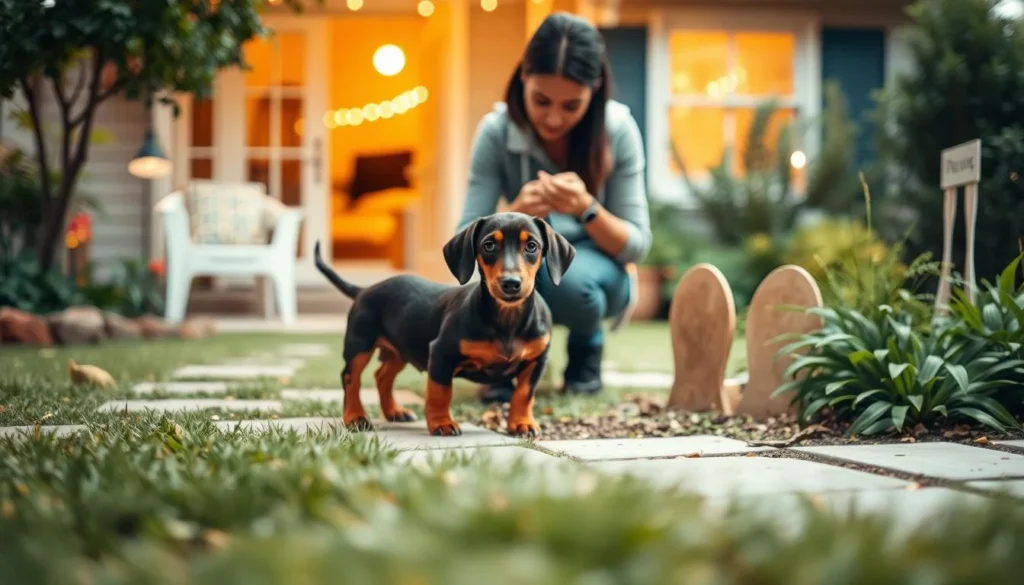
I bring my puppy to the same outdoor spot each trip. I use one simple verbal cue so the pup links place and word quickly.
starting the first day home
On day one, I keep outings calm and focused. I take the pup out first thing, right after eating, after brief play, and before naps. I wait five to ten minutes at the outdoor spot.
If nothing happens, I come back in and try again in about 20 minutes. I avoid long play during potty trips. When the puppy eliminates outside, I give immediate praise and a tiny treat.
This builds a clear reward pattern for training a dachshund puppy to pee outside.
predictable potty times to follow
I follow a predictable schedule tied to waking, feeding, play, and bedtime. For young pups, I go out every hour or so. I always take the puppy out after meals and after active play.
I watch for signs like circling, sniffing, or sudden restlessness and act fast. Keeping a routine makes dachshund puppy toilet training easier. Consistency teaches the pup when to expect outdoor trips and reduces indoor accidents over time.
gradual spacing as puppy grows
I increase time between outings as the puppy matures. For example, at 8–11 weeks, I keep very frequent trips. At 12–14 weeks, I aim for hourly outings.
Between 14–16 weeks, I move toward every two hours. At 16–18 weeks, I stretch to every three to four hours. If I used puppy pads early, I shift them gradually toward the door, then toward the outdoor spot, and finally remove them.
My target is reliable outdoor control by about six months. Small, steady changes keep the pup confident and cut stress for both of us.
| Age | Typical Spacing | Key Focus |
|---|---|---|
| 8–11 weeks | Every 30–60 minutes | Frequent outings, build cue association |
| 12–14 weeks | About every 60 minutes | Set routine after meals and naps |
| 14–16 weeks | Every 2 hours | Stretch waiting times, reinforce outdoor success |
| 16–18 weeks | Every 3–4 hours | Phase out pads, aim for longer control |
| ~6 months | Varies by dog | Reliable outdoor elimination for most pups |
recognizing puppy potty clues and signals
I keep a close eye on my dachshund for any small changes in behavior. These changes often mean she needs to go outside. Catching these signs early is a key tip for dachshund puppy potty training.
Look out for sniffing the floor, circling, or sudden restlessness. Puppies might also stop playing to look nervous. If I see these signs, I act fast. Quick responses help avoid accidents and build trust during dachshund puppy toilet training.
I make sure to take my puppy out at the same times every day. This helps her learn to associate certain cues with going outside. If I catch her trying to go inside, I calmly take her to the yard. There, I reward her for finishing her business outside. This helps her learn to use the bathroom outside.
common behavioral signs
Sniffing and circling are big clues. I also watch for pauses in play or tight circles. A nervous look, sudden stillness, or sitting by the door are important too. I treat whining as a sign to take her outside.
Timing is everything. I stick to a routine that matches her feeding and play times. This makes training smoother and reduces surprise accidents.
teaching a clear signal for going out
I taught my dachshund to ring a bell at the door. Every time we go out, I ring the bell and say a cue phrase. When she rings the bell, I open the door and take her to the same spot.
When she rings the bell on her own, I praise her and give a treat. This builds a reliable signal. Using a verbal cue like “go potty” at the spot helps her learn to use the bathroom outside.
| Cue | What I Do | Expected Result |
|---|---|---|
| Sniffing/circling | Pick up and carry to outdoor spot immediately | Finishes outdoors, rewarded to reinforce behavior |
| Sitting by the door | Open door, ring bell, use verbal cue, walk to spot | Puppy learns to signal when she needs out |
| Whining or restlessness | Stop activity, redirect to outdoor trip right away | Accidents drop as puppy associates cue with outside |
| Mid-elimination indoors | Calmly interrupt, carry outside to finish, reward | Teaches finishing outdoors and reduces indoor repeats |
how to establish a consistent outdoor potty spot
Setting a regular spot for your dachshund puppy to go potty is key. Choose a quiet, less crowded area. For city dwellers, a balcony corner or a small turf area is perfect.
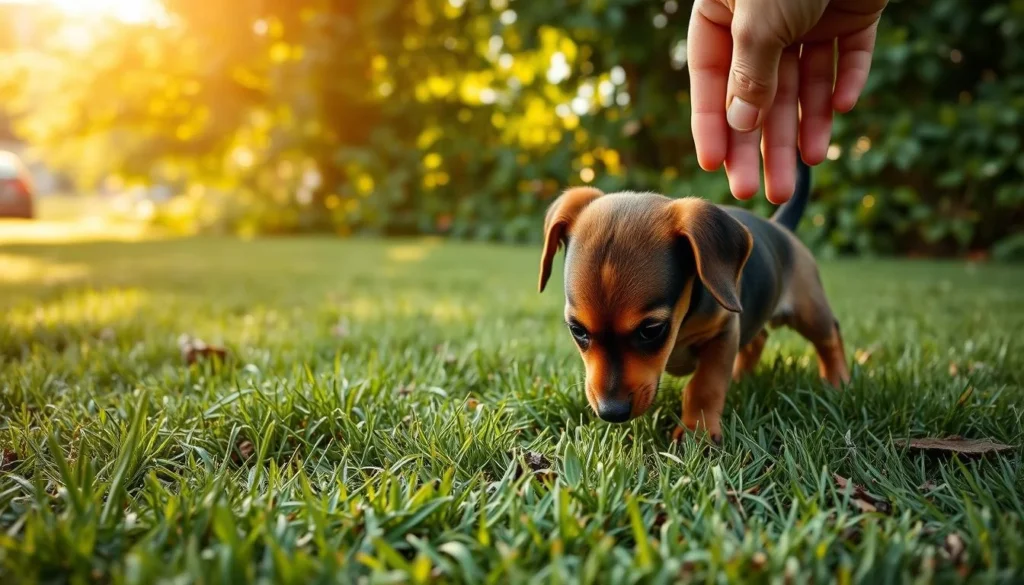
Being consistent helps your puppy learn fast. Take them to the same spot every time. This makes the yard a clear sign for them. If you used puppy pads inside, move one to the chosen spot. This helps your puppy understand where to go.
choosing the right location
Look for a spot that's easy to get to and not too noisy. Avoid areas near busy streets or playgrounds. A sheltered corner that stays dry is best on rainy days.
In small homes, pick a spot you can quickly reach during breaks. Short, frequent trips are better than long, distracted ones. This helps your puppy learn to go potty outside.
using verbal cues and scent association
Use a short command, like “Go potty,” each time. Keep your voice calm and steady. After they go, praise them and give a small treat. This links the command, the place, and the reward.
Go back to the same spot often. This creates a scent map that aids in training. If they miss, stay focused for up to ten minutes and try again soon.
crate training and playpen strategies for housebreaking
I use crates and playpens to help with dachshund puppy housebreaking. They limit where the puppy can go and make it easier to watch them. Puppies usually don't go to the bathroom where they sleep, so a crate routine helps teach them to hold it.
I start crate training a dachshund puppy slowly. I choose a crate that lets the puppy stand and turn but not roam. I place it near where the family hangs out so the puppy feels part of the group and safe.
I begin by leaving the crate door open and using treats to lure the puppy inside. Once they're comfortable, I move the treats to the back and feed them in the crate. I then close the door for a few seconds while sitting nearby, then open it and praise them. This helps the puppy get used to being in the crate for longer periods.
If a crate makes the puppy stressed or scared, I switch to a playpen. Playpens offer more space and an open top, allowing the puppy to stretch and play. I place the pen on a surface that's easy to clean and add a bed, toys, and a water dish.
I adjust the size of the playpen as the puppy grows and sit inside with them at first to offer comfort. Playpens allow me to watch the puppy while they learn to wait for scheduled outdoor trips.
If the puppy panics or soils the crate too often, I stop using it and try a playpen or a gated area. I never use the crate as punishment. I make sure to give the puppy frequent potty breaks and don't keep them confined for too long.
If I need other options, I use short supervised room stays, baby gates, or scheduled outdoor trips. These alternatives help keep the puppy's training on track while keeping them comfortable and trusting.
positive reinforcement: praise, treats, and timing
I keep praise and treats simple for my dachshund to learn quickly. When my pup goes outside, I say "Good!" and give a small treat. This makes them learn fast.
Timing is key, not the size of the reward. I reward right away, then play briefly. This helps my puppy learn without getting confused.
For lasting results, I praise less as they grow up. A 20-minute walk before I leave helps prevent accidents.
rewarding successful outdoor elimination
I use treats like cooked chicken or Zuke's Mini Naturals. They're tasty but small to keep my puppy motivated. I pair the treat with a word and a light pet.
As my puppy learns, I change the rewards. At first, I reward every time. Later, I use rewards less often to keep the habit strong.
handling accidents without punishment
I never scold or rub a puppy's nose in an accident. Punishment can make them afraid and slow down learning.
If I catch them in the act, I interrupt gently and praise if they finish outside. If it's later, I clean up without scolding.
I use cleaners like Nature's Miracle to remove odors. This helps my puppy not to be confused during training.
| Situation | Immediate Action | Best Reward | Why it Works |
|---|---|---|---|
| Successful outdoor elimination | Praise and treat within 2 seconds | Small high-value treat (chicken, commercial mini) | Creates clear association between action and reward |
| Accident caught in the act | Interrupt calmly, take outside, praise if finished | Praise and short play if they comply | Redirects without fear, teaches where to go |
| Accident found later | Clean with enzymatic cleaner, avoid scolding | No immediate reward; reset schedule | Removes scent cues and prevents anxiety |
| Leaving for work | 20-minute walk before departure | Praise and brief calm pat | Reduces midday accidents and stress |
tools and gear that make dachshund potty training easier
I keep things simple and practical when training a dachshund. The right tools reduce frustration and speed up learning. I use a few durable products to protect my floors, guide my puppy, and make cleaning up easy.
essential items I recommend
I start with a crate that fits a dachshund, allowing them to stand and turn but not wander. A convertible playpen gives a safe zone for short stretches. I use the Walk Through Pet Gate for latched doorways and a retractable stair gate to protect the back. A lightweight house line or leash attaches to my belt so I can guide my pup without pulling on the spine.
Enzymatic cleaner is essential after accidents to remove scent and prevent repeat marks. I choose washable waterproof pads or vinyl flooring under playpens to protect surfaces. Small bells hung by the door help teach a signal for going out. When shopping, I look for adjustable sizes, strong ventilation, and washable materials.
when and how to use puppy pads
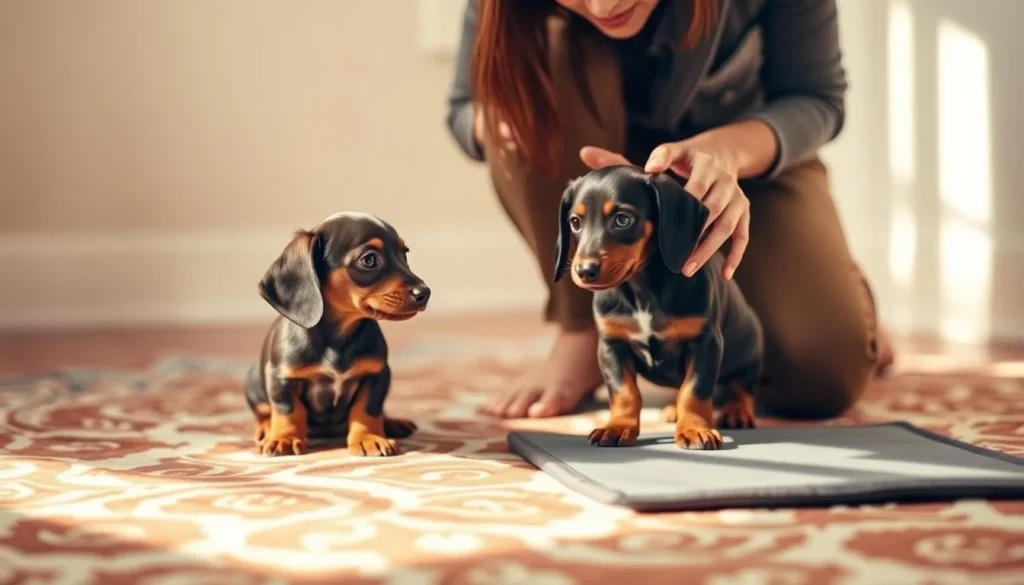
Puppy pads for dachshund use have a role in the first weeks or during bad weather. I avoid making pads the default. If a pad is needed, I place it inside the playpen and reward outside eliminations to keep outdoor goals clear.
To phase pads out, I move the pad a few inches each day toward the exit. Next, I place the pad just outside the door. This shifts the scent and cue toward outdoor elimination. Once the pup consistently goes on the pad outside, I remove it and praise outdoor success.
| Item | Why I use it | How I use it |
|---|---|---|
| Adjustable crate | Creates a den and teaches bladder control | Sized for dachshund, short sessions, never used for long confinement |
| Walk Through Pet Gate | Controls access and secures rooms | Latched doorway placement to block off off-limits areas |
| Convertible playpen | Safe play area that can expand as puppy grows | Used for supervised breaks and short alone time |
| Waterproof pads / vinyl underlay | Protects flooring and speeds cleanup | Placed under playpen or in early potty spot |
| Enzymatic cleaner | Removes odor that invites repeat accidents | Clean immediately after accidents, follow label directions |
| House line / light leash | Keeps puppy close without strain | Attach to belt or let drag for quick redirection |
| Bells for door | Teaches an exit request signal | Ring and reward when the puppy rings before going out |
managing daytime and nighttime potty needs
I help readers create a simple routine for daytime and nighttime care. It's all about clear timing and easy steps for both the puppy and the owner. This approach fits a busy schedule and respects a dachshund's needs.
schedule adjustments for workdays
I suggest making a dachshund puppy bathroom schedule that matches your work hours. Puppies can only hold for about four hours. So, I plan breaks for morning, after meals, after play, midday, late afternoon, and before bed.
If you work full time, consider hiring a dog walker, pet sitter, or using doggie daycare. Apps like Rover and Wag make booking help easy. Regular breaks during the day help prevent accidents and stress.
I use alarms at first to keep the routine consistent. Short, frequent walks are better than long gaps. Using clear cues and the same spot for walks helps the puppy learn faster.
nighttime expectations and tips
At night, I keep expectations realistic for dachshund puppy nighttime potty training. An 8–10 week puppy might need one or two trips overnight. By 11 weeks, most drop to one trip. At 12 weeks, many sleep through, but early morning potty is still common.
If the puppy cries, I bring a blanket and bed into my bedroom temporarily. Sleeping nearby helps me hear their needs and calms them. This is a short-term solution until the puppy signals reliably.
I avoid rough handling and big jumps when taking a dachshund out at night. Spinal health is crucial for this breed. Gentle lifting and low steps protect the back during every trip.
When nights are still disruptive, I use timed alarms and a nearby bed for a few weeks. These measures support consistent signals and fit into a long-term plan for managing dachshund puppy potty needs and a steady dachshund puppy bathroom schedule.
common setbacks and how I handle potty training regression
Teaching a dachshund to go outside comes with its challenges. Accidents don't mean you've failed. Instead, they're a sign to check your routine, health, and supervision.
I closely monitor the reasons for setbacks. Around four to five months, dachshunds may face developmental changes. Outdoor distractions and stress can also cause problems. Knowing this helps me plan for recovery rather than getting upset.
typical causes of regression
First, I look for timing and triggers. Growth milestones and new sounds can be culprits. Medical issues like urinary tract infections or parasites can also cause problems. So, I always check with the vet if regression is sudden.
practical steps to recover progress
I go back to basics with a calm, structured plan. Tightening supervision with a playpen or baby gate helps. I also increase outdoor opportunities to the earlier, more frequent schedule.
I watch for potty clues and reward any correct outdoor elimination. If needed, I bring back crate routines. Using a bell or a clear verbal cue helps rebuild the signal for going out. I clean indoor spots with enzymatic cleaners to remove scent markers.
If progress stalls, I consult a veterinarian to rule out health causes. I may seek a professional trainer or use trusted resources like the American Kennel Club guidance and K9 Training Institute courses. Persistence and a steady routine usually lead to recovering dachshund housebreaking progress.
| Issue | Quick Check | Immediate Action | Goal in 7 Days |
|---|---|---|---|
| Developmental distraction | Age 4–6 months, more sniffing outdoors | Shorter outdoor sessions, clearer cue, reward fast | Consistent outdoor elimination with cue |
| Schedule change | New work hours or visitors | Use playpen, add supervised potty breaks | Reestablished routine and fewer accidents |
| Medical concern | Sudden, frequent accidents or pain | Visit veterinarian for tests | Diagnosis and treatment plan started |
| Loss of supervision | Puppy left alone more than usual | Return to crate use or hire sitter | Reduced indoor accidents and better signals |
| Scent-triggered repeats | Same indoor spot used multiple times | Enzymatic cleaner, block access, retrain | Area no longer used for elimination |
I keep dachshund puppy potty training tips simple and steady. Short steps, clear rewards, and quick medical checks help me prevent long setbacks. This approach preserves momentum and speeds up recovering dachshund housebreaking progress.
additional dachshund puppy potty training tips and best practices
I keep a calm, steady routine when I work with a dachshund puppy. Small wins matter. I use the same spot, the same verbal cue, and the same praise every time. This steady approach is at the heart of dachshund puppy training tips that actually stick.
Consistency builds confidence. I expect accidents with young pups under 4–6 months. I stay patient and reset without scolding. That gentle rhythm supports dachshund puppy housebreaking best practices and reduces stress for both of us.
I protect a dachshund’s back during every part of training. I use a soft harness rather than a collar for walks and short leash sessions. I block stairs with a gate and lift my pup when getting on sofas or into cars. These habits lower the risk of IVDD and keep training safe.
Indoor solutions matter for apartments and cold months. I place a consistent balcony turf or pee pad area and move it closer to the door over time. Short, frequent trips work best when outside access is limited. These steps are practical dachshund puppy potty training help for owners with tight schedules or harsh weather.
When I see signs of medical trouble, I contact my veterinarian right away. Common issues such as urinary tract infections or worms can derail progress. If training stalls despite patience, I hire a certified trainer or behaviorist for tailored guidance. I have used programs like the K9 Training Institute and local certified trainers for focused support.
For busy days, I arrange extra potty breaks through a dog walker or daycare. That prevents long gaps and protects progress. I also teach household members the same cues and rewards so everyone is consistent.
Below is a clear comparison of practical steps I use to protect progress, health, and safety during housebreaking. It helps me pick the right action fast.
| Concern | My Recommended Action | Why it Helps |
|---|---|---|
| Frequent accidents | Increase outdoor trips, shorten intervals, reward immediately | Reinforces correct location and builds bladder control |
| Risk to spine | Use harness, block stairs, lift on/off furniture | Reduces strain and lowers IVDD risk |
| Workday gaps | Hire a dog walker or use daycare for midday breaks | Prevents regression and maintains routine |
| Apartment living | Designate a balcony/turf spot and keep trips consistent | Makes outdoor expectations predictable |
| Training stalls | Consult a vet, then a certified trainer or behaviorist | Rules out health problems and provides expert behavior plans |
| Cold-weather reluctance | Use short outside trips, warm coat, or temporary indoor spot | Maintains momentum without forcing exposure to cold |
Patience, safety, and timely help form the core of my dachshund puppy housebreaking best practices. I stay calm, protect the spine, and bring in professionals when needed. These steps make dachshund puppy potty training help both realistic and lasting.
Conclusion
Potty training a dachshund puppy to go outside is doable with clear goals and a consistent routine. Start training the day your puppy arrives, after vet approval. Use short, frequent trips outside and a single spot with a consistent cue.
Early on, take your puppy outside every hour and watch them closely. This helps until they learn to control their bladder around four to six months.
Use crate and playpen time to your advantage. Reward your puppy right away when they go outside. Clean up accidents with enzymatic products to avoid any lingering smells.
For outdoor training, gates, a proper harness, bells, and a reliable crate are key. They make life easier and help avoid setbacks. Remember, your puppy might go back to old habits around four to five months. Slowly increase the time between outings.
Always protect your dachshund's spine during training. If you need help during the day, get it to keep the routine consistent. If health or behavior issues come up, see your vet or a certified trainer right away.
With patience, a calm approach, and the right tools, your dachshund can learn to go outside reliably by six months. Start with confidence, reward your puppy immediately and consistently, and seek help if needed. A simple, steady plan makes potty training straightforward.