When I first brought my puppy home, the joyous barks and playful tail wags filled the air. These moments reminded me of the happiness this little ball of fur could bring. But soon, I realized that a cute puppy also means a lot of nibbles and accidental bites during play.
I remember the surprise when my puppy's playful enthusiasm turned to sharp little teeth grazing my hands. This experience made me search for answers to a question many new puppy owners ask: how can I train my puppy not to bite? It's important to address puppy biting behavior early, not just for my comfort but for the puppy's own development.
In this article, I'll share effective strategies and puppy biting training tips that helped me. These tips can help you stop puppy biting too, ensuring our beloved companions grow into well-mannered adults.
Key Takeaways
- Understanding the reasons behind puppy biting is essential for training.
- Early intervention can prevent negative behaviors from becoming habits.
- Positive reinforcement methods are effective in teaching appropriate behaviors.
- Consistency in training is key to success.
- Socialization and proper play can reduce unnecessary biting.
- Knowing the difference between playful mouthing and aggression is vital.
Understanding Puppy Biting Behavior
Training a puppy starts with knowing why they bite. Puppies, like babies, use their mouths to learn about the world. This is a natural way for them to explore and understand their surroundings.
Puppies bite for many reasons, like teething pain, curiosity, or play. When they're teething, their gums hurt, so they chew on things, including hands. Knowing this helps me prevent biting by meeting their needs.
It's key to tell if a puppy bites during play or because they're in pain. This helps me train them better. By understanding why they bite, I can train them gently and effectively. This approach not only reduces bad behavior but also strengthens our bond.
Why Do Puppies Bite?
Puppies bite for many reasons, often because of their natural instincts and growth stages. One big reason is teething pain. Just like human babies, puppies feel pain in their gums as their adult teeth grow in. They chew and bite on anything to ease this pain.
Exploring their world is another reason. Puppies use their mouths to check out new things and feelings. This helps them learn as they discover their surroundings.
Social habits also play a part. In the wild, puppies learn to control their bites from their siblings. If they bite too hard, their littermates will pull away, teaching them to be gentle. Starting puppy behavior training early is crucial to teach them how to act with humans and other dogs.
Knowing why puppies bite helps us train them better. Teaching them to control their bites is important for a well-adjusted adult dog.
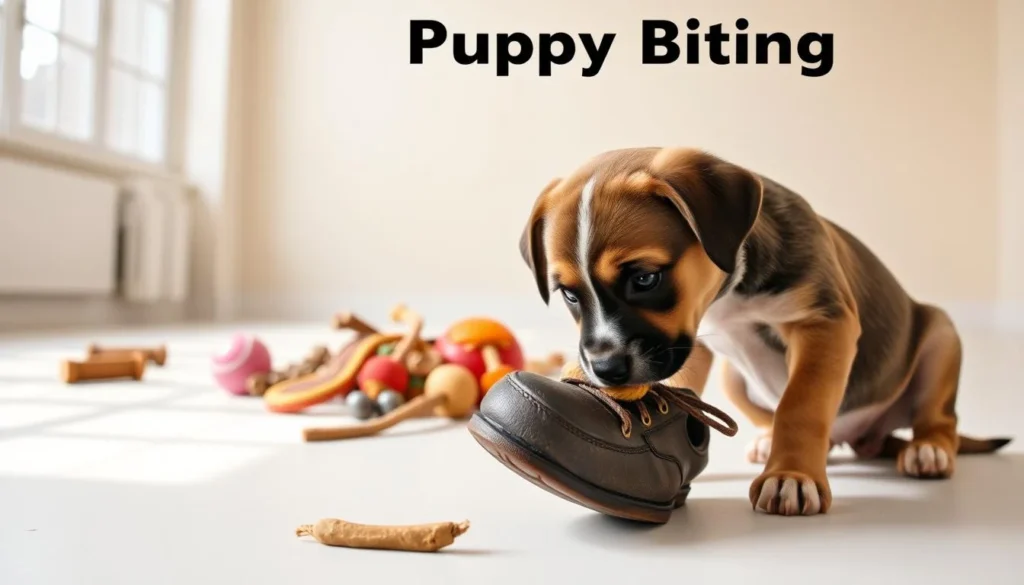
The Importance of Bite Inhibition
Bite inhibition is key for a puppy's growth. It helps them learn to control their biting, reducing harm as they get older. Puppies learn this by playing with their littermates, setting boundaries and learning pressure limits.
Owners can help by setting clear rules during play. If my puppy bites too hard, I redirect them and praise softer bites. This teaches them gentle play is okay, but hard bites are not. A safe, loving space helps them develop this skill, leading to a well-adjusted dog.
| Method | Description | Effectiveness |
|---|---|---|
| Play with Littermates | Puppies learn limits and pressure control during roughhousing. | High |
| Setting Boundaries | Redirecting biting behavior during playtime reinforces limits. | Medium |
| Positive Reinforcement | Rewarding gentle interactions encourages softer behaviors. | High |
Learning about bite inhibition is crucial. It helps reduce unwanted biting and ensures a peaceful life together as my puppy grows up.
How Can I Train My Puppy Not to Bite
Training your puppy not to bite needs patience and the right methods. Playing with your puppy is a great way to teach them about gentle play. If your puppy bites too hard, use a high-pitched yelp to stop play. This sound tells them that hard bites mean no more fun.
Teaching Bite Inhibition Through Play
During play, use different toys to keep your puppy engaged. If they bite too hard, yelp and pause play. This teaches them that biting too hard means no more fun.
Here's how to train your puppy:
- Choose safe and fun toys for your puppy.
- Play without using your hands as toys.
- Yelp for hard bites to teach them.
- Start play again with softer bites to show them what's right.
Recognizing Playful Mouthing vs. Aggression
It's key to know the difference between playful mouthing and aggression. Playful mouthing has a wagging tail and relaxed body. Aggression shows in growling and stiff body language. Knowing these signs helps you react correctly.
| Behavior | Characteristics | Response |
|---|---|---|
| Playful Mouthing | Wagging tail, relaxed posture, playful barks | Encourage play and gently redirect biting |
| Aggressive Biting | Stiff body, growling, focused stare | Stop play and reassess situation |
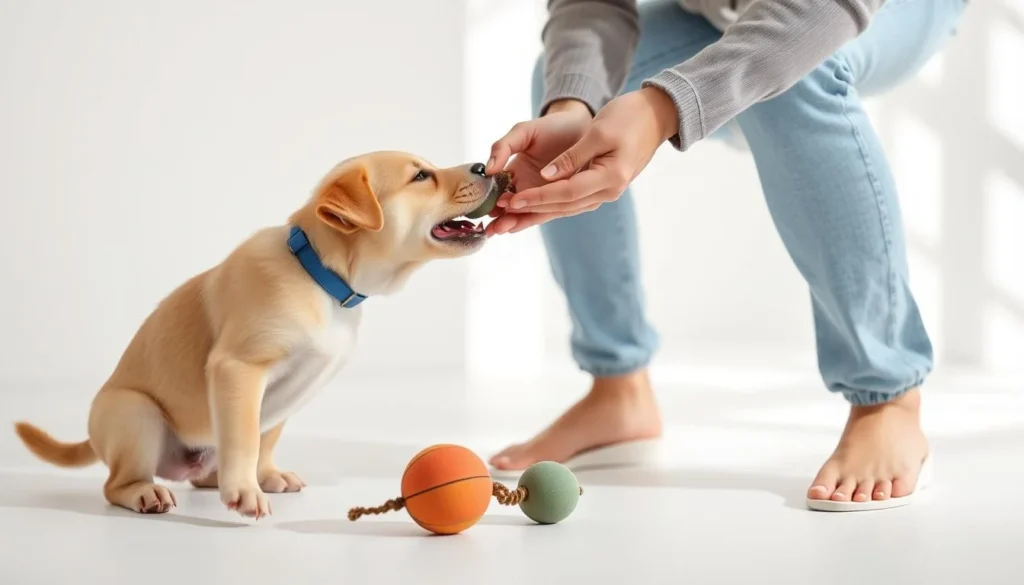
Puppy Biting Training Tips
Teaching your puppy not to bite can be done with the right methods. Using effective training techniques helps a lot. Positive reinforcement is a top choice because it encourages good behavior and strengthens your bond.
Positive Reinforcement Techniques
When my puppy acts calm instead of biting, I give them treats and praise. This teaches them that gentle behavior is what I want. It's important to be consistent and reward them every time.
I want my puppy to be confident and happy. Keeping training sessions positive makes them fun for both of us.
Redirecting Chewing Behavior
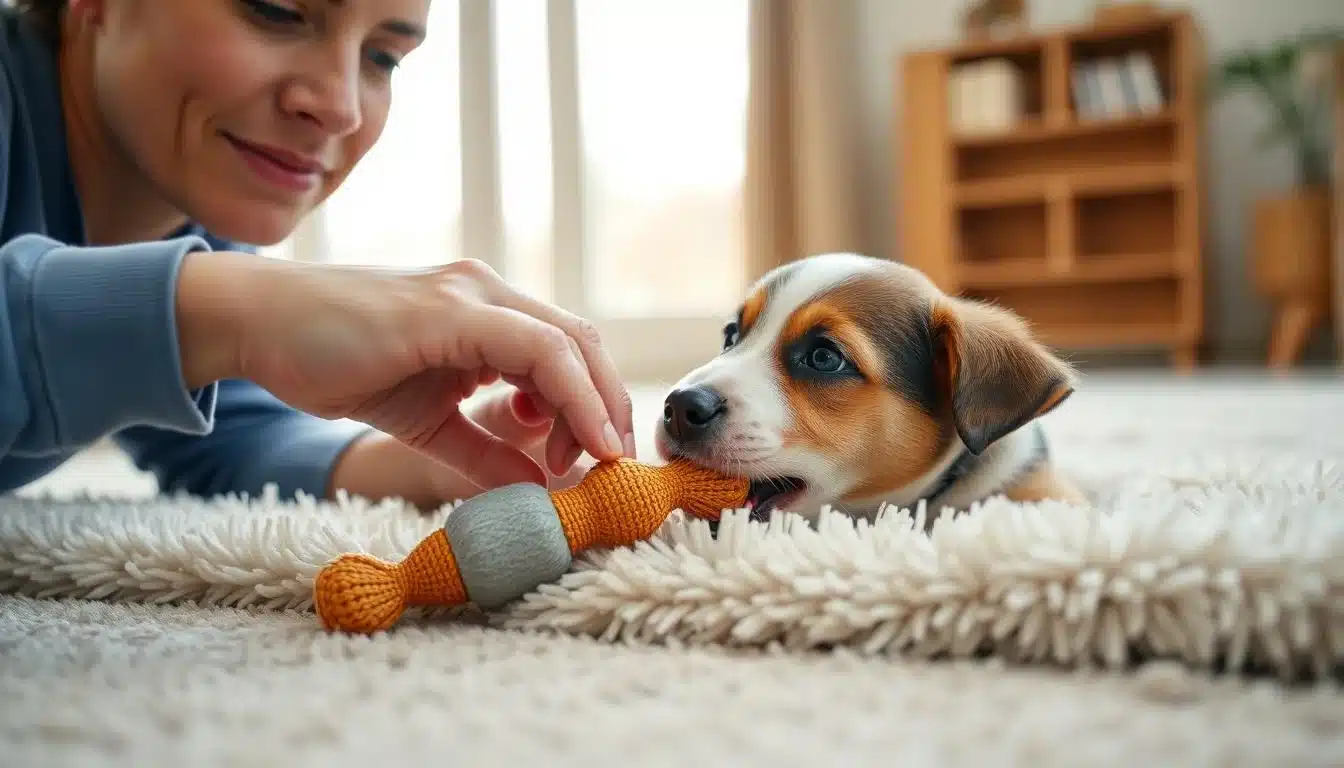
Redirecting your puppy's chewing is also crucial. If they bite, I give them a chew toy instead. This teaches them what's okay to chew on and avoids frustration.
Knowing what your puppy likes to chew helps you find safe and fun alternatives. This way, they learn what's acceptable without getting upset.
Using Time-Outs Effectively
Time-outs can help manage puppy biting. When my puppy bites too hard, I stop play right away. This tells them biting stops our fun.
Time-outs should be short, about a minute or two. This helps my puppy understand the consequences without feeling scared or anxious. I make sure the time-out spot is comfy for them. This way, they see it as a break, not punishment.
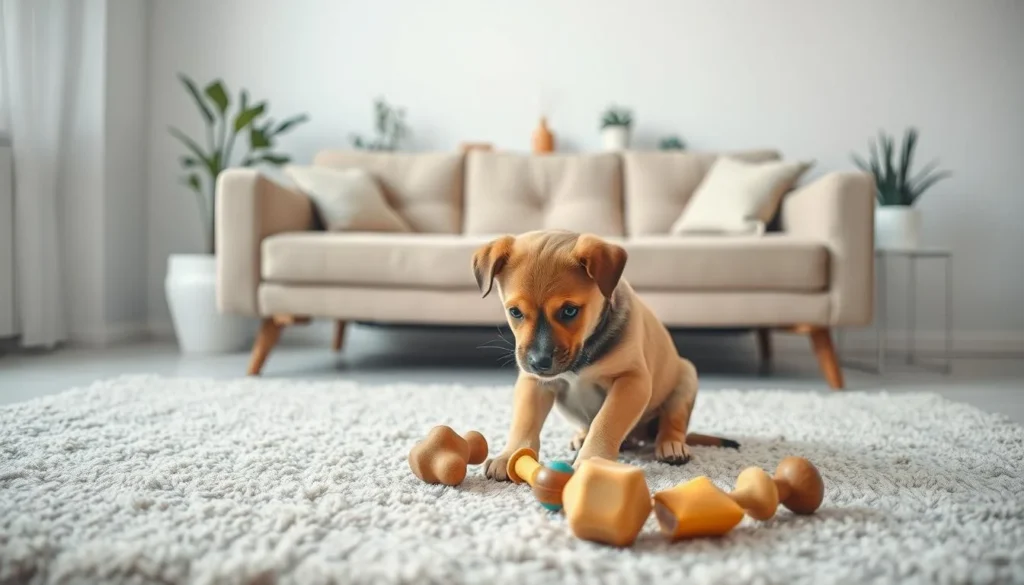
Being consistent is crucial. Everyone in the house must follow the same rules for biting. This teaches my puppy that biting is not okay.
My puppy learns that gentle play keeps us playing. But biting means we stop. Using time-outs helps my puppy learn better social skills and play habits.
Teaching Appropriate Chew Toy Behavior
Choosing the right chew toys is key in puppy training. Look for toys that are tough but gentle on teeth. This helps puppies chew right and not bite people or clothes. A good chew toy calms a teething puppy and guides their chewing to the right place.
Selecting the Right Chew Toys
When picking out puppy toys, I look for a few important things. They must be safe, last long, and fit my puppy's mouth size. I also check if they're soft for gum relief or firmer for dental health. Toys that squeak or hide treats keep puppies busy and happy.
Introducing Chew Toys to Your Puppy
Introducing chew toys right is crucial for good training. Here's how I do it:
- I show lots of excitement when I give my puppy a new toy. This makes them think it's fun.
- I play with the toy to get my puppy interested. This could be tossing it or playing tug-of-war.
- I change the toys often to keep things fresh and exciting. This keeps playtime fun for my puppy.
- If my puppy bites me, I quickly show them the toy. This teaches them it's the right thing to chew.
By following these steps, my puppy learns what's okay to chew. This makes them happier and healthier. Good chew toy training is essential for a happy puppy.
Establishing Consistency in Training
Consistency is key in puppy training. A routine helps my puppy know what's expected. I use the same commands and methods every time. This makes training clear and cuts down on confusion.
It's important for all family members to follow the same rules. When everyone agrees, my puppy learns faster. Dogs love routine, which helps them learn better.
Having a set training schedule helps a lot. Regular sessions and consistent responses to biting teach my puppy well. Setting aside time daily keeps our training on track.
| Training Method | Key Consistency Points | Benefits |
|---|---|---|
| Positive Reinforcement | Use the same rewards each time. | Builds trust and encourages desired behavior. |
| Command Training | Use one word for each command consistently. | Enhances understanding and retention of commands. |
| Family Rules | All members must repeat the same commands. | Creates a stable environment for learning. |
Recognizing Signs of Overstimulation
My puppy's playtime can sometimes get too wild, leading to too much biting and odd behavior. I've learned to spot certain signs that show my puppy is getting too excited. These include frantic energy, fast tail wagging, and trouble settling down after play.
Understanding these signs helps me manage my puppy's excitement better. This way, playtime stays fun without too much biting.
To avoid overstimulation, I keep an eye on my puppy's energy during play. If they start acting too wild or jump around too much, it's time to stop and do something calmer. Giving them a soft toy or practicing simple commands helps change their energy. This not only cuts down on biting but also makes my puppy more relaxed.
Knowing when my puppy is getting too excited lets me step in early. I use treats and praise to encourage calm behavior. This way, playtime is fun and safe, without the worry of too much biting.
Enrolling in Puppy Training Classes
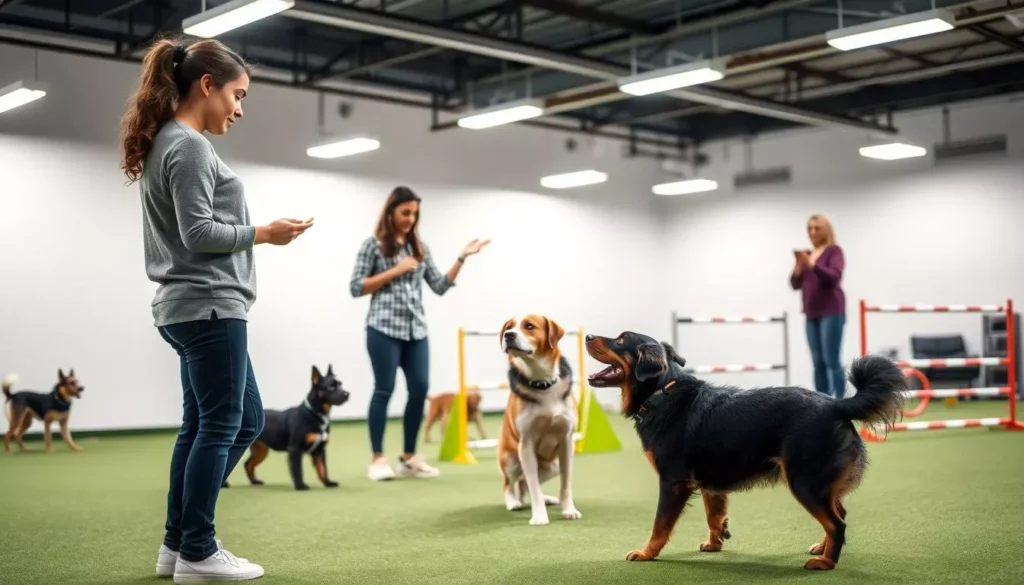
Putting my puppy in training classes has been a game-changer for biting issues. These classes give a safe space for learning and socializing. Puppies learn to play right and understand dog language.
When picking a class, I look for key features. A good program teaches basic commands, social skills, and play manners. It's crucial that the teachers are experienced and use positive methods. This makes the learning environment safe and friendly for my puppy.
Being in classes helps my puppy learn to control biting. They see and copy other puppies, learning to bite gently. These classes are vital for social skills, helping my puppy grow into a well-adjusted dog. With the right training, these sessions improve our bond and tackle any behavior problems.
Puppy Obedience Training Techniques
Effective puppy training techniques include specific obedience methods that help reduce biting. Basic commands like "sit," "stay," and "come" are key. They help foster good behavior and create a harmonious bond with my puppy.
Obedience training makes my puppy more responsive, even in distracting places. Consistency is crucial. Regular training sessions help reinforce these commands. Positive reinforcement, like treats and praise, makes training fun and builds trust.
To show the importance of obedience commands, I've made a table. It lists essential commands and how to train them:
| Command | Training Technique | Purpose |
|---|---|---|
| Sit | Hold a treat above the puppy's nose and move it back; reward for sitting. | Establishes patience and focus. |
| Stay | Have the puppy sit, back away slowly, and reward for staying in position. | Encourages self-control. |
| Come | Call the puppy while showing a treat, rewarding when he reaches me. | Strengthens recall ability. |
| Leave It | Place a treat in one hand, say "leave it,” and reward for ignoring. | Reduces inappropriate chewing or biting. |
Using these puppy obedience training techniques daily improves my puppy's behavior and reduces biting. Clear commands and positive outcomes make learning easier.
Seeking Professional Help if Biting Persists
When my puppy keeps biting, I know it's time to get help. Sometimes, no matter how hard I try, my puppy's aggression doesn't go away. That's when I need a Certified Professional Dog Trainer (CPDT) or an animal behaviorist.
These experts can give me strategies I haven't thought of. They know how to tackle puppy aggression. They'll work with me to make a plan just for my puppy.
Here are some times when you might need to get help:
| Situation | Recommended Action |
|---|---|
| Excessive biting leading to injury | Consult with a CPDT immediately |
| Fearful or anxious behavior accompanying biting | Seek a behaviorist for an assessment |
| Inability to manage aggressive responses during play | Enroll in a specialized training class |
| Frustration from unsuccessful training attempts | Consider one-on-one sessions with a trainer |
Getting professional help can really help with my puppy's biting. It's important for their social skills and happiness. Knowing when to ask for help is key to raising a well-adjusted dog.
Conclusion
Training a puppy not to bite is key to raising a well-adjusted pet. We looked at ways like teaching bite control and using positive reinforcement. It's important to start early to help your puppy grow well.
Being patient and consistent is crucial. I learned that good training not only stops biting but also makes your bond stronger. Setting clear rules helps your puppy become confident and well-behaved.
By sticking to these training methods, we can help our puppies succeed. Every small step we take makes our relationship with our pets better.