When I first brought my puppy home, I was filled with joy and anticipation. But soon, my joy turned to frustration as my puppy chewed on my fingers. It's natural for puppies to explore and chew, but it can hurt if not stopped.
Teaching my puppy not to bite was crucial for both of us. I wanted to help him learn to play without hurting others. This is called bite inhibition. It's a skill that's essential for puppies to grow up safely.
Let's explore some effective ways to stop puppy biting. These methods can help turn your puppy's sharp teeth into gentle nibbles.
Key Takeaways
- Understanding that puppy mouthing is a natural behavior.
- Learning bite inhibition is essential for a puppy's development.
- Effective techniques include positive reinforcement and redirection.
- Immediate response to biting helps establish good habits.
- Consistent training helps strengthen the bond between you and your puppy.
Understanding Puppy Mouthing Behavior
Puppies explore their world with their mouths. My puppy loves to play by nipping at my fingers and toes. This behavior is cute in young puppies but not as much when they grow up.
Training starts early, thanks to their interactions with siblings. Puppies learn to control their bites during play. If one bites too hard, the other yelps, teaching them to be gentle.
Knowing when mouthing is okay and when it's not is key to training. By understanding why they do it, we can teach them better. This helps them grow and reduces unwanted biting.
The Importance of Bite Inhibition
Understanding the importance of bite inhibition in puppies is key for any owner. This skill is crucial for safe interactions with people and other animals. It also plays a big role in puppy obedience training.
Puppies learn to control their biting through play with their littermates. If a playmate yelps from a strong bite, it means the pressure was too much. This is a clear signal for them.
As owners, we can help this learning by teaching dogs not to bite. Using bite inhibition techniques helps shape our puppies' behavior. This reduces the chance of injuries during play or stressful situations.
By focusing on bite inhibition, I help my puppy navigate social interactions safely. This skill is not just good for my puppy. It also makes our environment more harmonious for everyone.
How Can I Teach My Puppy Not to Bite
Puppy biting is a common issue that comes from many reasons like teething, play, or attention seeking. Knowing why they bite is key to teaching them not to. Puppies learn not to bite too hard between six to eighteen weeks. This is when they play with their mom and siblings.
To teach my puppy about gentle mouthing, I need to set limits. If they bite too hard, I should react. This shows them that hard bites are not okay. Using toys to distract them can also help.
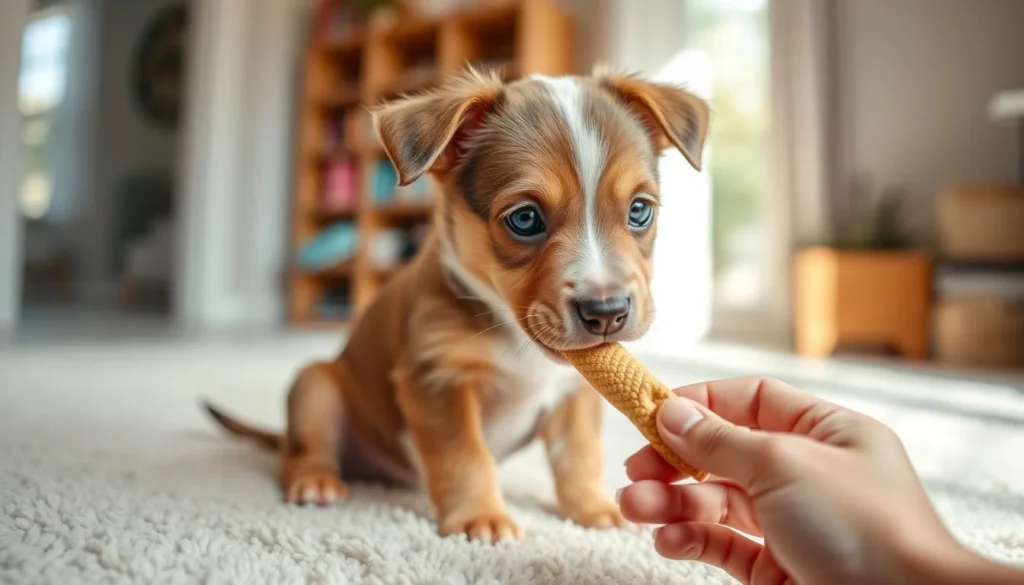
This way, I teach them what's right and strengthen our bond. Regular training and play help create a safe space for them. It's all about understanding and training to raise a well-behaved dog.
Using the Yelping Technique
The yelping technique is very effective in stopping puppy biting. By making a high-pitched yelp sound when my puppy bites too hard, I tell them it hurts. This sound reminds them of how their littermates react, teaching them to play gently.
After yelping, I take a brief pause. This pause shows my puppy that biting too hard ends playtime. If they keep biting hard, I use time-outs to show them it's not okay. The yelping technique clearly tells them biting hard is not acceptable.
Establishing Time-Outs for Hard Bites
Setting time-outs for hard bites is a good way to stop puppy biting. It's important to tell your puppy what behavior is not okay. For example, if they bite hard during play, stop the game right away. This shows them that biting means no more fun.
To use time-outs right, take your puppy away from play for a little while. This teaches them that hard biting means no more play. The aim is to teach them to play softly so they can keep playing.
Being consistent is crucial. Every hard bite should mean a time-out. By always following this rule, your puppy learns that good behavior gets them more fun. This makes playtime safe and fun for both of you.
Redirecting Biting Behavior
Redirecting a puppy's biting behavior takes patience and consistent effort. One key puppy training tip is to give them many chew toys. When they want to bite, I offer a toy instead. This keeps them from biting me and satisfies their chewing urge.
Playing with tug toys helps them interact without biting people. It teaches them what's okay to chew on. This way, they learn what's right over time.
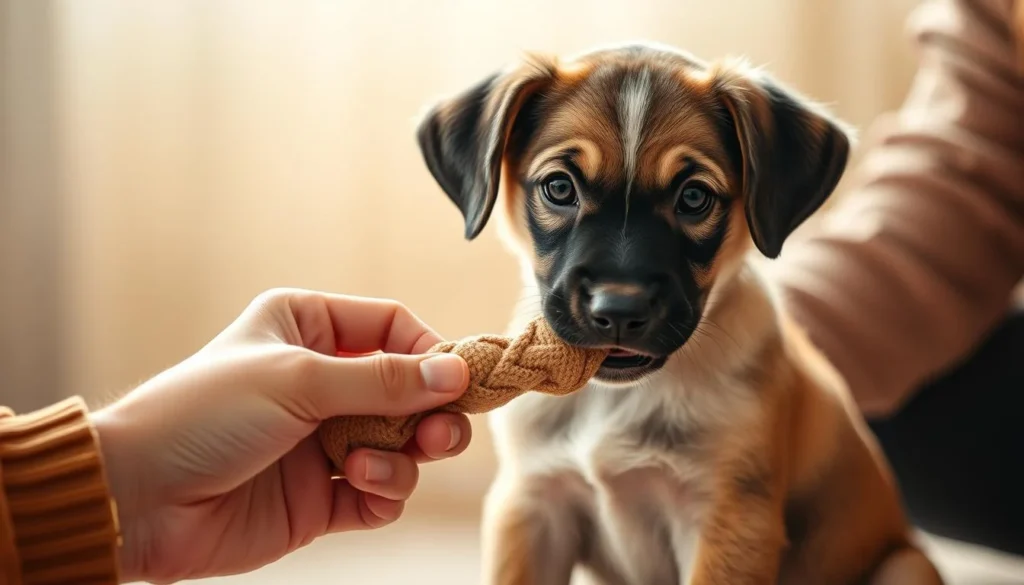
Being consistent in puppy biting training is key. Every time they try to bite, I redirect them to a toy. This teaches them to use their energy in better ways, not by biting.
| Type of Toy | Benefits |
|---|---|
| Chew Toys | Satisfy chewing instincts, prevent damage to furniture |
| Tug Toys | Encourage interactive play, reduce biting on people |
| Soft Plush Toys | Safe for gentle play, offers comfort to young puppies |
| Interactive Puzzle Toys | Stimulate mental engagement, keep puppy occupied |
Encouraging Gentle Play
It's key to teach dogs to play gently. I show my puppy calm behavior during play. This helps him learn how to play right.
When my puppy plays gently, I praise and reward him. This shows him that calm play is good.
If play gets too rough, I stop it right away. This teaches my puppy that biting ends the fun. It helps him understand that gentle play is best.
Gentle play strengthens our bond and teaches good behavior. My aim is to stop puppy biting and raise a well-behaved dog. With regular practice, gentle play becomes a big part of our time together.
Providing Appropriate Socialization Opportunities
Socializing my puppy with other dogs is key for their growth. Through play and interactions, they learn to control their bites and behave right. Early exposure to different dogs helps them develop better social skills and lowers the risk of aggression.
Signing up for puppy classes is a great way to help with puppy biting training. These classes offer a safe space for puppies to meet and play with others. With the help of experts, I learn how to improve my puppy's behavior while they socialize.
I also make sure my puppy meets new people and pets. This well-rounded approach helps them learn and grow. Regular social activities help reduce biting and build confidence and friendly skills.
Using Taste Deterrents
Using taste deterrents is a good way to stop puppies from biting. These are put on my skin and clothes. When my puppy bites, they get a bad taste, teaching them not to bite.
It's important to have these deterrents ready. I keep them close during play. Puppies might get used to the taste over time. Watching how my puppy reacts helps me know if it's working.
Taste deterrents are part of a bigger training plan. They work best when used with positive rewards and regular training. This mix helps my puppy learn better and faster.
General Precautions to Take
To prevent puppy biting, I take several steps. I avoid playing too rough or letting my hands become toys. This helps my puppy know what's okay and what's not. If I forget these rules, my puppy might start biting more.
Instead of yelling or hitting, I use positive methods. When my puppy plays nicely, I praise and reward them. This makes them feel good and helps stop the biting.
Being consistent is key. Every time we play, I teach my puppy what's right and wrong. Staying calm and encouraging helps a lot. My aim is to teach my puppy to play gently through positive experiences.
Recognizing Signs of Puppy Temper Tantrums
Understanding puppy behavior is key, especially when it comes to temper tantrums. These tantrums happen when a puppy feels frustrated, restrained, or upset. I might see my puppy become more aggressive, like biting, during these times.
It's important to tell the difference between playful biting and severe biting that shows a tantrum.
The signs of a temper tantrum include:
- Excessive barking or whining
- Rolling over and displaying defiance
- Bounding back and forth in agitation
- Attempts to nip or bite without an invitation
It's crucial to stay calm in these situations. Giving attention can make things worse. Instead, I use consistent puppy behavior modification strategies. This helps my puppy learn better ways to show their feelings.
Understanding puppy behavior helps me respond well. This way, we can reduce the impact of tantrums on our training.
When to Seek Professional Help
It's important to know when my puppy's biting needs more than just my training. If biting keeps happening, even after trying different puppy training tips, it's time to get help. A certified dog trainer or behaviorist can give advice that fits my situation.
Things like fear or anxiety can make a puppy bite more. Getting help from a pro means I get the right advice and strategies. They help make sure my puppy's training is safe and effective.
Acting quickly on these issues helps my puppy and our bond. Recognizing when we need more help means we can move forward together. This way, we can have a happy and well-behaved puppy.
Maintaining Consistency in Training
Starting puppy obedience training shows me how key consistency is. It's vital for all family members to agree on how to handle puppy biting. This unity helps in reinforcing the training I'm doing.
Everyone needs to react the same way to biting. Whether it's saying "no" firmly or gently redirecting to a toy, it should be the same for everyone. This uniform approach makes learning easier for my puppy and less stressful for us.
Training together makes us a team and strengthens our bond with our puppy. It helps us understand what behavior is okay and builds good habits. Puppies learn best in a place where things are always the same, making it easier to avoid biting.
| Training Aspect | Consistency Needed | Impact on Puppy |
|---|---|---|
| Reaction to Biting | Uniform responses from all family members | Reduces confusion, promotes learning |
| Set Commands | Everyone uses the same commands consistently | Enhances understanding and retention |
| Reward System | Identical rewards for good behavior | Reinforces positive actions effectively |
Having a consistent environment helps in training and strengthens our bond. A united front means no mixed signals, leading to a happy and well-adjusted puppy.
Understanding the Role of Positive Reinforcement
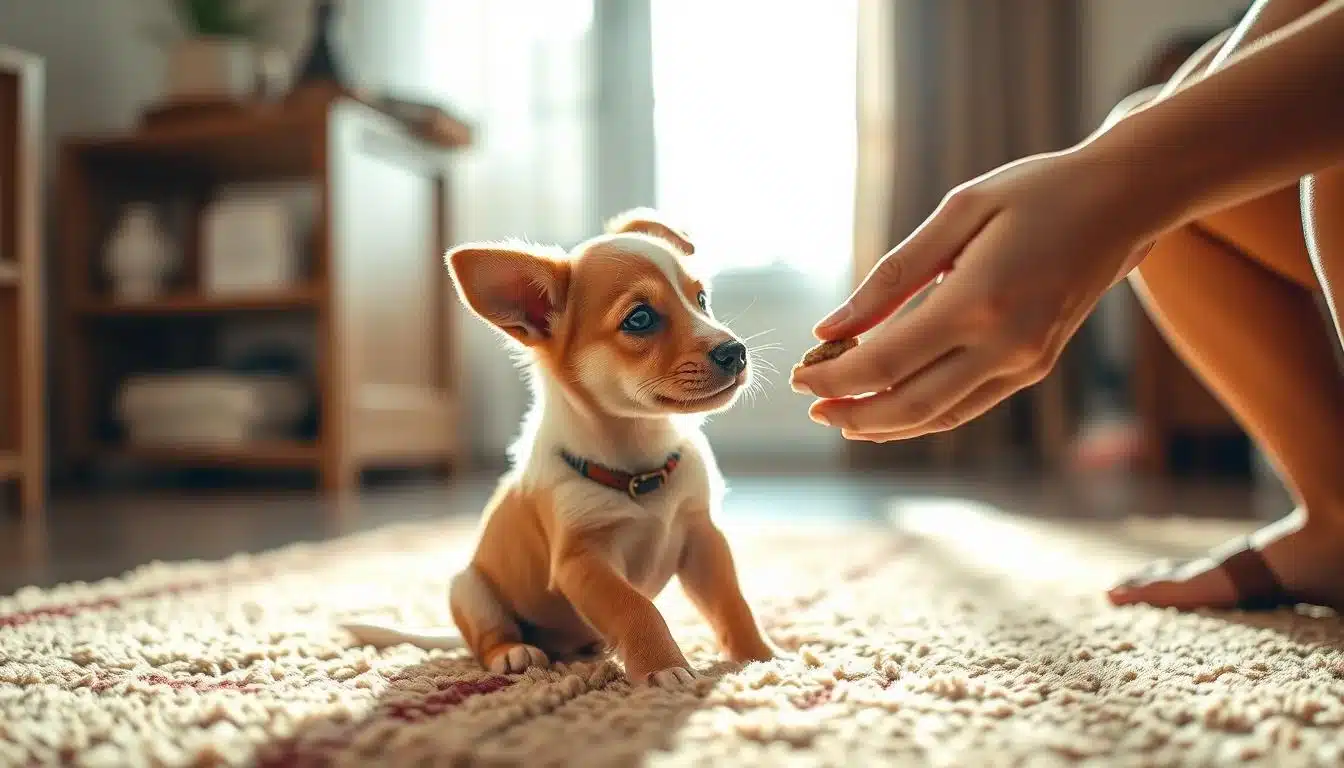
Positive reinforcement is key in my puppy training. It helps teach dogs not to bite by encouraging good behavior. I reward my puppy with treats, praise, or more playtime for being gentle.
This approach creates a loving space and builds trust. When my puppy acts right or plays gently, I celebrate it. This teaches them what's okay and what's not.
Here's a quick guide on positive reinforcement:
- Always give praise immediately after a desired behavior.
- Use high-value treats that excite your puppy when training.
- Incorporate playtime as a reward for good behavior.
Using these tips makes training easier. It helps my puppy learn good habits and prevents biting. This makes our time together more peaceful and fun.
Conclusion
Teaching a puppy not to bite is crucial for a strong bond with our pets. Techniques like the yelping method and consistent time-outs help a lot. The more I use these methods, the better they work.
Positive reinforcement is a big help. Rewarding gentle play and using taste deterrents encourages good behavior. Remember, every puppy is unique, so being patient and flexible is key.
If my puppy's biting doesn't stop, I'll get professional help. With the right advice, I can teach my puppy not to bite. This way, we can have fun and safe playtime together.