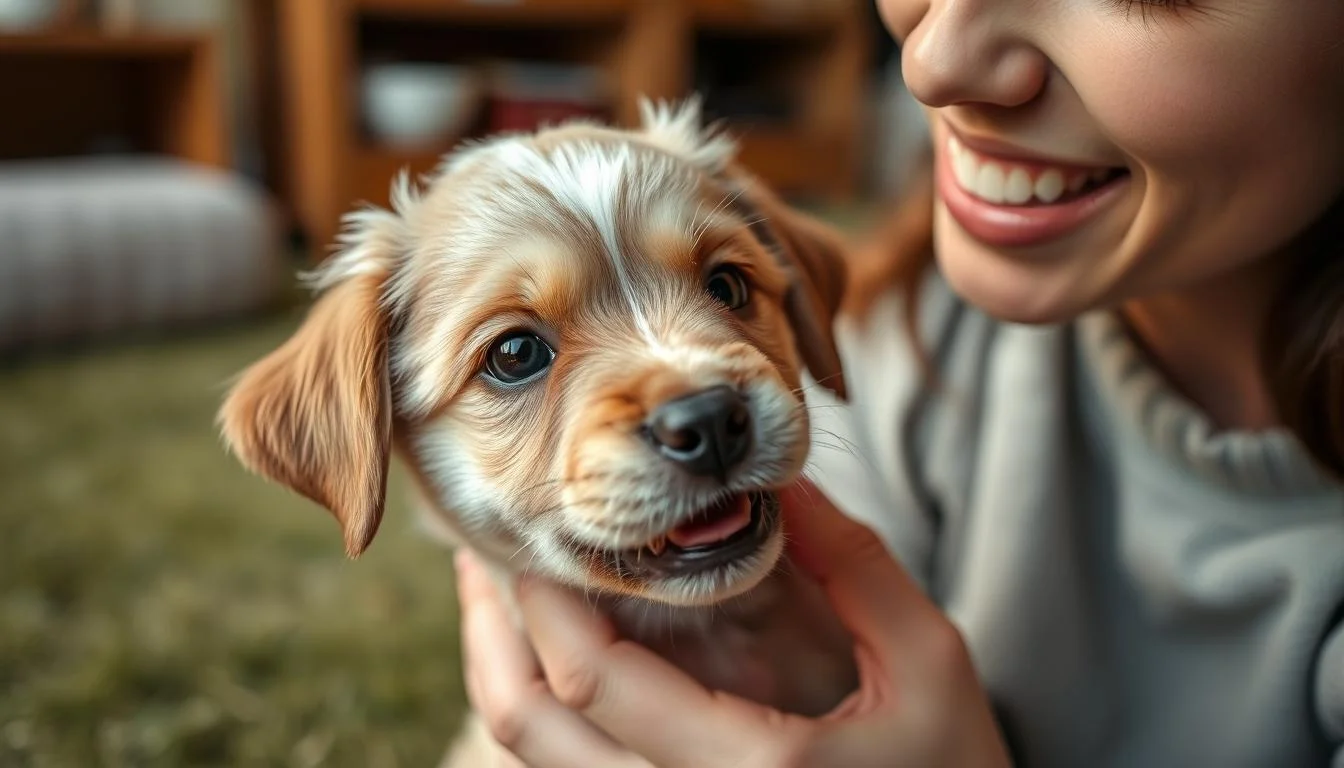
Bringing a puppy home was a joyous moment for me. Their small paws and playful energy filled my heart with happiness. But, I soon learned that their little teeth can hurt a lot!
Puppies bite to explore and show excitement. It's important to stop this to keep everyone safe and happy. Teaching them not to bite is key to a loving relationship.
As I learned to care for my puppy, I realized training them was essential. It helps us both enjoy each other's company.
Key Takeaways
- Puppies naturally bite as part of their exploration and play.
- Recognizing the importance of puppy biting prevention for safety and comfort.
- Understanding how to train a puppy not to bite effectively fosters better behavior.
- Consistency and patience are crucial in correcting biting behavior.
- Engagement and proper play can redirect biting tendencies.
Understanding Puppy Behavior
It's key to know why puppies bite to train them well. Puppies use their mouths to explore. Their bites show playfulness, curiosity, and growing needs. Knowing this helps us stop puppy biting the right way.
Why Puppies Bite
Puppies bite to communicate, especially when playing. This behavior might seem cute but can be a problem as they get bigger. They learn from their siblings and littermates about what's okay to do.
Seeing that biting is not mean but a way for them to talk can help. It guides us in teaching them better ways to behave.
The Role of Teething in Biting
Teething is a big reason puppies bite. Like human babies, they feel pain in their gums. They chew to ease this pain and because they're curious.
This phase usually lasts from three to six months. Knowing this helps us prepare for training. It sets realistic goals and ways to stop puppy biting.
Importance of Bite Inhibition
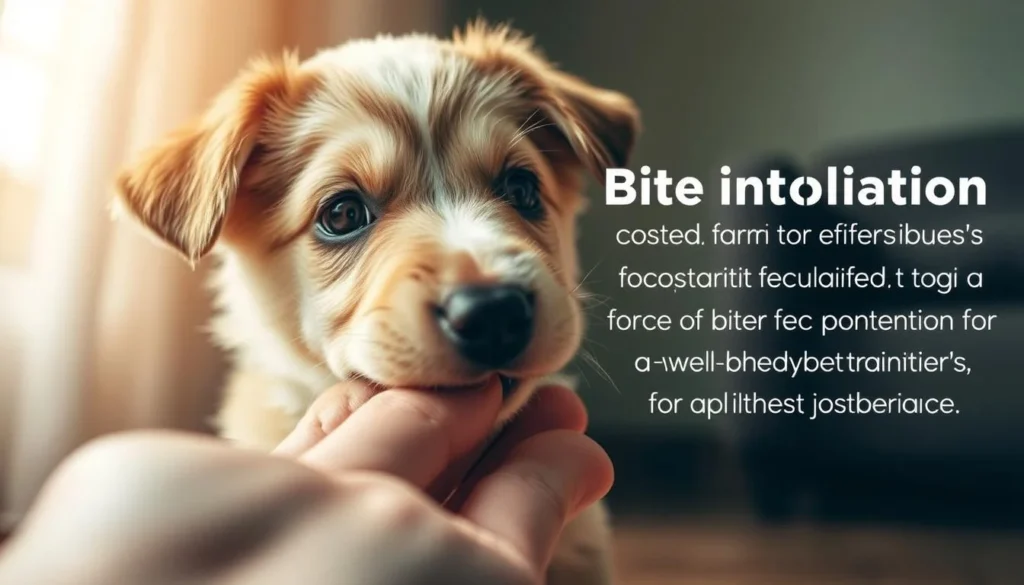
Understanding bite inhibition is key for puppy training. It's about a puppy learning to control their bite force. This skill is vital for how they interact with others.
What Is Bite Inhibition?
Bite inhibition is when a puppy learns to bite softly. Puppies play with their littermates to figure out how hard to bite. If they bite too hard, their playmate yelps or walks away.
This teaches them to bite more gently. Over time, they learn what's okay to bite.
How Puppies Learn to Moderate Biting
Puppies learn to bite softly by playing with others. If they bite too hard, their playmate yelps or leaves. This tells them to bite softer.
Owners can help by yelping or ignoring their puppy when they bite too hard. Doing this often helps puppies learn to bite gently. This makes them better behaved in the future.
Best Ways to Stop Puppy Biting
Stopping puppy biting needs specific methods for quick action. Clear communication helps fix biting habits early. Each method teaches puppies to bite gently.
Immediate Response Techniques
Stopping play right when biting happens is key. It shows puppies that biting means no more fun. Using yelps or acting limp helps them learn what's okay.
Using Yelping to Communicate
High-pitched yelps are great for stopping puppy biting. When they bite, make a sound like other puppies. This surprises them and stops the biting.
The Effectiveness of Time-Outs
Time-outs are also helpful. If your puppy bites hard, ignore them for a bit. This makes them think about their actions and play nicer.
| Technique | Description | Benefit |
|---|---|---|
| Immediate Response | Stop playtime and withdraw immediately | Helps puppies link biting with the end of fun |
| Yelping | Use a high-pitched yelp to mimic other puppies | Startles the puppy, signaling a need for gentler play |
| Time-Outs | Ignore the puppy for a brief period after a hard bite | Encourages reflection on biting habits and promotes moderation |
Redirecting Biting Behavior
Dealing with puppy biting can be tough, especially when they're teething. Redirecting their focus is key to managing their behavior. Using the right toys can greatly lower the chance of them biting fingers or other things they shouldn't.
Using effective tips for dealing with puppy biting makes a big difference. It helps them explore their teeth in a better way.
Substituting Toys for Fingers
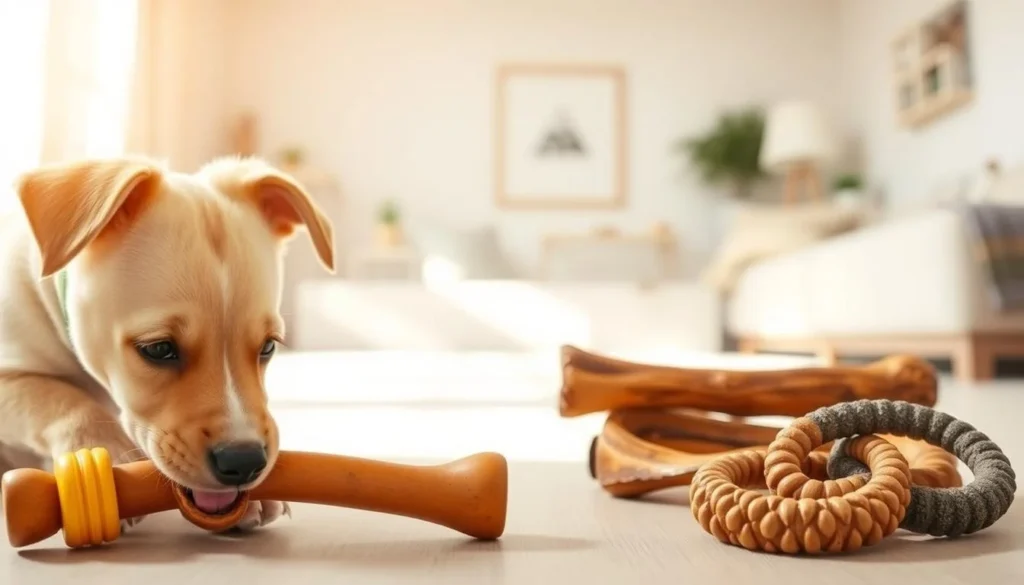
When my puppy bites or chews on my fingers, I quickly grab a toy to offer instead. This teaches them what's okay to chew. Having many toys around helps me quickly change their focus when they start biting.
This way, they learn that toys are their best friends during play.
Encouraging Alternative Chewing Options
Offering a variety of chewable items is important for puppy teething solutions. This variety keeps my puppy interested in the right things to chew. Different textures and flavors distract them from biting things they shouldn't.
Safe and appealing chew options not only keep their focus. They also help them develop healthy dental habits.
Playtime Strategies for Puppy Training
Playing with your puppy the right way can really help their behavior and growth. Gentle play is key, as it helps them learn to be calm and behave well. It's important to know how to play gently with your puppy to raise a well-behaved pet.
Engaging in Gentle Play
Playing gently with my puppy means I keep my voice calm and my movements soft. This not only encourages good behavior but also makes playtime fun and safe. It helps my puppy learn to play without getting too excited and biting.
Understanding Non-Contact Play
Non-contact play, like fetch and tug-of-war, is crucial for teaching safe play. Avoiding rough play helps my puppy learn to control their biting. Having tug toys ready helps manage their energy and teaches them what's okay to play with.
| Play Activity | Benefits | Considerations |
|---|---|---|
| Gentle Play | Teaches calmness and control | Avoid overstimulating behavior |
| Fetching | Enhances bonding and exercise | Ensure a safe, open area |
| Tug-of-War | Promotes safe play habits | Use appropriate toys to avoid aggression |
Using these play strategies has been really helpful for my puppy's training. With regular practice, I can help my puppy grow into a well-adjusted dog. They learn through fun, playful experiences.
Puppy Chewing Solutions
Finding good ways to stop puppies from chewing is key to a happy home. Puppies chew because it's natural for them. The right chew toys and safe items can help a lot.
Choosing Appropriate Chew Toys
Look for chew toys that are tough and safe. KONG and Nylabone have great options for puppies. These toys keep my puppy busy and save my furniture.
Switching toys often keeps my puppy interested. It means he always has something new to chew on.
Understanding Safe Items for Chewing
It's important to know what's safe for my puppy to chew. Some things in my house are not good for him. I make sure he only chews on safe things.
Things like rubber or soft nylon bones are good. But shoes and wires are not safe. Learning about puppy chewing helps keep my home safe and fun for my dog.
Effective Strategies for Puppy Biting
Dealing with puppy biting can be tough, but there are good ways to handle it. Understanding and rewarding good behavior is key. Removing triggers and using positive reinforcement helps a lot. I found my training sessions to be fun and productive.
Eliminating Triggers for Biting
To cut down on biting, I looked at what usually made my puppy nip. I found and removed these triggers. For example, my puppy bit more when he was really excited during play.
By keeping things calm, I could reduce those biting moments. It made a big difference in his behavior.
Using High-Value Treats for Positive Reinforcement
Positive reinforcement was a game-changer for me. When my puppy acted right, I gave him treats. This made him feel good and want to do it again.
It helped us bond and made training better. It also made my puppy less likely to bite. This approach made our training sessions positive and loving.
Socialization and Puppy Classes
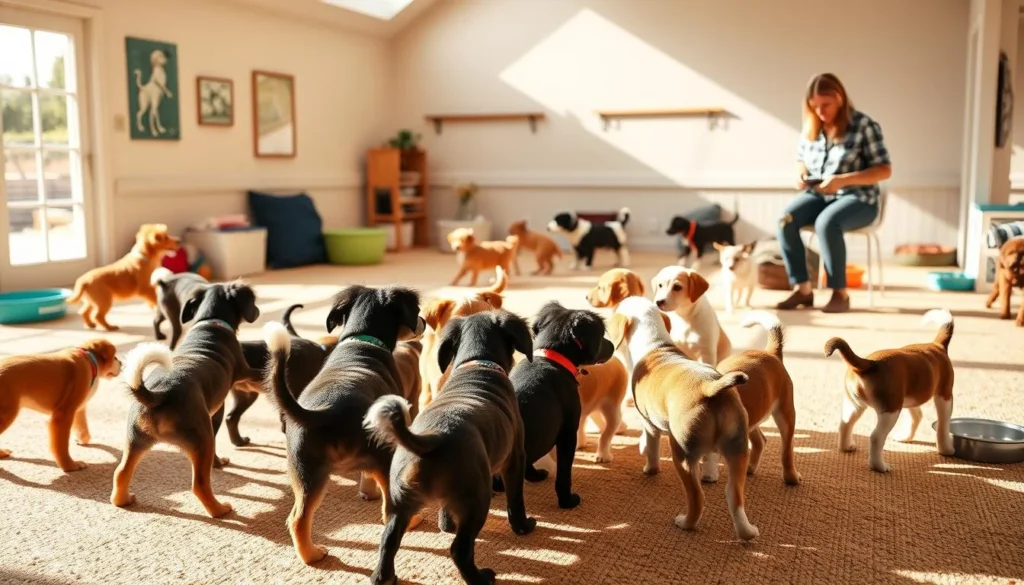
Socialization is key for a puppy's growth. It lets them meet other dogs and people. This helps them behave well and avoid aggression later. Puppy training classes provide a great way to socialize, making learning fun.
Benefits of Socializing with Other Dogs
Playing with other vaccinated puppies teaches them not to bite too hard. They learn what's okay and what's not in a group setting. The advantages are:
- Improved confidence in new places
- Learning important dog communication
- Developing good play habits
Choosing a Good Puppy Training Class
Choosing the right puppy training class is crucial. Look for one that focuses on socialization and has expert trainers. A good class should have:
- Trainers who know a lot about puppy behavior
- A safe place for puppies to play
- A program that teaches both training and social skills
Creating a Calm Environment
Creating a calm space is key for good puppy training. A peaceful area helps avoid overstimulation, which can cause biting. Puppies do best when they have quiet times to rest and recharge.
Providing Quiet Time for Your Puppy
Quiet time is essential for your puppy's mental health. It helps control their hyperactive behavior. Having a cozy spot for them to relax, with comfy bedding and toys, is very helpful. I've seen that giving my puppy enough downtime reduces biting.
Recognizing Overtired Behavior
Knowing when your puppy is tired is important. Look for signs like yawning, whining, or less playfulness. By spotting these signs, I make sure my puppy rests before getting upset. A calm space helps lower biting, making my puppy happier and more balanced.
Preventing Aggression in Biting
Understanding puppy behavior is crucial in stopping aggression, especially biting. Training your puppy right means knowing the difference between playful bites and aggressive ones. This knowledge helps create a safe and loving bond with your puppy.
Differentiating Between Playful Mouthing and Aggression
Puppy bites can be either playful or aggressive. Playful bites are gentle and show excitement. Aggressive bites, however, are forceful, accompanied by growling or stiff body language. Watching your puppy's behavior helps you understand their mood. Understanding puppy behavior is key to spotting these signs and stopping aggression.
Understanding Puppy Tantrums
Puppy tantrums often happen when they're stressed or uncomfortable. These tantrums can lead to biting as a way to express frustration. It's important to stay calm during these times. A mix of patience and kindness can help calm your puppy down.
Knowing when your puppy might have a tantrum helps prevent biting. This approach is effective in preventing aggression.
Professional Help for Biting Issues
When my puppy bites, even after I've tried to train them, I know I need help. Professional trainers offer strategies that fit my puppy's needs. Knowing when to ask for a dog trainer is key to solving these problems.
When to Seek a Dog Trainer
If my puppy bites aggressively or training doesn't work, it's time to get help. Getting help early can stop the behavior from getting worse. It also helps me teach my puppy better habits.
Types of Professionals to Consult
There are many experts who can help with puppy training. I can talk to a certified dog trainer, a vet behaviorist, or join a puppy training class. Each can help figure out why my puppy bites and teach them not to.
Best Way to Stop a Puppy from Biting
Stopping a puppy from nipping needs a smart plan. It's all about being consistent and positive. By using the right methods, I can teach my puppy what's okay and what's not.
Reviewing Key Techniques
Yelping and time-outs are key to good behavior. When my puppy bites, a yelp tells them it's not okay. Then, a time-out shows them the rule again.
These steps help my puppy use their energy right. They also make sure they learn and remember the rules.
Maintaining Consistency in Training
Being consistent is key for my puppy to learn. I make sure every moment teaches them what I expect. This way, they understand better and we get along better.
Conclusion
Reflecting on my journey with my puppy, I've learned a key lesson. Stopping a puppy from biting early is vital. It requires patience, consistency, and the right techniques.
By using the strategies from this article, I can fix my puppy's biting. This will also strengthen our bond over time.
Every puppy is different, and what works for one might not work for another. But understanding why they bite and using positive reinforcement helps. It's important to stay committed and consistent.
The journey to stop puppy biting is a learning adventure for both of us. With the right strategies, I'm confident in making my puppy friendly and well-behaved.