When I brought home my adult rescue, I thought training would be easy. But late-night barking and door-darting showed me it's about trust and commands. Those quiet moments when she settled at my feet reminded me of the importance of this work. It strengthens our bond and makes life calmer for both of us.
I quickly learned that positive reinforcement changes our relationship. Using treats, praise, and play to reward good behavior helped. Ignoring bad behavior and rewarding good habits sped up progress.
Engagement in dog training became my key idea. Focusing on motivating her to participate greatly reduced problems like leash reactivity and chewing. This approach works in classes or at home, leading to confident dogs and fewer surprises.
I also found some practical truths. Dogs learn through operant and classical conditioning. Their senses affect how they see cues, and their attention span is like a toddler's. This changed how I set goals and practiced, including potty training with a predictable schedule and clear cues.
Key Takeaways
- Adult dog training rebuilds trust and reduces disruptive behaviors.
- Positive reinforcement training—food, toys, praise—encourages desired actions.
- Engagement in dog training motivates participation and solves many behavior issues.
- Dog obedience classes can accelerate learning and provide real-world practice.
- Consistent routines and clear expectations help when learning how to potty train an adult dog.
Understanding How Adult Dog Training Works
I explain how adult dogs learn so you can train them better. Training adult dogs needs clear rules, short sessions, and consistent feedback. I apply behavioral science to create lasting habits and keep my dog safe.
Principles of learning: operant and classical conditioning
Operant conditioning in dogs changes behavior by linking actions with outcomes. Rewarding good behaviors like sitting makes them more likely to happen again. Classical conditioning also helps by linking cues or sounds with pleasant outcomes, making my dog expect something good.
Why positive reinforcement is the foundation
Positive reinforcement training is my top choice because it builds trust and motivation. I reward effort and timing to help my dog connect actions with rewards. Ignoring unwanted behaviors like jumping removes the reward and reduces the habit.
Punishment can harm trust and slow progress. So, I focus on rewarding what I want to see.
How a dog’s senses and communication affect learning
Dogs mainly communicate through body language, tone, and scent. I read their ears, tail, and posture to know when they're ready to learn. Letting them sniff before a session helps them relax.
Dogs can hear higher pitches than humans, so I avoid loud noises that can startle them and disrupt learning.
Comparing adult dogs’ learning to toddlers: attention span and expectations
Adult dogs learn like two-year-old toddlers. They have short attention spans and need gentle repetition. I keep training sessions brief, frequent, and focused on one cue at a time.
Setting realistic expectations and practicing regularly helps me see progress without getting frustrated.
adult dog training
I start by taking a clear, calm look at where my adult dog is today. Adult dog training works best when I set small, reachable steps. These steps build toward reliable responses in real life. Engagement, trust, and predictable routines guide every choice I make.

Setting realistic goals for an adult dog
My first task is setting training goals for adult dogs that match my dog’s history and my schedule. I break large aims—like reliable recall in the park—into stages. First, I teach sit and stay at home. Then, I add mild distractions, and finally, I proof around other dogs. Short wins keep both of us motivated.
Assessing prior learning, habits, and reinforcement history
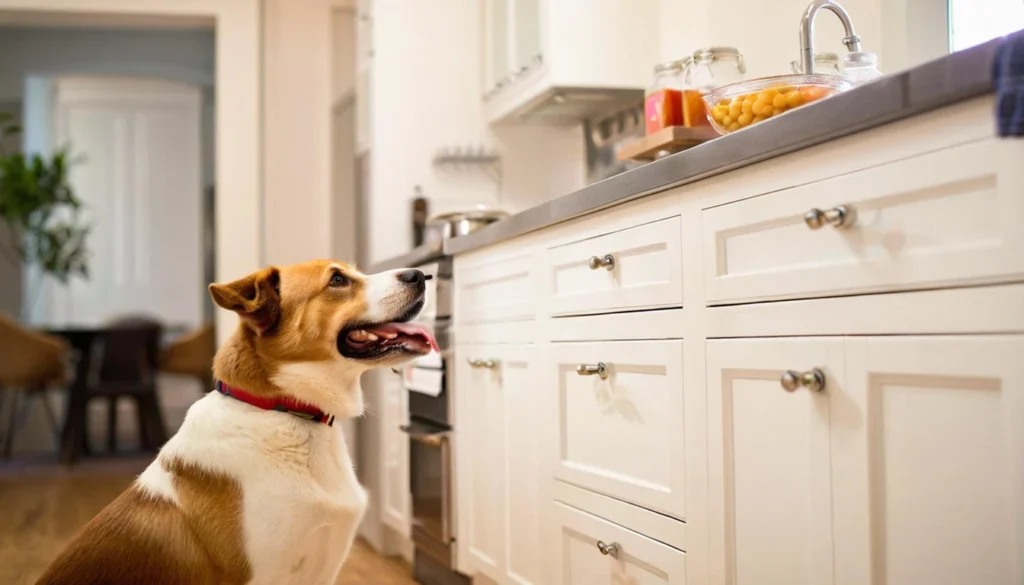
I spend time assessing dog reinforcement history by watching everyday moments. Does counter-surfing get rewarded with table scraps? Does pulling on walks earn forward movement? Noting what has been reinforced helps me stop accidental rewards and replace them with clear alternatives.
I test simple cues and observe responses. This reveals habits that need rewiring and tips me off to strong motivators. With that knowledge, I avoid repeating past mistakes and choose the right tools for change.
Creating a personalized training plan that fits my lifestyle
My personalized dog training plan ties goals to daily life. I slot three-to-five minute sessions into walks, mealtimes, and play so training feels natural. Each week I raise the challenge slightly by adding distance, duration, or distraction.
- Plan: clear weekly targets linked to daily routines.
- Methods: mix shaping, luring, and capturing to teach new behavior.
- Progress: fade prompts, add intermittent reinforcement, and proof skills.
When I choose a class or coach, I meet the trainer, check class size, and confirm a reward-based style. Small groups give better feedback and speed progress. My plan stays flexible so I can adapt goals as my dog improves and my life changes.
Practical Positive Reinforcement Techniques
I start by finding what truly motivates my dog. For many pets, food is a big winner, so I use it as rewards. I test toys, praise, and focused attention to see what works best. Knowing the best dog treats for training and when to use a favorite ball helps keep sessions fun and short.
I keep timing precise. I mark the exact instant my dog performs a behavior, then reward them right away. This clear timing helps them learn faster, so I practice consistent clicker training and a single cue. It creates a strong connection between their actions and rewards.
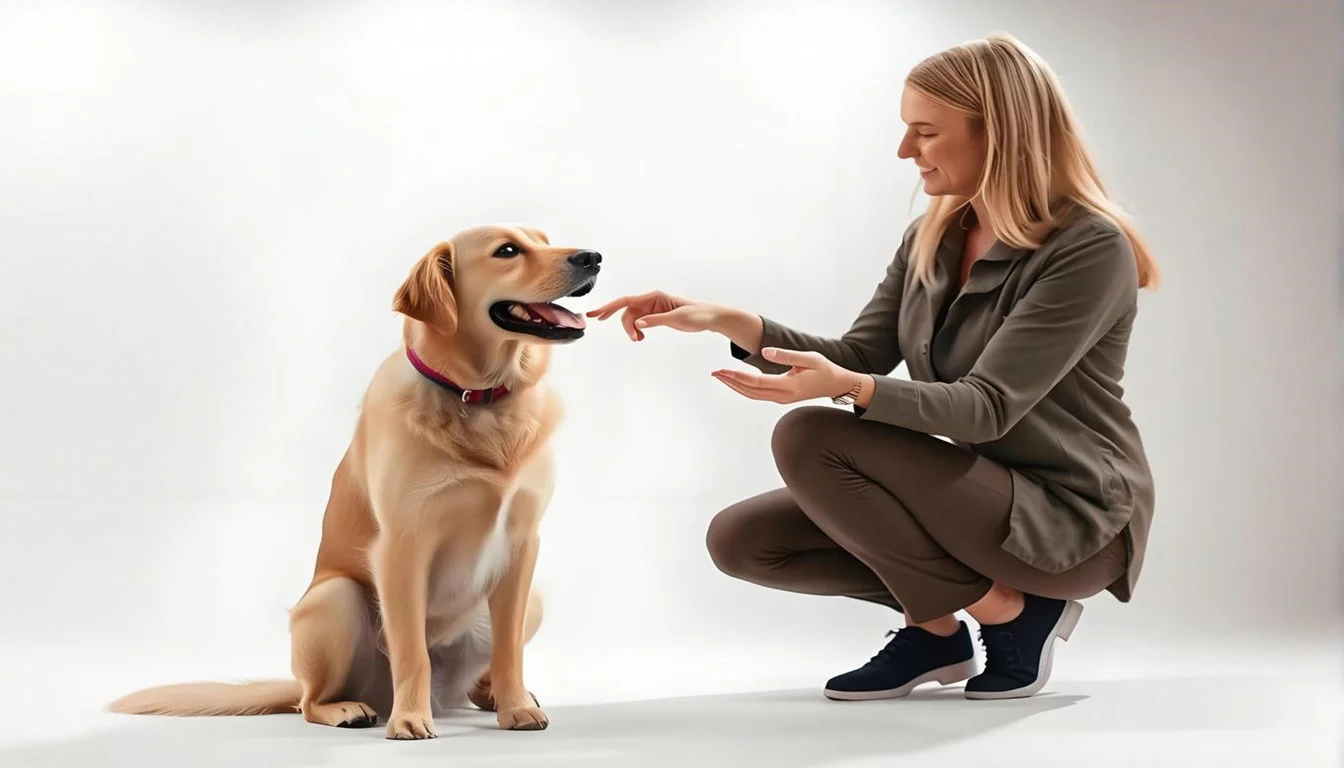
I use shaping, luring, and capturing to teach new skills. Shaping rewards small steps toward a goal. Luring guides a dog with a treat and then fades it. Capturing means rewarding a desired behavior as soon as it happens. Mixing these methods lets me teach complex cues without force.
Once a skill is learned, I shift rewards to build durability. I move from treating every response to an intermittent pattern. This reduces dependence on constant treats and increases reliability. I vary when and how often I reward, then test the behavior in different situations.
I balance engagement and consistency in every session. Short, frequent practices with the right reinforcers and crisp timing make training fun for my dog. This keeps us both motivated to work together for the long term.
Crate and Potty Training for Adult Dogs
I guide readers through simple steps to teach an adult dog new habits for nighttime and going to the bathroom. I focus on creating a safe space, a regular schedule, and gentle fixes. This makes my dog feel safe and helps us both see progress.
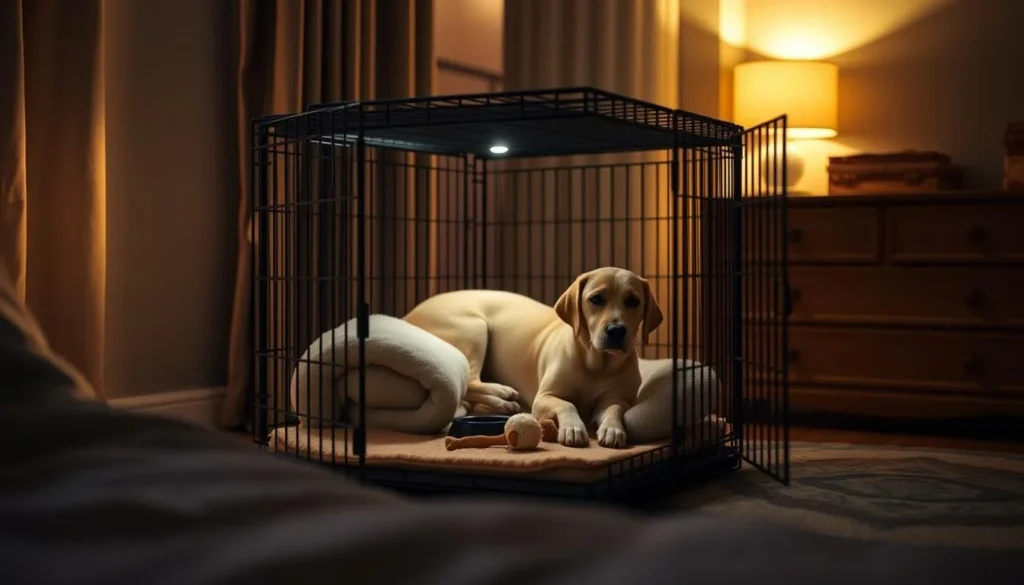
Crate train adult dog at night: step-by-step nighttime routine
I start the evening with a last chance to go outside 10–15 minutes before bedtime. I use a consistent cue and praise right away if they go. A short playtime earlier helps them relax for the night.
I lead my dog to the crate with treats and a soft voice. I keep the lights low and use a special bedtime cue. If they wake up, I take them out quietly and back to the crate without play. This routine helps avoid drama when crate training at night.
Adult dog crate training at night: choosing size, placement, and comfort
I choose a crate that's just big enough for my dog to move around comfortably. This size prevents accidents and lets them rest well. I avoid big crates that might cause accidents.
I put the crate in a quiet spot, but not too far away. This reduces anxiety at night. I add a washable bed, a safe chew, and a breathable blanket. I never use the crate as punishment, only for positive times.
How to potty train an adult dog: schedule, cues, and praise
I plan out feeding, waking, play, and nap times to predict when they'll need to go. I take notes for a few days to learn their pattern. Regular feeding times make the schedule more reliable.
I pick a clear cue like “Go potty” and use it every time. When they succeed, I reward them with treats and praise. If they have an accident, I interrupt gently and take them outside without scolding. This positive approach helps them learn and shows respect.
Why is my adult dog regressing in potty training and how I troubleshoot it
I check if changes in routine, stress, or health issues caused the setback. If accidents start suddenly, I schedule a vet visit. Medical problems can affect even well-trained dogs.
I make the schedule tighter, reduce freedom when unsupervised, and increase outdoor breaks. I refresh the cues and rewards to remind them of the good behavior. Short training sessions help boost motivation and reduce setbacks.
| Challenge | What I check first | My action plan | Expected short-term result |
|---|---|---|---|
| Night anxiety in crate | Crate placement and comfort | Move crate near me, add familiar blanket, use calming bedtime cue | Shorter wake periods, calmer nights |
| Frequent nighttime accidents | Feeding schedule and water access | Adjust evening meals, final bathroom break before bed, limit late water | Fewer accidents, clearer elimination pattern |
| Daytime regressions | Routine changes or stressors | Reinstate consistent outing times, increase supervision, vet exam if needed | Fewer accidents, regained consistency |
| Poor cue response | Timing of rewards and clarity of cue | Use immediate rewards, simplify cue language, repeat short training sessions | Faster cue recognition and reliable elimination on command |
Leash Training and Off-Leash Obedience for Adult Dogs
I set clear, simple goals for walks and play. Good leash work makes walks calmer and keeps my dog safe. I use stepwise practice so skills build without pressure. Small sessions help my dog stay engaged and confident.
I teach leash training for adult dogs with consistent rules. I stop when the leash tightens and wait for slack. When my dog gives me slack, I reward with a treat or praise. I add a cue like “let’s go” or “heel” to mark correct movement.
For equipment, I prefer a front-clip harness or a head halter to manage strong pullers. These tools help me avoid pain-based methods and keep control while I teach loose-leash techniques.
I distraction-proof skills before busy walks. I start in a quiet yard, then add mild distractions such as parked cars and distant people. I lengthen practice and introduce new sights and sounds only when my dog is ready.
Short, frequent sessions work best for generalization. I practice in several places so my dog learns that loose leash and attention apply everywhere. I aim for steady progress rather than perfection in one outing.
Off-leash obedience training begins with airtight recall drills. I use high-value rewards and a clear, enthusiastic cue. I build reliability on a long line so my dog feels freedom while I retain control.
My phased exposure goes like this: indoors, fenced yard, quiet field, busier areas. Each stage adds distance and distraction in controlled steps. I never skip a stage if my dog struggles with focus.
When skills are still shaky, I use a training field for off-leash work or a fenced area. These controlled spaces let me practice recall drills and impulse control with fewer risks. Supervised sessions with a professional trainer speed progress when needed.
| Goal | Practice Setting | Tool Options | Key Cue |
|---|---|---|---|
| Loose walking | Quiet yard, neighborhood sidewalk | Front-clip harness, flat collar | “Let’s go” |
| Distraction-proofing | Parks with few people, then busier streets | Head halter for strong pullers, long line when needed | “Focus” or name |
| Reliable recall | Indoors → fenced yard → training field for off-leash work → quiet field | Long line, high-value treats, toys | Single-word recall cue |
| Full off-leash | Fenced training field or supervised dog sports area | No-restriction freedom once reliable | Consistent recall and release cues |
Addressing Common Behavior Problems and Modification Strategies
I start by finding out what keeps a problem going. Things like attention, access to items, and avoiding things they dislike are common reasons. I stop accidental rewards and give a clear, better alternative. For example, ignoring jumping and rewarding a calm sit teaches the dog what works.
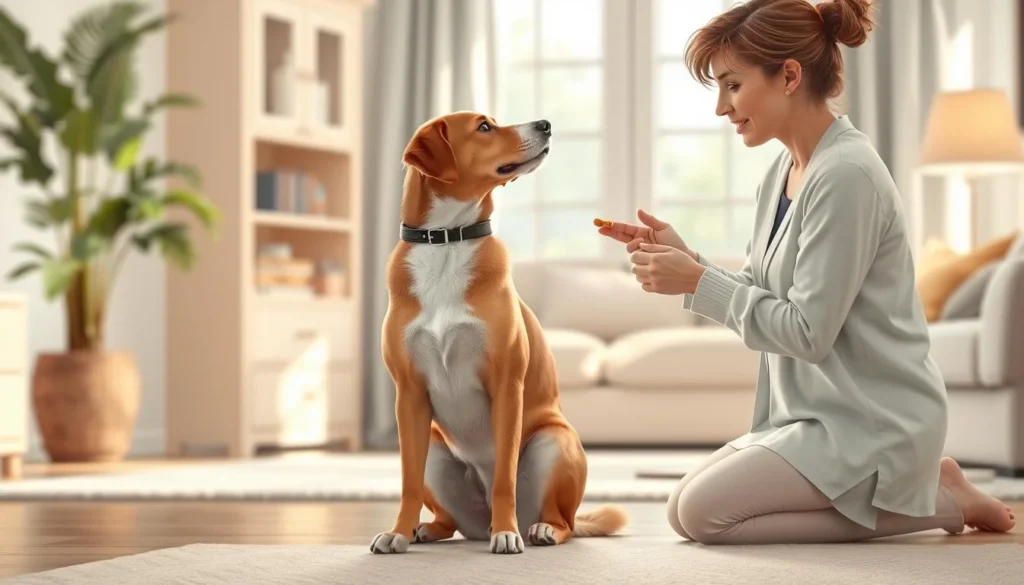
I use simple tests to find out what triggers and rewards the behavior. I note when it happens, who's around, and what the dog gets. This helps me create focused plans that target the real cause, not just the symptom.
Behavior modification for dogs changes how they feel and act. I use counterconditioning by pairing low-level triggers with treats. I slowly increase exposure while the dog stays calm. This reduces fear and aggression without harsh correction.
For barking, I figure out why dogs bark. It can mean they're bored, alarmed, frustrated, or seeking attention. I teach a quiet cue and reward silence. I also give them mental work and enrichment to reduce barking.
Chewing needs a plan to redirect energy. I give them durable chew toys and short training games. I remove tempting objects and replace them with fun alternatives until the habit fades.
Jumping can be solved with clear rules and rewarding four-on-the-floor greetings. I teach “off” and a reliable place behavior. Guests ignore leaps while I reward the dog for calm approaches.
Resource guarding needs careful handling. I use trading games and “leave it” drills to build trust. When it's severe, I use proven solutions that focus on safe exchanges and stepwise desensitization.
I create management plans for safety first. Gates, leashes, and supervised access prevent problem behavior. Management works with training until the dog chooses the new behavior.
If progress stalls or risk is high, I consult a dog behavior specialist. I look for a certified, force-free professional with a science-based approach. Their expert assessment protects families and helps dogs with complex issues.
| Problem | Immediate Management | Training Strategy | When to Call a Specialist |
|---|---|---|---|
| Barking | Block triggers, provide enrichment | Teach quiet cue, short focus drills, counterconditioning | Persistent, safety-impacting reactivity or night disturbances |
| Jumping | Ignore guests, use leash control | Reward four-on-floor, teach “off” and place behavior | High-strength jumpers that risk injury |
| Chewing | Remove hazards, offer approved chews | Structured chew sessions, enrichment and exercise | Destructive chewing due to anxiety or medical causes |
| Resource Guarding | Manage access, avoid confrontations | Trading games, desensitization, “leave it” and reward exchanges | Escalating aggression around food or toys |
Integrating Training into Daily Life
I make training a part of our daily routine. I use mealtimes, walks, and play to teach my dog. This way, training is fun and practical.
I make training rewarding and clear. At meals, I ask for a sit or wait. On walks, I reward loose-leash behavior with treats and praise. During fetch, I focus on recall and release cues.
I keep training sessions short. Five-minute sessions are perfect for adult dogs. Ending on a success note keeps them motivated and avoids frustration.
I gradually increase challenges to proof behaviors. I start with simple tasks and add complexity. This approach helps my dog respond reliably without getting overwhelmed.
To track progress, I use a notebook or apps like Woofz. I log details like response speed and distance. This helps me adjust my training goals as my dog improves.
Consistency and patience are key. I mix home drills with classes for real-world practice. Group settings help test skills and boost confidence.
| Practice Moment | Goal | Session Length | Progress Marker |
|---|---|---|---|
| Mealtimes | Wait at bowl until released | 2–4 minutes | Delay increased to 30 seconds |
| Walks | Loose-leash walking | 3–6 minutes per drill | Fewer pulls across a block |
| Play sessions | Reliable recall during fetch | 4–6 minutes | Return on first call with toy |
| Doorway routines | Polite exits and entries | 1–3 minutes | No barging at threshold |
| Public outings | Proof under distraction | Short exposures, 5–10 minutes | Maintains cue with passersby nearby |
Classes, Tools, and Resources to Boost Success
When I plan training, I look for options that fit my goals and schedule. Group and one-on-one lessons each have their benefits. I consider class size, trainer credentials, and training style before signing up.
I choose dog obedience classes after checking local schools like PetSmart Training and private trainers. Puppy training classes focus on safe socialization and basic cues. Adult group classes target problem-solving and reliable callbacks in real-world settings.
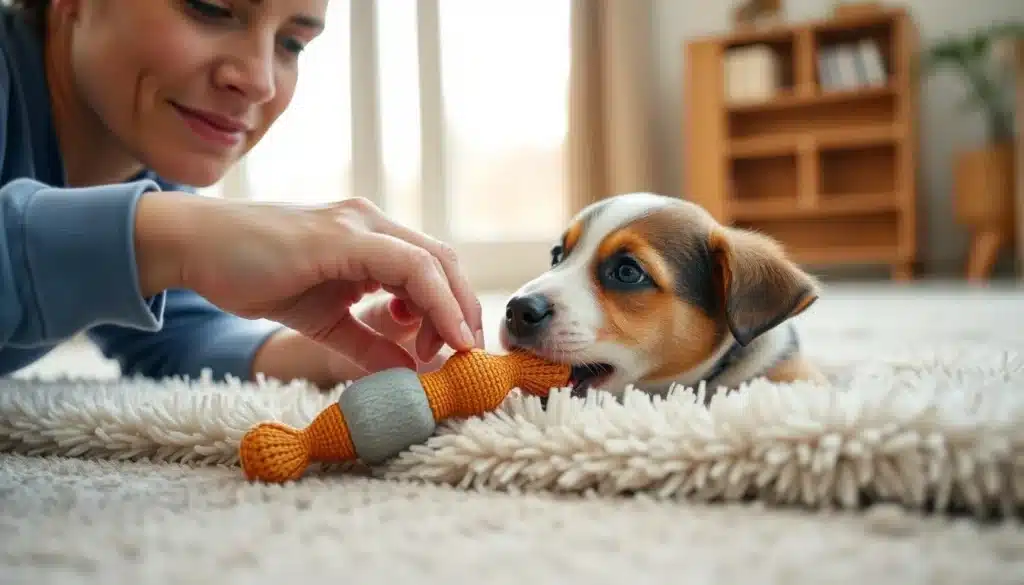
I rely on training tools for dogs that make reinforcement easy and humane. Clicker training gives me a precise way to mark exact behavior. I use treat pouches for quick rewards, a front-clip harness for leash control, and properly sized crates to support adult dog crate training at night.
Online dog training programs let me practice daily when in-person options are tight. Apps and e-books provide lesson plans, reminders, and video demos. I use structured programs to track progress and troubleshoot challenges between live sessions.
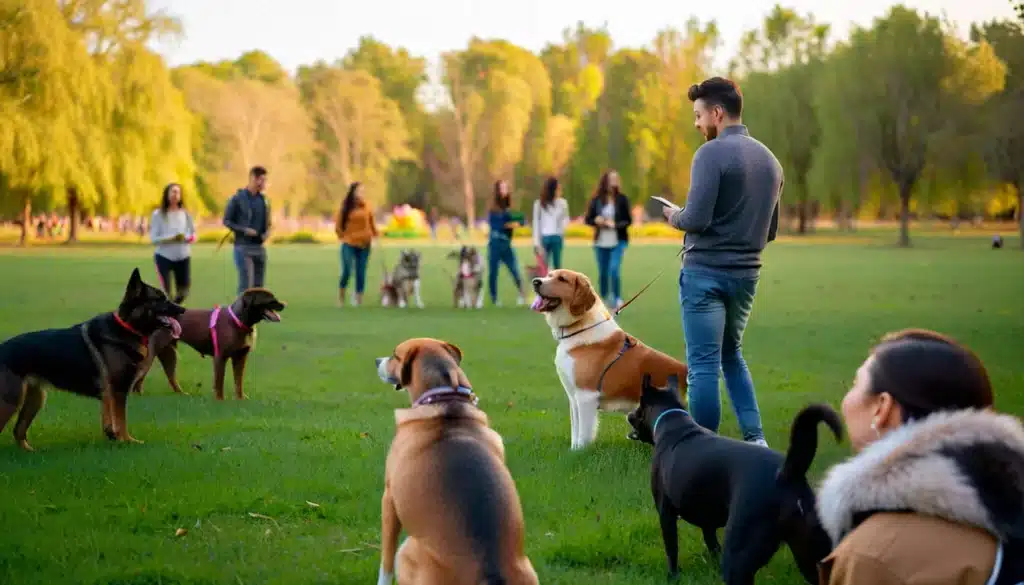
Smaller classes give me more individual feedback and faster progress. Larger group lessons offer wider distraction-proofing because my dog meets different breeds and personalities. I prefer a mix: a short series of private sessions, then group classes to proof skills in public.
Below I compare formats, tools, and digital options to help decide what fits your needs.
| Option | Best Use | Key Benefits | What I Check Before Joining |
|---|---|---|---|
| Small Group Classes | Basic obedience and socialization | Individual attention, quicker corrections, real-world distractions | Trainer credentials, class size under 8, reward-based methods |
| Large Group Classes | Proofing behavior around many dogs | High distraction exposure, socialization, cost-effective | Ratio of dogs to instructors, safety protocols, clear curriculum |
| Private Lessons | Behavior problems or tailored plans | Customized strategies, faster behavior change | Experience with behavior issues, sample lesson plan, references |
| Clicker Training & Tools | Precision training and shaping | Clear marking, faster learning, portable gear like pouches | Quality clicker, reward types for motivation, fitting harnesses |
| Crate Options | Night routines and management | Comfort, safety, supports adult dog crate training at night | Proper size, ventilation, bedding, placement near family |
| Online Dog Training Programs | Flexible scheduling and ongoing support | Lesson libraries, progress tracking, video feedback | Instructor reputation, refund policy, community access |
| E-books & Apps | Reference guides and daily reminders | Stepwise plans, troubleshooting tips, engagement exercises | Author credentials, user reviews, sample chapters or trials |
Advanced Canine Training and Next-Level Skills
I take training to the next level by removing prompts and using rewards less often. I want the dog to respond quickly and correctly, even when distracted. My goal is for the dog to perform well in real-life situations.
What advanced work looks like:
Once a dog knows a command, I make it harder. For example, I stop using treats for "sit" and reward randomly. I also add distractions and distance to test the dog's skills.
Specialized task preparation:
For tasks like scent work or therapy dog work, I focus on specific skills. I build endurance and keep the dog motivated with rewards. For scent work, I use short searches to reward quick finds. For therapy, I teach calmness and steady handling.
Maintaining performance:
To keep skills sharp, I schedule regular practice. I also make practice part of daily routines and games. This keeps the dog engaged and ready to perform.
Competition and working-dog readiness:
Preparing for competitions requires speed, accuracy, and endurance. I get feedback from experts and practice in real-world settings. This helps the dog perform well in competitions and advanced training.
| Focus Area | Key Drills | Goal | Typical Frequency |
|---|---|---|---|
| Response Precision | Fade lures, timed reps, exact positioning | Consistency within 1–2 seconds | Daily short sessions |
| Speed & Endurance | Interval runs, cue chains, extended play | Maintain accuracy at speed | 3–5 times weekly |
| Scent Work | Blank searches, variable hides, distraction proofing | Reliable alerts in novel settings | 2–4 short searches weekly |
| Therapy Skills | Desensitization, calm-focus drills, public exposure | Stable behavior in busy environments | Weekly community visits |
| Maintenance | Refresher cues, intermittent rewards, play integration | Long-term reliability | Ongoing, brief sessions |
Conclusion
I conclude by talking about what really works in adult dog training. Positive reinforcement, clear cues, and consistent practice are key. By focusing on what rewards bad behavior and replacing it with good, I see big changes.
This approach, known as identify, replace, reward, boosts confidence and strengthens our bond. It's a simple yet powerful method.
My positive reinforcement training summary emphasizes short, practical sessions and rewards that motivate my dog. I use classes, apps, and books to stay updated. Keeping training fun is crucial.
If I hit a snag, I seek certified trainers for personalized advice. Finding a dog trainer near me helps a lot.
For future dog training, I aim for achievable goals and daily practice. This includes feeding drills, walk routines, and short practice sessions. Mastering motivation, trust, and clear communication solves many issues.
With patience and the right tools, adult dogs become reliable family members. Training becomes a fun activity we share together.