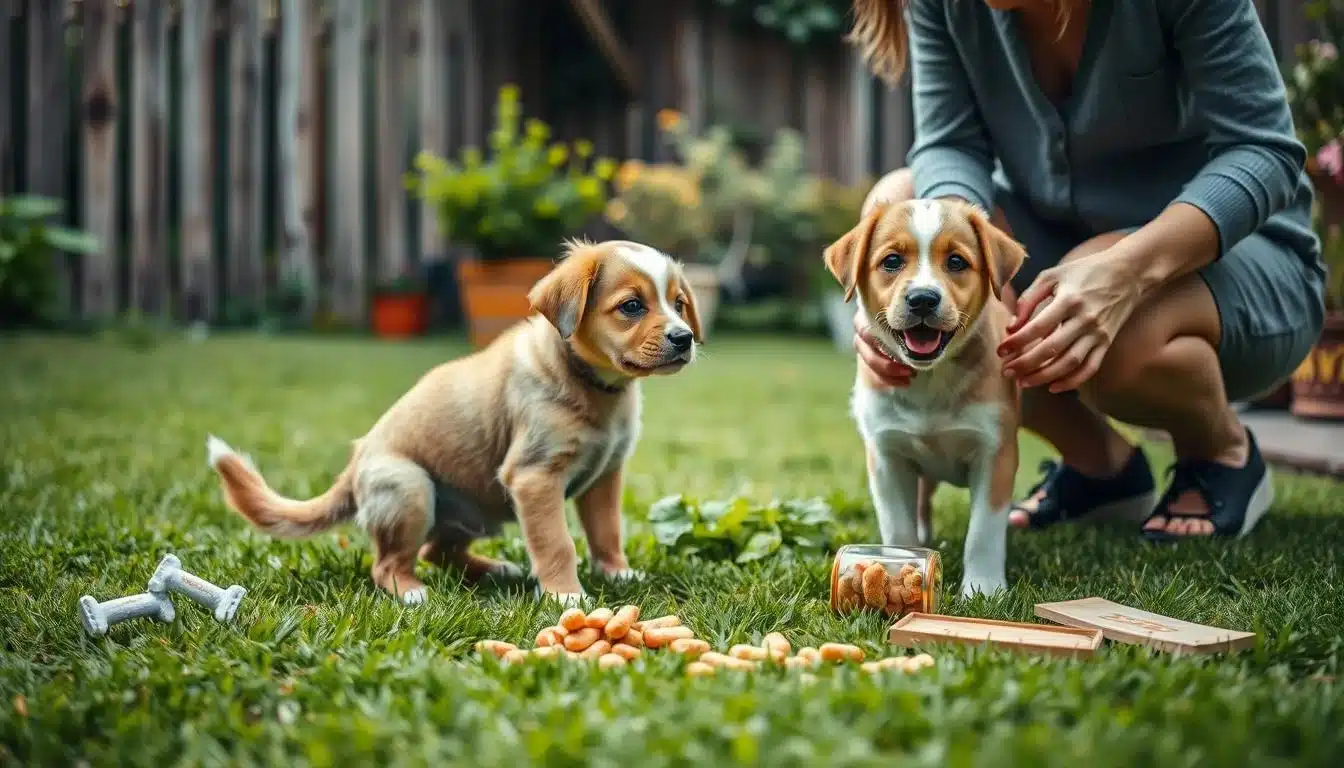
I remember the first morning with my Labrador. It was filled with joy and nerves. Potty training was our first big test of patience and teamwork.
I had read up on potty training before bringing my puppy home. I made a plan, but the real learning came from the small moments. Like taking breaks after naps and praising them for going to the right spot.
Before getting my puppy, I researched toilet training that fit my schedule. I chose a consistent spot, a short schedule, and tools like a crate and puppy pads. This preparation saved me a lot of confusion and helped my puppy learn quickly.
What worked for me was simple: repetition, positive reinforcement, and watching them closely. I learned to expect accidents and clean up, then redirect and reward them when they go to the right spot. Every puppy is different, and some learn faster than others.
Key Takeaways
- Start with a clear plan before bringing your puppy home.
- Use consistent schedules tied to meals, naps, and play.
- Repetition and positive reinforcement are essential.
- Expect accidents—clean with enzymatic cleaners and redirect.
- Adjust pace to your puppy’s age, diet, and individual needs.
Why potty training matters for a happy home
I want my home to be calm, clean, and welcoming for my new puppy. Teaching them where to go helps avoid messes and stress. It makes planning easier, without worrying about accidents.
House training sets clear expectations for both of us. Focusing on training outside makes travel and vet visits easier. It also keeps my home clean and safe.
Benefits for your household
Potty training stops stains and odors, saving me from extra cleaning. It helps avoid tension and keeps my home tidy.
A routine makes life more predictable. Knowing when my puppy needs a break helps me plan better.
House-trained dogs are easier to care for when traveling. It makes vet visits and boarding smoother for everyone.
Benefits for your puppy
Puppies need structure to feel secure. A routine helps them learn faster and reduces anxiety.
Teaching them the right spot to go strengthens our bond. It makes training more enjoyable for both of us.
Good housetraining helps me monitor their health. It lets me spot health issues early and share important details with the vet.
| Household Advantage | Puppy Advantage |
|---|---|
| Cleaner home with fewer stains and odors | Less anxiety from predictable routines |
| Easier scheduling for work, sleep, and errands | Faster learning of leash manners and socialization |
| Smoother travel, vet visits, and boarding | Stronger bond through positive reinforcement |
| Reduced long-term behavioral problems | Better ability to spot health issues early |
Creating a consistent potty training schedule
I set clear routines to make progress steady and predictable. A repeatable schedule helps me learn how to train a puppy to go potty. It tunes into natural patterns around meals, sleep, and play. Small, regular steps reduce accidents and build confidence for both of us.
Timing around meals, naps, and play
I feed my puppy three small meals at the same times each day. Puppies tend to eliminate soon after eating. So, consistent mealtimes create reliable windows for potty breaks. This routine helps when I practice how to train a puppy potty outside or on a pad.
I take my puppy out first thing in the morning, right after naps, after play sessions, after drinking or eating, and just before bedtime. For a rough guide, a puppy can often hold its bladder about as many hours as its age in months. For example, a 3-month-old might manage roughly three hours.
Very young pups under eight weeks need outings every one to two hours. I watch each puppy’s signs and adjust timing as they mature. Consistent timing makes asking for an outdoor break or pad easier to teach.
Practical tips for busy schedules
When I can’t be home, I arrange help from a dog walker, neighbor, or sitter so the schedule stays intact. Leaving a young puppy alone more than four to five hours harms progress. Short, frequent breaks work best.
I use containment like a crate, playpen, or a puppy-proofed room with pads to limit accidents when supervision is not possible. Placing pads near exit doors helps bridge pad training and outdoor elimination while I teach the puppy how to train a puppy to potty on a pad and then move that habit outside.
I keep a simple checklist: feed, potty, play, nap. I set phone reminders to maintain the rhythm until habits form. Small tools and helpers let me stay consistent even with a busy life.
| Age | Suggested Interval Between Potty Breaks | Best Practice |
|---|---|---|
| Under 8 weeks | Every 1–2 hours | Frequent supervised outings or indoor pads, short supervised play |
| 8–12 weeks | Every 2–3 hours | Start consistent mealtimes and brief outdoor trips after eating |
| 3–6 months | Every 3–4 hours | Extend outdoor potty sessions, practice how to train a puppy potty outside |
| 6–12 months | Every 4–6 hours | Increase independence, phase out pads as outdoor success grows |
| Adult | Every 6–8 hours | Stable schedule, occasional adjustments for activity and health |
Crate training as an effective potty training tool
I use a crate to teach my puppy house rules. It's safe, limits accidents, and makes potty training easier. I start with short, positive sessions and increase them as my pup gets more comfortable.
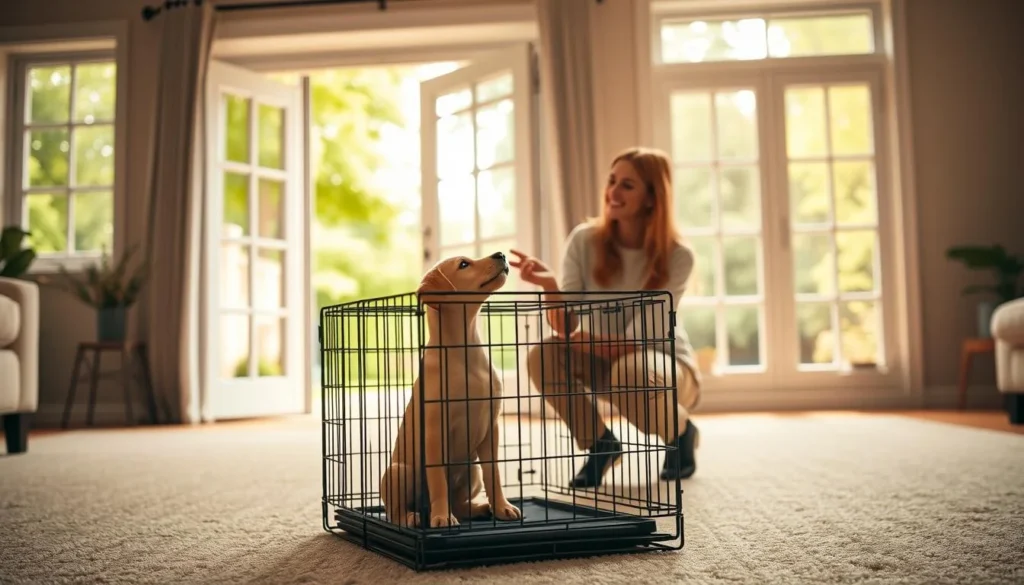
I choose a crate that fits my puppy snugly. It should allow them to stand, turn, and lie down. Avoiding oversized crates helps prevent accidents. Crates with adjustable partitions save money and grow with your puppy.
Choosing the right crate and setup
I line the crate with soft bedding for comfort. If accidents happen, I remove the bedding. This teaches my pup that the crate is not for bathroom use. I place the crate in the family room to keep my dog connected.
I never use the crate as punishment. Instead, I add a chew-safe toy and a small blanket once housetraining is steady. I also set a schedule tied to meals and naps to help with potty training.
- I prefer wire or plastic crates from Petmate or Midwest for durability.
- I add a chew-safe toy and a small blanket once housetraining is steady.
- I set a schedule tied to meals and naps to reinforce potty training.
Introducing your puppy to the crate
I make the crate inviting with treats and short, calm sessions. Feeding meals inside builds positive feelings quickly. I close the door for a minute or two while my puppy eats, then open it and praise calm behavior.
I increase crate time gradually for supervised naps and nighttime. If my puppy whines at night, I respond promptly for potty breaks. Whining can signal a real need to eliminate, not just attention seeking. When I suspect attention whining, I wait for a quiet moment before opening the door so I do not reward noisy demands.
Rescue puppies sometimes soil a crate from past confinement. I go back to basics: restrict free access, control feeding and potty breaks tightly, and rebuild trust slowly. This approach supports progress toward potty training and teaches lasting habits.
Using puppy pads and indoor potty options
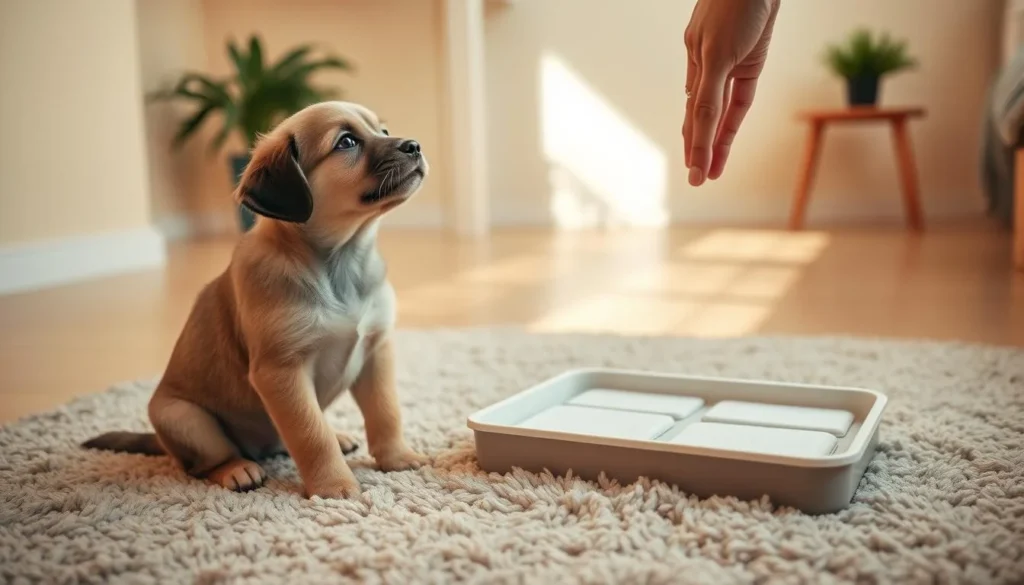
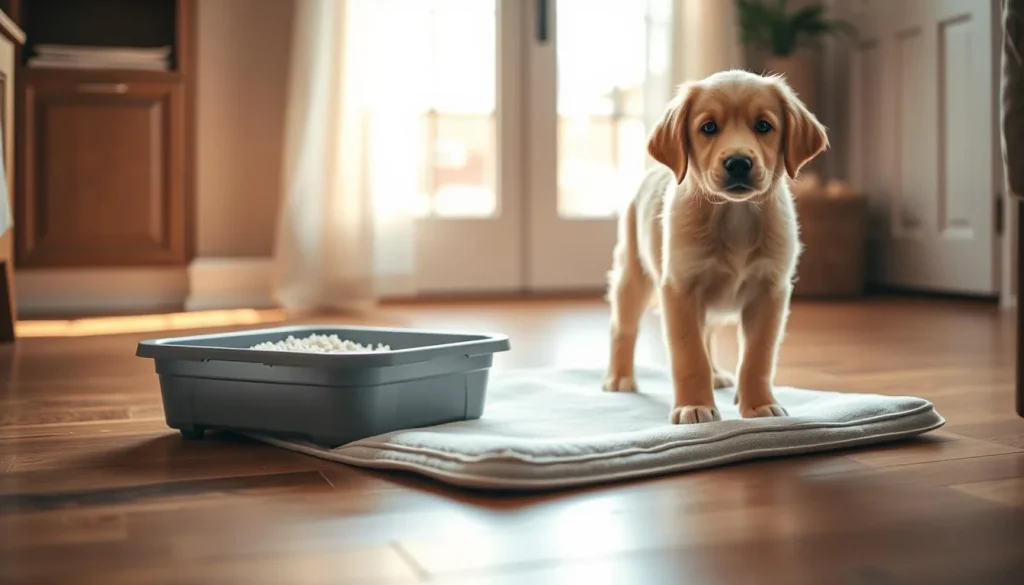
I keep things simple with puppy pads and indoor potty options. Pads work best when they're in the same spot every time. I also make sure my puppy has a short, consistent routine. This helps them learn quickly.
Placing and transitioning puppy pads
I start by picking a spot that's easy to see. I place the pad near the door to signal potty time. Using pads that absorb well and control odors helps keep the area clean.
When moving from pads to outside, I slowly move the pad closer to the door. After a few days, I put it just outside. I praise my puppy for going outside to help them learn.
For nights or when I'm away, I use heavy-duty pads to protect floors and crates.
When pads are the right choice
Pads are great for small breeds and those living in apartments. They're also useful when my work schedule is tight. Pads teach my puppy an indoor spot while I plan for outdoor training later.
Products like Health Tracker Dog Pad help by showing urine changes. This alerts me to any health issues. Pads also protect crates and playpens during training.
| Use Case | Best Pad Type | Transition Tip |
|---|---|---|
| Apartment living | High-absorbency with odor control | Place near door, move closer daily |
| Tiny breeds | Create-a-size pads for small areas | Short, frequent breaks plus pad rewards |
| Nighttime protection | Overnight pads with extra layering | Use crate liners until bladder control improves |
| Health monitoring | Color-changing Health Tracker pads | Watch for pH changes and consult vet |
Recognizing signals your puppy needs to go potty
I keep a close eye on my puppy to catch the first signs they need to go. Recognizing these signs early helps prevent accidents and speeds up training. A calm routine and quick response increase the chances of success outside.
I always watch my puppy when I'm home. I use a six-foot leash or a small, puppy-proofed area to supervise without stress. This method reduces accidents while I work on training.
How to supervise effectively indoors
I look for signs like circling, sniffing the floor, restlessness, and sudden squatting. I also watch for barking or scratching at doors and returning to previous accident spots. These are clear signals that the puppy needs to go.
I treat early yard trips as training sessions. I put a leash on the puppy to keep them focused. I limit their freedom until they show consistent success, then I gradually give them more freedom.
Reacting when you spot signals
If I see the puppy starting to go inside, I pick them up calmly and take them to the potty spot. If they finish outside, I praise them, give a small treat, and play. This helps them associate going outside with rewards.
I never scold after the fact. Punishment can confuse the puppy and harm our trust. I clean accidents with an enzymatic cleaner to remove odors. I use a consistent verbal cue like "go potty" while they eliminate. This helps them link the phrase with the action and improves training.
Feeding, water management, and gut health for reliable potty breaks
I keep things simple with feeding, water, and gut health to make housetraining predictable. A steady routine helps answer common questions about training a puppy. Small diet and schedule changes make a big difference in how often my puppy needs to go.
How diet influences housetraining
I pick a high-quality puppy food that matches the pup’s life stage. This reduces loose stools and keeps bathroom breaks regular. Most puppies need three meals a day for predictable elimination.
I watch stool quality closely. Bulky, loose, or smelly stools mean intolerance or overfeeding. If this happens, I call my vet and consider a gentler formula. I switch diets slowly to avoid GI upset and keep training on track.
Managing nighttime water and long stretches
To cut overnight accidents, I remove the water bowl 2 to 2.5 hours before bedtime. I make sure the pup drinks plenty during the day. Very young or tiny-breed puppies may still need a nighttime trip until they mature.
If I must be away for long periods, I arrange a midday break or hire a caregiver. Leaving a puppy alone for more than 4–5 hours regularly hurts housetraining and welfare. For overnight monitoring, I place a crate near my bedroom or use a pad as a short-term aid while I continue training.
| Area | Practice | Why it helps |
|---|---|---|
| Feeding schedule | Three measured meals daily | Makes elimination times predictable and reduces accidents |
| Food choice | High-quality puppy formula; switch slowly | Prevents loose stools and digestive upset that stall training |
| Water timing | Remove bowl 2–2.5 hours before bed | Reduces nighttime accidents while preserving daytime hydration |
| Overnight strategy | Crate near bedroom or temporary pad | Allows quick response and reinforces how to train a puppy to potty train |
| Long absences | Arrange midday breaks under 4–5 hours | Supports welfare and consistent potty learning |
Positive reinforcement and rewarding potty success
I help owners praise their puppies gently and consistently. This way, puppies learn what's expected of them. Positive reinforcement works better than scolding. It's all about timing, clear cues, and a routine everyone can follow.
When a puppy goes in the right spot, I give a treat and praise right away. This teaches them to connect their actions with rewards. It makes learning to go potty outside faster.
Short treats are best. They don't interrupt the puppy and help them stay focused. I give the same reward every time they go potty outside. This builds a strong habit.
Timing rewards for strongest learning
I reward them immediately after they go potty. Praising too soon can stop them mid-stream. I use excited words and small treats. Sometimes, we play for a bit before going inside.
Every time they go potty right, they get the same reward. This consistency is key to training them to go potty on command.
Using a consistent cue and reinforcement plan
I use a short cue like "go potty" every time. The routine includes leash, cue, reward, and play. This makes it predictable for the puppy.
It's important that everyone in the house uses the same cue and reward. If there's an accident, I clean up and focus on the next chance to reward them.
| Step | Action | Why it helps |
|---|---|---|
| 1 - Cue | Use a short phrase like "go potty" at the spot | Builds association between phrase and behavior |
| 2 - Wait | Allow the puppy to finish eliminating before reacting | Prevents interruptions and incomplete behavior |
| 3 - Reward | Give a tiny, high-value treat plus verbal praise | Immediate reinforcement strengthens the habit |
| 4 - Brief play | Short play session before re-entering the house | Creates a positive routine and marks success |
| 5 - Consistency | All family members follow the same cue and rewards | Removes mixed signals and speeds training |
Troubleshooting common potty training problems
Repeat accidents can be really frustrating. But most problems have simple solutions. First, check if the area is clean, if your puppy has access, and if the schedule is right. Then, you might need to change how you train them.
Cleaning and preventing repeat accidents
Use an enzymatic cleaner to get rid of urine and feces smells. Regular cleaners just hide the smell, not get rid of it. This can attract your puppy to the same spot again.
If your puppy keeps going to the same spot, limit their access. Place the pad or a familiar scent where it should be. For those wondering how to train a puppy to potty on pads, supervise them after meals and naps. Give them a treat right away if they use the pad correctly.
For indoor training without pads, make the schedule tighter and limit free time. Increase outdoor trips after play and meals to help them learn. If you want them to poop outside, give praise and treats immediately after they do.
Crate accidents might mean the crate is too big or the timing is off. With rescue pups, start over with routines, shorten unsupervised time, and add crate comforts slowly.
When to seek professional help
If a young pup can't be housetrained, get a vet check. They can look for urinary tract infections or digestive problems. Medical issues need to be ruled out first.
If the vet says everything is fine but accidents keep happening, consider a professional dog trainer or a vet behaviorist. They can make a plan for small-breed piddling, anxiety, or dogs with past confinement issues.
Don't wait too long to get help. Chronic accidents make training harder and can be frustrating. Professional advice can help you succeed faster and bring peace back to your home.
Conclusion
I trained my puppy to potty by staying patient, consistent, and positive. I kept a clear schedule and used a crate and leash when needed. I also rewarded successes right away.
This routine made it easier to teach my puppy where and when to go. It helped avoid confusion during the first few weeks.
I learned that timelines vary with age, diet, and health. So, I adjusted my approach when progress slowed. Cleaning accidents thoroughly and tightening meal and bathroom times helped a lot.
Monitoring food quality was also important. If problems persisted, I consulted my veterinarian and a certified trainer for targeted help.
Learning to train a puppy to potty is all about repetition and kindness. By committing to scheduled breaks and prompt rewards, I set my puppy up for reliable habits. This made our home calm and clean.