Welcoming a puppy into my home was a dream come true. Their endless energy and curiosity brought joy. But, I soon realized they posed a biting challenge.
It's easy to laugh at their tiny teeth on everything. Yet, when their bites get too sharp, it's a sign to teach them limits. Learning how to stop a puppy from biting is key for both my comfort and my pet's well-being.
With patience and the right training, we can get through this playful phase. We can build a harmonious relationship.
Key Takeaways
- Understand that biting is a natural behavior for puppies.
- Establish clear boundaries to deter biting.
- Use redirection techniques to guide proper behavior.
- Consistently reinforce positive interactions with rewards.
- Provide suitable chew toys to satisfy their exploration instincts.
- Be patient and consistent in training to ensure long-term success.
Understanding Puppy Biting Behavior
As I explore the world of puppy ownership, I've learned that understanding puppy biting is key. Puppies bite for many reasons. Knowing these reasons helps me handle their behavior better.
Reasons Why Puppies Bite
Puppies bite to explore and learn. Their mouths are tools for them. Teething is another reason; they chew to ease tooth pain. They also bite during play, a behavior they learn from their littermates.
Understanding these reasons is crucial for handling puppy biting.
The Importance of Play for Puppies
Playtime is more than fun for puppies; it's vital for their growth. It teaches them social skills, like bite control. Playing with other dogs helps them learn what's okay and what's not.
Regular playtime with other dogs is essential. It lets me see how they interact and teach them to be gentler. This is important for understanding their biting behavior.
Why Do Puppies Bite?
Puppies bite as they grow and explore. Knowing why they bite helps manage their behavior. It's important to understand that their biting changes as they develop.
Exploration and Learning
Puppies learn by biting and chewing. They get important information through their mouths. Giving them safe things to chew helps them learn without biting too much.
Teething Phase
When puppies get teeth, they chew more. This is because their gums hurt. Giving them chew toys and distracting them helps them chew safely.
Play Behavior in Puppies
Play is key for puppies to learn social skills. They mouth each other as a way to play. If they bite too hard, others will stop playing, teaching them to be gentle.
How to Keep a Puppy from Biting
Teaching a puppy not to bite can be tough, but there are ways that really work. It's important to set clear rules to show them what's okay and what's not. I've learned some tricks to steer them towards better behaviors, making our bond stronger.
Establishing Clear Boundaries
When my puppy bites too hard, I say "ouch" in a high-pitched voice. This tells them it's not okay and helps them learn. Quick feedback helps them change their ways. Being consistent is key to teaching them right from wrong.
Redirecting Their Attention
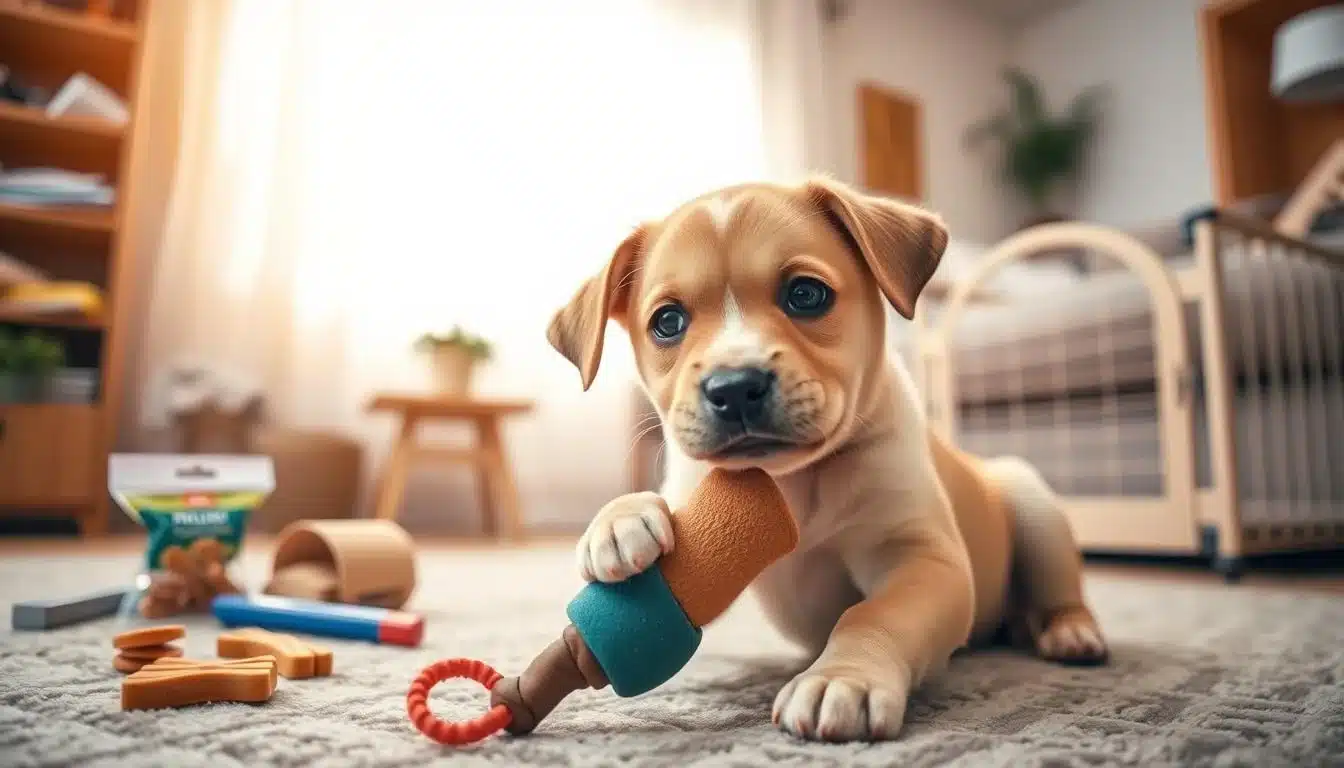
Every time my puppy tries to bite, I give them a chew toy instead. Having the right toy ready helps them play without biting. This method not only stops biting but also teaches them good habits from the start. Here are some toys that work well:
| Toy Type | Benefits |
|---|---|
| Rubber Chew Toys | Durable and promotes chewing. |
| Rope Toys | Great for tug-of-war while being safe on teeth. |
| Stuffed Animals | Encourages gentle chewing and comfort. |
| Interactive Toys | Stimulates mental engagement and play. |
By setting boundaries and redirecting their behavior, my puppy learns to play safely. Each time we play well together, our bond gets stronger. This helps my puppy become a well-behaved dog.
Teaching Bite Inhibition
Understanding the importance of teaching bite inhibition is key. It's about a dog's ability to control their bite pressure. Puppies explore their world with their mouths, so it's important to teach them to bite gently. This training helps prevent serious bites as they grow.
What is Bite Inhibition?
Bite inhibition is when puppies learn to control how hard they bite. They do this by playing with their siblings and mother. This social play helps them understand how to bite without hurting others.
Methods to Encourage Bite Inhibition
Using different methods in puppy training can be very effective. Here are some good ways to teach bite inhibition:
- Play with Other Dogs: Playing with other puppies helps them learn to bite gently through social play.
- Puppy Classes: Classes provide a safe space for socializing and learning bite inhibition.
- Yelp or Stiffen: If your puppy bites too hard, say a short "yelp" or stop playing. This helps them understand their biting strength.
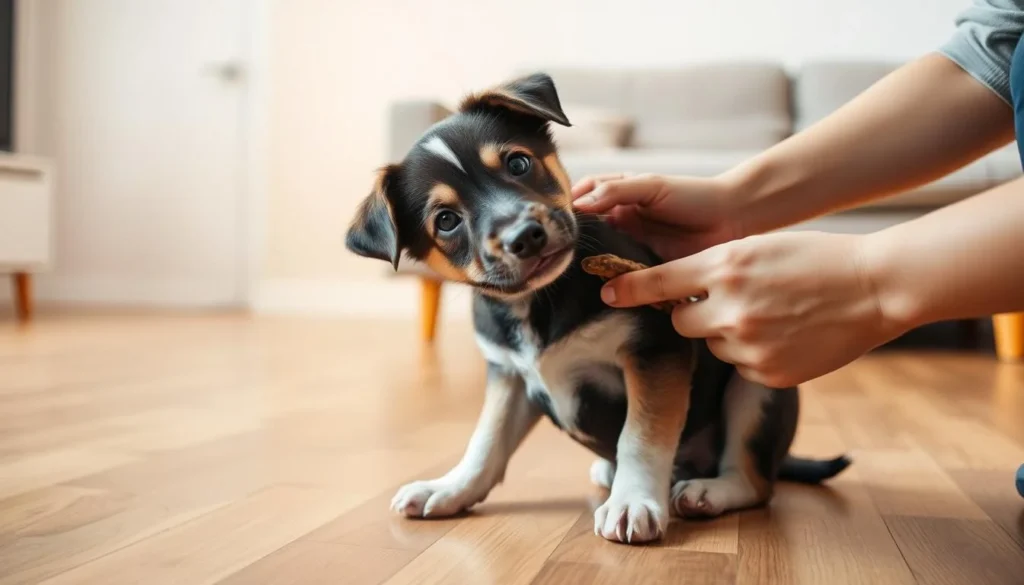
- Praise Gentle Behavior: Give treats and affection when your puppy bites gently. Positive reinforcement is key in teaching bite inhibition.
Using Positive Reinforcement
Positive reinforcement is a great way to teach puppies. It helps them learn not to bite. When I reward my puppy for being gentle, they understand what I want. This method strengthens our bond and builds trust.
Rewarding Gentle Behavior
I give treats or praise when my puppy is gentle. This teaches them to be calm and friendly. For instance, if they sniff my hand without biting, I reward them. This positive feedback shapes their behavior in a good way.
Praising Calm Interactions
It's also important to praise calm moments. When my puppy is relaxed, I show them love and positive words. This helps them learn that being calm is good.
By doing this, my puppy learns that being gentle gets them nice things. This encourages them to keep being gentle. It's a big part of their training.
Substitute Chew Toys
Finding the right chew toys can really help how to keep a puppy from chewing on things they shouldn't. Puppies naturally want to chew, and the right toys can satisfy that need. This way, you can protect your stuff too.
Types of Appropriate Chew Toys
When picking chew toys, look for ones that are safe and last long. Some great picks include:
- Soft rubber toys that can handle a lot of chewing
- Rope toys, perfect for tugging and chewing
- Teething rings that help with sore gums
- Interactive toys that give treats, keeping your puppy busy
These toys keep your puppy happy and teach them to chew right.
When to Introduce New Toys
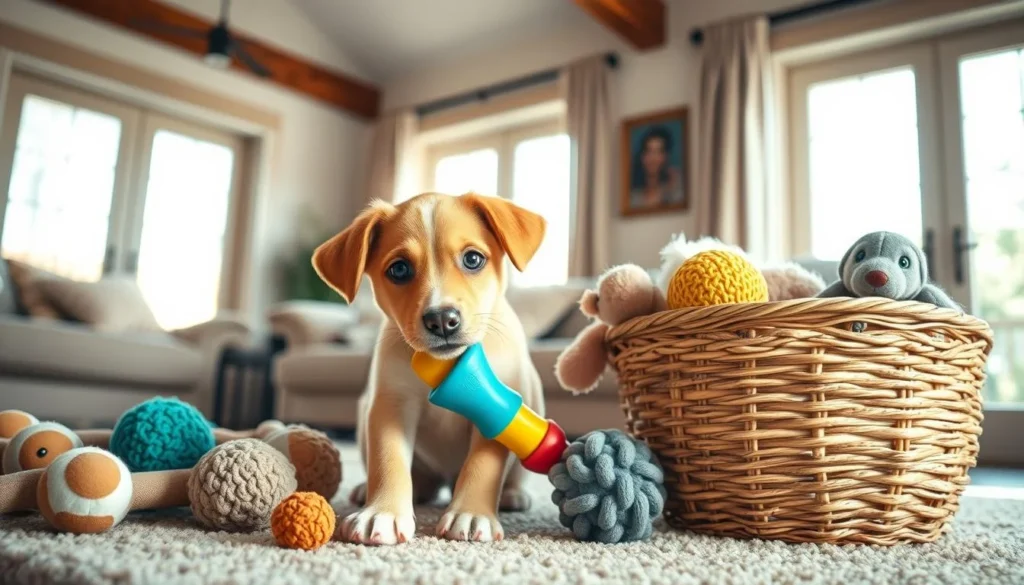
It's key to switch up your puppy's toys to keep things interesting. I bring in new toys now and then to keep playtime fun. This keeps my puppy from getting bored and chewing on things they shouldn't.
Watching how your puppy chews helps you know when to swap out toys. This keeps playtime exciting and your puppy happy.
Redirecting Puppy’s Biting Behavior
Managing a puppy's biting can be tough, but it's key for a good bond. Using the right techniques helps your puppy learn better ways to behave.
Using Toys During Playtime
Using toys during play is a simple yet effective method. If my puppy bites my hands or clothes, I swap them for a toy. This teaches them that toys are for chewing, not people.
Having many chew toys around helps keep them interested in the right things to bite.
Implementing the “Time-Out” Technique
Time-outs are a great way to stop biting. If my puppy bites too much, I stop playing and take them away for a bit. This shows them biting ends the fun.
After they calm down, we play again. This teaches them that being calm means more fun.
Managing Teething and Biting
Managing a puppy's teething and biting is key. Puppies feel pain as their teeth come in, leading to more chewing. By helping them, we can ease their discomfort and stop unwanted biting.
Providing Teething-Friendly Toys
Teething toys are a great solution. They're soft on gums and satisfy a puppy's need to chew. Choose toys made of soft materials to ease pain and stop biting on things like furniture.
Having many toys keeps a puppy busy and happy during teething.
Signs Your Puppy is Teething
Knowing when your puppy is teething is important. Look for these signs:
- Increased chewing on objects
- Swollen or bleeding gums
- Changes in appetite, such as reluctance to eat
- Excessive drooling
Spotting these signs helps us give our puppy the care they need. It makes the teething process easier for both of us.
Encouraging Gentle Play
Creating a fun and safe space for my puppy means promoting gentle play. Playing non-contact games makes playtime fun and keeps rough behavior low. It's key to channel their energy into safe activities that build trust.
Non-Contact Games to Play
My puppy and I can play many non-contact games that teach gentle behavior:
- Fetch: Toss a ball and let my puppy chase it without touching.
- Hide-and-Seek: I hide and call my puppy, sparking excitement without rough play.
- Treasure Hunts: Hiding treats around the house keeps them calm and uses their nose.
- Puzzle Toys: These toys keep my puppy's mind busy without encouraging rough play.
Avoiding Rough Play
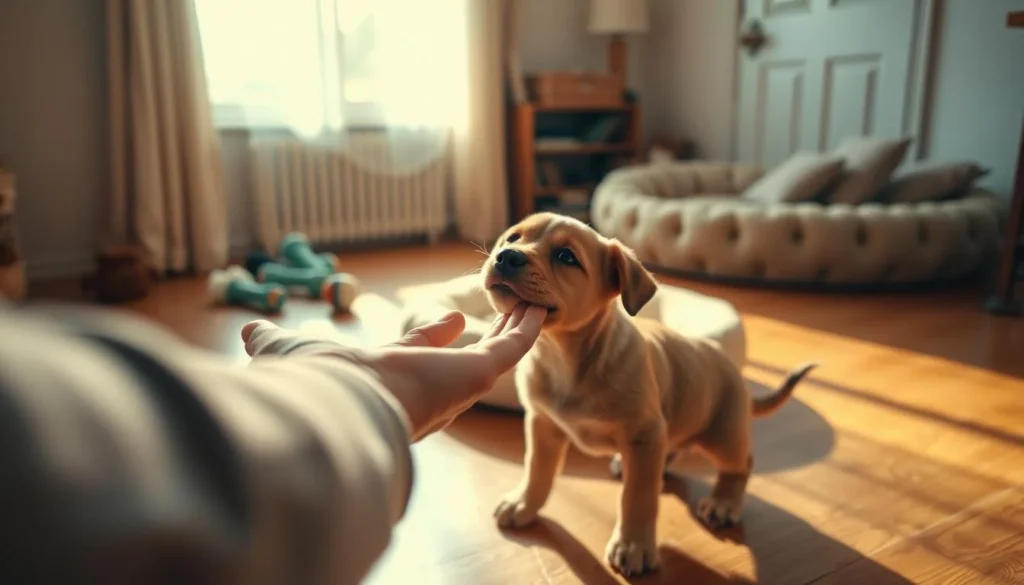
It's tempting to let play get a bit wild, but avoiding rough play is vital. I watch playtime closely to ensure calm interactions. If I see nipping or aggression, I switch to a calm activity or toy.
It's important to set play boundaries. This prevents bad habits from forming.
Setting Up a Safe Environment
Creating a safe space for puppies means thinking about my home carefully. I use puppy-proofing techniques to avoid accidents and keep my puppy happy. These steps help prevent bites and make my home a safe place for them to explore.
Puppy-Proofing Your Home
Securing electrical cords and keeping cleaning supplies away are key. I also put heavy objects on high shelves. This stops my puppy from getting into danger.
By doing this, I make sure my puppy can't chew on things they shouldn't. It keeps them safe and happy.
Removing Tempting Objects
I also remove things that might catch my puppy's eye. Shoes, toys, and small items can be tempting. I give my puppy their own play area to keep them safe.
This way, they can play without getting into trouble. It helps them stay out of mischief.
| Hazardous Items | Safe Alternatives |
|---|---|
| Cords and Wires | Puppy-proof cord covers |
| Sharp Objects | Designated play areas |
| Cleaning Supplies | Pet-safe cleaning products |
| Small Household Items | Interactive toys |
By preparing my home, I make sure my puppy has a great place to live. Using these puppy-proofing tips makes life better for both of us.
Socializing Your Puppy
Socialization is key for my puppy's growth. It shapes behaviors that last a lifetime. Playing with other dogs helps them learn social skills and understand their peers.
Playdates are vital for puppy socialization. They provide a safe space for puppies to interact and learn. This is crucial for their development.
Importance of Puppy Playdates
Puppy playdates are essential for their growth. They help puppies learn to communicate and avoid aggression. By observing others, they understand social cues and acceptable play.
These interactions boost their emotional well-being. It helps them navigate complex social situations.
Benefits of Puppy Training Classes
Puppy training classes offer structured learning and social opportunities. They expose puppies to different environments and dogs. This improves obedience and social skills.
Through these classes, my puppy becomes more confident. It helps prevent bad habits like biting from poor social experiences.
Recognizing When to Seek Help
Knowing when to act is crucial for puppy owners dealing with biting issues. It's important to tell the difference between playful nips and aggressive behavior. Paying attention to recognizing puppy aggression signs helps keep everyone safe.
Signs of Aggressive Behavior
Aggression can show in different ways. I watch for behaviors like:
- Growling or snarling when approached or touched
- Stiff body posture and a raised tail
- Snapping or biting, especially when startled
- Hiding or cowering, showing signs of fear
If I see these signs often, it's time to get professional help. Early action leads to better training and a stronger bond with my puppy.
Finding a Professional Trainer
Working with a skilled trainer is key. They provide advice and solutions that match my puppy's needs. I look for someone who specializes in puppy behavior. Their expertise helps me manage tough behaviors effectively.
Common Mistakes to Avoid
Training a puppy is an exciting journey, but it comes with its challenges. I have learned that being mindful of certain mistakes to avoid when training puppies can significantly enhance the experience. Understanding common puppy training pitfalls can lead to a more positive relationship with my new furry friend.
Avoiding Harsh Corrections
One of the largest mistakes I see is the use of harsh verbal or physical corrections. Such methods can breed fear and potentially escalate biting behavior. Instead, I focus on positive reinforcement. Rewarding good behavior encourages the puppy to repeat those actions, cultivating a healthier training environment.
Not Providing Enough Mental Stimulation
Another common oversight involves failing to offer adequate mental stimulation. Puppies are curious and energetic. Insufficient activities can lead to boredom, resulting in undesired nipping behavior. I make it a priority to engage my puppy with interactive games and puzzle toys. This helps keep her mind stimulated and reduces the chances of developing biting habits.
The Role of Consistency in Training
Consistency is key in puppy training. Puppies love routine and knowing what to expect. By always responding the same way to their actions, I teach them what's right and wrong.
Having a set schedule for training and playtime is crucial. It helps my puppy learn faster and feel secure.
Why Consistency is Key
Consistency helps puppies learn quicker. When I react the same way to their biting, they learn the difference. This makes them less confused and more relaxed during training.
Establishing a Routine
Setting a daily routine is important. It helps my puppy know when it's time to learn and play. This stability makes them more confident and better behaved.
Conclusion
Learning how to stop a puppy from biting is a big task. It's all about understanding why they bite and how to stop it. Giving them things to chew on and being consistent in training helps a lot.
Looking back, I see that being patient and positive is key. The tips I've shared help not just stop biting but also build a strong bond with my puppy. Playtime and the right chew toys are crucial for a well-behaved puppy.
In the end, preventing puppy biting is about understanding, redirecting, and supporting them always. With the right effort, my puppy will learn to get along with everyone. This way, we can all enjoy a happy and safe space together.