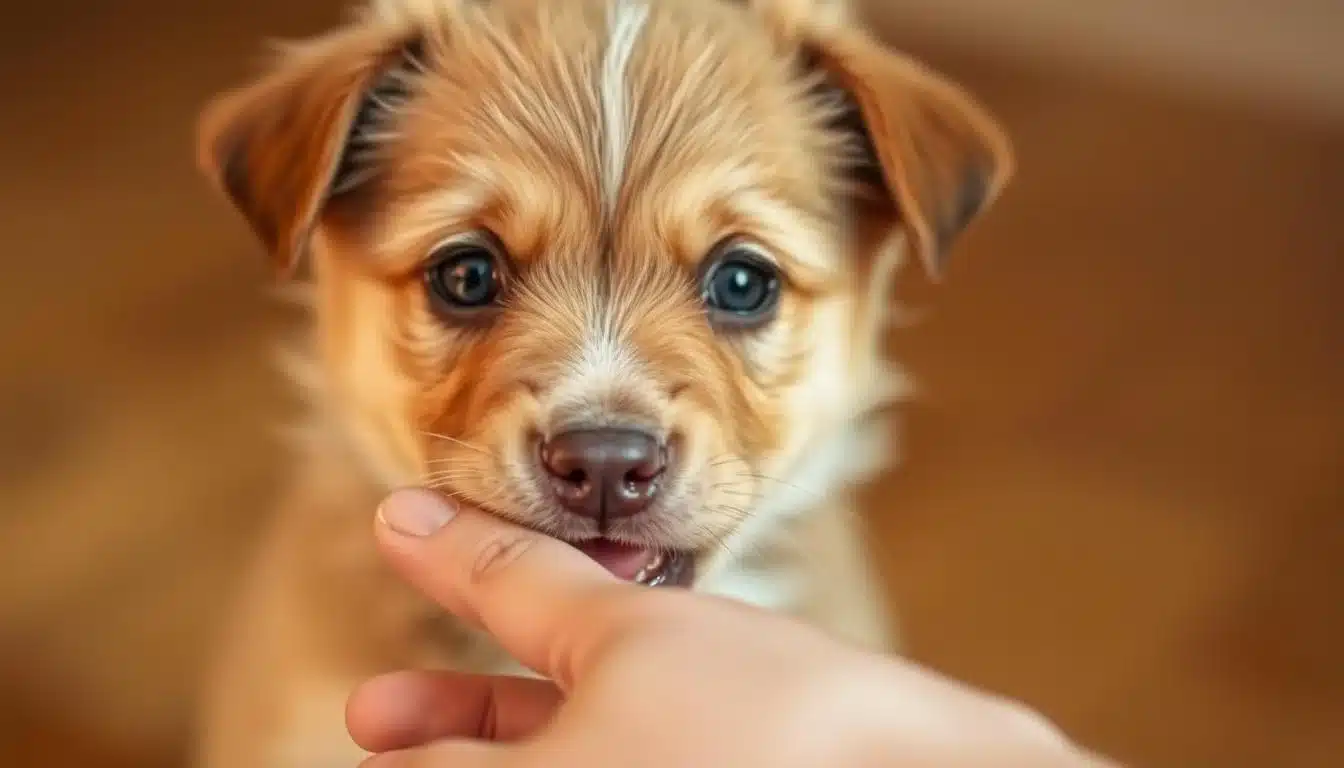
We've all been there—puppy teeth suddenly sinking into our hands during play. In those initial weeks, I often wondered, why does my puppy bite me? It can be confusing and sometimes painful. This biting behavior, often playful, makes us question the reasons behind it.
It's important to know that puppies bite for many reasons as they explore their new world. Understanding why puppies bite, especially when they're teething or seeking social interaction, helps us raise a loving and well-behaved companion.
Key Takeaways
- Puppy biting is common and often stems from play and exploration.
- Understanding the reasons for puppy biting is essential for management.
- Teething can lead to increased chewing and biting behavior.
- Socialization plays a vital role in a puppy's biting habits.
- It's crucial to distinguish between playful mouthing and aggressive biting.
Understanding Puppy Biting Behavior
Puppy biting is a normal part of a young dog's life. They use their mouths like we use our hands to explore. This helps them learn and understand their world.
Puppies bite for many reasons, like playfulness, curiosity, or frustration. When they're excited, they might nip at my hands or clothes. It's not always aggressive; it's their way of playing and learning.
To stop puppy biting, I need to know what triggers it. Giving them chew toys helps keep them busy and away from my hands. Understanding why they bite helps me teach them better.
The Importance of Mouth Play in Puppies
Puppy mouth play is key to their growth. It lets them explore and learn about biting limits. From the start, puppies play with their siblings, learning how hard they can bite.
This learning shapes their physical skills and helps them interact well with others. Mouth play helps puppies develop important skills for future relationships with humans and other dogs. It lets them understand how hard they can play and control their bites.
It's important to encourage safe mouth play. This helps prevent too much biting as they get older. Giving my puppy safe toys and playtime helps mouth play grow in a good way. This way, my puppy learns to show love and know when to stop.
Reasons for Puppy Biting
Understanding why puppies bite is key to a happy home. Puppies bite for many reasons, like exploring and teething. Knowing these helps me manage their energy and curiosity.
Puppies Exploring Their Environment
Exploring puppies use their mouths to learn about the world. They nibble on hands and objects to discover. It's cute but can get out of hand if not guided.
Redirecting their explorations to toys is crucial. It keeps everyone safe and happy.
Puppy Teething and Biting
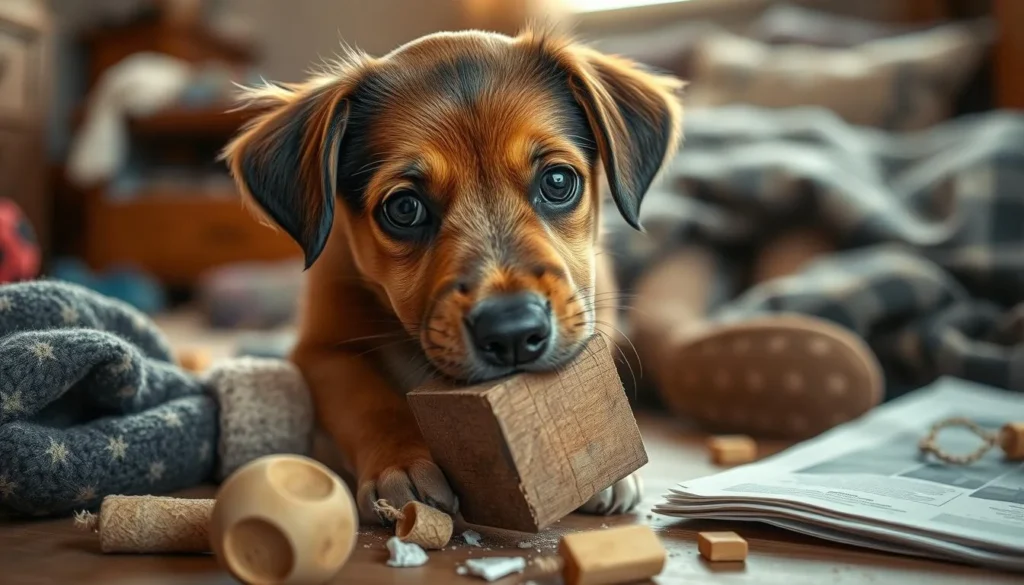
Teething is a big reason for puppy biting. Puppies get sore gums when they lose baby teeth. This soreness makes them bite more.
Teething toys help soothe their gums. They also keep puppies from chewing on things they shouldn't.
Why Does My Puppy Bite Me?
Puppy biting can leave new pet owners puzzled. It's important to understand why your puppy bites. Usually, it's because they want to play and connect with you.
Puppies show excitement by biting during play. This is their way of saying they're happy to be around you and other animals.
Play Behavior and Socialization
Play helps my puppy learn about social rules and limits. This puppy play behavior lets them discover their world and improve their skills. Playing with others teaches them how hard to bite.
When I react well to their bites, I teach them better ways to play. This helps us understand each other better and strengthens our connection.
Normal vs. Problematic Biting
It's key for pet owners to know the difference between normal and problematic biting in puppies. Puppy biting can change based on the situation and their mood. Normal biting is usually seen during play and is soft. It shows excitement and is full of energy.
Problematic biting, however, can be hard and hurt. It often means the puppy is scared, uncomfortable, or too excited. Watching my puppy's body language helps me understand their feelings. Normal biting might show a wagging tail and playful growls. But, signs of bad biting include a stiff body and loud, mean sounds.
To tell normal from bad biting, I've made a table:
| Type of Biting | Characteristics | Body Language |
|---|---|---|
| Normal Biting | Gentle mouthing during play; no pain caused | Wagging tail, relaxed posture, playful vocalizations |
| Problematic Biting | Hard biting that causes discomfort; often accompanied by growling | Tense body, raised hackles, aggressive stance |
Understanding puppy biting behavior is crucial for training and socializing. Knowing the difference helps me act quickly. This keeps my puppy and me safe and happy.
How to Stop Puppy from Biting
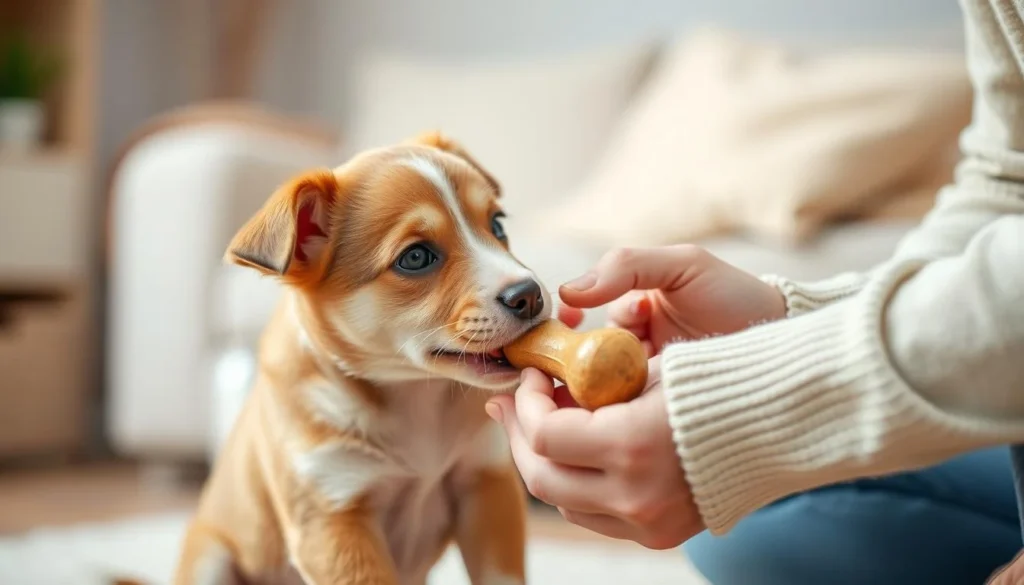
Redirecting my puppy's attention to toys is a key strategy. It prevents unwanted biting and encourages proper chewing. I offer a variety of durable, enticing chew toys to keep them away from my hands or clothes.
Using toys during playtime helps reinforce good behavior. I praise my puppy when they choose toys over inappropriate items. This teaches them what's okay to bite and strengthens our bond. It turns their energy into a fun, engaging activity.
Understanding Bite Inhibition
Bite inhibition is key for my puppy. It helps them learn to control their bites. When playing with other dogs, puppies learn this by feeling the force of their bites.
If they bite too hard, the other dog might yelp. This tells my puppy that they need to be gentler. It's important to teach puppies to be gentle to ensure safe play with both dogs and humans.
Training my puppy to be gentle is crucial. It helps them develop good social skills and become a well-behaved dog. Gentle play during training sessions helps them understand the concept of bite inhibition.
Bite inhibition is more than just play. It helps prevent injuries when dogs get too excited. Puppies that learn to control their bites are more fun to be around. As I continue training, these lessons will shape my puppy's behavior.
| Skill | Benefit |
|---|---|
| Bite Inhibition | Prevents injuries during play |
| Socialization | Enhances interactions with other dogs |
| Control | Promotes gentleness with humans |
| Training | Fosters a well-mannered adult |
Puppy Socialization Classes
Putting my puppy in puppy socialization classes helps a lot with biting. These classes give my puppy a place to meet other dogs and learn important social skills. It's a safe spot for them to practice not biting too hard, which is key for good play.
At puppy obedience training, expert trainers teach me a lot about my puppy's social needs. They help my puppy get used to different places and situations, which helps them not bite out of fear. This way, my puppy grows up to be confident and well-adjusted.
These classes also help my puppy get used to new sights, sounds, and smells. This makes them less anxious when they meet new things. I've seen big changes in my puppy's behavior, showing how crucial early socialization is. With regular training and exposure, biting will get better over time.
The Role of Exercise and Mental Stimulation
Exercise is key in puppy training to cut down on biting. When my puppy gets enough physical activity and mental challenges, they're less likely to bite out of boredom. A happy, active puppy also learns to control their impulses better.
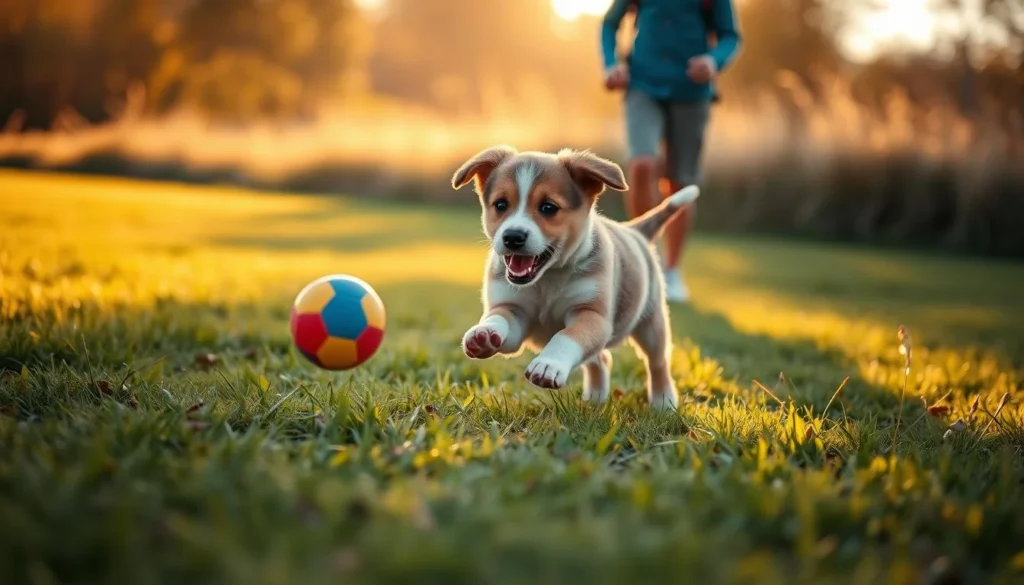
Playtime needs to be both fun and educational. I use interactive toys and set play times to keep my puppy engaged. It's important to mix in challenges that keep their mind sharp and body active. This helps teach them right from wrong, including how to handle biting.
Creating a Biting-Friendly Environment
Creating a safe space for puppies can also help. Giving them the right toys and chews helps them learn to bite the right things. Here's how I do it:
- Offer a variety of chew toys to cater to my puppy's preferences.
- Incorporate training exercises that require problem-solving skills.
- Schedule regular play sessions to maintain energy levels.
- Establish boundaries around my hands and feet to discourage targeting them.
By focusing on exercise and mental stimulation, I create a positive space. This helps my puppy behave better and reduces biting. Making these changes has made our relationship better.
When Does Puppy Biting Become Aggression?
It's key to tell the difference between playful puppy bites and aggression. Most of the time, my puppy's bites show joy and curiosity. But, some situations can turn play into aggression. It's important to know the signs of aggressive biting for my puppy's safety.
Signs of aggressive biting can show in different ways. I watch for changes in my puppy's body language that might mean fear or discomfort. A stiff posture or raised fur can mean my puppy feels threatened. Growling is a clear warning that my puppy is not playing anymore. Also, if my puppy bites for a long time without stopping, it might be aggression.
If I see these signs, I need to stay calm and assess the situation. Early action can stop aggression from getting worse. If aggression is serious, getting professional help is a good idea. Understanding puppy biting aggression helps manage it better and keeps everyone safe.
Common Myths About Puppy Biting
Exploring puppy biting, I find many myths. One common belief is that biting will naturally lessen over time. But ignoring it can make biting worse, so I must act quickly.
Understanding puppy behavior is key to managing bites. Many think puppies will stop biting as they grow. But this belief can lead to frustration for both me and my puppy.
Learning about puppy biting myths, I find many resources to help. Talking to professional trainers or going to puppy classes can clear up doubts. This way, I can ensure a healthy bond with my puppy.
| Myth | Truth |
|---|---|
| Puppies will grow out of biting on their own. | Without proper guidance, biting can persist into adulthood. |
| Biting is just a phase and harmless. | Unchecked biting can lead to fear or aggression later in life. |
| Ignoring biting behavior will make it stop. | Proactive management is essential to curb the behavior. |
| Only certain breeds bite more. | All puppies, regardless of breed, can exhibit biting behavior. |
Tips for Managing Puppy Biting
Managing puppy biting can seem tough, but using the right techniques makes a big difference. One key method I've found is positive reinforcement. This approach encourages good behavior and stops bad ones.
Positive Reinforcement Strategies
By rewarding my puppy for gentle mouthing and not punishing for biting, I see big changes. Treats, praise, and playtime help show what's okay. Being patient is key, as positive reinforcement takes time to work.
- Reward Moments: Reinforce gentle behaviors immediately with a treat or praise.
- Redirecting Attention: Replace my puppy's biting habit with an appropriate chew toy. This teaches them what to chew on.
- Consistency is Key: Everyone in my household must follow the same approach to reinforce positive behavior.
- Celebrate Small Wins: Recognizing progress, even small steps, encourages my puppy to keep trying.
These positive reinforcement strategies make managing puppy biting easier and more effective. Seeing my puppy grow and learn good behavior brings me so much joy.
Professional Help for Biting Issues
When my puppy keeps biting, getting help from a pro can really help. A Certified Professional Dog Trainer (CPDT) or a skilled behaviorist can give me new ideas. They help me understand if my puppy's bites are normal or a bigger problem.
These experts create special plans to fix my puppy's biting. They know a lot and help me see what my puppy needs. Working together, we can make a safe and happy space for both of us.
| Factors to Consider | Professional Help | Potential Benefits |
|---|---|---|
| Type of Biting Behavior | Behavior assessment by CPDT | Identifying the root cause |
| Training Techniques | Customized training plans | Improved obedience and understanding |
| Consistency of Training | Follow-up sessions and support | Long-term behavioral change |
Getting professional help is a smart move to fix biting problems. It makes our bond stronger and happier.
General Precautions to Prevent Biting
Preventing puppy biting starts with awareness and proactive measures. It's essential to provide appropriate outlets for your puppy's natural instincts. This can greatly help to prevent puppy biting by offering suitable toys and chews that satisfy their urge to nibble.
Another vital precaution involves avoiding situations that may encourage biting behaviors. For instance, rough play can inadvertently teach pups that nipping is acceptable. Instead, focus on gentle interactions and supervised playmates to promote puppy behavior modification.
Proper supervision plays a significant role in ensuring that biting incidents are minimized. By closely monitoring my puppy during playtime and social interactions, I can intervene if biting behavior escalates. This supervision creates a secure environment where my puppy can learn proper behavior and reduce the chances of unintentional nips.
Conclusion
Understanding why puppies bite is crucial for dog owners. Recognizing the reasons behind their biting helps me tackle these behaviors. Using the right training methods, like redirection and positive reinforcement, creates a loving and disciplined home.
Being patient is essential in teaching my puppy good habits. This stage is a part of their growth and shows the importance of training. If needed, getting professional help can greatly improve our journey together.
My aim is to raise a well-adjusted and gentle dog. By following the advice in this article, I can manage my puppy's biting. This will help us build a strong and lasting bond.