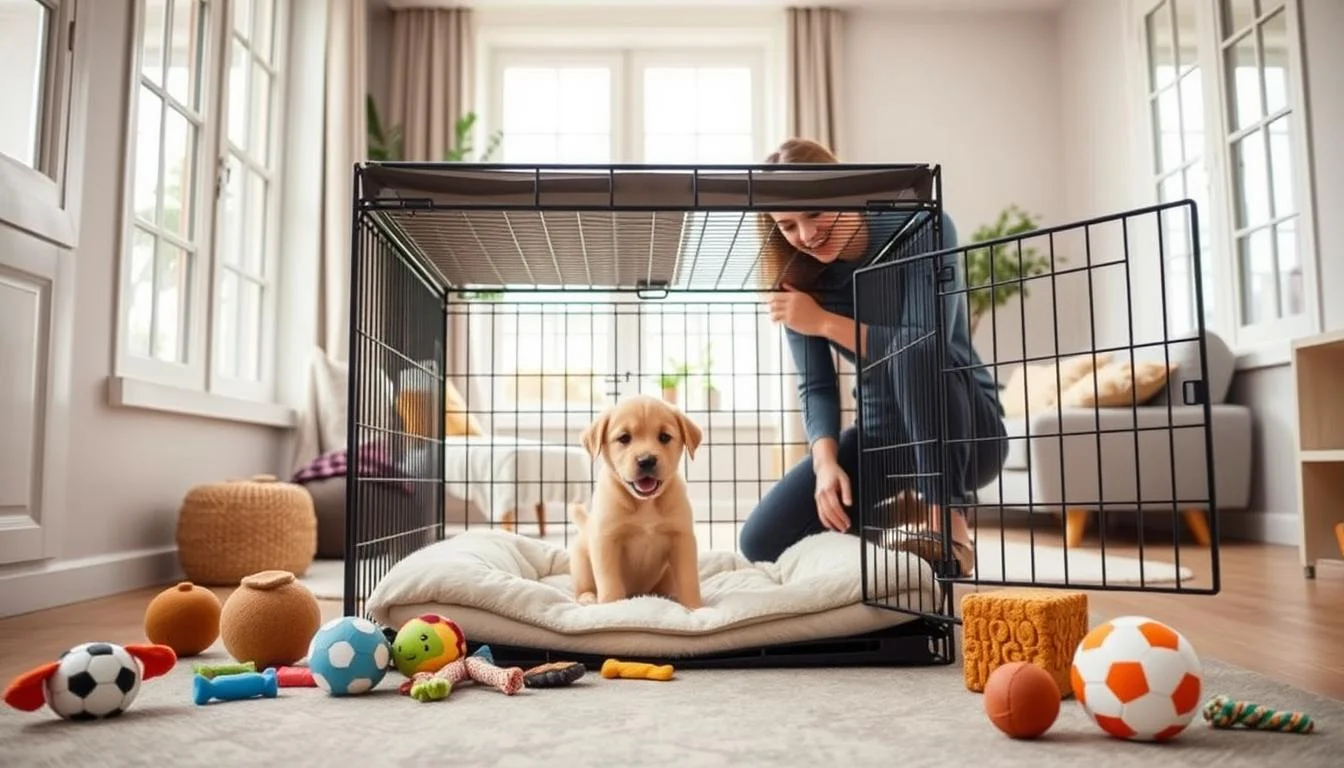
I remember the first night with my Labrador. The tiny whimpers, the chewed-up slipper, and the need for a plan hit me hard. Crate training was daunting at first but became a calm spot in our busy lives. It gave my puppy a safe place and me peace of mind for potty breaks, travel, and vet visits.
Crate training is about getting your puppy used to a dog crate. Figuring out when to start is a big decision for new owners. Starting early makes the process easier. It helps prevent bad behavior, supports potty training, and gets your dog ready for vet visits and more.
In this section, I'll cover the basics and why timing is key. I'll share practical steps to help you know when to start and what to expect. My aim is to guide you and your puppy to a calm, safe routine.
Key Takeaways
- Start crate training early when possible; timing affects success.
- Crates provide a den-like safe space for rest and recovery.
- Proper crate training supports potty training and reduces chewing.
- Being crate trained improves readiness for vets, groomers, and travel.
- Use stepwise, low-pressure methods when learning how to crate train a puppy.
Why crate training matters for puppies and owners
I think crate training is very helpful for both new puppy owners and their dogs. It makes the crate a safe place. It also helps manage the house and handle emergencies without stress.
There are three main reasons why crate training is important. Each reason shows how it makes life easier and safer for everyone.
Safety and emergency preparedness
Crate-trained dogs are safer during evacuations or sudden trips to a shelter. Many places, like Banfield and VCA, require animals to be crate-trained for transport and stays.
Having a dog used to a crate makes emergency moves faster. It lowers stress for the pet, the owner, and first responders when time is short.
Helps with potty training and household management
Puppies like a clean place to sleep, making crates great for house training. The right size crate and dividers help prevent accidents.
Using a crate at night helps with consistent routines. It reduces midnight accidents and makes potty breaks easier to schedule.
Reduces destructive behavior and supports restful recovery
Crates keep puppies safe from dangers like electrical cords and toxic items. They help manage chewing and damage while teaching boundaries.
Crates are key after surgery or injury. Dogs used to crates recover better from vet stays and enforced rest.
I see crate training as a temporary tool for learning. The goal is to earn freedom and a trusted resting spot for both dog and owner.
| Owner Concern | How Crate Helps | Practical Tip |
|---|---|---|
| Emergency transport | Safe containment for quick moves | Keep a travel-ready crate in the car |
| House training | Encourages clean sleeping area | Use dividers to match puppy size |
| Destructive chewing | Prevents access to hazards | Provide safe chew toys inside crate |
| Post-surgery rest | Enforced calm in a familiar space | Practice short confinement sessions first |
| Night routines | Predictable overnight behavior | Start crate training puppy at night in your bedroom |
when to start puppy crate training
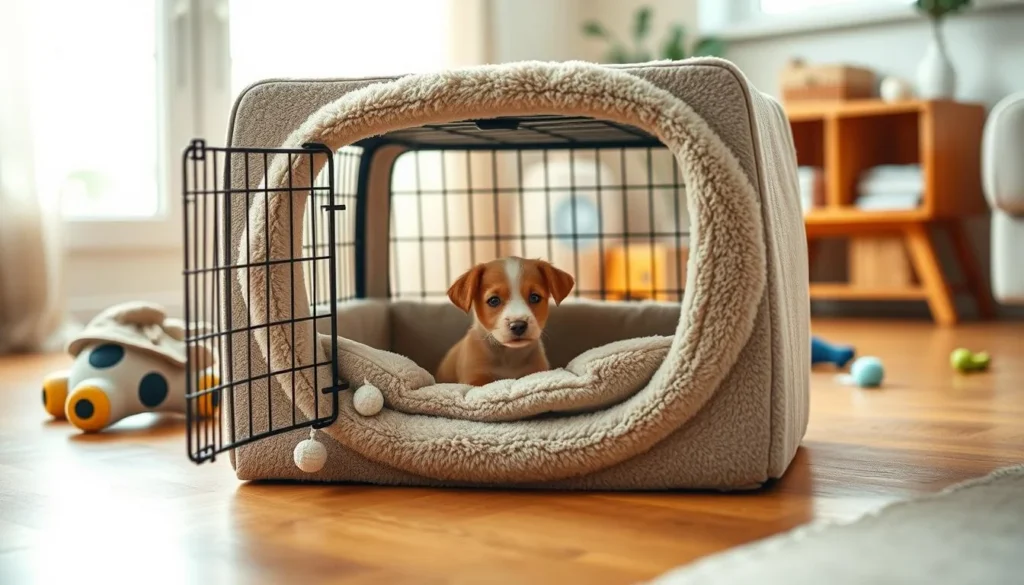
I remember the first time I brought home a Labrador mix at eight weeks. I set the crate up before arrival and focused on calm, positive steps. This small preparation made every evening easier and helped the pup adapt to a routine. Deciding when to start puppy crate training shapes how quickly your dog accepts the crate as a safe place.
Recommended starting age and why earlier is often better
Most veterinarians and trainers recommend beginning crate introduction around eight weeks. At this puppy crate training age, pups are highly adaptable. Early exposure helps them form positive associations with the crate and builds predictable habits.
Young puppies learn quickly, so starting now cuts down on future resistance. I found short, frequent sessions work best. Praise, treats, and quiet time inside the crate create a comfort zone that stays useful as the puppy grows.
Bringing home a puppy at eight weeks: starting immediately
If you bring a puppy home at eight weeks, start immediately but gently. Let the crate remain open at first to encourage curiosity. Feed near the crate and place a few meals inside to link food with the space.
Begin with very short closed-door intervals. I keep sessions to a few minutes at first, then increase time as the puppy stays calm. This approach reduces fear and makes it clear that the crate is a positive, safe den.
Training older puppies and adult dogs: expectations and timeline
Older puppies and adult dogs can learn a crate, yet the process often takes longer. Established habits may slow progress. I use consistent positive reinforcement and slower steps when working with older dogs.
Expect a range of timelines: some dogs adjust in days, others in weeks. I recommend patience and small wins—short sessions, favorite treats, and a calm routine. When I follow this plan, even older dogs begin to accept the crate as a resting place.
| Age Group | Typical First Steps | Realistic Timeline |
|---|---|---|
| 8 weeks (newly home) | Open crate access, feed nearby, short closed-door practice | Days to 2 weeks |
| 10–16 weeks | Increase crate time, introduce naps inside, consistent schedule | 1–3 weeks |
| 4–12 months | Gradual longer sessions, combine with training cues, exercise first | 2–6 weeks |
| Adult dogs | Slow progression, strong positive reinforcement, patience | Weeks to months |
Choosing the right crate: size, style, and safety
Choosing a crate is a big step in crate training. The right one keeps your puppy safe, calm, and clean. I focus on size, material, and features to help you make the best choice for home, travel, or vet visits.
Measure for the crate size for puppy by imagining your dog as an adult. The crate should let the dog stand up, turn around, and lie down. If you expect a large adult, use a divider to shrink the space as the pup grows.
Dividers solve the problem of an oversized crate. They prevent accidents and keep the sleeping area correct.
How big should a crate be for a growing puppy
Choose a crate that fits your pup’s projected adult size. If unsure, ask your vet for a growth estimate. A divider lets you adjust the interior and prevents accidents while preserving the correct sleeping area.
Wire vs. plastic vs. mesh vs. soft-sided: pros and cons
Wire crates are sturdy, well-ventilated, and collapse for storage. They are good for puppies with separation anxiety because they are visible. Drape a blanket for privacy when needed.
Plastic crates give a den-like feel and travel well. They are easier to move and clean, and they limit escape routes. I pick plastic for car trips and airline travel when the dog needs a secure, enclosed space.
Mesh and soft-sided crates stay lightweight and comfy. They work well for calm, crate-trained dogs on short trips. I avoid them for chewers or stressed puppies because fabric tears easily.
Crate features that improve safety and cleaning
Look for rounded corners and secure latches to reduce injury and escapes. Removable metal or plastic trays make cleaning fast. If you plan to crate for longer than two hours, choose a model that accepts a water bottle or an attachable bowl.
I weigh intended use when choosing a dog crate: daily home use, travel, or vet stays guide the style. Temperament matters too. A chewer needs sturdier construction. A nervous pup may do better in a wire crate with a cover for a den-like feel.
| Crate Type | Best Use | Pros | Cons |
|---|---|---|---|
| Wire | Home, training | Ventilated, collapsible, visible | Less privacy without a cover |
| Plastic | Travel, vet visits | Enclosed, lightweight, easy to clean | Reduced airflow, less visibility |
| Mesh / Soft-sided | Calm dogs, short travel | Comfortable, portable | Not for chewers or anxious pups |
When choosing a dog crate, keep crate training essentials and your schedule in mind. My rule is simple: pick the crate that matches your pup’s temperament, your intended use, and the correct crate size for puppy so training stays effective and safe.
Preparing the crate: comfort and den-like setup
I want the crate to feel like a safe, cozy den before I begin introducing puppy to crate routines. A calm, inviting crate helps my pup relax and learn faster. I place the crate where my family spends time, away from heavy foot traffic, and start nights near my bedroom so I can respond if the puppy cries.
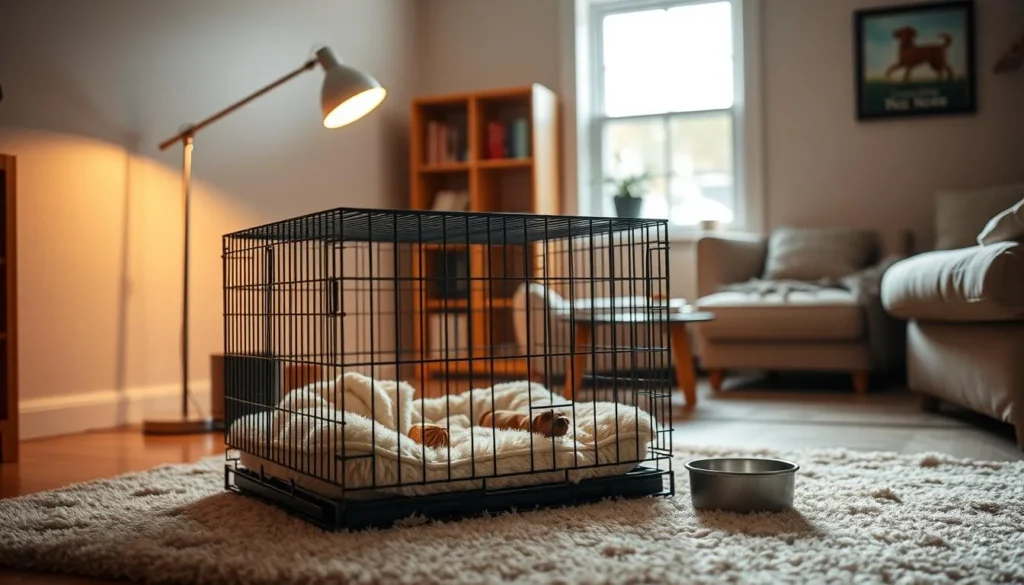
I check crate bedding for chew safety and avoid small pieces that could be swallowed. I tuck a soft blanket or dog bed into the crate and add one worn T-shirt to share my scent. I rotate durable toys and include a stuffed puzzle toy with a tiny amount of plain yogurt or peanut butter to keep the pup busy during longer practice sessions.
I use a crate divider so the space stays appropriately sized as the puppy grows. The divider keeps the den small enough to support potty training and prevents the pup from soiling a larger area. I adjust the divider every few weeks to match my puppy’s body length.
Before each session I run a quick safety check. I remove loose threads, small parts, and anything that is overly chewable. I keep only safe chew toys and inspect bedding regularly. This routine keeps the crate inviting and secure while preparing the crate for everyday use.
How to introduce a puppy to their crate
I guide you through a calm, step-by-step plan to introduce your puppy to their crate. This way, your new dog will feel safe and curious, not scared. Focus on short wins, steady progress, and rewards to build trust. Always use patience and praise, never force a puppy inside or use the crate as punishment.
I start with an open-door, low-pressure approach. Toss tiny treats just outside the crate, then a few inside the threshold. Let the puppy explore at their own pace. If they step in, give calm praise and another treat.
Open-door, low-pressure introduction with treats and meals
Keep the door open while meals are served nearby. Move the food bowl a bit closer each meal until the puppy eats comfortably with their head inside. This creates a positive link between the crate and good things.
Feeding inside the crate to build positive association
Once the pup eats inside, place kibble or wet food deeper into the crate. After a few successful meals, close the door for the duration of one meal, then open it when the puppy finishes. Repeat this over days to teach that closed doors are temporary and safe.
Gradually closing the door and short practice sessions
Start with one-minute closures while the puppy is relaxed and enjoying a stuffed puzzle toy or safe chew. Bump the time to 10 minutes, then to 30, watching for signs of stress. If whining starts, shorten the session and advance more slowly.
I recommend using stuffed KONG-style toys or frozen peanut-butter-safe chews to keep a puppy busy while they grow comfortable with closed-door time. After short closures, sit nearby. Once the pup is calm, step out of the room for very brief absences and extend them gradually.
| Step | Action | Goal |
|---|---|---|
| 1 | Open-door treats and free exploration | Reduce fear and spark curiosity |
| 2 | Feed meals gradually deeper inside | Create positive association with the crate |
| 3 | Close door during a meal, then open | Teach that closure is temporary |
| 4 | Short closed sessions with puzzle toys | Build tolerance and comfort |
| 5 | Leave room briefly once calm | Increase independence and reduce separation stress |
These crate training tips for new puppy owners work best with consistent timing and gentle rewards. If progress stalls, slow down and repeat earlier steps. When I follow this plan, introducing puppy to crate becomes a predictable, positive routine that sets the stage for how to crate train a puppy successfully over the coming weeks.
Crate training schedule for puppies and recommended maximum times
I aim for a crate routine that's easy, regular, and gentle on a puppy's needs. A consistent plan aids in house training and boosts confidence in crate training age and limits.
For young dogs, I opt for short, frequent crate sessions. An 8–14 week old pup gets hourly potty breaks, brief playtime, and short naps in the crate. Meals are given in or near the crate to create a positive association.
I've created a daily routine to guide you. It includes feeding, potty breaks, play or training, and a calm crate nap for the youngest pups.
Sample daily routine for very young puppies (8–14 weeks)
The day begins with a morning potty, a meal, and 10 minutes of play. Then, a short crate rest follows. This pattern is repeated every one to two hours, based on the puppy's needs.
I keep an eye out for signs and adjust accordingly. I allow supervised play, brief training, and two to three calm crate periods between playtimes.
Progressing safe maximum crate times as puppies age
As bladder control grows, so does crate time. For 8–10 weeks, I aim for 30–60 minutes.
At 11–14 weeks, crate time increases to one to three hours. By 15–16 weeks, it's three to four hours. After 17 weeks, most pups can handle four to five hours, with regular breaks.
Balancing exercise, potty breaks, and crate time
I always ensure a potty break before crate time. I also include 30–60 minutes of exercise and mental stimulation when the puppy is old enough and after vet advice.
To maintain a healthy routine, I schedule meals, play, potty, and naps at the same times. A consistent crate training schedule for puppies speeds up house training and reduces stress.
How to crate train a puppy at night
I start night-time crate training with calm routines and realistic expectations. Moving the crate into my bedroom gives the puppy reassurance. It also helps me hear nighttime signals. I make sure the pup has a final potty break and play session well before lights-out.
I place the crate where I sleep or in a nearby hallway for the first few nights. This lets the puppy smell and hear me. It lowers anxiety and makes night-time crate training easier. I keep bedding cozy and limit toys to safe chews to avoid messes overnight.
I watch for patterns in crying. Early-evening whining often means nerves, not a bathroom emergency. Middle-of-night cries frequently signal a need to eliminate. When I respond, I stay calm, take the pup outside on a leash, then return straight to bed.
As the puppy sleeps longer stretches, I move the crate farther from my room in small steps. I shift it a hallway length, then another, until it reaches its permanent spot. Small moves protect progress and make the transition gentle.
Consistency matters with night routines. I avoid feeding right before bed and stick to a predictable schedule. If I wonder when to start puppy crate training, I follow daytime success as my cue.
I stay patient and expect setbacks. Night transitions follow daytime progress and may take several weeks. With steady routines and calm responses, night-time crate training becomes part of a healthy sleep habit for both of us.
Common problems and crate training tips for new puppy owners
I help owners deal with common crate training issues. I want the crate to be a calm, safe spot for your puppy. Making small changes and sticking to routines can solve most problems easily.
Handling whining, barking, and separation anxiety
First, I figure out why the puppy is making noise. If they need to pee, I take them out right away. If they want attention, I don't rush back. This teaches them that quiet behavior is rewarded.
If the puppy really struggles with separation anxiety, I don't force them to stay in the crate. I start with short, gentle sessions and use treats and safe chews to make it positive. For serious cases, I suggest talking to a certified trainer or a vet behaviorist.
What to do about accidents in the crate
Puppies can't control their bladders well. I make crate time shorter and add more potty breaks until they get better. If accidents happen, I clean up with an enzyme cleaner and never yell at the puppy. Yelling can make them scared and slow down their learning.
I also check if the crate is the right size. If it's too big, a puppy might sleep in one part and pee in another. Using a divider helps the crate grow with the puppy and cuts down on accidents.
Avoiding crate misuse and not using it as punishment
The crate should be a safe place. I never use it to punish the puppy or force them inside. Punishing them or using the crate as a time-out can hurt their trust. Instead, I use positive reinforcement to build a strong, positive bond.
To stop misuse, I make sure the puppy gets enough exercise before crating. I also give them water for long crate times and sometimes add puzzle toys. If the puppy seems upset, I go slow and seek help if problems keep happening.
These tips focus on keeping things calm and consistent when crate training. They help you and your puppy build trust and confidence together.
Benefits of crate training a puppy — long term advantages
I trained my Labrador mix with a gentle, consistent plan. Over time, I saw clear benefits of crate training a puppy. It helps with everyday life and in emergencies.
Three practical outcomes make crate training a good choice. It makes safe travel with dog easier. Airlines, car trips, and family outings are better when a pup knows their crate is a calm space.
Second, a crate for vet stays removes extra stress at appointments and boarding facilities. Staff appreciate a dog that rests quietly in a familiar den.
Safe travel, vet stays, and boarding preparedness
When I crate-train, I plan short practice drives and quieting exercises. The dog learns that the crate equals security, not punishment. This habit pays off during long drives or vet appointments.
A dog that accepts a crate meets many boarding rules and adapts faster to new care routines.
Encouraging calm behavior and a reliable resting spot
I set up the crate as a predictable, den-like spot with soft bedding and a few safe toys. The dog begins to use it for naps and quiet time. This steady retreat helps with sleep and lowers household stress.
It gives me a reliable place to direct the dog when guests arrive or when I need focused downtime.
Helps prevent destructive behavior and supports rehabilitation
Crate time keeps curious puppies safe when I cannot supervise them. It prevents chewing hazards and keeps them from ingesting harmful items. If a dog needs rest after surgery, the crate enforces limited movement.
This controlled environment supports healing and reduces the chance of setbacks.
I view the initial investment in training as practical and long lasting. Even with full access at home, leaving a crate available offers a consistent resting spot. The benefits ripple into daily life, travel plans, and emergency situations, making ownership calmer for both of us.
Introducing puppy to crate: step-by-step checklist and essentials
This section is practical for a clear crate training checklist from day one. It covers puppy crate training essentials, supplies to gather, and a stepwise routine for new litters and shelter puppies. This guide helps you move from first introductions to safe longer absences without guessing.
Essential supplies
A correctly sized crate with a divider is key. Add washable bedding or a mat, and chew-safe toys. A puzzle feeder for slow feeding and a spill-proof water bowl or attached bottle are also important. Keep an enzyme cleaner ready for accidents to avoid odors.
Stepwise checklist
- Set up the crate in a family area before the puppy arrives. Place bedding and a shirt with your scent inside.
- Let the puppy explore the crate with the door open. Put treats and toys near the entrance to build curiosity.
- Feed meals progressively farther into the crate until your pup is comfortable eating inside. Close the door briefly while they eat, then open it.
- Introduce short closed-door sessions using puzzle chews to keep the puppy engaged. Increase closed time gradually as the pup stays calm.
- Practice leaving the room for short intervals. When the puppy remains relaxed for about 30 minutes, try short absences from the house.
- Follow age-based maximum crate times. Schedule potty breaks and exercise right before crating for better rest.
When to consult a professional
If the puppy shows signs of panic, extreme distress, persistent separation anxiety, or destructive attempts to escape, contact a certified professional dog trainer or a veterinary behaviorist. Seek prompt help when behavior does not improve with short, patient steps from the crate training checklist.
I designed these points to flow as a step-by-step plan for introducing puppy to crate. Use the puppy crate training essentials and this crate training checklist to keep progress steady and stress low for you and your pup.
Conclusion
I've talked about when to start puppy crate training and its benefits. Starting around eight weeks is ideal. It balances social learning and bladder control.
This guide helps you choose the right crate size and make it cozy. Introduce it with meals and treats. Follow a schedule that includes exercise and potty breaks.
My tips for new puppy owners are about patience and positive reinforcement. Start by feeding inside the crate. Use dividers as your puppy grows. Keep night sessions close at first.
If your puppy whines or has accidents, stay calm. Never use the crate as punishment. If problems last, get help from a trainer.
To wrap it up, start early and go at your puppy's pace. Balance crate time with play and breaks. With a consistent routine and kindness, crate training becomes a safe space for your puppy.