I remember the first night with my Labrador puppy. The soft whine, tiny paws, and my hope for a clean home. Potty training was crucial for our routine and peace of mind. Learning the right time and place for potty breaks is key for a calm home and a strong bond.
This guide offers practical tips for potty training a puppy. It's based on research and my own experience. You'll learn about patience, repetition, and positive reinforcement, not punishment. My aim is to help you train your puppy quickly and kindly.
Here's clear advice on puppy toilet training. Learn how to set a schedule, use consistent cues, and reward your puppy. With planning and simple habits, you'll reduce accidents and keep your home clean and happy.
Key Takeaways
- Start potty training early — timing and place matter for long-term success.
- Use consistent schedules, cues, and immediate rewards to speed learning.
- Focus on repetition and positive reinforcement, not punishment.
- Designate a potty spot and use short supervised trips on a leash.
- Research and planning before bringing a puppy home improve results.
Why potty training matters for a happy household
I want my home to be calm and predictable with a new puppy. Early housetraining is key for good behavior and routine. It also helps create a positive bond between me and my puppy.
Small victories early on lead to lasting habits. Consistent cues, timing, and praise teach my puppy what I expect. Expert advice helps me train without being too strict.
Cleanliness is crucial for comfort and health. Teaching a single spot for elimination reduces indoor messes. This makes our home more welcoming for everyone.
When I bring a puppy home, many things compete for my attention. But housetraining is a top priority to avoid future issues. I schedule training around walks, vet visits, and classes.
Using a single outdoor spot and a leash helps my puppy learn. Repetition and rewards make the routine clear for them. These steps show the value of early training for a happier home.
Creating a consistent potty training schedule
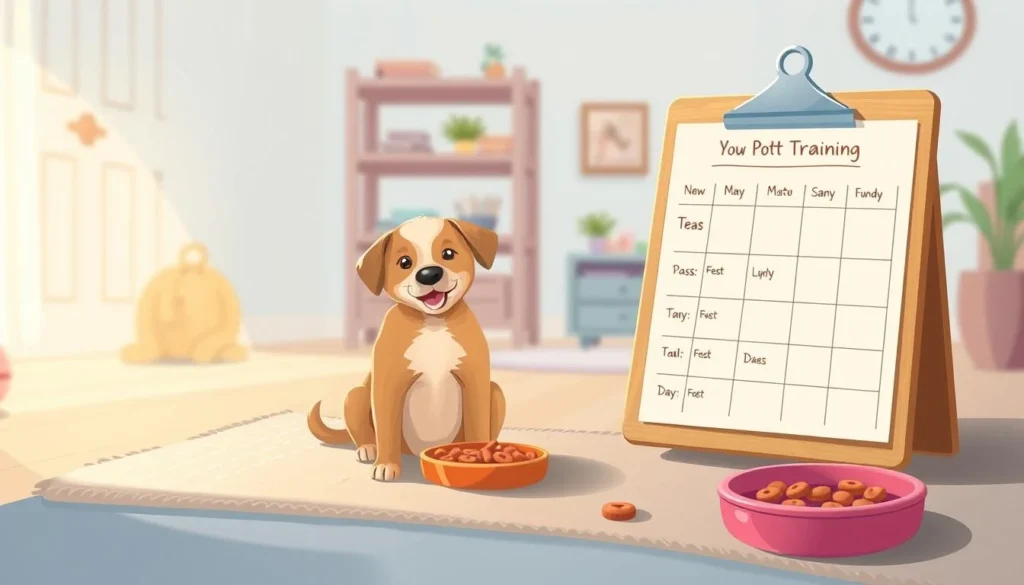
I want a clear plan for potty training that's easy for me and my puppy. A steady routine helps me know when my dog needs to go. It also builds good habits quickly. Here's a plan based on timing, age, and a daily routine that fits home life.
How to time bathroom breaks around feeding and naps
I start with bathroom trips in the morning and after meals. I also do it after play and naps. Puppies usually need to go 10–20 minutes after eating.
Feeding three times a day means three potty breaks. I keep water out during the day but remove it 2.5 hours before bedtime. This helps avoid accidents at night.
Short trips are best when I'm home. Away from home, I arrange a mid-day break with a dog walker or sitter.
Age-based bladder expectations
Puppies have small bladders. A rule of thumb is that a puppy can hold its bladder for about its age in months. For example, a 3-month-old can hold for about three hours.
Young pups under eight weeks need a break every 1–2 hours. As they grow, I increase the time between trips. But I never push them too hard during training.
Designing a realistic daily routine I can follow
I make a simple daily plan with fixed times for meals, play, naps, and potty breaks. A sample day includes morning wake, breakfast, and a trip outside. Then, mid-morning play and potty, lunch, and a post-meal trip.
Afternoon rest and potty, dinner, and a final evening trip are next. I use alarms and a checklist app to keep the routine. I reward my puppy right away for successful trips. These steps are key to potty training and are part of the best ways to potty train a puppy.
- Wake — Potty — Breakfast — Potty
- Play — Short rest — Potty
- Lunch — Potty — Crate nap — Potty
- Dinner — Evening walk — Last potty before bed
If I'm away for long periods, I arrange a midday visit or use indoor solutions. Clear timing, age-appropriate expectations, and a steady routine make progress predictable and manageable.
Using crate training as an effective potty training tool
I use crates every day to teach puppies where to go. A crate that fits right helps tap into a dog's den instinct. It also keeps their sleeping area clean. Crate training is a fast and reliable method, especially with a consistent schedule and patience.
Why crates help: den instinct and clean sleeping areas
Dogs don't like to soil their bedding. This instinct makes crates a great tool for housebreaking. When a puppy can move around comfortably in the crate, it feels like a safe den. This encourages them to hold their urine until they're let out.
Introducing a crate humanely
I introduce the crate slowly. I put treats and meal bowls inside to make it a positive space. I never force a puppy into the crate or use it as punishment. If they struggle, I add a partition to make the crate smaller.
Troubleshooting crate accidents
If a puppy soils the crate, I first check if they can hold it when they're out. If they have accidents often, I tighten their feeding and potty schedule. I increase outdoor trips or hire a dog walker for long days.
I watch for signs like whining and scratching at the crate. These mean they need a break. For rescued dogs, I start retraining from day one with small steps. These tips keep training humane and focused on positive routines.
Puppy pads, indoor options, and transitioning outdoors
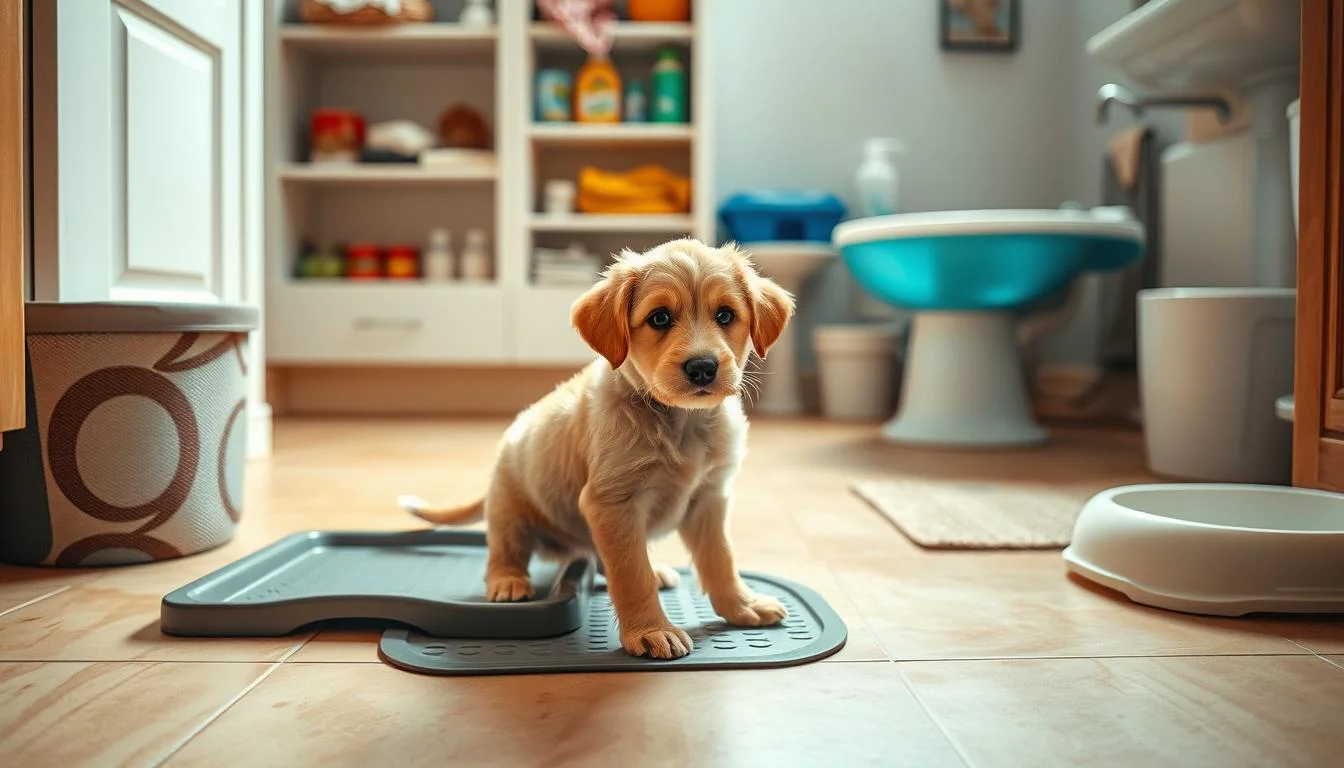
I use puppy pads when it's hard to go outside. They protect floors and are good for small breeds. They also help when I'm busy or live in an apartment.
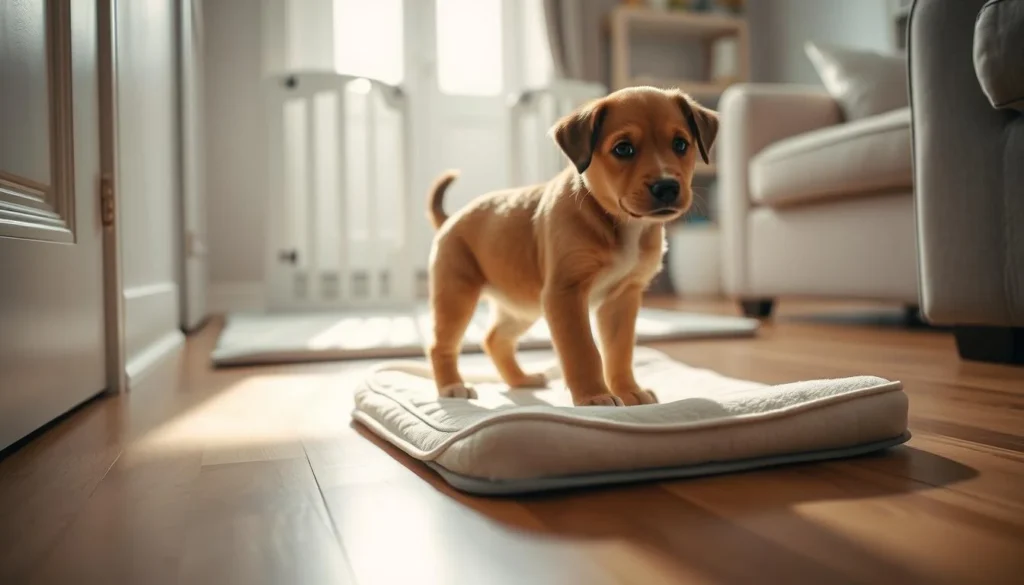
Choosing puppy pads depends on my routine and my dog's size. They're great for busy schedules, extreme weather, or if I have a senior in the house. Indoor potties are good for male dogs and small breeds that can't walk far.
I place pads near the back door to help my puppy learn. This links indoor use to going outside. I use pads that don't smell to help with accidents.
I praise and reward my puppy for using the pad correctly. Short cues like “potty” help them learn. I change liners in playpens or crates to keep things clean.
I try to move my puppy from pads to outside. I start by moving the pad a little closer to the door each day. Then, I encourage them to go outside to the same spot. I give treats and calm praise for successes.
In apartments, I follow special tips for potty training. I keep a routine and schedule trips outside. I use a covered potty area if needed. I never rush the transition to avoid accidents.
If accidents happen, I move the pad closer to the door. This helps my puppy learn again. I always use positive training to keep things calm.
Positive reinforcement and reward-based techniques
I use gentle, reward-based methods to train my puppy. I praise and reward them right after they go outside. This instant feedback helps them connect the action with the reward.
Choosing the right reward and timing
I give my puppy tiny, tasty treats that they can eat in one bite. I wait until they finish before giving the treat. This way, they don't stop mid-elimination.
A quick cheer, a gentle pet, and a small treat are perfect for me. These tips keep rewards meaningful without overfeeding.
Consistent cues and verbal markers
I use a short cue word like “potty” or “bathroom” every time I take my puppy out. The cue pairs with the treat and praise, teaching the pup to go now. Using the same marker and timing every trip helps them learn faster.
These tips make training easy for any caregiver.
Why scolding is counterproductive
I never scold my puppy for accidents or shout after a mistake. Scolding creates fear and slows progress. If I catch an accident, I calmly take them outside.
If they finish there, I reward them. I clean indoor accidents with an enzymatic cleaner to remove scent and prevent repeat behavior.
I follow these tips: reward immediately, use a consistent verbal marker, keep treats tiny, and stay upbeat. This approach keeps training positive, clear, and effective for both me and my puppy.
Recognizing signals and supervising to prevent accidents
I always watch my puppy closely to avoid accidents. Puppies show simple signs when they need to go. Learning these cues helps me take them out on time and speeds up their training.
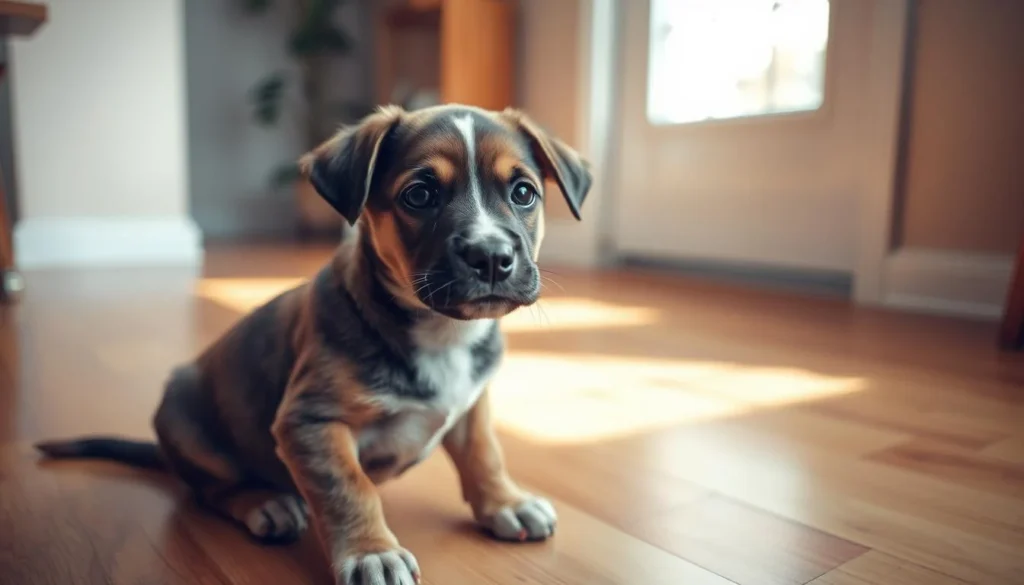
Common pre-potty behaviors to watch for
My puppy will pace, circle, or sniff the floor when they need to go. Some dogs whine or scratch at the door. Others show sudden restlessness, bark, or squat quickly. I look for the signs that match my dog's behavior.
Practical supervision techniques indoors
I keep short, focused sessions to supervise my puppy's training. When I'm home, I follow them and watch for those cues. If I'm busy, I use a playpen or baby gate to keep them safe.
I tether my puppy to me with a six-foot leash when I need to keep them close. This way, I can move them quickly to the potty spot. If I have to leave, I arrange for someone to check on them.
Using a leash for every potty trip
I put my puppy on a leash for every outdoor potty break. A leash keeps us together and prevents distractions. It also lets me reward them right away.
After a successful potty, I give a quick play session. This makes going outside fun and not a sign that training is over. These steps help me supervise and teach consistent habits. Using clear cues, containment tools, and leash-controlled trips builds my puppy's confidence and reduces indoor accidents.
Managing diet, feeding schedule, and potty predictability
I keep feeding and bathroom times the same every day. This helps my puppy learn faster. Puppies can't digest food well, so I feed them three times a day. This makes it easier to know when they need to go.
Why consistent feeding times help house training
Feeding at the same times helps my pup learn. They usually need to go after eating. So, I take them outside 10–20 minutes after meals.
This routine helps during the day. It also helps me know when to watch for signs.
Choosing high-quality puppy food and watching stool
What a puppy eats affects their stool. I choose good brands like Royal Canin, Purina Pro Plan, or Hill's Science Diet. I also watch their stool closely.
Firm, well-formed stools mean the food is good. But, if stools are loose or smell bad, it might be a sign of too much food. Or, it could mean the pup needs a different food. In this case, I might need to see a vet.
If my puppy still has accidents and it's not because of health issues, I get help from a certified trainer or behaviorist. Watching stool patterns helps me find problems early. I can then adjust their food or portions.
Water access and nighttime strategies
I let my puppy drink water during the day but stop it 2.5 hours before bedtime. This helps prevent accidents at night. Most puppies sleep for about seven hours. But, very young ones might wake up.
I take them outside right before bed. I also have a plan if they wake up at night. If they need to use pads, I use them until they learn to go outside.
These small steps help us both. They make potty training at night easier and more manageable.
Troubleshooting common potty training challenges
I stay calm and follow a step-by-step plan when accidents happen. Small setbacks don't mean we've failed. They often show we need to adjust the schedule, clean better, check for health issues, or slow down freedom.
Frequent accidents despite consistency
First, I check with the vet to rule out health problems like UTIs or digestive issues. Puppies from shelters might need extra training because of past habits.
I stick to a strict routine: shorter times in, more trips out, and leash-led potty breaks. I reward them right away and don't punish. If progress stops, I get help from a certified trainer or vet behaviorist.
Puppies that keep returning to the same spot
Puppies go back to spots with urine smells. I use Nature’s Miracle to clean up fully. A smell left behind can undo all our work.
I block off the area to clean it well, then let them back in slowly. If they keep going back, I put a puppy pad or indoor potty nearby. This helps them learn to go there instead.
Special cases: stubborn puppies, toy breeds, or apartment living
For stubborn puppies, I focus on being consistent and patient. I take them out more often and use treats from Blue Buffalo or Zuke’s. I keep training sessions short and fun.
Toy breeds need to go out more because of their small bladders. I might use a small, washable indoor tray if they can't go outside.
In apartments, I stick to a regular schedule, leash walks to a specific spot, and a dog walker if I'm away. I don't adopt a puppy if I can't meet their needs for frequent potty breaks.
For all these challenges, I use simple fixes: clean up accidents well, go back to routine, take them out more, and get help when needed. These steps make solving potty training problems easier and more hopeful.
Seasonal and situational tips: night training, apartments, and winter
I prepare for special conditions before getting a puppy. Making small changes helps with training in long nights, small spaces, or cold weather. Keeping routines simple and predictable helps the puppy learn faster and makes me less stressed.
Tips for potty training a puppy at night
I take away water 2.5 hours before bedtime and make a final trip out before bed. I use a calm voice and dim lights to avoid exciting the puppy too much during night walks.
If the puppy wakes up, I stay quiet, grab the leash, and head to the spot. I give a soft reward and go back to bed to show night trips are routine, not fun. For very long nights, I put a high-absorbency pad in the crate area as a backup.
Tips for potty training a puppy in an apartment
I treat the balcony, entryway, or indoor potty station as part of the home. I place puppy pads or a grass patch near the door and keep them visible until the puppy uses them reliably.
I leash every potty trip to teach the puppy that going out is a quick task. For long days, I hire a dog walker or pet sitter to keep up with consistent breaks and training.
Tips for potty training a puppy in the winter
Severe cold and snow require flexible choices. I use indoor options like puppy pads or a sod box when it's too dangerous outside. I dress small or short-haired pups in a coat for quick outdoor trips.
I schedule short, frequent outings and reward right away to keep cold exposure short. When the weather gets better, I move indoor pads closer to the door and then outside to ease the transition.
I find a balance between comfort and consistency in all situations. By planning, taking short trips, and rewarding good behavior, I keep training steady, whether at night, in an apartment, or through winter.
Conclusion
I've shared tips on puppy potty training that make it easy and stress-free. With patience and persistence, most puppies learn quickly. They become reliable in a few months.
My tips include repetition, supervision, and timely rewards. I watch for signals and manage feeding and water. Using a leash for outdoor trips helps keep the routine consistent.
If I need help, I ask my vet or a professional trainer. I also arrange care when I'm away. This way, I can house train my puppy fast and keep stress low.