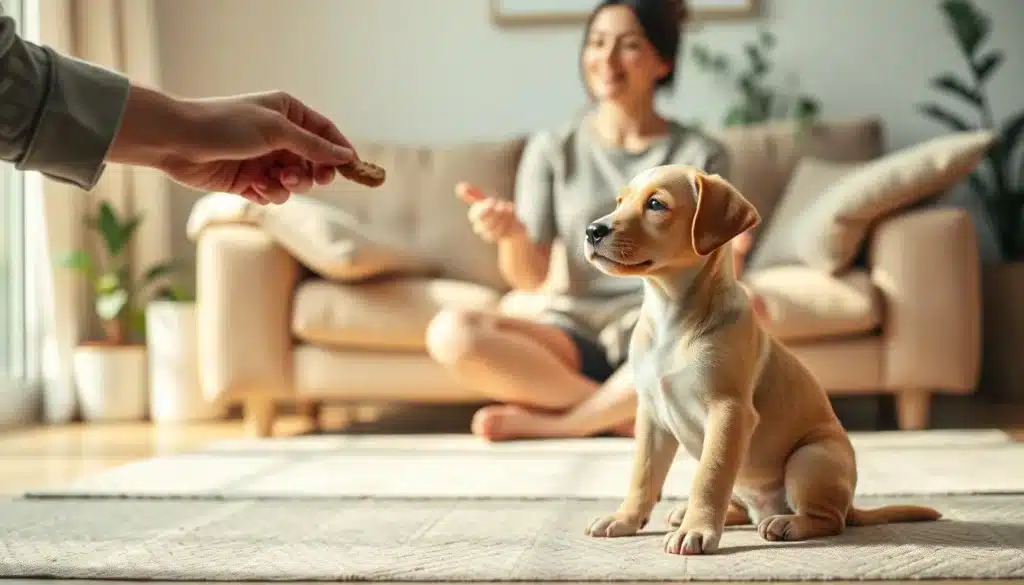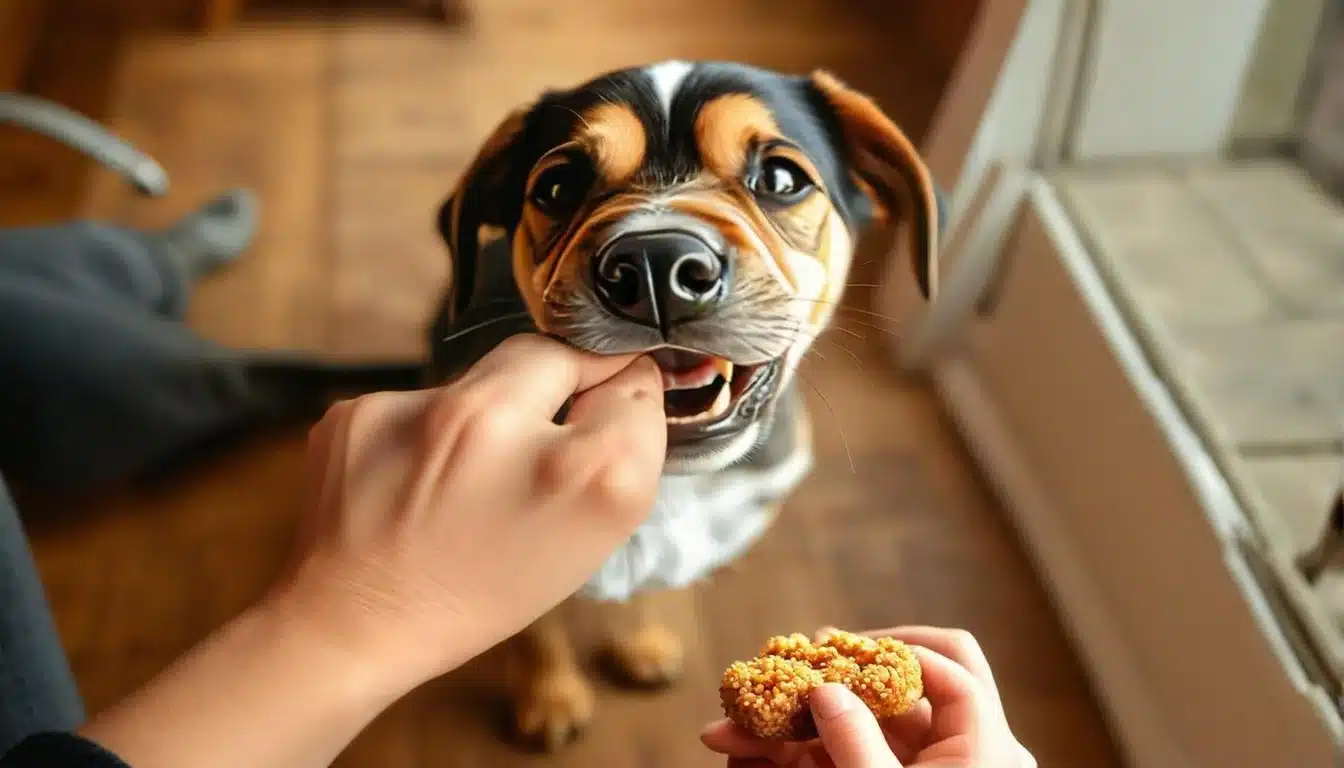
As a new puppy owner, I remember the first time my little furball playfully nipped at my fingers. It seemed innocent at the moment, that delightful mix of curiosity and playfulness. However, I soon realized that this *puppy biting behavior* could escalate into something troubling if not addressed properly.
Many of us face similar challenges with our furry companions. We struggle with those painful bites that remind us of their teething phase or their need for excitement. Thankfully, understanding the nuances behind this *bad puppy behavior biting* is the first step toward nurturing a harmonious relationship with our pets.
Together, we can explore effective strategies to train our puppies. This ensures their playful nature doesn’t lead us down a path of frustration or discomfort.
Key Takeaways
- Puppy biting is a natural behavior but needs direction.
- Understanding the reason behind puppy bites can aid in training.
- Early intervention is key to correcting biting behavior.
- Playfulness often drives puppy biting; it's essential to channel it appropriately.
- Puppy biting can lead to serious behavioral issues if not managed.
Understanding Puppy Biting Behavior
Puppies are naturally curious and explore the world with their mouths. This curiosity often leads to different types of biting during play. Play is key for a puppy's growth, helping them learn social skills and improve their motor skills.
However, as play gets more intense, bites can become more aggressive. This can worry owners.
The Role of Play in Puppy Biting
Play helps puppies learn social cues from their littermates and other dogs. It teaches them what is okay to do. I've seen how fun activities can lead to biting, especially when excitement takes over.
It's important to watch how puppies play. If play gets too rough, it can turn into harmful biting.
When Puppy Biting Becomes a Concern
As puppies grow, it's crucial to tell the difference between fun and harmful biting. I watch my puppy's biting closely. If it's painful or shows aggression, it's a sign of a problem.
Spotting these signs early helps address issues before they get worse. Training and intervention can stop innocent play from becoming harmful biting.
Common Reasons for Bad Puppy Behavior Biting
Understanding why puppies bite is key for pet owners. Puppies bite for natural reasons. Knowing these can help manage their behavior.
Puppy Teething and Its Effects
Teething is a big reason for puppy biting. Puppies, like human babies, feel pain as their teeth grow. They chew and bite to ease this pain.
They might chew on things they shouldn't, like hands or furniture. Giving them the right teething toys can help them bite on the right things.
Playfulness and Excitement
Puppies also bite because they're playful. They have lots of energy and might think human skin is a toy. This can be fun but needs to be stopped.
Teaching puppies to play with toys instead of people is important. It helps them learn to play right and keeps everyone safe and happy.
Identifying Aggressive Puppy Biting
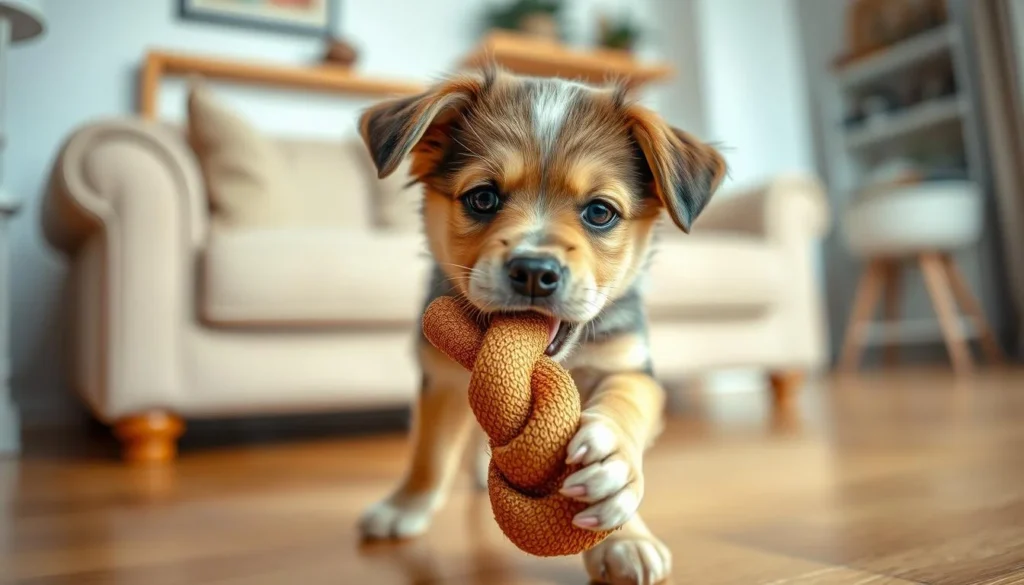
It's important to know the difference between aggressive and playful puppy biting. This knowledge helps keep both the puppy and owner safe. By watching their behavior, I can tell if my puppy is just playing or showing aggression.
Signs of Aggression vs. Playful Biting
Aggressive puppy biting has clear signs that differ from playful biting. Aggression often shows in:
- Stiff body posture, which means they might be tense or aggressive.
- Growling sounds, which can mean they're uncomfortable or defending their space.
- Painful bites, which make me react fast because they're sharp or hard.
Playful biting, however, is more relaxed. I see these signs when they're just playing:
- Wiggly body stance, showing they're excited and full of energy.
- Open mouth biting, which is softer and gentler.
- Barking or yipping, which usually means they're in a playful mood.
Being able to tell the difference is key. It helps me know how to react, making sure our time together is safe and fun.
Teach Your Puppy Bite Inhibition
Teaching your puppy to control their bite is key for safe play with people and pets. This skill, called bite inhibition, helps your puppy learn to bite softly. You'll discover ways to stop puppy biting during play and daily interactions.
What is Bite Inhibition?
Bite inhibition means your dog knows how hard to bite without hurting. It's vital for safe and fun play. With training, your dog will play gently and avoid hurting others. This skill also makes your dog friendlier and more stable.
How to Use Yelping Technique
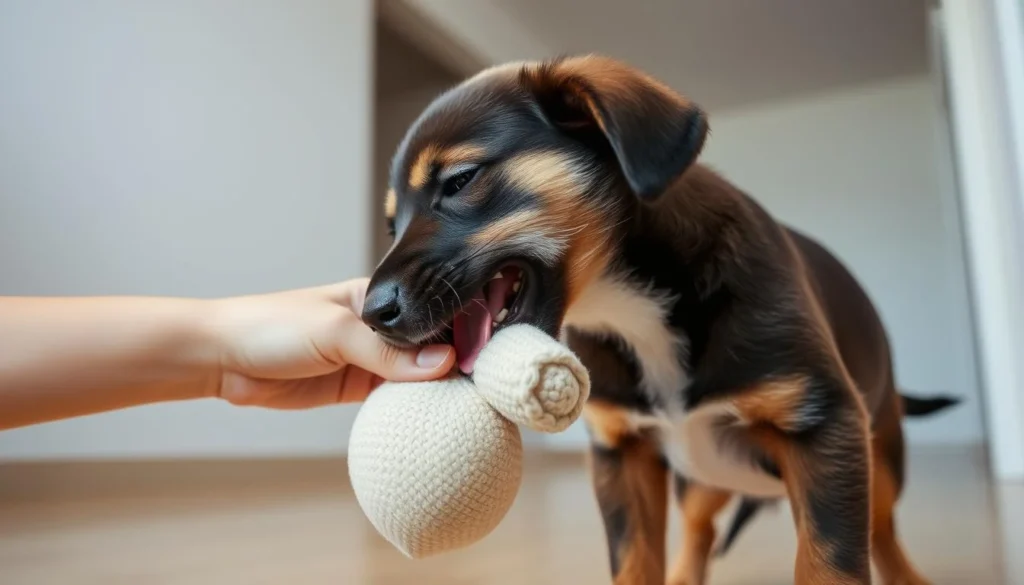
The yelping technique is a great way to teach bite inhibition. When your puppy bites too hard, yelp as if you're hurt. This tells your puppy their bite was too strong.
After yelping, stop play for a bit to show your puppy the message. Praise your puppy for playing softly. This teaches them what's okay and what's not. With this method, my puppy learned to play gently and interact better.
Correcting Puppy Biting: First Steps
Correcting puppy biting needs quick and effective steps to teach right boundaries. Setting these limits helps my puppy know what's okay. Two key methods help create a good learning space, guiding my puppy to better habits.
Immediate Responses to Biting
When my puppy bites, I quickly respond to stop it. Saying “ouch” in a high voice tells them it's too hard. Stopping play right away shows biting ends the fun. My consistent reactions help teach my puppy not to bite.
Redirecting Biting Behavior
Teaching my puppy to chew on the right things is key. I give them a tough chew toy or safe item when they bite. This teaches them what's okay to chew. Setting these rules and knowing when to change helps create a caring space, encouraging good behavior and stopping bad ones.
| Response Method | Description | Effectiveness |
|---|---|---|
| Yelping | Imitates a littermate's reaction to rough play. | High |
| Stop Play | Immediate cessation of activities when biting occurs. | High |
| Redirecting to Toys | Provide acceptable items for chewing. | Medium |
| Consistent Responses | Regularly applying the same techniques. | Very High |
Puppy Biting Prevention Strategies
Early intervention is crucial in preventing puppy biting. Redirecting your puppy to the right toys not only protects your stuff. It also helps them learn good habits. Simple strategies can make your home a calmer place, promoting gentler play.
Providing Appropriate Chew Toys
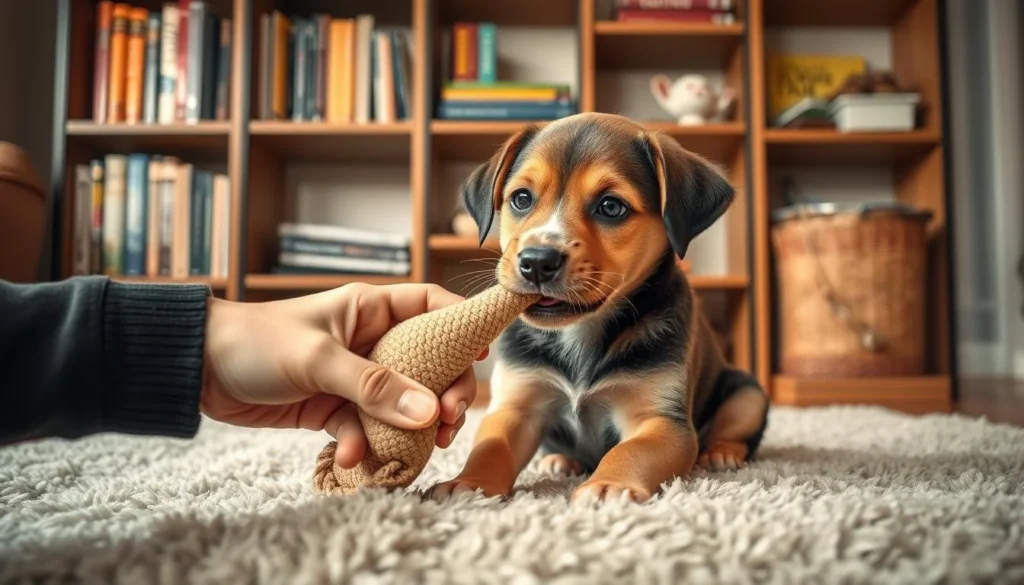
One of the best biting puppy tips is to give them lots of chew toys. These toys let them chew without biting your hands or furniture. Rubber, rope, and soft plush toys meet different tastes.
Each toy has a unique feel, making chewing fun instead of harmful.
Encouraging Gentle Play
Teaching your puppy to play gently is key. I play games that encourage them to be soft. I avoid rough games that might make them bite.
Instead, I play fetch or tug-of-war with soft toys. These games are fun, teach good behavior, and keep them active and smart.
Managing Bad Puppy Behavior Biting
Understanding how to manage puppy biting is key. Using time-outs and recognizing overstimulation signs are important. Time-outs give a break, helping both me and my puppy to calm down. It's important to make the crate a safe space, not a place of fear.
When my puppy gets too excited or upset, it's crucial to spot the signs early. Look for signs like too much barking, hyperactivity, or biting that seems too hard. Catching these signs helps me act fast.
Using Time-Outs Effectively
To use time-outs right, I take my puppy away calmly. A quiet spot away from distractions is best. This lets my puppy relax. Time-outs should be short, about 2 to 5 minutes, so my puppy can play again when calm.
Recognizing Signs of Overstimulation
Knowing my puppy's behavior helps me stop biting before it starts. Look out for these signs:
- Rapidly wagging tail with erratic movements
- Excessive panting or whining
- Difficulty focusing or listening
- Increased biting or mouthing
If I see these signs, I guide my puppy to a calmer place. Giving them quiet time and fun activities helps stop biting. This makes our time together more peaceful.
How to Handle Puppy Biting During Playtime
Managing puppy biting during play is key to having a well-behaved pet. I've found that setting clear rules helps prevent bad behavior and makes playtime better. By being consistent and teaching my puppy the rules, we can have fun without unwanted biting.
Setting Boundaries with Play
Stopping play when my puppy bites is an effective method. It shows them that biting means no more fun. Being consistent is important. Every time they bite, we stop playing. This teaches them that biting ends the game.
Encouraging them to play with toys instead is also helpful. I give them chew toys to redirect their biting. This way, they learn to bite the right things and not me. I reward them for gentle play, creating a positive environment with praise and treats.
By managing our interactions and setting clear rules, I help my puppy understand what's expected. This training strengthens our bond and makes playtime more enjoyable for both of us.
| Action | Outcome |
|---|---|
| Stop play after biting occurs | Puppy learns biting halts fun |
| Introduce chew toys | Redirects biting to appropriate items |
| Reward gentle play | Encourages desired behavior |
| Be consistent in responses | Faster understanding and learning |
The Importance of Socialization in Puppy Development
Socialization is key in shaping a puppy's behavior and character. By introducing puppies to different situations and places early, I can help them learn important skills. These skills lower the chance of biting problems. Well-socialized puppies are more flexible and less aggressive, making it easier to prevent biting.
Organized puppy classes are a great way to socialize. They offer a safe space for puppies to meet other dogs and people. These classes help my puppy learn good behaviors and gain valuable experiences for the future.
Opportunities for Puppy Interaction
It's important to give my puppy chances to interact with others. Joining puppy playgroups or classes is a fun way to introduce her to new things. These experiences are crucial for her learning, including:
- Learning to interact with other dogs and humans.
- Understanding boundaries during playtime.
- Practicing bite inhibition with peers.
Also, taking my puppy to pet-friendly parks or community events is great. It lets her meet new people and dogs. This helps her grow emotionally and behaviorally, leading to better habits as she gets older.
| Socialization Activities | Benefits |
|---|---|
| Puppy Classes | Structured learning and controlled interactions with other dogs. |
| Playdates | Friendly interactions with familiar dogs to build confidence. |
| Public Outings | Exposure to various sights and sounds to reduce anxiety. |
When to Seek Professional Help for Puppy Biting
Knowing when my puppy's biting is a problem is key to managing their behavior. It's important to tell the difference between playful bites and serious ones. If my puppy bites more often or harder, when to seek professional help is a big question. Getting help early can stop problems from getting worse.
Identifying Problematic Behavior
There are a few things to look for to see if my puppy's biting needs a pro:
- If biting during play gets too hard or hurts.
- My puppy bites a lot, even when there's no reason for it, or bites people.
- My puppy shows fear, anxiety, or anger when they bite.
- Training and simple fixes don't work to stop the biting.
If I see these signs, getting help from a trainer or behaviorist is a good idea. They can teach me how to fix the problem. They'll help me understand why my puppy is biting and how to stop it.
Puppy Biting Training Techniques
Understanding and training puppies is a journey. I've learned that positive reinforcement is key. It encourages good behavior and strengthens our bond. By focusing on what I want, my puppy feels safe and learns well.
Positive Reinforcement Methods
Positive reinforcement is a game changer in puppy training. When my puppy plays gently or doesn't bite, I reward them. This teaches them that calm actions lead to good things. Here are some effective techniques:
- Praising my puppy right after they play gently.
- Using treats for calm moments during play.
- Playing interactive games to teach proper biting.
Using these methods makes training fun. It also helps my puppy become a well-adjusted friend who knows how to interact.
Biting Puppy Tips for New Owners
Getting a puppy is exciting but also comes with challenges, like biting. A consistent routine helps a lot with biting. It sets clear expectations for what the puppy should do every day. Puppy classes also help a lot with social skills.
Establishing a Consistent Routine
A daily routine makes my puppy feel safe. It helps manage their biting by setting times for eating, playing, and learning. Here are some biting puppy tips for routines:
- Set specific times for play to avoid too much excitement.
- Have regular training to teach good behaviors.
- Make sure to include quiet times for rest, which helps calm biting.
Puppy Classes for Social Skills
Puppy classes are great for socializing, which helps with biting. My puppy learns how to play and talk with other puppies. These classes teach good behavior with expert help.
| Puppy Class Benefits | How They Help |
|---|---|
| Social Interaction | Teaches about boundaries from other puppies. |
| Expert Guidance | Offers training tips and techniques. |
| Routine Structure | Creates a consistent schedule in a controlled setting. |
Conclusion
Addressing bad puppy behavior, like biting, is key to a happy relationship with my pet. Knowing why puppies bite helps me fix the problem. Often, it's because they're teething or just playing.
Using the tips from this article, I can lower biting and raise a well-behaved dog. Training, routines, and socializing are crucial. They help us bond and make our home a joy.
With patience and love, I can help my puppy grow. A bit of effort ensures we live happily together.