I remember the first rainy morning with my Labrador mix. Standing at the back door, I felt both hope and worry. Teaching a dog to go outside was like learning a new language. We both missed cues, got frustrated, and then found a rhythm.
This patience and routine changed our days and deepened our bond. Whether you brought home a puppy or adopted an adult, potty training outside is about repetition, calm timing, and clear signals. I'll share dog potty training tips I use, like crate-led routines, consistent schedules, leash supervision, and immediate rewards.
Outdoor potty training also means managing emotions. Excitement, anxiety, and confusion can slow progress. So, I focus on short, predictable outings and positive reinforcement. This helps my dog feel safe and successful.
Key Takeaways
- Consistency and routine are the foundation of successful outdoor potty training.
- Use crate training, leash control, and immediate rewards to reinforce outdoor elimination.
- Short, calm outings reduce anxiety and help dogs learn faster.
- Both puppies and adult dogs can learn with repetition and clear cues.
- Emotional states affect training; patience and positive reinforcement work best.
Why outdoor potty training matters for your dog and household
I focus on outdoor potty training for dogs because it cuts indoor accidents and keeps the house cleaner. A clear routine helps a nervous puppy settle into daily life. Training a dog to go to the bathroom outside also teaches leash manners when you step into public spaces.
Prioritizing this work early sets up predictable behavior and less stress for everyone. When I teach a dog to potty outside, I reduce odor and the need for constant cleaning. For adopted dogs or pets from shelters, outdoor training often prevents long-term marking problems.
Benefits for dogs and owners
Clean floors and less laundry make life easier for me. A consistent plan gives dogs structure and lowers anxiety. Training a dog to go to the bathroom outside makes vet visits and walks smoother because the dog learns to work around distractions.
Good outdoor habits speed up socialization. Dogs that learn where to go are calmer around people and other dogs. I find that clear signals, like pacing or circling, become reliable cues once I respond consistently.
When to prioritize outdoor training
I put outdoor potty training first when I bring a new puppy home. Young dogs need predictable schedules, and crate use supports that effort. If I switch from pads or indoor toilets, moving to outdoor routines prevents confusion and reduces accidents.
I also prioritize outdoors when indoor soiling repeats or marking starts. In those cases, the best methods for teaching dog to potty outside involve focused trips, timely rewards, and consistent locations. If I ask myself how to potty train my dog to go outside, I begin with short, frequent outings and clear praise.
| Situation | Why act now | Quick steps I use |
|---|---|---|
| Bringing home a puppy | Forming routine early prevents bad habits | Set schedule, crate small, frequent outdoor breaks |
| Transitioning from pads | Avoids mixed signals and indoor accidents | Move pad closer to door, then outside; reward success |
| Recurring indoor marking | Teaches approved places and reduces scent marking | Limit access, supervise, take out on leash to same spot |
| Adopted or anxious dogs | Routine reduces stress and builds trust | Use calm outings, predictable timing, gentle praise |
Preparing for success with the right mindset and supplies
I set clear goals before starting any dog toilet training outside plan. Being patient, following a routine, and setting realistic timeframes helps keep everyone calm. Puppies, rescued dogs, and shy dogs learn at different speeds, so I adjust my pace and avoid rushing.
I choose one outdoor potty spot and a cue phrase like “go potty.” I create a schedule that fits the dog's age and bladder size. If I'm away during the day, I arrange for someone to help or walk the dog mid-day to keep things consistent.
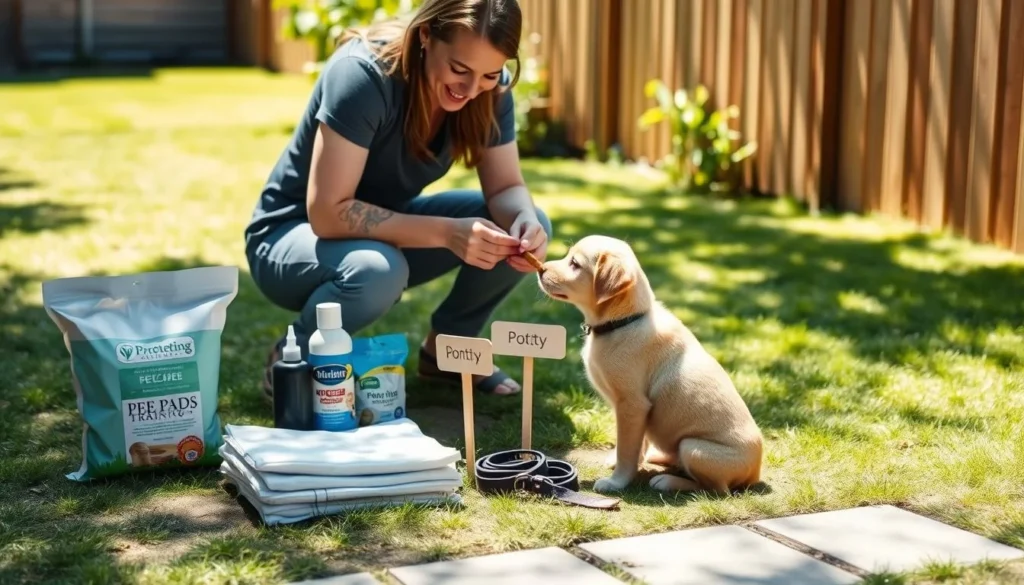
What I gather before I start training
I decide on timing and limits first. Short, frequent trips outside work best for potty training puppies and older dogs with small bladders. I set weekly goals and track progress in a notebook or app.
I stay calm when accidents happen. Stress and excitement slow down learning. My focus on rewards and repetition makes training smoother.
Essential supplies for outdoor potty training
I gather gear that supports learning and keeps things clean. A properly sized crate with a partition helps with bladder control as the dog grows.
- Crate and partition: creates a safe den and prevents corner elimination.
- Durable leash and harness: keeps the dog close during early outdoor potty training steps for dogs.
- Long lead: useful for timid dogs who need gradual distance while staying under control.
- High-value pocket treats and a clicker or cue word: reward within one to two seconds of completion.
- Enzymatic cleaner such as Nature’s Miracle or Eco-88: removes scent so dogs do not re-mark indoors.
- Waste bags and a poop scoop: for sanitary outdoor cleanups during repeated trips.
- Toys and food-dispensing items like Kong: make crate time pleasant and provide enrichment.
I use a simple checklist before each training session. It includes the leash, treats, cleanup supplies, and a plan for the trip. This routine supports consistent training and improves results.
| Supply | Purpose | How I use it |
|---|---|---|
| Crate with partition | Den, bladder control, prevents corner elimination | Adjust partition as puppy grows; short supervised crate times daily |
| Durable leash & harness | Control range and limit distractions | Keep dog leashed during early outings to reinforce a single potty spot |
| Long lead | Safe distance for shy dogs | Allow exploration while maintaining voice control and recall |
| High-value treats & clicker | Immediate positive reinforcement | Reward within 1–2 seconds after elimination; pair clicker or cue word |
| Enzymatic cleaner | Remove odor to prevent re-marking | Clean accidents promptly and thoroughly |
| Waste bags & scoop | Hygienic removal of feces | Carry during outings and dispose responsibly |
| Toys & Kong-type items | Crate enrichment and calm-down aid | Use during supervised confinement to reduce anxiety |
With my mindset and supplies ready, I'm set to start training. These preparations help me potty train a puppy to go outside and make training a consistent, stress-free routine.
How to potty train dog outside
I make outdoor potty training for dogs simple and consistent. My goal is to teach the cue, timing, and rewards. This helps a dog understand where and when to go. I follow a clear routine, use a leash, and reward immediately.
Overview of the step-by-step approach
I start by supervising closely and taking the dog out at predictable times. This includes after waking, after meals, after play, and before bed. It helps me anticipate needs and reduce accidents.
I keep the dog on a leash and walk to the same quiet spot each time. The leash limits range and cuts distractions. This lets the dog focus on eliminating.
I wait calmly and keep the mood low-key. I avoid play before the dog potties. If the dog does not go in a reasonable time, I return indoors and try again soon.
I use a consistent verbal cue while the dog eliminates, such as “go potty.” Using the same short phrase every time builds a strong association.
Immediate reward timing and examples
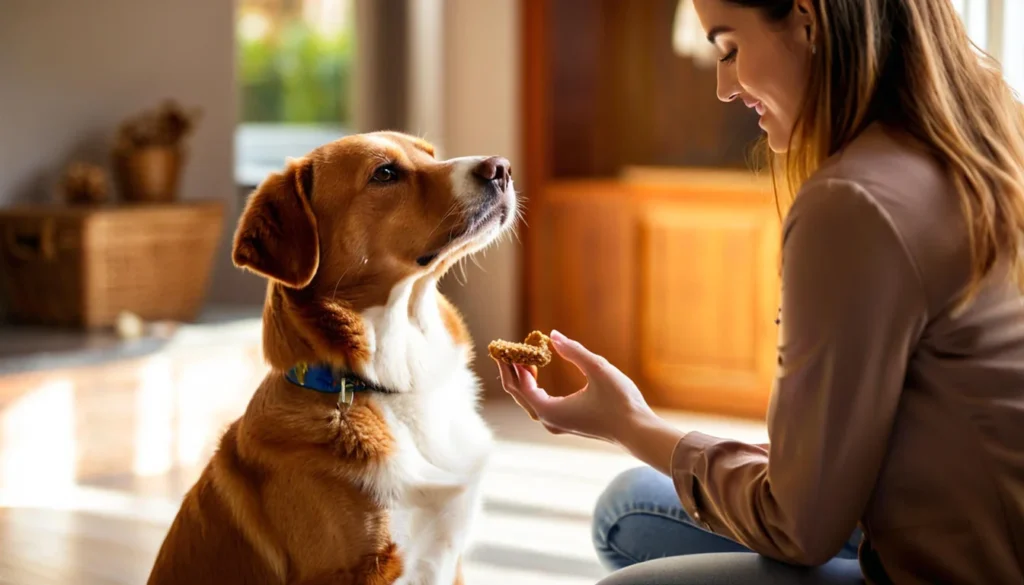
I reward within one to two seconds of the dog finishing. The timing is critical for learning. If the reward is delayed, the link between action and treat weakens.
My go-to treats are small, soft, highly palatable pieces like cooked chicken, tiny cheese bits, or small training treats. I keep portions tiny to avoid overfeeding while using powerful motivation.
I pair food with enthusiastic praise and sometimes allow a short run or play session as part of the reward. Over time I fade food treats to occasional reinforcement and keep the cue and praise strong.
- Supervise often to spot signals and take the dog out predictably.
- Use a leash and a consistent spot to reduce distractions.
- Keep timing tight by rewarding within 1–2 seconds after finish.
- Confine when needed until the dog is reliable outdoors.
Creating and sticking to an outdoor potty schedule
I create a clear routine for potty training puppies outdoors. This routine helps my dog and me. It includes tracking timing and setting realistic goals for training.
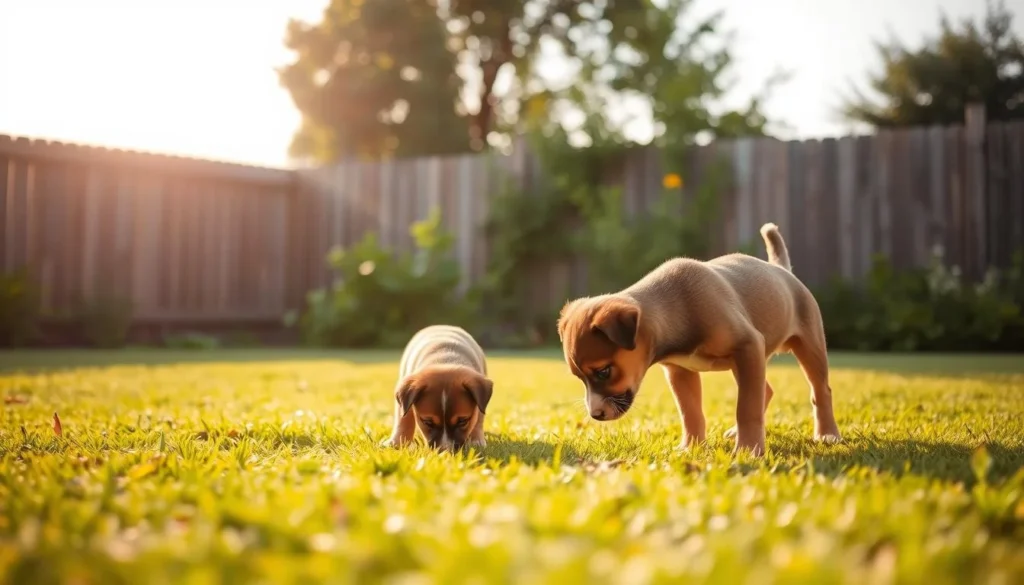
Typical schedules for puppies and adult dogs
A 5-month-old puppy needs to go often. I take them out in the morning, after meals, and before bed. I also take them out mid-day and in the evening.
For a 2-year-old dog, I space out the trips more. They go in the morning, mid-day if possible, and in the evening. I also take them out before bed.
Adjusting schedule to age, size, and individual needs
Younger pups can hold their bladder for hours based on their age. I don't make them wait too long. Smaller breeds need to go more often.
I adjust the schedule based on size and breed. I also increase frequency after play or meals. If I'm away, I hire a dog walker or ask a neighbor to help.
When training, I use short, consistent sessions. I reward them quickly and keep things predictable. This approach shows progress over time, not just days.
Using a crate and confinement as a training tool
I use a crate as a training aid because it taps into a dog's natural den instincts. A properly sized crate helps teach bladder control. It offers a small, clean space that dogs naturally avoid soiling. This makes crate training for potty an effective step toward reliable outdoor routines.
Why crates help outdoor potty training
When I set up a crate, I focus on size and layout. A crate that is too large lets a dog use one corner to eliminate and another to sleep. Using a divider or choosing the right size prevents that. Good sizing supports dog crate potty training by encouraging the animal to hold until it goes outside.
Crates also make travel and vet visits simpler. If a dog is already used to confinement, I can keep routines consistent. That consistency speeds how to potty train a puppy to go outside without accidents because the dog learns predictable timing for breaks.
How I introduce and maintain positive crate habits
I make the crate inviting. I add a comfy bed, safe chew toys, and the occasional food-dispensing item like a Kong. Short, happy sessions work best. I start with a few minutes and slowly build up time so the dog associates the crate with calm and comfort.
I never use the crate as punishment. If a dog has a history of soiling, I go back to basics: control feeding times, increase outdoor trips, and watch bladder signals closely. For longer absences, I arrange a midday walker or a trusted neighbor to break up confinement. This balance is key when using crate to potty train dog outside and to avoid overlong holds that lead to accidents.
| Crate Practice | Why it matters | How I implement it |
|---|---|---|
| Right size or divider | Prevents corner elimination and promotes holding | Measure dog standing and lying; add divider to match growth |
| Positive items inside | Creates a pleasant den, reduces stress | Use bed, safe toy, and occasional Kong treats |
| Short, frequent sessions | Builds tolerance without fear | Start 5–10 minutes, increase gradually to match routine |
| Crate after outside trips | Encourages holding if dog didn't go and reinforces schedule | Place dog in crate for a short period, then try outside again |
| Rescue or soiled-history approach | Rebuilds trust and bladder control | Control diet, increase potty frequency, retrain crate habits |
Leash etiquette and selecting a consistent outdoor potty spot
Leash etiquette is key when potty training a dog. A short leash helps the dog stay focused. It also prevents them from wandering off during training.
I choose the right tools for each dog. A high-energy Labrador gets a six-foot nylon leash. A timid rescue gets a long lead for safety and supervision.
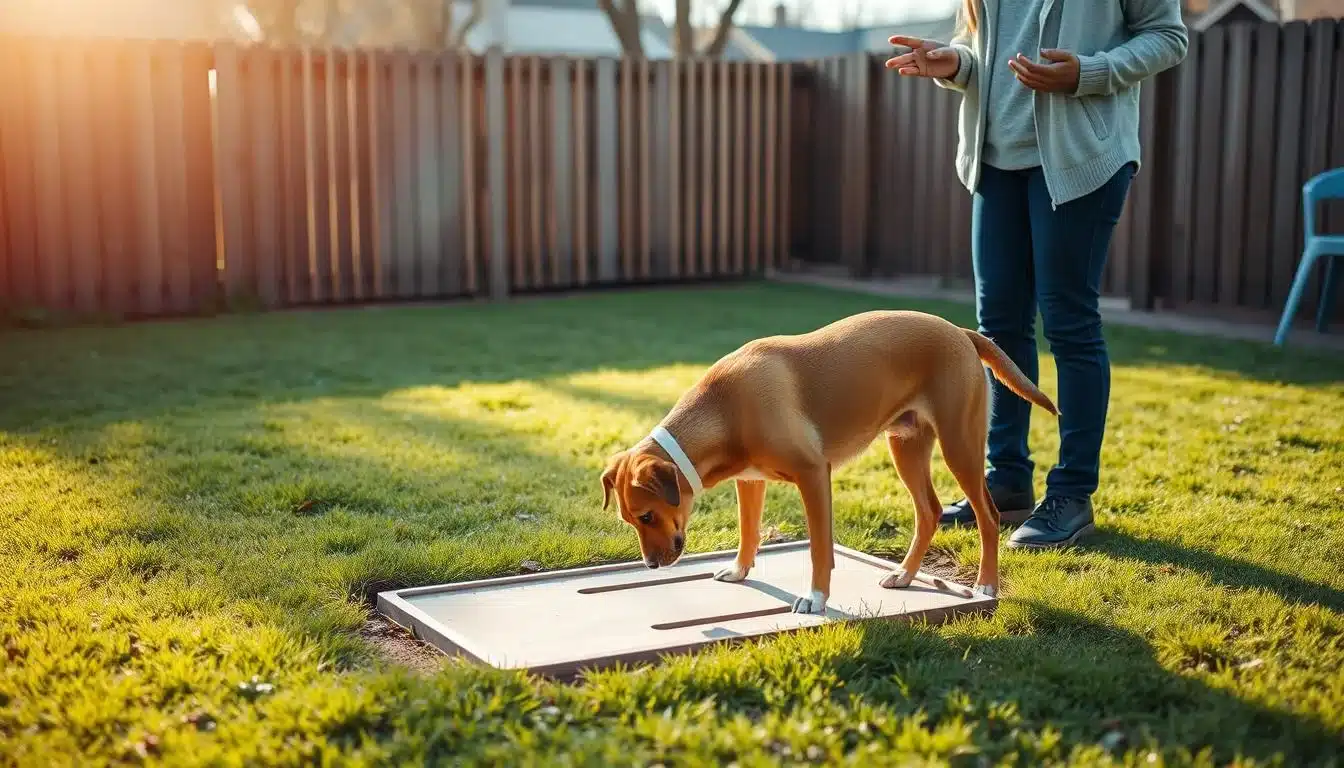
I pick a quiet spot in the yard for potty training. Using the same spot every time helps the dog learn. I follow the same routine each time.
I use a clear cue like “go potty” when they start. Saying it every time strengthens the connection. After they finish, I reward them with treats or praise.
Training a dog outside means avoiding distractions. Toys or play before potty time can be a problem. I prefer quieter hours at public parks for training.
For successful potty training outside, stick to a routine. Consistent leash use and a set spot make training easier. It leads to fewer accidents and calmer walks.
Positive reinforcement and reward-based techniques
I use clear, immediate rewards to teach my dog to go outside. Treats, praise, or play should follow the act within one to two seconds. I keep training sessions short and consistent. This helps the dog connect the reward with the behavior.
Types of rewards that work best
I use a special treat for potty work, like small pieces of cooked chicken or soft training treats. This treat makes my dog want to go potty more.
I also praise my dog and let them play or roam after they go potty. If they like to run away after, I let them. This makes the habit stronger without overfeeding.
How I shape behavior and use cues
I start by rewarding small steps, like sniffing or circling. Each step gets a reward, teaching the dog the sequence. This gradual approach is key to teaching my dog to go outside.
When they go potty, I say a consistent cue like “go potty.” I repeat this cue during success. Over time, I reduce treats and keep praise and occasional treats to keep the behavior.
| Training Element | What I Use | Timing | Expected Result |
|---|---|---|---|
| Treats | Cooked chicken, soft training bites | Within 1–2 seconds of finish | Fast association with outdoor elimination |
| Verbal Cue | Short phrase like “go potty” | During elimination | Turns action into a cue-driven response |
| Praise & Play | Enthusiastic voice, quick play loop | Immediately after treat or instead of treat | Reinforces behavior without extra calories |
| Privacy Management | 25-foot lead or stepping back | Before giving space to attempt | Reduces stress, encourages focus on elimination |
| Reward Fading | Reduce treat frequency, keep praise | Once reliable over several weeks | Long-term stable habit with fewer treats |
For puppies, I combine these methods with a routine for potty training. Reward-based training and the best methods for teaching a dog to go outside are similar. I make rewards immediate and predictable for repeat success.
My positive reinforcement training focuses on timing, value, and consistency. Small, frequent rewards build a reliable habit that lasts.
Managing accidents and cleaning to prevent repeats
I stay calm when my dog has an accident indoors. I never yell or make them sniff the mess. This can make them scared and confused.
If I catch them in the act, I say "hey!" sharply to stop them. Then, I take them outside to finish. When they go outside, I praise them and give a treat.
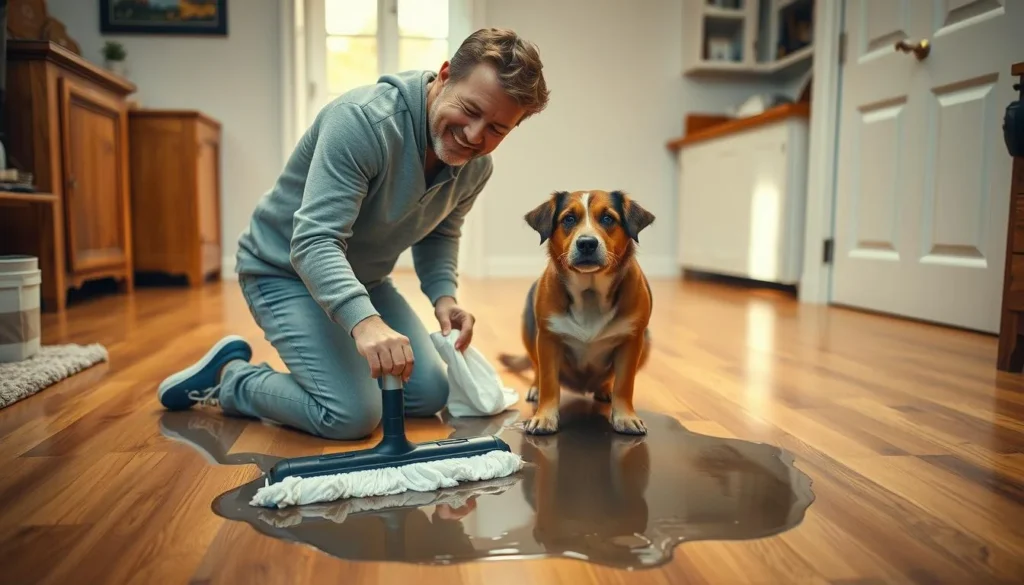
If I find an old accident, I clean up quietly. I avoid making a big deal about it. This helps prevent more accidents.
To stop accidents, I watch them closely, take them out often, and reward them for good behavior.
How I respond to indoor accidents
When I catch my dog in the act, I interrupt calmly. I take them outside and praise them when they finish. If I can lift them, I carry them outside and praise them.
If I find dried accidents, I don't punish them. Instead, I watch them more closely and adjust their schedule.
I use belly bands or dog diapers for short-term solutions. But, I also train them to go outside. This way, they learn to eliminate in the right place.
Cleaning methods to remove scent markers
To keep my dog from going back to the same spot, I use enzymatic cleaners. Products like Nature’s Miracle or Eco-88 work well. They break down the smell so my dog won't go back.
On carpets and rugs, I blot up spills first. Then, I follow the cleaner's instructions for the best results. For furniture and corners, I treat the whole area. If any smell is left, I repeat the cleaning.
| Situation | Immediate Action | Cleaning Tool | Follow-up |
|---|---|---|---|
| Caught mid-accident | Interrupt calmly, take outside, reward | No cleaner needed if fresh; clean after | Increase outdoor trips, note schedule |
| Found fresh indoor mess | Calmly remove waste, clean quietly | Enzymatic cleaner (Nature’s Miracle/Eco-88) | Blot first on rugs, monitor for repeats |
| Dried or old stain | Clean without scolding | Enzymatic cleaner, repeat as needed | Deep clean upholstery, consider professional |
| Male marking | Redirect outside, use belly band short-term | Enzymatic cleaner for marked areas | Pair with behavior training and supervision |
Transitioning from pads or indoor toilets to the outdoors
I start this move slowly so my dog stays confident and clear about where to go. A steady plan helps with the transition from puppy pads to outside without upsetting routines. I keep crate time and a regular schedule to support dog toilet training outside while I shift locations.
Gradual pad-to-door method I use
I begin by placing the pad in a corner near the door. Each day I move it a foot or two closer so my dog learns to associate the exit with pottying. When the pad reaches the doorway, I set it just outside in the chosen spot and take my dog there at set intervals.
I sometimes use grass-scented attractant pads like Wee-Wee® Ultimate Attractant Pads with grass scent to speed recognition. The grass smell helps link outdoor surfaces with elimination, which makes moving from indoor potty to outdoors smoother.
When to stop using indoor aids
I only remove indoor pads after my dog consistently potties outside at scheduled times. I watch for reliable outdoor success over several days before I take the last pad away. Until then, I keep praise and treats for outdoor elimination so dog toilet training outside remains rewarding.
For tiny breeds or during severe weather, I keep an indoor backup while I continue training for outdoor consistency. Retaining a plan and steady reinforcement prevents regression when I transition from puppy pads to outside.
Troubleshooting common outdoor potty training challenges
I keep training notes to spot patterns quickly. Outdoor potty training challenges often include distractions, fear, bladder size, and routine changes. I address each issue with a calm plan and short, frequent outings to build success.
I watch for play that interrupts elimination. If my dog gets distracted, I shorten trips and keep them calm. I avoid play before the dog goes. If play happens first, I bring the dog back inside and try again within 10–15 minutes.
I choose quiet spots for shy or anxious dogs and use a long lead. Letting a dog keep a little distance from people helps them relax. If I have a calm companion dog, I let that dog model behavior without play before pottying.
Handling distractions, fear, and stress
When distractions derail a session, I move to a less busy area and reduce noise. I reinforce the potty cue with a soft tone and quick reward after the dog eliminates. For fear-based issues, I use gradual exposure and keep sessions short and predictable.
Small breeds need more frequent trips because of their faster metabolisms. I plan closer monitoring and shorter intervals between outings for tiny dogs. If routine changes cause regression, I go back to a strict schedule and crate use until the dog stabilizes.
When to consult a vet or trainer
If accidents are sudden, frequent, or come with signs of illness, I call my veterinarian right away. Medical problems can mimic behavioral issues and need prompt testing.
For chronic marking, persistent fear-based elimination, or dogs from traumatic backgrounds, I seek a certified trainer or a veterinary behaviorist. I ask about tailored behavior plans and consider a combined veterinary workup plus professional behavior help when soiling continues despite consistent management.
Conclusion
I created this guide to give you practical dog potty training tips. Being consistent, patient, and positive is key. Routine and repetition help teach your dog to go outside.
Use a crate that's the right size, a regular schedule, and leash training. Pick one spot outside for your dog to go. This sets clear expectations for them.
Immediate rewards and thorough cleaning are important. Use high-value treats quickly and clean up with enzymatic cleaners. Adjust your training based on your dog's age, breed, and personality.
For puppies, you'll need to take them out more often. Small breeds or dogs with past traumas might need a gentler approach. Keep a potty log and have all the necessary supplies ready.
If you hit a roadblock, consider getting help from a walker, vet, or certified trainer. With a solid plan and dedication, most owners can potty train their dogs outside. This leads to fewer accidents and more freedom for your pet.