Welcome to the world of puppy parenthood. It's a time filled with joy, excitement, and a few nibbles. When I first brought my puppy home, I was thrilled. But soon, I faced a challenge: my puppy bites.
This is a common issue for new pet owners. It can be overwhelming. Knowing why my puppy bites is key for both of us. In this article, we'll look at practical tips to stop puppy biting. This will make our lives happier.
Key Takeaways
- Puppy biting is a normal part of development.
- Understanding the reasons behind the bites is essential.
- Implementing effective training strategies can curb biting behavior.
- Positive reinforcement is key for good behavior.
- Time-outs can help manage excessive biting.
Understanding Why Puppies Bite
Puppies often bite as a natural part of their behavior. This comes from instinct and curiosity. Understanding puppy biting is key for pet owners. They use their mouths to explore, which can lead to nipping hands and clothes.
This behavior worries many, so I've looked into why do puppies bite. I also explored how to change this behavior.
Biting is not just about exploring. It's also a way for puppies to show excitement and intentions. Knowing this helps us understand their actions better. It's important to remember that biting is common in puppies. But, with the right guidance, we can teach them better ways to behave.
The Natural Instinct to Chew and Explore
Puppies have a strong urge to chew and explore. This behavior is not just a phase; it's vital for their growth. By chewing, they learn about their world, which is key for their development.
Teething can make puppies want to chew even more. They might chew on anything, which can be a problem. Knowing this helps me find better ways to handle their chewing.
To keep my puppy and myself safe, I need to give them the right things to chew on. Offering a variety of chew toys helps them satisfy their urge to chew. This way, they can explore safely and healthily.
My Puppy Biting: Why It Happens
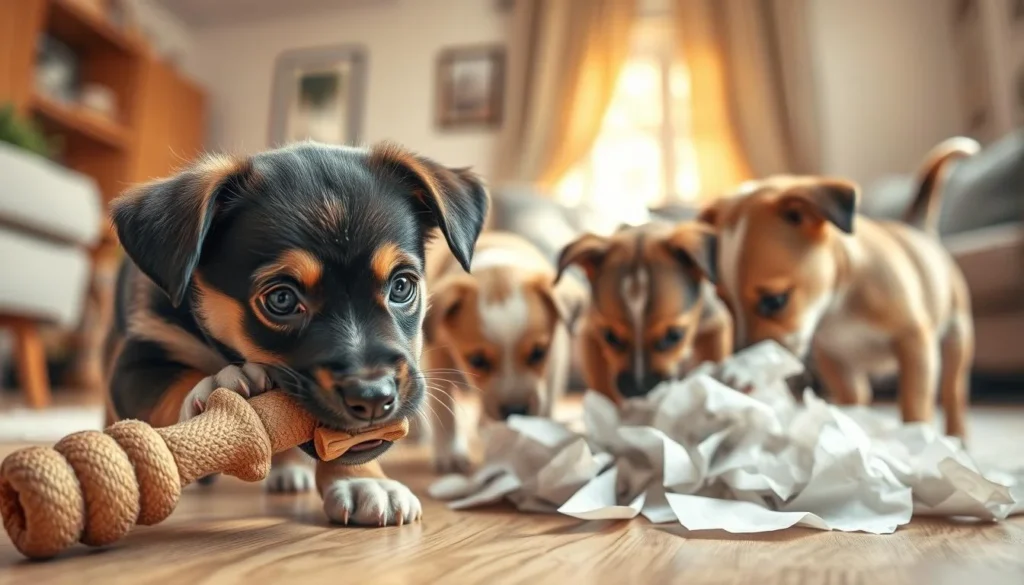
Understanding why my puppy bites is key to fixing the problem. Teething and overexcitement during play are main reasons. Knowing these causes helps me manage and stop the biting.
Teething and Its Impact on Biting
Teething is a big reason for my puppy's biting. As they grow, their baby teeth fall out and adult teeth come in. This makes their gums sore, leading them to chew on things to feel better.
This chewing can include toys, furniture, or even my hands. It's a natural way for them to cope with the pain.
Overexcitement and Playful Behavior
My puppy also bites when they get too excited during play. They might get a bit too rough, which can be a problem. It's important to set limits and teach them to play nicely.
By recognizing when they get too excited, I can stop the biting before it gets out of hand.
Teach Your Puppy Bite Inhibition
Teaching bite inhibition is key in puppy training. It stops future biting problems. Puppies must learn to control their bite strength. This is crucial for their growth.
Gentle play during playtime strengthens our bond. It also teaches my puppy that hard bites end fun. This is important for their learning.
The Importance of Gentle Play
Gentle play teaches puppies about their limits. When playing, I show my puppy to be gentle with their teeth. Soft play helps them understand when to hold back.
This way, my puppy learns to control their bites. They feel safe to explore while knowing when to stop.
How to Use Yelping to Communicate
Yelping stops my puppy from biting too hard. When they bite hard, I make a high-pitched sound. This sound is like a sibling's yelp.
This teaches my puppy that hard bites are not okay. Consistent yelping helps them learn to bite softly. This makes playtime fun for both of us.
Recognizing Out of Control Puppy Biting
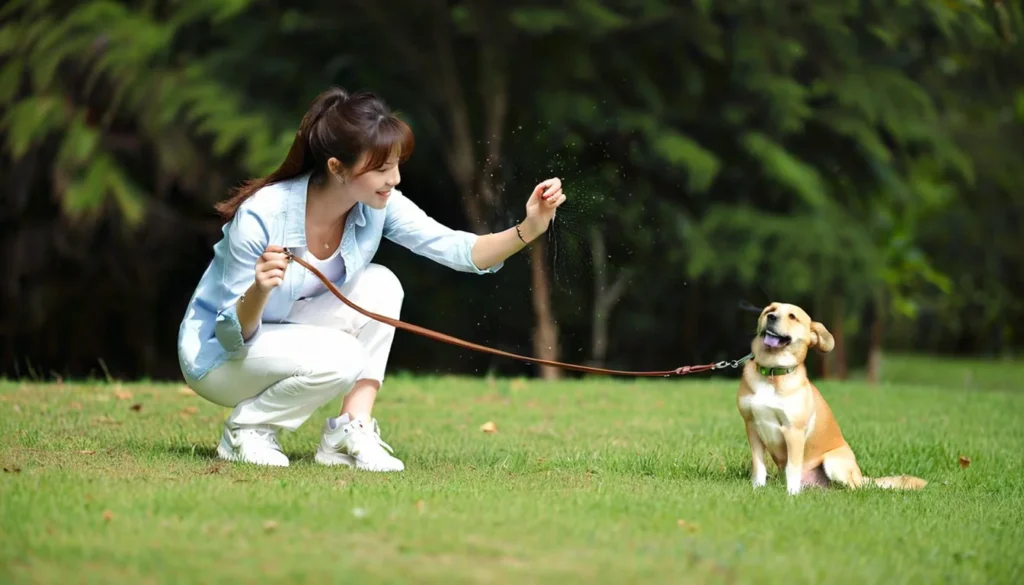
As a puppy owner, it's key to know the difference between playful and out-of-control biting. Spotting excessive biting helps me act fast. Playtime might include some nipping, but if it gets worse, it's a red flag. Signs of too much biting include:
- Increased intensity: If my puppy bites harder than usual, it may signal an issue.
- Loss of control: When my puppy seems unable to stop despite my attempts to redirect the behavior, it raises concern.
- Growling or barking: Aggressive vocalizations during playtime may indicate that my puppy is feeling threatened or overstimulated.
- Frequent targeting: If my puppy consistently targets specific people or objects during play, I need to address this behavior.
Spotting these signs helps me control puppy play better. It's crucial to step in early to prevent aggressive behavior. This ensures safe interactions with others.
Redirecting Biting Behavior
When my puppy starts nipping or biting, it's key to redirect their behavior. I've found ways to make them focus on chew toys instead of my hands. Using chew toy alternatives helps create a good environment for chewing. This satisfies their urge to chew and cuts down on unwanted biting.
Substituting Chew Toys
Chew toys are crucial in stopping my puppy from biting. I choose the right chew toys like rubber or rawhide bones. This keeps them away from things they shouldn't chew, like my furniture or hands. Giving these toys during playtime teaches them to chew on the right things.
For durable chew toys, I trust Nylabone and KONG. They can handle a teething puppy's strong bites.
Engaging in Non-contact Play
Playing non-contact games like fetch or tug-of-war has really helped my puppy. These games keep them focused on toys, not biting. Fetch is fun and helps them use up energy. It also teaches them to play with their toys.
Tug-of-war, with a rope or tug toy, is great for bonding without biting. Changing up play keeps my puppy happy and biting-free.
Positive Reinforcement for Good Behavior
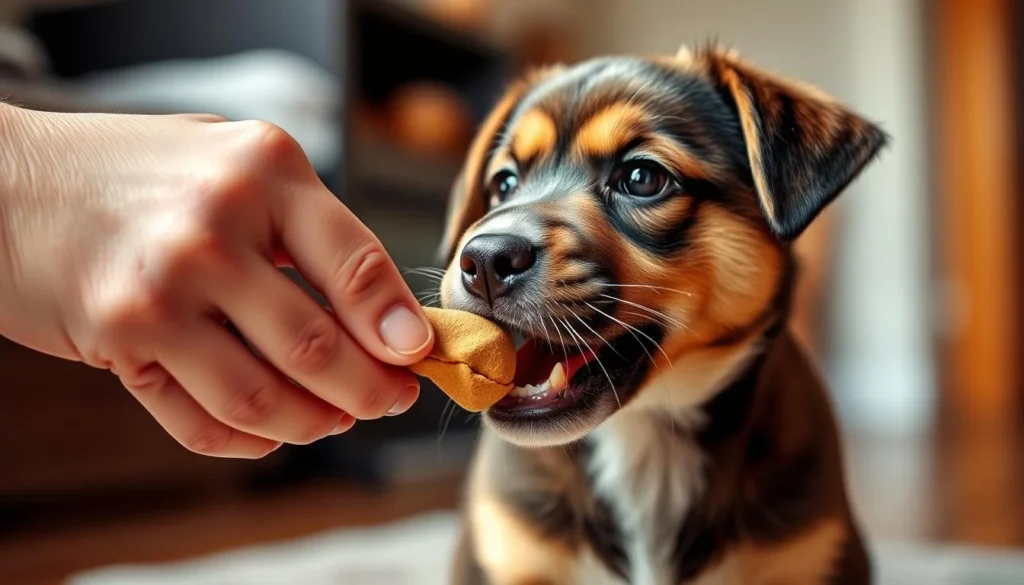
Positive reinforcement training can really help my puppy's behavior. When I reward good actions, he learns to do them more. For example, if he plays gently with a toy, I give him treats or praise. This makes him want to play nicely more often.
It's important to use the right methods to reinforce good behavior. Being consistent is key. Whether it's treats, toys, or words of praise, being consistent helps him understand what's expected. Seeing him learn to play gently is really rewarding.
Positive reinforcement does more than just teach calm behavior. It also builds trust and strengthens our bond. As he learns that good actions get rewards, he becomes more eager to please. This sets a strong foundation for his growth and behavior.
Time-Outs for Excessive Biting
Time-outs are key in managing my puppy's biting. They teach my puppy that biting means no fun or attention. It takes patience and consistency to work well.
Implementing Effective Time-Out Strategies
To use time-outs right, I need to know when to step in. If my puppy bites too hard or gets too excited, it's time for a pause. This break helps my puppy calm down and learn to control their biting.
Here's how I handle time-outs for my dog:
- I calmly stop the biting.
- I remove my puppy from the play area.
- I put them in a quiet spot for a few minutes.
- Then, I let them play again and watch how they behave.
Being consistent is key. Every time my puppy bites wrong, I use the time-out. This teaches them that biting means no play. Regular practice helps my puppy learn to behave better.
| Time-Out Duration | Puppy's Age | Comments |
|---|---|---|
| 1-2 minutes | Under 4 months | Short interruptions help young puppies learn quickly. |
| 2-3 minutes | 4-6 months | More extended time-outs may be effective as attention spans develop. |
| 3-5 minutes | 6 months and older | Older puppies may need longer to understand the consequences of biting. |
Time-outs help my puppy learn good behavior and enjoy playtime. With effort, we can have more fun together.
When to Seek Professional Help for Puppy Aggression
It's crucial to know when my puppy's aggression is getting worse. If my puppy's biting doesn't stop, even with training, it's time to get help. A professional dog trainer or behaviorist can offer puppy aggression solutions that fit my puppy's needs.
Here are some signs that mean I need to get professional help:
- My puppy bites more often during play or daily activities.
- My puppy shows fear or anxiety around people, dogs, or new places.
- My puppy suddenly becomes aggressive, which could hurt someone.
It can be hard to know when to ask for help. But, getting professional advice is important for my puppy's well-being and our bond. Understanding these signs helps my puppy grow into a well-adjusted friend.
| Signs of Aggression | Recommended Actions |
|---|---|
| Frequent biting | Consult a professional trainer |
| Fearful behavior | Consider behavior modification strategies |
| Unpredictable aggression | Implement safety precautions and seek immediate help |
Preventing Future Biting Issues
Stopping biting starts with clear rules at home. Setting consistent rules helps my puppy know what's okay and what's not. This way, we can all live together better and bite less.
Establishing Clear Rules at Home
Household rules can really help my puppy's behavior. Here are some tips I find helpful:
- Define areas where my puppy can play freely and where they can't.
- Choose consistent commands for different actions.
- Make sure everyone in the family follows the same rules to avoid confusion.
Socializing with Other Dogs
Introducing my puppy to other dogs is a great tip. It lets them:
- Learn how to play right from others.
- Get better at reading social cues and body language.
- Feel more confident in different situations.
Regular socialization helps my puppy grow into a well-adjusted dog. This greatly lowers the risk of biting problems later on.
Common Mistakes to Avoid with Puppies That Bite
Puppy training can be tough, especially when dealing with biting. Many mistakes puppy owners make make things worse. Getting angry tells your puppy their biting is okay. But staying calm helps set clear boundaries.
Another mistake is giving attention when your puppy bites. This can make them bite more. Instead, ignore them until they calm down. Rewarding good behavior is key to success.
| Mistake | Why It's Problematic | Better Approach |
|---|---|---|
| Reacting with anger | Can excite or confuse the puppy | Stay calm to set a clear example |
| Giving attention during biting | Reinforces unwanted behavior | Redirect focus to toys or calming activities |
| Inconsistent responses | Creates confusion about what's acceptable | Establish clear rules and stick to them |
| Allowing rough play | Encourages biting during excitement | Engage in gentle play only |
Knowing these tips has made puppy training easier for me. Being consistent and patient is crucial for a well-behaved pet.
Understanding Puppy Temper Tantrums
Puppies can sometimes have what I call puppy tantrums. These behaviors might look like biting but are really about emotions. It's important to understand why they happen to help them.
These tantrums are often due to frustration or too much stimulation, not true aggression. Knowing the signs of a tantrum helps us manage their feelings better. A whiny bark, playful nips, or sudden energy changes are signs they're upset.
When this happens, it's time for gentle but firm guidance. Redirecting their energy into good behaviors is key. Try playing a game or giving them a favorite toy. This not only distracts them but also encourages positive actions.
| Behavior | Emotion | Suggested Action |
|---|---|---|
| Barking and whining | Frustration | Redirect to a toy |
| Nipping or biting | Overexcitement | Take a short break |
| Hyperactivity | Overstimulation | Calm environment |
Teaching our puppies to manage their emotions is a continuous effort. With patience and understanding, these moments can be great learning experiences. Always keep the focus on teaching, communication, and building a strong bond.
Keeping Calm: Best Practices During Biting Episodes
When my puppy bites, staying calm is key. Puppies pick up on our emotions. If I'm calm, they feel safer.
Using calming techniques helps a lot. When my puppy nips, I redirect their energy. This means giving them a chew toy or finding another activity. The more I handle biting calmly, the better my puppy behaves.
Here are some helpful techniques:
- Breathing deeply to relax before responding
- Using soft, reassuring tones to talk to my puppy
- Playing games that let them be active without biting
Staying calm helps my puppy learn right from wrong. With time, they get better at not biting.
Using these methods often makes our home calmer. It helps with puppy biting and strengthens our bond. Regular practice makes our home a peaceful place for both of us.
Conclusion
Having a puppy that bites can be tough, but it's common. Knowing why they bite and using consistent training helps a lot. I can manage their biting by understanding things like teething and excitement.
Positive reinforcement and teaching them to bite toys are key. Setting clear rules also helps. These steps not only cut down on biting but also strengthen our bond. It's great to see my puppy become well-behaved and playful, without worrying about bites.
Patience and sticking to a plan are essential. As I keep using what I've learned, our bond will grow. This way, we can enjoy many happy moments together.