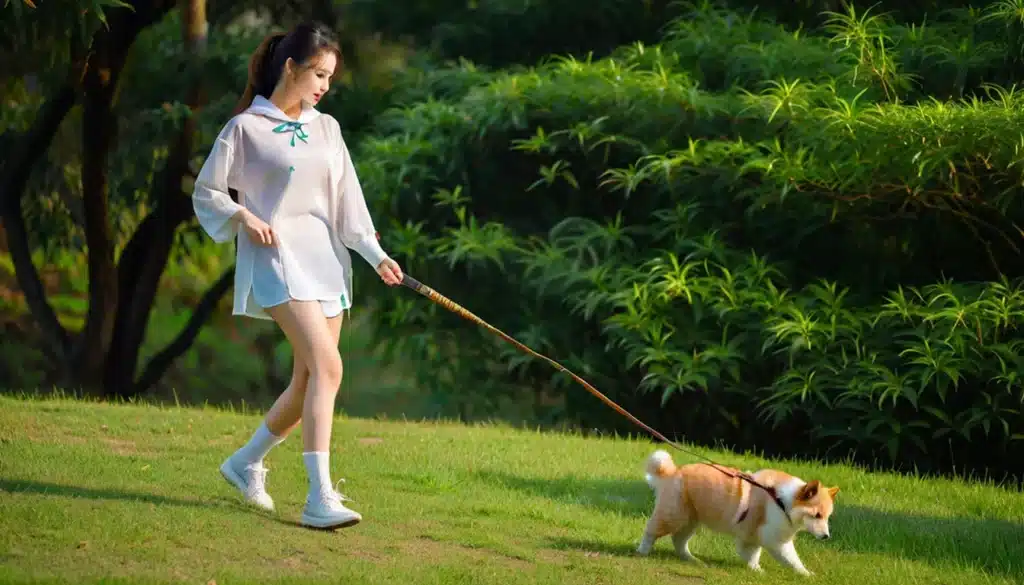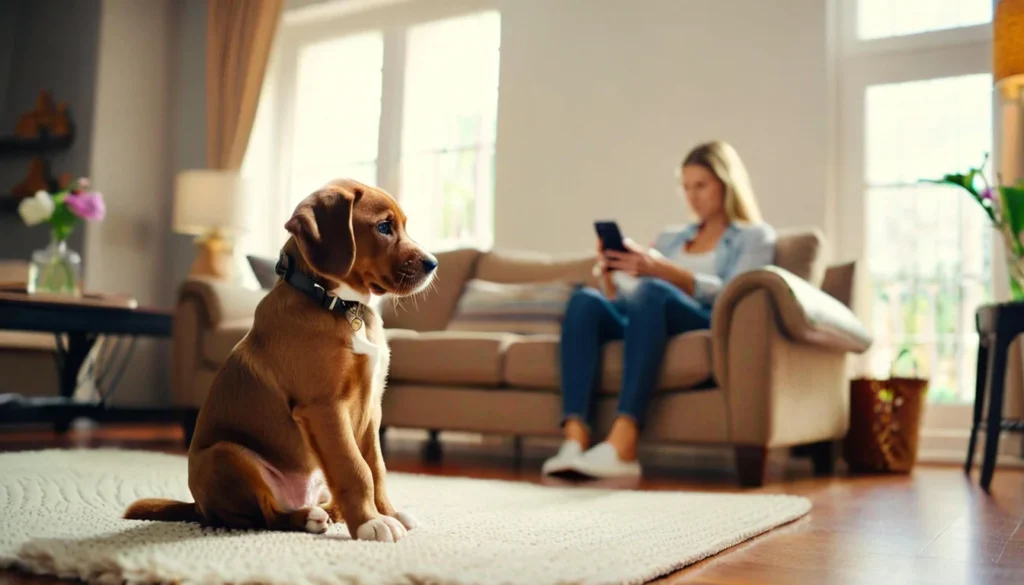
I remember the first time my Labrador pulled me down the sidewalk. I felt embarrassed and exhausted. Learning to teach a dog to heel changed our walks.
This guide is for U.S. dog owners who want stress-free walks. Heel means walking beside you, with a clear release. I'll share the techniques I use and why it's tough for puppies.
Heeling is about clear communication and small steps. I'll cover warm-ups, choosing the right equipment, and rewarding your dog. These methods will help you train your dog with fewer headaches.
Key Takeaways
- Heeling means walking at your side with a clear release — it’s a specific obedience skill.
- Short, consistent sessions work better than long, inconsistent practice.
- Clear cues and timely rewards build a dog’s confidence and compliance.
- Choosing the right equipment and treats makes leash training techniques more effective.
- Progress gradually: start in low-distraction areas and add challenges over time.
Why heel training matters for walking dog on leash properly
I teach heel work to make walks calm and predictable. It makes walking on a leash easy and fun, not stressful. Every step becomes clearer for both of us.
Benefits for owner and dog
Heeling makes walks simpler. I don't have to tug or repeat commands as much. My dog knows where to be and what I expect.
This reduces frustration and makes walks more enjoyable.
Safety, control, and better leash manners training for dogs
Keeping my dog at heel keeps them safe from traffic and crowded sidewalks. Good leash manners prevent sudden lunges toward bikes or other dogs. I use leash guidance as communication, not punishment.
How heeling improves other obedience skills
Heel work builds attention and eye contact. These skills help with Sit, Place, and recalls. Once the dog understands the position, we can practice turns and pace changes.
Teaching the dog to heel strengthens overall obedience. It prepares them for sports or field work.
Preparing for training dog to heel on leash
Before we dive into leash training, let's get ready for success. The right gear, tasty treats, short sessions, and calm spots make it easy. Making smart choices now saves time and keeps your dog feeling confident.
Choosing the right collar or harness and leash length
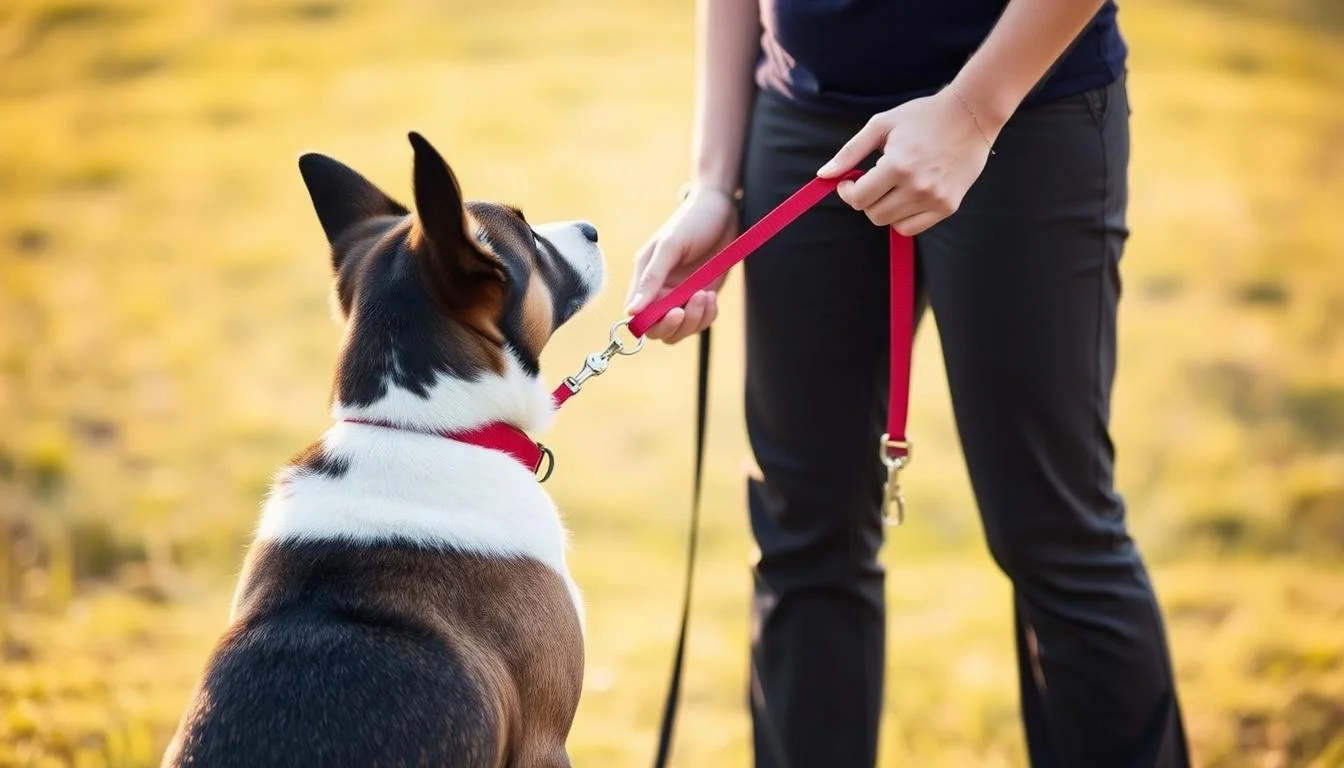
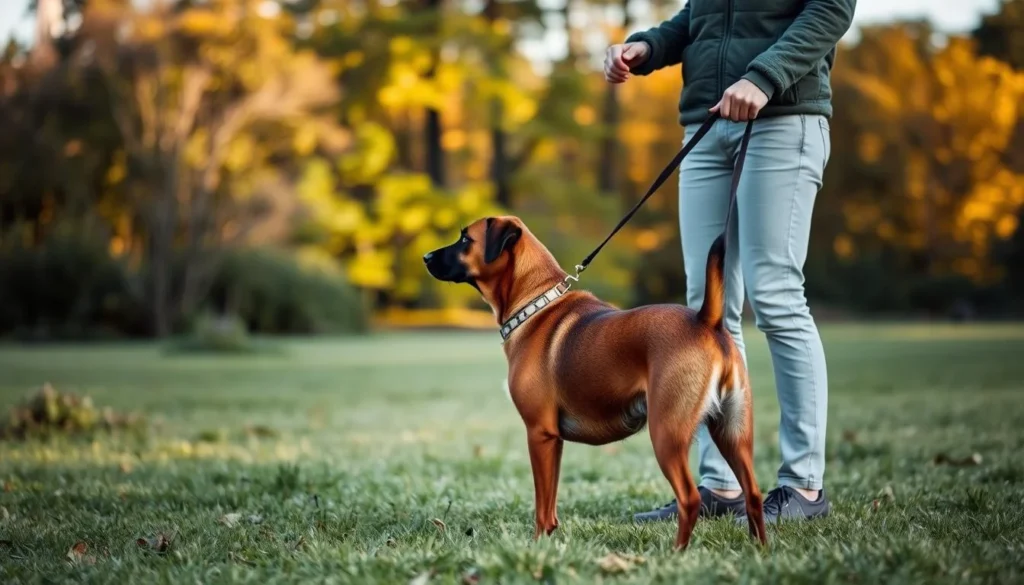
Choose a collar or harness that lets you guide without forcing. Avoid pinch collars and harsh devices to keep trust and movement free. Use a leash that's not too long, so your dog can move but still follow your lead.
Hold the leash in your chosen hand and keep the slack in the other. This method lets you correct your dog quickly and helps everyone in the family train consistently.
Selecting high-value treats and limiting session length
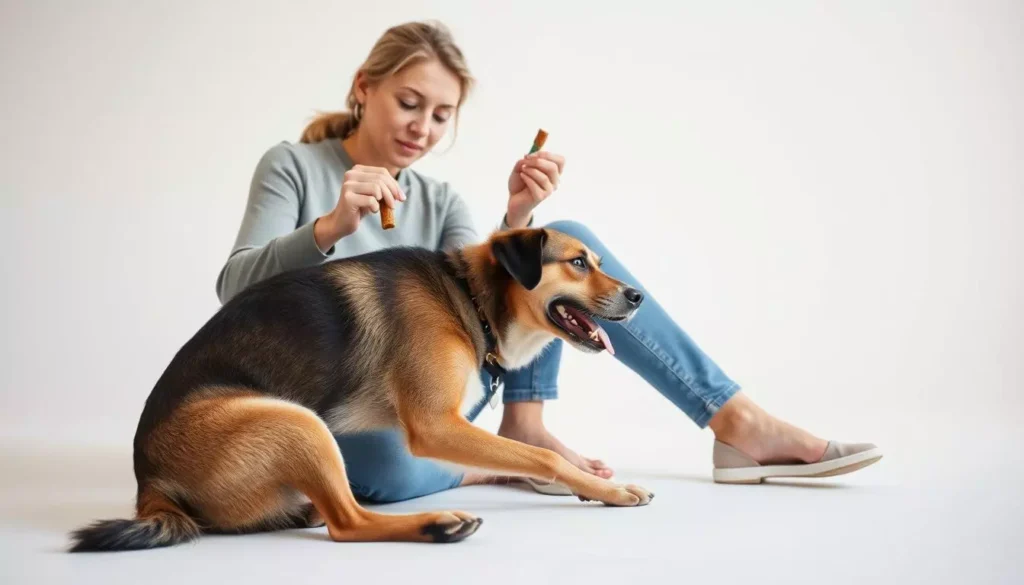
Break treats into tiny pieces to avoid overfeeding. Hold the treat hand near your chest to guide your dog without letting them pull ahead.
Keep training sessions short. For puppies, aim for 2–3 minute warm-ups and several short repeats. For older dogs, spread sessions over the day, up to 15 minutes total. Short lessons are more effective and prevent burnout.
Managing the environment: low-distraction starting locations
Begin in quiet places like living rooms, hallways, garages, or backyards. I start with low-distraction areas and gradually add more distractions over weeks. This helps your dog learn without getting stressed.
If several people walk your dog, start with the same side. Consistent handlers, gear, and places speed up learning. Remember, the leash is a tool for communication. With the right equipment and a calm place, training is safer and faster.
Warm-up routines and building attention for heel work training
I start each session with a warm-up to get my dog ready for leash work. These drills help my dog switch from play mode to training mode. I use gentle movements, eye contact, and simple cues to prepare them for heel work.
Using a "Let’s Go" routine to get focus
I walk a few steps and apply light side pressure on the leash if my dog pulls. Saying “Let’s Go,” patting my leg, or using a soft whistle helps me regain their attention. When they follow, I release the pressure and reward them. This process is repeated for two to three minutes to build momentum.
Short practice sessions and marking eye contact
I keep the warm-ups short and frequent. Three to five minute sessions are best to keep my dog engaged. When my dog looks at me, I mark it with “Good” or a click and sometimes reward them right away. This quick reward strengthens their focus during leash training.
Feeding a training session during a meal time to boost motivation
I often use mealtime as a training session. Using food as rewards makes them more valuable and increases my dog's responsiveness. This method helps when teaching the heel command because my dog sees it as a real job with rewards.
I incorporate these warm-ups into my leash training techniques for every heel work session. Consistent routines help my dog develop a working mindset. This reduces distractions and helps with pulling on the leash during walks.
Step-by-step beginner heel training techniques
I'll show you easy steps to teach your dog to walk beside you. These methods use clear signals, short training sessions, and steady improvement. This way, you can teach your dog to walk nicely on a leash without getting stressed.
Getting your dog to the chosen side and using a lure
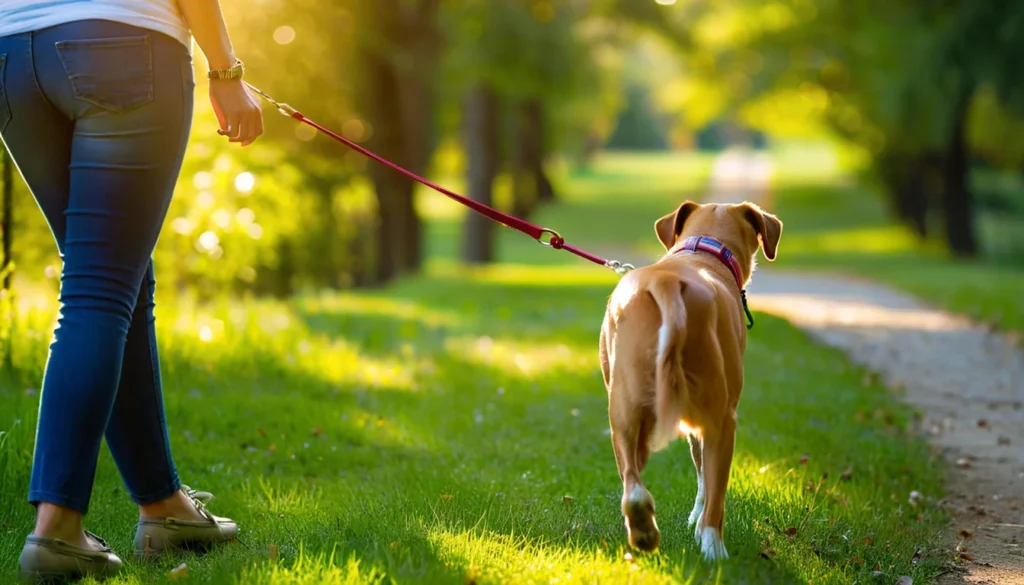
First, I call my dog's name and point to the side I want them to be on. When they get there, I click or say "Yes" and give them a treat right away. I keep doing this until they go to that side without hesitation.
I hold a treat near my dog's nose, keeping my hand at chest level or by my side. This helps keep them from crossing in front or jumping up. As they get used to it, I slowly move the treat towards my hip. This teaches them to stay in position, not just follow the treat.
Taking small steps, marking "Good" and rewarding immediately
I take a small step forward and say "Heel," then walk a few slow steps. I stop, say "Good," and give them a treat right away. This short training helps them connect the command with the action.
Keep training sessions short and regular. If the dog gets out of position, I stop and start again. This keeps them focused and avoids confusion.
Adding duration gradually without rushing
I slowly increase the steps or time they stay in position. I only add more when they stay focused and steady. This way, I teach them to walk nicely on a leash without getting frustrated.
Being patient is key. If they lose focus, I go back to shorter sessions and build up again. Over time, I use fewer treats and focus on using just the command. This makes the behavior reliable, even when we're out and about.
Heel with turnarounds and place integration
I start heel work training with a simple Place. Placing my dog on a mat gives a clear target. It helps focus their energy before we move. I cue Heel from beside the Place so the dog walks into position with intent.
Begin each rep with the dog on Place. Walk away a few steps, cue Heel, then take two to five controlled steps and return to Place. This loop keeps sessions short and predictable. It reduces chances of zooming and supports leash manners training for dogs.
I teach turnarounds by holding a treat near my hip so the dog tracks the arc around my body. Start turning toward the dog so they learn to move with your knee. When tracking is consistent, practice turns away from the dog to build independence.
Mark and reward each successful turnaround and each return to Place. If focus drifts, use Sit on the Place to reset attention. These small resets help train dog to stop pulling on leash by reinforcing calm pauses instead of forward lunges.
Use gradual progression: slow turns, then slightly faster arcs, then added steps. I alternate walking to and from Place with short turn drills to challenge focus without overloading the dog. This approach supports training dog to heel on leash and improves overall leash manners training for dogs.
| Exercise | Steps | Goal |
|---|---|---|
| Place Start | Dog on Place, cue Heel, walk 2–5 steps, return | Controlled starts and predictable pauses |
| Turn toward | Treat at hip, turn into dog slowly, mark and reward | Teach tracking with knee as reference |
| Turn away | Once reliable, turn away from dog, keep treat near hip | Build independent following and alignment |
| Place returns | Finish reps by returning to Place and using Sit if needed | Reinforce calm and reduce zooming |
| Progression | Increase steps, add pace and zig-zags, fade lures | Solidify training dog to heel on leash and leash manners training for dogs |
Incorporating sit and settle into leash training techniques
I teach stops as part of every walk to make leash work purposeful. Short, calm pauses give my dog clear expectations and help me manage excitement. I use simple sequences that link movement and stillness so the dog learns structure instead of guessing when to rush.
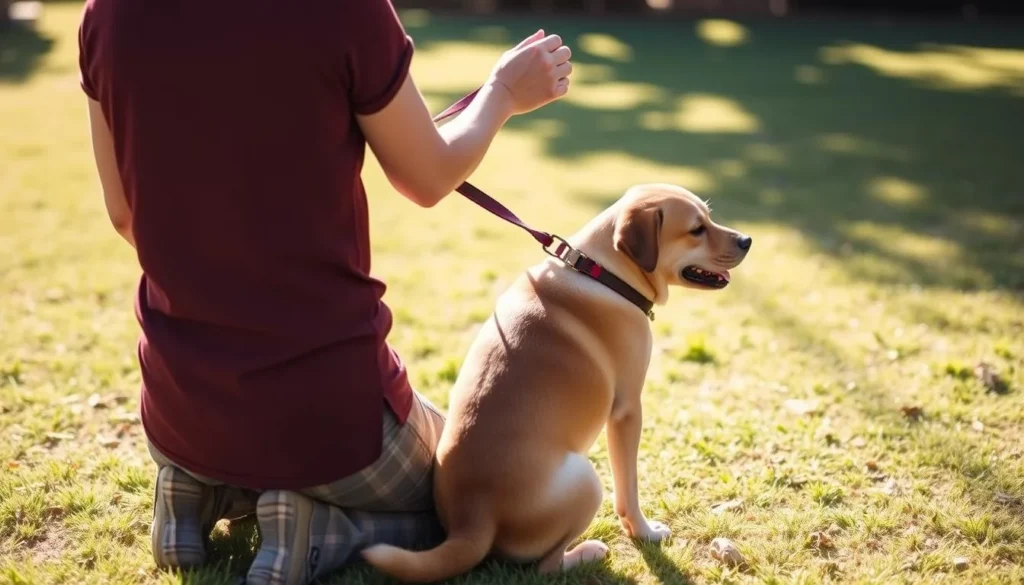
When I slow and stop, I lure my dog into a sit at my side. A quick mark of "Good" and a reward turns the stop into a positive cue. This luring into a sit at stops helps regain attention and reinforces calm behavior before we move on.
I create short practice loops that combine Heel, Sit, and Place. One routine I use is Heel → Sit → Place → Heel to practice transitions. These combos make clear that movement follows calm, which strengthens dog training heel exercises and helps me train dog to stop pulling on leash by rewarding correct position rather than allowing forward surges.
Settles are useful when the dog is excited. I ask for a sit, wait for relaxed posture, then reward quietness on the leash. Reinforcing settles at stops reduces chances of bolting and teaches patience. Frequent short stops with a required calm pause prevent explosive starts and keep walks controlled.
I start these sequences in low-distraction spots like a quiet yard or an empty park path. Once the dog is reliable, I raise the challenge gradually. Practicing how to teach dog heel command alongside sits and settles builds a resilient behavior set that transfers to busier places.
Correcting pulling and how to train dog to stop pulling on leash
I teach owners a simple, calm method to stop pulling. My aim is to make training easy and fair. I want dogs to understand pulling stops the walk and returning to heel starts it again.
I use a stop-and-rerequest method. When a dog pulls, I stop and wait for attention. Then, I ask for heel and reward them immediately for returning to position. This teaches them pulling stops the walk and correct positioning earns rewards.
I never yank on the leash. Instead, I use gentle side pressure or a brief snap to guide them back. These cues help with training without causing fear or resistance.
Short, consistent corrections are key. The leash is usually loose. If I need to correct, I do it quickly and predictably. I mark the right response with a click or "yes" to reinforce the desired behavior.
I use the "Let’s Go" routine to handle distractions. A prompt to re-request Heel works better than punishment. I reward them for returning to position, teaching them staying close is beneficial.
If pulling persists, I check my timing and consistency. I adjust reward timing and repeat the stop-and-rerequest routine. If tools worsen pulling, I change my approach to calm guidance.
Progressing heel training: distractions, pace, and distance
I start progress heel training with small, clear steps. This keeps my dog confident and focused. I begin each session where the dog succeeds, then add a little challenge.
I increase the pace and add turns and zig-zags. This forces sharper attention. Short bursts at a faster walk test how quickly my dog responds.
When my dog holds position through a few directions, I reward them and repeat. This builds their confidence.
I introduce new places slowly. We start in the living room, then move to the backyard, driveway, sidewalk, and neighborhood over weeks. I never increase distractions until the current setting is solid.
I add mild obstacles and different surfaces to generalize the skill. Walking through grass, gravel, or a small group of cones helps apply heel work training in real life. Each new surface gets its own short practice session.
I fade food lures gradually while teaching the cue. I treat intermittently, then ask for the cue-only heel. Using a brief “Watch Me” or “Look” builds eye contact before rewarding.
This helps teach the dog heel command without constant treats.
I shift reinforcement from every correct step to a variable schedule. Sometimes I give a treat, sometimes praise. This pattern keeps the behavior strong when rewards are less frequent.
Patience is key. I keep sessions brief, consistent, and focused. I track small wins and only progress when the dog shows steady success in training dog to heel on leash.
Common mistakes and troubleshooting dog training pulling on leash
Many owners face challenges when training their dogs on a leash. Small mistakes can add up and slow progress. I'll cover common problems and solutions to help you move forward quickly.
Inconsistent walking side
Changing sides often confuses dogs. They learn by patterns, not rules. Start with one side and stick to it until your dog learns to heel.
This approach reduces zig-zagging and speeds up learning. It helps your dog walk nicely on a leash.
Overlong sessions and boredom
Long, repetitive training can bore dogs and test their limits. Short, frequent sessions are best. Aim for 2–15 minutes, depending on your dog's age and energy level.
End sessions while your dog is still engaged. This keeps training positive and effective.
Equipment and method reinforcing pulling
Some tools can make pulling worse or hide problems. Avoid pinch collars or overly restrictive harnesses. Holding the leash too tightly can reward pulling.
Review your gear and leash handling. This is key to solving pulling issues.
Reinforcement timing and marking
Delayed or inconsistent marking weakens training. Mark the exact moment of correct behavior with a quick “Yes” or click. Reward immediately.
This clear timing trains your dog faster. It helps them learn to walk nicely on a leash.
Over-reliance on lures
Using treats too much makes the heel cue weak. Move the treat, fade it, and ask for cue-only heeling. Use rewards only sometimes.
This helps your dog learn to walk nicely without treats.
Troubleshooting pulling
Start with stop-and-re-request: freeze when your dog pulls, wait for attention, then continue. Use gentle side pressure instead of jerking back.
Brief leash corrections can clarify if timed right. If pulling doesn't stop, try stationary work. This helps your dog learn to come to your side before walking.
| Problem | Common Cause | Quick Fix |
|---|---|---|
| Switching walking side | Multiple handlers, no standard side | Choose one side and practice until consistent |
| Long, boring sessions | Repetition without variety | Shorten to 2–15 minutes; end on success |
| Gear masking issues | Force-position collars, tight leash handling | Use gentle harness, check leash posture |
| Delayed marking | Inconsistent timing of click/yes | Mark the exact correct moment, reward fast |
| Dependence on lures | Treat follows dog, no cue control | Move lure, fade to cue-only heeling |
| Persistent pulling | Reinforced forward movement | Stop-and-re-request; simplify to stationary drills |
If progress stalls, check three things: equipment, session structure, and handler consistency. Go back to basics, use short focused sessions, and mark precisely. These steps often solve common leash training mistakes and help you train your dog with fewer setbacks.
Conclusion
Training a dog to heel on a leash works best with a solid plan and regular practice. Begin with the right collar or harness, short warm-ups, and teach the side position. Keep lessons brief, reward immediately, and use Place and Sit to teach the dog to stay by your side.
Choose a side and stick to it, using gentle side pressure instead of harsh yanks. Gradually add more steps, turns, and distractions. These steps improve leash manners and help stop pulling. If progress slows, go back to stationary drills and rebuild walking steps.
Remember to be patient, especially with puppies. Short, focused sessions keep dogs interested and reinforce the heel command. If you need help, call a professional like the AKC GoodDog! Helpline. With consistent effort and calm leadership, walks will become more enjoyable for both you and your dog.