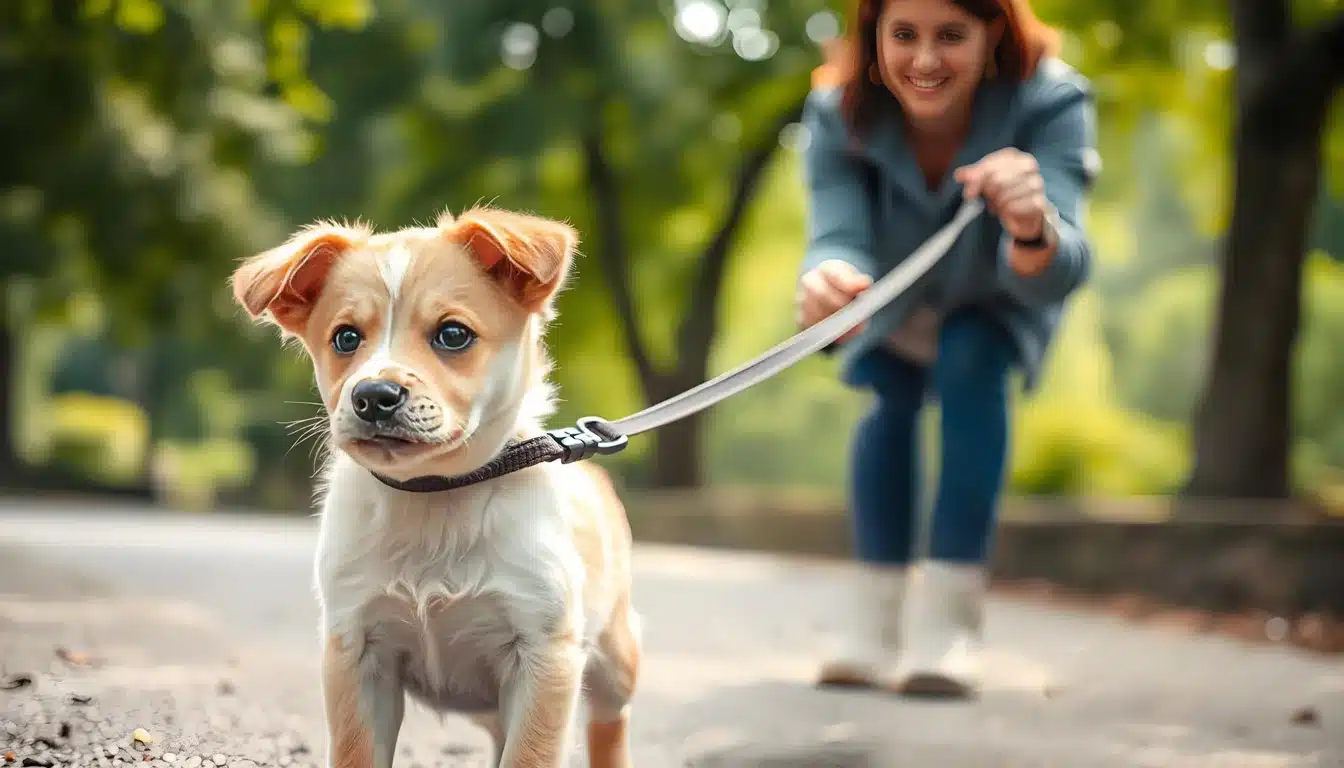
I remember the first time my Labrador mix pulled me down the sidewalk. Her bright eyes were fixed on a squirrel. My heart was racing with joy and alarm. That day taught me that walking on a leash is a skill, not something puppies are born with.
It makes every walk calmer, safer, and more enjoyable for both of us.
Over the years, I've learned a few key things. Setting realistic goals, keeping training sessions short, and making it predictable and rewarding works best. I introduce the collar, harness, and leash slowly.
I use a clear marker like “Yes!” to signal treats. I start with quiet indoor steps and gradually move to busier areas.
Teaching a puppy to walk on a leash is all about comfort and consistency. I make sure the harness fits snugly and use a 4–6 foot leash. I avoid rewarding them for pulling.
With patience, a sound cue that predicts food, and frequent short practices, we make progress. Those frantic first walks turn into steady progress and trust.
Key Takeaways
- Walking politely on leash is a learned foundation that improves every walk.
- Start slowly: introduce gear at home, use a marker, and keep sessions brief.
- Use a snug harness and a 4–6 foot leash for safe, effective puppy leash training.
- Reward focus frequently at first, then fade treats to reinforce lasting behavior.
- Progress from indoor practice to quiet outdoor spots before busier routes.
Why leash training matters for puppies and owners
I start leash training early to keep us both safe and make walks fun. It helps me control my puppy in parks, near roads, and around other dogs. I use distance and clear cues to prevent lunges and risky encounters.
Safety and control in public spaces
In busy areas, I use a short leash close to my side. This reduces the risk of my puppy running off or meeting other dogs unsafely. I teach simple cues to keep my puppy focused and calm.
Building a lifelong habit early
Starting leash training early makes it a normal part of my puppy's life. I keep training sessions short and positive. This way, my puppy learns to walk nicely without struggle.
Reducing stress and unwanted behaviors on walks
Good leash manners prevent my puppy from pulling or barking. I balance physical and mental activities to keep them calm. This way, walks become enjoyable for both of us.
Choosing the right equipment for puppy leash training
I start by letting my puppy wear a collar or harness and leash inside for short, happy sessions. I pair gear with treats and play so my dog sees the equipment as part of fun time. This makes later walks calmer and sets the stage for effective puppy training leash techniques.
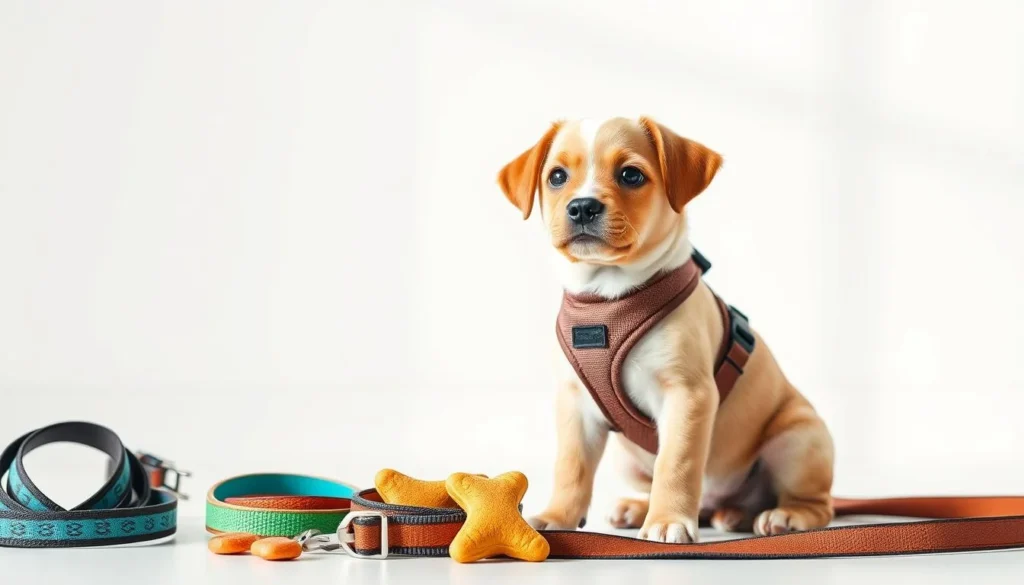
Collar vs. harness: pros and cons for young puppies
I prefer a soft, well-fitted harness for most young puppies. It spreads pressure across the chest and shoulders. A back-clipping harness is easy to put on and feels secure.
Collars work for ID and short outings, but choke or slip styles can hurt a growing neck. For small breeds or fragile pups, a step-in harness often fits best and reduces escape risk.
Recommended leash length and material (4-6 feet)
I use a 4- to 6-foot leash for training. Four feet gives tight control near roads and crowded spots. Six feet lets the puppy sniff and explore without losing guidance.
Nylon or woven webbing holds up to chewing and weather. I avoid retractable leashes during lessons because they teach pulling. A sturdy clip, stitched handle, and a simple length are the safest choices for leash walking tips for puppies.
When to consider head halters or front-clip harnesses
If pulling keeps being a problem, I try a Gentle Leader or a front-clip harness. These tools let me steer the head and redirect momentum without hard corrections. I introduce them slowly, with treats and short indoors sessions, so the puppy tolerates the feel.
When time is tight or energy is high, these humane walking tools speed progress and support consistent puppy leash training.
Introducing the collar, harness, and leash at home
I make gear time fun by turning it into play. I let my puppy sniff the collar and harness first. Then, I place treats nearby while speaking in a calm, cheerful voice.
Keeping sessions short is key. Ten minutes of play with gear on, followed by a break, keeps my puppy eager. This method links the gear to rewards and attention, making leash training easier.
I measure the harness to fit snug but not tight. I attach a 4–6 ft leash and let the puppy drag it indoors under my watch. I cut the loop end at home to prevent catching on furniture and watch closely while the puppy explores.
I use short, positive sessions to build comfort. I hide high-value treats and mark correct steps as I practice loose-leash heel work inside. Holding treats in my free hand keeps the leash slack for a few paces, then I reward the puppy for staying by my side.
For supervised leash dragging, I sometimes attach the leash to myself and let my puppy follow. This small step reinforces the idea that gear means walking with me. Repeating this in low-stress indoor settings speeds up teaching a puppy to walk on a leash.
| Step | Action | Goal |
|---|---|---|
| 1 | Introduce collar/harness on floor with treats | Foster positive first impressions |
| 2 | Short wear sessions during play (5–10 min) | Build tolerance without fatigue |
| 3 | Attach 4–6 ft leash and supervise indoors | Help puppy feel the leash without pressure |
| 4 | Cut loop end and check harness fit using girth | Improve safety and correct fit |
| 5 | Practice loose-leash heel, mark each correct step | Teach focus and movement with me |
| 6 | End sessions while puppy is eager for more | Maintain enthusiasm for leash training for puppies |
Teaching a cue and using a marker for leash lessons
I start in a quiet room with my puppy and some soft treats. I introduce a clear marker sound, like my "Yes!" or a small clicker. This lets the puppy know a reward is coming. It's the first step in effective puppy leash training and helps them focus.
I mark the moment the puppy looks at me and then reward them. When they come to me on the leash, I use the marker. I treat them after a few steps to connect the marker with moving toward me. This makes walking together smoother.
Then, I work on keeping them walking for longer. I mark and treat almost every step at first. Later, I space out the rewards. This keeps their attention strong outdoors.
I use a short, consistent verbal cue like "Watch" or my marker sound for eye contact. This helps them stay focused when they see new things.
I also use lure-based shaping. I hold a treat near their nose and move it up toward my face. When they look, I mark and reward them. After they get the hang of it, I mix the marker with recall and short walks. This helps them learn to walk well in different places.
| Step | Action | What I Mark | Goal |
|---|---|---|---|
| 1 | Introduce marker sound in quiet area | First look or head turn | Teach that marker predicts reward |
| 2 | Mark look, then reward | Eye contact | Build reliable attention |
| 3 | Encourage come on leash | Approach and one step beside me | Link marker to moving toward handler |
| 4 | Mark and treat many steps | Loose steps at my side | Establish loose-leash walking |
| 5 | Fade to random rewards | Occasional correct responses | Maintain attention under distractions |
Indoor practice: first steps of walking on leash
I start indoors once my puppy knows recall and marker. A quiet room with few toys or new smells helps them focus. The leash can feel strange, so I treat the first steps as a comfort exercise.
I set up short sessions, five to fifteen minutes, and keep rewards frequent. For puppy leash training, I reward almost every step at first. This steady reinforcement makes the puppy eager to follow beside me.
I start with a sit beside me. I say “Let’s go!” then take one or two slow steps. If the puppy follows with a loose leash, I mark and treat. If they lunge forward, I return to a sit and try again.
To teach a basic heel, I lower a treat near the puppy’s nose and move one step. I say “Heel” as they follow beside my leg, then reward. These small rehearsals help the puppy learn position and pacing before we add distractions outdoors.
| Drill | Duration | Reward Frequency | Goal |
|---|---|---|---|
| Leash-on comfort | 5 minutes | Every 10–20 seconds | Puppy accepts leash without pulling |
| Sit to two steps | 5–10 minutes | Each successful step | Link cue to movement |
| Indoor heel practice | 5–15 minutes | Every correct side position | Reliable side-by-side walking |
| Loose-leash walking | 10 minutes | Frequent, then faded | Walking a puppy on a leash with slack |
Taking training outside: gradual exposure to distractions
I wait until my puppy is steady with indoor lessons before taking puppy outside. New sounds, smells, and people can overwhelm a young dog. I keep first outings calm and predictable so leash training for puppies stays positive.
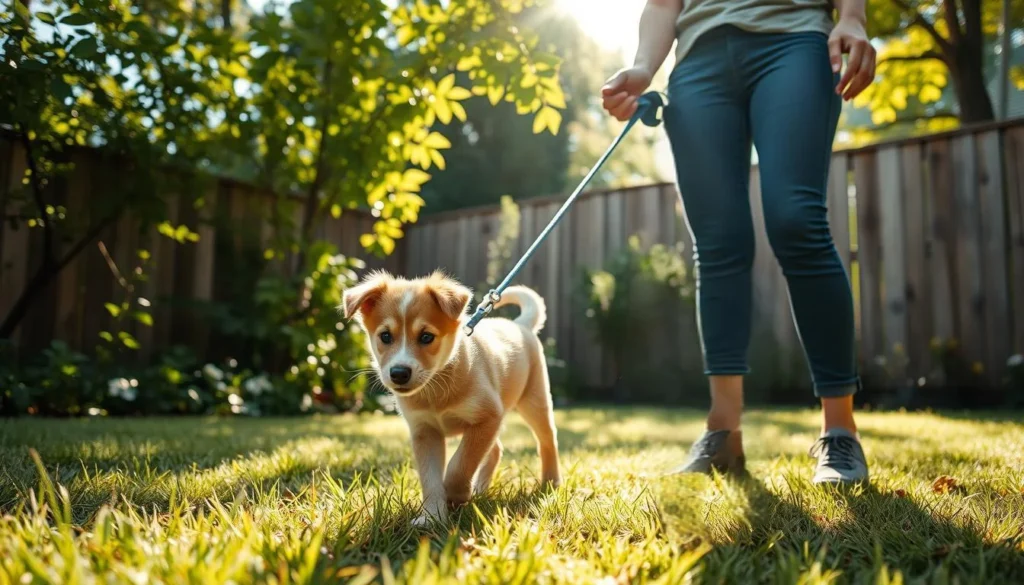
Start close to home in a quiet yard or a low-traffic street. Short walks of five to fifteen minutes let me watch how my pup reacts. I reward any sign of focus and slowly add time as attention improves.
I use distance management when sights and smells become too much. If my puppy fixates, I make my cue and step away a few paces. When the pup follows and refocuses, I mark and reward to reinforce that following me is good during walking a puppy on a leash.
As confidence grows, I move slightly closer to distractions and then pause. Repeated, gentle practice helps my puppy learn thresholds without pressure. Leash training for puppies works best when I balance control with chances to investigate, giving short sniff breaks on cue.
When a walk goes sideways, I step back to a quieter spot and rebuild success with easy wins. This gradual exposure keeps taking puppy outside a rewarding habit and sets up reliable walking a puppy on a leash for daily life.
Teaching heel and loose-leash walking with positive reinforcement
I keep training sessions short and fun when teaching heel and loose-leash walking. My goal is for my puppy to look at me, walk beside me, and enjoy it without pulling on the leash. We start indoors, then move to the yard and quiet streets as the puppy gets more confident.
I use a special cue that means "food is coming" to get the puppy's attention. First, I teach recall with this cue. Once my puppy comes for a treat every time, I start moving and say the cue. Then, I mark and treat them for walking beside me.
I say "Let's go!" with a happy voice to start moving. At first, I mark almost every step with "Yes!" or a clicker. I give a treat at my knee to teach the right position. As the puppy gets better, I give fewer treats and use random rewards to keep the behavior strong.
To teach the right position, I lure with a treat near the puppy's nose and take a step while saying "Heel." When they walk beside me, I mark and reward. I do this in short sessions and move to more distracting places only when they succeed in easier ones.
It's important to prevent accidental rewards. I control sniffing and greetings to avoid pulling. If the puppy pulls, I stop and wait for the leash to be loose before moving. This keeps the puppy walking nicely on a leash.
I use different rewards: small kibble for regular practice, and higher-value treats for distractions. I celebrate small wins and gradually increase the time in each session. This keeps the learning positive and reliable.
Below is a simple practice plan I follow. It gives structure and shows clear steps for building heel and loose-leash walking with positive reinforcement.
| Step | What I Do | Goal |
|---|---|---|
| 1. Marker and recall | I teach a marker that means food is coming, then reinforce recall indoors. | Reliable attention on cue |
| 2. Lure one step | I hold a treat at the nose, take a step, say “Heel,” mark and reward at my knee. | Follow at my side for one step |
| 3. Short repeats | I do multiple 1–2 minute drills with high-value treats and frequent marking. | Build consistency without fatigue |
| 4. Move outside | I practice in the yard, then a quiet street, keeping sessions short and predictable. | Generalize loose-leash walking to new places |
| 5. Fade rewards | I switch to intermittent treats and praise once position holds reliably. | Durable puppy leash manners |
How to train a puppy to walk on a leash
I start with a simple routine that introduces my puppy to walking on a leash. I keep the sessions short and fun. This makes training easy and keeps my puppy excited.
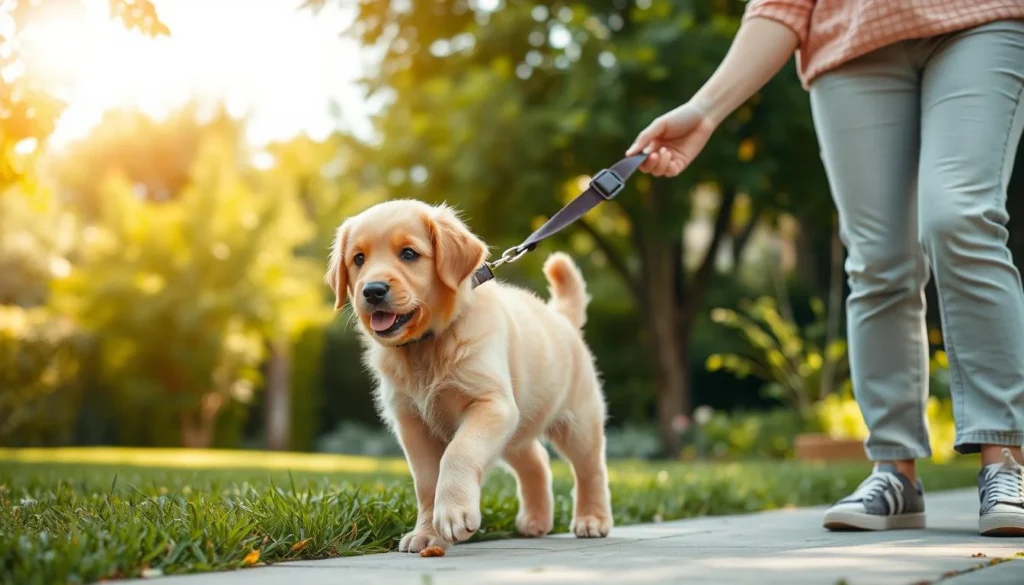
First, I let my puppy wear a collar or harness indoors while playing. I add the leash and let it drag while watching. I use treats and praise to make it feel safe.
This indoor practice helps when we go outside. It supports the puppy's leash training.
I teach my puppy a "Yes!" marker and a "Let's go!" movement cue. I reward quick attention with the marker and start walking with the cue. Short practice sessions help keep the puppy focused.
When we go outside, we start in a yard, then a quiet street, and finally busier sidewalks. I keep a safe distance from distractions and reward any attention. If the puppy pulls, I use U-turns or "Be a tree" to correct without force.
Using recall, marker cues, and short training helps learning happen fast. I start with frequent rewards, then gradually reduce them. This strengthens the puppy's behavior and makes walks predictable.
I look for signs of progress like relaxed gear-wearing and coming on cue. I also watch for steady heel in the yard and neighborhood walks. If progress slows, I go back to simpler drills and treats.
My routine shows how to train a puppy to walk on a leash with consistent, small steps. It balances play, structure, and clear cues. This makes training a natural part of our routine, ending each session with success and a happy puppy.
Common problems and troubleshooting leash training
I keep walks calm by spotting issues early and using clear, simple fixes. Below I share quick techniques I use when leash training troubleshooting turns into a short session of problem solving.
If my puppy pulls on leash, I stop moving and become a tree. I hold my position until my dog looks back or relaxes the leash. I never yank. If that pause does not work, I try a U-turn. I cue “Turn” and walk the other way. Reward when my pup follows to reinforce the change in direction.
When pulling persists, I step back to less distracting spots and use higher-value treats. I use penalty yards by stepping backward with gentle leash pressure to move the goal away, then release and reward when the leash loosens. Short practice in quiet areas builds steady progress.
For lunging at people or dogs, I redirect with a treat before the trigger gets close. I create distance and call my dog's name, then reward focus. A slight lateral leash pressure and a turn away work well for prompt recalls. Keeping the leash short and using food lures helps maintain attention.
If my puppy barks or overreacts, I check exercise and mental stimulation first. I add a quick play session before a walk to lower arousal. I manage distance from triggers and reward attention before the behavior starts. Pre-emptive treats at the first look keep focus where I want it.
When leash problems puppies face seem stubborn, I switch to a front-clip harness or a Gentle Leader while I keep training consistent. I reduce distractions, add more high-value rewards, and shorten sessions to set my dog up for success. Small wins lead to steady gains.
Exercises and games to make walks more engaging
I use short, playful drills to keep my puppy excited and focused on walks. A mix of scent breaks, recall games, and quick training bursts makes each outing feel like a reward. These exercises support engagement on walks and reinforce puppy leash training tips I rely on daily.
Incorporating sniff breaks with a "Go sniff" cue
I teach a clear "Go sniff" cue that lets my pup know when investigation is allowed. Giving permission reduces frustration and keeps me in control. I cue a sniff break after short walks of focused walking, then gradually shorten the sniff time so attention returns to the walk.
Play, fetch, and mental enrichment before walks to reduce arousal
A five- to ten-minute game of fetch at home or a brain puzzle calms my puppy so he walks with fewer bursts of energy. I use Kong treats, treat-stuffed toys, and brief tug sessions to burn excess drive. This prep improves engagement on walks and makes puppy leash training tips more effective outdoors.
Heel turnarounds, recalls, and random reinforcement games
I mix heel turnarounds and short recalls into routes to keep focus high. I reward reliably at first, then switch to random reinforcement as the puppy improves. That unpredictability raises attention and allows me to phase out constant treats while keeping walking games for puppies fun and rewarding.
- Sniff station: Pause for an allowed sniff after 5–10 focused steps.
- Energy burn: Quick indoor play before leaving reduces pulling.
- Focus switch: Cue a recall or turnaround to reset attention.
- Random rewards: Give treats sporadically to sustain interest.
When I follow this outline, walks stay lively and constructive. The puppy learns that attention to me wins rewards, sniffing is allowed at set times, and training stays gentle and fun. These practices make walking games for puppies a core part of strong puppy leash training tips that boost long-term engagement on walks.
When to use training aids and when to get professional help
I watch my puppy’s progress closely and decide which tools to try based on comfort and safety. For many pups, simple puppy training aids like a front-clip harness make early walks calmer. I keep sessions short and rewarding. I use treats and consistent cues so the gear supports learning without replacing it.
I use a Gentle Leader or Halti when pulling becomes repetitive and my regular techniques stop working. These head halters and front-hook harnesses help steer attention and reduce strain on a young neck. I avoid harsh correction tools and prefer humane walking tools that let me manage safety while I teach loose-leash skills.
When progress stalls after steady practice, I consider professional input. I contact the AKC GoodDog! Helpline or enroll in a local class to get targeted coaching. I call a trainer if pulling, lunging, or reactivity create safety risks or if I can’t make measurable gains despite using recommended tools and methods.
I set realistic expectations by age, breed, and energy level. Puppies have short attention spans, so I expect small wins each week. Herding and high-energy breeds often need more structure and outlets for stimulation during leash training for puppies. I factor breed tendencies into the plan and adjust pace accordingly.
When deciding whether to use an aid or hire help, I ask three quick questions: am I keeping the sessions positive, is the tool improving safety, and have I given consistent effort over several weeks? If the answer to any of these is no, I seek professional guidance.
Recommended resources I trust include front-clip harnesses, Gentle Leader head halters, AKC GoodDog! Helpline, and reputable classes like The Puppy Academy for live Q&A and structured lessons.
Conclusion
Training a puppy to walk on a leash is all about short, positive sessions. It's about clear cues and steady practice. I use a marker like “Yes!” and a cue like “Let’s go!” to guide them.
Keeping the leash short and practicing in low-distraction areas helps. Using the right equipment and rewarding small wins builds trust and calmness.
For leash training, I mix realistic exercise with frequent rewards. I use U-turns or “be a tree” pauses to stop pulling. I also give sniff breaks with a cue to avoid frustration.
Starting with treats and gradually fading them keeps things interesting. These tips make walks safer and more fun for both of us.
If progress slows, I adjust rewards or shorten sessions. Sometimes, I seek help from a professional trainer. With patience and consistent practice, my puppy learns to walk nicely on a leash.