Key Takeaways
- Crate training a puppy creates a den-like space that discourages indoor elimination.
- Most puppies respond to consistent routines and rewards within weeks.
- Expect housebreaking to take about 4–8 weeks with steady practice.
- Use patience and positive reinforcement, not punishment, to teach potty habits.
- Combining crate use with scheduled potty breaks improves success.
Why crate training helps with puppy potty training
I use a crate to help my puppy learn fast and avoid mess. It gives them a safe, small space. This space helps them follow their natural habits and makes potty training easier.
Den instinct and cleanliness
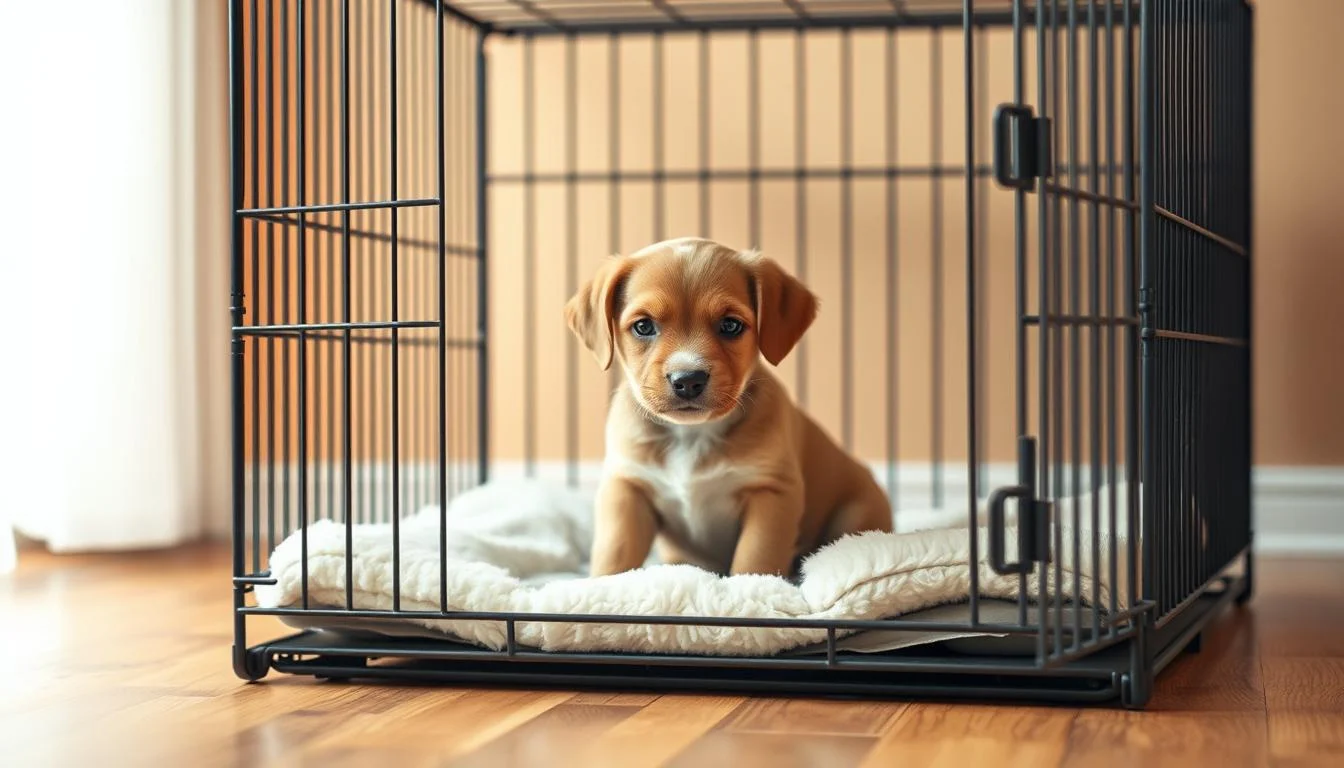
Dogs like to have a clean place to sleep. I pick a crate that's just the right size. This helps my puppy wait to go potty until I take them outside.
This instinct makes crate training a natural fit for potty training. Keeping them in the crate for short times helps them learn to stay clean. It also reduces accidents.
Safety, supervision, and confinement benefits
When I'm busy, the crate keeps my puppy safe from dangers like electrical cords. It also limits where accidents can happen.
With fewer places to go, I can catch signs like sniffing or whining. This lets me act fast and prevent accidents. These benefits make potty training faster and less stressful for both of us.
How crate training supports routines and housebreaking
Crating works best with regular feeding times and potty breaks. This creates a routine that teaches my puppy what I expect.
I use the same cues, like “Go potty,” and stick to a schedule. This helps me notice patterns in when my puppy needs to go. It makes it easier to plan walks and breaks.
| Focus | Practical action | Benefit |
|---|---|---|
| Den instinct | Use a crate sized to allow standing and turning | Encourages holding until potty breaks |
| Safety | Crate when unsupervised; remove hazards | Reduces accidental eliminations and injuries |
| Supervision | Short confinement between outings | Makes signals easier to observe |
| Routine | Combine crate with set feeding and potty schedule | Creates reliable housebreaking progress |
| Positive use | Never use crate as punishment; reward entry | Maintains crate as a safe, inviting den |
How to choose the right crate for potty training
I want my puppy to see the crate as a cozy, clean space. The right crate is key for comfort, cleanliness, and training. I'll talk about size, materials, and placement to fit my puppy's training schedule.
Size and use of dividers
The crate should be big enough for the puppy to stand, turn, and lie down. A crate that's too big might lead to accidents. So, I check the size before buying.
Crates with adjustable dividers are great for growing puppies. I move the divider to make the space smaller as needed. This helps the puppy learn to hold its bladder and keep the sleeping area clean.
Types of crates and cleaning considerations
Wire crates are strong and let in air. I prefer ones with removable pans for easy cleaning when accidents happen.
Plastic or transport crates are cozy but can hold smells. I look for ones with smooth surfaces for easy cleaning. Soft-sided crates are easy to carry but hard to clean after accidents.
I like crates with trays or removable floors. They make cleaning up faster and help me keep to the training schedule without long breaks.
Placement and quiet location
I put the crate in a busy area, like the living room, during the day. This makes the puppy feel safe and reduces accidents.
For nighttime, I place the crate near my bed. This way, I can hear my puppy and respond quickly. I avoid noisy, busy places to help with training.
Preparing the crate: comfort, bedding, and safety
I make my puppy's crate a cozy, safe spot for them to rest. Small changes can make a big difference. I add comfy touches while keeping safety in mind to help with housebreaking.
Making the crate a welcoming den
I put in a soft mat or crate pad that fits right. A low-profile blanket and a few favorite toys help them relax. I also feed them near or inside the crate to make it a positive place.
I place the crate where we spend time together, not in a basement. Short, calm visits and praise help them see it as a good spot. If they seem anxious, I slow down and use treats to help them feel comfortable going in.
Safety first
I check the crate for sharp edges and loose parts. I choose durable models and non-toxic bedding to avoid risks. I never use bedding that can be easily shredded and swallowed.
I keep electrical cords and small objects away from the crate. Using the crate only for rest and training is key. If they soil the crate, I remove the bedding to teach them not to sleep there. Then, I add it back when they learn to go potty outside.
These steps help with comfort, hygiene, and training. They're essential for my puppy's progress.
Introducing my puppy to the crate with positive reinforcement
I start by letting my pup explore the crate at his own pace. I open the door a bit and put some treats inside. This helps him feel curious without getting stressed.
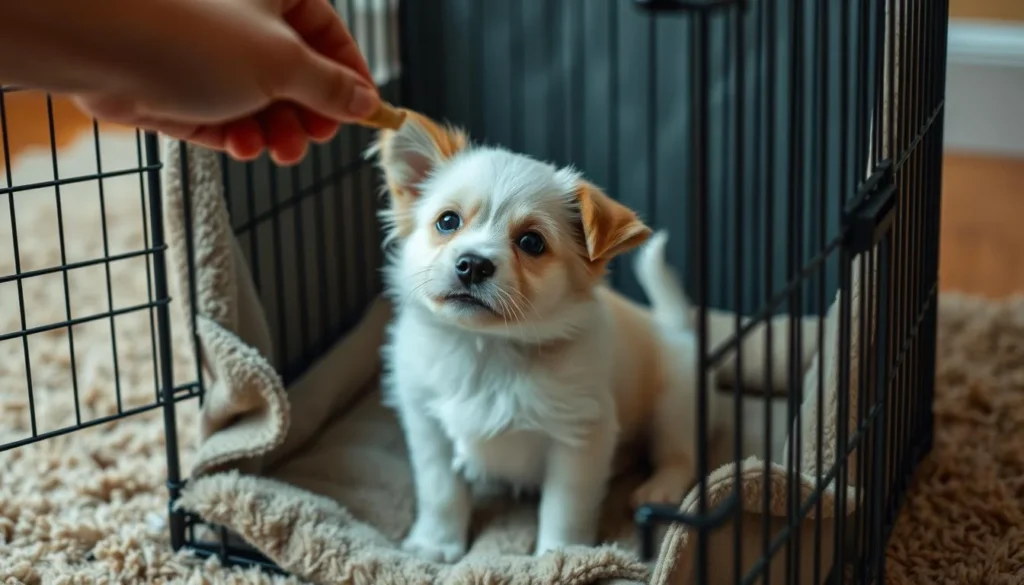
Open-door, low-pressure introduction
I speak in a happy, calm voice and use a single cue like “Crate” or “Go to bed.” I give treats or praise for any move toward the crate. I never push him inside. Instead, I wait for him to go in on his own and move the treats inside to build his confidence.
Feeding meals in the crate
When my puppy seems relaxed, I start feeding him near the crate. I place the bowl at the door first, then move it inside over time. When he eats well inside, I close the door for a bit and then open it again.
Using toys and treats to encourage voluntary entry
I add durable chews and stuffed KONGs to make the crate a positive place. I give these rewards only inside the crate. Short, fun times in the crate help my puppy learn to relax and enjoy it.
| Step | Action | Goal |
|---|---|---|
| 1 | Open-door exploration with treats at entrance | Build interest without pressure |
| 2 | Use a single cue and celebrate small steps | Create clear communication and trust |
| 3 | Feed meals gradually deeper in the crate | Teach comfort with enclosure during feeding in crate |
| 4 | Place long-lasting chews or stuffed toys inside | Encourage voluntary entry and calm settling |
| 5 | Close the door briefly while the puppy is calm | Build tolerance and reduce door anxiety |
| 6 | Wait for quiet before releasing if whining occurs | Avoid reinforcing unwanted behaviors |
Step-by-step plan to close the door and increase crating time
I start with short, calm steps to teach my puppy the crate is safe. I keep the sessions positive and watch for stress signs. This method fits into my crate training schedule and helps increase crating time smoothly.
Short closed-door sessions while present
After my pup eats meals in the crate with the door closed, I try one-minute sits with the door closed. I sit quietly and read or work, making the crate a normal part of life. If the puppy whines, I shorten the interval and go slower.
I increase those minutes step by step until I reach ten or more. I praise calm behavior and offer a chew toy. This steady method teaches control and patience, which is key for potty training.
Leaving the puppy alone for short periods
Next, I close the door and leave the room for 20–30 minutes. I return before the puppy becomes anxious. I vary the lengths and timing to avoid making crating mean I'm leaving for good.
Once 20–30 minutes is easy, I add more time slowly. I use this phase to expand independence without rushing. Short, predictable sessions help prevent separation anxiety and build trust.
Nighttime crating and hearing potty cues
For nighttime crate training, I start with the crate in my bedroom so I can hear small sounds. Young puppies often need at least one midnight potty trip. When I hear stirring, I take the puppy out on a leash and keep the interaction calm.
As nights become longer and accidents stop, I move the crate toward its permanent spot bit by bit. This gradual shift fits my crate training schedule and keeps the puppy confident while learning to sleep through the night.
Building a puppy crate training schedule for potty success
I create a routine for crate training to keep things calm and predictable. Knowing when my puppy needs a break helps us both. This routine makes learning faster and reduces stress.
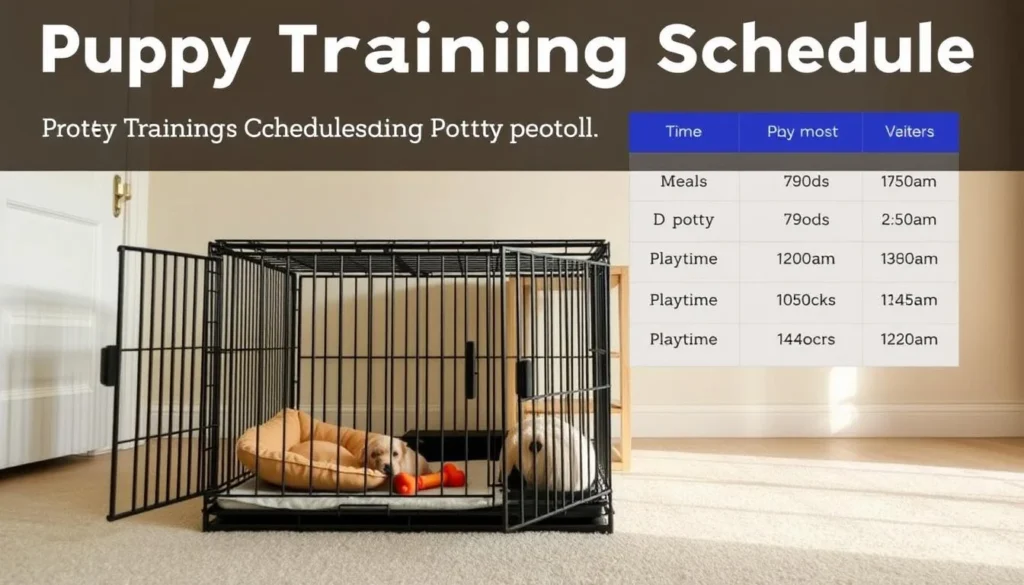
Regular feeding times to predict elimination
I stick to a strict feeding schedule to make it easier to predict when my puppy will need to go. Young puppies eat three times a day, and I keep track of these times. This way, I can plan potty breaks more easily.
I match the crate periods to the feeding schedule. Free-feeding is avoided to keep the training rhythm steady.
Timing potty breaks around events
I take my puppy to the same spot for potty breaks after waking, playing, and eating. At first, I aim for a trip every two hours to reduce accidents. Using the same location and a short phrase like “Go potty” helps create strong associations.
I also plan a break before closing the crate and before bedtime. These breaks fit into my daily routine and support potty training.
Using consistent cues and rewards
I use one verbal cue each time and reward correct elimination with a small treat and quiet praise. I stay still and silent while my puppy goes to keep them focused. Then, I reward them the moment they finish to reinforce the behavior.
Consistency in cues and immediate rewards is key. Over time, my pup learns to associate the cue, the spot, and the reward with the desired action.
| Action | Timing | Why it helps |
|---|---|---|
| Feed main meals | Morning, midday, early evening | Creates predictable digestion and elimination windows |
| Potty break | Immediately after waking, after meals, every 2 hours early on | Reduces accidents and builds routine |
| Pre-crate check | Right before closing crate and bedtime | Minimizes overnight accidents and discomfort |
| Use verbal cue | Each trip to elimination spot | Builds clear signal-response link for the puppy |
| Immediate reward | Right after successful elimination | Reinforces potty habits quickly and positively |
Troubleshooting crate soiling and when to adjust
I track accidents to spot patterns before making changes. A single mishap after a long car ride is different from repeated nighttime wetting. I look at timing, recent meals, and how long the puppy was left alone to guide my next steps.
I keep a simple log with dates and times. This helps me figure out if crate training problems are behavioral or medical. If I see clusters around meals or vaccinations, I treat that differently from random episodes.
Assess frequency and identify causes
I ask: are accidents rare or regular? Rare incidents suggest too-long confinement or a stomach upset. Frequent soiling points me toward vet checks, lifestyle gaps, or a crate that’s too large. Tracking helps me tailor potty breaks and tethering times.
Health checks and diet considerations
I call my veterinarian when elimination changes suddenly or often. Urinary tract infections, parasites, or medication side effects can make a puppy soil the crate. I also watch treats, table scraps, and other dogs’ food that my puppy might sneak.
I adjust food gradually under vet guidance. If diarrhea causes crate problems, I shift to a bland diet and increase potty frequency until stools normalize.
Adjusting confinement and bedding
I check crate size and add a divider to limit space if needed. A puppy with too much room may use one end to sleep and the other to eliminate. If soiling persists, I shorten confinement periods and add regular outdoor trips.
Soft bedding can absorb messes and invite repeat marking. I remove plush items temporarily, clean everything promptly, and use enzyme cleaners to remove odors that lure the puppy back to the same spot.
- Reduce time alone and add scheduled potty stops.
- Use dividers so the puppy cannot avoid close proximity to soiling.
- Consult a vet for chronic problems or sudden changes.
I blend these steps when I troubleshoot crate accidents, keeping patience and consistency as central tools while I refine how to crate train a puppy to potty train without creating new crate training problems.
Handling accidents calmly and cleaning to prevent re-marking
I stay calm when accidents happen. This helps my puppy not to fear me. It also makes them learn faster. If I catch them in the act, I gently take them to the potty spot and reward them if they go there.
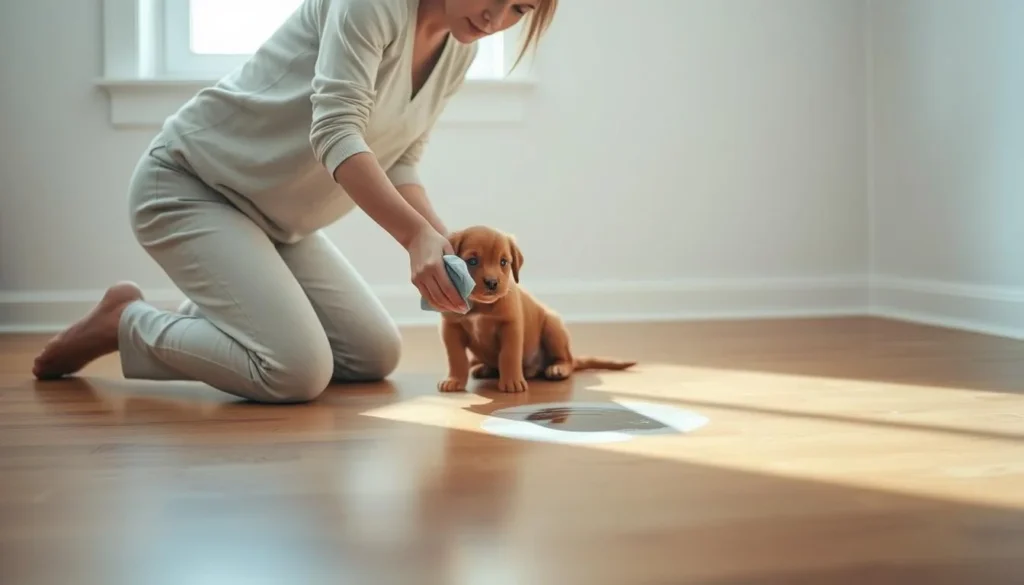
How to respond when I catch an accident
If I see the accident, I make a soft noise to stop my puppy. Then, I take them to the potty area right away. I praise and give a small treat to show them the right place.
I keep the interruption short. This helps my puppy understand where they should go. I never rub their nose in messes or scold them later. This can confuse them about when and where to go.
Cleaning protocols to neutralize odors
For cleaning urine from crate or bedding, I use enzymatic cleaners. These products break down urine and remove scents that make them go again. I wash fabric bedding in hot water and replace crate pans or pads when needed.
Ordinary household cleaners might just hide the smell. They don't get rid of it. So, I use enzymatic cleaners to really clean up.
I keep supplies ready: enzymatic spray, paper towels, a scrub brush, and a laundry bag for soiled bedding. After cleaning, I let areas air out before putting bedding back. If the crate has a removable tray, I scrub it well and dry it in sunlight when I can.
Ignoring past accidents I didn’t witness
If I didn't see an accident, I clean it up without scolding. I remove the smell and adjust the schedule or confinement if accidents keep happening. Sometimes, I put a clean food bowl or bedding over a soiled spot after cleaning.
Dogs don't like to go where they eat or sleep. This helps stop accidents from happening again. These tips help me stay patient and keep my puppy safe and confident.
| Situation | Immediate Action | Cleaning Step | Follow-up |
|---|---|---|---|
| Caught in the act | Interrupt gently, move to potty spot, reward if completed | Quick blot, clean area with enzymatic cleaner | Note timing and adjust schedule |
| Accident not witnessed | Do not scold; treat as cleanup only | Wash bedding in hot water, clean crate pan | Place bowl or bedding over spot after cleaning to deter reuse |
| Repeat soiling in crate | Shorten crate time, increase potty breaks | Disinfect and air-dry crate components with enzymatic products | Review diet, health, and crate size for adjustment |
| Strong lingering odor | Isolate item, deep clean with specialized product | Use multiple enzyme treatments and launder fabrics | Consider replacing heavily soiled bedding or pads |
Special considerations for older dogs and slow-to-adapt puppies
I help many owners with adult rescues or slow-to-adapt puppies. They want steady progress, less stress, and reliable routines. Older dogs might need a slower pace for crate training than young puppies. I use small steps, clear cues, and calm repetition to make it easier.
How to crate train an older dog for potty training
I start by guessing the dog’s adult size to choose the right crate. I use dividers if needed. I feed meals in the crate and reward the dog for going in on their own.
Closed-door sessions start short and get longer if the dog stays calm. Putting the crate in a familiar room helps build trust. For older dogs, consistent feeding and bathroom breaks help predict when they'll need to go.
Managing separation anxiety and excessive whining
I figure out if the dog's whining is for attention or to go potty. If it's for release, giving in can teach the wrong lesson. I use gradual desensitization and brief departures that get longer over time.
Products like Adaptil can help some dogs feel less stressed. For separation anxiety, I keep goodbyes and hellos calm. I reward quiet behavior after short times away.
When to seek professional help
If crate soiling keeps happening or anxiety stops progress, a vet visit is a good idea. I suggest certified dog trainers or animal behaviorists for help when basic steps don't work. A professional can offer targeted strategies to help the dog and owner bond.
Extra crate training tips and potty training techniques I rely on
I keep my advice simple and easy to follow. Small victories boost my confidence and my puppy's. I stick to routines, offer calm rewards, and watch closely to teach good habits.
I focus on three key things: being consistent, patient, and positive. I give treats or praise right after my puppy does the right thing. I never scold for accidents. If mistakes happen, I watch more closely and crate for shorter times until they get better.
Consistency means regular times for meals, walks, and crate use. This helps with potty training because I can predict when my puppy needs to go.
Patience helps me stay calm during tough times. Puppies learn at their own pace. I remember that gentle repetition is more effective than harsh corrections.
Positive reinforcement rewards the good behavior I want. I use a cue word, a treat, and praise. Over time, just the cue makes my puppy respond correctly.
I watch for signs that my puppy needs to go potty. Signs include sniffing, circling, whining, pawing at the door, or sudden restlessness. When I see these signs, I take my puppy out calmly and quickly.
Learning to recognize these signs helps prevent accidents. I keep track of when my puppy goes after meals and naps. This helps me improve my schedule and crate training tips.
Using a crate is part of keeping my puppy safe. I also use baby gates, covered cords, and secure trash cans. The crate is a safe place for my puppy to travel, recover from vet visits, and find safety during emergencies.
For long-term success, I make crate times predictable. This keeps the crate a positive and useful tool, not a punishment.
Here are quick steps I follow:
- Set fixed times for meals and potty breaks to help with potty training.
- Reward instantly for correct elimination with a treat and praise.
- Shorten crate time if accidents increase; increase supervision.
- Respond to puppy signals to potty instead of waiting for accidents.
- Use the crate with houseproofing to reduce risks and temptations.
Following these steps leads to steady progress and less stress. My approach combines crate training, observing puppy signals, and houseproofing for safer, faster learning.
Conclusion
Training a puppy to use a crate for potty breaks is all about a few key steps. You need the right crate, a set schedule for feeding and potty breaks, and positive rewards. I started with short crate times and gradually increased them. This approach helped my puppy learn to use the crate for potty breaks.
My main tips are simple: pick the right crate, use dividers as your puppy grows, and stick to a routine. Also, stay calm when accidents happen. If your puppy keeps having accidents, it's time to see the vet. They can check for health issues. If your puppy is anxious or has other problems, a certified behaviorist can help.
In summary, crate training is all about repetition, patience, and positive rewards. A consistent crate training schedule, treats for good behavior, and a crate that feels safe can make a big difference. Most puppies learn quickly, making your home cleaner and calmer.