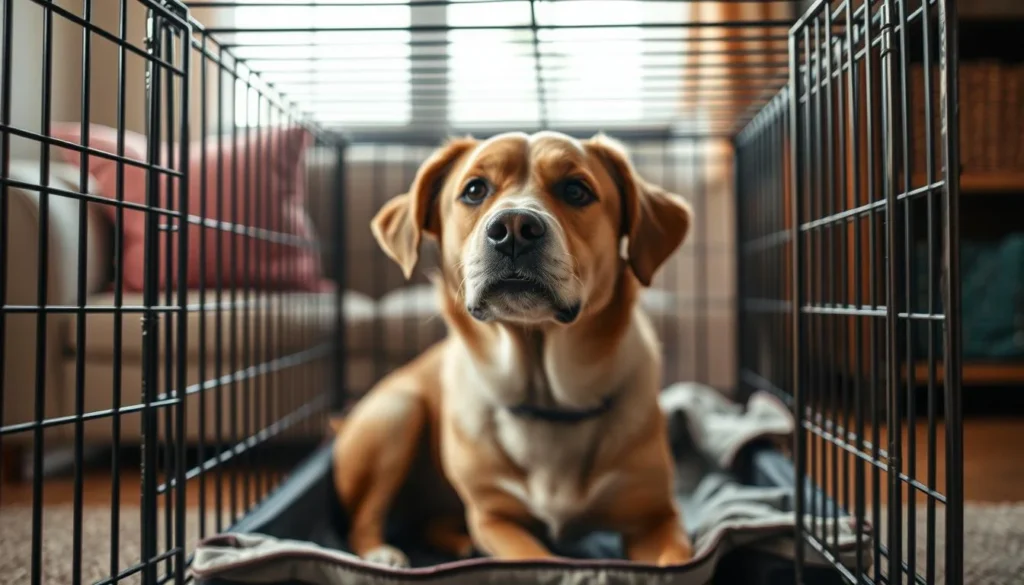
I remember the first week with my Labrador: midnight whines, a damp crate pad, and constant worry. Learning to train a puppy to sleep at night was a test of patience and love. But it was also incredibly rewarding.
When nights finally became peaceful, we both slept better. Our days together became even more enjoyable.
Teaching a puppy to sleep through the night is not easy. It rarely happens overnight. Most puppies reach this milestone between 12–16 weeks. Some may need a bit more time. Patience, consistency, and realistic expectations are key.
In this article, I'll share practical tips for puppy sleep training. You'll learn about creating a calming bedtime routine, crate training, potty management, and more. I'll also cover pre-bed exercise, calming items, and how to handle nighttime crying.
Key Takeaways
- Sleep training is important for both you and your puppy—expect a learning curve.
- Most puppies sleep through the night by 12–16 weeks, but individual timelines vary.
- Consistent routines, crate setup, potty strategy, and calming aids are central to success.
- I’ll provide step-by-step methods and troubleshooting for nighttime crying and accidents.
- This guide focuses on friendly, practical advice for U.S. puppy owners teaching a puppy to sleep in a bed or crate.
Understanding puppy sleep patterns and why nights are rough
I want to explain what a typical night is like for a young dog. Nights can be chaotic, but knowing about puppy sleep patterns helps. It sets realistic expectations and guides how to settle them.
How much puppies sleep and why sleep matters
Puppies sleep 12–20 hours a day. Very young ones might sleep 18–20 hours. This is because their brains, immune systems, and muscles are growing.
Sleep helps with growth spurts and recovery after play. If puppies don't get enough sleep, their behavior and learning can suffer. I focus on sleep as much as feeding and play when coaching new owners.
Common reasons puppies wake at night
Being away from littermates and the mother can upset many pups. New smells and sounds also cause anxiety. Young puppies have small bladders and often need to go out at night.
They avoid soiling their sleep spot, so they whine if they need to go. Excitement or too much stimulation in the evening makes it hard to settle. Feeding too late can also lead to nighttime bathroom trips.
What to expect during the adjustment period
Adjustment times vary. Some puppies adjust quickly, while others take weeks. Expect interrupted nights with crying and bathroom needs at first.
Many puppies start sleeping through longer stretches by 12–16 weeks. But, every puppy is different. Patience and consistent sleep training tips help. I suggest a schedule, using a crate or co-sleeper, and reducing evening stimulation. With steady routines, nights become calmer and sleep more predictable.
Where should your puppy sleep
I remember the first week with my Labrador mix and the nightly question: where should your puppy sleep? My goal was calm nights and a routine that worked for both of us. I weighed options, tried crate training for puppies, and used a gentle co-sleeper hack before settling into a plan that fit our home.
Benefits of crate training for nighttime
Crate training for puppies gives structure and safety. A properly introduced crate becomes a den where a pup can rest without roaming the house. I found that crates reduce nighttime accidents and speed up potty training by teaching predictable sleep and wake times.
When I used a crate, nights felt simpler. The pup learned to associate the space with sleep, not punishment. That consistency helped me and the dog settle faster into a steady sleep pattern.
Alternatives to a crate and co-sleeper hack
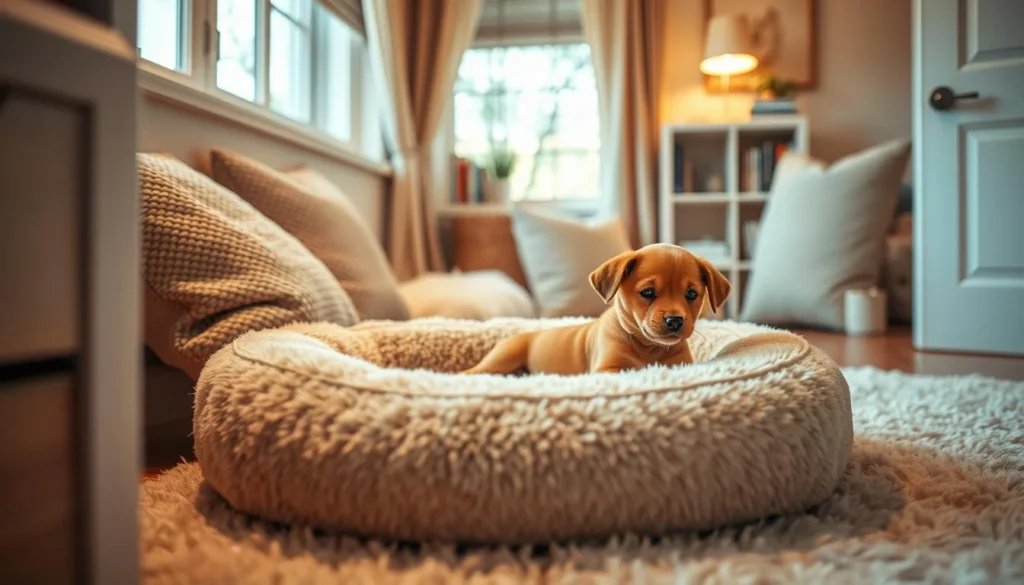
Not every owner wants a crate. I tested a co-sleeper hack where a small bed sat beside my bed and the puppy was gently tethered to a bed leg for safety. The close proximity gave the pup comfort while I stayed able to hear any potty needs.
Other choices I tried included a supervised dog bed in the bedroom and a playpen with soft bedding. Those options work for people who plan to supervise sleep or who do not want confinement long term. Keep in mind that avoiding any confinement can make vet or groomer visits more stressful later on.
Deciding where to place the crate
Early on, I kept the crate in my bedroom to ease separation anxiety and catch nighttime potty cues. That closeness helped both of us sleep through the growing pains of adjustment.
As the pup matured, I moved the crate slowly to its permanent spot. Small steps preserved the crate as a safe den while teaching independence. If your end goal is training a puppy to sleep in a bed elsewhere, use gradual transitions and short relocations so the pup learns the new routine without stress.
Creating a comfortable crate space for nighttime sleep
Small changes can make a big difference in a puppy's sleep spot. A cozy crate space helps a pup settle, feel safe, and sleep well. I focus on making the crate comfortable, clean, and secure.
Choosing the right crate and sizing it to grow
Start by picking the right crate for your pup’s size and personality. I choose crates that let a puppy stand, turn, and lie down comfortably. This prevents them from using corners as bathrooms.
I often suggest wire crates with dividers for growing dogs. They "grow" with the dog. For shy pups, plastic crates offer privacy. Soft-sided crates are good for calm dogs that don't chew through fabric.
Bedding and chew-proof options
For bedding, I use washable or waterproof mats for young puppies. Accidents happen, and soft blankets can be a chewing hazard.
If a puppy chews on bedding, I remove plush items and switch to chew-proof pads. Brands like K9 Ballistics and PetFusion are durable for older puppies. I avoid expensive foam until the puppy stops chewing.
Using a crate cover and creating a dark den
A fitted crate cover helps create a dark den for sleep. It can raise melatonin levels. I make sure covers allow airflow and don't have loose edges a puppy could pull inside.
I turn off room lights and mute screens to reduce stimulation. If a pup tugs at the cover, I remove it and try a sturdier option or leave the crate uncovered until chewing stops.
| Feature | Best for | Care & Notes |
|---|---|---|
| Wire crate with divider | Fast-growing pups; flexibility | Measure before buying; easy to clean; good airflow |
| Plastic crate | Travel and anxious pups | Provides privacy; sturdy; wipeable surfaces |
| Soft-sided crate | Calm, non-chewing dogs | Lightweight and portable; not for chewers |
| Chew-proof pad | Puppies that mouth bedding | Waterproof, washable, low profile; remove if ingested |
| Fitted crate cover | Creating a dark den for sleep | Allows airflow; secure fit; remove if pulled or chewed |
Designing a calming bedtime routine and schedule
I want your evenings with a new pup to feel calm and predictable. A steady puppy bedtime routine gives your dog cues that night is coming. Small, consistent steps before lights out make crate time easier and help you sleep better too.

Establishing consistent nightly cues
I use a short sequence of cues each night: a final potty, dimming lights, quiet petting, a gentle cue phrase, then crate time. Keep interactions low-key during those moments. No active play before bed or during potty breaks. Calm signals tell your puppy the day is over and that sleep is next.
Sample evening and night schedule
I recommend feeding the last full meal at least three hours before lights out so digestion and a pre-bed potty are possible. A small interactive puzzle with a tiny portion can be a slow, soothing activity closer to bedtime.
- Dinner → calm walk or gentle play about one hour before bed
- Short training or brain game for 10–15 minutes
- Last-chance potty right before crate time
- Crate with a comfort item and soft music or a pheromone diffuser
At first I set an alarm for intentional night potty breaks. As bladder control improves, I push the alarm later. This gradual change supports longer stretches of sleep.
Managing daytime naps to support nighttime sleep
Puppies nap in short bursts, often 30 to 120 minutes. I schedule play and short training sessions before planned naps. That pattern helps the pup learn to rest predictably.
Avoid overstimulation late in the evening. An overtired puppy can be harder to settle. I encourage independent crate naps during the day so the puppy learns to fall asleep without being held.
Pre-bedtime exercise and mental enrichment
I make sure my puppy's evenings are calm and predictable. I mix short playtime with quiet activities to help them relax. This mix is gentle and follows the rules for puppies.
Physical activity that helps burn energy
Before bed, I give my puppy 10–20 minutes of play or a short walk. This helps them digest and relax their muscles. Games like tug and fetch are great for short sessions. I adjust the intensity based on their age and health.
Brain games and food puzzles
Mental games also help my puppy relax. I use West Paw Toppl and KONG Puppy for their evening meals. A Difflife snuffle mat is perfect for slow, calm foraging.
Starting with easy toys, like the Toppl, builds their confidence. As they get better, I make the toys more challenging. This keeps their brain active and quiet.
Calming activities to promote settling
Before crate time, I offer a LickiMat or a frozen Toppl meal. This helps them relax with a calming activity. Short training sessions during TV breaks keep their mind busy without getting too excited.
I end with gentle petting and quiet time. This helps my puppy settle into the crate calmly.
- Keep play short and purposeful to avoid overstimulation.
- Rotate brain games and food puzzles for puppies to prevent boredom.
- Use calming activities like LickiMats and snuffle mats to extend settling time.
Potty management and nighttime bathroom strategy
I'll share a simple potty plan that helped my pup sleep better. It's based on realistic goals and easy steps you can start tonight. Just remember to keep it simple, track your progress, and adjust as your puppy grows.
How often puppies need night potty breaks
Young puppies usually need to go every 2–4 hours at night. By 12 weeks, many start to stretch this time. By 16 weeks, they often do even better.
As your puppy gets older, their bladder grows. So, I adjust the alarm times later as they mature.
I watch for signs of discomfort and any sudden changes. If your pup urinates more than usual, it's a good idea to check with a vet. They can rule out infections or other medical issues.
Making the last-chance potty calm and boring
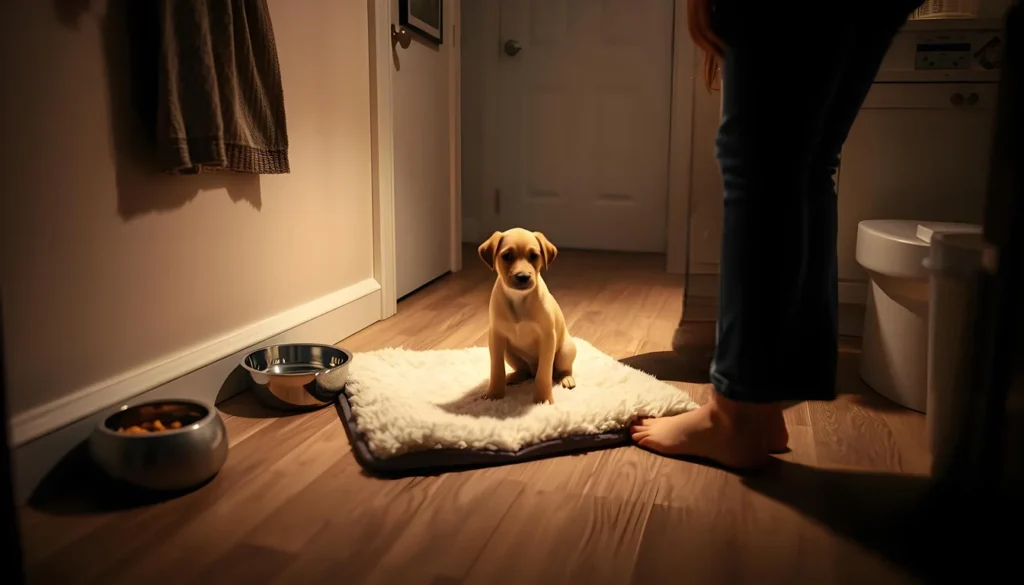
My last-chance potty is intentionally low-key. I keep the lights dim and take a quiet walk to the spot. After a quick go, we head back to the crate right away. No play, treats, or long sniffing sessions.
I also avoid heavy meals and limit water before bed, if my vet agrees. This helps keep the puppy calm and supports better sleep.
Tracking potty schedule to extend sleep
I keep a simple log to track when my puppy goes. I record night wakeups, successful holds, and accidents. This helps me adjust the alarm times and feeding schedules.
Use the log to see how your puppy is doing each week. If progress slows, I check for health issues and tweak the routine. Tracking progress helps us both get more sleep.
Using comfort items and calming aids
I have a special set of comfort items for puppies to help them sleep better at night. These items provide warmth, familiar scents, and steady sounds. This makes a new puppy feel more at ease. It's important to try one thing at a time to see what works best for your puppy.
Security blankets, Snuggle Puppy, and familiar scents
I give a soft blanket with my scent to a new puppy on the first night. This blanket helps them feel secure and focused when it's time to sleep.
A Snuggle Puppy with a fake heartbeat and heat pack can also help. It mimics the warmth and closeness of a littermate. Just remember to remove batteries or heating parts before washing. If your puppy likes to chew, use chew-proof bedding or watch them closely.
Dog-appeasing pheromones and topical aids
Dog-appeasing pheromones can be helpful for some puppies. Products like Adaptil come in diffusers, sprays, and plug-ins. They create a calming scent in the background.
I place a diffuser out of reach and use a little pheromone spray on their bedding before bedtime. These products are safe when used as directed and with your vet's advice.
Calming music, white noise, and sound masking
I play calming music during the evening and keep it playing after the lights go out. Gentle classical or special playlists like Through a Dog's Ear can help puppies relax.
White noise is also crucial to block out outside noises that might wake them. A white noise machine or fan provides a steady sound. I choose a sound that calms my puppy and use timers. There are also dog-focused playlists and speakers for long, calming tracks at night.
How to handle nighttime crying without reinforcing it
A midnight whine can seem urgent with a new puppy. I check if it's a real potty call or just for attention. Clear, calm reactions teach them without rewarding every cry.
First, I ask if it's been 2–4 hours since the last bathroom trip. If yes, I assume it's a potty need. Young pups often cry when they need to go. If it's not a potty call, I look at if they're seeking attention.
I have a quiet routine for bathroom trips. I leash the pup, walk to the spot, praise softly after they go, and then back to the crate. This keeps it serious and not a playtime.
For cries from wanting attention or comfort, I'm careful. A calm touch or soft voice reassures them. I avoid play, feeding, or long cuddles. Ignoring the crying helps stop it from becoming a habit.
Always watch for medical signs. If a puppy urinates too much, shows blood, vomits, or seems tired, see a vet. Odd changes in nighttime patterns could mean a health issue.
Consistent responses teach the puppy boundaries. Using the same calm steps for potty breaks and attention helps build trust. Over time, they learn to stay quiet at night.
Crate training tips specifically for nighttime success
I'll share how I helped my puppy sleep all night. It takes patience, short sessions, and clear signs. A calm routine and the right gear help both of us adjust.
Crate acclimation steps and positive association
I started crate training during the day, just a few minutes at a time. I fed meals inside and left the door open. I also added treats and a KONG with peanut butter to make it inviting.
I used toys like the Toppl and soft bedding to make the crate cozy. I never used it as punishment. Each session ended calmly, teaching my pup it's for rest and safety.
Managing accidents and cleaning the crate
Accidents are common with young puppies. I chose waterproof, washable bedding for easy cleaning. I also kept enzymatic cleaner ready to remove odors that might cause more accidents.
If accidents kept happening, I checked feeding times and my potty log. I adjusted last-walk times and reduced water at night. If problems didn't stop, I talked to my vet to check for health issues.
Transitioning out of the crate when ready
I waited until my puppy slept through the night before removing the crate. I moved the crate farther from my bedroom over weeks. I introduced a comfy dog bed in the same room first.
When we stopped using the crate, I kept the same bedtime routine and rules. This steady approach helped us stay calm as we phased out the crate.
how to train a puppy to sleep at night
I kept notes while training my Labrador mix. I used a clear routine to help nights improve fast. Below, I share a practical, step-by-step puppy sleep plan I used and recommend. The plan balances crate acclimation, timed potty breaks, and calm evening cues to build steady progress.
Step-by-step plan I used and recommend
Day 1–7: I brought the crate into the bedroom and paired it with meals and KONG or Toppl treats. I used a Snuggle Puppy and a familiar-scent blanket. My evening routine was simple: final meal at least three hours before bed, calm play, last-chance potty, then crate with a pheromone diffuser and soft music. I set one initial night alarm for a potty if needed.
Weeks 2–6: I slowly lengthened the time between night alarms as bladder control improved. I added crate-alone naps so my pup learned to self-settle. Evening enrichment used puzzle feeders that promoted calm chewing. The last potty stayed quiet and boring to avoid extra excitement.
Weeks 6–16+: I moved the crate gradually toward its long-term spot if needed. I phased out the Snuggle Puppy heating pack as my dog matured. My goal was uninterrupted sleep by 12–16 weeks for many puppies, while continuing to monitor individual needs.
Age-based expectations and checkpoints
8–10 weeks: I expected frequent night wakings and scheduled potty breaks every two to four hours. The focus at this stage was building crate comfort and a steady bedtime routine.
10–15 weeks: Bladder control improved. Many puppies begin longer stretches. I kept the same schedule and added calm enrichment to reduce night arousals.
12–16 weeks: Many pups can sleep through longer stretches. By 16 weeks, many will sleep through the night with consistent training. I watched breed differences and individual pace when setting expectations.
Common mistakes to avoid
Responding to every whine with play or prolonged attention trains waking behavior. I learned to wait, check for potty needs, then return to calm signals instead of rewarding noise.
Feeding or playing too close to bedtime produces late energy and extra eliminations. I shifted the last meal earlier and reserved only quiet activities before bed.
Using unsafe bedding or leaving chewable items with exposed parts can cause accidents. I supervised the first uses of any toy or Snuggle Puppy to avoid swallowed pieces or batteries.
Expecting instant perfection and varying responses slows progress. I tracked potty patterns, adapted feeding and potty timing, and stayed patient when adjustments were needed.
Conclusion
Teaching a puppy to sleep through the night is possible with a solid plan and consistent effort. Use bedtime cues, a safe place to sleep, and evening activities to help. Also, manage potty breaks and use calming aids like Snuggle Puppy or pheromones.
By 12–16 weeks, most puppies make good progress. But remember, every dog is unique. Be patient and expect some challenges. Keep track of your puppy's progress and stick to a bedtime routine.
Begin with a simple evening routine. Add calming activities and sound masks if needed. Use pheromones or a Snuggle Puppy for extra comfort. If your puppy has persistent night waking, talk to your vet. Try the step-by-step plan and see how it improves your puppy's sleep and behavior.