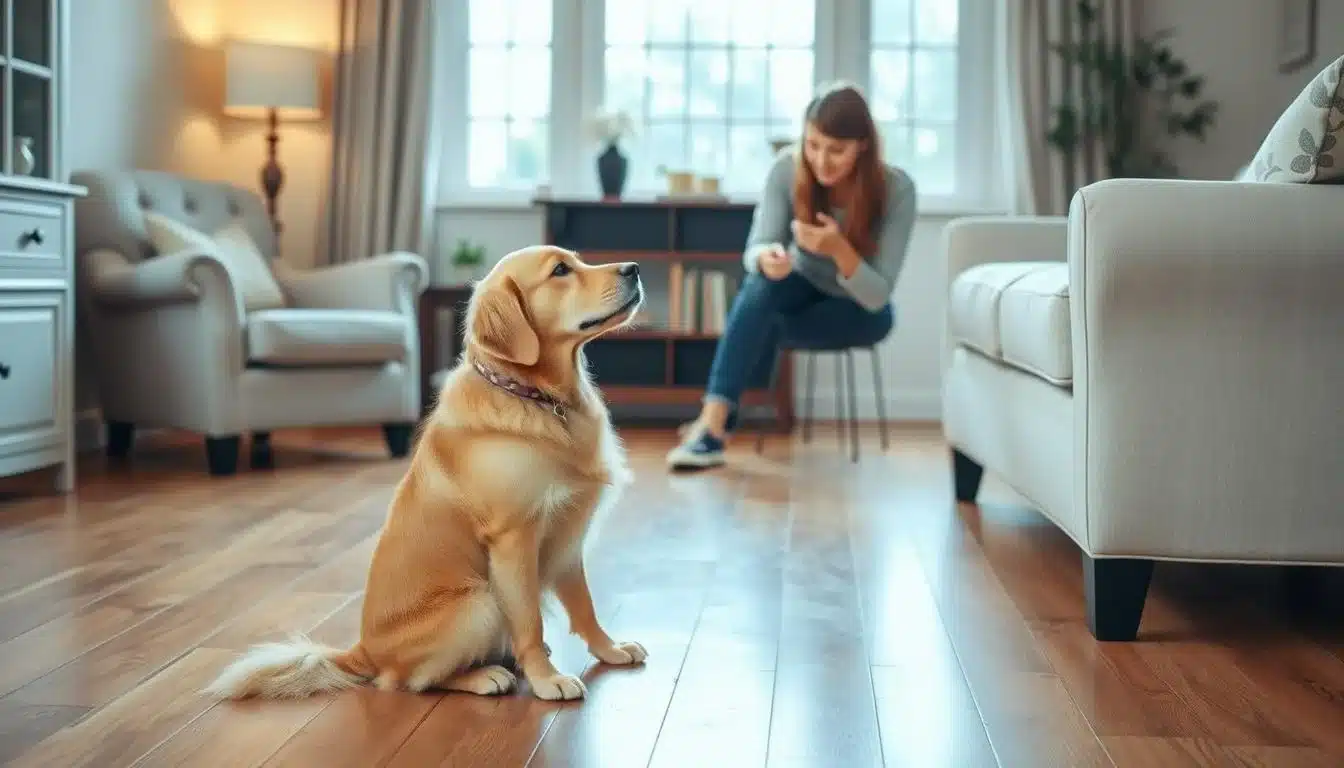
Having a dog can be incredibly rewarding, but it comes with challenges. My dog started barking at everyone and even the wind. This excessive barking changed our home's atmosphere.
I learned that while dogs can't always be silent, there are ways to reduce barking. This article shares expert tips on dog behavior. Training takes time, patience, and clear goals. Together, we can make our homes quieter and happier for our pets.
Key Takeaways
- Understanding the reasons behind your dog's barking is essential.
- Identifying triggers can help in applying the right bark training techniques.
- Consistent training routines lead to better results.
- Positive reinforcement is an effective method for encouraging calm behavior.
- Creating a calm environment can help reduce barking triggers.
- Engagement through play and exercise can alleviate boredom-induced barking.
Understanding Why Dogs Bark
Dogs bark to communicate, and it's key to understand why they do it. They bark for many reasons, and knowing these helps in training them. Let's look at three main types: territorial, attention-seeking, and compulsive barking.
Territorial Barking
Territorial barking happens when a dog wants to protect its area. They bark at strangers who come near their home. My dog gets really defensive when someone new comes to the yard.
This shows he wants to guard our territory. Knowing this helps us teach him not to bark so much when strangers are around.
Attention-Seeking Barking
Dogs also bark to get attention from their owners. They might bark to play, go outside, or for treats. My dog barks a lot until I talk to him.
It's important to understand this to avoid making the barking worse. Training them right is key.
Compulsive Barking
Compulsive barking is a bit more complicated. It often comes from anxiety or stress and can happen without a reason. Some dogs bark a lot, like they're in a trance, showing deep emotional issues.
Spotting compulsive barking is crucial. It helps us tackle the anxiety and create a good training plan.
Identifying the Trigger for Barking
Understanding why a dog barks is key to stopping it. By finding out what makes them bark, I can train them better. Dogs bark for many reasons, so it's important to watch their behavior closely.
Common Triggers for Barking
- Doorbells ringing
- Other barking dogs
- People passing by
- Noises from outside
- Unfamiliar animals
These things can make my dog bark a lot. Knowing what causes it helps me find ways to stop it.
Assessing Your Dog’s Behavior
Watching my dog helps me see what makes them bark. I take notes on when and why they bark. This helps me understand them better.
- Noting when the barking occurs
- Observing my dog’s body language during these instances
- Identifying any patterns related to specific triggers

How to Train a Dog Not to Bark
Training a dog not to bark too much starts with establishing training goals that are clear. Knowing what barking is okay and what's not is key. This helps me keep our training sessions consistent, which is crucial for a good bark control plan.
Establishing Training Goals
When I think about how to train a dog to stop barking, setting achievable goals is vital. By knowing what behaviors to encourage or avoid, I can see how we're doing. For example, I might aim to cut down on barking when people come over or when cars drive by.
- Identify specific situations where barking is excessive.
- Define appropriate responses for different scenarios.
- Regularly assess my dog's behavior to track improvement.
- Adjust training methods as needed based on my dog's reactions.
Using effective training tips for bark control in each session really helps. With clear rules and expectations, we both get to enjoy a quieter home.
Desensitization Techniques
Desensitization techniques are key in training dogs to control their barking. This method slowly introduces dogs to things that make them bark. It helps them get used to different situations, making them less anxious and calmer.
Gradual Exposure to Triggers
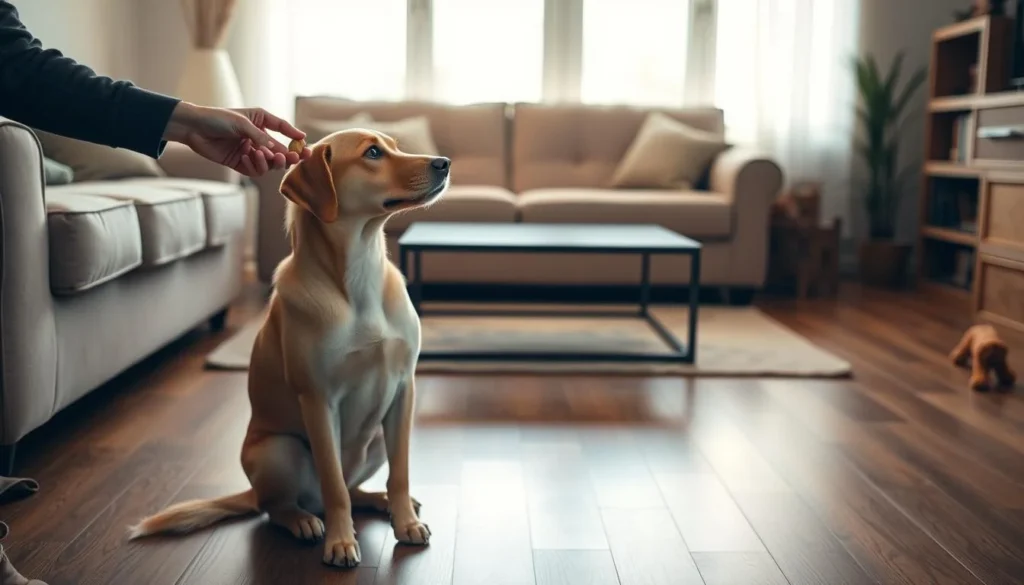
Starting with small amounts of stimuli helps dogs adjust without feeling scared. For example, when training for a mailman, I might start with a video or a brief appearance. I reward my dog with treats for staying calm. This teaches them that being quiet is good and stops them from barking at unexpected visitors.
Positive Reinforcement for Calm Behavior
Positive reinforcement makes desensitization techniques work better. When my dog stays calm, I give them treats or praise. This makes them more likely to stay calm in the future. Over time, I see less barking as my dog becomes less reactive and more composed.
| Trigger | Initial Exposure | Positive Reinforcement Method |
|---|---|---|
| Mailman | Watch from a distance | Treats for staying quiet |
| Vacuum Cleaner | Turn on in another room | Praise for calmness |
| Doorbell Sound | Play from a speaker | Treat for no barking |
Using these desensitization techniques and positive reinforcement makes our home more peaceful. It builds trust and understanding, reducing barking.
Effective Bark Training Techniques
Training my dog to stop barking too much involves specific methods that work well. Using the "quiet" command helps keep our home peaceful. These training techniques help me teach good behavior and avoid things that make my dog bark.
Teaching the "Quiet" Command
To teach the quiet command, I use the same words and hand signals every time. I wait patiently for my dog to stop barking. When they do, I give them treats or praise right away.
Practicing this command in different places makes it stronger. My dog learns that being quiet is rewarded.
Using Positive Reinforcement
Positive reinforcement is key in training my dog to bark less. The more I reward them for being quiet, the more they learn to stay calm. Using different treats makes training fun.
Staying calm when my dog barks helps them learn the right behavior. It shows them what I want them to do.
| Technique | Description | Outcome |
|---|---|---|
| Quiet Command | Teaching a specific command to cease barking. | Reduced barking frequency. |
| Positive Reinforcement | Rewarding desired behaviors with treats or praise. | Increased compliance with commands. |
| Consistency | Practicing techniques regularly across different situations. | Stronger understanding and response to commands. |
Utilizing Commands to Control Barking
Teaching a dog barking commands can really help cut down on unwanted barking. I start with the "speak" command. This lets my dog know when it's okay to bark on command. Then, I celebrate this to introduce the "quiet" command, teaching my dog when to stop.
Implementing the "Speak" Command
Here's how I train my dog with the "speak" command:
- Get my dog’s attention with a favorite treat.
- Use a clear, firm voice to say “speak.”
- Reward my dog right away for barking, linking the action.
This approach helps my dog learn barking commands well. It shows them when to bark and helps me manage barking better.
Transitioning to "Quiet"
After my dog gets the "speak" command, I move to the "quiet" command. Here's how:
- Start with the "speak" command to get barking.
- When my dog barks, say “quiet” calmly.
- Give a treat and praise as soon as they stop barking.
This way, my dog learns to respond to commands and knows when to be quiet. Using commands to control barking makes our home more peaceful.
Creating a Calm Environment
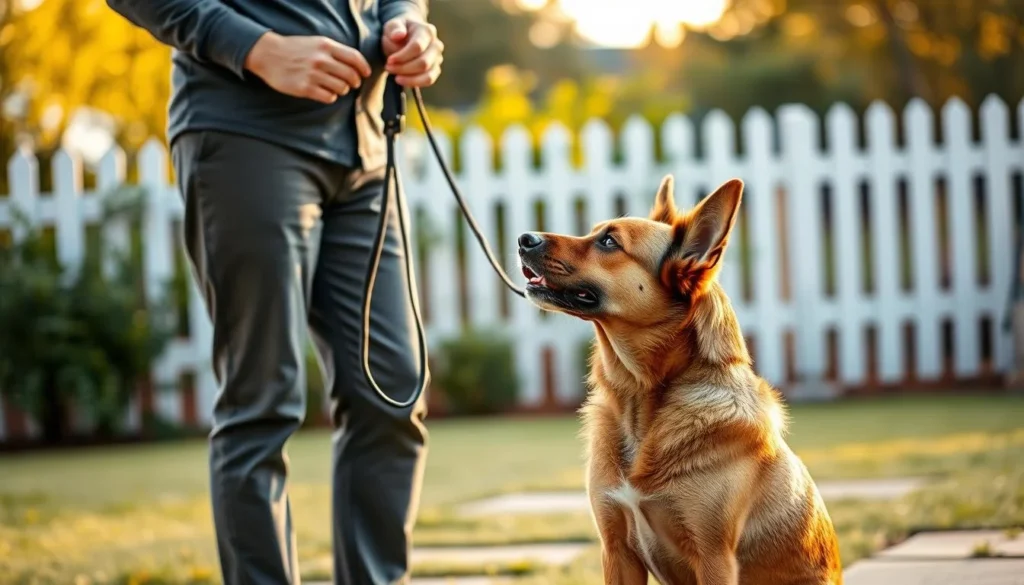
Creating a peaceful space is key for my dog's happiness. By making a calm pet environment, I can lower their anxiety and barking. I do this by removing things they see and using sound to cover up loud noises.
Removing Visual Stimuli
Dogs get upset by what they see outside, like people or other animals. To block these sights, I use curtains or blinds on windows. This easy change helps cut down on visual triggers that make my dog bark.
Using White Noise to Mask Sounds
Outside sounds can really upset dogs and make them bark. To fix this, I use white noise machines or soft music. These sounds help cover up loud noises, making a calmer place for my dog. By adding these sounds to the background, I help reduce barking and create a peaceful space for my pet.
Alleviating Boredom to Reduce Barking
One effective strategy for reducing boredom-related barking involves incorporating regular play and exercise into your dog's routine. When a dog feels mentally and physically stimulated, they are less likely to vocalize out of frustration or boredom. Engaging your dog in activities not only helps eliminate excess energy but also fosters a stronger bond between you and your pet.
Engaging Your Dog in Play
Interactive games such as fetch or tug-of-war can be excellent for engaging your dog in fun and stimulating ways. These activities provide your dog with both physical exercise and mental challenges, which are crucial for maintaining their overall well-being. I often notice how excited my dog becomes when I take the time to play with them, resulting in a quieter environment at home.
Scheduled Walks and Exercise
Establishing a routine for scheduled exercise for dogs is essential. Dogs thrive on consistency, and daily walks will not only help in reducing boredom-related barking, but they also offer opportunities to explore and socialize. I recommend setting aside specific times each day for walks, which can greatly enhance your dog's mood and reduce the likelihood of excessive barking.
| Activity | Description | Benefits |
|---|---|---|
| Fetch | A game where you throw an object for your dog to retrieve. | Burns energy, develops retrieving skills, and enhances bonding. |
| Tug-of-War | A game where you pull on opposite ends of a toy with your dog. | Encourages interaction, strengthens jaw muscles, and provides mental stimulation. |
| Walking | Leisurely strolls in the neighborhood or parks. | Promotes exercise, socialization, and exploration. |
| Obstacle Course | Using items like cones and tunnels for training. | Enhances agility and obedience while making exercise fun. |
Anti-Stress Devices for Bark Control
As a dog owner, I want my furry friend to feel calm and secure. Anti-stress devices for dogs are very effective in managing anxiety-related barking. They help my pup live a happier, quieter life.
Pheromone Collars
Pheromone collars are a popular choice for pet owners. They release calming scents that mimic a mother dog's pheromones. This scent helps anxious dogs feel more relaxed in stressful situations.
Anxiety Wraps for Dogs
Anxiety wraps for dog calming offer gentle pressure around a dog's torso. It's like a soothing hug. I've seen a big drop in my dog's anxiety during thunderstorms or fireworks.
| Device Type | Benefits | How It Works |
|---|---|---|
| Pheromone Collars | Calms anxiety effectively | Releases calming scents |
| Anxiety Wraps | Provides comfort and security | Gentle pressure around torso |
Investing in these anti-stress devices has made a big difference for my dog. Each device meets different needs, helping me find what works best for my furry friend. Their effectiveness is truly worth exploring for anyone with an anxious pup.
Professional Help for Barking Issues
Some barking problems are tough to fix by ourselves. At this point, getting help from a skilled professional is key. Hiring professional dog trainers or behaviorists can offer strategies made just for your dog's barking issues.
There are many training methods, each with its own strengths. Knowing about these helps me find the right professional for my dog. Working with a dog behaviorist can give deep insights into my pet's behavior and what makes them bark.
Hiring a Dog Trainer or Behaviorist
Finding the right trainer or behaviorist is crucial for tackling barking problems. They should have experience, good reviews, and know many training techniques. I'll look for someone who focuses on positive reinforcement in their training.
Understanding Different Training Approaches
There are many training methods for barking, each for different situations. Some common ones include:
- Positive Reinforcement: Rewarding calm behavior helps dogs bark less.
- Behavior Modification: Changing barking behavior through consistent training.
- Counterconditioning: Teaching dogs to react differently to triggers, reducing barking.
Exploring these methods during consultations helps me choose the best one for my dog and me.
Using Bark Control Collars Effectively
Understanding the differences in bark control collars is key. Many dog owners seek ways to stop excessive barking. Collars like spray and shock types offer different solutions.
Differences Between Spray and Shock Collars
Spray collars release a mist when a dog barks. This mist often smells bad, like citronella. It's a humane way to stop barking without harm.
Shock collars, on the other hand, give an electric shock for barking. Many are worried about these collars because they can make dogs anxious or aggressive. They might not even solve the barking problem.
Choosing the right collar is important. It should keep both the dog and owner safe and happy.
Long-term Maintenance of Bark Training
Keeping your dog trained for the long haul takes hard work. It's key to make training a regular part of your routine. This keeps your dog's skills sharp and strengthens your bond.
Regular practice is important. It makes your dog more comfortable in different places. This is thanks to consistent training and socialization.
Consistency in Training Sessions
Consistency is crucial for good behavior in dogs. Short, regular training sessions are best. They make learning fun and keep your dog looking forward to it.
Regular Socialization Opportunities
Introducing your dog to new people and places helps a lot. It makes them calm in situations they used to find scary. Regular socialization is key for long-term success.
In short, consistent training and socialization are the keys to success. These habits help your dog live a happy, well-adjusted life. With the right focus, your dog can handle new situations better, leading to less barking and a peaceful home.
Conclusion
Learning how to train a dog not to bark too much is a journey. It's all about understanding what makes my dog bark. This could be to protect their territory, get attention, or because of compulsive behavior.
By knowing these reasons, I can choose the right training methods. This approach requires patience and sticking to a plan.
To train my dog positively, I use methods like desensitization and teaching commands. Creating a calm space is also key. Plus, keeping my dog busy with exercise and play helps a lot.
Changing behavior takes time and effort. It's not something that happens quickly. But with dedication, we can make progress.
To live peacefully with my dog, I use many strategies. These include training and using tools to help them relax. By doing this, I'm not just teaching them to be quieter. I'm also learning more about how they communicate, which strengthens our relationship.