As a dog owner, I've faced the challenges of potty training. It can be frustrating when your dog forgets the rules, leaving surprises around the house. But there's hope! Teaching your dog to go to the bathroom in one place keeps your home clean and establishes a routine.
Imagine stepping outside to a tidy yard, free of messes. You'll know your dog knows where to go. In this article, I'll share effective dog potty training tips. These will help you and your dog navigate this essential part of life together.
Key Takeaways
- Establish a designated bathroom area for your dog to encourage consistency.
- Understand your dog’s bathroom behavior to better guide their training.
- Utilize positive reinforcement to make potty training a rewarding experience.
- Implement commands and cues during training for clarity.
- Maintain supervision during the training process to reinforce good habits.
- Choose an appropriate surface for your dog's potty spot to enhance comfort.
Understanding Your Dog's Bathroom Behavior
Training a dog to go outside is easier when you understand their natural behaviors. Dogs are territorial and prefer certain spots for bathroom breaks. This knowledge helps me tailor my training to their needs.
Creating a routine is key for my dog's bathroom habits. Dogs love consistency, and a regular schedule helps them know when to go. I've noticed that regular feeding times make their bathroom habits more predictable.
I also watch for signs like circling or whining. These signals mean it's time for a bathroom break. By recognizing these cues, I can train my dog more effectively.
Learning about my dog's behaviors strengthens our bond. The more I understand how dogs think, the better I can train them. This makes the process of training them to go outside easier.
Picking Your Dog’s Potty Spot
Choosing the right spot for your dog's bathroom is key for good training. Finding a good potty spot is good for both you and your dog. Knowing what makes a good spot is important for success. Here are some tips to help you pick the right spot.
Factors to Consider When Choosing a Spot
When training your dog, the size and how easy it is to get to the spot matter a lot. The spot should be big enough, at least five times the size of your dog. This makes sure your dog feels comfortable.
- The surface should be soft and inviting, such as grass, mulch, or gravel, as dogs tend to prefer these materials over harder surfaces.
- Location is key; a less trafficked area reduces distractions and helps your dog maintain focus.
- Dogs gravitate towards familiar spots, so picking a location they have previously shown interest in will aid in the training process.
Types of Surfaces Preferred by Dogs
Dogs have their favorite surfaces. They like surfaces that are comfortable and supportive during their bathroom activities.
| Surface Type | Benefits |
|---|---|
| Grass | Soft, natural, and familiar; encourages consistent use. |
| Mulch | Comfortable and provides drainage; great for maintaining cleanliness. |
| Gravel | Firm yet forgiving; helps prevent muddy paws. |
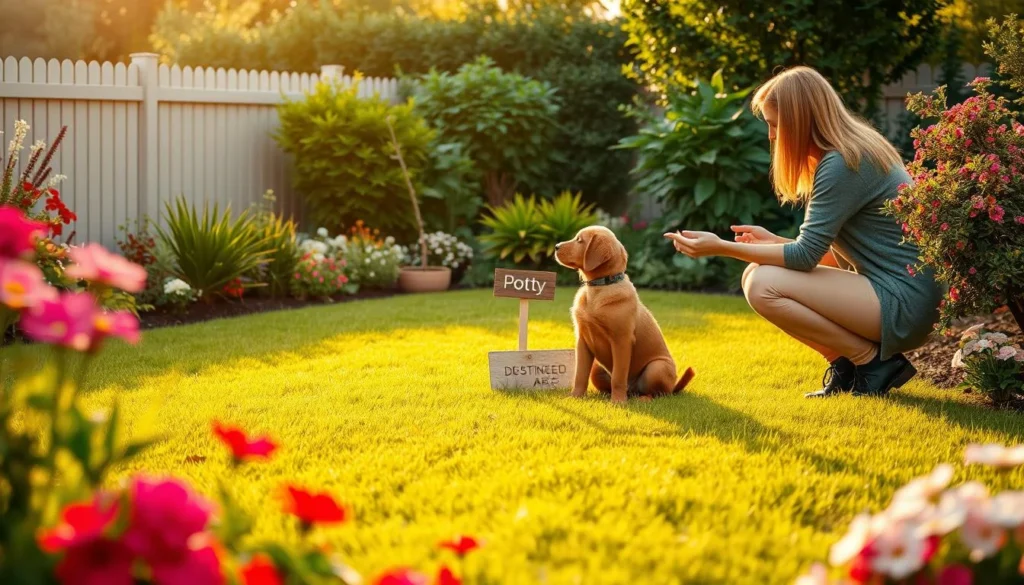
How to Teach Dog to Go to the Bathroom in One Place
Teaching my dog to go to the bathroom in one place takes patience and a clear plan. By following specific steps, the training becomes easier and more rewarding. A consistent routine and positive reinforcement help my dog learn where to go.
Key Steps in the Training Process
I start by picking a specific spot in my yard for my dog to go. It's important to always use the same spot so my dog gets used to it. When I see my dog needs to go, I take them to the spot right away.
If there's waste in the wrong place, I move it to the right spot. This teaches my dog that the chosen area is for potty time.
How to Use Positive Reinforcement
When my dog goes potty in the right spot, I reward them with praise or a treat. This positive feedback encourages them to do it again. Keeping the area clean is also key, as it makes the experience better for my dog.
By consistently practicing and using positive reinforcement, my dog learns where to go.
| Step | Description |
|---|---|
| 1. Choose a Potty Spot | Select a specific area where you want your dog to go. |
| 2. Move Existing Waste | Relocate any waste from undesired areas to the potty spot. |
| 3. Consistency | Take your dog to the same spot each time potty is needed. |
| 4. Immediate Reward | Provide praise or treats right after your dog goes in the right area. |
| 5. Clean Environment | Keep the potty area clean to encourage continued use. |
Effective Training Techniques for Dogs to Go in One Place
Training your dog to go in one place needs a consistent approach and good strategies. A routine is a powerful tool. By setting regular times for bathroom breaks, dogs learn when it's time to go outside. This predictability helps shape good habits.
Establishing a Routine
Sticking to a routine greatly improves success. Choose specific times for bathroom breaks. This helps your dog know when it's time to go. Watching your dog's behavior helps you adjust the routine as needed.
Using Commands and Cues
Using a verbal command like "Go potty" during bathroom breaks helps. Add positive reinforcement with treats or praise when they go in the right spot. This creates a clear link between the command, action, and reward, key for training.
| Time for Potty Break | Dog's Activity | Possible Indicators |
|---|---|---|
| Morning | Waking Up | Restlessness, sniffing |
| After Meals | Eating | Pacing, circling |
| After Playtime | Playing | Looking towards door, whining |
| Before Bed | Wind Down | Increased sniffing, sitting by door |
By using these techniques and setting potty routines, you'll train your dog well. Keep it consistent and patient as they learn new habits.
The Importance of Supervision During Training
Supervision is key in dog training, especially for potty training. Watching my dog closely helps me know when they need to go outside. This is especially true after meals or during playtime.
By being proactive, I can guide my dog to the right spot. This makes training easier and more effective.
Adding dog potty supervision tips to my routine has helped a lot. I keep a schedule for bathroom breaks. This encourages my dog to go potty in the right place.
When my dog goes potty correctly, I reward them right away. This builds a strong connection between them and potty training.
Being attentive during training strengthens our bond. It makes my dog feel safe and supported. With regular supervision, I see my dog's progress and it makes training fun for both of us.
| Supervision Tips | Benefits |
|---|---|
| Monitor after meals | Prevents accidents indoors |
| Stay close during playtime | Encourages timely bathroom breaks |
| Use a consistent schedule | Reinforces learning and habits |
| Reward successful potty behavior | Strengthens positive associations |
| Be patient and observant | Builds confidence in your dog |
How to Use Leash Training for Bathroom Success
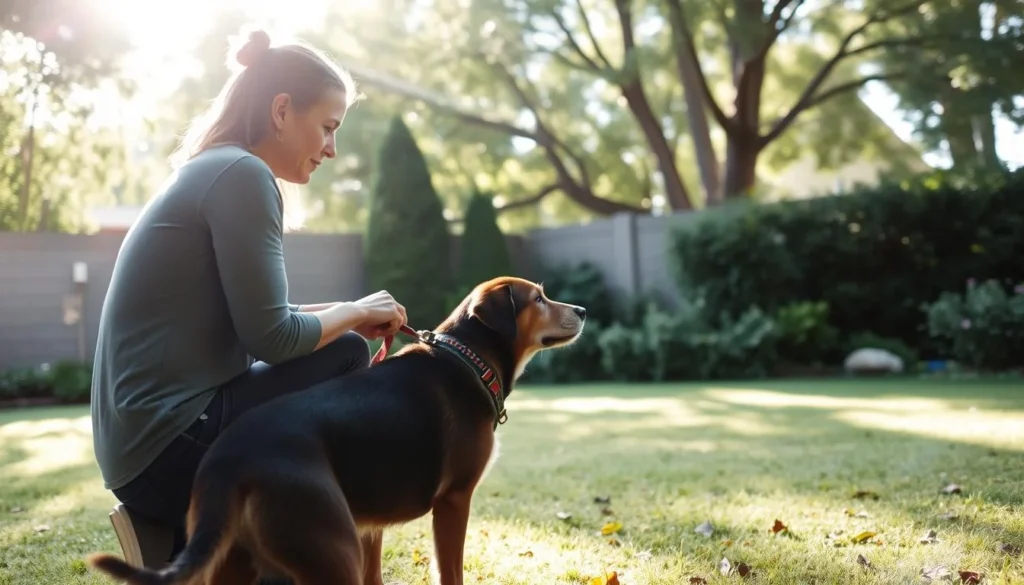
Leash training is key for potty training dogs. It helps guide them to the right spot. This way, my dog can focus better without getting distracted.
When we go outside, the leash helps me show my dog where to go. It saves time and helps my dog learn where to go. This makes it easier for them to follow a routine.
Keeping Your Dog Focused on the Potty Area
Keeping my dog on a leash helps me catch any straying. This quick action is important for good behavior. It also keeps the training positive and focused.
Addressing Common Challenges in Dog Potty Training
When I'm potty training my dog, I face some common issues. Marking behavior and not wanting to go outside are big ones. Knowing what these mean helps me tackle them better.
Dealing with Marking Behavior
Marking is a big problem for male dogs during potty training. I try to get my dog to go on command. If I see them about to mark, I quickly take them to the potty area.
This spot is where they should go. I use commands to teach them this. It helps them not to mark everywhere.
Handling Reluctance to Go Outside
Some dogs don't want to go outside to pee. Leash training helps a lot. It keeps them focused on going to the potty.
Letting them sniff around a bit helps too. Then, I reward them when they go outside. This makes them want to go there more.
Best Practices for Teaching Dogs Potty Habits
Teaching dogs to use the potty requires careful planning. A clean and welcoming spot is key. I've found that a tidy area makes my dog associate it with good potty experiences.
Creating a Clean and Welcoming Potty Spot
Keeping the potty area clean is crucial. I clean up messes and remove debris often. This makes the spot a reliable place for my dog to go.
A clean space also helps my dog use it more often.
Using Scent to Encourage Potty Behavior
Using familiar scents can also help. Dogs are drawn to smells they know. I use their old potty spots' scent or natural attractants to encourage them.
Maintaining Cleanliness in Your Yard
Keeping my yard clean for dogs is key for their health and happiness. Regular cleaning of the potty area stops odors and messes. This keeps my dogs happy to use it.
When cleaning dog potty areas, picking up solid waste right away is important. Using waste bags and a scooper makes it easy and clean. Then, I wash the surfaces with a pet-safe cleaner to remove smells and keep it fresh.
Deodorization solutions, like natural enzymatic cleaners, are great for tough smells. They break down waste at a molecular level, making the area welcoming for my dogs. These steps help keep my yard clean and encourage my pets to use the right spot.
Establishing a Designated Bathroom Area for Your Dog
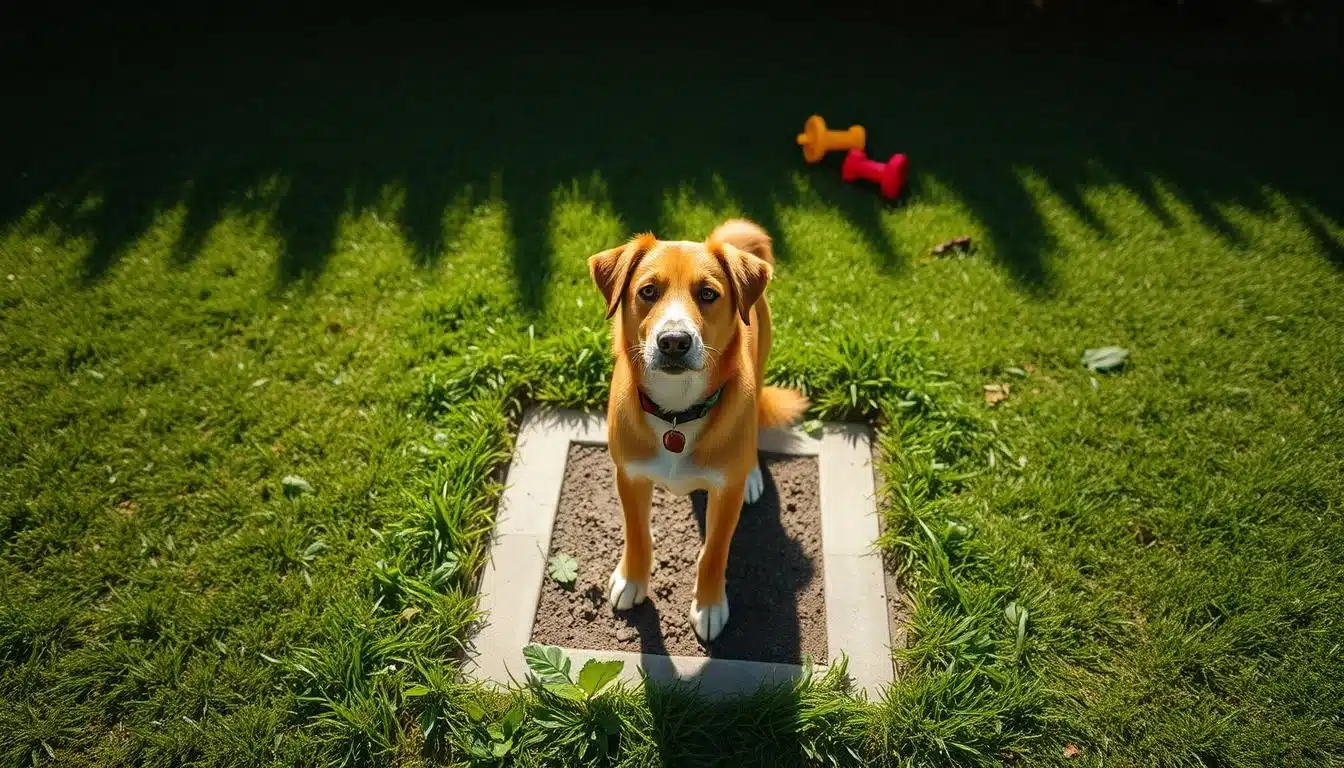
Setting up a special bathroom area for your dog is key to keeping your home clean. I found that having a specific spot for dog potty helps my pet know where to go. This makes my yard neat and makes my dog feel more at ease.
Choosing the right spot for this area is important. It should have good drainage and be easy to get to. Keeping it in the same place helps my dog learn it fast. I make sure it's marked well so my dog knows where to go.
Having a special bathroom area makes my dog more relaxed when it's time to go. It makes potty training easier for both of us. With time and patience, my dog learned to use this spot without any trouble.
Training Dogs to Use Designated Bathroom Areas
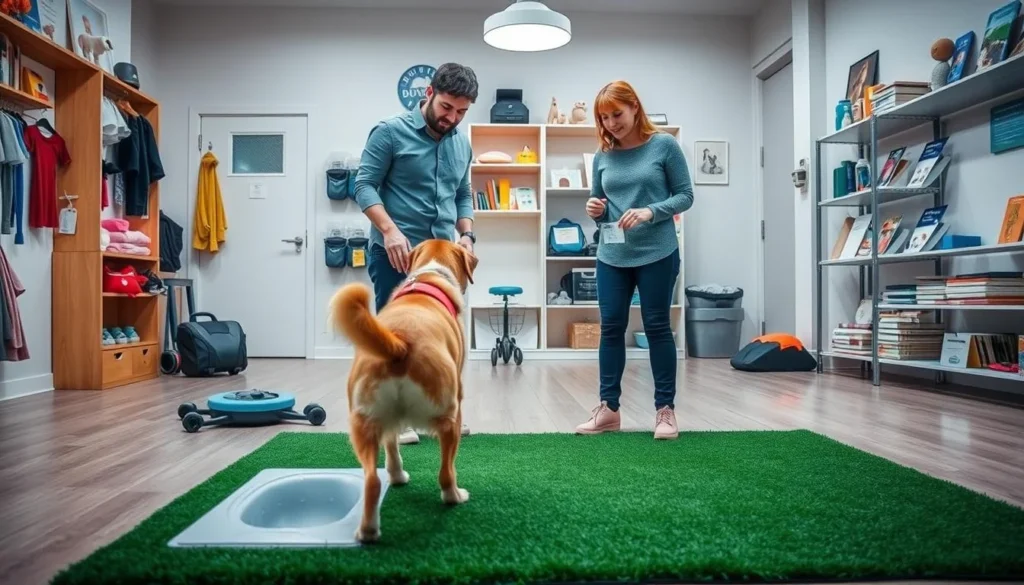
Training dogs to use specific bathroom spots can make potty training easier. Smart dog potties are a great tool for this. They help you keep an eye on your dog's bathroom habits.
Incorporating the Use of Smart Dog Potties
Smart dog potties make training more convenient. They alert you when your dog has done their business. This helps you reward them right away, which is key in training.
These potties are perfect for those without outdoor spaces. They look and feel like the real thing, helping dogs adjust fast. Using them, I found my training sessions were more fun and productive.
Rewarding Success in Potty Training
Recognizing and rewarding dogs during potty training can greatly impact their behavior. When my dog goes potty in the right spot, I celebrate. I use treats, praise, or playtime to show my joy. This makes the dog feel good about doing the right thing.
Using rewards right away helps my dog understand what's expected. It makes them want to go potty again. High-value treats are especially effective in making training successful.
Having a routine helps dogs know what to expect. I reward my dog every time they go potty. This makes them see going potty as a positive thing.
| Reward Type | Benefits |
|---|---|
| Treats | Creates a tangible reward that dogs can savor, enhancing motivation. |
| Praise | Encourages positive emotional feedback and strengthens the bond. |
| Playtime | Provides a fun way to celebrate success, making training enjoyable. |
Being mindful of rewards and timing makes potty training fun. It's not just about training; it's about bonding with our dogs. By rewarding them, we achieve our goals and strengthen our relationship.
How Long Does It Take to Train Your Dog?
The time it takes to potty train a dog varies a lot. It depends on the dog's age and personality. Puppies might learn in a few weeks, while older dogs might take longer or need more practice.
Some dogs learn new rules fast, understanding them in just a few days. Others might need more time. Being consistent, patient, and using positive reinforcement helps a lot. I found setting a regular potty schedule really helped speed up the training.
Here's a quick look at how long training might take for different ages:
| Dog Age | Typical Duration of Training |
|---|---|
| Puppies (8-12 weeks) | 4-6 months |
| Young Dogs (6 months - 2 years) | 2-4 months |
| Adult Dogs (2+ years) | 1-3 months |
Knowing how long to train a dog helps set realistic goals. I kept track of my dog's progress and adjusted my training as needed. Taking breaks in the training can also help, so being consistent is key.
Conclusion
Training your dog to go potty is all about being consistent and patient. I've learned that using the right methods makes training faster and strengthens our bond. Knowing how dogs behave helps us create a routine that suits us both.
Remember, every dog learns differently. It's key to stay committed and adapt your approach as needed. With persistence, keeping your yard clean is achievable, benefiting both you and your pet.
My experience with potty training has been incredibly rewarding. It's not just about teaching your dog to go potty. It's about deepening your connection and making your daily life together better.