Being a pet owner can be both rewarding and challenging. When your puppy starts play biting, it can be frustrating. Those small bites might seem harmless but can become a problem if not stopped early.
I remember my puppy would bite my fingers during play. It was hard to know how to stop it. Learning about puppy behavior is key to a good relationship with them. In this guide, I'll share ways to stop your dog from play biting. This will make playtime better for both of you.
Key Takeaways
- Understanding puppy behavior is essential to stop puppy biting.
- Addressing play biting early can prevent future issues.
- Effective dog training techniques can help curb biting behavior.
- Redirecting mouthy behavior is a key strategy.
- Positive reinforcement is crucial in any training regimen.
Understanding Puppy Behavior and Play Biting
Puppies are naturally curious and playful. They often engage in play biting as part of their development. This behavior is vital for their learning process, helping them explore social interactions and figure out acceptable boundaries.
Through biting and mouthing, puppies communicate and establish their play preferences with their littermates. It's a way for them to learn and grow.
Understanding this aspect of puppy behavior is key. It's not a sign of aggression. Instead, it shows their need to socialize, play, and learn about their environment. When puppies lack proper outlets for their energy and curiosity, they might nip at humans.
This leads pet owners to seek ways to stop dog nipping. It's important to teach puppies appropriate play behavior. Interactions with other dogs help them learn bite inhibition, controlling the strength of their bites.
With patience and guidance, pet owners can redirect their puppies' energy positively. This ensures healthy socialization and impulse control as they grow.
The Importance of Bite Inhibition in Dogs
Bite inhibition is key for dogs, especially when they're puppies. It helps them control the force of their bites. This way, they don't hurt anyone by accident during play.
Teaching puppies about bite inhibition is vital. They learn this skill by playing with their siblings. If a puppy bites too hard, a sibling might yelp. This teaches the puppy to be gentler.
Adult dogs without this skill can hurt people when they get excited or stressed. That's why teaching puppies early is so important. It helps them understand that being gentle is important.
As they grow, they learn that play should be fun for everyone. This includes humans.

How to Teach Bite Inhibition
Teaching bite inhibition is key to stopping puppy biting. It makes a dog well-mannered and safe to play with. Two strategies work well: using high-pitched yelps and time-outs.
Utilizing High-Pitched Yelps for Correction
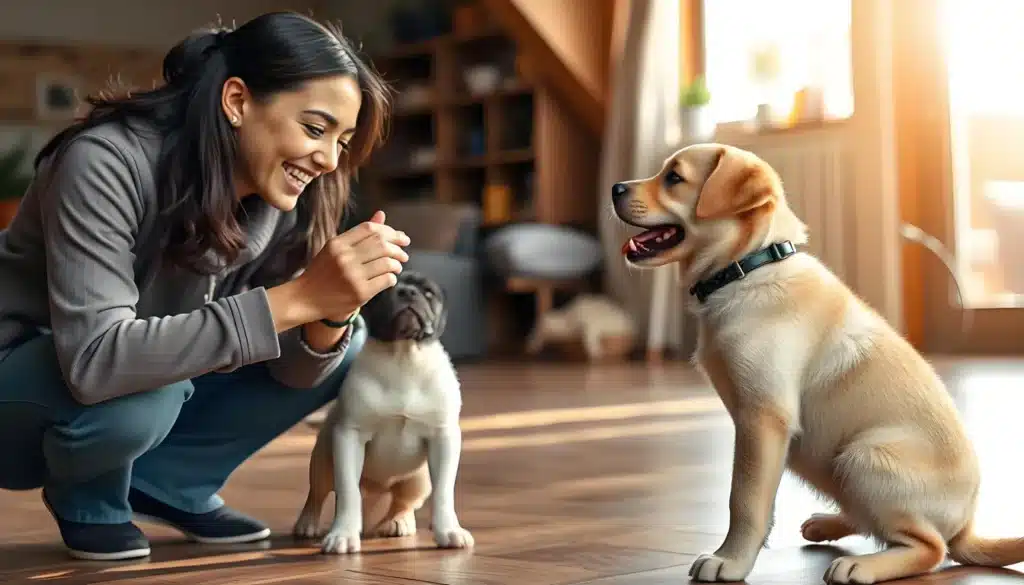
When my puppy bites too hard, I use a high-pitched yelp. This sound is like what a dog would say during play. It tells my puppy that biting too hard is not okay.
Over time, my puppy learns to bite softer. They see that biting hard means playtime ends.
Using Time-Outs Effectively
If yelps don't work, I use time-outs. When my puppy bites too hard, I stop playing. This teaches them that biting hard means no more fun.
By doing this often, my puppy learns the lesson. They understand that biting hard means playtime stops.
Identifying When Play Biting Becomes Aggressive Behavior
As a dog owner, it's key to know the difference between playful bites and aggression. Playful bites are usually soft and happen when the dog is relaxed. But, aggressive behavior shows up as hard bites, growling, or stiff body language. Spotting these changes early helps manage my dog's playtime.
If my puppy's bites turn aggressive, it might mean they're scared, frustrated, or have had bad experiences before. Watching my dog closely during play helps keep everyone safe.
Understanding the difference helps me find the right help, like a trainer or behaviorist. Knowing when behavior is aggressive lets me take steps to keep our bond strong and positive.

Stop Dog from Play Biting: Effective Strategies
To stop a dog from play biting, using the right strategies is key. Redirecting their focus helps teach them good habits from the start.
Redirecting Mouthy Behavior with Toys
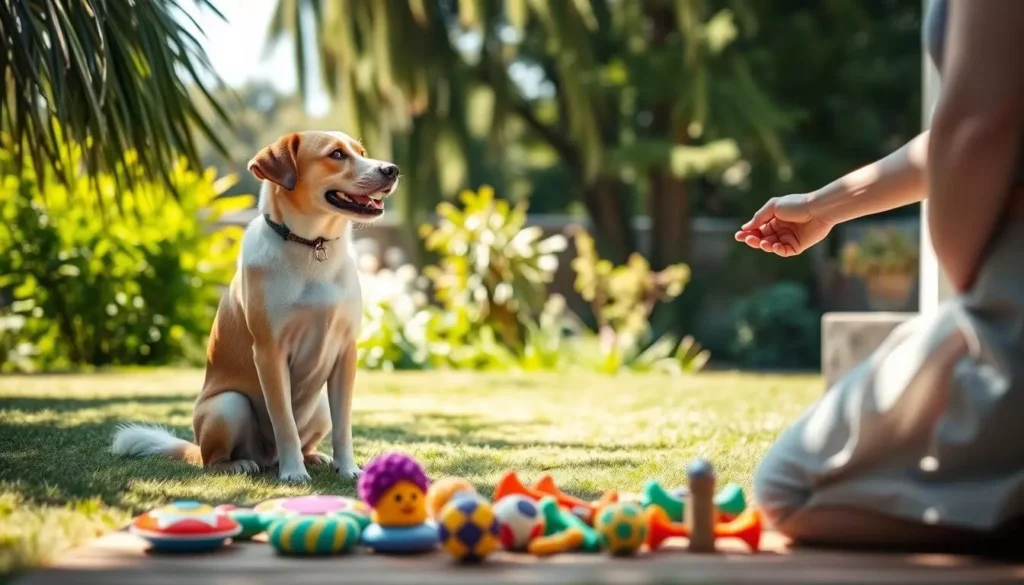
Redirecting mouthy behavior is a main tactic I use. I give my puppy toys made for biting and chewing. This way, they have a fun outlet for their natural urge to bite. Here are some tips:
- Always have a variety of toys available.
- Introduce different textures to maintain engagement.
- Encourage play during their active moments to replace biting behavior.
Encouraging Non-Contact Play Techniques
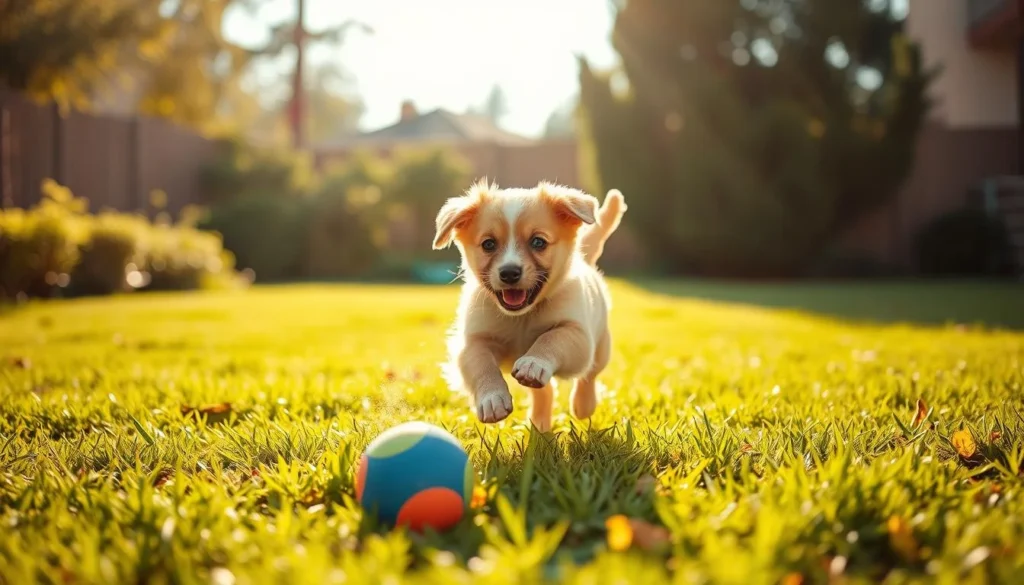
Another method is to encourage non-contact play. Games like fetch or hide-and-seek keep them busy and away from biting. These activities also help strengthen our bond and teach obedience. Here’s how I make these games happen:
- Use balls or flying discs for fetch.
- Hide treats or favorite toys for scavenger hunts.
- Involve other dogs to encourage social play without biting.
Providing Teething Toys for Puppies
Puppies face a tough teething phase that can be quite uncomfortable for them. It's crucial for me to offer the right options to help them get through it. Teething toys for puppies are perfect, allowing them to ease gum pain and satisfy their urge to chew.
By giving my puppy their own teething toys, I keep them from biting my hands and feet. Soft rubber or fabric toys work best. They're gentle on their gums and keep them busy. This way, my puppy is less likely to bite, making it easier to stop dog biting.
With the right teething toys, my puppies' biting urge during play decreases. These toys not only support their health but also strengthen our bond through play. By providing the right tools, I help them get through the teething phase more comfortably.
Engaging Your Dog in Interactive Play
Playing with my dog strengthens our bond and gives them a way to release energy. Games like fetch or tug-of-war help them not nip at hands or clothes. These activities keep their mind and body active, which is key for a happy puppy.
It's vital to have structured play sessions with clear rules. Adding obedience training to playtime teaches my dog important skills. This helps them learn to play without biting, showing them how to have fun the right way.
Interactive play also keeps my dog from getting bored. It creates a positive space where they learn good behaviors. The more we play together, the better we communicate, making my dog happier and more well-behaved.
Helping Your Dog Burn Off Excess Energy
Managing a puppy's energy is key to stopping them from biting. Regular physical exercise is a great way to keep them active. Activities like long walks, runs, or playtime in the yard help them burn off energy.
When puppies get enough exercise, their behavior improves. This can greatly reduce the urge to bite hands.
Regular Exercise and Socialization
Socialization is vital for a puppy's health. Letting them play with other dogs teaches them how to play right. It boosts their confidence and reduces frustration that can lead to biting.
Regular exercise and socializing with other dogs make them less likely to mouth. This is because they learn to interact in other ways.
Playing with Other Dogs
Playing with other dogs is a great way to keep your puppy active. Supervised playdates help them learn from each other. They also learn natural boundaries that reduce bad behavior.
By letting my puppy play with friends, their behavior has improved a lot. Especially when they get too excited and try to bite hands.
Positive Reinforcement in Dog Training
Positive reinforcement training is key when trying to stop play biting. By rewarding my dog for calm and gentle play, I encourage good behavior. Treats or praise help my dog link gentle play to positive results.
This method not only stops biting but also strengthens our bond. As I use rewards in training, my dog becomes more interested and eager to learn. It's a method that works well in many situations, making my dog a well-behaved friend.
Here's a simple table showing the benefits of positive reinforcement in dog training:
| Positive Behavior | Reinforcement Methods | Long-Term Effects |
|---|---|---|
| Gentle Play | Treats, Praise | More Calm Interactions |
| Obedience | Clicker Training, Rewards | Better Listening Skills |
| Socialization | Positive Experiences with Other Dogs | Confidence in New Situations |
By focusing on positive behaviors, my dog becomes happier and more well-adjusted. Consistent use of these strategies leads to big improvements in my dog's behavior. It shows how joy can be a powerful tool in learning.
What Not to Do When Your Dog is Play Biting
Dealing with a dog that play bites can be tough. It's important to know what not to do. Some actions might make things worse instead of better.
Avoid Physical Punishment
Physical punishment doesn't work for play biting. It can make your dog scared and aggressive. I use positive methods like training and redirection to teach good behavior.
Do Not Encourage Rough Play
Rough play can lead to bad biting habits. It's best to keep playtime calm and gentle. This helps set the right tone for play and stops unwanted nipping.
Consulting Professional Dog Trainers
When my puppy keeps biting, even after I've tried to train them, I know it's time to get help. Professional dog trainers are experts who can spot problems I might not see. They create special training plans for my dog's needs.
Working with a trainer is more than just getting advice. It's about building a team that helps my dog change for the better. Trainers teach me how to stop my dog from biting and help us bond stronger.
Conclusion
Understanding my puppy's behavior is crucial to stop them from play biting. Puppies use their mouths to explore, so teaching them to bite gently is key. Using high-pitched yelps and toys to distract them helps a lot.
Positive reinforcement training has also been effective. Rewarding my pup for gentle play and setting clear boundaries helps. It's a lot of work, but it's worth it for a well-behaved dog.
Getting professional advice has been a game-changer. Trainers offer solutions that fit my dog's unique needs. By using all these methods, I've created a safe space for my dog to play gently. This has made our bond stronger and more joyful.