
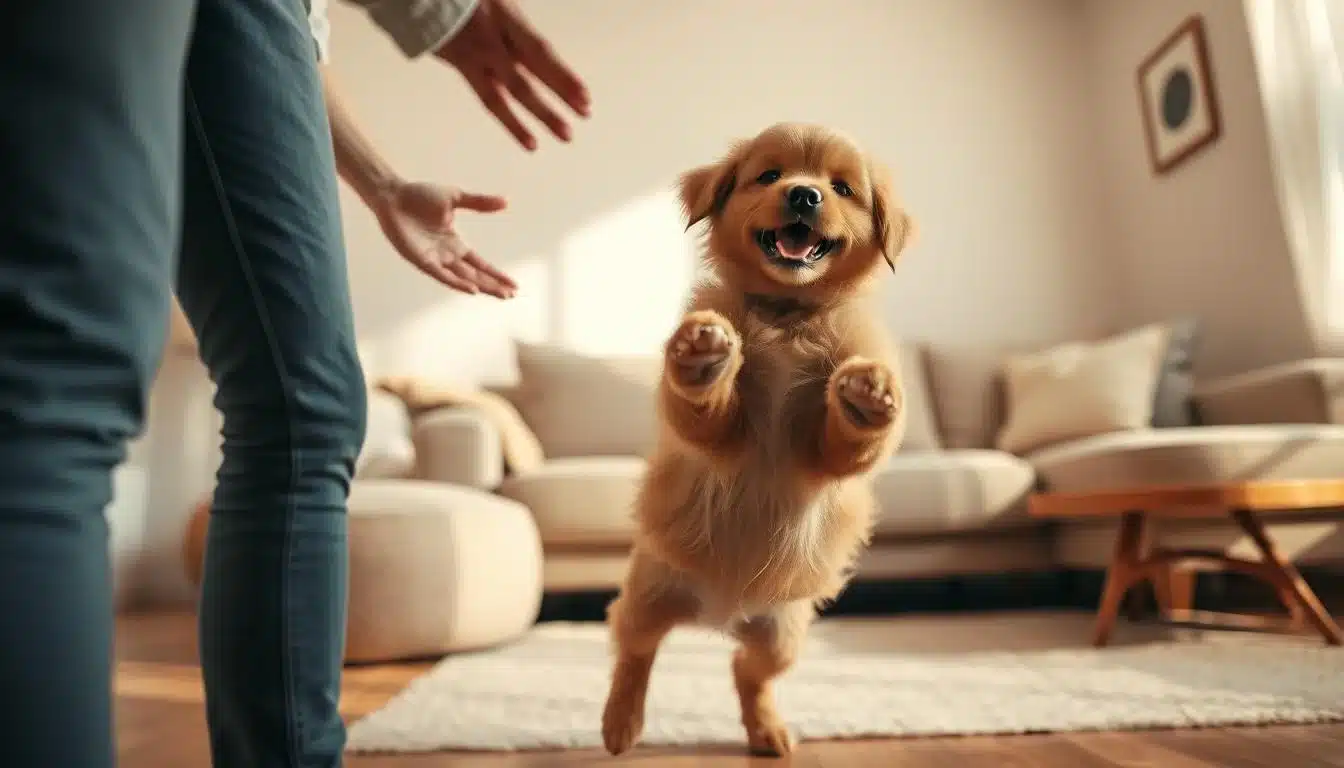
As a devoted dog owner, seeing your puppy excitedly jump when you come home is heartwarming. This joy is contagious, but it's important to manage it for a balanced relationship. If you're looking to stop your dog from jumping too much, you're in the right place. This guide will show you how to turn that excitement into more polite greetings.
Key Takeaways
- Understanding the reasons behind puppy jumping can aid in addressing the behavior.
- Teaching alternative behaviors is essential in training your puppy.
- Positive reinforcement encourages desired actions rather than pushing against the jumping habit.
- Creating a structured environment helps set your puppy up for success.
- Being consistent with training improves your dog's learning process.
- Engaging in obedience training can significantly reduce unwanted jumping.
Understanding Why Puppies Jump
Puppies jump as a natural way to greet, showing their joy and excitement. This behavior is a key social signal, showing they want to play. It's important to know why they do this to handle it well. Many pet owners struggle with puppy jumping without realizing it's just their puppy's way of saying hello and wanting to play.
Natural Greeting Behavior
When my puppy jumps up, it's her way of saying hello. It's like waving, but for dogs. This happy behavior might be cute at first, but it can get too much as they grow bigger and more energetic.
Seeking Attention
Puppies jump to get attention, whether it's praise or scolding. Even negative feedback can make them jump more. Watching my puppy, I see she jumps to get my attention. This shows the need for better ways to communicate without jumping. Knowing why they jump helps me teach them better manners.
How to Stop a Puppy from Jumping
Teaching alternative behaviors is key when stopping a puppy from jumping. I teach my puppy to greet by sitting or standing calmly. This rule helps them understand what is expected and guides them to better behavior.
Teaching Alternative Behaviors
I guide my puppies to know what's expected of them. By teaching them to greet calmly, they learn to express excitement in a good way. When they stay calm, I reward them with treats and praise. This boosts their confidence and teaches them good behavior.
Using Positive Reinforcement
Positive reinforcement is very effective in stopping puppies from jumping. I use treats and praise when they greet calmly. It's important to reward them right away. This way, they learn that calm behavior gets better rewards than jumping.
| Behavior | Action | Reward |
|---|---|---|
| Jumping Up | Ignore | No Reward |
| Sitting Calmly | Give Treat | Praise and Treat |
| Standing Calmly | Pet and Praise | Affection |
By using these methods, I've been able to change my puppy's behavior. Focusing on positive behaviors makes our environment a place of learning and joy.
Setting Up for Success
Creating a good environment is key to managing puppy jumping. By setting up controlled spaces, I can train my puppy better. Keeping my puppy away from distractions, like guests, helps a lot.
Using baby gates or crates is also helpful. They keep my puppy safe and help me teach them. This makes training easier.
Creating Controlled Environments
A controlled environment helps me teach my puppy clear rules. It keeps them calm and focused. This way, they learn new commands better.
Introducing guests slowly is important. It makes sure every meeting is calm and positive. This helps avoid unwanted jumping and builds good habits.
Using Baby Gates or Crates
Baby gates and crates are great for managing puppy jumping. They help me control where my puppy goes. This stops them from jumping during training.
Crates also give my puppy a safe place to relax. This lowers the chance of them jumping out of excitement. Adding puppy leash training helps me teach them to behave when guests come over.
| Method | Description | Benefits |
|---|---|---|
| Controlled Environments | Set boundaries to minimize distractions. | Promotes focused learning and reduces jumping. |
| Baby Gates | Limit access to certain areas during training. | Ensures safe interactions and reinforces boundaries. |
| Crates | Provide a secure space for relaxation. | Helps decrease excitement levels and prevents jumping. |
| Leash Training | Guide your puppy during guest arrivals. | Encourages good behavior and teaches control. |
Your Greeting Rule: Only Four Paws on the Floor
Having a consistent greeting rule for my puppy has made a big difference. I make sure my puppy keeps "four paws on the floor" before getting attention. This rule helps set clear expectations for puppy greeting behavior.
By sticking to the training puppy no jump command, our interactions become more controlled. This greeting routine helps both my puppy and our guests enjoy friendly moments without the mess of jumping. Now, my puppy greets everyone calmly and happily, without jumping up.
Consistency is Key
Training my puppy taught me the importance of consistency. It's crucial for my puppy to know what's expected. I reward good behavior to build positive habits.
Rewarding the Right Behavior
Whenever my puppy is calm instead of jumping, I reward them right away. This could be a treat or praise. This method helps my puppy grow into a balanced pet.
Avoiding Mixed Signals
Mixed signals confuse my puppy, making training hard. I never give attention when they jump. This helps avoid confusion and keeps training on track.
Redirecting Puppy Jumping
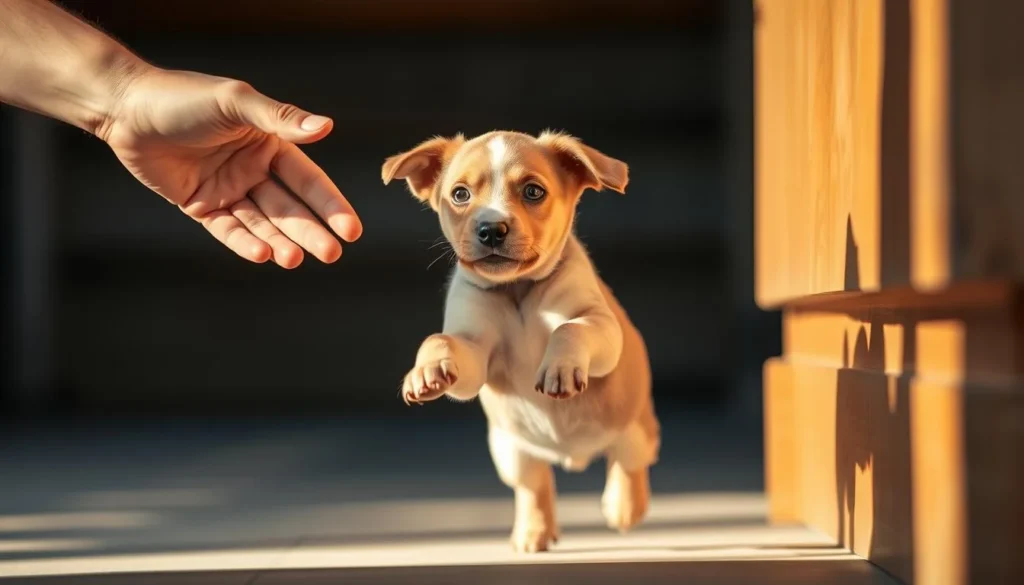
Redirecting puppy jumping is easier with the right training. Teaching the "sit" command helps. It makes the puppy calm instead of jumping. This command is great for greetings, making them friendly and controlled.
Introducing the “Sit” Command
I start by teaching my puppy to sit when I greet them. This builds a good behavior and stops jumping. With patience, they learn sitting gets praise, not jumping.
Using Treats to Encourage Sitting
Treats make training better. When my puppy sits, I give them a treat. This makes sitting a good thing. Soon, jumping becomes less common.
| Command | Action | Reward |
|---|---|---|
| Sit | Puppy sits calmly | Treat |
| Jump | Puppy jumps up | No Reward |
These methods help stop puppy jumping. Greetings become joyful and controlled.
Stopping Attention for Jumping
Stopping puppy jumping needs a clear plan. It's about not giving attention when they jump. I've learned that ignoring them when they jump is key. Turning my back when they jump up tells them it won't get a reaction from me.
Turning Your Back
When my puppy jumps, I turn away without looking at them. This teaches them jumping doesn't get my attention. I wait for them to calm down before I give them attention. This teaches them to stay calm and not jump.
Removing Your Presence
If my puppy keeps jumping, I sometimes leave the room. This shows them jumping makes me leave. When they calm down, I come back and give them attention. This teaches them calmness earns love and attention.
Not giving attention is a key way to stop puppy jumping. Using these methods helps my puppy learn to be calm and respectful.
Preventing Jumping on Guests
Managing puppy jumping, especially around guests, can feel overwhelming. I’ve found that using effective management techniques can make gatherings more inviting. It makes everyone's experience better, including your puppy's.
Using a Leash Indoors
Using a leash indoors is a great way to control access during greetings. It prevents unwanted jumps and keeps your puppy calm. This way, gatherings are relaxed, and guests can approach without fear.
Establishing a “Place” Command
Teaching your puppy a "place" command gives them a spot to settle down when guests arrive. It creates structure and reduces excited jumping. With practice, your puppy will know their spot and feel comfortable, making interactions smoother.
Using these strategies can greatly improve how your puppy interacts with guests. In my experience, focusing on these two techniques has made gatherings more peaceful. As your puppy learns to follow your lead, you and your guests will enjoy a calmer atmosphere.
Managing Excited Greetings
Learning to manage excited puppy behavior is key to a calm home. How I greet my puppy when I come home affects their mood. Starting with calm greetings helps set a peaceful tone.
If I act too excited, my puppy gets excited too. This can cause jumping and chaos. So, it's important to keep greetings calm.
Keeping Greetings Low-Key
When I come home, I try not to make a lot of noise. I take a moment to calm down before greeting my puppy. This shows my puppy we can have a calm reunion.
These simple steps help my puppy learn to behave during greetings. It sets the right expectations for calm salutations.
Gradually Building Excitement Levels
As my puppy gets better at staying calm, I can get more excited. I teach my puppy to match my energy levels. This way, we can have fun without getting too hyper.
This approach helps manage my puppy's excitement. It teaches them the right way to greet, through consistent practice.
Encouraging Obedience Training
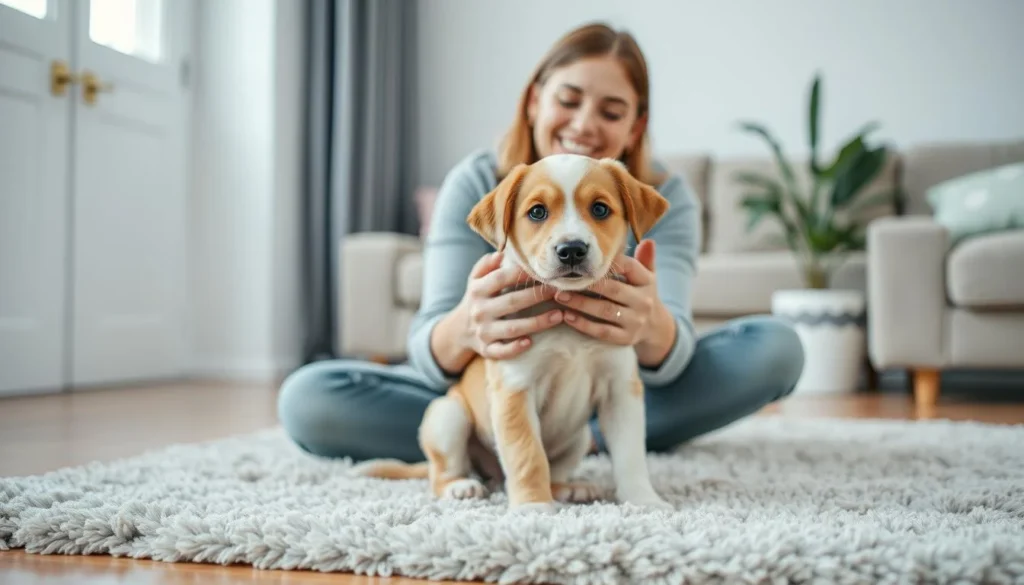
When I tackled my puppy’s jumping habit, puppy classes were a big help. These classes provide a structured setting for learning good behavior. They also offer group training benefits that are very valuable.
Using Puppy Classes to Foster Good Behavior
Puppy classes let my puppy learn with others. This socialization reduces fear and anxiety around new people and dogs. Plus, professional trainers teach us how to train our puppies to stop jumping.
Through fun activities, my puppy learned new behaviors. This was a big step forward.
Incorporating Practical Exercises
We added practical exercises to our daily routine. Simple commands and controlled interactions at home were perfect for practice. My puppy started to see the value in good behavior.
This led to a big drop in jumping. Regular practice made training a positive experience. It also made our bond stronger and encouraged better behavior.
| Training Aspect | Puppy Classes | Daily Practice |
|---|---|---|
| Socialization | High Exposure to Other Puppies | Controlled Home Environment |
| Professional Guidance | Trainers Present | Owner-led Exercises |
| Learning Style | Structured Activities | Interactive Sessions |
| Focus on Obedience | Group Training Benefits | Consistent Reinforcement |
Understanding Excitement Control
Managing a puppy's excitement is key to good training. Teaching them to control their impulses makes them well-mannered. By controlling their excitement, I help my puppy learn to behave better. This improves their happiness and our relationship.
Teaching Impulse Control
Teaching impulse control starts with simple commands. I teach my puppy to sit before getting a treat. This teaches them patience and responsibility in a fun way.
Helping Your Puppy Calm Down
Having a quiet spot in my home helps calm my puppy. I set up a cozy area for them to relax when they're too excited. Using calm words and gentle touches helps them stay calm. Deep breathing exercises also help them relax.
| Technique | Description | Benefits |
|---|---|---|
| Controlled sitting | Teaching your puppy to sit before receiving anything they want | Encourages patience and reduces impulsive behavior |
| Quiet space | Creating a designated calming area for your puppy | Provides a safe retreat during overwhelming situations |
| Deep breathing | Practicing calm breathing in your presence | Can help your puppy learn to relax during moments of excitement |
Engaging with Your Puppy
Finding ways to engage my puppy is key for their happiness and my sanity. Activities that keep them active and mentally sharp help prevent jumping and other excited behaviors. Playtime is a great way to channel their energy, reducing bad habits and strengthening our bond.
Playing Interactive Games
Interactive games are a great way to keep my puppy entertained and active. Some of my favorite activities include:
- Fetch: This classic game boosts my puppy's retrieving skills and helps them burn off energy.
- Tug-of-War: A good game of tug develops my puppy's strength and determination, promoting bonding.
- Puzzle Toys: These toys provide mental stimulation and keep my puppy busy as they search for hidden treats.
Channeling Excess Energy
Regular play sessions are vital for channeling my puppy's energy. Structured activities teach them to focus their energy positively. Here are some tips for making the most of our playtime:
- Schedule consistent playtimes throughout the week to establish a routine.
- Rotate toys and games to keep things fresh and stimulating.
- Incorporate both physical and mental challenges to balance the types of engagement.
Leveraging Guest Cooperation
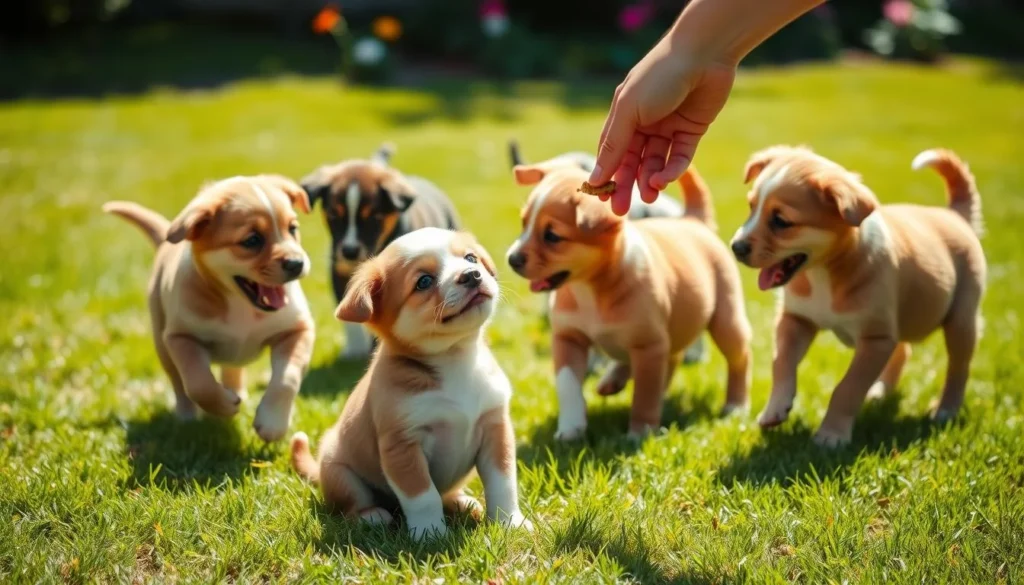
Clear communication and consistent behaviors are key in puppy training. Guests can greatly help by learning the right way to greet. This helps my puppy stay calm and respectful during visits.
Instructing Guests on Proper Greetings
Telling guests how to greet is very important. When they arrive, I ask them to wait until my puppy is calm. This helps set a standard for how to greet visitors.
I brief my guests on what to do. For example:
- Not making direct eye contact with the puppy.
- Keeping their hands to themselves initially.
- Waiting for the puppy to sit or settle before engaging.
Consistent Reinforcement from Others
Guest cooperation is a great way to reinforce training. If everyone acts the same, my puppy learns what's expected. Guests should ignore any jumping or over-excitement.
This unity in response strengthens the training. It also helps reduce jumping behaviors effectively.
When to Seek Professional Help
Watching my puppy's behavior is key for a good relationship. Sometimes, even with my best efforts, jumping can be tough. Knowing when to get help from a dog trainer is crucial.
Trainers have the skills to help us tackle tough behaviors. They can guide us through the challenges.
Recognizing Persistent Issues
Jumping that doesn't stop can mean deeper problems. If my training doesn't work, it might be time for a pro. Here are signs I should look out for:
- Puppy keeps jumping, even with training.
- They get anxious or aggressive when greeting.
- They struggle to focus or listen in busy places.
Seeing these signs early can help a lot. Getting help from experts can give us the right plan. This way, we can handle our puppy's behavior better.
Common Mistakes to Avoid
Training a puppy requires avoiding common mistakes. These errors can slow down progress. It's important to steer clear of methods that don't work well. Focus on avoiding physical corrections and using consistent reinforcement.
Using Physical Corrections
Physical corrections can make puppies fearful and anxious. This can lead to more problems like jumping or aggression. Positive reinforcement builds trust and encourages learning.
This approach reduces anxiety during training. It helps create a strong bond between you and your puppy.
Inconsistent Reinforcement
Inconsistent reinforcement confuses puppies. It makes them unsure of what's right. To avoid this, I reward good behavior every time.
This consistency helps them understand what's expected. It makes training more effective and creates a secure learning space.
Conclusion
Stopping puppies from jumping is key to enjoying time with them. Knowing why they jump helps us teach them better. This way, we meet their needs and teach them good manners.
Training them takes time and effort, but it's worth it. Soon, they'll be well-behaved friends. With the right training, we can enjoy a better relationship with our puppies.
By using these training methods, we build a strong bond with our puppies. A well-trained puppy makes our home happier. It makes welcoming guests easier and more enjoyable for everyone.


