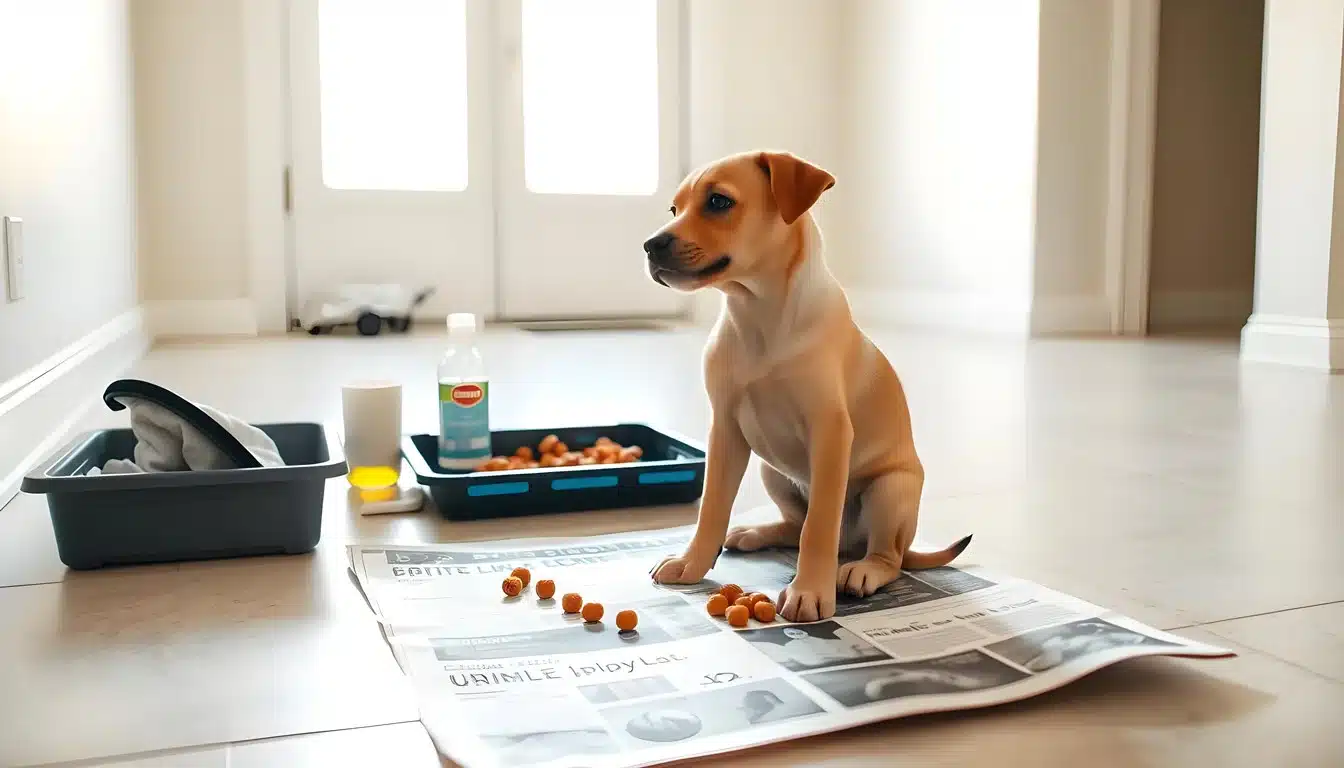
I remember the first week with a puppy—sleepless, hopeful, and worried about accidents. This mix of joy and worry is common. It's why I focus on clear, kind methods to potty train a dog fast, without losing patience or bond.
Potty training is crucial for puppies. It helps establish a routine, keeps your home clean, and lays the groundwork for obedience and manners. Having a plan before your puppy arrives can save time and stress.
Every puppy is different, influenced by age, breed, and past experiences. Yet, with consistent steps from the American Kennel Club, vets, and trainers, most puppies learn in weeks to months. This guide offers a fast-track approach that includes scheduled feeding, crate use, leash trips, and clear rewards for quick, compassionate progress.
Key Takeaways
- Start with a clear plan—decide on crates, pads, or outdoor training before you bring the puppy home.
- Consistency in schedule and rewards speeds learning and reduces accidents.
- Most puppies respond to fast-track dog potty training within weeks if methods are applied reliably.
- Combine evidence-based tips from AKC and veterinarians with patient, positive reinforcement.
- Expect individual variation and adjust pace to your puppy’s age and bladder control.
Why quick potty training matters for your dog and home
Starting fast makes life easier for both of us. Quick housebreaking keeps the house clean and protects furniture. It also lowers the chance of long-term problems like indoor marking.
I teach owners clear steps for quick potty training. A short learning curve means fewer accidents and less odor. This gives us more time for walks and play.
Early wins build confidence in the puppy. This makes daily life calmer for everyone.
Training affects the bond between owner and dog. Fast training that uses consistent cues and rewards strengthens trust. The puppy learns what I expect, and I reward success.
The benefits of fast and effective housebreaking
Fast results protect floors, rugs, and baseboards from soiling. They cut down cleaning time and reduce harsh chemicals. Owners see less frustration and more predictable habits.
Quick housebreaking reduces behavioral risks later on. Puppies that learn reliable bathroom habits are less likely to develop indoor marking. This makes training future skills simpler.
How fast training improves bonding and reduces stress
I use short, consistent sessions to teach desired behavior. This creates routine the puppy can rely on. Predictable schedules lower anxiety for a young dog and reduce owner's worry.
When positive reinforcement follows success immediately, the puppy connects the action to praise. This strengthens our relationship and speeds learning. Owners stay more patient when they see steady progress.
When to start: age and developmental considerations for puppies
I tell owners to begin right after bringing a puppy home. Very young pups under eight weeks need breaks every one to two hours. As they grow, I match the schedule to development and size.
Use a simple rule as a guideline: a puppy may hold its bladder about as many hours as its age in months, up to roughly nine or twelve months. Expect variation by individual dog and breed.
Rescued dogs or puppies from crowded environments may need more gentle repetition and basic reminders. Small and toy breeds often require closer monitoring because of faster metabolisms and smaller bladders.
| Age | Typical Maximum Hold Time | Monitoring Tips |
|---|---|---|
| Under 2 months | Every 1–2 hours | Frequent supervised trips, use puppy pads if needed |
| 2–4 months | 2–4 hours | Short supervised outings, start consistent cue training |
| 4–6 months | 3–6 hours | Increase time between breaks, reinforce outdoor cues |
| 6–12 months | 4–8 hours | Adapt to individual control, begin longer outings and gradual independence |
| Small/toy breeds | Often shorter than age rule | Offer more frequent breaks and closer supervision |
how to potty train a dog fast
I follow a clear, repeatable plan to speed up training. My method focuses on strict timing, constant supervision, and quick rewards. This builds good habits fast.
Here's a simple routine for daily action. Small, consistent steps lead to quick results with puppies and adult dogs.
My step-by-step fast-track approach
1) Set a strict schedule for feeding and bathroom breaks. This makes elimination predictable.
2) Crate or confine the dog when unsupervised. This prevents accidents and teaches bladder control.
3) Take your dog on leash to the chosen spot. Use a single cue word like “potty.”
4) Wait patiently until elimination happens. Rushing back indoors breaks the association.
5) Reward within a second or two with a high-value treat, praise, or a short play session.
6) Record successes and accidents to spot patterns and tweak the plan.
7) Gradually increase freedom as reliability grows and the dog earns trust.
Combining schedule, cues, and rewards for speed
Combining schedule cues and rewards forms a tight loop that dogs learn fast. Regular feeding creates predictable bathroom windows. A consistent cue tells the dog what you expect. Fast rewards make the cue irresistible.
Use small treats like tiny cheese pieces or cooked chicken. Reward the exact moment the dog relieves itself outdoors. This reinforces location, word, and timing in one clear package.
Measuring potty training progress and adjusting pace
Measuring potty training progress keeps you honest and helps you act when things stall. Track the ratio of successful outdoor potties to accidents each day.
Note time-of-day trends and adjust feeding or break times to fill problem windows. If progress slows, tighten supervision, return to crate use, or consult your veterinarian or a certified behaviorist for medical or behavioral causes.
Speedy dog potty training relies on patience, precise timing, and record keeping. Stick to the routine, celebrate small wins, and you will see steady improvement.
Creating a consistent housetraining schedule
I set a simple daily plan for my puppy to learn where and when to go. A steady routine helps both of us. It focuses on meal times, bathroom breaks, and sleep to reduce accidents.
Feeding times and bladder control: matching meals to bathroom breaks
I feed my puppy at set times, usually three meals a day for young ones. After each meal, I take them out. This helps them learn to go at the same times.
I watch for signs after meals and keep a leash ready. Short walks or trips to the yard after meals help them learn fast.
Typical frequency by age and how to adapt
I track how often my puppy needs to go and adjust the plan as they grow. Young puppies need breaks every 1–2 hours. As they get older, I stretch the time to every 3–4 hours.
I keep a quick log to spot patterns. If they show signs of needing to go, I shorten the gaps. This keeps their training steady.
Nighttime routines and crate placement
I end the day with a quiet routine: a final bathroom trip, then a predictable bedtime. I limit water an hour before bed and offer a last outing before lights out. This cuts down on overnight accidents.
I place the crate near my bedroom at first so I can hear cues and respond quickly. The crate must be large enough for comfort but small enough to discourage soiling. Moving the crate slowly to a permanent location helps the pup settle without stress.
| Age | Suggested Interval | Feeding Schedule | Night Strategy |
|---|---|---|---|
| 0–8 weeks | Every 1–2 hours | Small, frequent feedings | Frequent checks; crate very close |
| 8–12 weeks | Every 2–3 hours | Three small meals a day | Final outing before bed; crate near you |
| 3–6 months | Every 3–4 hours | Three regular meals; consistent times | Limit water before bed; one night trip possible |
| 6–12 months | Every 4–6 hours | Two to three meals; stable routine | Longer sleep stretches; respond if needed |
Crate training as an accelerated potty training tool
I use crate training to help my dog learn to go potty fast. It uses their natural instinct to find a den. A crate helps control their bladder and cuts down on accidents when I take them out on time.
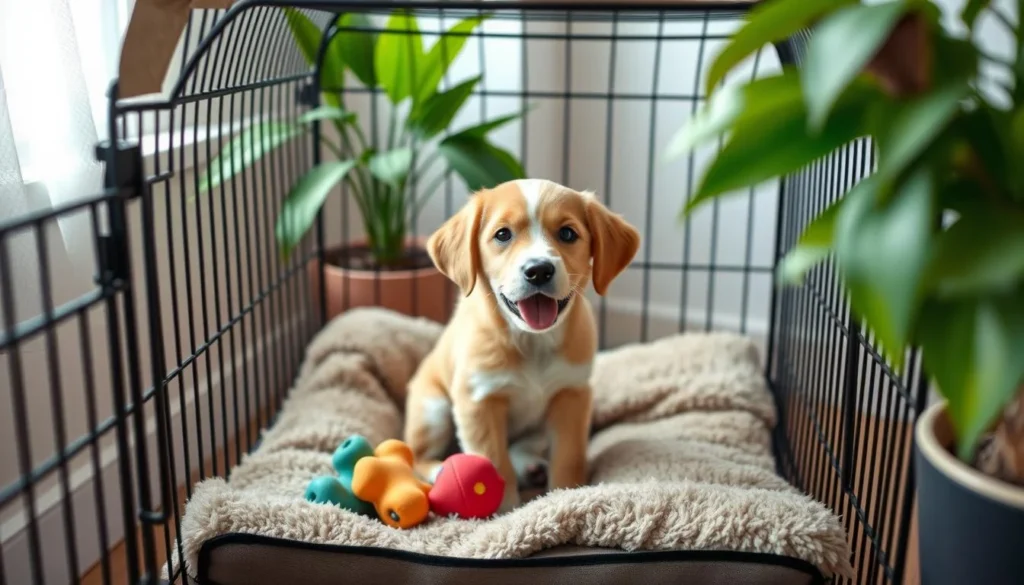
Here are some tips to make crate time good and effective.
Why crates prevent indoor messes
Dogs don't like to go potty where they sleep. That's why crates are great. They teach the puppy to wait until you take them out.
I watch for signs of stress and adjust the timing if needed. Short breaks help them learn quickly and gently.
Choosing size and using partitions
Choosing the right crate size is key. I pick one where the dog can stand, turn, and lie down. A too big crate can slow down learning.
I use partitions to make the crate smaller as the puppy grows. This way, I don't need to buy a new crate every time.
Safe crate routines for rest and alone time
Safe crate routines include naps, nights, and short times alone. I never punish them by using the crate. Instead, I feed them inside and give them favorite toys.
For when I'm away, I arrange for a walker or a secure playpen. If they have an accident, I check the schedule and adjust the crate time until they learn again.
| Need | Action | Why it works |
|---|---|---|
| Prevent accidents | Use crate during naps and nights | Den instinct encourages holding until outdoor break |
| Growing puppy | Install partition panels | Maintains right space as puppy gains size |
| Positive association | Feed and reward in crate | Makes crate a safe, welcome place |
| Long absences | Provide walker or playpen with pad | Prevents overstaying and crate soiling |
| Soiling incidents | Shorten crate time and adjust schedule | Matches bladder capacity and reduces stress |
Puppy pads and indoor options for fast housebreaking
I want to share indoor options that help with house training quickly. Puppy pads protect floors and are useful when going outside is hard. The key is to plan well so the pads don't confuse your puppy.
When to use them: weighing benefits and drawbacks
Puppy pads are good for those with long work hours, living in apartments, or facing winter storms. They offer a predictable, absorbent spot that can cut down on accidents and save floors.
But, it's important to know the downsides of puppy pads. They can make your puppy think it's okay to go inside. This can make it harder to switch to going outside later if you don't have a clear plan.
How to move from indoor pads to outdoor success
I start by placing pads near the door to help your puppy connect them with going outside. Then, I move the pads a little closer to the door each day.
When a pad is partly outside, I reward your puppy for going outside. I slowly take away the pads until your puppy goes outside without them. This process takes days or weeks, but it makes your puppy learn to go outside reliably.
Where to place pads to teach a reliable target
Where you put the pads is more important than the brand. Make sure the spots are visible and consistent. Use a playpen or crate-liner area when you're not watching to prevent accidents.
For nighttime, I choose high-absorbency pads in a set spot. If accidents happen, I clean up with an odorless cleaner to avoid teaching the wrong spot.
| Situation | Recommended pad approach | Fast-training tip |
|---|---|---|
| Apartment living, limited outdoor access | Use puppy pads for fast housebreaking near exit; high-absorbency overnight | Pair pads with a consistent cue and short walks to the door |
| Young puppy, small breed | Place pad in playpen and move gradually toward door | Reward any outdoor elimination immediately with treats and praise |
| Cold or rainy season | Use pads temporarily inside; schedule frequent outdoor trips when weather permits | Limit pad availability while increasing outdoor rewards during dry days |
| Goal: outdoor-only elimination | Implement gradual transition from pads to outside, remove pads when ready | Maintain consistent outdoor cue and reduce indoor pad prompts |
Outdoor potty training strategies for speed
I'll show you a quick way to potty train your puppy. First, pick a spot in the yard and a simple cue word. Keep training sessions short, calm, and regular. This helps your puppy learn fast.
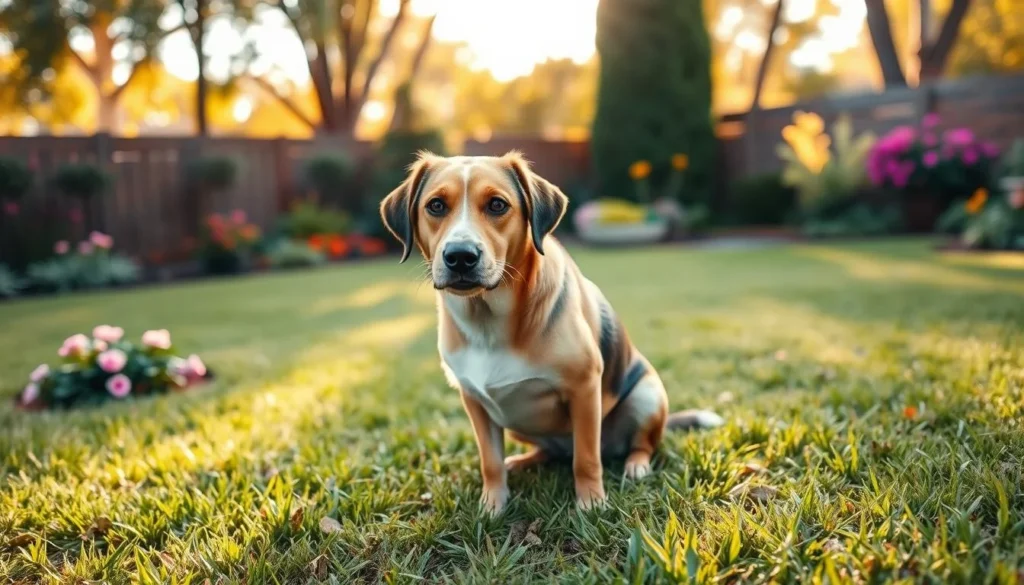
Always use a leash and consistent cues to teach your puppy. A six-foot leash is good for most. For shy puppies, a longer leash helps when you need space.
Three key habits speed up training: guide your puppy to the spot, say the cue once, and wait without playing. Reward them right after they go. This makes them connect the cue with the action.
Using leash and consistent cues
- I take the puppy to the same spot each trip to form a scent map.
- I say the cue like “potty” one time when we arrive so the word predicts the action.
- I avoid wandering; direct movement to the spot reduces confusion.
Wait and reward potty training
- I stand quietly and watch; no games until after elimination.
- I deliver a treat or enthusiastic praise within a second or two of success.
- I let play or free-roam follow the reward so outside time feels positive.
Making yard preferred spot
- I reduce distractions by choosing a quiet corner away from foot traffic.
- I use another well-trained dog only when it helps, never when it distracts the pup.
- I keep pre-potty play minimal so the dog focuses on the task.
When distractions are strong, I lengthen the leash or move farther from the house. If a pup resists eliminating near people, I create distance until comfort grows. Patience and short, repeated sessions win every time.
Positive reinforcement and reward systems that accelerate learning
I believe fast, reliable housebreaking hinges on a clear reward plan. I use concise steps that link the puppy's action to the reward. This makes learning quick and less stressful for both of us.
I start by focusing on timing rewards within seconds. Give the treat or burst of praise within one to two seconds of the elimination so the puppy connects the behavior to the reward. Delayed rewards blur the link and slow progress.
For the first phase, I rely on high-value treats and praise. Small pieces of cooked chicken, string cheese, or commercial training treats work well. I keep portions tiny so the puppy stays eager without spoiling a meal. I pair food with enthusiastic verbal praise and a quick play reward when possible.
I keep sessions short and predictable. I say the cue, wait patiently, then reward immediately the moment the puppy goes in the right spot. This consistent loop speeds learning and cuts down accidents.
Once elimination is consistent, I begin shifting from treats to praise. I use an intermittent schedule: treats most of the time, then occasional treats, mixed with strong praise and brief petting. This gradual fading keeps the behavior reliable without relying on food forever.
To maintain long-term success, I keep the cue and scatter rewards. I still reward after less frequent mistakes and I reinforce during challenging times, like after a change in routine. This prevents slipping back and supports durable habits.
| Training Phase | Primary Rewards | Timing | Goal |
|---|---|---|---|
| Initial learning | High-value treats and enthusiastic praise | Timing rewards within seconds (1–2 sec) | Establish clear association between action and reward |
| Consistency building | Treats, praise, short play sessions | Immediate, then intermittent | Increase reliability across settings |
| Maintenance | Mostly praise and routine; occasional treats | Reward unpredictably but promptly when given | Shift to routine reinforcement and prevent regression |
| Trouble moments | Return to high-value treats temporarily | Immediate and frequent | Re-establish confidence after setbacks |
Recognizing your puppy’s signals to prevent accidents
I keep a close eye on my puppy to catch early signs. Spotting these signs helps me guide them outside quickly. I use simple steps and tools to stay ahead of accidents.
Common pre-elimination behaviors to watch for
Puppies often show clear signs before they need to go. I look for sniffing, circling, restlessness, whining, pacing, and scratching. When I see these signs, I quickly take them to the potty spot.
Using supervision, tethering, and bells to monitor movement
I watch closely during training to act fast. Tethering keeps them in sight while they learn. I also teach them to ring a door bell when they need to go out. Crating is my backup when I'm busy.
Keeping a log to identify patterns and peak times
I keep an accident log to track important events. It shows patterns, like accidents after play or before bed. With this log, I adjust their schedule and give more freedom when they deserve it.
Controlling diet and water for faster potty training results
I aim to simplify potty training by adjusting meals and water. Making these small changes helps puppies go to the bathroom more regularly. This makes housebreaking easier for both of us.
Meal frequency recommendations and predictable elimination
Feeding puppies three small meals a day is best. This schedule helps us know when to take them outside. Dogs usually go to the bathroom right after eating.
Having a set meal schedule helps us predict when they need to go. For example, if I feed at 7am, 12pm, and 5pm, we go outside 10–20 minutes later. This routine helps them learn faster and have fewer accidents.
What to feed and how portion size affects stool consistency
Choose a good puppy food from brands like Royal Canin or Purina Pro Plan. Pick a formula that fits your puppy's size and age. This helps keep their stools firm and regular.
It's important to control how much food you give. Too much can make their stools too loose. If their stools are loose or smell bad, we adjust the food amount. If problems persist, we see a vet to check for allergies or parasites.
Managing late-night water and bathroom breaks safely
Don't cut off water too much. Instead, control when they drink it. Give water freely during the day but less before bed if they have accidents. Take them outside right before bedtime.
For young puppies, we're ready for nighttime trips. As they get better, we can wait longer. Being careful with water and nighttime trips keeps them safe and helps them learn.
Troubleshooting common potty training problems quickly
I guide you through quick fixes for potty training hiccups. Taking swift action, sticking to a routine, and using the right cleaning tools can keep things moving. I'll talk about cleaning up accidents, dealing with setbacks like marking and crate-soiling, and when it's time to get help from a pro.
Handling accidents calmly
I never yell at a puppy for accidents. If I catch them in the act, I take them outside and praise them. For spots that keep coming back, I use cleaners like Nature’s Miracle or Eco-88 to remove smells that lead to more accidents.
Addressing regression and marking
Regression can happen when things change, like a new schedule or people. I make routines tighter, increase watch time, and use belly bands for male dogs to stop marking. For crate-soiling, I cut down crate time, go outside more, and look for signs of stress or discomfort.
When to consult a vet or behaviorist
If your dog keeps soiling despite training, check for health issues first. A UTI or other health problem can cause sudden problems. If health checks don't find anything, it's time to see a vet or behaviorist for help with behavior plans and techniques.
- Stay calm and consistent with routines.
- Clean thoroughly with enzymatic cleaners for accidents to stop scent-driven repeats.
- Shorten crate periods and increase outdoor trips to address crate-soiling.
- Use management tools like belly bands while addressing regression and marking.
- If problems persist, consult vet or behaviorist to rule out health or deep-rooted behavior issues.
Conclusion
Learning how to potty train a puppy fast is not about tricks. It's about being consistent. A steady schedule, immediate positive feedback, and using a crate or pads correctly are key. These tips, along with leash walks, a clear cue, and rewards, make a big difference.
My approach combines AKC crate training, vet-approved feeding schedules, and practical training methods. Supervision, tethering, and logging help spot patterns. Adjusting diet and water times to match elimination windows keeps progress steady.
Being patient and persistent is important, but using the right training methods can speed up learning. If progress slows, tighten up management, review logs, and seek help from a vet or trainer. With these steps, you can quickly reduce accidents and teach your puppy reliable house manners.