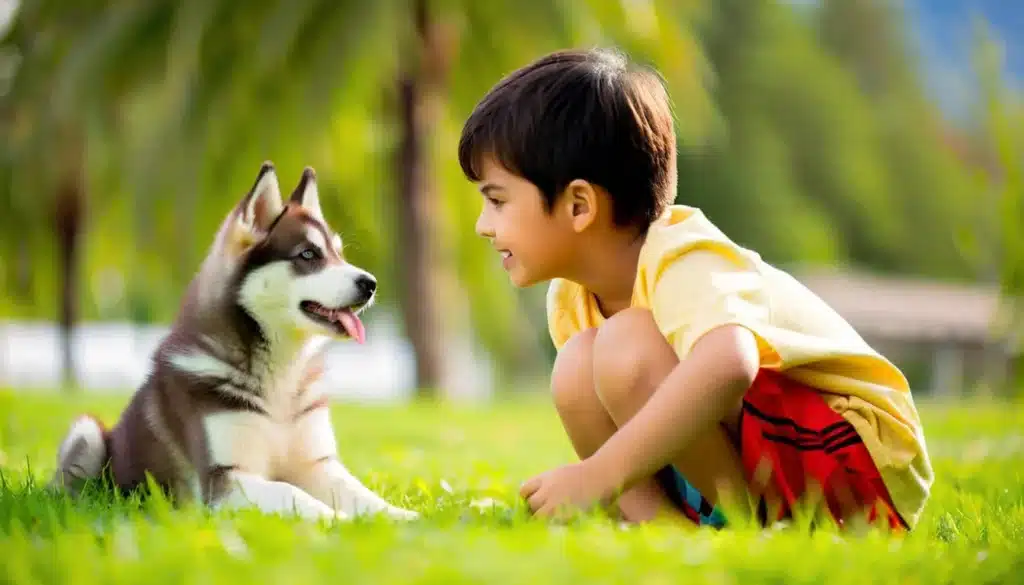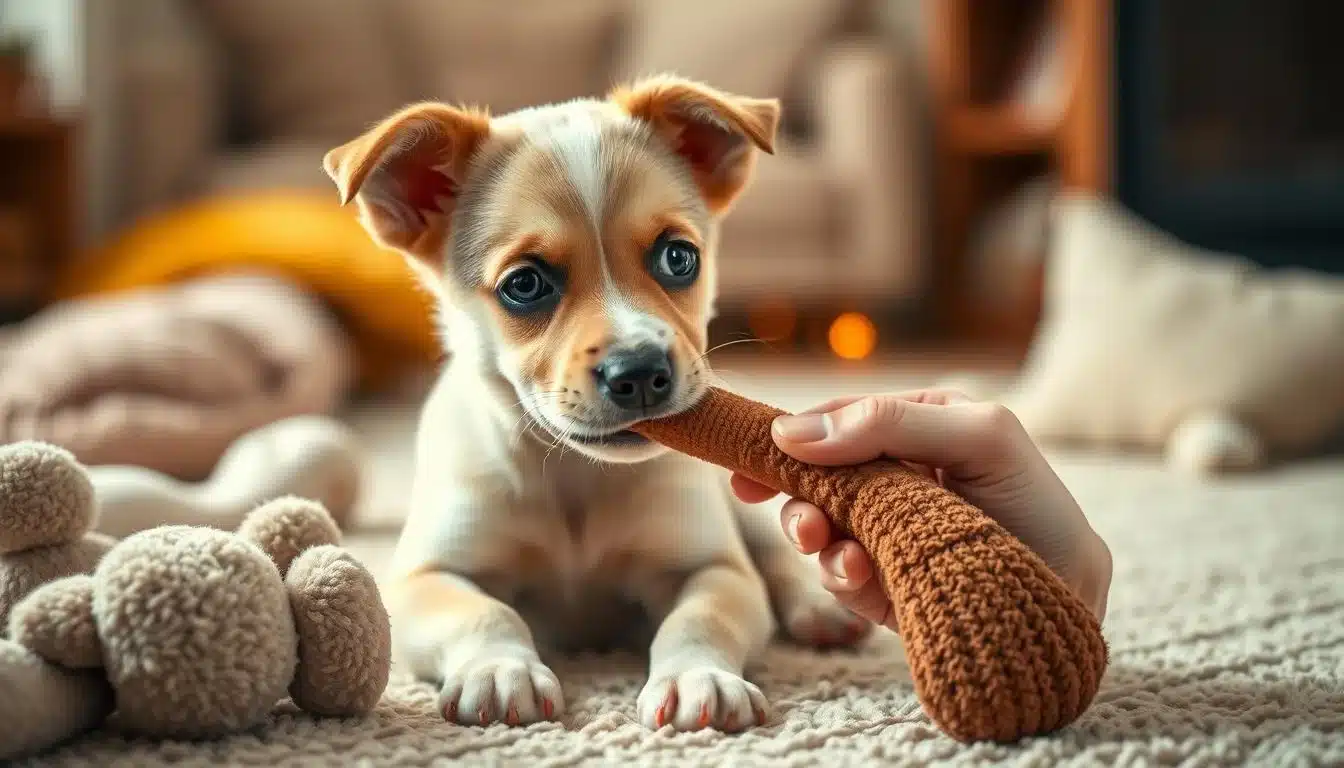
Bringing a puppy home was a joyous day, but it came with challenges. My little furball would run through the living room, nipping at me. I wondered how to stop this.
Understanding my puppy's biting was key to a loving relationship. If you're facing this, you're not alone. We'll find ways to enjoy your puppy's company without worry.
Key Takeaways
- Understanding the reasons behind puppy biting is essential for effective training.
- Recognizing the difference between normal and problematic biting can help you manage behavior appropriately.
- Positive reinforcement plays a crucial role in teaching your puppy not to bite.
- Redirecting your puppy's energy through play and appropriate chew toys can reduce biting.
- Establishing a consistent routine contributes to your puppy's understanding of acceptable behavior.
Understanding Puppy Biting Behavior
Puppy biting is a normal part of their behavior and often surprises new pet owners. It helps them explore and interact with others. Knowing why puppies bite can make it easier to handle.
Teething is a key time when puppies bite more. It's a stage of growth.
Why Do Puppies Bite?
Puppies bite for many reasons. It's a natural way for them to learn about the world. They also bite when they're excited or playing.
They learn what's okay to bite and what's not. Giving them the right toys can help them learn to play nicely.
The Role of Teething
Teething is a big reason for puppy biting. It happens when puppies are between three to six months old. They feel pain as their baby teeth fall out and new ones grow in.
They want to chew on things to ease their pain. Giving them chew toys is a good way to help them.
| Age | Teething Phase | Biting Behavior |
|---|---|---|
| 0-3 months | Before teething starts | Curiosity-driven mouthing |
| 3-6 months | Active teething | Increased biting and chewing |
| 6+ months | Adult teeth present | More controlled biting; reduced frequency |
Recognizing Normal vs. Problematic Biting
Understanding dog behavior is key to telling normal puppy biting from aggression. As a puppy owner, it's important to know the signs of different biting behaviors. Young dogs often nibble and chew as they explore and learn to interact.
However, this playful mouthing can turn into something more serious.
When Does Biting Indicate Aggression?
Puppy aggression signs can be tricky to spot. Knowing them is crucial for safety and training. A calm puppy might playfully bite, showing no signs of trouble.
But aggression shows through tense body language and firm bites. Growling, baring teeth, or a stiff posture mean it's time to act. Spotting these signs early and acting fast can keep everyone safe and happy.
How to Get a Puppy to Stop Biting People
Puppy biting is common in the early stages. It's important to teach them not to bite people. This can be done by teaching bite inhibition and using positive reinforcement.
Teaching Bite Inhibition
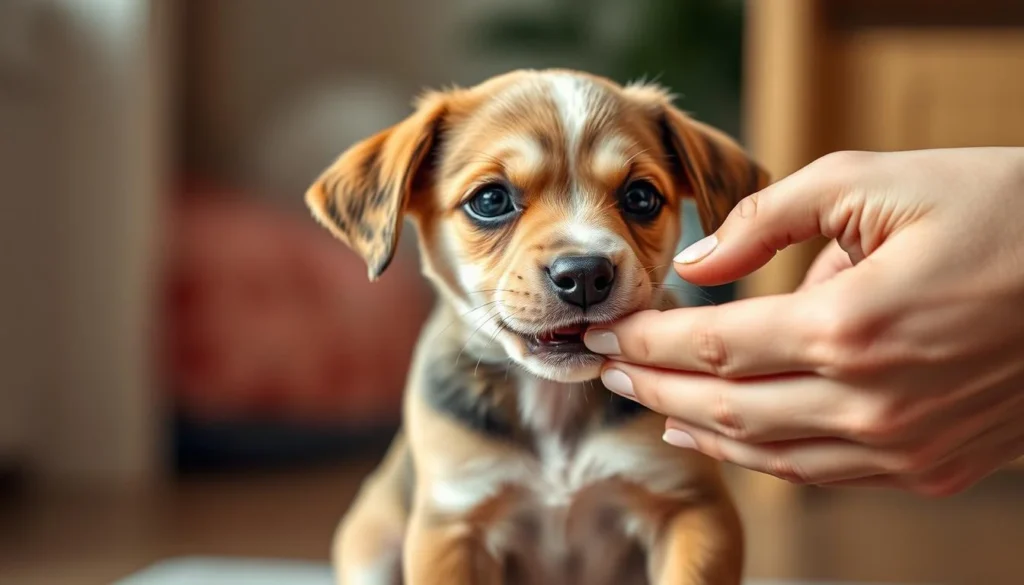
Teaching bite inhibition means helping puppies learn to control their bite. You can use techniques like yelping or removing your hands if they bite too hard. This teaches them that hard bites stop playtime.
By doing this, you help them understand that a gentle mouth is better. Over time, this makes interactions safer.
Using Positive Reinforcement
Positive reinforcement is key to stopping puppy biting. When your puppy bites gently, praise or treats are great rewards. This encourages them to keep being gentle.
Redirecting their bites to chew toys is also helpful. It shows them that some things are okay to bite, but not human hands. Being consistent and rewarding good behavior builds trust.
Effective Training Strategies
Effective puppy training involves using specific techniques to stop unwanted behaviors like biting. Sounds that show surprise or discomfort help puppies learn right behavior. A gentle "Ouch" or "Yip" sound teaches them about bite control.
Using "Ouch" or "Yip" Sounds
Responding with a high-pitched sound after a bite teaches puppies to be gentle. This method shows them how their actions affect others. Being consistent with this approach helps stop puppy nipping.
Time-Out Techniques
Time-out is a great way to handle biting. When your puppy bites, calmly take away your attention. This teaches them that biting ends fun and play.
By setting clear boundaries, you help your puppy understand what's right. Being consistent with time-out helps eliminate unwanted mouthing.
Redirecting Puppy Energy
It's key to manage a puppy's energy to stop biting and encourage good behavior. Redirecting their energy means giving them the right ways to be active. Activities that keep them busy both physically and mentally are great.
Providing Appropriate Chew Toys
One good way to redirect a puppy's energy is with the best chew toys. These toys help them chew and ease teething pain. Look for toys that are tough, safe, and made for puppies. Some top picks include:
- Rubber toys that can be filled with treats
- Soft ropes for tugging games
- Textured toys that promote dental health
Having many toys helps keep my puppy busy. This reduces the chance of them biting or causing damage during play.
Physical Exercise and Mental Stimulation
Regular exercise is key for a puppy's health. Daily walks, play, and games help burn off energy. Activities like fetch or agility training improve their focus and cut down on biting. Mental games are also vital for their well-being.
- Puzzle toys that challenge their problem-solving skills
- Training sessions that reinforce commands and tricks
- Socialization with other dogs and people to develop social skills
By adding these activities to my puppy's life, I can keep their energy in check. This makes them happier and calmer.
Managing Playtime Effectively
Playtime with my puppy is incredibly fun. To keep it positive, I use different strategies for safe and enjoyable activities. I set clear rules to stop unwanted behaviors like biting and encourage good play habits.
Noncontact Play Activities
Noncontact games are key in teaching my puppy about boundaries. Games like fetch and tug-of-war keep me at a distance. This lets my puppy play with toys instead of biting me.
These games are not only fun but also help us bond. They show my puppy that toys are more exciting than biting.
Avoiding Rough Play
It's important to avoid rough play. I make sure our play is gentle to prevent biting. Gentle games teach my puppy that play is about having fun, not being aggressive.
This way, our playtime is calm and fun. It helps my puppy learn good behavior and enjoy our time together.
Socializing Your Puppy
Socializing puppies is key to their growth and behavior. Puppy training classes are a great place for them to learn and grow. In these classes, puppies meet other dogs, learning how to interact and play nicely.
The Benefits of Puppy Classes
Puppy training classes offer many benefits for puppy behavior education. Here are some key advantages:
- Safe Environment: Classes provide a safe space for puppies to learn and socialize.
- Bite Inhibition: Playing with other dogs teaches puppies when it's okay to bite.
- Exposure to New Experiences: Classes expose puppies to different environments, helping them adapt.
- Guidance from Professionals: Trainers offer valuable advice to help with training and socialization.
Watching my puppy in classes showed me how much they benefit. Puppy training classes do more than teach commands. They help shape well-adjusted adult dogs ready for the world.
| Benefits | Description |
|---|---|
| Safe Environment | Controlled space for interaction with other puppies. |
| Bite Inhibition | Learning through play and social interactions. |
| Exposure to New Experiences | Adapting to various stimuli in a supportive setting. |
| Guidance from Professionals | Expert suggestions for effective training techniques. |
Establishing Positive Interactions with Children
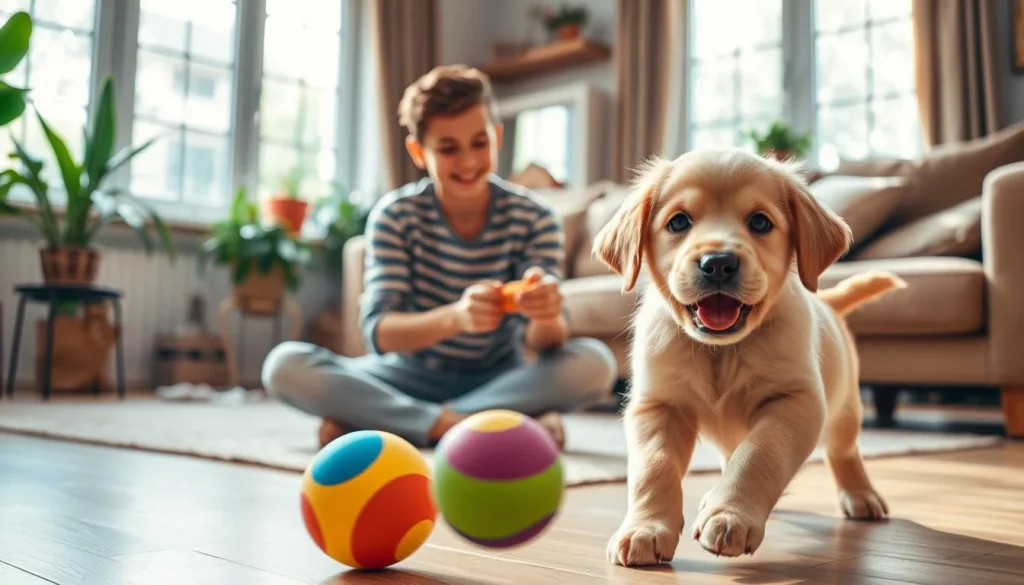
Creating a harmonious environment for puppy and child interaction starts with education. It's crucial to teach kids how to safely interact with puppies. This ensures both are comfortable and happy. By setting guidelines for safe play, everyone can enjoy their time together without stress.
Teaching Kids How to Engage with Puppies
Educating kids on dog behavior is key to a positive relationship with their furry friends. Here are some important points:
- Approach Carefully: Kids should always approach puppies calmly and avoid sudden movements that might scare the dog.
- Gentle Touch: Encourage gentle petting and discourage pulling or rough handling to promote safe play with puppies.
- Supervised Interactions: Supervision during playtime ensures safety and helps kids learn how to read the puppy's body language.
- Avoid Rough Play: It's important to teach children that rough or aggressive play can lead to negative experiences for both the puppy and themselves.
By following these guidelines, kids can have enriching experiences with their puppies. These experiences build trust and affection.
Handling Mouthing During Grooming
Grooming puppies can be tough, especially when they mouth things. To make grooming better, I use treats to distract my puppy. This helps them focus on the treats, not my hands or tools.
Using treats makes grooming a good thing. Here are some tips I use during grooming:
- Introduce grooming tools slowly to avoid overwhelming my puppy.
- Have a variety of treats ready to keep their interest.
- Start with short grooming sessions, then make them longer as they get used to it.
- Reward my puppy right away when they stay calm during grooming.
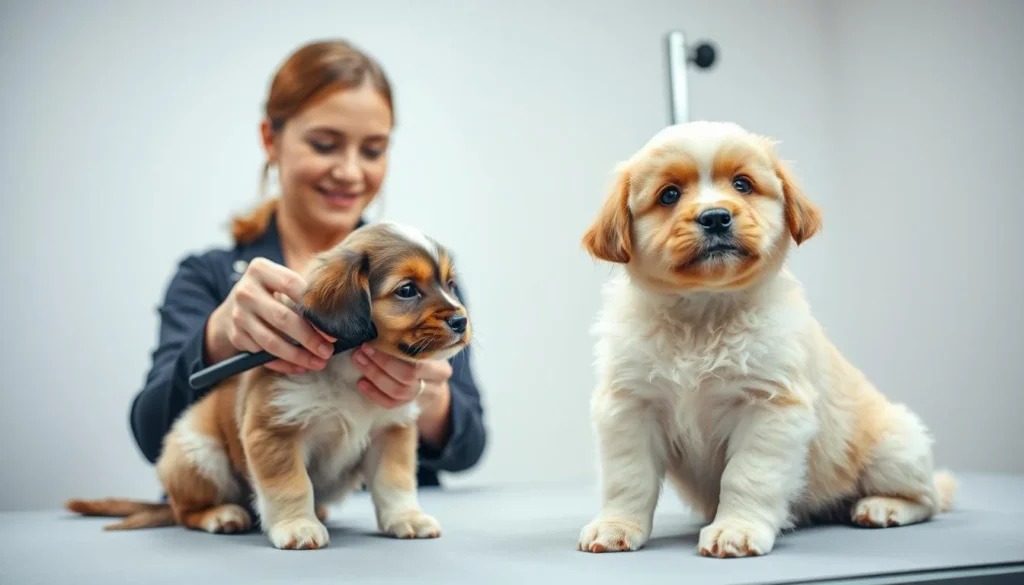
Treats not only control mouthing but also build trust. Positive reinforcement makes my puppy see grooming as a good thing.
Preventing Biting During Daily Activities
In my daily life with puppies, it's key to move calmly. Puppies get excited easily and might nip if they see or feel sudden movements. Keeping things calm helps reduce nipping and makes our time together more peaceful.
I make sure to move slowly and smoothly. This helps my puppy feel secure and teaches them to be calm too. Quick or loud actions can make them want to play bite. So, I always try to stay calm.
If my puppy gets too excited, I take a break or sit down. Doing low-key activities like gentle petting helps keep things calm. This way, I help my puppy stay happy and well-adjusted.
Creating a Consistent Routine for Your Puppy
Setting up a routine for my puppy has been a big help. A good routine helps my puppy grow and learn. It also makes training easier.
With set playtimes and naps, my puppy's energy is better managed. This cuts down on biting. Puppies love routine, which stops boredom and anxiety.
Scheduling Play and Nap Times
Having a play and nap schedule is good for both my puppy and me. Here's what I remember:
- Set specific times for play and rest each day.
- Alternative activities to keep things interesting.
- Monitor energy levels to adjust the routine as needed.
Adding these to my puppy's daily plan helps them stay balanced. It promotes healthy habits and keeps them happy and calm.
Using Taste Deterrents as a Training Tool
Training a puppy means finding ways to stop bad habits. Taste deterrents for dogs are great for stopping biting. By putting these on things your puppy likes to chew, they learn biting is bad.
Choosing Safe Deterrent Options
It's key to pick the right taste deterrents for safety and success. Here are some safe options I recommend:
- Bitter Apple Spray: A favorite, this spray is safe and makes chewing unpleasant.
- PetSafe Taste Deterrents: These use natural ingredients to stop chewing without harming your puppy.
- Citrus-Based Sprays: Puppies usually don't like citrus, making these sprays a good choice.
Remember to use taste deterrents consistently. This way, your puppy knows what not to chew. These safe tools help teach good habits without stress.
Recognizing Signs of Stress or Overstimulation
Knowing how a puppy feels is key to better training. It's important to spot puppy stress signs early. This helps avoid bad behaviors like biting. By watching for these signs, I can keep my puppy happy and calm.
Identifying Triggers for Biting
Every puppy reacts differently to stress. I watch my puppy closely to find out what makes them bite. Some common things that might upset them include:
- Too much noise or a messy place
- People coming up too fast
- Play that gets too rough
- Meeting other dogs that make them tense
Knowing what makes my puppy bite helps me act fast. For example, I can give them a quiet spot or play something calm. Spotting stress and overstimulation lets me keep things positive for my puppy.
When to Seek Professional Help
Knowing when to get professional dog training help is key for you and your puppy. Biting behaviors can be hard to stop, even with lots of effort and training. It's important to know when to ask for help to make sure your puppy grows up well-behaved.
Finding a Qualified Dog Trainer
A certified dog trainer is crucial for solving biting problems. Look for certified trainers in your area. Check their experience and training style to make sure it fits your needs and your puppy's.
Also, ask for feedback from other pet owners. This helps you see if the trainer really works. Professional dog training offers the right guidance and strategies for your puppy's behavior. It helps fix bad habits and builds trust between you and your puppy.
Patience and Consistency in Training
Training a puppy is a journey that needs patience and consistency. It's not just about the techniques. Understanding the importance of a supportive approach is key. This creates a nurturing environment where my puppy can learn and grow.
The Importance of a Supportive Approach
A supportive training environment changes how a puppy responds to instructions. Using gentle, positive reinforcement and celebrating small wins boosts my puppy's confidence. This consistency lays a strong foundation for their behavior.
When I use supportive training techniques, I see big improvements. My puppy does well when I'm calm and encouraging. Keeping a steady routine makes discipline easier and reinforces good habits. This makes our lives better in the long run.
Conclusion
Stopping puppy biting is all about understanding, patience, and using the right training. Puppies use their mouths to explore, and teaching them to do it right is key. This sets the stage for a happy relationship.
My training journey has shown me that it's not always easy. Yet, every small step makes a big difference. Using the right techniques, my puppy learned quickly.
Enjoying life with a puppy is more than just stopping the biting. It's about building trust and understanding. With patience and effort, my puppy became a loving and respectful friend. This made our life together even more joyful.