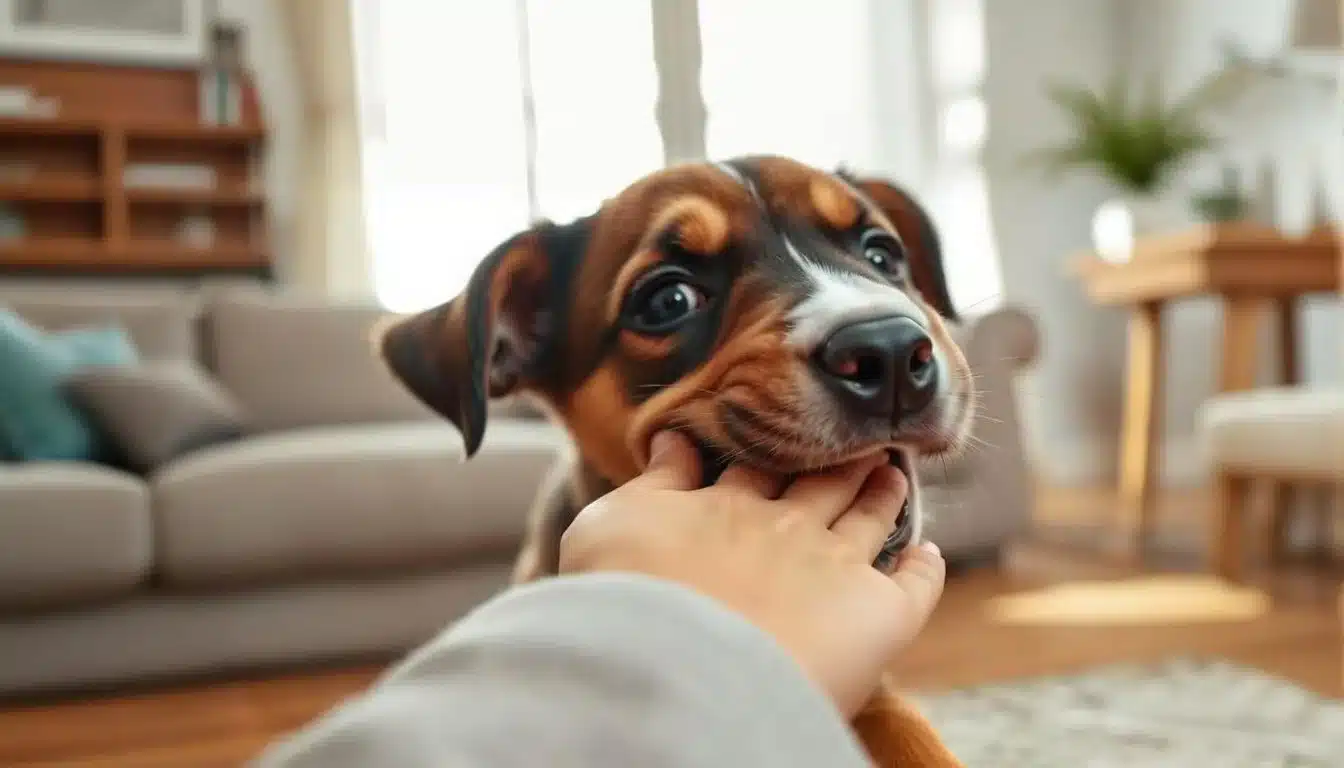
Welcoming a puppy into my home was a joyful experience. I fell in love with my new furry friend. But, my love turned to concern when I realized my puppy had a biting problem.
This behavior was not just annoying—it was baffling and upsetting. I learned that puppy biting is common among dog owners. It's a normal part of their development. But, it doesn't have to be a problem.
I found effective solutions to teach my puppy how to interact with people. By being careful and compassionate, I guided my puppy to become well-mannered. This was the companion I had always hoped for.
Key Takeaways
- Puppy biting is a normal behavior that can be managed with the right techniques.
- Establish boundaries early to prevent aggressive biting.
- Incorporate positive reinforcement to encourage gentle behavior.
- Chew toys serve as effective distractions and safe outlets for teething.
- Socialization with other puppies can help reduce biting tendency.
Understanding Puppy Biting Behavior
It's key for pet owners to understand why puppies bite. Puppies use their mouths to explore, leading to playful bites. This is how they learn about boundaries, especially with other puppies.
Play helps them learn how hard is too hard. If a bite is too strong, the other puppy will yelp. This teaches them about bite inhibition.
Why Do Puppies Bite?
Puppies bite for many reasons. They explore with their mouths, like human babies do. Playful biting helps them learn to communicate with other dogs.
It's important for owners to know how to handle this. Understanding why they bite can make playtime better and more positive.
The Role of Teething in Biting
Teething is a big reason puppies bite. They start teething at three weeks, leading to discomfort. This discomfort makes them want to chew on anything, including hands or furniture.
Knowing how teething affects biting can help owners. Giving them toys to chew on can soothe their gums and stop excessive biting.
Signs of a Biting Puppy
It's important to know when a puppy is biting. Knowing the difference between normal mouthing and aggressive biting helps me train them right. Young dogs often mouth during play, which is okay. But, aggressive biting has clear signs that need attention.
Normal Mouthing vs. Aggressive Biting
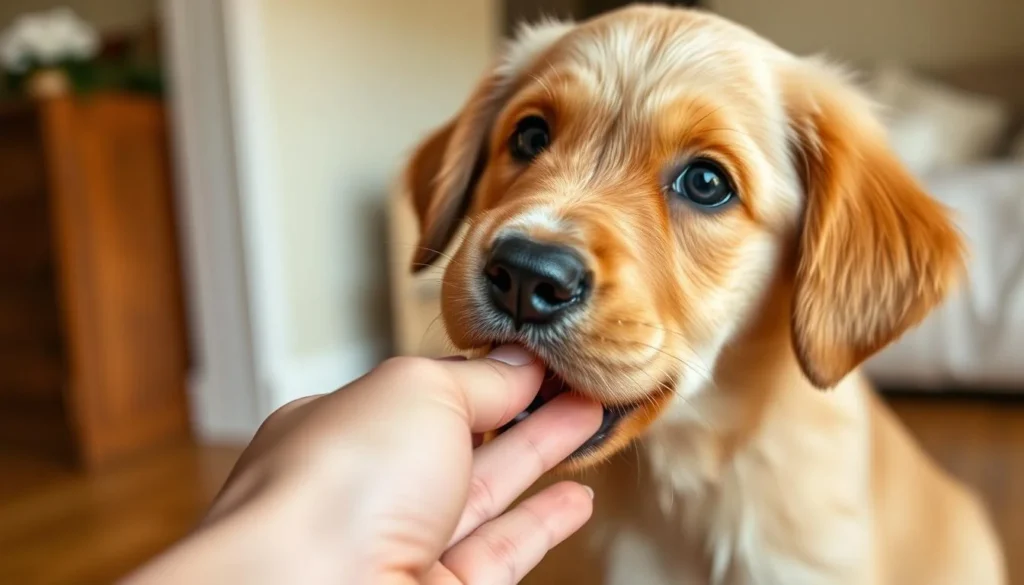
Normal mouthing is gentle and shows relaxed body language. When my puppy plays, some teeth on skin is normal. But, if there's growling or stiff body, it's aggressive biting.
Understanding Playful Biting
Playful biting can look like aggression if I'm not watching. My puppy's playful bites show a wagging tail and relaxed ears. By noticing these signs, I know it's just play. Training them at this time helps set boundaries while letting them play.
How to Deal with a Biting Puppy
Dealing with a puppy's biting can be tough. But setting clear rules helps a lot. It's key to teach them what's okay during play.
Establishing Boundaries for Biting
It's vital to teach my puppy what's off-limits. If they bite too hard, I make a high-pitched sound. This tells them it's too much.
Stopping play right after helps them learn. It shows biting ends the fun. This teaches them to avoid it.
Teaching Bite Inhibition
Teaching my puppy to play gently is crucial. I reward them for soft mouthing. This shows them being gentle is good.
By doing this often, they learn to be calm and gentle. This makes a big difference in their behavior over time.
Effective Puppy Training Tips
Training a puppy needs patience and consistency. I use positive reinforcement in my training. This means giving treats or praise when my puppy is calm. It helps them learn good behavior.
Positive Reinforcement Techniques
I make sure to reward my puppy quickly. If they chew on a toy instead of my fingers, I give them a treat right then. This teaches them what I want them to do. It also builds trust between us.
Using Chew Toys and Distractors
Chew toys are a great way to stop my puppy from biting me. They keep my puppy busy and happy. Playing with toys teaches my puppy good behavior and satisfies their need to chew.
Preventing Puppy Biting
Prevention is key in managing puppy biting. Keeping valuable items out of reach helps avoid damage. It's also important to avoid loose clothing, as it can lead to nipping during play.
Engaging in safe, structured play is crucial. This type of play does not provoke biting. By consistently following these preventive steps, I can help my puppy avoid chewing on things they shouldn't.
Teaching Gentle Play
Playing gently with my puppy strengthens our bond and keeps things positive. I set rules for safe play to avoid aggressive behavior. This way, we can have fun without biting.
Safe Roughhousing Guidelines
It's tempting to get rough, but I follow certain rules for safety:
- Use toys that can withstand chewing, avoiding hands during playful wrestling.
- Monitor the intensity of play, stopping if it becomes too rough or aggressive.
- Encourage breaks during play to maintain a calm environment.
Alternatives to Using Hands in Play
Instead of wrestling with my hands, I use interactive toys. Tug ropes and fetch toys keep play safe and fun. This method helps my puppy learn to play without biting. It's a great way to keep playtime positive and safe.

Using Time-Outs as a Training Tool
Using time-outs in puppy biting training is very effective. When my puppy bites too hard, I act fast. Stepping away from play for a bit shows them hard biting stops the fun.
This method clearly tells them some actions have consequences. It's a way to teach them what's okay and what's not.
Time-Outs for Hard Biting
Every hard bite means a time-out for my puppy. I calmly walk away, giving them a break. This teaches them biting means they lose playtime, not get more attention.
The Importance of Consistency
Being consistent with time-outs is key. I always react the same way to biting. This helps my puppy understand their actions cause the time-out.
Knowing what to expect helps them learn faster. It also means fewer biting incidents in the future.
Understanding the Impact of Overstimulation
Puppies can get too excited during play, leading to unwanted biting. By knowing how puppies act, I can spot when they're too excited. This helps me change play to keep them calm and well-behaved.
Recognizing Signs of Overexcitement
It's key to know when my puppy is too excited. This can happen when they:
- Start nipping or biting more
- Become restless and hyperactive
- Bark too much
- Pant or breathe heavily
Seeing these signs means it's time to adjust play. This way, I can steer their energy into better activities and avoid biting problems.
Managing Playtime Duration
Having a set play schedule is vital for my puppy's happiness. I make sure playtime is not too long to avoid too much excitement. Here's a guide for playtime lengths:
| Age of Puppy | Recommended Play Duration |
|---|---|
| 8-12 weeks | 5-10 minutes |
| 3-6 months | 10-20 minutes |
| 6-12 months | 20-30 minutes |
Adding breaks during play helps my puppy relax. This simple approach helps us have a better relationship and less biting.
Providing Appropriate Chewing Outlets
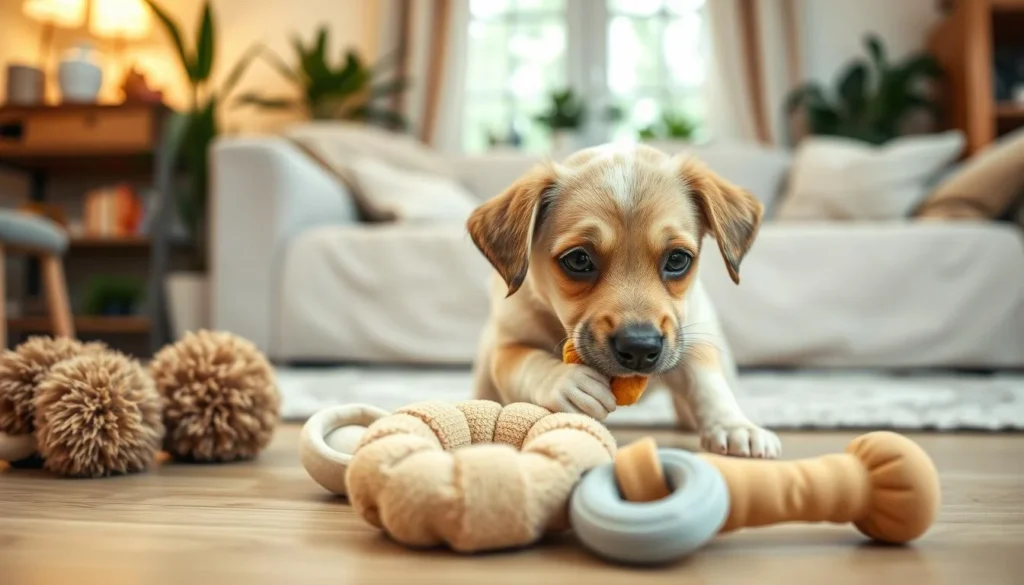
Choosing the right chewing outlets is key in my puppy chewing training. Giving them the right chew toys helps them channel their chewing urge, especially during teething. This way, they are less likely to chew on things they shouldn't, leading to better puppy biting solutions.
Importance of Chew Toys in Puppy Training
Chew toys are essential in shaping my puppy's behavior. They help with teething pain and keep my puppy busy and happy. This keeps them from biting on things they shouldn't.
Chew toys teach my puppy what's okay to chew on. It's a positive part of their learning.
Choosing the Right Type of Chew Toy
I look for safe and durable chew toys. They should be the right size to avoid choking. A mix of textures keeps my puppy interested and playing longer.
Brands like KONG, Nylabone, and Benebone are great choices. They meet my puppy's chewing needs and help with biting issues.
Socialization and Playdates
As a puppy parent, I know how vital socialization is for puppies. It helps them learn to interact with other dogs, people, and different places. Puppy classes are a great way to ensure they get the socialization they need in a safe setting.
Benefits of Puppy Classes
Puppy classes offer many benefits for my furry friend. They provide a chance for focused learning with an experienced trainer. My puppy can develop important social skills and learn how to behave during interactions.
The structured setting helps my puppy have positive experiences. This can greatly improve their confidence.
Controlled Play with Other Dogs
Safe play with other dogs in a controlled setting is crucial. It lets my puppy learn how to play correctly. Trainers guide and monitor the play, helping puppies avoid aggressive behavior.
These experiences teach good manners and help my puppy make friends. It's a key part of their socialization.
Handling Children and a Biting Puppy
When kids and puppies meet, it's key to handle things gently. Puppies might bite if they feel too excited or scared. Teaching kids how to play nicely with our puppy is important.
Using soft voices and gentle hands helps keep everyone safe. This way, we create a better space for both our puppy and the kids.
Preventing bites is easier with fun, safe games. I tell my kids to play with toys, not their hands. This way, our puppy learns and everyone has fun.
Knowing when a puppy is stressed is crucial. If our puppy looks upset, we give it space to relax. This teaches our kids patience and helps our home stay peaceful.
When to Seek Professional Help
Knowing when to get help with puppy training is key for a good experience for both my puppy and me. If my puppy bites too hard or it's a safety risk, it's time to get professional help. Getting help early can make a big difference, as ignoring the problem can make it worse.
Looking for a certified dog trainer is a smart move to fix these issues. A Certified Professional Dog Trainer (CPDT) can give me advice that fits my puppy's needs. They offer practical tips and help me change my puppy's biting habits.
Patience and Consistency in Training
Training a puppy is rewarding but also challenging. It needs patience and consistency. A calm environment is key for good results. This helps my puppy stay focused and learn better.
When my puppy bites, I use consistent methods. This could be a time-out or redirecting to chew toys. Each action shows them what's right. This steady approach helps them understand what's expected.
Conclusion
Dealing with a biting puppy can be tough, but knowing why they bite is key. Understanding teething and setting clear rules helps a lot. Using positive reinforcement, giving the right chew toys, and time-outs can really help.
Also, socializing and going to puppy classes are great. They help my puppy learn to play gently. These steps not only stop the biting but also make our bond stronger.
Every effort I make to stop my puppy's biting makes our home happier. By sticking to these methods, we can have lots of fun together. This way, we both grow and enjoy each other's company.