I remember the first time a warm, sleepy bundle joined my life at eight weeks. I had read about GoldenSoul Dogs and Puppy Academy. But nothing compared to the look of a pup learning your voice is safety and structure. That moment made me promise to start training right away.
My training method combines breeder wisdom and trainer advice. Start at two months, use positive reinforcement, and give simple jobs to channel energy. I'll share reliable sources and golden retriever puppy training book options as we go.
This article is practical and hands-on. I'll keep sessions short and recommend tools like a clicker or a clear marker word. I'll explain developmental phases so you know what to expect from angelic cuddles to teenage testing. If you're looking for golden retriever puppies info and training, you're in the right place.
Key Takeaways
- Start training as early as two months with brief, positive sessions.
- Use consistent routines and simple “jobs” to manage energy and focus.
- Combine breeder advice and trainer methods for balanced development.
- Marker tools like a clicker or “Yes!” and kibble work well for rewards.
- My guidance references trusted sources and practical golden retriever puppy training book suggestions.
Why Golden Retrievers Make Great Puppies and What to Expect
Many families wonder why golden retrievers capture hearts so quickly. Their history is key. Developed in Scotland in the 1800s, they were bred to retrieve waterfowl. They became recognized by the AKC in 1925.
Today, they are known for being eager to please and easy to train. They excel in various roles, from therapy work to family play. Knowing they are built for retrieving and connecting with people is crucial for their care.
Golden retrievers are also known for their loyalty, affection, and gentleness with children. They communicate well through vocalizations and body language. Young Goldens may mouth things due to their retrieving instincts.
Positive reinforcement and consistent training help them develop soft mouths and polite manners. Puppies sleep a lot but learn quickly. They have short, intense training windows.
Start training them early, focusing on name recognition and basic exercises. Their energy can lead to mouthing or zoomies. Plan structured play and training sessions throughout the day.
Physical needs are important too. Adult females weigh 55–65 lb, males 65–75 lb. They grow until 18–24 months. Avoid high-impact activities until their joints mature.
Their double coat sheds a lot, needing weekly brushing. Include grooming in early training to make vet visits easier. A suitable home has a yard or access to parks.
Owners who enjoy hiking, swimming, or fetch match the breed's energy level. Goldens can get separation anxiety without early training. Teach families simple steps to prevent this, using training tips that build confidence.
Be prepared for teething, chewing, and energy bursts alongside cuddles and smiles. Gentle cue-work can encourage a friendly look for photos and interaction. This is part of my approach to training their smile.
Starting Early: Puppy Socialization and Desensitization
I start socialization and desensitization the moment a puppy arrives. Short, positive-reinforcement sessions work best. I begin at about eight weeks and focus on simple wins: attention, sit, name game, and gentle recall. Keeping sessions brief builds confidence without overwhelming a young Golden.
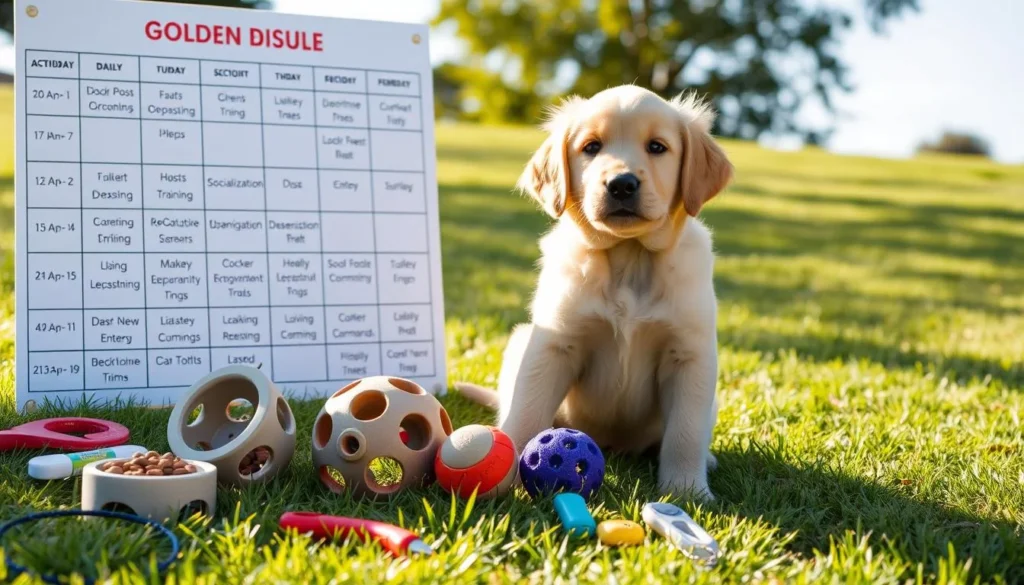
Why start now
Early exposure prevents permanent fears. Lewine and Cochran recommend group Puppy Kindergarten during the Angel Phase. This is when puppies learn social rules and process normal fear stages. I follow that advice and introduce low-level sounds, varied people, and controlled surprises so my pup learns to "check it out" instead of panicking.
Practical desensitization exercises
I use short, repeatable exercises to build tolerance. I handle ears, paws, and teeth for just a few seconds, then reward. I play low-level vacuum or doorbell sounds while feeding treats. Brief car rides and held neighborhood walks help a puppy adapt to motion and new surfaces.
I pair every new stimulus with treats and praise. If a puppy looks unsure, I step back and make experiences easier. I never force interactions. This approach fits neatly into a golden retriever puppy training schedule that balances exposure with rest.
Puppy classes and supervised play
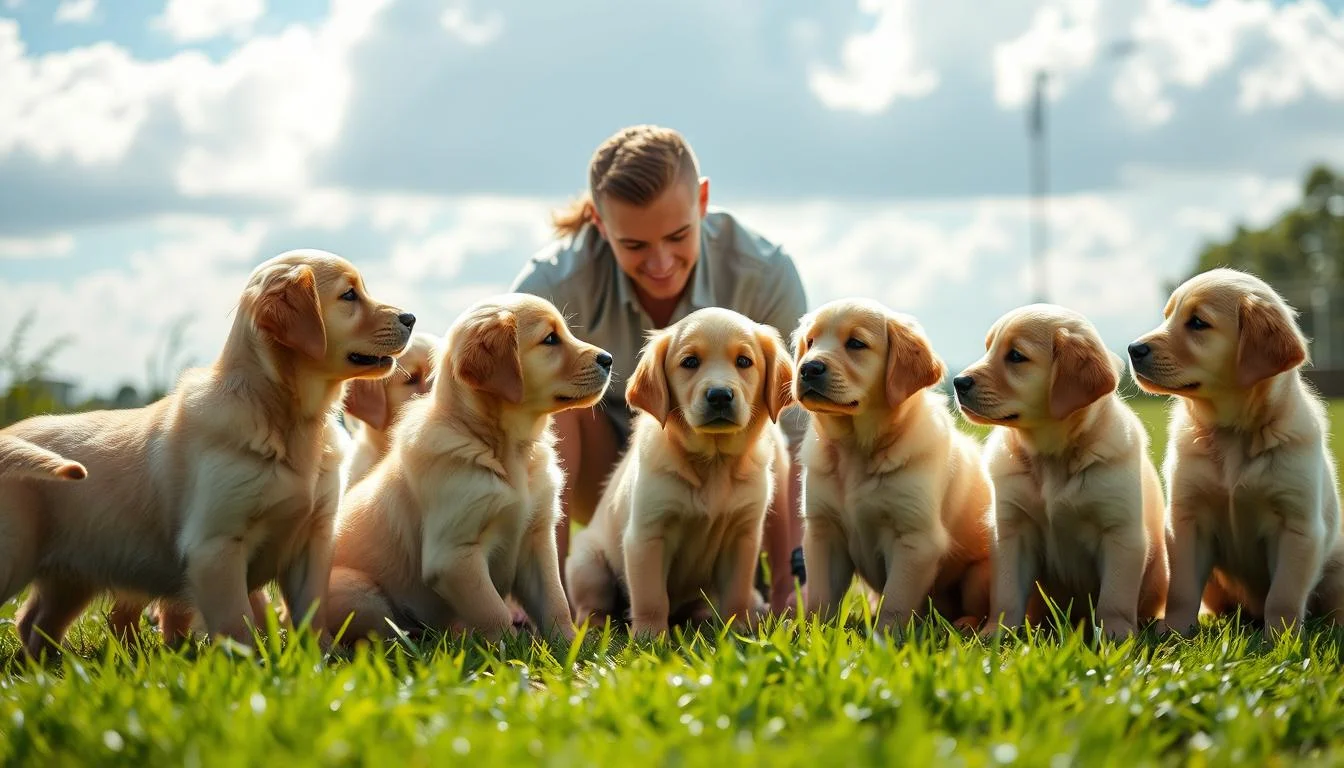
I enroll puppies in group classes once vaccinations allow. Group work teaches greeting manners and reduces jumping and lunging. Trainers I trust guide controlled play so pups learn bite inhibition and social preferences. Supervised play with vaccine-appropriate peers builds real-world skills safely.
I use short supervised sessions and occasional puppy parties to reinforce lessons from classes. When I need a visual example, I consult a golden retriever puppies training video or a set of golden retriever puppy training videos to compare techniques and refine timing.
golden retriever puppies training
I start with a simple routine for both puppy and owner. Sessions are short, lasting three to five minutes. We focus on calm attention before adding distractions.
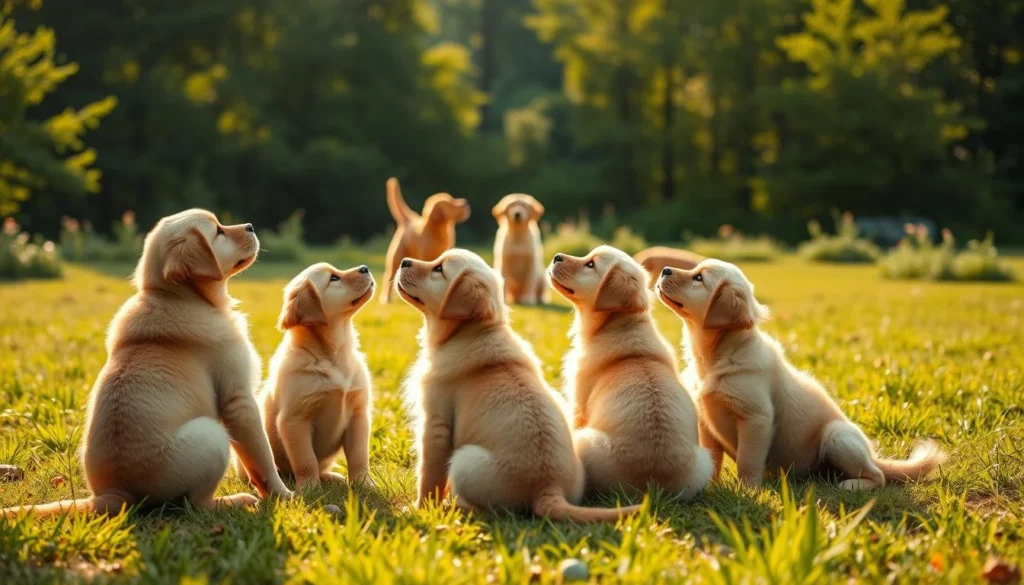
I teach a few basics first to help the puppy listen and settle. Short, frequent practice helps build steady habits without overwhelming them.
Foundations I work on first
I start with eye contact and name recognition for reliable attention. Then, I teach sit and recall for safety. I add leash manners and basic impulse control like leave it and drop it.
Calming exercises like waiting at thresholds and before meals are also included. Each skill starts with minimal distraction and increases as the puppy grows.
Tools and rewards I use
I use positive reinforcement and measured food rewards. Daily kibble is used as treats to keep calories in check. A clicker or "Yes!" is used for precise timing.
For teething, I use long fleece tug toys and soft chew toys. I avoid rope toys during early teething, following Puppy Academy guidance.
How to progress training through developmental stages
Training progresses through three stages. From two to six months, I focus on bonding and basic obedience. I expose puppies to common noises and new surfaces to reduce fear.
From six to eighteen months, energy and curiosity rise. I reinforce foundations and add sports like rally and agility. This burns energy and builds confidence.
After eighteen to twenty-four months, maturity signs appear. I consolidate advanced obedience and consider performance goals. I shift toward adult feeding and maintenance.
Across all stages, I create jobs and activities to meet mental and physical drives. I keep rules consistent and match practice times to natural energy cycles for the best results.
| Stage | Focus | Key Skills | Training Tools |
|---|---|---|---|
| Angel Phase (2–6 months) | Bonding and basics | Name, sit, recall, gentle handling | Measured kibble, clicker/“Yes!”, soft chews |
| Teenage Rebellion (6–18 months) | Reinforce and channel energy | Stronger recall, leash manners, impulse control | Fleece tugs, structured play, short training bursts |
| Signs of Maturity (18–24+ months) | Consolidate and specialize | Advanced obedience, sport skills, steady calmness | Performance treats, targeted sessions, maintenance routine |
I recommend pairing hands-on practice with a trusted training book. A golden retriever puppy training book can provide useful drills and ideas. For quick reminders, golden retriever puppy training tips help shape daily routines and keep progress on track.
Potty Training and Crate Habits for Golden Retriever Puppies
I help owners with a calm, structured potty training and crate habits plan. This fits well with busy American homes. A steady routine helps puppies learn faster and reduces accidents.
I suggest timed feeding for a golden retriever puppy training schedule. Measure meals and feed at set times. This makes eliminations predictable. Take puppies out first thing in the morning, after naps, after play, and within 15–20 minutes of eating.
Start short crate sessions with treats and meals inside. This makes the crate a safe den. Never use the crate for punishment. Pair crate time with calm handling, nail trims, and gentle grooming. This links the crate with comfort and care.
I use clear cues for outings. A single word or short phrase before each trip helps puppies learn where to go. Praise and a small treat right after they eliminate outside reinforces the habit. Keep outings brief but frequent, especially for young puppies.
When accidents happen, avoid scolding. Clean thoroughly with an enzymatic cleaner and return to a stricter routine. Limit indoor access, increase outdoor trips, and refresh cues and rewards. If problems persist, consult a veterinarian to rule out medical causes.
Teenage months bring regressions as hormones and distraction rise between six and eighteen months. Lower expectations during this stage. Stick to the golden retriever puppies training tips that emphasize consistency, patience, and short sessions.
Here are practical steps I follow:
- Set a golden retriever puppy training schedule with 3–4 measured meals daily.
- Take the pup out immediately after waking, after play, and after eating.
- Use the crate kindly: short stays, meals inside, and calm handling drills.
- Reward outdoor elimination within seconds to link action and praise.
- If accidents occur, tighten the schedule and increase outdoor frequency.
Progress usually appears in weeks, not days. Adjust routines as the pup grows and celebrate small wins. This steady plan helps owners master golden retriever puppies potty training while keeping the puppy relaxed and eager to learn.
Daily Puppy Training Schedule and Routines
I create a daily plan for owners to follow. It helps with potty training, socialization, and building confidence. Short sessions keep puppies focused and prevent frustration.
Here's a sample day, tips for balancing activities, and how routines change as the puppy grows.
Sample daily schedule I recommend
My routine is divided into times that match a puppy's needs. Training sessions are 3–5 minutes long. They're paired with meals and play to help lessons stick.
Morning starts with potty breaks, a short walk, and a 5-minute training session. Then, breakfast with training treats.
Mid-morning, puppies nap. After, they get used to touch through gentle grooming.
Midday, puppies play or go to puppy class. They also learn recall and leave-it.
Afternoon includes fetch or a run, grooming, and dinner training with rewards.
Evening is for calm obedience, social outings, and crate time before bed.
Balancing mental and physical exercise
I make sure puppies get both physical and mental stimulation. They have two to three walks a day. Mental exercises include nose games, tricks, and puzzle feeders.
Fetch sessions are short with breaks to avoid overexcitement. Scent work and agility drills focus the mind and tire it quickly.
For those who learn better by watching, I suggest golden retriever puppy training videos. They show how to handle and time training sessions.
Adjusting the schedule as they grow
Puppies go through different phases. In the Angel Phase, sessions are short and frequent. The Teenage Phase adds structure and longer walks.
At maturity, exercise remains steady. I adjust calories based on growth and spay/neuter timing. I track weight to ensure it's within expected ranges.
A consistent training schedule prevents behavior problems. Following the plan helps with potty training, crate training, and social skills.
| Time of Day | Activity | Purpose |
|---|---|---|
| Morning | Potty → short walk → 5-min training → breakfast | Start day with structure, reinforce attention and sit |
| Mid-morning | Nap → handling/grooming desensitization | Build calm tolerance for touch and care |
| Midday | Supervised play or puppy class → 3–5 min training | Socialization and recall/leave-it practice |
| Afternoon | Fetch/walk → grooming touch-up → dinner training | Physical outlet and meal-based learning |
| Evening | Calm obedience → short social outing → crate/bedtime | Wind-down routine for better sleep and manners |
Handling Mouthing, Bite Inhibition, and Chew Training
I tell owners to expect mouthing as a normal part of a puppy's growth. Golden retrievers were bred to carry items, and teething makes them even more mouth-focused. I explain that short attention spans and high energy increase this behavior.
My approach centers on redirection, consistent cues, and positive rewards. This helps the puppy learn safe ways to use its mouth.
I start by offering suitable chew options. Soft toys, long fleece tug toys, and frozen Kong treats give puppies something to mouth besides hands. I avoid punishment.
When a puppy mouths my hand, I move a toy into play and reward the swap with a small treat. This method keeps interactions calm and teaches bite inhibition through practice.
I introduce basic cues early. I use food trade-ups and mark-and-reward timing when teaching leave it and drop it. For give, I offer a treat while gently taking a toy and click or praise the release.
Repetition during the teenage phase helps, since mouthing can resurge then. Training games channel retrieving instincts into controlled fetch sessions.
I supervise all child–puppy interactions. I teach kids to offer long toys and avoid direct hand play with the puppy’s mouth. I train puppies to sit or settle for greetings and enforce no-jumping rules.
When visitors arrive, I use a crate or baby gate to manage introductions. This lets the puppy approach calmly.
If mouthing grows into hard nips or shows fear-driven escalation, I return to desensitization and structured handling exercises. I recommend seeking a qualified trainer if the puppy displays persistent aggressive reactions.
Short, frequent practice sessions and a calm owner response prevent most problems.
Below I summarize common techniques and when to use them.
| Situation | Technique | When to Use |
|---|---|---|
| Mouthing hands during play | Redirect to a soft toy; reward the swap | Daily play sessions and after meals |
| Puppy grabs undesired item | Use drop it with food trade-up and praise | Any time the puppy holds household items |
| Puppy becomes overexcited with guests | Ask for sit/settle; use gating for controlled greeting | Visitor arrivals and busy social events |
| Persistent hard nips or fear reactions | Return to desensitization; consult a certified trainer | During developmental fear phases or escalation |
| Chew boredom or teething | Rotate chew toys; offer frozen chewables and enrichment | Throughout teething and high-energy periods |
I often recommend owners watch a golden retriever puppy training video when first practicing these skills. Seeing timing and body language makes techniques easier to copy. These golden retriever puppy training tips pair well with hands-on classes and short daily drills.
Consistent practice and clear exchanges make a big difference. With patient guidance, golden retriever puppies training becomes a positive path to reliable manners and safe play around children and guests.
Grooming, Handling, and Health-Related Training
I start grooming and handling with a Golden puppy as soon as they arrive. I keep sessions short and calm to build trust. I use gentle praise and small treats to make nail trims, ear checks, and brushing enjoyable.
This method helps the puppy learn to stand still and accept touch. It's a key part of golden retriever puppies info and training.
I begin weekly nail trims and introduce a Dremel file early for comfort. Brushing several times a week helps prevent mats. I trim around paws, ears, and tail but never shave the double coat.
Grooming sessions are also training moments. I teach sit, stay, and stand for inspection during these times.
I prepare puppies for vet visits and travel with positive experiences. Car rides start with a few minutes and a tasty reward. I place the pup on a lap or in a crate to teach them motion is safe.
I lift paws, check ears and teeth, and place them on my kitchen counter. This mimics a vet table and reduces stress during exams. These steps follow golden retriever puppies training tips about gradual exposure.
Health screening and breeder checks are crucial. I watch for hip and elbow dysplasia, subvalvular aortic stenosis (SAS), and common Golden issues. If you adopt, ask the rescue or breeder about health testing.
I track body condition closely, especially through adolescence and after spay or neuter. Goldens need proper calories and muscle conditioning to stay lean and strong.
Grooming is a practical training tool. While brushing, I teach short holds and praise calm behavior. During ear and tooth checks, I reward compliance to make vet visits routine.
Regular hands-on work helps me spot lumps, ticks, or skin changes early. This links health awareness with golden retriever puppy training book guidance on consistent care.
When travel or longer vet procedures are planned, I build up tolerance with progressive steps. I practice brief handling sequences, crate entries, and calm exits. I reward the puppy for relaxed behavior and break tasks into tiny, repeatable steps.
This steady plan supports golden retriever puppies training tips. It keeps handling gentle, safe, and effective.
Training Resources: Books, Videos, and Courses I Trust
I keep my list simple and easy to use. I like formats that fit how people learn. Some like a golden retriever puppy training book for theory. Others prefer short videos for handling and timing.
Short training videos are great for showing real sessions. A single video can teach you a new method. Apps help me track progress and review lessons.
Books offer deep insights. A good golden retriever puppy training book covers development stages and feeding plans. I keep treats, a clicker, and a schedule ready when reading.
I value local trainers and puppy kindergarten for hands-on feedback. Look for CPDT-KA credentials or accredited schools. I check vaccination policies and visit a trial class before signing up.
Here's a quick guide to help you choose based on your goals and style.
| Format | Best for | What I bring to sessions |
|---|---|---|
| Books | Foundational theory and breed-specific guidance | Notebook, measured kibble, and a quiet spot for reading |
| Short videos & apps | Quick demos, timing, and repeatable handling drills | Clicker, smartphone for replay, four- to six-minute practice windows |
| Interactive courses | Structured weekly plans and feedback loops | Consistent schedule, progress tracking, and session notes |
| Local trainers & classes | Real-time correction, socialization, and supervised play | Vaccination records, leash, and proof of puppy age |
I mix resources for the best results. I read a book to understand the theory. Then, I watch videos to learn the handling. I use videos for practice days and courses for weekly plans.
When choosing materials, I check credentials and look for clear steps. I prefer methods that focus on rewards and health.
Conclusion
I summarize my approach to golden retriever puppies training in three clear steps. First, start immediately with positive reinforcement. Second, keep sessions short and consistent. Third, prioritize early socialization and desensitization.
I build a structured daily schedule that balances play, training, and rest. I adapt routines through developmental milestones—puppy, teenage, and maturity. This way, progress matches the dog’s needs.
My golden retriever puppy training tips emphasize real-world actions. Choose a reputable breeder or perform a thorough rescue screening. Schedule an early veterinary visit and enroll in puppy classes like Puppy Academy-style programs.
I rely on trusted resources—apps, training videos, and experienced trainers—to stay consistent and troubleshoot challenges.
For golden retriever puppies info and training, I blend breeder expertise with practical, positive techniques. With patience, firm but fair boundaries, and engaging activities like jobs, sports, and tricks, you can raise a well-mannered, happy Golden. I stand by this plan as a straightforward path to lasting success.