As a dog owner, I've learned that a puppy seeing my fingers as toys can be both cute and frustrating. Watching them explore the world with their mouth is adorable. But, when their tiny teeth start to bite, it can be overwhelming.
It's during these moments that I realized how important it is to understand puppy behavior and training. Knowing that puppy biting is a natural part of their growth has helped me a lot. In this guide, I'll share why puppies bite and how we can stop it.
Key Takeaways
- Puppies bite as a natural part of their play and exploration.
- Understanding the reasons behind puppy biting can aid in effective training.
- Implementing bite inhibition techniques can help manage puppy behavior.
- It’s essential to remain patient and consistent in training practices.
- Redirecting biting behavior with appropriate toys encourages good habits.
- Monitoring playtime interactions can enhance safety, especially with children.
Understanding Puppy Biting Behavior
Puppy biting is a natural behavior that surprises new pet owners. Puppies use their mouths to explore the world. This behavior is not just mischief but a crucial part of their development.
Puppies bite everything as a way to playfully explore and learn about their environment. When I watch my pup play with its littermates or humans, I see how important these interactions are. They help puppies learn how hard they can bite without causing harm.
By understanding what triggers puppy biting, I can better manage their behavior. This knowledge helps me provide the right intervention. It ensures my puppy grows into a well-mannered dog.
Why Puppies Bite
Puppies bite for a few reasons. Knowing why helps us manage their natural instinct. Teething and a desire to explore are the main causes.
Teething and Its Effects
Teething is tough for puppies. They have 28 sharp baby teeth coming in. They bite to find relief.
Offering chew toys can help. This way, they can chew without biting hands or fingers. It's a big problem if they don't have the right toys.
Playful Exploration and Discovery
Puppies also bite because they love to play. They learn by mouthing things. This helps them understand the world.
It's important to give them toys to play with. This way, they don't bite us. It's all part of their growth.
Learning Bite Inhibition
Understanding bite inhibition is key in puppy training. It's about controlling the force of their mouth. This helps them learn what's okay to do as they get older.
When puppies play with their mothers and siblings, they learn about biting. They get feedback on how hard they're biting. This feedback is important for learning to control their mouth.
The Importance of Gentle Mouthing
Gentle mouthing is very important in puppy training. Puppies often play with their teeth and might not know they're biting too hard. Teaching them to mouth gently helps them behave better later.
This method also helps them get along with others and feel good emotionally. Puppies that learn to control their bite are less likely to be aggressive as adults.
How Puppies Learn Through Play
Playtime is where puppies learn from each other. They figure out what's okay and what's not through play. When they play gently, they learn an important lesson.
As they grow, using play to teach them helps them remember these lessons. This way, they keep learning and growing in a good way.
Effective Techniques to Stop Puppy Biting
Stopping puppy biting can be tough, but there are good ways to do it. I've found two methods that work well: using a high-pitched yelp and time-out strategies. These help change puppy behavior and teach them what's okay during play.
Using a High-Pitched Yelp
One good way to stop puppy biting is to use a high-pitched yelp when they bite too hard. This sound tells the puppy their bite is too rough. By doing this often, puppies learn to play softer, which is better for everyone.
Time-Out Strategies
Time-out strategies are also key. If a puppy bites when they shouldn't, take them away from play right away. This teaches them that biting means no more fun. Using these methods helps puppies learn good behavior and stop biting.
Puppy Biting and Nipping
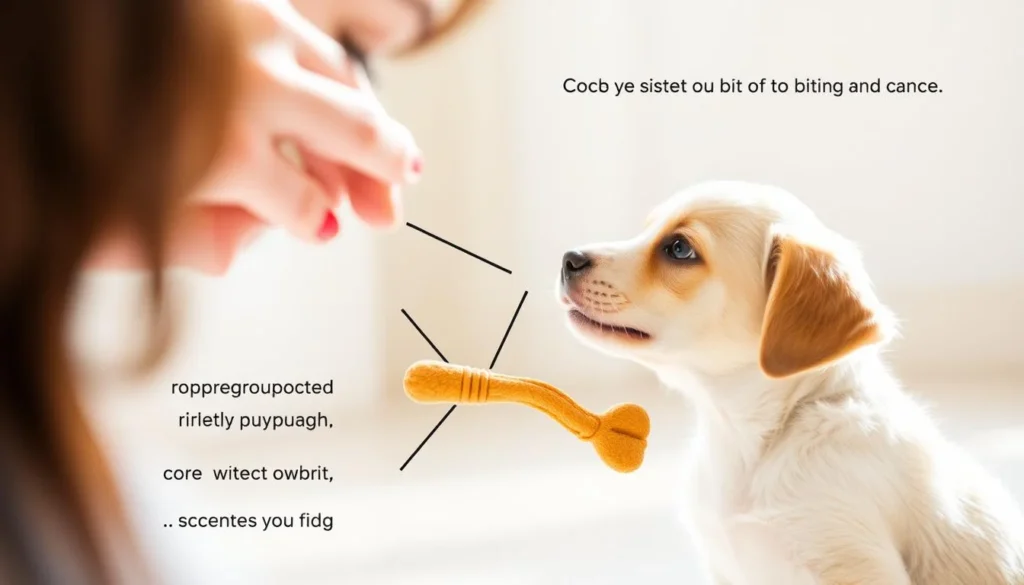
Puppy biting and nipping happen a lot, especially when they're full of energy. It's key to know the difference. Playful nipping is usually okay and shows they're learning. But biting might mean they need help.
When your puppy nips, it's often gentle. They might even bite your fingers or face. It's crucial to teach them what's right. I use redirection to help. If they nip, I give them a toy to play with instead.
Teaching your puppy what's okay is important. Praise them when they choose to play with toys instead of biting. This helps them learn right from wrong. It's all about setting limits while still letting them have fun.
Puppy Biting Child: Safety Tips
When my puppy plays with kids, I keep a close eye to avoid bites. Safety is key, as puppies can nip accidentally. Teaching kids how to play with puppies safely helps everyone understand each other better.
Supervision During Playtime
I always watch when kids and puppies play together. This way, I can stop any rough play before it starts. It keeps everyone safe and teaches the puppy to play nicely.
Teaching Gentle Interactions
It's important to teach kids to play gently with puppies. Using toys instead of hands is a good rule. I show them how to use voice commands and play games that are fun and safe.
Puppy Biting Constantly: Understanding Triggers
It's important to know why puppies bite a lot. Different things can make a puppy bite more than usual. Finding out what causes it helps me find ways to stop it.
Excess Energy and Boredom
Puppies are full of energy and love to explore. If they have too much energy or get bored, they might bite things. Giving them lots of exercise and playtime helps. Also, toys that challenge their minds can keep them from biting too much.
Over-Stimulation Factors
Too much excitement can also make puppies bite a lot. They might feel overwhelmed and bite to feel better. Knowing when they're too excited helps me make things calmer. This way, I can help them stop biting so much.
Redirecting Biting Behavior
Puppies often use their mouths to explore the world. This can lead to unwanted biting. A key part in managing this is to redirect biting behavior with suitable alternatives.
Providing my puppy with the right chew toys is crucial. It satisfies their natural urge to chew and sets boundaries. This way, they learn what is okay to bite.
Substituting Chew Toys
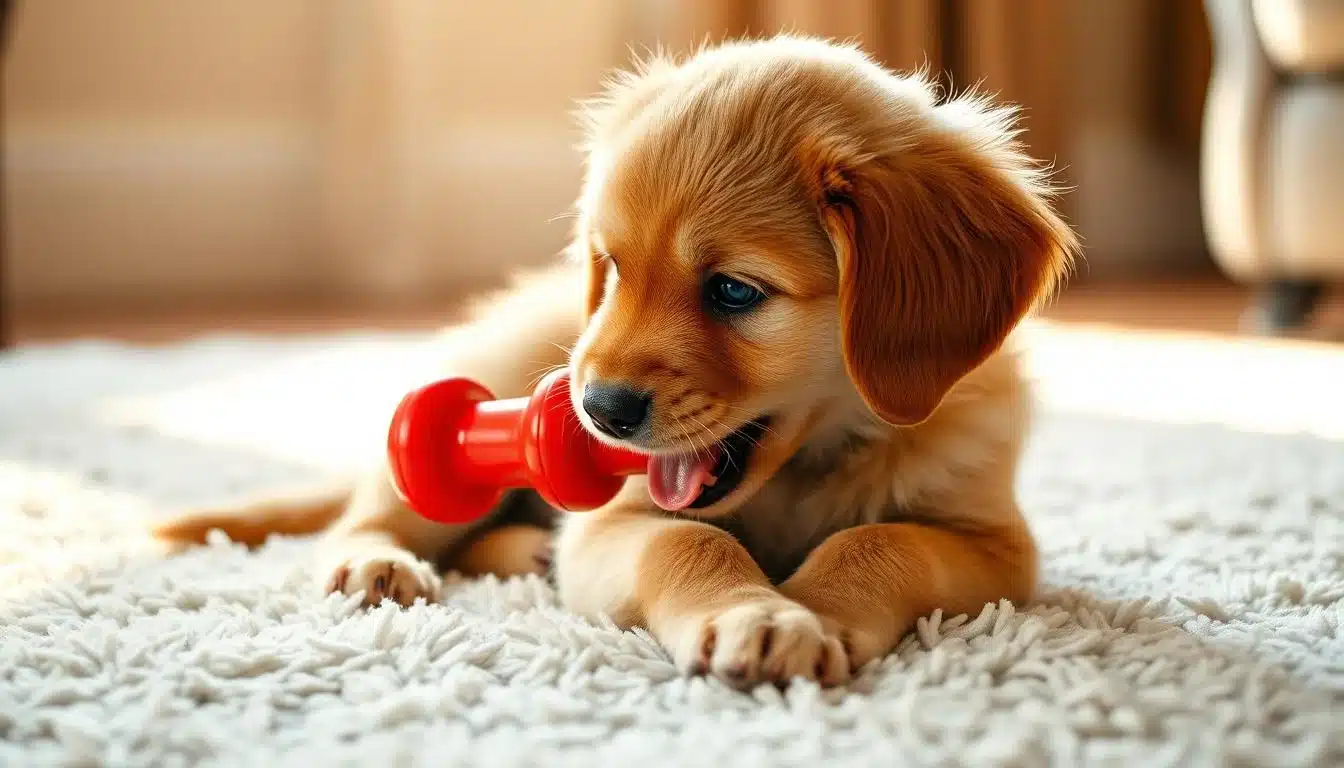
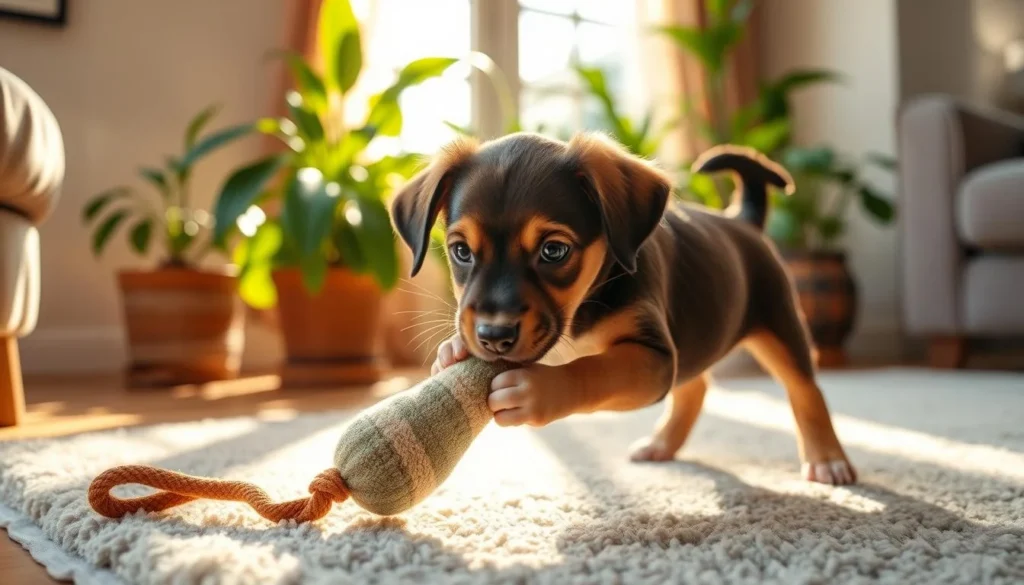
Chew toys are a top solution for puppy teething. When my puppy bites my fingers, I give them a toy instead. This teaches them that biting people is not allowed.
It also encourages them to chew on safe items. This way, they can release energy and pain from teething without hurting themselves or others.
Encouraging Non-Contact Play
Non-contact play helps reduce biting urges. I play games that don't involve biting, like tug-of-war with a rope toy. Or games where they chase a ball.
These activities help us bond and teach them what's acceptable. They learn not to bite inappropriately while having fun.
Puppy Training Tips for Managing Biting
Managing your puppy's biting needs a thoughtful approach and strategies. Using effective puppy discipline techniques helps shape their behavior positively. With puppy training tips, you can create a supportive environment. Here, your pet learns how to interact with family members correctly.
Reinforcing Desired Behaviors
Positive reinforcement is key in puppy obedience training. I reward my puppy with treats and praise for good behavior. This encourages them to do it again.
Whether it's playing gently or responding to cues, I acknowledge and reinforce these moments. This builds a positive association with the desired behavior.
Consistency Across Family Members
Consistency among family members is crucial for effective puppy discipline. Having the same rules and boundaries about biting helps avoid confusion for the puppy. I make sure all family members agree on puppy training tips and techniques.
This unified approach helps my puppy learn faster. It also makes our home environment more peaceful.
Puppy Teething Solutions and Relief
My puppy loves to bite everything when they're teething. To solve this, I found some great puppy teething solutions. Giving them safe chew toys helps with their pain and teaches them good habits. Toys made just for teething puppies really help manage their biting.
Choosing the Right Toys
Finding the right toys is key to changing my puppy's behavior. I look for toys that are tough but gentle on their gums. Rubber chew toys, rope toys, or even frozen items help soothe their gums. Toys with different textures keep them excited and less likely to chew on things they shouldn't.
Safe Chewing Alternatives
Along with toys, I've found natural chew options work well. Rawhide alternatives, dental chews, or even carrots are great for teething puppies. These options give them a healthy way to chew and encourage good behavior. Having these safe chew items ready helps keep my puppy happy and healthy.
Puppy Aggression Management Techniques
Understanding puppy aggression is key. It's important to notice when my puppy feels stressed or scared. This helps in managing their aggression effectively.
When puppies feel threatened, they might bite or snap. Watching their body language is crucial. Signs like raised hackles or growling show how they're feeling.
Recognizing Signs of Stress or Fear
I need to watch for changes in my puppy's behavior. If he hides or doesn't want to play, he might be scared or overwhelmed. These feelings can get worse if not handled right away.
Using techniques to prevent puppy mouthing helps keep everyone safe. It lets children and my puppy have positive interactions.
Seeking Professional Help When Needed
If my puppy's aggression worries me, I should get help. A dog trainer or behaviorist can offer specific advice for my puppy. This is especially true if he's aggressive towards children.
With the right help, my puppy can learn to handle social situations better. This makes everyone safer and happier.
Stopping Puppy Nipping: Gentle Approaches
Stopping puppy nipping can be tough, but gentle methods work well. When I see my puppy biting and nipping, I redirect them. I give them toys to play with, showing them hands are not for play.
It's important to consistently tell my puppy "no" when they nip. This lets them know it's not okay. Reinforcing good behavior teaches them and strengthens our bond.
Also, socializing my puppy helps reduce biting. Playing with other dogs under watchful eyes teaches them how to play right. This helps cut down on nipping.
Effective Puppy Discipline Techniques
Understanding effective puppy discipline techniques is key when training my puppy. The right methods help build a strong bond and a well-behaved companion. The training approach I choose greatly affects my puppy's development and behavior.
Positive Reinforcement vs. Punishment
Positive reinforcement rewards good behavior with treats, praise, or playtime. These methods strengthen the bond between me and my puppy. They also improve obedience training. By focusing on what's right, I teach good behavior without being negative.
Punishment can make my puppy fearful or aggressive, making training hard. It can cause anxiety, making learning harder. Keeping things positive makes training more enjoyable for both of us.
Conclusion
Managing puppy biting needs patience and consistent training. It's important to understand why my puppy bites. This helps me fix the problem better.
Using techniques like redirection and positive reinforcement can really help. Every puppy is different. So, finding the right approach for my puppy is key to success.
As my puppy grows up, the training I do now will help a lot. I'm sure that with time and effort, we can have a great relationship. And, we can avoid unwanted biting.