Bringing a puppy home was a thrilling moment for me. But, it brought a challenge I didn't see coming: their little bites during play. At first, I laughed as they bit my fingers. But soon, I knew I had to find ways to stop it.
Learning to train my puppy to not bite became a key part of our day. It turned playtime into fun without the worry of getting hurt. This guide will help you teach your puppy to be gentle, so you can enjoy their love and affection fully.
Key Takeaways
- Understanding why puppies bite is crucial for effective training.
- Bite inhibition is an important skill for your puppy’s safety and social interaction.
- Positive reinforcement methods can effectively teach your puppy not to bite.
- Providing appropriate chew toys can redirect biting behavior.
- Recognizing signs of overstimulation helps manage your puppy's energy.
Understanding the Behavior of Puppies
Puppies show interesting behaviors as they discover their new world. It's key to understand puppy biting in this phase. They use their mouths to play with things, people, and other pets.
This is a time of playful biting, which helps them explore and communicate. I see my puppy play with siblings or other dogs. Their bites are gentle but clear. It's not aggression; it's their way to connect and socialize.
Good training depends on knowing what their bites mean. By understanding, I can teach them right biting habits. This knowledge is vital for their early development.
Why Do Puppies Bite?
Puppies are naturally curious and explore the world with their mouths. This is especially true during certain developmental stages. Many pet owners wonder, "why do puppies bite?" Knowing the reasons can help us respond and train them better.
Exploration and Teething
Teething starts around three to four months of age. Puppies feel pain as their baby teeth fall out. Chewing and biting help them ease this pain and explore their surroundings.
It's key for pet owners to understand this behavior is part of their growth.
Play and Social Interaction
Play biting and social interaction are also reasons for puppy biting. Puppies play with their littermates, wrestling and nipping. This teaches them important social skills, like bite inhibition.
If they bite too hard, a yelp from their sibling tells them to adjust. This social learning helps them bite better in the future, promoting healthy social behavior.
Importance of Bite Inhibition
Teaching my puppy to control their bite is crucial. This skill helps them play gently, avoiding injuries to people and pets. It's a key part of their training.
Puppies with good bite control are less likely to hurt others as they grow. This skill is essential for their social development. It lets them play and interact without causing fear or harm.
By focusing on bite inhibition, I aim to create positive experiences for my puppy. This training builds trust and helps them understand boundaries. It makes them feel safe and learn to handle different situations well.
Teaching Your Puppy Bite Inhibition
Teaching a puppy not to bite is all about clear communication and understanding what's right. One good way is to teach them to respond to hard bites. This helps them know the difference between okay and not okay when they bite.
Using sounds that mimic their natural interactions helps them learn faster. It makes understanding gentle mouth pressure easier for them.
Creating a Response to Hard Bites
When your puppy bites too hard, a high-pitched yelp is a strong signal. It's like what they would get from their siblings. This method teaches them that biting too hard means playtime stops.
By doing this, they learn to be gentle. This makes playtime better for everyone.
Using Play to Teach Gentle Mouth Pressure
Play makes learning fun. I let my puppy mouth my hands during play. But if it gets too hard, I yelp and pull my hand back.
This teaches them that gentle mouthing is good, but hard biting stops play. Rewarding them for gentle behavior makes playtime positive.
Effective Techniques for Training
Training your puppy not to bite is key. Consistency is vital. I use a yelp sound when my puppy bites too hard. This tells them it hurts and they should stop.
I also use time-outs for too much biting. When my puppy bites too much, I take them away for a bit. This teaches them biting means losing playtime. It's important to be patient, as learning takes time.
Always having a chew toy ready helps too. If my puppy bites, I give them a toy instead. This teaches them it's okay to bite toys, not people.
By using these methods—yelping for hard bites, time-outs, and chew toys—I help my puppy learn. With regular practice, these techniques have greatly improved my dog's behavior.
| Training Technique | Description |
|---|---|
| Yelp for Hard Bites | Imitates the response of another puppy to signal pain |
| Time-Out | Temporarily removes the puppy from play to discourage excessive biting |
| Chew Toys | Offers alternatives to biting human skin, redirecting attention |
How to Train Puppy to Not Bite
Training a puppy not to bite needs consistent methods and patience. Positive reinforcement works well. Puppies like being praised and rewarded for good behavior.
When my puppy plays nicely, I give him treats or affection. This shows him what's right.
Positive Reinforcement Methods
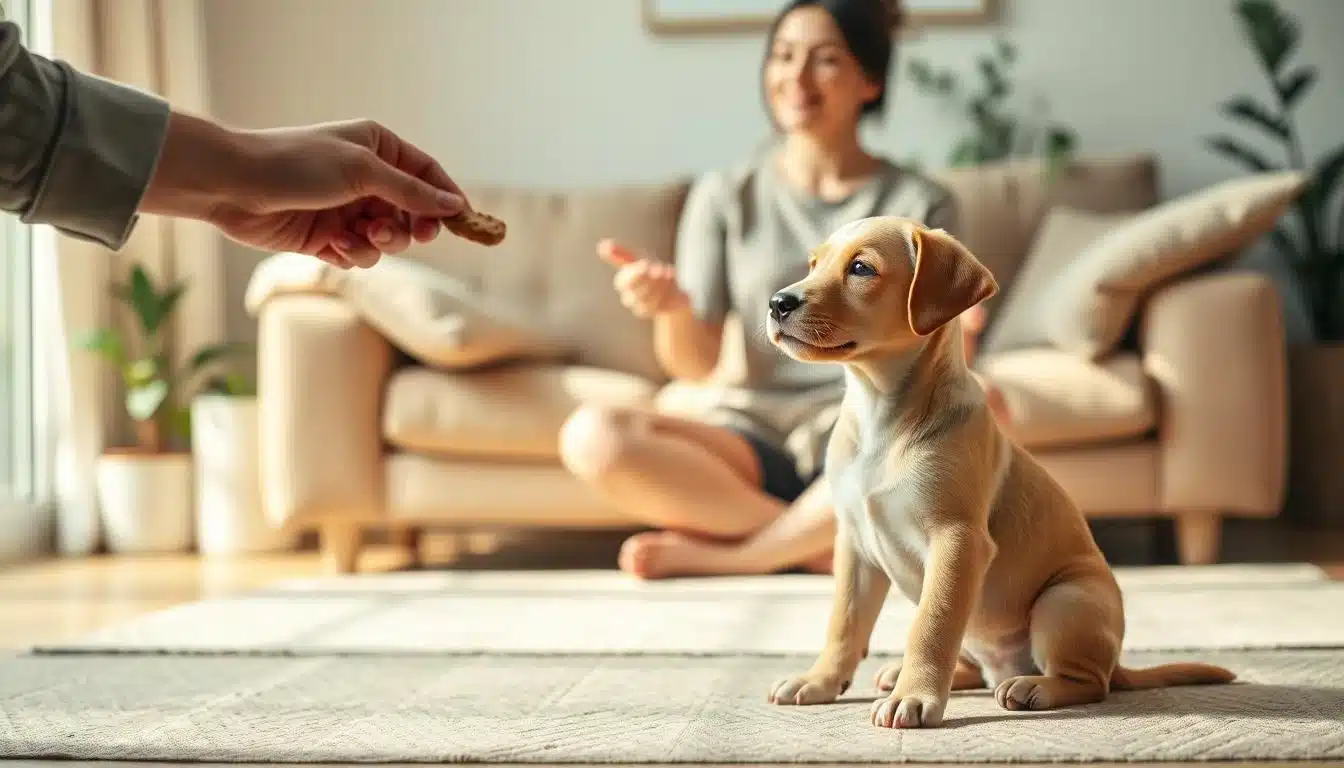
Positive reinforcement is key in stopping puppy biting. I praise or give treats when my puppy plays gently. This teaches him that not biting is good.
Using Time-Outs Effectively
Time-outs are also important in training. If my puppy bites too much, I use a time-out. I calmly step away or put him in a quiet area for a short time.
Time-outs remind my puppy that biting stops the fun. It helps him learn that biting isn't okay.
Providing Alternatives to Biting
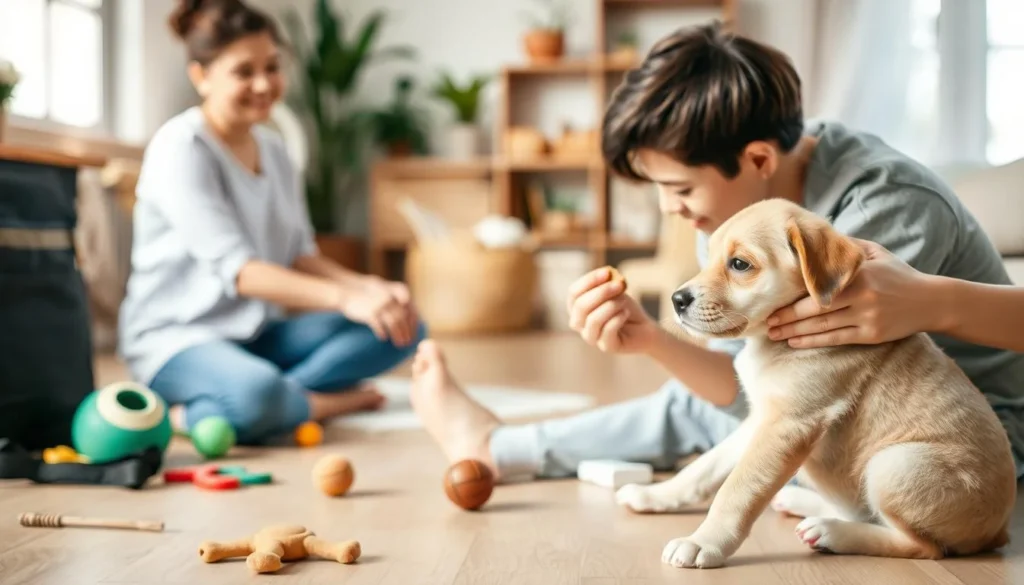
When I work on stopping puppy biting, giving them other things to chew on is key. Using the right chew toys is a great way to do this. These toys keep my puppy busy and stop them from biting my hands or furniture.
Encouraging Chewing on Appropriate Toys
It's important to pick the right toys. Healthy chew toys like rubber ones or tough bones are perfect. They can handle a lot of chewing, which is great for teething puppies.
For a fun twist, I sometimes give my puppy frozen Kongs with peanut butter or treats inside. It's a tasty snack and helps soothe them during teething.
Engaging in Non-contact Play
Playing games that don't involve biting is also helpful. Games like fetch or tug-of-war are great. They let me play with my puppy without encouraging bad biting.
These games give my puppy the exercise and fun they need. It helps us have a better, healthier playtime together.
These methods not only stop bad biting but also make our relationship better. It's a win-win for both of us.
Managing Your Puppy’s Environment
Creating a good environment for my puppy is key to managing their behavior. By using the right strategies, I can lower the risk of unwanted biting. Making my home puppy-proof is crucial to stop them from getting into things that might lead to bad habits.
Watching over play sessions is a smart move. I stay involved, ready to step in if biting happens. Using crates or playpens gives my puppy a safe spot and helps control their interactions with others.
Baby gates are also helpful. They keep my puppy in certain areas of the house, away from dangers. This setup lets my puppy explore safely, reducing chances of bad behavior.
In short, by making my home puppy-proof and managing my puppy's space, I create a safe area for them to grow. My hard work will help in promoting good behavior and reducing biting.
Recognizing Signs of Overstimulation
As a puppy owner, it's important to understand my dog's behavior. This helps manage their excitement and prevent biting. Knowing when they're overstimulated is crucial for a calm home.
Puppies show signs when they're too excited or overwhelmed. Their high energy levels can be a challenge. It's key to spot these signs early.
Understanding Puppy Energy Levels
Puppies have different energy levels based on their age, breed, and personality. Knowing when they're too energetic helps spot overstimulation. Look out for:
- Increased playfulness
- Excessive jumping or barking
- An inability to settle down after play
By watching these signs, I can manage my puppy's excitement. This makes our home more peaceful.
Providing Quiet Time for Relaxation
After playtime, it's vital to give puppies quiet time. I create a special space for them to rest with their favorite toys. This helps them relax and reduces the risk of biting.
Quiet time lets my puppy recharge. It helps them balance their energy levels. This is good for their well-being.
Incorporating Playtime in Training
Adding play to puppy training makes learning fun and engaging. When I teach commands like "sit" or "stay" through play, it's not just a task. It's a fun activity that my puppy looks forward to.
Playtime is essential for puppies to stay active and mentally sharp. Structured play helps them learn while strengthening our bond. This mix of training and play makes it easier for them to remember what they've learned.
I often use a favorite toy to reward my puppy for good behavior. This turns training into a game they enjoy. It boosts their enthusiasm and eagerness to learn.
| Training Component | Playtime Integration | Benefits |
|---|---|---|
| Commands | Incorporate during fetch games. | Improves command recognition. |
| Socialization | Introduce new playmates in a controlled setting. | Enhances comfort and confidence with other dogs. |
| Impulse Control | Use toys to practice "leave it" during play. | Encourages patience and self-control. |
Playful training methods make learning a joy for both my puppy and me. Each session helps them grow and strengthens our bond. It turns learning into an exciting adventure.
Using Crates and Playpens as Tools
Using crates and playpens is key for puppy training. Crates create a safe space for puppies. They see the crate as their own, where they feel safe and calm.
Playpens are great for puppies too. They let puppies play safely without causing trouble. This way, they can play freely while I watch over them.
Choosing the right spot for a crate or playpen is important. I put them in busy areas so puppies get used to them. Adding their favorite toys and bedding makes them cozy. This helps puppies see these spaces as good tools for learning.
| Tool | Benefits |
|---|---|
| Crate | Safe space for relaxation, aids in house training, prevents destructive behavior |
| Playpen | Controlled play environment, encourages safe exploration, reduces overstimulation |
Socialization and Puppy Classes
Putting my puppy in puppy classes opened a new world for socialization. These classes are more than just learning; they teach my puppy how to act around other dogs and people. My puppy learns to play nicely with others and enjoys fun activities.
Socialization is key. It helps my puppy get used to new things like different places, sounds, and friends. This helps my puppy feel confident and calm when they meet new things.
In these classes, trainers focus on positive behavior. They create a safe space for my puppy to learn important dog manners. Seeing other dogs helps my puppy learn what's okay and what's not, building a strong foundation for good behavior.
Professional Help for Persistent Biting
When my puppy's biting doesn't stop, I think about seeking professional help for biting. It's good to know that Certified Professional Dog Trainers (CPDT) can help. These puppy training professionals can really understand my puppy's behavior and find problems I might not see.
Professional trainers use special training methods for my puppy's biting. They give me plans that help with obedience and stop the biting. Working with a pro helps me understand my puppy better, making training fun and effective.
Finding the right trainer is key. I look for someone who knows about biting and uses positive methods. The right trainer helps my puppy be happy and well-adjusted.
Building a Bond Through Positive Interaction
Bonding with your puppy is incredibly rewarding. Positive interactions help my puppy feel secure and loved. Short training sessions filled with praise and affection build trust.
By focusing on fun games and gentle handling, I improve my puppy's behavior and social skills. This approach shows them that interactions can be enjoyable and safe.
Here are some effective methods I use to strengthen our bond:
- Engage in playtime with toys that encourage interaction.
- Offer treats for good behavior, making learning a positive experience.
- Provide plenty of affection, like cuddles and petting, to reinforce our connection.
Through these positive interactions, my puppy becomes more confident and comfortable. Our bond is essential for their emotional well-being and behavioral development.
Conclusion
Training a puppy not to bite is key for me as a pet owner. It shows the importance of understanding, consistency, and patience. I've learned that using positive reinforcement and giving alternatives to biting is crucial.
Knowing why my puppy bites helps me react the right way. It could be because they're exploring or playing. Building a strong bond through positive interactions stops bad behavior and strengthens our relationship.
My dedication to understanding puppy behavior has made a big difference. With the right approach, my puppy will grow into a well-behaved and loving friend for many years.