When I first welcomed my puppy, I was filled with excitement. But soon, I faced a challenge: my puppy loved to bite. Whether it was playfully nipping at my fingers or chewing on my shoelaces, I knew I had to teach him boundaries.
If you're dealing with a similar issue, you're not alone. Learning how to train your puppy not to bite is key for a good relationship and their well-being. By understanding why they bite and using the right strategies, you can build a loving and respectful bond.
Key Takeaways
- Understanding the reasons why puppies bite is crucial.
- Positive reinforcement can effectively train puppies to stop biting.
- Redirecting puppy energy to appropriate activities is essential.
- Establishing clear playtime boundaries helps reinforce good behavior.
- Providing appropriate chew toys can satisfy your puppy's biting instinct.
- Recognizing normal behaviour versus problematic biting is vital.
Understanding Why Puppies Bite
Puppies naturally want to bite, which makes us wonder why. This behavior comes from their instincts, like teething and playing. Knowing this helps us manage their biting better.
The Role of Teething
Puppy teething starts around 3 to 4 months old. They lose baby teeth for adult ones. Chewing helps them feel better during this time.
It's key to give them chew toys. These toys help them bite without causing harm.
Exploration Through Mouthing
Mouthing is how puppies explore and interact. It helps them learn social cues. They use it to talk to their siblings and understand when to stop biting.
This is important for their social skills. But, we need to watch them to prevent aggressive biting.
Play Behaviour with Siblings
Play with siblings teaches puppies about their strength. They learn how hard they can bite without hurting others. Watching them play helps us understand their growth.
Recognizing Normal Puppy Behavior
Knowing what's normal in a puppy's behavior is key for any dog owner. Puppies often bite, but it's usually because they're exploring, socializing, or have too much energy. Knowing why they bite helps me teach them better ways to act.
Common Reasons for Biting
Puppies bite for many reasons. Spotting these can help me manage their behavior well. Here are some common reasons:
- Exploration: Puppies use their mouths to check out their surroundings.
- Attention-Seeking: Biting can be a way for my puppy to get noticed or play with others.
- Teething: When they get new teeth, it can hurt, making them bite more.
Puppy Energy Levels
Puppies have lots of energy, which can make them bite more. If they don't use this energy, they might get bored and mouth things. To keep my puppy busy, I make sure he gets enough exercise and mental play.
- Playtime with toys
- Short training sessions
- Frequent walks or outdoor adventures
By understanding normal puppy behavior and keeping their energy in check, I can reduce puppy biting. This helps them grow up happy and healthy.
How to Train My Puppy Not to Bite
Training my puppy not to bite is key. It's about teaching them to control their mouth during play. This skill is vital for their safety and development, especially in stressful situations.
Importance of Bite Inhibition
Bite inhibition helps my puppy understand the strength of their bites. A well-trained puppy knows when to use a gentle mouth. This makes interactions with humans and other pets better. It also lowers the risk of injuries, making my puppy's behavior safer.
Techniques for Teaching Control
To stop puppy biting, I use several methods:
- Yelp Technique: If my puppy bites too hard, I yelp to show it's not okay. This sound tells them to think twice about their actions.
- Stop Play: If they bite, I stop play for a bit. This teaches them biting ends fun.
- Redirect Attention: Giving them chew toys helps them focus on something else. This teaches them what's okay to chew.
With patience and consistency, I can teach my puppy about bite inhibition. This makes our playtime safe and fun for both of us.
Positive Reinforcement Techniques
Training methods are key in shaping my puppy's behavior. Positive reinforcement is a top strategy. It rewards good behavior and avoids punishing bad ones. This makes training fun for both of us, building a strong bond without stress.
Using Praise Effectively
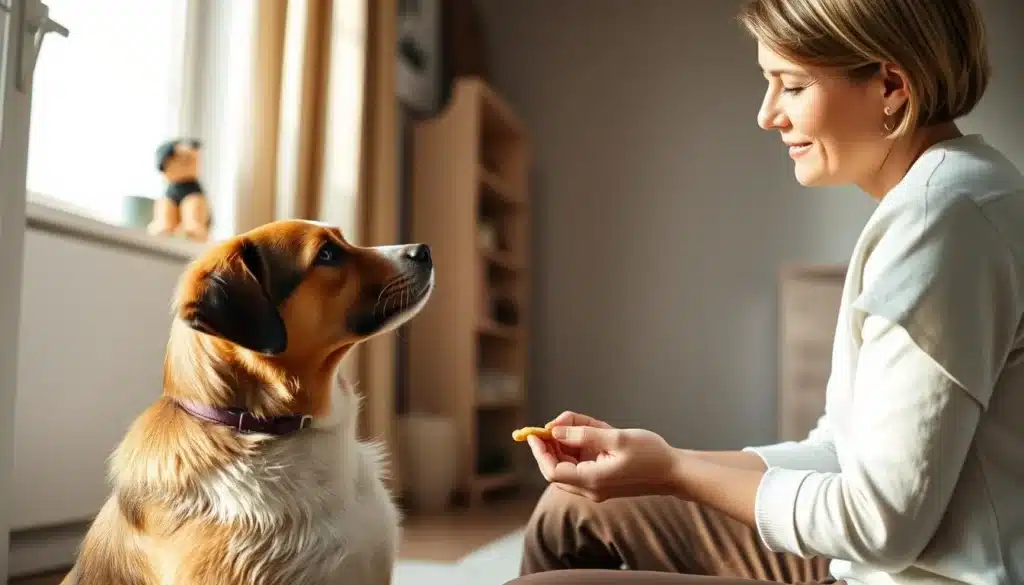
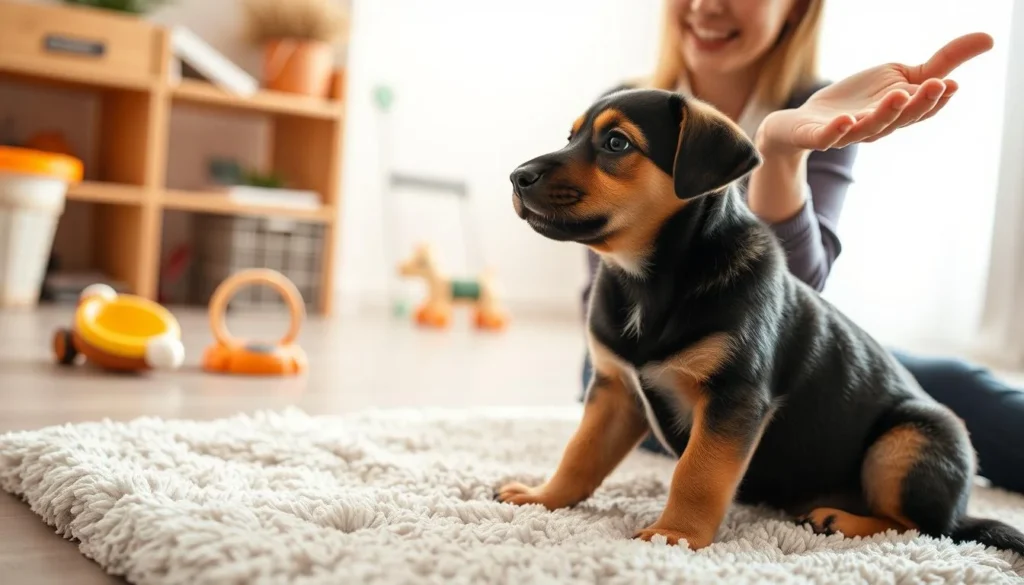
When my puppy sits calmly, I praise them right away. This positive feedback helps them link good behavior to rewards. I use different tones to keep praise exciting and engaging.
Rewarding Calm Behavior
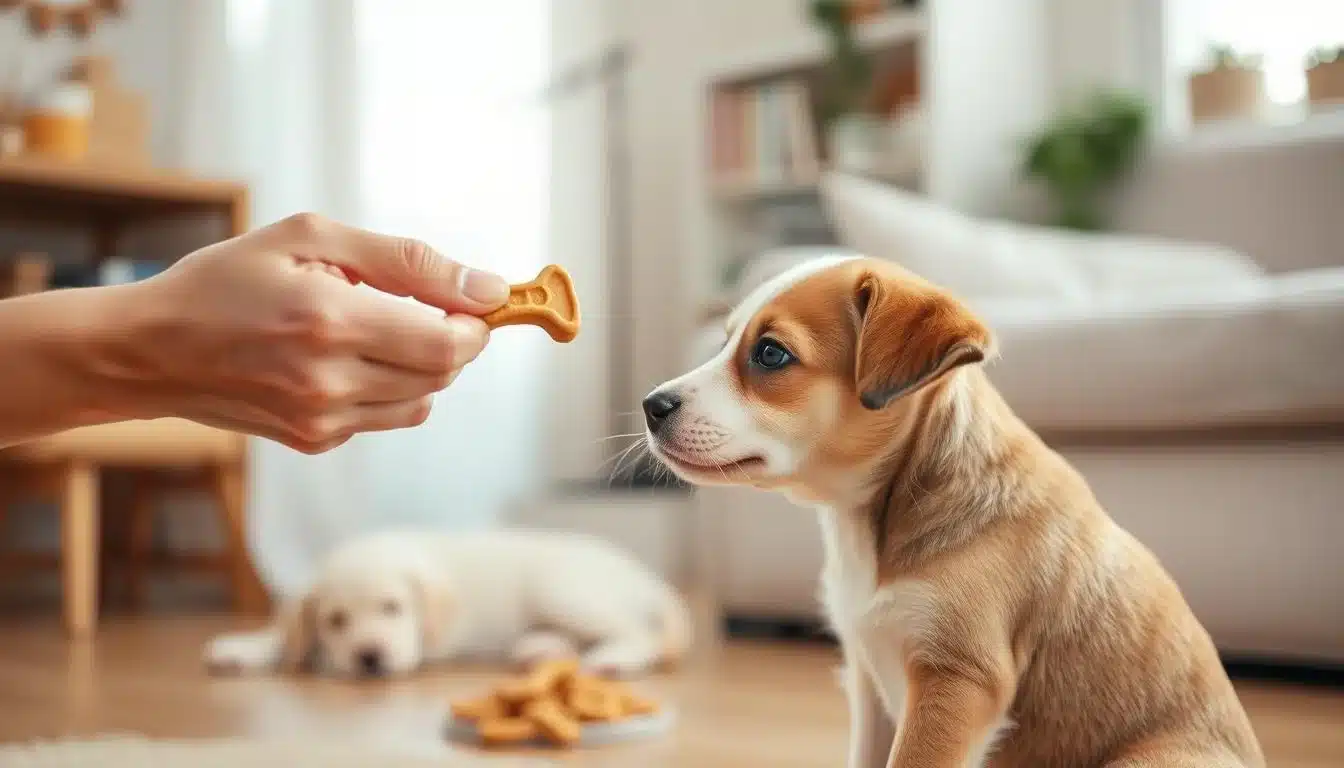
Using a reward system boosts training. Giving treats for calm behavior cuts down on biting. This method sets clear expectations and motivates my puppy to behave well. I mix up rewards like toys, treats, and affection to keep them interested.
| Behavior | Reward Type | Effectiveness |
|---|---|---|
| Calm Sitting | Praise & Treat | High |
| Gentle Play | Toy | Moderate |
| Following Commands | Praise | High |
| Ignoring Biting | Positive Interaction | High |
Using various positive reinforcement techniques and consistent praise and rewards helps. This method is great for puppy training, supporting my puppy's growth and behavior.
Redirection Strategies for Biting
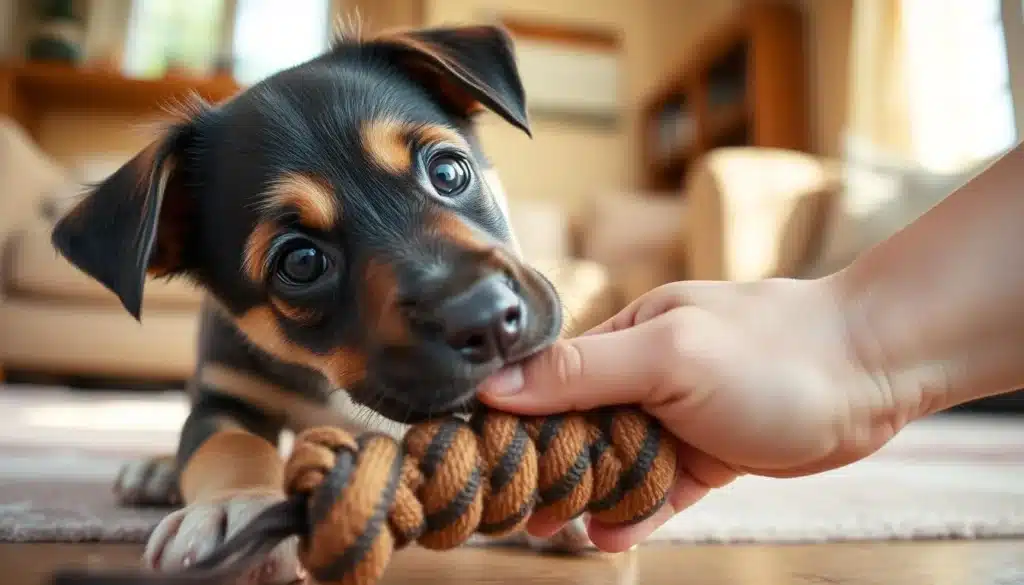
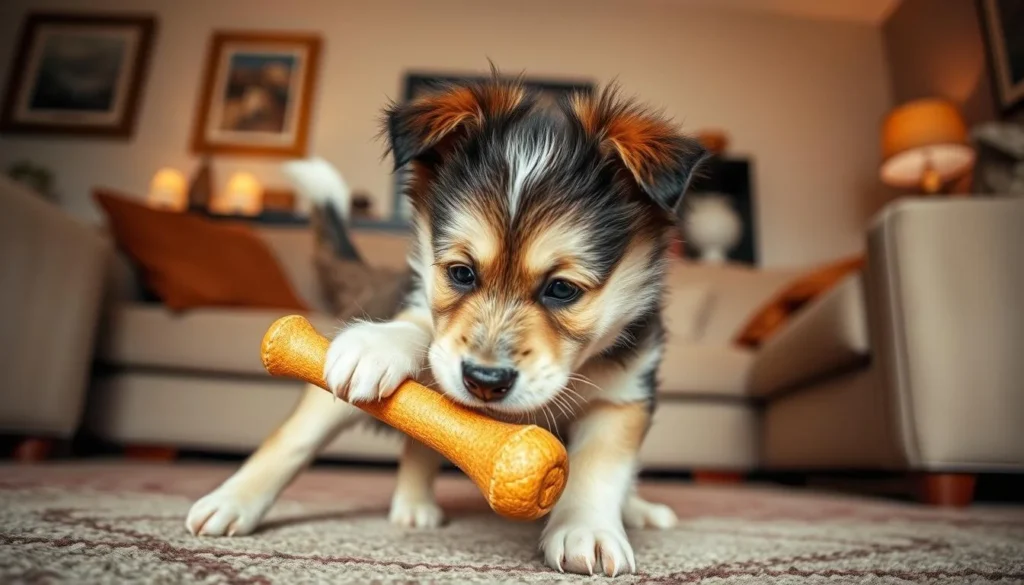
When a puppy bites, using redirection strategies can help. One good way is to give them toys instead of hands. Puppies often bite during play, so giving them chew toys can redirect their attention.
This not only satisfies their chewing urge but also teaches them what's okay to bite.
Trying different activities can also help. Games like fetch or tug-of-war are great. They keep puppies active and happy, and they bond with you too.
By using these strategies, biting becomes less common. This makes for a happier, healthier relationship with your puppy.
| Activity | Description | Benefits |
|---|---|---|
| Fetch | Throwing a toy for the puppy to retrieve. | Encourages exercise and focus away from biting. |
| Tug-of-War | A playful contest using a rope toy. | Channeling energy into an interactive game. |
| Chew Toys | Providing various safe chew toys. | Satisfies the chewing instinct with safe alternatives. |
Establishing Playtime Boundaries
Setting boundaries during puppy playtime is key to good behavior. When my puppy gets too excited and bites, I stop play right away. This teaches her that biting means no more fun, but gentle play is where the fun is.
When Playtime Ends
Stopping play at the first bite is very important. This consistent action helps my puppy learn. She'll soon know that biting ends fun, and gentle play is where the fun is.
Communicating Through Yelps and Silence
Good communication during play is crucial. If my puppy bites too hard, I yelp like her littermates do. This tells her that's not okay.
Silence is also a strong way to communicate. After a bite, I stop playing. This shows her that gentle play keeps the fun going, but biting stops it.
Time-Out Techniques
Managing puppy biting is key for a happy home. Using time-outs for puppies is a great way to handle it. This method lets the puppy calm down in a special area. It teaches them about boundaries and stops unwanted behavior.
Implementing Time-Outs For Excessive Biting
When my puppy bites too hard, I use time-outs. I ignore them for a bit or put them in a quiet spot. This teaches them that biting means no playtime.
Over time, they learn to control their biting. They understand that it's not okay.
| Action | Response | Expected Outcome |
|---|---|---|
| Bite at Play | Ignore or place in time-out | Puppy learns biting leads to loss of play |
| Hard Bite | Immediate time-out | Reduction in biting intensity over time |
| Excessive Mouthing | Calmly redirect to toys | Increased focus on appropriate chewing |
Using these time-out techniques helps create a good environment. It encourages my puppy to behave well. With patience, managing their biting becomes easier, making them a great companion.
Providing Appropriate Chew Toys
As a puppy parent, I know how crucial it is to give my furry friend the best chew toys. Teething can be tough, making them uncomfortable as their teeth come in. The right toys help with teething and keep my puppy happy and engaged.
I look for durable, textured toys made for teething puppies. This ensures my puppy has safe options to chew on.
Choosing the Right Toys for Teething Puppies
When picking puppy toys, I aim for variety to match my puppy’s chewing style. Soft rubber toys ease sore gums, while tougher ones handle their biting. Some top picks include:
- KONG Classic Dog Toy - Great for stuffing with treats
- Petstages Cool Teething Stick - Provides cooling relief for sore gums
- Nylabone Puppy Chew Toys - Durable and textured for teething relief
Having these toys ready helps me manage my puppy's biting during play. The right chew toys encourage healthy chewing, easing the teething period for both of us.
Encouraging Non-Contact Play
Engaging my puppy in fun activities that don't involve biting is a big help. These games are not only fun but also teach my puppy better ways to play. They help us bond and keep us safe from unwanted bites.
Games to Play Without Biting
There are lots of fun games that don't require contact. These games keep my puppy's mind and body active. Here are some ideas:
- Fetch: This classic game lets my puppy run and fetch, all without touching.
- Hide and Seek: It's a fun way to use my puppy's sense of smell while staying safe.
- Puzzle Toys: These toys challenge my puppy's brain and keep them busy without biting.
- Scent Games: Hiding treats around the house keeps my puppy sniffing and happy for hours.
Using these games means my puppy gets to exercise and think without biting. It makes our time together more enjoyable and helps my puppy learn good habits.
| Game | Description | Benefits |
|---|---|---|
| Fetch | A traditional game where puppies retrieve a thrown object. | Promotes physical fitness and tire them out. |
| Hide and Seek | I hide while my puppy tries to find me or treats. | Encourages problem-solving and reduces contact. |
| Puzzle Toys | Toys that dispense treats when solved. | Stimulates mental engagement and keeps them occupied. |
| Scent Games | Teaching my puppy to find hidden treats based on smell. | Enhances their natural instincts and focus. |
Conquering Foot and Hand Biting
Dealing with a puppy that bites my feet and ankles is tough. To stop foot biting, I use a smart plan. I always have a toy ready to distract them when they nip at my legs. This keeps them busy and teaches them right play habits.
Dealing with Biting Ankles and Legs
When my puppy bites my ankles or legs, I use different ways to stop it. Keeping chew toys out during playtime is a great distraction. I also show them biting is wrong by reacting the same way every time.
When they bite, I calmly stop playing until they calm down. This teaches them what's okay and what's not.
Strategies for Walking Safely with a Puppy
Walking with puppies can be tricky, especially when they nip at my legs. I use treats to reward calm behavior while we walk. This teaches them to stay by my side instead of biting my legs.
It makes our walks better and helps them learn good habits. Regular practice helps prevent leg biting, making our walks more fun.
Socialization and Training Classes
Training my puppy not to bite is a big task. But, I've learned that socializing them is key. Social activities boost their confidence and can lower biting. Puppy playdates and training classes are great ways to do this.
Importance of Puppy Playdates
Puppy playdates are super important for my puppy's social skills. They offer a place for my puppy to meet other dogs and learn how to behave. These playdates help my puppy deal with different situations and reduce fear biting.
I've seen how important these playdates are. They teach my puppy how to play right and set boundaries with others.
Finding the Right Puppy Classes
Playdates are not the only thing. Finding the right puppy classes is also crucial. These classes provide a structured setting with expert trainers. My puppy learns social skills with other puppies their age.
This education teaches good behavior and important life lessons. It helps them interact well with humans and dogs. Choosing the right class is key for my puppy's growth.
Using Taste Deterrents
In my quest to stop my puppy from biting, I've found taste deterrents to be very helpful. By putting bitter stuff on things my puppy likes to chew, I keep her from biting. This method teaches her that biting is not good and helps her learn better habits.
Applying Deterrents Effectively
Getting taste deterrents to work takes time and effort. Here's how I do it:
- Select a suitable taste deterrent: Pet stores have many options to stop biting.
- Target specific areas: I focus on places my puppy likes to bite, like my hands and clothes.
- Reapply regularly: Using it often helps my puppy learn that biting is bad.
- Combine with positive reinforcement: I also give my puppy treats when she plays with toys instead of biting me.
Using taste deterrents with positive actions helps a lot. My puppy learns to not bite, and we both have more fun together.
| Deterrent Type | Application Method | Duration of Effectiveness |
|---|---|---|
| Bitter Apple Spray | Spray on hands and furniture | Up to 1 week |
| Hot Pepper Spray | Apply on favorite chewing items | 1 week |
| Commercial Taste Deterrents | Spray directly on targeted areas | Varies by brand |
Understanding When Biting is a Problem
Training a puppy means knowing when biting is a big deal. It's key to spot when biting turns from normal to a problem. This helps me and my puppy get along better and stay safe.
It's important to know what makes puppy biting a problem. This knowledge helps us both.
Distinguishing Normal Biting from Aggression
Normal puppy biting is gentle during play. It shows they're exploring and learning to interact. Puppies often mouth things when they're teething.
But, if my puppy bites hard or shows stiff body language, growls, or stares, it's a sign of aggression. These are warning signs.
It's crucial to act fast if I see aggression. Knowing the difference between playful and aggressive biting helps avoid problems. By recognizing aggression early, I can help my puppy grow up well-adjusted.
Conclusion
Teaching my puppy not to bite is key to our bond. It makes our home a peaceful place. Positive puppy training helps us communicate and respect each other.
Using techniques like redirection and positive reinforcement is crucial. It builds a strong, loving bond. Being patient and dedicated is essential for success.
By tackling my puppy's biting behavior, we face challenges together. The right mindset and training commitment make our time together enjoyable and safe.