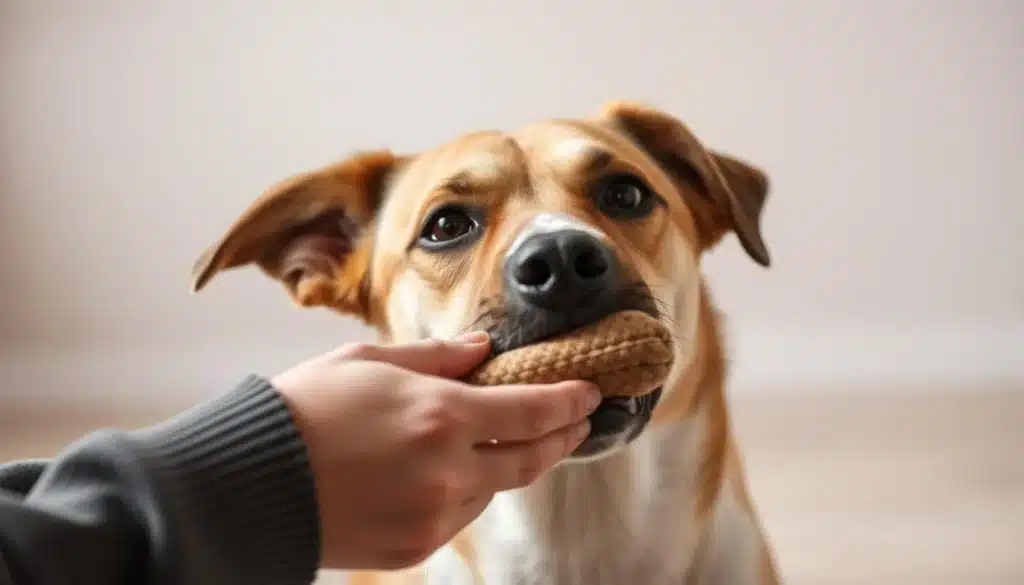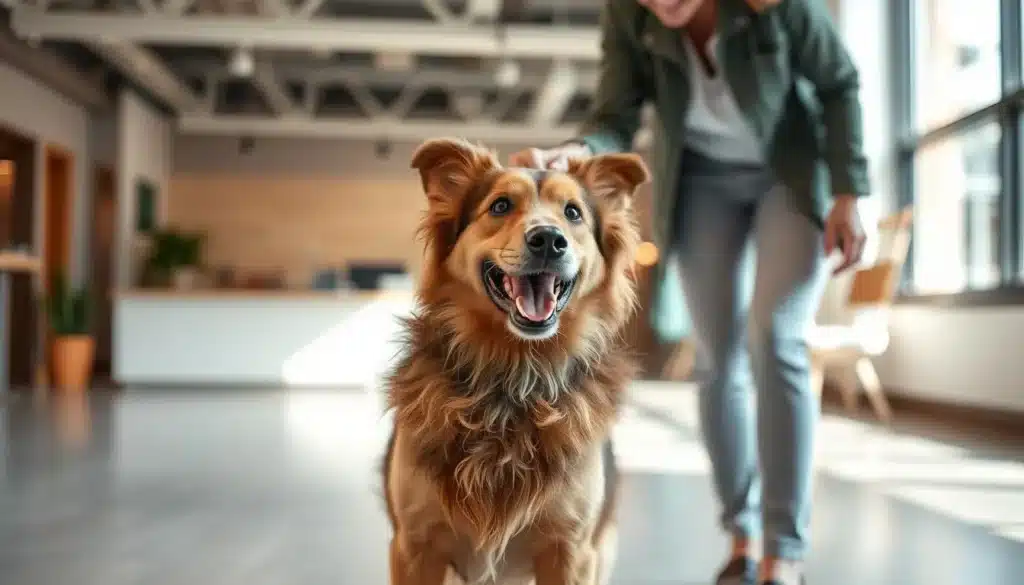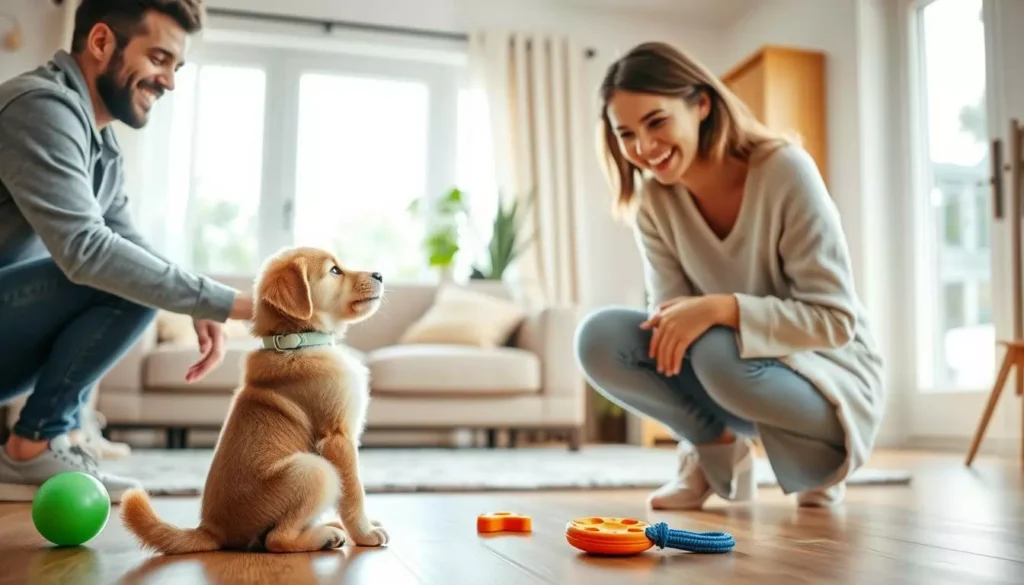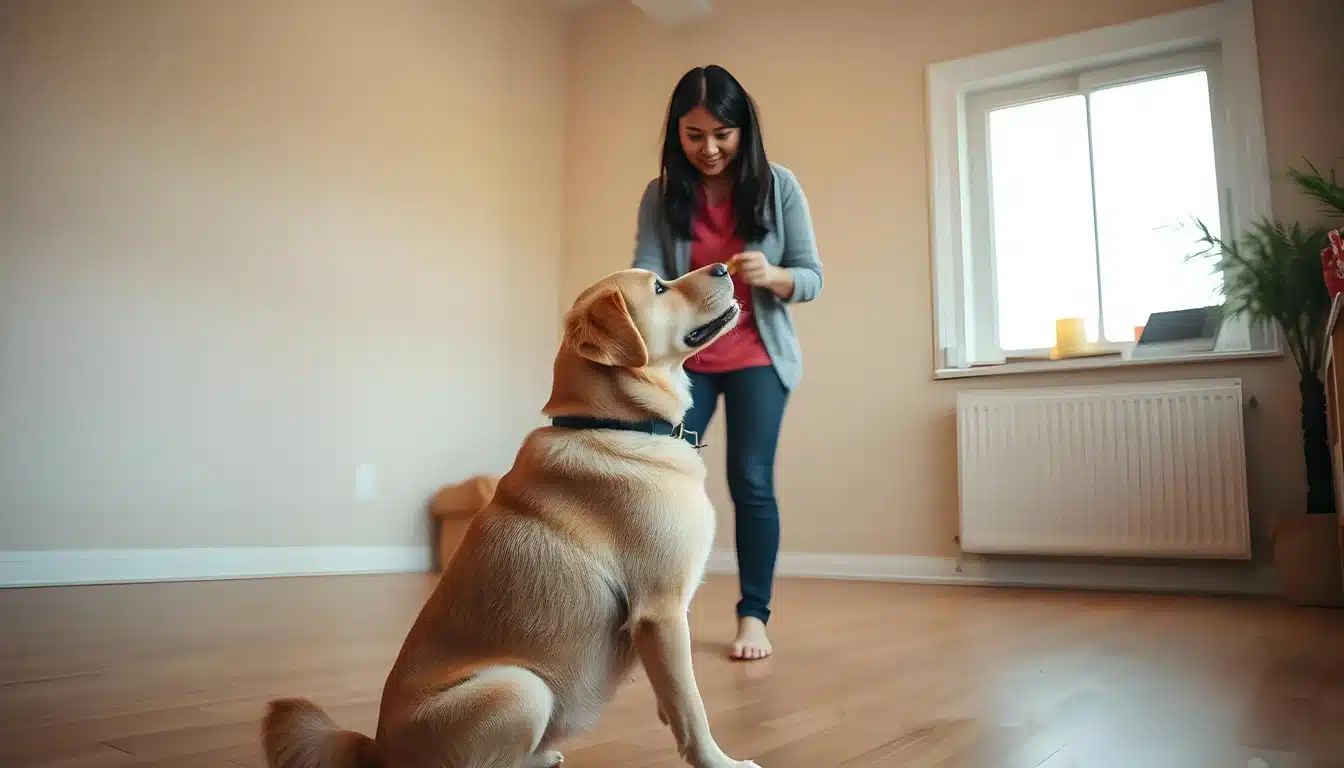
When I open the door, I'm ready for a warm welcome from my dog. But instead, I dodge their excited jumps and feel their paws on my clothes. It's a mix of joy and chaos.
So, I'm working on training my dog to stop jumping. It's not just about a calm hello. It's about keeping everyone safe and comfortable, including my dog. Learning why they jump and how to stop it is crucial.
If you're also trying to teach your dog not to jump, let's explore some training tips. We can help our dogs greet visitors in a more polite way.
Key Takeaways
- Jumping is a common behavior in dogs, often tied to their social instincts.
- Training is essential not just for social etiquette, but also for safety.
- Understanding the underlying reasons for jumping helps in addressing the behavior effectively.
- Establishing clear commands and routines can reduce jumping significantly.
- Consistent positive reinforcement encourages better behavior.
- Practice interacting with your dog to create calm greeting situations.
Why Do Dogs Jump on People?
Understanding why your dog jumps can help you understand their social behavior. Many dog owners ask, "why do dogs jump on people?" It shows their natural instincts and social habits.
Social Behavior and Greeting Rituals
Dogs are social animals. They jump on people to greet them like they do with other dogs. This lets them get closer and communicate better. Knowing this helps in training them not to jump up.
Seeking Attention and Closeness
Dogs jump for attention too. They might get it from affection or scolding. By understanding this, I can teach them better ways to get attention. Training them to not jump involves finding new ways to meet their needs.
Understanding the Risks of Jumping
Jumping can be a big challenge for dogs and their owners. It's key to know the risks of jumping dogs to tackle these issues well. Jumping can hurt people, especially kids and the elderly. It can also damage clothes and make social situations awkward.
Injury to People
Dogs that jump can hurt people. When a dog jumps on someone, it can make them lose their balance. This is a big worry for people who are more likely to get hurt, like kids and the elderly.
The injuries can be anything from small bumps to serious accidents. This shows why it's so important to teach dogs not to jump.
Damage to Clothing
Jumping can also damage clothes. Dogs might have dirty paws or sharp nails that can ruin clothes. Guests might feel upset if their clothes get ruined by a jumping dog.
This can make people not want to visit the dog again. It ruins the fun of a visit and makes it hard for people to want to be around the dog.
Disrupting Social Situations
Jumping can also mess up social events. A dog that jumps a lot can take everyone's attention away from what's happening. This can make guests feel uncomfortable and upset the dog's owner.
Knowing these risks shows why teaching dogs not to jump is so important. It helps everyone have a better time together.
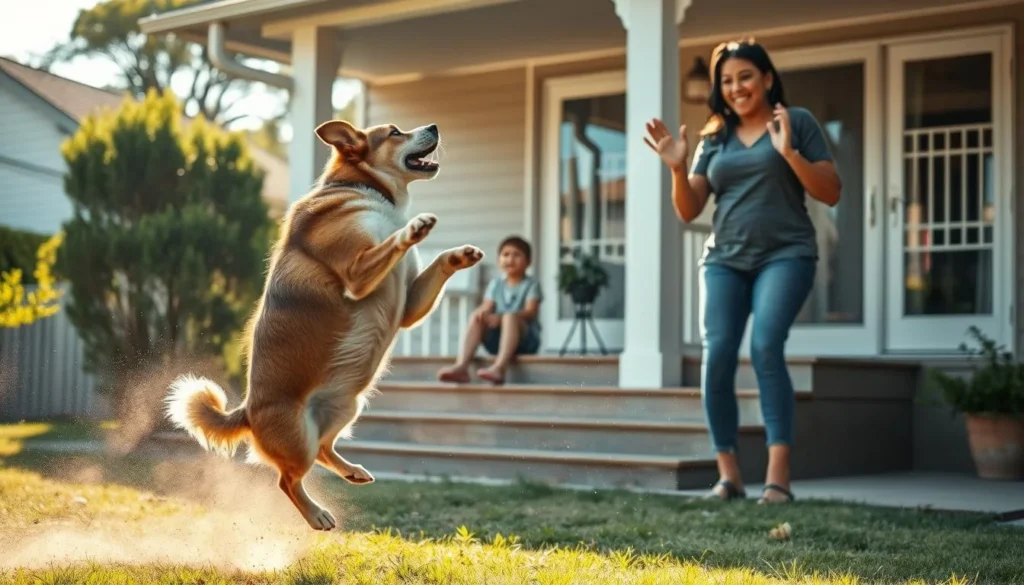
Training Your Dog Not to Jump on People
Training a dog not to jump up on visitors is all about being consistent. Simple and effective methods work well. Ignoring the dog when they jump teaches them it doesn't get them attention.
On the other hand, rewarding calm behavior shows them staying down is better. I keep treats ready for this purpose. It takes time and patience, especially if my dog jumps a lot.
Creating a calm environment is crucial. This means visitors should enter calmly, and I give my dog a command to sit. Using barriers also helps prevent jumping.
Training a dog not to jump is about managing expectations too. Regular practice and corrections are key. Remember, the goal is to train dog no jumping, so stay persistent.
Alternative Behaviors to Teach
Teaching alternative behaviors to dogs that jump is key. I can teach them to respond to specific commands instead of jumping. This makes greetings better and helps them learn good manners.
Two great strategies are the "Four on the Floor" command and teaching them to "Sit" instead of jumping. These methods make interactions more pleasant and help with good manners.
Teaching "Four on the Floor"
To teach the "Four on the Floor" command, I focus on keeping my dog calm during greetings. This stops them from jumping and teaches them to stay calm. Here's how to do it:
- Begin with my dog on a leash, so I can control the situation.
- When someone comes over, ask my dog to "Sit." This gives them something else to do.
- Give them treats and praise when they stay seated instead of jumping.
- Practice this with different people, always rewarding them for staying seated.
Training "Sit" for Greetings
Teaching the "Sit" command is another way to stop dogs from jumping. It teaches them that sitting is better when people arrive. Here's how to train them:
- Use treats to reward them when they sit. Say "Sit" when they start to jump.
- Have someone approach slowly while they're sitting. This makes sitting a positive thing.
- Praise and treat them if they stay seated during the greeting.
- Do this often to make sure they remember.
Management Techniques to Prevent Jumping
Managing a dog's behavior is key to stopping jumping. It's important to keep things calm, especially when guests are over. Crates and barriers help keep dogs in check before visitors arrive.
Leash training is crucial for guiding dogs during greetings. It makes interactions smoother. Treats can also help by distracting dogs and keeping them calm.
Use of Crates and Barriers
Crates are a safe space for dogs when guests come. They prevent jumping and make dogs feel secure. Barriers, like baby gates, keep dogs from rushing to visitors.
Leash Training for Greetings
Leash training during greetings is very effective. It lets me control the dog and guide them through greetings. This way, jumping is less likely.
Using a leash keeps dogs focused on me, not on jumping on others.
Using Treats as Distractions
Using treats to distract dogs during greetings works well. It redirects their energy and stops them from jumping. This method encourages good behavior and makes greetings fun for everyone.
| Technique | Purpose | Benefits |
|---|---|---|
| Crates | Confinement before guests arrive | Calm environment and reduces anxiety |
| Barriers | Restricting access to certain areas | Prevents jumping and creates clear boundaries |
| Leash Training | Guiding behavior during greetings | Improves control and promotes grounded behavior |
| Treat Distractions | Redirecting focus during interactions | Encourages positive behaviors through rewards |
Using Positive Reinforcement
When I train my dog, I always focus on positive reinforcement. It's a powerful method that encourages my pet to learn good behavior. This is especially true when jumping becomes a problem.
By praising calm behavior and offering rewards for no jumping, I build a trusting bond. This encourages my dog to follow my training commands.
Praising Calm Behavior
I always recognize and praise my dog when they remain calm during greetings. This helps reinforce their behavior and lets them know what I expect. Each time they keep all four paws on the ground, I give them enthusiastic praise.
This positive feedback motivates my pet to repeat the desired action. It's a great way to encourage good behavior.
Rewarding Success with Treats
Incorporating treats into my training sessions has proven to be effective. I use rewards for no jumping, making sure my dog associates calm behavior with something enjoyable. Timing is crucial; I offer a treat immediately after they follow my command.
This immediate reward creates a strong connection. It encourages my pet to maintain the calm during future interactions.
How to Train Your Dog for Greetings
Teaching your dog to greet people calmly is key. A dog that gets too excited can be hard to control. Start by practicing in quiet places. This helps them learn how to act around people.
Managing Their Excitement
To keep your dog calm, start with short training sessions. As they get better, you can make the sessions longer. Here are some tips:
- Keep the area calm by removing distractions.
- Use treats to reward them for staying calm when they meet people.
- Teach them a command, like "easy," before they greet anyone.
Practice with Family and Friends
Practice with your dog's family and friends is the best way to improve their greeting skills. This lets them meet different people while you teach them to stay calm. Here's how to do it:
- Have family or friends greet your dog while you're in charge.
- Always use the same command to tell your dog when it's okay to approach.
- Slowly introduce new people, focusing on calm greetings each time.
When Strangers Come to the Door
Teaching dogs to behave when guests arrive is key to a welcoming home. The right training helps my dogs greet visitors calmly. This makes a great impression on everyone who comes over.
Strategies for Guest Arrival
To help my dog do well with visitors, I use these strategies:
- Practice commands like "sit" or "stay" with distractions around.
- Set up a special spot for my dog to wait until guests get there.
- Let guests meet my dog slowly, starting from a distance.
- Give treats for calm behavior when guests arrive.
Maintaining Calm Greetings
To keep greetings calm, I use these techniques:
- Tell guests about my dog's training to get their help.
- Ask guests to ignore my dog until they calm down to stop jumping.
- Have regular sessions where guests help make my dog calm through positive actions.
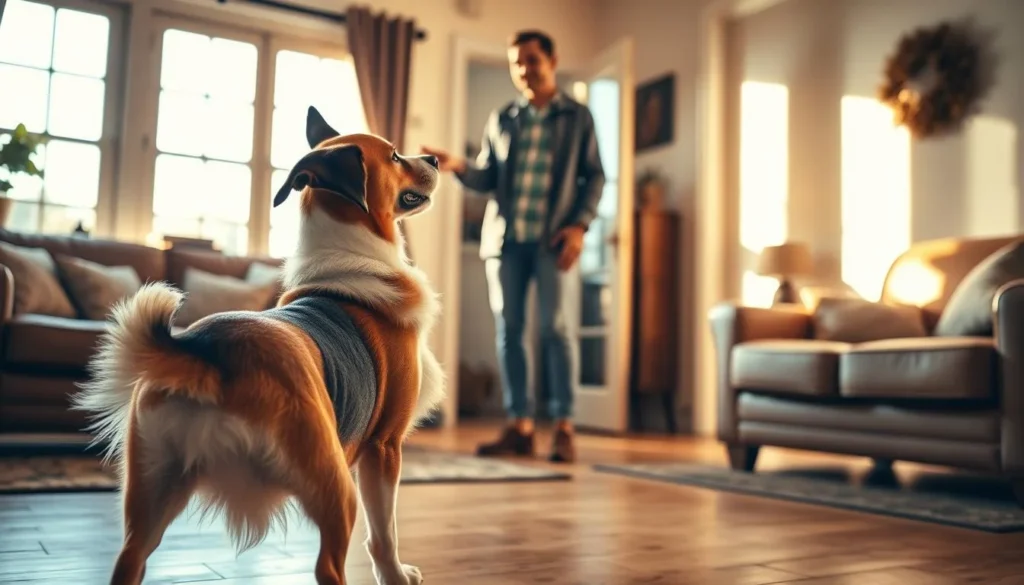
Training Techniques for Walking
Training your dog for walks in public is key for safe and fun outings. It's important to stop jumping to make walks better for dogs and owners. Using certain techniques can really help with this.
Addressing Jumping During Walks
One good way is to reward your dog for staying calm. When we meet people, I use commands like "sit" or "stay." This keeps my dog calm and focused.
Carrying treats or toys helps too. If my dog wants to jump, I distract them with the treat. This keeps us in control.
Engaging with Passersby
Meeting people on walks is great for socializing. I ask friends or family to stand far away and get closer slowly. This helps my dog stay calm and enjoy saying hello.
By training for public interactions, my dog learns how to react to new people. It makes walks better for both of us.
Consistency in Training
Consistency is key in dog training. All family members must use the same commands and responses. This ensures my dog knows what's expected of him in any situation.
To keep training consistent, I suggest a few strategies:
- Everyone should use the same commands.
- Choose specific family members for training sessions.
- Use the same rewards for good behavior.
Tracking our dog's progress helps us share tips. This strengthens our bond and shows the value of consistent training. Keeping family members informed about our dog's training is crucial.
Using these strategies can greatly improve our dog's behavior. A consistent training environment leads to a happier dog and better interactions with guests.
Common Mistakes to Avoid
Training my dog not to jump on people has taught me a lot. Knowing common mistakes in dog training can save time and reduce frustration. Some errors might seem small, but they can really affect my training.
Offering Attention for Jumping
One common mistake is giving attention when my dog jumps. This makes them think jumping is a way to get attention. Instead, I ignore the jumping and reward calm behavior.
This way, my dog learns that staying on the ground gets them positive reinforcement.
Using Negative Reinforcement
Another mistake is using negative reinforcement. This can harm the bond between my dog and me. Instead of correcting them harshly, I redirect them to better behaviors.
I teach positive actions, making training more enjoyable for both of us.
Professional Help and Resources
Getting help from a professional can really help when training your dog not to jump on people. Certified dog trainers have the knowledge and plans that fit your dog's needs. Choosing the right trainer is key to teaching good behavior.
Finding Certified Trainers
Here's how to find certified dog trainers:
- Look for local dog training schools or individual trainers.
- Make sure they are certified by well-known organizations.
- Read what others say about them in reviews and testimonials.
- Find out if their training methods are positive and rewarding.
Enrolling in Obedience Classes
Obedience classes are great for teaching your dog good behavior. They also help your dog get along with other dogs. Here's why:
| Class Type | Description | Benefits |
|---|---|---|
| Puppy Classes | Focus on socialization and basic commands for young dogs. | Foundation for good behavior and social interaction. |
| Basic Obedience | Teaches essential commands like sit, stay, and come. | Improves communication and strengthens the bond between owner and dog. |
| Advanced Obedience | Builds on basic skills with more complex commands. | Enhances focus and control in various environments. |
Using these professional dog training resources can make your relationship with your dog better. It also helps solve the problem of jumping.
Benefits of Successful Training
Spending time training your dog can bring great rewards. It's not just about stopping bad habits. It's about building a strong bond between you and your pet. You'll see big changes in your dog's behavior and how your family interacts.
Improved Social Interactions
Training has made socializing with my pets better. A well-trained dog is easier to handle. This means we can go to parks or parties without worries.
It boosts my confidence when we meet other dogs and owners. Playdates and social events become more fun.
Enhanced Safety and Etiquette
Good training keeps my dog safe and makes guests feel at ease. A well-behaved dog is less likely to jump on people. This reduces the chance of injuries and awkward moments.
When my dog knows basic commands, he's more aware of his surroundings. This helps him behave well in different places. It makes visits more enjoyable for everyone.
Conclusion
Training your dog not to jump on people is key for safety and better interactions. Knowing why they jump helps us fix the problem. Using positive reinforcement, we teach them good manners.
This journey has shown me the value of being consistent and patient. The dog training tips in this article are a great start for anyone wanting a peaceful home with their pet. With the right strategies and positive reinforcement, our bond with our dogs grows stronger.
Our aim is to build a respectful relationship with our dogs. Training them helps turn excited jumps into calm welcomes. This makes our meetings with others more pleasant. By following these tips, every dog can learn to greet people right, making our lives happier.